Home Blog Page 2410

Southern Kaduna: Sultan Visits El-Rufai Over Crisis

0
Sultan of Sokoto visits El-Rufai

The Sultan of Sokoto, Saad Abubakar on Monday paid a private visit to Governor Nasir El-Rufai of Kaduna State.

The Sultan’s visit comes barely 24 hours after the Former Emir of Kano, Muhammadu Sanusi visited El-Rufai to discuss issues bothering on security and economy of the state.

Upon his arrival at the Government House in Kaduna, the Sultan went straight to the governor’s office where he held a closed-door meeting with El-Rufai and some government officials including the Senator representing Kaduna North in the National Assembly, Suleiman Abdu-Kwari.

Although the Sultan declined to speak to reporters after the meeting, Governor Nasir El-Rufai said the meeting discussed the security challenges in southern Kaduna and other parts of the state.

The governor disclosed that he received advice and encouragement from the royal father towards finding a lasting solution to the security challenges in the state.

He appreciated the Sultan for his fatherly visit and support in ensuring that peace returns to the state.

Kaduna has been experiencing a series of attacks with a recent one carried out six weeks ago.

On July 19, 21 people were killed while 28 others sustained various degrees of injuries when gunmen attacked Kukum Daji Village of Kaura Local Government Area of the state.

According to the President of the Community, Mr. Yashen Titus, the gunmen suspected to be herdsmen, invaded the venue of a wedding party in the community at about 10 pm.

Similarly, on July 7, no fewer than 38 persons lost their lives in separate attacks on two villages in Sanga Local Government Area of Kaduna state on July 7.

The Council Chairman, Emmanuel Adamu, who confirmed the attack, said the gunmen unleashed mayhem on Ankpon Village in Nandu and Kabamu Village in Fadan Karshi, all of Numana district.

While describing the incident as unfortunate, he said the gunmen killed 38 persons including women and children.

Following the continued attacks in the state, the Defence Headquarters deployed Special Forces to halt the senseless killings and restore peace in Southern Kaduna.

Receiving the troops at Sector 7, the headquarters of Operation Safe Haven on August 14, the Commissioner for Internal Security and Home Affairs, Mr Samuel Aruwan charged them to take the battle to the bandits and ensure that peace and security are restored to southern Kaduna.
UNILAG Senate appoints female professor as new Acting Vice Chancellor

0
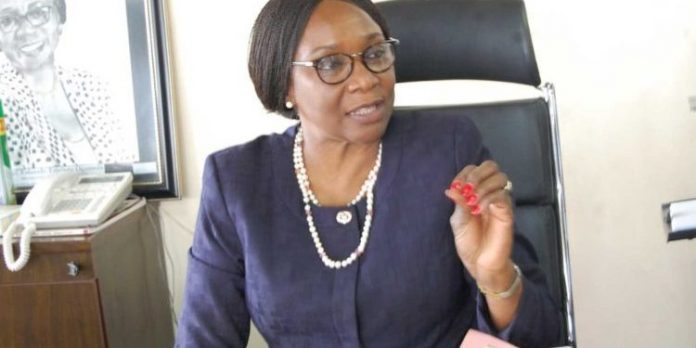
Prof Folasade Ogunsola

The Senate of the University of Lagos (UNILAG), Akoka, has elected the deputy vice-chancellor in charge of development services, Folasade Ogunsola, as the institution’s acting vice-chancellor.

She is the first female to be so appointed in the history of the 58-year-old ivory institution.

Mrs Ogunsola, a professor of medical microbiology and first child of Nigeria’s first professor of Geography, Akin Mabogunje, was also the first female provost of the university’s college of medicine, Idi-Araba.

She defeated her opponent and a deputy vice-chancellor in charge of management services, Ben Oghojafor, with a wide margin. She scored 135 votes as against Oghojafor’s 31 among the senate members.

The senate meeting was held today purposely to appoint an acting VC as instructed by President Muhammadu Buhari.

Mr Buhari, who acted in his capacity as the institution’s visitor, had also set up a seven-member visitation panel to look into the crisis rocking the university.

In a statement issued on Friday to announce the President’s recommendations, the Director of Press at the Federal Ministry of Education, Ben Goong, noted that the panel would be inaugurated by the minister, Adamu Adamu, on Wednesday.

Ahead of the panel’s inauguration, the senate was mandated “to immediately convene to nominate an acting vice-chancellor from amongst its members for confirmation by the governing council.”

GDP Decline: Time To Start Doing Some Things Differently, Says Rewane

0

Notable economist and adviser to the Federal Government, Bismarck Rewane, on Monday said the latest Nigeria Bureau of Statistics report on the economy should push the country to start “doing some things differently.”

Nigeria’s Gross Domestic Product (GDP) decreased by six percent in real terms in the second quarter of 2020, the NBS said Monday morning.

According to Rewane, the decline was “surprising and concerning” but not “alarming at this point in time.”

“The truth is that the economy had its pre-existing conditions in Q1 and the lag between the slow down and the contraction was underestimated by all analysts,” Mr Rewane said in an interview with Channels Television on Monday.

He pointed out that the Federal Government’s stimulus plan for the economy was inadequate to cover for the shortfall recorded by the NBS.

“We have a N2.5trn equipment to fight a 12trn contraction,” he said. “So the limitations and inadequacies and inappropriateness of the tools, compared to the problem we have, is stacked.

“So we are saying that the move from a slowdown into a contraction was more than we expected. The tools that we have at our disposal are inadequate. The stimulus that is required to take us out of this equation is going to be much more than we expected. And we are going to have to take some measures.”

Mr Rewane added that the country was now faced with a quadrilemma, a situation in which a choice must be made between four undesirable options.

“The first variable we are looking at is recession, negative growth,” he said. “The second variable is high inflation, which is almost 13 percent.

“The third variable is high unemployment; even though the unemployment numbers are at 28 percent, we think that it is much more than that. And finally, we have weaknesses in currency.

“So we are having external weaknesses and vulnerabilities, slow growth, high unemployment, and, more than anything else, contraction in economic activity.

“Now we are going to move away from the monetary policy complement that we have, stimulate the economy with greater catalyst, and do some things differently.”

-CHANNELS TV

APPG’s Christian Genocide Claim versus Facts

0

By Angie Bello

The Parliament of the United Kingdom’s All-Party Parliamentary Group (APPG) for International Freedom of Religion or Belief recently launched a report, “Nigeria – Unfolding Genocide?” which is now being processed into other bye-products like letters, opinion articles, analyses and just about any other format that suggests the intent of the report is less than sincere.

As a document, “Nigeria-Unfolding Genocide?”, is sparse on facts, generous with half-truths, replete with conjectures and heavy on mischief, with the consequence that the entire enterprise of the APPG came out as devious. The very disclaimer at the start of the 56-page document speaks of an international fraud committed against those that have been misled to put faith in what the authors wanted them to believe.

The disclaimer reads, “This is not an official publication of the House of Commons or the House of Lords. It has not been approved by either House or its committees. All-Party Groups are informal groups of Members of both Houses with a common interest in particular issues. The views expressed in this report are those of the Groups.”

But the APPG members have been busy spinning letters off the report, including one that is asking that the document forms a basis for redirecting the UK’s bilateral aid to Nigeria for other interests. So, the report on one hand is claiming not to be the formal position of the UK Parliament but in the same breadth its authors are asking that it forms a basis of recalibrating relations with Nigeria. The claim is the that the APPG and its report are unofficial versus the fact is that it is being deployed as a policy document.

APPG members are reportedly “alarmed by the dramatic and escalating violence in Nigeria characterised as the farmer-herder conflict. This violence has manifested along ideological lines, as the herders are predominantly ethnic Fulani Muslims and the farmers are predominantly Christians.” False! First, APPG members are not alarmed by the violence, which is more of persistent than escalating and by the way scenarios that result in the loss of human lives should not be trivialized by being described as “dramatic”. The greatest falsehood is to market the Muslim/Christian brand in describing the farmers/herders’ conflict. The herders do clash with communities that are predominantly Muslim – it is a conflict in which climate change, urban sprawl and cultural factors play significant roles as opposed to being reduced to an ethno-religious excuse. By the way, there are other security breaches like Boko Haram and banditry, so APPG went sparse on facts by encapsulating everything in farmers/herders’ crisis.

The document reported the death of no less than 6000 Christians as the basis for alleging a genocide. Fewer fatalities than that qualify as a genocide when an ethnic, national, racial, or religious group—in whole or in part – is targeted for destruction or extermination. Even one death on the bases of the aforementioned grouping is condemnable. But the fact is that as many as 39,192 persons have been killed by the combined actions of terrorists (Boko Haram/ISWAP), sectarianists and state actors in the period between 2011 to date, according to the Nigerian Security Tracker produced by the African Programme at the Council for Foreign Relations (accurate statistics remains elusive for several reasons). APPG somehow managed to classify 15% of the tragic deaths in Nigeria since 2011 as constituting genocide, which implies that the other over 30,000 deaths do not matter or should not be a source of concern because they do not belong to the same sectarian leaning as the members of the APPG.

The group claimed that hundreds of churches have been destroyed by Islamists. The fact: churches were destroyed but the exact count is not known. But mosques were also destroyed and in large numbers too. Singling out the number of churches destroyed without acknowledging that other religions came under terrorists’ attack is capable of provoking retaliatory mindset that will cause violence to further spiral. It cannot be put past the APPG that it has the ulterior motive of making the violence in Nigeria to spiral, possibly out of control.

Part of the misleading claims in the report include the conclusion of “the Nigerian Government’s failure to respond adequately to the violence, to protect communities or to bring perpetrators of violence to justice.” It is surprising that APPG came to this conclusion considering the sources of its information, which is mostly from newspaper reports, international and local NGOs like Amnesty International, as well as interviews with persons who have vested interests in the crisis. The same news outlets that the group gleaned its information from are replete with the successes that the military as well as other security agencies in Nigeria have recorded in making arrests or even neutralizing terrorists and other criminals in the course of operations that are launched to keep the people safe. The APPG’s NGO sources have even had cause to accuse the military if being high handed in dealing with terrorists, whom they prefer to be arrested than being killed in encounters with the military.

Glaringly absent is the failure of APPG to highlight the external factors that have allowed light weapons to freely flow into the regions where there are conflicts. The United Kingdom is among the axis of interest that empowered and armed terrorists with the aim of provoking regime changes in the north of Africa and Middle East. The ill-conceived strategy of “Arab Spring” that was hailed as people expressing their preference for democracy was at the root of the instability that spread from those areas to the north of Nigeria. The least that should happen is for the APPG to persuade its own government to take responsibility for the fragility that is weeping through the security landscape of Africa instead of grandstanding about genocide. If the UK must shirk responsibility for its role in what is happening in Nigeria it should not be by way of lying about a genocide when people of all different sectarian persuasion are being killed.

Bello is a Pan- Africanist and wrote this piece from Abuja.

NIMASA Commends Nigerian Navy on the Enforcement of New Anti-Piracy Law

0

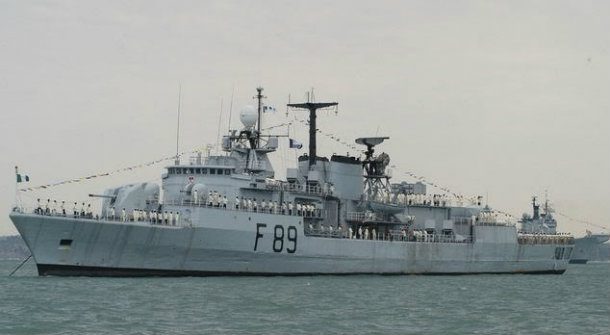
The Director General/CEO of Nigerian Maritime Administration and Safety Agency (NIMASA), Dr Bashir Jamoh has commended the Nigerian Navy for the successful enforcement of the new anti-piracy law in Nigeria.

In a commendation letter to the Naval Headquarters, Dr Bashir noted the commendable achievements of the Nigerian Navy in the discharge of its responsibilities on security and other related matters. In this regard, he expressed the Agency’s appreciation on the high level of professionalism and expertise exhibited by the Nigerian Navy in its collaborative efforts with NIMASA especially in the enforcement of the Nigeria’s Suppression of Piracy and Other Maritime Offences Act 2019.

It could be recalled that the Nigerian Navy recently secured a conviction for the first time under the new anti-piracy law of 3 of 9 accused persons involved in the hijack of an Equatorial Guinea flagged vessel, MV ELOBEY VI off Equatorial Guinea coast.

While assuring the Nigerian Navy of NIMASA’s continuous cooperation, the Director General further appreciated the Nigerian Navy for keeping with its traditions and ensuring safer maritime boundaries and internal waters to the benefit of the country and the international community.

Nigerian Navy arrests smugglers, seizes 825 bags of rice in Kwara ...

CAMA: Nobody can take over my church, I built it with my sweat – Primate Ayodele

0

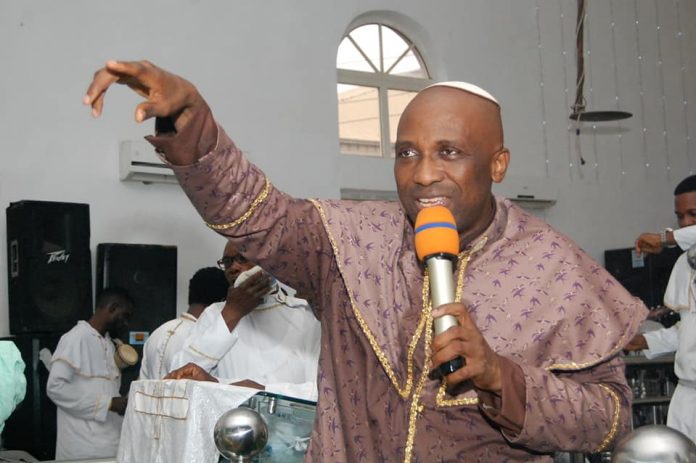
Primate Babatunde Elijah Ayodele has stated that nobody can take over his church following the amended Companies and Allied Matters Act (CAMA).

The preacher said his blood and energy were put towards building the church for many years and he will not back down.

“Forget the governor, let them not try it” he said.


IPOB attacked our patrol team killing two officers in Enugu – DSS

0

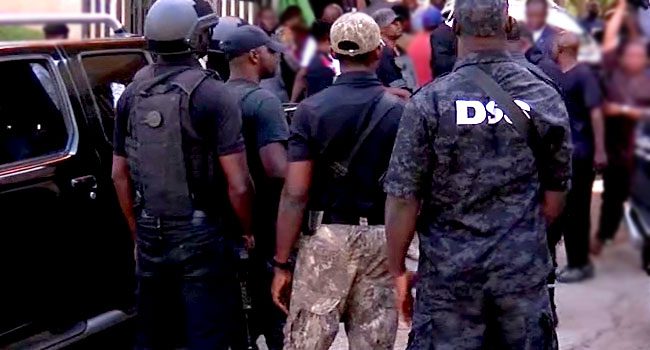
A patrol team of the Department of State Security (DSS) was attacked in Enugu state on Sunday by members of the Indigenous People of Biafra (IPOB), according to DSS spokesman, Peter Afunanya.

Afunanya, in a statement, added that the Service lost two of its officials “in what was clearly an unprovoked violent attack”.

The group, which is calling for the secession of the South-East region from Nigeria, has been proscribed by the Federal Government.

The DSS, in its Sunday statement, said measures have been put in motion to fish out the killers.

THE DSS FULL STATEMENT READS BELOW:

UNPROVOKED VIOLENT ATTACK ON DSS PATROL TEAM IN ENUGU

The DSS wishes to inform the public that its patrol team was, today, 23rd August, 2020, attacked in Emene, Enugu State by members of the outlawed Indigenous People of Biafra (IPOB).

The Service lost two personnel in what was clearly an unprovoked violent attack launched by IPOB on the team.

The Service hereby condoles with families of the departed officers and also prays for the repose of their souls.

However, all measures have been put in place to ensure that their killers and everyone involved in this dastardly act are promptly apprehended and brought to justice. Consequently, a full scale investigation will be carried out with regard to the incident.

Once again, the Service reaffirms its commitment to assiduously work with other security agencies to maintain public safety and order. It, therefore urges law abiding citizens and residents to go about their normal businesses without fear.

Peter Afunanya, Ph.D
Public Relations Officer
Department of State Services
National Headquarters
Abuja
23rd August, 2020

20 inmates killed in Madagascar prison breakout

0

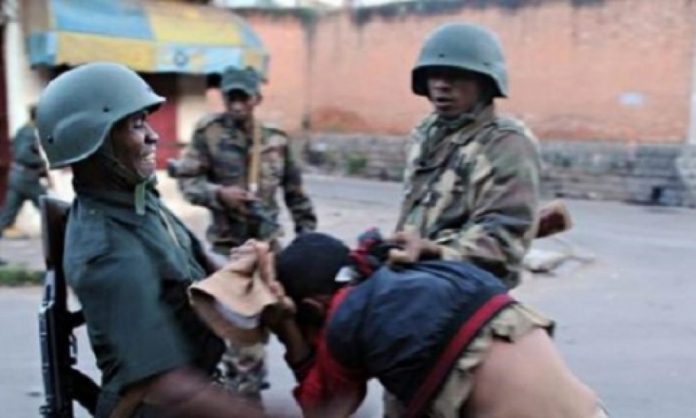
Twenty inmates have been killed in a shoot-out with police during a prison breakout in Madagascar on Sunday.

Madagascar’s justice ministry said tens of prisoners attacked guards with rocks and grabbed a gun as they tried to flee the Farafangana prison in the southeast of the Indian Ocean island.

Thirty-seven of the 88 who managed to escape were captured by the police and army while eight were wounded in the shoot-out.

Thirty-one inmates are still on the run, the ministry said, vowing to boost security at all penitentiaries across the country.

Mass prison escapes are not uncommon in Madagascar.

In 2016, approximately 40 detainees broke out of a high-security prison in Toliary in southern Madagascar.

Mali military junta seeks three years’ rule, agrees to free deposed President Keita

0

The junta that seized power in Mali wants a military-led transitional body to rule for three years, and has accepted that ousted president Ibrahim Boubacar Keita return home, sources in a visiting West African delegation said Sunday.

“The junta has affirmed that it wants a three-year transition to review the foundations of the Malian state. This transition will be directed by a body led by a soldier, who will also be head of state,” a source in the ECOWAS delegation in capital Bamako told AFP.

“The government will also be predominantly composed of soldiers” under the junta’s proposal, the source said on condition of anonymity.

The source added that the junta has agreed to “free president Keita”, who has been detained along with other political leaders since the coup on Tuesday, and he “will be able to return to his home” in Bamako.

“And if he wants to travel abroad for treatment, that is not a problem,” the ECOWAS source said.

Prime Minister Boubou Cisse, who has been detained with Keita at a military base outside the capital where the coup began, would be moved to a secure residence in the city, the source said.

A junta official confirmed to AFP the decisions on the fate of Keita and Cisse, as well as that “the three-year transition would have a military president and a government mostly composed of soldiers”.

The coup followed months of protests calling for Keita to resign as public discontent with the government grew over the country’s brutal Islamist insurgency and collapsing economy.

While it was met by international condemnation, thousands of opposition supporters celebrated the president’s ouster in the streets of Bamako.

The junta has said it “completed the work” of the protesters and has vowed to stage elections “within a reasonable time”.

However Mali’s neighbours have called for Keita to be reinstated, saying the purpose of the visit by the delegation from the regional ECOWAS bloc was to help “ensure the immediate return of constitutional order”.

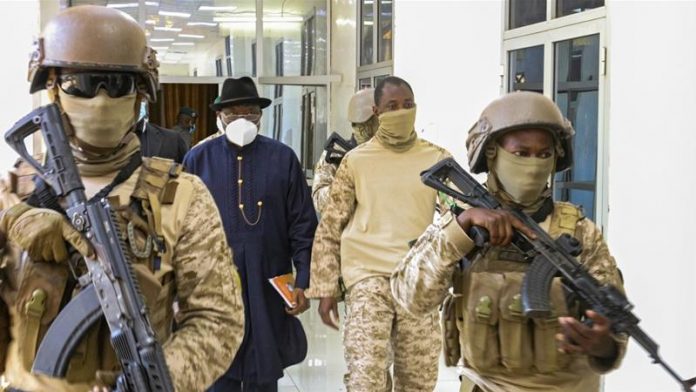
Leaders of the military junta led by Colonel Assimi Goita and mediators from West Africa’s regional bloc led by Nigeria’s former president, Goodluck Jonathan, met behind closed doors all day on Sunday.

“We have been able to agree on a number of points but not yet on all the discussions,” Jonathan told reporters on Sunday night after negotiations that lasted around nine hours.

A spokesman for the military junta, Colonel Ismael Wague, said: “We reached compromise on certain aspects and the negotiations will continue tomorrow.”

The overthrow of Keita on Tuesday has been condemned abroad, but celebrated by many in a country battling an Islamist insurgency and months of political unrest following a disputed legislative election in March.

The 15-nation Economic Community of West African States (ECOWAS), weary of prolonged instability in Mali and the potential for similar power grabs in the region, have taken a hard line on the coup.

It suspended Mali from its decision-making institutions, shut borders and halted financial flows with the country.

Mali coup must serve as a warning to African leaders who cling to power – PLO Lumumba

0

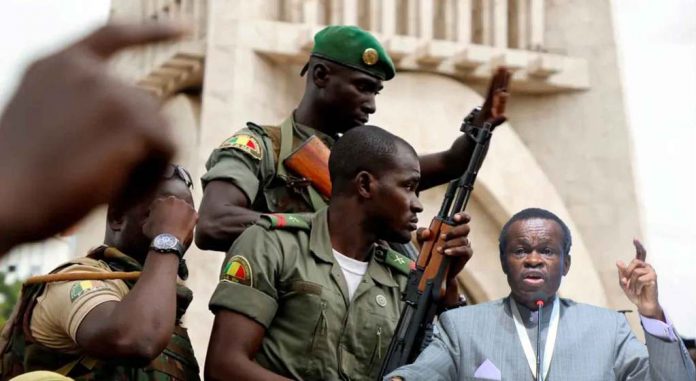
Renowned Pan-Africanist, Patrick Loch Otieno Lumumba has stated that the recent incident in Mali must serve as a serious warning to other African leaders who hold on to power for a very long time.

The very vocal scholar known to be an advocate for good governance added in clear terms that he does not support the idea of changing non-performing governments through unconstitutional means, especially military coup.

He stated in a short Facebook post that, “although the seizure of power by the Military is to be discouraged, African Presidents who cling to power to the detriment of the population must know that soldiers are also Citizens who will not be indifferent.”

He further narrowed the advice down to some specific long-serving leaders such as Paul Biya of Cameroon, Alpha Conde of Guinea and Ivorian Alassane Ouattara. “Let KEITA’S fate be a warning to CONDE, BIYA, OUATTARA and others,” he said.

The well-respected Professor known to be an advocate for good governance, however, stated that he does not support change of government through unconstitutional means