Home Blog Page 2401

Operation Accord: More armed bandits killed, camps destroyed by air strikes in Zamfara

0

In continuation of air strikes being conducted under Operation ACCORD, the Air Component of Operation HADARIN DAJI has destroyed an armed bandits’ camp at Kwayanbana Forest in Zamfara State killing scores of armed bandits and wounding many.

According to the Coordinator Defence Media Operations, Maj Gen John Enenche said, the feat was achieved 7 June 2020, after Human Intelligence (HUMINT) reports and series of Intelligence, Surveillance and Reconnaissance (ISR) missions established that a group of makeshift structures hidden under the dense forest vegetation as well as the caves in the surrounding high grounds serve as hideout for the armed bandits and their notorious kingpin, Dogo Gede.

Consequently, the Air Component dispatched a force package of attack aircraft and helicopter gunships to engage the location, leading to the destruction of the makeshift structures as well as the neutralization of several of the armed bandits.

In his reaction, The Chief of the Air Staff (CAS), Air Marshal Sadique Abubakar commended the Air Component of Operation HADARIN DAJI for their professionalism and urged them to remain resolute in the conduct of air strikes whilst continuing to provide close air support for ongoing ground operations in order to eradicate all armed bandits; thus accomplishing the directives of the Chief of Defence Staff (CDS) of restoring normalcy in the North West and North Central Zones of the Country.

Former Lagos Police Boss Abubakar Tsav is Dead

0

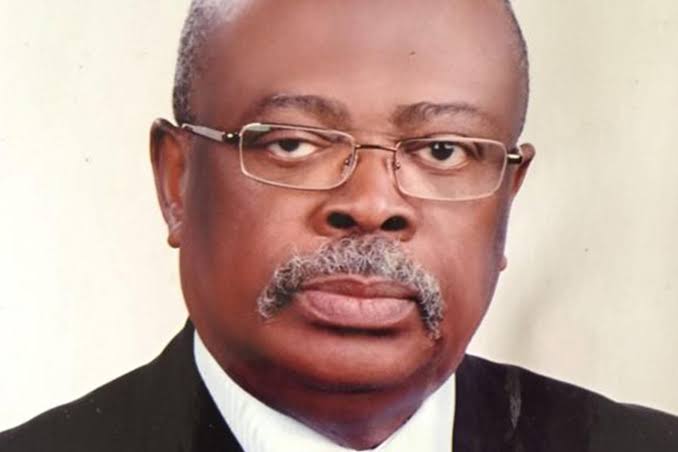
Socio-critic and former Commissioner of Police in Lagos State, Alhaji Abubakar Tsav, is dead.

Television Nigerian gathers that his Personal Assistant, Torkuma Uke, confirmed his death to newsmen in Makurdi.

Tsav who was appointed Commissioner of Public Complaint Commission in Benue by President Muhammadu Buhari during his first tenure was said to have died at the Federal Medical Centre in Makurdi on Monday afternoon after a brief illness.

The deceased was aged 82.

His third son, Sani Abubakar Tsav, also confirmed his father’s death to newsmen stressing that, “he had been ill for sometime now.”

Tsav’s son said his father will be buried at the Muslim Cemetery in Makurdi according to his wishes.

Many sympathizers including the State Commissioner of Police, Garba Mukaddas, were spotted at the mosque where the late Tsav’s body laid for prayers.

How Buratai’s presence in the theatre of war boosted troops morale for monumental successes in two months – CISS report

0

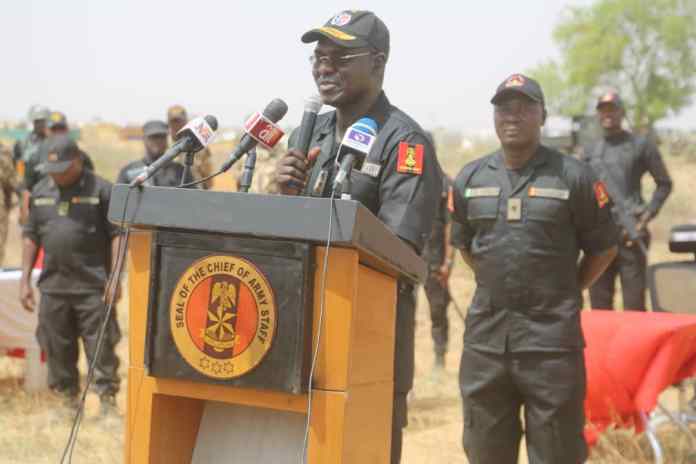
A report by the Centre for International and Strategic Studies (CISS) has revealed how the Chief of Army Staff (COAS), Lt. Gen. Tukur Buratai’s presence in the Northeast for two months triggered a monumental turnaround in the fight against Boko Haram/ISWAP.

Co-signed by its Chancellor, Prof. Ahmed Danfulani and Senior Research Fellow, Dr Samson Bello, the Centre said the COAS’ relocation to the theatre of operations provided the much-needed morale booster for the troops to edge closer to victory.

According to CISS, the result is evident as over 250 insurgents have surrendered voluntarily due to immense offensives by the troops while no fewer than 1,200 lost their lives to the Nigerian Army’s superior firepower.

It added that 600 women and children have been freed from Boko Haram captivity, thanks to the renewed commitment by the Army in its well coordinated onslaught led by the Chief of Army Staff himself.

The Centre, however, urged the COAS and his troops to sustain the momentum, adding that the war against terrorism would end in no distant time.

Read full report below:

Introduction:

The Centre for International and Strategic Studies in its documentation of the Boko Haram war in Nigeria for reference and research purposes has been undertaking bi-monthly reports on the war against terrorism and the operations of the Nigerian Military in North-East Nigeria.

This report is designed to be encompassing to reflect the various aspect of the war as well as the commitment from the Nigerian Military in the prosecution of the war, the commitment of the political leadership in the country, the commitment of the International Non-Governmental Organizations, as well as the commitment of humanitarian agencies and the interventionist agencies.

The War against Terrorism in North-East Nigeria:

The Boko Haram crisis in Nigeria assumed a violent dimension in 2009 when the group began its violent campaign against the Nigerian state. From 2009 to date, the number of casualties has been mind-boggling that has resulted in the death of hundreds of thousands, and as well as the displacements of millions of people in North-East Nigeria.

Successive administrations in Nigeria from 2009 indeed introduced measures to counter the threats posed by the Boko Haram insurgent group. However, the group continued to gain popularity amongst the youthful population of North-East Nigeria, which indeed translated to a swell in their ranks.

The Boko Haram group gained affiliations to terrorist networks outside Nigeria, and this saw to an increment in their sophistication in terms of operational style, the sophistication of their arms and ammunition, war tanks and technical know-how in the entrenchment of violence across not just North-East Nigeria, but in Nigeria as a whole as the other parts of the country witnessed Boko Haram attacks continuously.

The Federal Capital Territory of Nigeria was not spared as critical government infrastructures came under the attack of the Boko Haram group, including schools, places of worship, motor parks, the headquarters of the Nigerian Police Force, the headquarters of the United Nations in Nigeria and other areas of public concerns. There was also incessant cases of suicide bombings that resulted in the deaths of innocent people across the divide in Nigeria.

The Boko Haram group also resulted in the kidnapping of schoolboys and girls from their dormitories which attracted global condemnation. The activities of the Boko Haram group festered due to the lack of political commitment from the authorities who viewed their activities as propaganda.

How the Nigerian Military has sustained the War Against Terrorism:

The Nigerian Military has continued to sustain war against the threats posed by the Boko Haram group through a combination of factors. The coming of the administration of President Muhammadu Buhari in 2015 proved to be the game-changer in the war against Boko Haram terrorism in Nigeria.

This political will exhibited by the administration was manifest in the overhauling of the security apparatus in the country starting with the appointments of new Service Chiefs, the relocation of the military command from the Federal Capital Territory to Borno State, as well the reequipping of the Military with modern-day arms and ammunitions to confront the Boko Haram terrorist group.

In 2016, the Nigerian Military gained ascendency over the Boko Haram group with the capture of its operational headquarters in Sambisa Forest, as well as the capture and killing of some of its key commanders in the various operations carried out by the Nigerian Military.

The Nigerian Military also recaptured the over 16 local government areas hitherto under the control of the Boko Haram group. This feat was achieved through the combined efforts of the various security agencies with support from the political authorities at the federal and state levels in Nigeria.

This trend continued till date with the Boko Haram group restricted to the fringes of the Lake Chad Basin region from where they regroup and launch attacks in Nigeria. It is succinct to state that the Nigerian Military has indeed displayed acts of bravery in reducing the threats posed by the Boko Haram group in Nigeria to the barest minimum through laudable initiatives as well as the professionalization of its operations in line with the rules of engagement in warfare.

The role of the various Service Chiefs in the coordination and persecution of the war against terrorism has been outstanding, and this has resulted in the multiple gains recorded so far. The various rescue operations carried out by the Nigerian Military has seen to the rescue of hundreds of thousands of women and children as well as elderly ones held captive by the Boko Haram group.

There has also been lots of emphasis on the welfare of the troops by the military authorities. This fact is partly responsible for the renewed vigour in the prosecution of the Boko Haram war by the Nigerian forces.

Timeline of Events/Successes by the Nigerian Military in the War Against Terrorism in Nigeria:

The Nigerian Military has indeed made considerable gains in the War against terrorism in Nigeria. From the reports gathered in the field, it can be stated the from 2016 to date; the Nigerian Military was able to redefine the War against Terrorism in Nigeria by ultimately rendering the Boko Haram group ineffective and confined to their hideouts in the fringes of the Lake Chad Basin Region.

In the last two months, the gains recorded are phenomenal with the relocation of the Chief of Army Staff, Lt. Gen. Tukur Buratai to the theatre of operations in North-East Nigeria. The number of terrorist that surrendered in the last two months stands at a figure of 250, while those killed by the Nigerian Military stands at over 1200 in the past two months of intensified military operations led by the Chief of Army Staff in North-East Nigeria.

In the last two months, the various rescue operations of the Nigerian Army has led to the rescue of over 600 women and children from Boko Haram captivity spread across multiple locations in North-East Nigeria. This feat was as a result of the renewed commitment by the Nigerian Army in its onslaught against the Boko Haram group that was coordinated by the Chief of Army Staff.

The presence of the Chief of Army Staff in the theatre of operations has indeed boosted the morale and operational effectiveness of the Nigerian Military in North-East Nigeria. The troops have been continually engaging the Boko Haram group, and this has led to scores of overtures made by the Boko Haram fighters signifying their willingness to dialogue for a ceasefire.

Recommendations:

The routine presence of the Chief of Army Staff in the theatre of operations in North-East Nigeria, which had been a significant strategy of the Nigerian Army leadership has shown a significant impact on the war against Boko Haram insurgency in North-East Nigeria. This must be sustained as a culture and spread across the whole armed forces and security apparatus in Nigeria.

The precarious situation that Nigeria has found herself demands that all state actors must take the welfare of their personnel seriously and must be in the trenches with the troops providing psychological support using the example of the Chief of Army Staff and the Nigerian Army.

It must be stated that if the leadership of other security agencies take a cue from the Nigerian Army experience, the myriads of security challenges would be nipped in the bud. If the Inspector General of Police moves in with its personnel in the forest combing for bandits and other criminal elements, there would be a significant improvement in the security situation in the country.

If the Comptroller General of Immigration occasionally mans the borders with its officers would reduce incidences of smuggling and other trans border-related crimes in the country.

There is a need for greater synergy between the local political leadership and the Military. This has been seen from the constant collaboration between the Military and the current political leadership in northeast Nigeria.

This cordial relationship has helped to eliminate mistrust between the Military and the political leadership which worked to the advantage of the terrorists in the past. Therefore there is a need for a deliberate effort by the political leadership in conjunction with the Nigerian Police and the Department of State Security to take control of recovered territories in North-East Nigeria to return life to the communities and make it impossible for fleeing terrorists to regroup against the Nigerian state.

Interventionist agencies in the North-East must speed up developmental activities to help the populace in bouncing back to life by providing the needed infrastructures that would encourage the displaced people to return to their communities.

Conclusion:

The operations of the Nigerian Military in North-East Nigeria can be described as effective in curtailing the various threats posed by the Boko Haram terrorist group. The various rescue operations that have led to the release of several women and children held in captivity by the Boko Haram group lends credence to the strategic importance of the role of leadership in the War against terrorism in Nigeria.

The example by the Chief of Army Staff is indeed a worthy example that must be emulated by heads of security agencies in the country in ensuring that our officers and men are in high spirits in pursuant of the task of maintaining law and order in the country.

It is, therefore, the considered opinion of the Centre for International and Strategic Studies that the gains recorded by the Nigerian Military in the War against terrorism in Nigeria is strategic and in line with global best practices that emphasizes teamwork, patriotism, dedication and zeal. These are all the hallmark of the leadership of the Nigerian Military since 2015.

We wish to state that if this momentum is sustained, Nigeria would win the war against terrorism in no distant time.
Buratai’s relocation to Northeast has made a difference in Boko Haram fight – Ndume

0

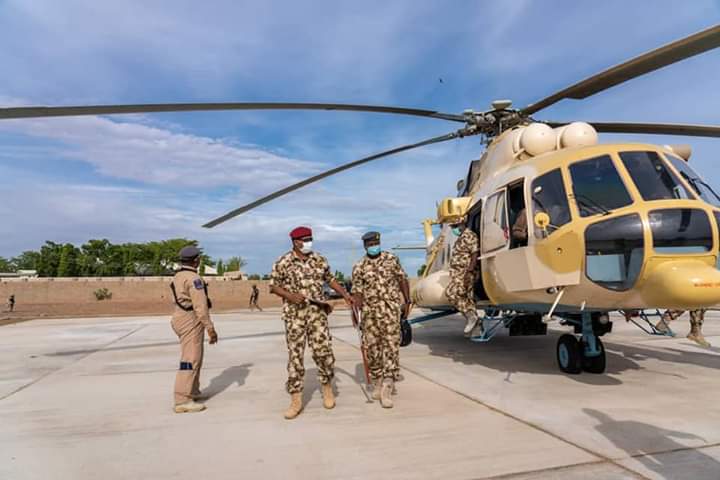
Sen. Ali Ndume (APC-Borno), says the relocation of Chief of Army Staff (COAS) Lt.-Gen. Tukur Buratai to the Northeast has significantly impacted on the fight against Boko Haram insurgency.

Ndume, who is the Chairman of Senate Committee on Nigerian Army made this known in Maiduguri on Monday while speaking with newsmen.

He said many successes had been recorded within the two months stay of Buratai in the area, saying that what was remaining was the final uprooting of the insurgents in Lake Chad fringes, Sambisa forest and Mandara Mountain.

“Definitely the coming of COAS has maa de visible difference. He has taken a break after two months, to re-strategise because the remaining areas are delicate, because they are mixed with civilians being held hostage by the insurgents.

“The army needs to sort that out to avoid high level of collateral damage; they need to strategise for the last push,” Ndume said.

He added that the recent sporadic attacks on soft targets by the insurgents were normal as they become desperate after being defeated by the military.

Ndume lamented the delay in releasing funds for military capital projects, adding that the military and other security agencies needed to be given all the needed support to discharge their assigned tasks.

“I don’t know what happened from Thursday that I left Abuja, but before Thursday you can quote me on that, no money has been released to the army as their capital allocation 2020 and we are in June.

“The president has been giving presidential orders on tackling insecurity but some people responsible for providing the army with funding are not responding. That’s what is baffling me,” he said.

Ndume lauded Gov. Babagana Zulum for his commitment towards reconstruction and resettlement of people in areas affected by the insurgency before the farming season.

“I want to personally appreciate the governor for his courage and determination, resilience and of course commitment to making sure that he returns the people of Kirawa, Ashegishar and Ngoshe back to their homes.

“Already the governor is waiting for the military to go-ahead go ahead for the state Ministry of Reconstruction, Rehabilitation and Resettlement to move in,” he said.

Ndume said that he had been making contact with the military towards deployment of soldiers in Kirawa, a border community so that Nigerians taking refuge in Cameroon can return home and continue their farming.

Over 1400 Boko Haram terrorists killed in the Northeast – Buratai

0

Over 1400 Boko Haram terrorists have been neutralized in the NorthEast.

This is one of the several successes recorded by the Nigerian military according to the Chief of Army Staff, Lt- Gen Tukur Buratai.

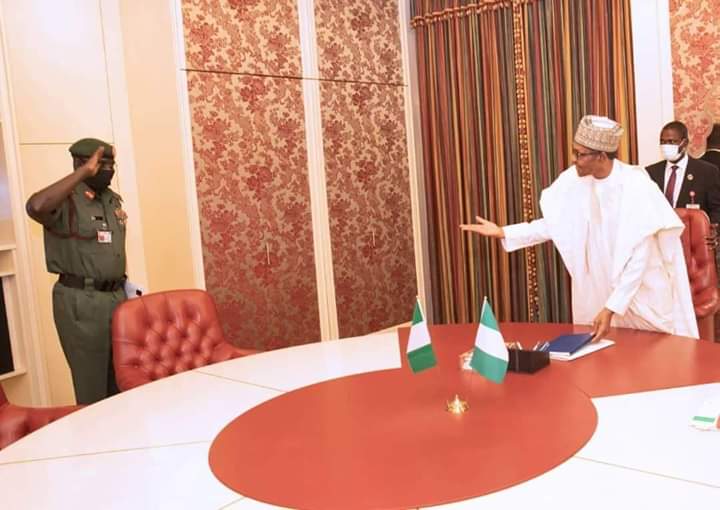
The Army Chief who has been with the troops on the frontline spoke to State House correspondents after a meeting with President Muhammadu Buhari at the State House, Abuja.

General Buratai expressed joy with the morale and performance of the troops insisting that the military is determined to rid all parts of the country of terrorism and banditry.

COVID-19: Infected Abia Governor moved to Abuja

0

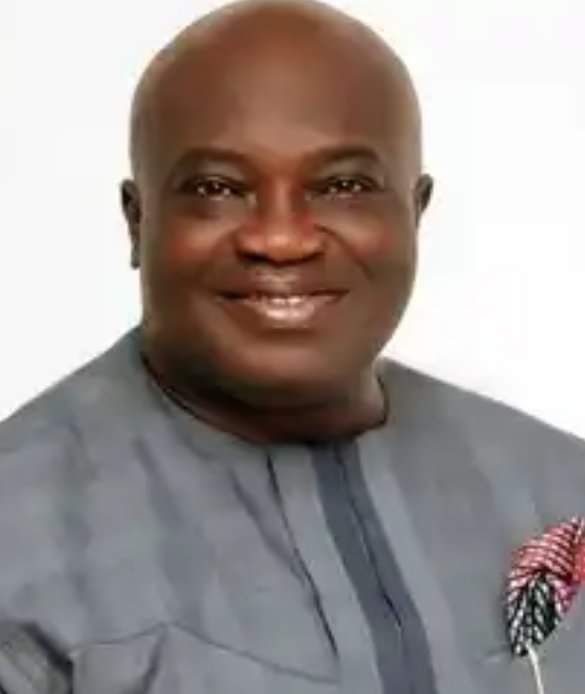
Abia State Governor, Okezie Ikpeazu, has moved out of the government house in Umuahia after testing positive for Coronavirus (COVID-19), APR can report.

A government official who didn’t want to be mentioned told this website that Ikpeazu was moved out of the governor’s lodge to Abuja following the confirmation that he was COVID-19 positive.

The governor had recently fallen sick, prompting him to undergo two separate tests for the virus.

While the first test returned negative, a second test carried out on him by the Nigeria Centre for Disease Control (NCDC) returned positive.

Bush, Romney won’t support Trump for second term

0

Former President George W. Bush and Sen. Mitt Romney (R-Utah) will not support President Trump’s reelection, The New York Times reported at the weekend.

Several Republican leaders are struggling with whether to endorse the sitting president in his reelection campaign, with some are considering endorsing or voting for presumptive Democratic nominee Joe Biden.

Recent events involving Trump’s response to the protests against police treatment of minority populations and the coronavirus pandemic have inspired an urgency among Republicans to decide whether to publicly discuss their voting plans for November, according to the Times.

People familiar with George W. Bush’s thinking told the newspaper he will not back the president’s reelection and that his brother, former Florida Gov. Jeb Bush, is not sure how he will vote.

Freddy Ford, a spokesman for the former president, told the Times that George W. Bush would not get involved in the elections and only speak on policy issues, like he did last week when he said the U.S. must “examine our tragic failures” on race.

Romney will not support Trump and is considering writing in his wife’s name again or casting a different ballot, according to the Times.

The 2012 Republican nominee told The Atlantic in February he would not back the president after he voted to convict him of abuse of power during the Senate impeachment trial.

Retired Gen. Colin Powell, who served as the secretary of State under Bush, announced on CNN’s “State of the Union” Sunday that he will be voting for Biden in November because Trump “lies about things.”

Powell’s declaration of support for Biden sparked sharp rebuke from Trump himself, who tweeted that the retired general was “a real stiff who was very responsible for getting us into the disastrous Middle East Wars.”

Another well-known GOP member, Cindy McCain, the widow of Sen. John McCain (R-Ariz.), is likely to back Biden in the race, but it’s unclear how public she will make her decision, the Times reported.

The Times noted that none of these Republicans had voted for the president in 2016 but their criticisms stand out because they are now denouncing a sitting president.

Representatives for former Speakers Paul Ryan (R-Wis.) and John Boehner (R-Ohio) declined to say how they would vote.

Biden plans to release his “Republicans for Biden” coalition later in the campaign after working to unify the Democratic Party behind him, Democrats familiar with the campaign’s planning told the Times.

The reported debate among Republicans comes after former Defense Secretary Jim Mattis issued a blistering statement condemning Trump’s handling of the protests over George Floyd’s death.

Sen. Lisa Murkowski (R-Alaska) also said last week that she was “struggling” on whether to vote for the president’s reelection. (thehill.com)

Centre hails COAS’ presence, incredible impact in the northeast, urges other security chiefs to lead by example

0

The Centre for International and Strategic Studies (CISS) has hailed the Chief of Army Staff (COAS), Lt. Gen. Tukur Buratai for turning things around in the war against Boko Haram/ISWAP terrorists since relocating to the northeast.

The Centre gave this commendation in its bi-monthly report on the state of the war against terrorism and the operations of the Nigerian Military co-signed by its Chancellor, Prof. Ahmed Danfulani and Senior Research Fellow, Dr Samson Bello.

According to CISS, the Nigerian troops have made tremendous progress in the war against the terrorists since 2015 but gained massive momentum in the last two months.

Highlighting the achievements, the Centre revealed that while over 250 insurgents surrendered voluntarily due to immense offensives of the troop, no fewer than 1200 have been killed in different operations led by the COAS.

The Army Chief’s doggedness, bravery and resilience, the Centre reckoned has rubbed off on his troops whose morale and operational effectiveness have been boosted.

In other to achieve similar result, CISS, however, urged the leadership of other security agencies to take a cue from the COAS to address the myriads of security challenges in the country.

It added that Lt. Gen. Buratai is indeed “ a worthy example that must be emulated by heads of security agencies in the country in ensuring that our officers and men are in high spirits in pursuant of the task of maintaining law and order”.

Read full report below:

Introduction:

The Centre for International and Strategic Studies in its documentation of the Boko Haram war in Nigeria for reference and research purposes has been undertaking bi-monthly reports on the war against terrorism and the operations of the Nigerian Military in North-East Nigeria.

This report is designed to be encompassing to reflect the various aspect of the war as well as the commitment from the Nigerian Military in the prosecution of the war, the commitment of the political leadership in the country, the commitment of the International Non-Governmental Organizations, as well as the commitment of humanitarian agencies and the interventionist agencies.

The War against Terrorism in North-East Nigeria:

The Boko Haram crisis in Nigeria assumed a violent dimension in 2009 when the group began its violent campaign against the Nigerian state. From 2009 to date, the number of casualties has been mind-boggling that has resulted in the death of hundreds of thousands, and as well as the displacements of millions of people in North-East Nigeria.

Successive administrations in Nigeria from 2009 indeed introduced measures to counter the threats posed by the Boko Haram insurgent group. However, the group continued to gain popularity amongst the youthful population of North-East Nigeria, which indeed translated to a swell in their ranks.

The Boko Haram group gained affiliations to terrorist networks outside Nigeria, and this saw to an increment in their sophistication in terms of operational style, the sophistication of their arms and ammunition, war tanks and technical know-how in the entrenchment of violence across not just North-East Nigeria, but in Nigeria as a whole as the other parts of the country witnessed Boko Haram attacks continuously.

The Federal Capital Territory of Nigeria was not spared as critical government infrastructures came under the attack of the Boko Haram group, including schools, places of worship, motor parks, the headquarters of the Nigerian Police Force, the headquarters of the United Nations in Nigeria and other areas of public concerns. There was also incessant cases of suicide bombings that resulted in the deaths of innocent people across the divide in Nigeria.

The Boko Haram group also resulted in the kidnapping of schoolboys and girls from their dormitories which attracted global condemnation. The activities of the Boko Haram group festered due to the lack of political commitment from the authorities who viewed their activities as propaganda.

How the Nigerian Military has sustained the War Against Terrorism:

The Nigerian Military has continued to sustain war against the threats posed by the Boko Haram group through a combination of factors. The coming of the administration of President Muhammadu Buhari in 2015 proved to be the game-changer in the war against Boko Haram terrorism in Nigeria.

This political will exhibited by the administration was manifest in the overhauling of the security apparatus in the country starting with the appointments of new Service Chiefs, the relocation of the military command from the Federal Capital Territory to Borno State, as well the reequipping of the Military with modern-day arms and ammunitions to confront the Boko Haram terrorist group.

In 2016, the Nigerian Military gained ascendency over the Boko Haram group with the capture of its operational headquarters in Sambisa Forest, as well as the capture and killing of some of its key commanders in the various operations carried out by the Nigerian Military.

The Nigerian Military also recaptured the over 16 local government areas hitherto under the control of the Boko Haram group. This feat was achieved through the combined efforts of the various security agencies with support from the political authorities at the federal and state levels in Nigeria.

This trend continued till date with the Boko Haram group restricted to the fringes of the Lake Chad Basin region from where they regroup and launch attacks in Nigeria. It is succinct to state that the Nigerian Military has indeed displayed acts of bravery in reducing the threats posed by the Boko Haram group in Nigeria to the barest minimum through laudable initiatives as well as the professionalization of its operations in line with the rules of engagement in warfare.

The role of the various Service Chiefs in the coordination and persecution of the war against terrorism has been outstanding, and this has resulted in the multiple gains recorded so far. The various rescue operations carried out by the Nigerian Military has seen to the rescue of hundreds of thousands of women and children as well as elderly ones held captive by the Boko Haram group.

There has also been lots of emphasis on the welfare of the troops by the military authorities. This fact is partly responsible for the renewed vigour in the prosecution of the Boko Haram war by the Nigerian forces.

Timeline of Events/Successes by the Nigerian Military in the War Against Terrorism in Nigeria:

The Nigerian Military has indeed made considerable gains in the War against terrorism in Nigeria. From the reports gathered in the field, it can be stated the from 2016 to date; the Nigerian Military was able to redefine the War against Terrorism in Nigeria by ultimately rendering the Boko Haram group ineffective and confined to their hideouts in the fringes of the Lake Chad Basin Region.

In the last two months, the gains recorded are phenomenal with the relocation of the Chief of Army Staff, Lt. Gen. Tukur Buratai to the theatre of operations in North-East Nigeria. The number of terrorist that surrendered in the last two months stands at a figure of 250, while those killed by the Nigerian Military stands at over 1200 in the past two months of intensified military operations led by the Chief of Army Staff in North-East Nigeria.

In the last two months, the various rescue operations of the Nigerian Army has led to the rescue of over 600 women and children from Boko Haram captivity spread across multiple locations in North-East Nigeria. This feat was as a result of the renewed commitment by the Nigerian Army in its onslaught against the Boko Haram group that was coordinated by the Chief of Army Staff.

The presence of the Chief of Army Staff in the theatre of operations has indeed boosted the morale and operational effectiveness of the Nigerian Military in North-East Nigeria. The troops have been continually engaging the Boko Haram group, and this has led to scores of overtures made by the Boko Haram fighters signifying their willingness to dialogue for a ceasefire.

Recommendations:

The routine presence of the Chief of Army Staff in the theatre of operations in North-East Nigeria, which had been a significant strategy of the Nigerian Army leadership has shown a significant impact on the war against Boko Haram insurgency in North-East Nigeria. This must be sustained as a culture and spread across the whole armed forces and security apparatus in Nigeria.

The precarious situation that Nigeria has found herself demands that all state actors must take the welfare of their personnel seriously and must be in the trenches with the troops providing psychological support using the example of the Chief of Army Staff and the Nigerian Army.

It must be stated that if the leadership of other security agencies take a cue from the Nigerian Army experience, the myriads of security challenges would be nipped in the bud. If the Inspector General of Police moves in with its personnel in the forest combing for bandits and other criminal elements, there would be a significant improvement in the security situation in the country.

If the Comptroller General of Immigration occasionally mans the borders with its officers would reduce incidences of smuggling and other trans border-related crimes in the country.

There is a need for greater synergy between the local political leadership and the Military. This has been seen from the constant collaboration between the Military and the current political leadership in northeast Nigeria.

This cordial relationship has helped to eliminate mistrust between the Military and the political leadership which worked to the advantage of the terrorists in the past. Therefore there is a need for a deliberate effort by the political leadership in conjunction with the Nigerian Police and the Department of State Security to take control of recovered territories in North-East Nigeria to return life to the communities and make it impossible for fleeing terrorists to regroup against the Nigerian state.

Interventionist agencies in the North-East must speed up developmental activities to help the populace in bouncing back to life by providing the needed infrastructures that would encourage the displaced people to return to their communities.

Conclusion:

The operations of the Nigerian Military in North-East Nigeria can be described as effective in curtailing the various threats posed by the Boko Haram terrorist group. The various rescue operations that have led to the release of several women and children held in captivity by the Boko Haram group lends credence to the strategic importance of the role of leadership in the War against terrorism in Nigeria.

The example by the Chief of Army Staff is indeed a worthy example that must be emulated by heads of security agencies in the country in ensuring that our officers and men are in high spirits in pursuant of the task of maintaining law and order in the country.

It is, therefore, the considered opinion of the Centre for International and Strategic Studies that the gains recorded by the Nigerian Military in the War against terrorism in Nigeria is strategic and in line with global best practices that emphasizes teamwork, patriotism, dedication and zeal. These are all the hallmark of the leadership of the Nigerian Military since 2015.

We wish to state that if this momentum is sustained, Nigeria would win the war against terrorism in no distant time.
NAPTIP publishes names, photos of convicted rapists

0

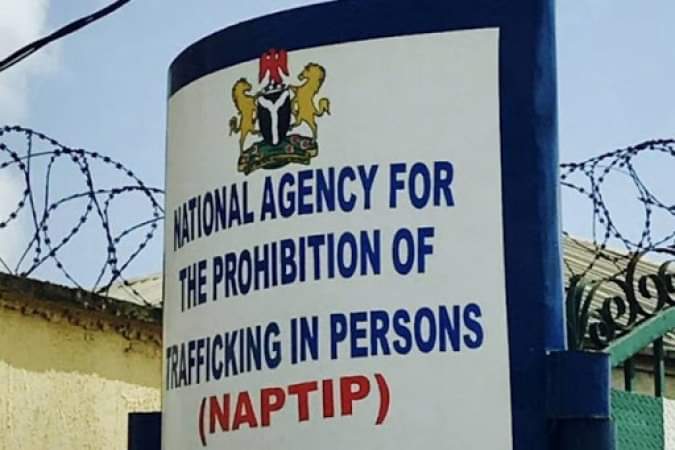
The National Agency for the Prohibition of Trafficking in Persons (NAPTIP) has published the names and photos of convicted sex offenders, including rapists.

The names and photos were published via the agency’s Twitter handle on Sunday. From the names published, six offenders were convicted in 2019 while four others were convicted in 2020.

A further breakdown of the published names showed that the offenders are from Ekiti, Abuja, Kano, and Lagos states. Among those named is a former supervisor at Chrisland School, Adegboyega Adenekan, 47, who was jailed 60 years for defiling a two-year-old child.

NAPTIP in the post assured Nigerians that it was committed to ending rape and sexual abuse.

“Here are the identities of convicted sex offenders as seen on the Nigeria Sex Offender Register. @naptipnigeria is determined to naming and shaming all sex offenders. More names will be published as the convictions keep coming in,” the agency tweeted.

Earlier, NAPTIP Director-General, Julie Okah-Donli, urged Nigerians to report cases of rape within their vicinity to the agency or the nearest police station.

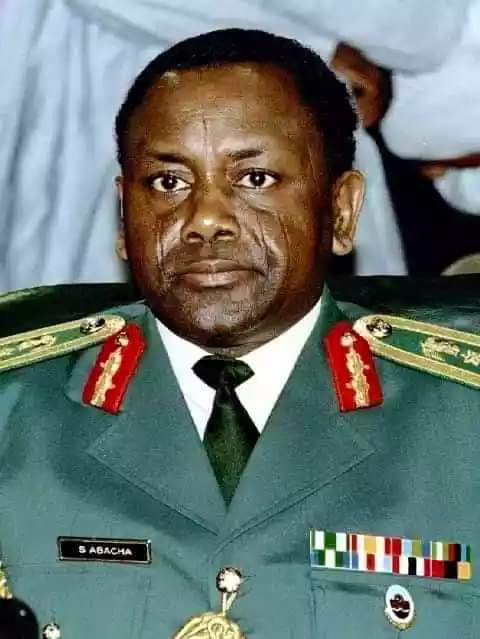
General Sani Abacha: 22 years after

0

He came at a time Nigerians were praying for a ‘change’. When he ascended the throne on November 17, 1993, it was with an air of discreet gentility. But five years later, Nigerians were writhing in pain.

GABRIEL AKINADEWO writes on the 22th anniversary (June 8, 1998) of the day General Sani Abacha became history.

He never pretended to be in the class of an academic professor. He never told anyone that he had the intellectual capacity to solve Nigeria’s problems. He was, first and last, a soldier. A crude one for that matter. His hold on Nigerians was unquestionably colossal, brutal and maximum.

When General Sani Abacha became the 10th Commander-in-Chief of the most-populous black nation on November 17, 1993, all those who knew him believed that it wouldn’t be long before Nigerians knew that they were in for a tough time. And for close to five years, Abacha really showed them the stuff he was made of.
22th anniversary: Day Abacha became history

The first thing he did was to trick the winner of the June 12, 1993 presidential election, the late Chief Moshood Kashimawo Olawale (M.K.O.) Abiola, to send representatives that would serve in his regime.

This pact led to the entrance of Chief Ebenezer Babatope, Alhaji Lateef Jakande and Chief Olu Onagoruwa as ministers.
When Abiola realised that he was riding on a tiger’s back, it was too late. With agitation for the revalidation of Abiola’s mandate reaching a peak, Abacha came out smoking.
Some people were sent into exile, a few killed. Others were clamped in detention. Nigerians were not sure of their future.
Abacha’s style of leadership, especially his foreign policy, led to the suspension of Nigeria from The Commonwealth.
Nigeria became a pariah nation.
What he lacked at home, he preached abroad. There was no democracy in the land but the dark-goggled General went to Liberia to witness the inauguration of Charles Taylor as President. He also sent soldiers to Sierra Leone to restore Teejan Kabba.
To his credit, Abacha tackled youth restiveness in the Niger Delta. All the militants became ‘born again’ youths when they realised he was ready to level the South-South geo-political zone with his no-nonsense aggressive military policy.
Nigeria also won the Nations Cup in 1994 and participated in the World Cup for the first time same year. In 1996, the Under-23 football team won the gold medal during the Atlanta Olympics Games with Chioma Ajunwa winning gold in the long jump.
22th anniversary: Day Abacha became history

When the British Airways engaged in a battle of supremacy with the Federal Military Government (FMG), Abacha sent the airline packing.
It was in this state of panic that Nigeria was when something happened on June 8, 1998.
Those who referred to Abacha as the most hated ruler in Nigerian history, in and out of office, were vindicated on that Monday when the news of his death hit the streets.
There is the age-long belief that you don’t rejoice over the dead, an unwritten rule that you must not speak ill of the dead.
But 22 years ago, Nigerians flouted that rule. To them, they were only following the footsteps of Abacha who never respected any rule while in office.
22th anniversary: Day Abacha became history

On June 7, 1998, Abacha received the Leader of Palestine Liberation Organisation (PLO), the late Yasser Arafat, at the Nnamdi Azikiwe International Airport, Abuja.
Arafat was on his way to attend a meeting of the Organisation of African Unity (OAU), now African Union (AU), in Burkina Faso.
22th anniversary: Day Abacha became history

That was the last time Nigerians saw Abacha alive.
The next day, the main event in Abuja was the official opening of a three-day seminar on a new information strategy. Abacha was billed to declare it open at the International Conference Centre (ICC), Abuja.
As usual, security was very tight. Stern-looking soldiers and security men, some wearing Russian-made long coats, frisked journalists and participants entering the hall.
Obviously, they were oblivious of what happened a few hours earlier at The Villa.
22th anniversary: Day Abacha became history

Although Abacha suffered from liver cirrhosis, there were various versions of the circumstances surrounding the death of one of the most successful coup plotters in Nigerian history.
For reasons bordering on the phobia of power loss, he snubbed medical options of treating himself properly abroad.
Known as The Khalifa, he relied on special prayers from marabouts, mullahs, sorcerers and spiritualists from Saudi Arabia, Egypt, Sudan, Chad and Niger.
Aside collecting money and contracts, they couldn’t save him that day.