Home Blog Page 2374

Insecurities and our guilty elites

0

By Philip Attah

The Holy scriptures admonishes us in Matthew 5:9 that “Blessed are the peacemakers, for they shall be called sons of God.” It is a sacred charge on all humanity to be partakers in the process of restoration of peace anywhere it is punctured. God Himself acknowledges the inevitability of wars and conflicts, precipitated by crisis among people, which culminates into what we generally categorize as insecurities.

But the King of the universe and King of Kings has told us through His messengers that “For everything there is a season, and a time for every matter under heaven: a time to be born, and a time to die; a time to plant, and a time to pluck up what is planted; a time to kill, and a time to heal; a time to break down, and a time to build up; a time to weep, and a time to laugh; a time to mourn, and a time to dance; a time to cast away stones, and a time to gather stones together; a time to embrace, and a time to refrain from embracing,” Ecclesiasticus 3:1-22.

Nigeria is facing dire and very serious resurgent insecurity situation in parts of the country. From Boko Haram/ISWAP terrorism to armed banditry, herdsmen marauders, ethno-religious and communal clashes to acts of kidnapping, armed robberies among others. The severity of the insecurity dilemma is well known to every Nigerian.

We have indulged in this self-destruction for too long and it is time to heal and reconcile ourselves and the nation. But some Nigerians are shirking on this divine command for egotistic interests.

President Muhammadu Buhari and the Nigerian Military have battled this insecurity menace in the last five years with an exceptional determination and commitment. For reasons best known to the actors of this illegal warfare on the Nigerian state, all entreaties and pleas to their conscience to drop their arms and ammunitions against their compatriots have failed to touch their hearts. Every day, fresh plots of horrendous atrocities on the Nigerian people are hatched and delivered on the country by these devils and their veiled paymasters.

For a country desirous of peace, its citizens collectively unite to confront insecurity threats. Peace cannot just descend from the skies; we must consciously work to have it.

But the thinking in Nigeria is ironic and different. All Nigerians erroneously think, the responsibility of blighting the fires of insecurities which have engulfed our land is the sole burden of Mr. President, the Service Chiefs and the troops on the battlefield. The rest of Nigerians are apathetic to it and have only assigned to themselves the infantile and inglorious role of wailing over the killings and blaming other leaders.

Some of those who blame Mr. President and disparage the Service Chiefs for not doing enough are also leaders in their respective capacities who have a role to play in the entrenchment of peace and security in the country. But they have unrepentantly ignored it.

We have forgotten that there is nowhere wars or conflicts are settled through military might alone. The dialogue table is the most fertile and potent weapon of resolving issues of war than guns. That’s why Malvin Gaye has told us that “War is not the answer, for only love can conquer hate.”

But we are all accomplices in failing ourselves. Everyone is guilty for failing our people and the nation. No matter how much we pretend or try to conceal this reality, but it smoulders with the flames of our guilt. All the stakeholders or leaders of Nigeria are guilty in same decree we delight in blaming the President or anyone else.

How long shall we continue with this dodgy posture on rising in unison to assail the insecurities besieging us? Depending on Mr. President to tackle it alone is like waiting for a tomorrow that may never come. Why have other leaders relinquished their basic and crucial roles of intervention in the respective capacities they preside over the people.

A few days ago, I was extremely cold, upset and astonished with the blitzkrieg of media criticisms of President Buhari when he jetted out to the Republic of Mali to officially mediate in the crisis in that country generated by electoral dispute. Buhari did not decide to busy himself with internal matters of another African country because he has finished solving all the problems of Nigeria. But the President had to act under the banner of ECOWAS and officially as demanded of him.

But some Nigerians deridingly scolded President Buhari and described his actions as abandoning crisis in his country to mediate on the same issues in another country. It is the loud confirmation of our posture of abandoning the entire insecurity crisis in Nigeria to the President alone. This is foolhardy.

None of the critics gave a thought to the symbolism of the President’s actions, which signifies collective actions to solve crisis of monumental proportion. His actions sent the message that leaders are not left alone to handle conflicts of such dimension and magnitude.

Unfortunately, in Nigeria, we have abandoned insecurities to Mr. President. Some simpletons even feel the President should again wear his military uniform and jump into the jungle to personally battle the armed criminals terrorizing Nigeria because he is the leader of the nation.

Therefore, Civil Society Organizations (CSOs) and activists are silent. When they find it necessary to voice out, they are lamenting or protesting the insecurities in the country. It means these Nigerians can’t think beyond these actions by working on initiatives which can assist government solve the problem of insecurities in Nigeria?

The religious leaders and clerics have also adopted the sit-down look attitude. In fact, some of them even preach inciting sermons in worship places to embolden or lure fresh Nigerians into such crimes against their compatriots, instead of peace. They hardly condemn the actions of the criminals and their sponsors who are dragging our country into this mess or ruination.

And the politicians only exploit the insecurities for politicking advantages. Some are beneficiaries of the insecurities, by using it for commercial value or as a means to grab and permanently hold unto to power. They arm the youths during elections. In the last general elections in the country, some aggressive votes catchers invaded IDPs camp in different parts of the country, manipulated the traumatized and helpless victims of violence to snatch votes.

Traditional rulers have been most disappointing. It is hard to belief that some of them have not only lost their voice, but no initiative of dialogue with subjects or stakeholders to explore ways of complementing government efforts in the fight against insurgencies, armed banditry and other crimes. Regrettably, some of them are even agents of these armed criminals and tormentors of Nigeria.

Bureaucratic bottlenecks are another pain in the neck. For the President to have the National Assembly (NASS)approve budgets for the purchase of weapons for the military to battle insurgencies and insurrections as well as carter for their welfare is usually a tug of war or a combat itself. NASS has refused to grant many requests from the Military to assist them win the war.

Time has come for us to either face the truth or continue with the hellish experiences in our communities. We must begin to collectively act now; we must come together to defeat Boko Haram and the ideology of our killers to appease those the criminals have sent to untimely grave. Excluding ourselves from the battle confronting us is a wrong perception.

Every one of us has a role to play and let’s begin to exercise it now. It is not the responsibility of Mr. President or Service Chiefs exclusively. If we continue with this inclination, it implies that we have all failed ourselves and country. And passing the buck to someone else like Mr. President or the military will do us no good neither can it rescue this nation. For now, we are all guilty. Let’s stop licking our wounds and whining, but embark on appropriate actions.

Attah is a pastor and Christian evangelist based in Abuja.

N-Power: Nigerians hold ‘Thank You Rally’ to Aso Villa

0

… task Minister to sustain Buhari, masses’ confidence in her stewardship

No fewer than 2,000 Nigerians, on Wednesday, held a ‘Thank You Rally’ to the Presidential Villa over the success of the N-Power scheme and other Social Intervention Programmes in the country.

Led by the Concerned Citizens/ N- Power Forum with participants drawn across the 36 states of the federation and the FCT, they expressed gratitude to President Muhammadu Buhari and Minister of Humanitarian Affairs, Disaster Management and Social Development, Hajiya Sadiya Farouq, for the numerous interventions “targeted at the vulnerable and less privileged groupings in the country”.

In his address, president of Concerned Citizens, Ibrahim Kabiru Dallah, extolled President Buhari as a leader with the interest of the people at heart who has displayed ” an unalloyed commitment to the entrenchment of sustainable growth and development”.

Dallah recalled how the National Home Grown School Feeding Programme (NHGSFP), National Cash Transfer Programme (NCTP), Government Enterprise and Empowerment Programme (GEEP) and N-Power, in particular, have affected the common Nigerian.

According to the groups, the feat recorded has been made possible by the commitment, dedication and transparency of Hajiya Farouq.

The Concerned Citizens and N-Power Forum, however, advised the minister not to relent in her service to the country, sustaining the trust of Mr President to ensure total implementation of the various SIPs.

While thanking President Buhari for the N-Power Batch A, B and incoming C, the groups pleaded that the number of intended intakes is increased from 400,000 to one million.

The groups further assured the president and minister of their total support.

Read the full statement below:

I bring warm greetings to everyone here on behalf of the Concerned Citizens/N-Power Forum on this exceptional day and occasion that has seen to the converging of like minds in appreciation to God for the gift of President Muhammadu Buhari to Nigeria.

Our joy knows no bounds. Words alone are not sufficient to express our gratitude to a man that has distinguished himself as a leader of repute in service to the country through the introduction of the various social intervention programmes targeted at the vulnerable and less privileged groupings in the country.

The Concerned Citizens/N-Power Forum is not oblivious of these numerous interventions that has indeed brought about the much-needed relief in the lives of these group of individuals that dots the nook and cranny of Nigeria.

Mr President, to say you haven’t done well would be a sin against God because in all sincerity, your passion towards uplifting the plight of the masses has been well articulated and this indeed gave birth to the various National Social Investment programmes suited to overcome the failings of the past and to enshrine the values and vision of the current administration for graduating its citizens from poverty through capacity building, investment and direct support.

Mr President, the Job Creation and Youth Employment (N-Power), National Home Grown School Feeding Programme (NHGSFP), National Cash Transfer Programme (NCTP), and Government Enterprise and Empowerment Programme (GEEP) have all proven to be invaluable in the lives of our citizens in the sense that the testimonies from these social interventions from the various states in the country are not in short supply.

Mr President, we have come here to inform you that the National Home Grown School Feeding Programme is feeding over 9 million pupils in 24 states in Nigeria. It has also engaged and empowered over 100,000 cooks across the country.

We wish to state that this is indeed phenomenal when we considered the multiplier effect the National Home Grown School Feeding Programme has had on the ecosystem in Nigeria. This is indeed strategic and a manifestation of foresight displayed by you in steering the ship of Nigeria to greatness.

Mr President, the implementation of the National Cash Transfer Programme (NCTP) has been a huge success with the payment of beneficiaries in 20 States, to 297,973 caregivers; being trained by 2,495 Community Facilitators. This is also aside from the conditional cash transfer of N20, 000 to the vulnerable households during the COVID 19 Pandemic lockdown.

Mr President, the joy that radiates in our hearts can be felt in all parts of the country because you have proven yourself as a leader with the interest of the people at heart. You have displayed an unalloyed commitment to the entrenchment of sustainable growth and development, you have also matched your words with actions, and the generality of Nigerians are better for it.

Mr President, the N-Power scheme is another way you have touched the lives of many citizens of Nigeria. This suffices to mention that the Batch A and Batch B streams accommodated 516,600 beneficiaries from various parts of the country. These individuals have benefitted immensely as evident in the contributions they have made towards the success of the programme as well as the skills and knowledge they have gathered throughout the duration of their enlistment in the programme.

We cannot thank you enough for this significant intervention that has catered for the needs of a large chunk of the youthful population in Nigeria. This is also strategic and a display of sound leadership acumen to understand the critical role of the youths in the socio-economic development of Nigeria.

Mr President, while we are still thanking you for the Batch A and B streams, the introduction of the Batch C stream is indeed soul-lifting for the members of the Concerned Citizens/N-Power Forum. This is so because of the enormous impact the commencement of the Batch C stream would have in the polity.

Mr President, as a father and a leader, we cannot be afraid or shy to ask for favours from you. Consequently, we are using the occasion of this rally to extend our endorsement of the Batch C stream of the N-Power Programme and also to plead that the number of intended intakes is increased from 400,000 to one million to be able to accommodate more youths and touch more lives in the country.

Mr President, this plea is with the best of intents because as a group, we are witness to the enormous impact the N-Power initiative has had on the lives of the youths in the country. We are not by any stretch of the imagination in denial that if the number of intake for the Batch C stream is increased to the one million marks, the youths of Nigeria would be eternally grateful to you and other members of your administration that have made the N-Power initiative a huge success.

Mr President, in as much as we are gathered here to thank you immensely, we must not fail to bring to your notice that the success of the various Social Intervention Programmes of your administration has been made possible by the commitment, dedication and transparency of some of your lieutenants in the person of the Honorable Minister of Humanitarian Affairs, Disaster Management and Social Development, Hajia Sadiya Umar Farouq.

The Honorable Minister has been outstanding in the discharge of her duties, and her level of transparency and accountability has seen to the display of confidence in the various social intervention programmes of your administration.

The Concerned Citizens and N-Power Forum wishes to encourage her not to relent in her service to the country as the supervisory minister of the various Social Intervention Programmes and to continue to uphold the confidence and trust of Mr President to ensure that there is 100% implementation of the various Social Intervention Programmes in the country.

Mr President, We thank you once again. It is our earnest prayers that God in His infinite mercies would continue to grant you the grace and the wisdom to lead Nigeria in the right path towards attaining sustainable growth and development.

Mr President, you can always count on the support of the Concerned Citizens/N-Power Forum at all times as we march towards greatness in Nigeria.

Thank You, Mr President and God Bless.


COVID-19: Chloroquine not validated for use, NCDC reacts to video of US-based Nigerian doctor

0
COVID-19: Chloroquine not validated for use, NCDC reacts to video of US-based Nigerian doctor
Dr Stella Immanuel
The Nigeria Centre for Disease Control (NCDC) has reiterated that hydroxychloroquine hasn’t been validated as the cure for COVID-19.
According to the agency’s tweet on Tuesday, some trial drugs show promising results but are yet to be approved for use.
The tweets come after a U.S-based Nigerian medical doctor, Stella Immanuel, claimed Hydroxychloroquine, Zinc and Zithromax could cure coronavirus.
Immanuel had led a team of medical practitioners to the White House, alleging that the malaria drug has been effective in treating patients.
The NCDC, however, clarified that in Nigeria, the use of hydroxychloroquine was limited to clinical trials.
“The centre advised that the usage of this vaccine be restricted to the trials, urging Nigerians to take responsibility and avoid self-medication,” the NCDC said in a tweet.
“Remember, there is NO specific cure for #COVID19. Some trial drugs show promising results but are yet to be validated for use. In Nigeria, the use of hydroxychloroquine is ONLY limited to clinical trials.”
The World Health Organisation(WHO) had also said there was no specific medicine recommended for the prevention or treatment of the virus.

Zulum travels to Damasak, meets returned refugees, supports 674 households

0

… Inspects works on 1,000 shelters

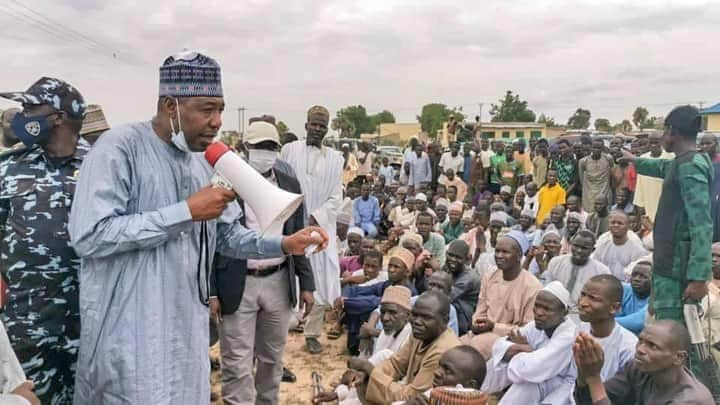
674 displaced households have received food items and cash support from Borno State Governor, Babagana Umara Zulum on Saturday when he travelled to Damask, headquarters of Mobar Local Government Area.

The households were refugees who returned to Damasak from parts of Niger republic. They had fled from attacks by boko haram.

Zulum supervised the distribution of Bags of grains and cooking to each household, in addition to directing the release of N10,000 to each of the families as immediate social protection.

The Governor Zulum in company of the Commissioner for Reconstruction, Rehabilitation and Resettlement inspected ongoing constriction of 1000 shelters that are to accommodate the returning refugees .

He directed the expansion of military trench in order to create room for the construction of more houses for by returning refugees IDPs. Zulum commended the quality and progress of the work.

Beside humanitarian issues, Zulum while in Damasak, visited an abandoned irrigation facility.

The Governor, after inspecting the destroyed facilities and directed the ministry of Reconstruction, Rehabilitation and Resettlement to invite Engineers to look into the possibility of reactivating all machines to restore the irrigation facility so that farmers can make use of it.

Aside agric, Governor Zulum directed the State Road Maintenance Agency to reassess the extent of damage at the famous “kam kura noz3y3” bridge, linking Nigeria with Niger Republic.

Before returning to Maiduguri later in the day, Zulum visited the Damasak General Hospital, and the military task force brigade.

At the brigade, the Governor commended the gallantry of soldiers in their sustained efforts to safeguard the lives, and property of citizens in the town.

He however appealed to the brigade Commander to look into the possibility of allowing people to access their farmlands early, as against the usual practice of 10am.

DSS uncovers plan to destabilize the country

0

The Department of State Services (DSS) has uncovered plans by some persons and groups desirous of taking advantage of latest developments in parts of the country to destabilize it.

Some prominent personalities and socio-cultural groups have resorted to divisive acts through inciting statements aimed at pitting individuals, groups and ethnic nationalities against another. The Service is, without doubt, aware of these plans and their sponsors.

Consequently, it warns that it will no longer tolerate the orchestrations by subversive and unscrupulous elements to cause a breakdown of law and order in the country.

In this regard, it is working assiduously with relevant authorities and sister security and law enforcement agencies to ensure that the sinister objective is not achieved.

The Service reiterates its commitment to the internal security of Nigeria and will, within the confines of the law, decisively deal with planners of the mayhem.

Law abiding citizens are urged to go about their normal businesses and disregard the antics of agents of destabilization.

They should, however, avail the Service and related agencies with useful information about the activities of criminals and groups intent on instigating violence in the country.


Nigeria’s counter-terrorism campaign and the role of its citizens in diaspora

0

By David Onmeje

Email address: daonmeje@outlook.com
Abstract:
This paper is an attempt to explore the various roles that Nigerians based abroad can play in the counter-terrorism campaign as the country grapples with the Boko Haram insurgency. The paper examines how the intellectual, professional and financial resources of the greater number of Nigerians in diaspora can be harnessed to give impetus to the fight against terrorism. The paper concludes that the Nigerian Diaspora have a vital role to play in the counter-terrorism effort of the country and that given the platform, coordination and motivation can have a significant impact on the country’s effort to overcome terrorism.
INTRODUCTION
In 2019, the conflict in North-eastern Nigeria entered its eleventh year. Since 2009, the Boko Haram insurgency has resulted in the death of tens of thousands of civilians and displaced millions across the Lake Chad region, which straddles Cameroon, Chad, Niger, and Nigeria. Although major military campaigns in 2015–2016 succeeded in degrading the group’s territorial control, Boko Haram has proven remarkably adaptable in its guerrilla tactics.
Since the early years of the crisis, Nigeria’s international partners have cautioned that Boko Haram is unlikely to be defeated on the battlefield alone. They have stressed the need for a multidimensional response/approach that tackles the drivers of insecurity in the region, including chronic weaknesses in service delivery, corrupt governance and environmental degradation. However, the perception of limited leverage over Nigerian counterparts, restricted access to the country’s Northeast, and a response to the crisis shaped by the U.S.-led Global War on Terror limited donors’ focus on these governance dimensions on the ground.
In practice, international assistance came late, and donors struggled to identify viable national counterparts for stabilization programs. As a result, their efforts centred on supporting regional military efforts and responding to the large-scale humanitarian crisis.
Since early 2017, military gains and improved security in parts of north-eastern Nigeria have spurred a greater focus on conflict stabilization measures. At the international level, key donors set up the Oslo Consultative Group on the Prevention and Stabilization in the Lake Chad Region to coordinate their response activities. The Lake Chad Basin Commission and the African Union Commission have adopted a regional stabilization strategy, which highlights short-to-medium and long-term stabilization, resilience, and recovery needs.
In parallel, donors have also begun expanding bottom-up stabilization programs aimed at addressing the drivers of insecurity at the local level. These efforts have generally fallen into three main categories: programs aimed at strengthening local conflict prevention and mitigation systems, programs aimed at restoring local governance and essential services, and programs aimed at fostering social cohesion and ensuring the reintegration of former combatants.
However, one area that has not been given much attention is bringing the considerable personnel and skills of Nigerians in the Diaspora in the current counter-terrorism measures in Nigeria. This paper will explore the possible role this important stakeholder can play in Nigeria’s counter-terrorism efforts.
HISTORY OF TERRORISM IN NIGERIA
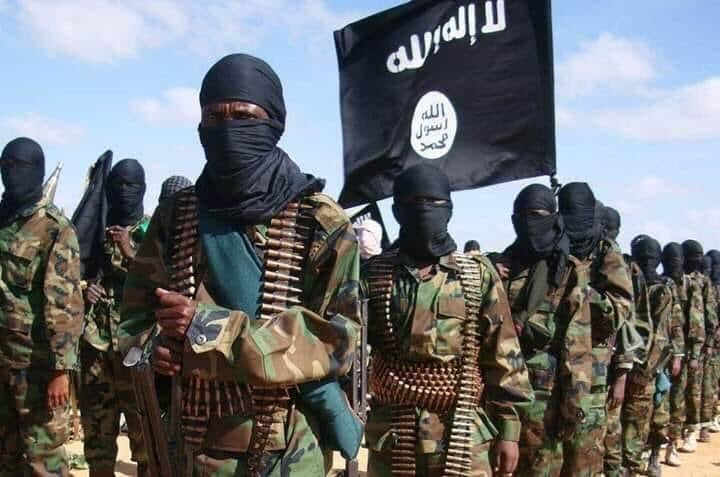
Boko Haram is a militant organization based in North-eastern Nigeria and also active in Chad, Niger and northern Cameroon. The group was founded in 2002 by Mohammed Yusuf upon the principles of the Khawaarij advocating Sharia law.
It turned into a violent extremist group in 2009 and has been responsible for the loss of lives in many parts of Northern Nigeria. Boko Haram previously existed as Jamā’at Ahl as-Sunnah lid-Da’wah wa’l-Jihād. One of the goals of the Boko Haram group is to champion for the establishment of an Islamic State, ruled by strict sharia law primarily in the Northern part of Nigeria where the majority of the populations are Muslims.
Boko Haram believes that democracy is too lenient and violates Islam. It also opposes the Westernization of Nigerian society and also the concentration of the wealth of the country among members of small political elite, mainly in the Christian south of the country. The roots of Boko Haram lie in the Islamic history of northern Nigeria, in which for some 800 years powerful sultanates centred on the Hausa cities close to Kano and the sultanate of Borno (roughly the region of the states of Borno and Yobe together with parts of Chad) constituted high Muslim civilizations.
These sultanates were challenged by the jihad of Shehu Usuman Dan Fodio (that lasted from 1802 to 1812), who created a unified caliphate stretching across northern Nigeria into the neighbouring countries. Dan Fodio’s legacy of jihad is one that is seen as normative by most northern Nigerian Muslims.
The caliphate still ruled by his descendants (together with numerous smaller sultanates), however, was conquered by the British in 1905, and in 1960 Muslim northern Nigeria was federated with mostly Christian southern Nigeria. The Muslim response to the Christian political ascendency was the move during the period of 2000-2003 to impose Sharia in 12 of the northern states in which they predominated. For the most part, the imposition of Sharia brought the previously feuding Muslim groups together, and there was no further use of takfiri (accusations of being non-Muslim).
While the imposition of Sharia did satisfy the official manifestations of Islam in the north (both Sufi and Salafi), it is clear that radicals who were takfiris doctrinally such as members of Boko Haram were left outside. There is no doubt that the suppression operation of 2009, and the killing of Muhammad Yusuf by Nigerian security forces in July of that year, was a turning point for Boko Haram.
The group was frequently said at this time to be defunct. In September 2010 (coinciding with Ramadan), however, Boko Haram carried out a prison break (said to have released some 700 prisoners). After that, the group began operations again. The targeted assassinations are the most revealing, involving political figures, such as Abba Anas bin `Umar (killed in May 2011), the brother of the Shehu of Borno, and secular opposition figures (Modu Fannami Godio, killed in January 2011), but also prominent clerics such as Bashir Kasahara, a well-known Wahhabi figure (killed in October 2010), Ibrahim Ahmad Abdullahi, a non-violent preacher (killed in March 2011), and Ibrahim Birkuti, a well-known famous preacher who challenged Boko Haram (killed in June 2011).
The shootings of these prominent clerics seem to be in accord with Boko Haram’s purification agenda concerning Islam. Boko Haram related violence has mostly been confined to Nigeria’s Northeast, in Adamawa, Borno and Yobe states. It has been most heavily concentrated in Borno, with the brunt of the violence borne by Maiduguri, Gwoza, and Kukawa.
Violence has also become common south and east of Maiduguri, along the border with Cameroon’s Far North Region, and around Lake Chad. There have been sporadic incidents in places such as Nigeria’s Middle Belt and the capital of Abuja that have been attributed to Boko Haram.
Boko Haram has adopted suicide attacks as an essential tactic in its struggle against government authority. Over the past seven years, Boko Haram has demonstrated flexibility. It remains a formidable threat to the Nigerian state despite losing much of its territory. Though the group is undoubtedly less potent than it was in 2015, there is no sign that the government will defeat it in the foreseeable future without bringing on-board inputs from various quarters such as the Nigerians in the Diaspora.
UNDERSTANDING TERRORISM
Understanding Insurgency and Terrorism have become one of the most security challenges for many countries in the world. Due to the threat terrorism poses to international peace and security, it has attracted much attention globally. Although there are international instruments which condemn terrorism and call for its suppression and elimination, there remains the primary challenge of a lack of a universally accepted legal definition for terrorism. The lack of specificity in definition has continued to pose the risk of non-standardized, insufficient or incorrect application and implementation of counter-terrorism measures.
There is a long-standing consensus in the academic community over the disagreement surrounding the conceptual and operational definition of terrorism. Both the theoretical conceptualization and the empirical manifestation of terrorism are highly contested based on state, national, political, geopolitical, religious and even ideological constellations, giving rise to not one but many manifestations of terrorism, differing from one region to another, one sub-region to another and one country to another.
However, even though there is still a lack of agreement on what terrorism is, attempts at arriving at a definition have been made. At the 1999 Convention on the Prevention and Combating of Terrorism, the Organization of African Unity (OAU) defined an act of terrorism as “any act which is a violation of the criminal laws of a State Party and which may endanger the life, physical integrity or freedom of, or cause serious injury or death to, any person, any number or group of persons or causes or may cause damage to public or private property, natural resources, environmental or cultural heritage”.
Similarly, the 2015 Global Terrorism Index (GTI) report defines terrorism as “the threatened or actual use of illegal force and violence by non-state actors to attain a political, economic, religious or social goal through fear, coercion or intimidation”.
Also, Forest and Giroux, defined terrorism as a tactic that uses violence or threat of violence as a coercive strategy to cause fear and political intimidation. Insurgency, on the other hand, is a strategy adopted by groups which cannot attain their political objectives through conventional means or by a quick seizure of power.
Insurgency could also be defined as any kind of armed uprising against an incumbent government.
It is characterized by protracted, asymmetric violence, ambiguity, the use of complex terrain (jungles, mountains, and urban areas), psychological warfare, and political mobilization which are all designed to protect the insurgents and eventually alter the balance of power in their favour. In his book titled ‘Globalization and Insurgency’,
Mackinlay defined insurgency as the actions of a minority group within a state who are intent on forcing political change utilizing a mixture of subversion, propaganda and military pressure, aiming to persuade or intimidate the broad mass of people to achieve their aim. Insurgency could start as a social protest, from a given group of people, who feel continuously marginalized in the affairs of government. From the preceding, terrorism and insurgency generally arise from similar causal conditions, terrorism often being employed as a tactic within a broad framework of an insurgent campaign. For example, groups like Al-Shabaab in Somalia and Boko Haram in Nigeria are known to employ a mix of insurgent and terrorist tactics. It is also clear that terrorism can stand alone, as in the case of known terrorist groups such as Al-Qaeda and Islamic States (IS).
CHALLENGES OF COUNTER-INSURGENCY/COUNTER-TERRORISM IN THE SAHEL
Faced with the complex and sophisticated terrorist attacks, stakeholders in the Sahel region have responded by deploying troops aimed at combating terrorism. Given the level of terrorist activities, it comes as no surprise that the region as a whole has undergone a process of securitization in recent years, which has resulted in a multitude of forces on the ground.
The current deployment in the Sahel includes G5 Sahel Joint Force, Operation Barkhane, Multi-National Joint Task Force (MNJTF) and United Nations Multidimensional Integrated Stabilization Mission in Mali (MINUSMA) and well as the national armies of the respective countries. The trends in terrorist activities and counter-terrorism efforts observed in the Sahel is somewhat not encouraging. Counter-terrorism response has been fraught with a lot of difficulties and challenges leading to the worsening and deterioration of the security situation in most countries of the Sahel.
This has the potential of spreading to other neighbouring countries. Some shortcomings could be cited. Undermining the success of the counter-terrorism efforts, is the discontent among troops, as exemplified by instances of military personnel refusing to take part in operations or abandoning their posts.
This is further compounded by the mistrust among troop-contributing countries with some troops always in a hurry to announce victory without crediting the entire force. This has often led to disagreements among countries contributing troops to the counter-terrorism efforts, thereby derailing the progress of the force.
Counter-terrorism operations require specific training, equipment, intelligence, logistics, capabilities and specialized military preparation. It would seem unrealistic to expect any significant improvement on this front in the short and medium terms, partly because of funding constraints and delays in deployment for some of the missions, such as G5 Sahel Joint Force.
Lack of financial capability of troop-contributing countries to adequately resource personnel has resulted in logistical constraints of deployed troops. Corruption within government and state security apparatus has also contributed to the logistical constraints of the troops as there have been cases of politicians and senior military personnel misapplying funds meant of equipment and retooling of troops.
Lack of coordination, cooperation, and collaboration among the many deployed troops in the Sahel is a significant setback confronting the fight against terrorism. There have been cases of some deployments refusing to share intelligence with other contingents operating in the same theatre, thereby undermining their military capability to curtail the scourge of terrorism. The delay in the response of some non-national contingents to distress calls from national authorities of the member states in which they are deployed is also another challenge.
Besides, it has become apparent that the ever-growing focus on counter-terrorism, underscored by significant international (Western) efforts, seeks to abandon the implementation of peace accords and agreements such as the 2015 Algiers Peace Accord in Mali, which is crucial not only for a security solution but also for a political resolution of the conflict.
In some cases also, the security situation has made it difficult for governments to implement reforms needed to address root causes fuelling the spread of terrorism. Similarly, the influx of foreign support and resources to address security challenges such as terrorism and human trafficking appears to fail to address much-needed reforms in state behaviour, governance and justice, which are significant factors in driving violence and radicalization.
AN ALL-INCLUSIVE APPROACH TO COUNTERING TERRORISM
In order to organize themselves, and to plan and carry out attacks, terrorists need recruits and supporters, funds, weapons, the ability to travel unimpeded, other forms of material support (e.g., means of communicating, places to hide), and access to vulnerable targets. Therefore, effectively countering acts of terrorism requires a comprehensive and strategic approach, relying on a broad range of policies and measures.
An all-inclusive approach to counter-terrorism often encompasses several objectives, addressing different chronological stages in the occurrence of terrorism. These objectives can be broadly categorized as:
• Preventing men and women from becoming terrorists;
• Providing opportunities and support to individuals on a path to, or involved in, VERLT to disengage;
• Denying terrorism suspects the support, resources and means to organize themselves or to plan and carry out attacks;
• Preparing for, and protecting against, terrorist attacks, in order to decrease the vulnerability of potential targets, in particular, critical infrastructure;
• Pursuing terrorist suspects to apprehend them and bring them to justice; and
• Responding to terrorist attacks through proportionate measures to mitigate the impact of such attacks and to assist victims.
Countries have an obligation to protect against acts of terrorism, and this requires that they put particular emphasis on preventing terrorism. This is reflected in their international legal obligations and political commitments.
The UN Global Counter-Terrorism Strategy notably defines a holistic approach to counter-terrorism that includes:
• Measures to address conditions that are conducive to the spread of terrorism;
• Measures to prevent and combat terrorism; and
• Measures to ensure respect for human rights for all and the rule of law as the fundamental basis of the fight against terrorism.
UN Security Council resolution 1373 (2001) imposes a legally binding obligation on all states to establish appropriate legislative, regulatory and institutional frameworks, including, to:
• Refrain from providing any form of support, active or passive, to entities or individuals involved in terrorist acts;
• Prevent and suppress the financing of terrorism;
• Suppress the recruitment of members of terrorist groups;
• Eliminate the supply of weapons to terrorists;
• Prevent the movement of terrorists or terrorist groups;
• Deny safe havens to those who finance, plan, support or commit terrorist acts, or provide safe havens;
• Ensure that any person who participates in the financing, planning, preparation or perpetration of terrorist acts or in supporting terrorist acts is brought to justice; and
• Afford each other the most significant measure of mutual legal assistance in connection with criminal matters related to terrorism.
UN Security Council resolution 1456 (2003) and subsequent resolutions oblige states to ensure that any measure taken to combat terrorism complies with international law, in particular international human rights law, refugee law and humanitarian law.
DIASPORA AND COUNTER-TERRORISM STRATEGY
Counter-terrorism requires a multi-faceted approach that is all-inclusive and addresses not only the manifestation of terror-related activities but also its underlining causes while also carrying everybody along. The Nigerian Diaspora community can be beneficial in every stage and facet of the strategy to counter insurgency and bring about the much-needed peace to the Northeast of the country.
One of the most effective counter-terrorism measures which can address the problem from its root cause is education. Education does not only help this potential terrorist a chance to get out of poverty but also help in reshaping perception. Nigerian Diasporans can help to mobilize and provide both human resources and educational material needed to help educate the children in this region that are prone to the insurgency.
Counter-terrorism has a significant international dimension and it’s impossible for a country to go it all alone. Significant pressure and lobby is needed to draw support of countries with the expertise and resources to help as well as other international partners. The Nigerian Diaspora community can play a role in lobbying and pressuring international organizations and the big countries to provide much-needed assistance.
Rehabilitation of victims of terror activities is an essential area in counter-terrorism. This required a lot of human resources and resources as the insurgency has displaced more than a million people. The Diaspora community can get actively involved in the rehabilitation effort using their connection to mobilize resources from charity organization all over the world and providing their expertise in rehabilitation and counselling.
The Nigerian diaspora community are significant players all over the world in the area of information and communication technology. They can help the counter-terrorism campaign in the area of gathering information and analyzing them. Getting the right information will help in proffering the correct solution to the problem of terrorism.
Technology can help give significant efficiency and effectiveness to both military and civilian operations in the counter-terrorism campaign. The Nigerian diaspora community can involve Nigerian inventors all over the world to help in providing proprietary technologies and other technological solution that will give precision to both military and political solution to the insurgency in Nigeria.
The counter-terrorism campaign can also draw many volunteers from Nigerians in the diaspora. Volunteers with diverse skill sets and professional background can be drawn from all over the world, which will have a significant effect on the fight against terrorism.
CONCLUSION
There is no doubt that the counter-terrorism campaign has not been effective enough to have a significant impact. There is a great room for improvement in every front, either in terms of finance, people, technology, ideas, and collaboration. The Diaspora community can help to bridge the gaps in this area significantly. The Diaspora community should be given the platform to bring in their significant resources, professional experience, inventions and exclusive contacts to help in giving the much-needed impetus to the counter-terrorism campaign. Nigeria has professionals in different field of endeavour all over the world; it will be astute to draw on the knowledge to bring terrorism to an end.
RECOMMENDATIONS
The Diaspora community should explore the possibility of bringing inventors, especially those in the military industry to help in the modernization of the Nigerian army. Israel leans significantly on its diaspora population in strengthening its security forces against insurgency in that country.
The Diaspora community should become a vanguard for countering fake news against the country’s military with facts that are available on government website.
The Diaspora community should maximize the significant population of Nigerians all over the world to draw attention and support to the fight against terrorism. The state of Israel actively engaged their citizens abroad to lobby for both financial and political support for its fight against insurgency and terrorism.
The Diaspora community in international media circles just like nationals of other countries do should use their mediums to promote efforts by the Federal Government and its military.
 The Diaspora community should begin the process of mobilizing volunteers from abroad for much needed humanitarian effort as part of the counter-terrorism effort.
Indian has used the ICT knowledge of it Diaspora in the gathering of information in gathering information in its fight against insurgency. Nigeria can do the same by taping on Nigerians ICT experts abroad.
The Diaspora community using its proximity to the International Criminal Court should form pressure groups that will ensure that sponsors and promoters of terrorist groups in Nigeria are arrested and prosecuted.
REFERENCES
1. Adepoju, A., 2003, ‘Continuity and Changing Configurations of Migration to and from the RepublicofSouthAfrica.
2. Kenneth Omeje 2007, The Diaspora and Domestic Insurgencies in Africa.
3. Bonn International Center for Conversion Diasporas and Peace, A Comparative Assessment of Somali and Ethiopian Communities in Europe, (2010).
4. Maxim Worcester: Combating Terrorism in Africa.
5. Akanji, O. O., 2019. Sub-regional Security Challenge: ECOWAS and the War on Terrorism in West Africa.
6. Banunle, A. & Apau, R., 2018. Analysis of Boko Haram Terrorism as an Emerging Security Threat in Western Sahel; Nigeria in Focus.
7. Organization of African Unity (1999). 1999 OAU Convention on the Prevention and Combating of Terrorism.
8. Forest, J.J. & Giroux, J., 2011. Terrorism and political violence in Africa: Contemporary trends in a shifting terrain.
Obasanjo Missing as Buhari Names Railway Stations after ‘Deserving Nigerians’

0

Ex-President Olusegun Obasanjo is not among the “deserving Nigerians” whom President Muhammadu Buhari has named some railway stations after.

On Monday, Rotimi Amaechi, minister of transportation, announced that the president had given approval that stations along the Lagos-Ibadan and the Itakpe-Ajaokuta-Warri corridors should be named in honour of some of the nation’s leaders.

Bola Tinubu, a national leader of the All Progressives Congress (APC), and Vice-President Yemi Osinbajo are among those that stations were named after.

Below is a full list of those who were honoured:

LAGOS

Mobolaji Johnson Ebute Metta Station
Babatunde Fashola Agege station
Bola Ahmed Tinubu Apapa station
Lateef Jakande Agbado station
OGUN

Yemi Osinbajo Kajola station
Funmilayo Ransome-Kuti Papalanto station
Wole Soyinka Abeokuta station
OYO

Segun Osoba Olodo station
Ladoke Akintola Omio-Adio station
Obafemi Awolowo Ibadan station
KOGI

Adamu Attah Itakpe station
Olushola Saraki Ajaokuta station

EDO

Augustus Aikhomu Itogbo station
George Innih Agenebode station
Anthony Eromosele Enahoro Uromi station
Tom Ikimi Ekehen station
Samuel Osaigbovo Ogbemudia Igbanke station

DELTA

Goodluck Ebele Jonathan Agbor Station Complex
David Ejoor Abraka station
Micheal Ibru Opara station
Alfred Rewane (Ujevwu station) and
Mike Akhigbe Railway Village, Agbor
Alex Ekwueme (Operation Control Centre)

Southern Kaduna: IGP orders full enforcement of curfew

0

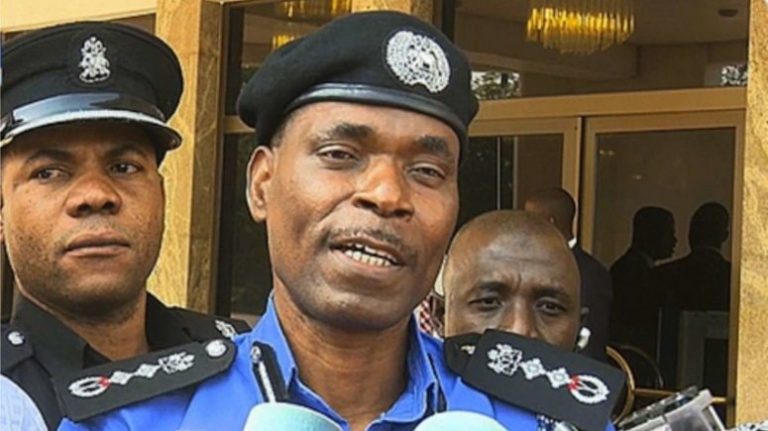
As part of efforts at restoring law and order in parts of Southern Kaduna affected by recent violence and other security challenges, the Inspector General of Police, IGP M.A Adamu, NPM,mni has directed the Commissioner of Police (CP), Kaduna State Police Command to ensure full enforcement of the curfew imposed by the Kaduna State Government. The CP is equally to ensure optimal deployment of both human and material assets of the Intervention Squad currently on ground in the State to safeguard lives and property of people in the communities.

The CP is to personally coordinate the operations of the Intervention Squad in carrying out collective and holistic tasks of ensuring peace and safety in the communities. The Squad comprises: the Police Mobile Force (PMF), Counter Terrorism Unit (CTU), Police Special Forces, Detectives/Intelligence Operatives as well as personnel of the Kaduna State Police Command, the Military and other security agencies.

The IGP commiserates with the people of Kaduna State, particularly those who have lost their loved ones and property as a result of the crises. He assures that the Force will do everything within its powers and means to ensure that peace is restored in the affected areas.

Meanwhile, the IGP enjoins the people of Kaduna State to cooperate with the Police, the Military and other law enforcement agencies as they carry out the full enforcement of the curfew amongst other measures directed at ensuring their safety. He however warns troublemakers in the State to desist forthwith from acts of violence and lawlessness.

Adeniyi: Yoruba Summit Group accused of instigating mutiny, campaign of calumny against Army

0

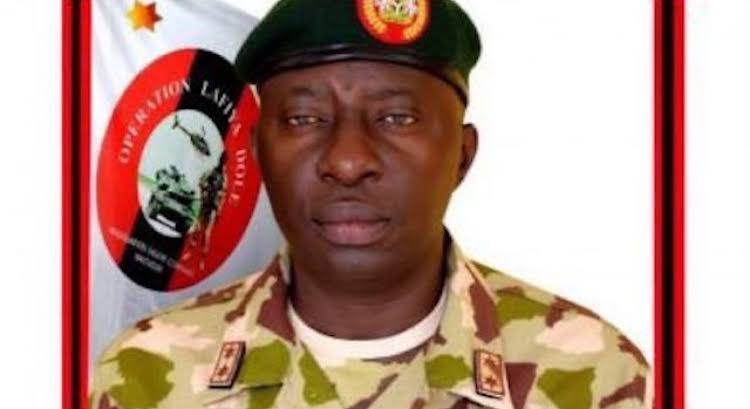
Some Southwest leaders, under the aegis of Yoruba Summit Group (YSG), have been accused of instigating mutiny and campaign of calumny against the Nigerian Army over claims bothering on ex-Theatre Commander of Operation Lafiya Dole, Major General Olusegun Adeniyi.

According to People’s Forum, a group of well-meaning Nigerians, the assertion that Major Gen. Adeniyi has been court marshalled is “despicable and an affront to our sensibilities as a people”.

In a statement signed by its Director of Strategy and Communication, Dr. Ifure Ataifure, on Monday, the People’s Forum said the motive is designed to “score cheap political points” ahead of the next elections.

The group recalled that the highest-ranking officer in the Armed Forces, the second most senior ranking officer in the Army as well as other top military personnel are all Yorubas.

The People’s Forum, however, warned that an impending mutiny could be on the cards in the Army should the Yoruba Summit Group carry on its campaign.

It further alerted members of the general public to hold the Yoruba Summit Group responsible if there is uprising in any part of the country against the constituted authorities.

Read full statement below:

The recent statement by the Yoruba Summit group, a conglomeration of leaders of socio-political organizations in South West Nigeria indicating that the former Theatre Commander of Operation Lafiya Dole, Major General Olusegun Adeniyi has been court marshalled by the Nigerian Army authorities is despicable and an affront to our sensibilities as a people.

We wish to state the reference and usage of Yoruba Nation in their treatise is an indication that the gathering under the Yoruba Summit group was designed to score cheap political points rather than face the facts.

Unfortunately, these groups of individuals have failed to let us know that the principal reason for their gathering was the fine-tuning of political permutations for the 2023 general elections. One of such permutations is to begin the ethnic persecution campaign against the Nigerian Army.

In their assertion that “We the Yorùbá condemn in strong terms, the cherry-picking of our fighters, soldiers, officers as either cannon fodders easy-targets, operational fall-guys and being used for experimental disciplinary measures, while the real culprits, go free!” is most uncharitable and an indication that there is more than meets the eyes.

The People’s Forum wishes to state that it is most unfortunate at the attempt to deceive the general public of the existence of ethnic persecution in the Nigerian Army without recourse to the sensibilities of others and the fact that the highest-ranking officer in the Nigerian Armed Forces is from Ekiti-South West Nigeria. The second most senior ranking officer in the Nigerian Army and a Lieutenant General by rank is also from South-West Nigeria.

This is aside the fact that the immediate past Commandant of the Nigerian Defense Academy and a Major General was also from the South West region, as well as others too numerous to mention across the Armed Forces of the Federal Republic of Nigeria.  It consequently holds that the ethnic categorization by the Yoruba Summit Group is borne out of ignorance and to score cheap political points.

It is also a puerile thought for the supposed big wigs at the meeting to advance causes that would further disunite the country; instead, they elected to be petty all in the bid to give a dog a bad name to hang it. They cannot claim to be in the knowledge of the rules and regulations for members of the Armed Forces with regards to punishment and rewards.

We consequently wish to state that it is outside the purview of the Yoruba Summit Group to delve into purely military matters. By their actions, they have indicated that they are calling for mutiny in the Nigerian Armed Forces to truncate our nascent democracy.

This fact is corroborated in their statement “We the Yorùbá Nation, therefore, reject the holding of a future general election before Restructuring Nigeria fiscally and structurally. We consequently wish to inform the members of the general public that in the event of a coup against our democracy, the Yoruba Summit Group should be held responsible.

The People’s Forum also wishes to inform members of the general public that should there be an uprising in any part of the country against the constituted authorities in the country; the Yoruba Summit Group should be held responsible through its statement “The emerging resolve of the Yoruba not to be part of the vassal state that Nigeria has become, is better managed with due accommodation before any further degeneration and obvious consequences.

Our quest shall henceforth be to mobilize the masses of our peoples not to participate in any further elections until the goal of Restructuring or Self-determination is attained.”

Nigerian Armed Forces and the limit of politics

0

By David Obaju

The Armed Forces of any nation are the only omnipotent institution which has the onerously pathetic responsibility of its members compulsorily risking their lives to protect others in comfort of homes in times of dire insecurity situations. It is a personally signed official national duty, the Military undertakes at the darkest moments in the history of any country at all times.

The Military have a disciplined and strict culture tethered on professionalism and observance of officially certified etiquettes which defines the entirety of their existence. It does not matter whether colleagues are in active service or retirement. But the spirit of comradeship has never waned at any time. It’s an indestructible cord in that confined league of warriors.

Therefore, it is dreadful for any country to consider operating an Armed Forces controlled by a clan of politicians of whatever adoring jargons, laced in the niceties of legislations which seeks to outsmart the singular regulating apparatus about the Military. Unfortunately for Nigerians who argue along such sentimental dimensions, the proposals are not possibly permissibly anywhere in the world.

Let the tattletale’s activists of such abomination gaze elsewhere because every nation trains, ethically purifies and preserves its Military strictly for lawful professional duties. And it is all about the protection and defence of sovereignty and territorial integrity of a country.

It is the standard conventional practice all over the world. It justifies why the Nigerian Armed Forces should be insulated from politics wholesale. And Nigerians must consider is crucial and avertable because indulgence or deviation of the Military into partisanship or posture violates national interest, which most times is lost along the line of corrupting influence.

However, Nigeria is an eccentric country. And politicians have always sought the control of the Military in disparate and cunny ways for partisan reasons. It is the same desperate politicians who yearn for a better democratic country. Nothing can be more condescending!

But in sardonic swagger, they ignore or are not satisfied with the Constitutional clause empowering them to append a seal on Mr. President’s nominees for Service Chiefs. Through the backdoor today, Nigerian parliament schemes to control even when Military Chiefs should be sacked, what the Nigerian Constitution, the supreme law of the land, vests exclusively powers in the hands of Mr. President.

That’s why in the 9th Republic Nigerian Senate, some members of the National Assembly (NASS) attempted to legislate and pass an illegal law to wrest such powers from the jurisdiction of President Buhari by transferring it to NASS or humongous politicians directly. The proposed law contemplated a Special Military Board, comprising politicians to decide appointment and sack of Service Chiefs any time they consider it necessary, instead of the Commander-In-Chief of the nation. Where has it ever happened in the world?

But Nigeria is full of surprises which no longer astounds anyone. They injected other very obnoxious clauses in the proposed law, which would empower all manner of politicians as approved by the legislature to decide the fate of Service Chiefs in a country where patriotism has been on sabbatical leave for dozens of years.

The resentful law crushed itself on the altar of truth and did not see daylight. But before this period, there have been countless times Nigerian politicians’ have interfered with the professionalism or tried to pollute the sanctity of soldiers. That’s why from 1983 to 1999, Nigeria was compelled to contend with different Military dictatorships. Almost all leaders of past military Heads of Government claimed they were invited by civilians to intervene and save democracy.

Generally, the world is no longer receptive to Military coup d’états. Africa is caught up in this new wind of change and with it, Nigeria which has reluctantly mooned the consciousness of a re-ordered world. It has nevertheless cautioned or appeased fifth columnists or political shenanigans and power hawks. Once in a while, especially when these despoiled politicians fail to garb democratic leadership through the ballot, they attempt to induce the military to seize power.

Nigeria has dragged the Military into civil duties which are in discord with their defined constitutional mandates. For a start, the drafting of soldiers for Election Duty; the attempts by some political moneybags or possessors of Nigeria’s illicit wealth to financially induce soldiers on such special assignments or Internal Security (IS) operations to gain certain favours are not exciting. But the society demands it. There are also other such demeaning acts which have always exposed Nigerian Military to risky temptations capable of compromising their professional ethics.

Of course, Nigerians would still remember the shambolic outing of soldiers on Election Duty which foisted former Governor Ayo Fayose of Ekiti state. Soldiers played ignoble roles leading to an indictment by a formal Military Panel of Inquiry and verdict, when President Muhammadu Buhari came on board as Nigeria’s democratic leader.

It’s still fresh, the attempt by Rivers Governor Nyesom Wike to bribe the GOC and the soldiers he deployed on Election Duty during the 2019 general elections in the state. It proclaims and confirms the ever-gassy determination of Nigerian politicians to corrupt the Military by all means.

It only took the grace of God for the GOC and the soldiers under the COAS and leader of counter-insurgency operations he assigned to resist Gov. Wike’s overtures of bribe in order to compromise the electoral process. But thereafter, a relentless Wike, like typical Nigerian politicians, followed it up with blackmail and executive rancorous intimidation of the Nigerian Army.

No doubt, Gen. Buratai has done everything possible to reposition the Nigerian Army to operate or function professionally at all times. The refined conduct of soldiers is generally much-admired by Nigerians anywhere they are deployed for special assignments. It’s a tempo the country should strive to sustain. And separating the Military from politics should be the inviolable obligation of every Nigerian.

But some Nigerian political elites and leaders have always advertised themselves as people who learnt nothing or any valuable lesson in a lifetime and so, have forgotten nothing! Some of them still nursing personal grudges and grievances against President Buhari have many times struggled to instigate the military to carry out a coup in the last five years, but it failed. President Buhari trusts his Service Chiefs whose first and last preoccupation is loyalty to professional creeds.

Meanwhile, unconscionable politicians whose permutations to grab power crumbled have fruitlessly and repeatedly attempted to drag them into politics. After failing variously on this agenda, they are also not relenting in other “clever” ways to smear the reputation of the Nigerian Military, so that they can use the Military to get at their political enemies. And President Buhari has been at the receiving end of their destructive designs.

President Buhari has suffered so much in the hands of these politicians hellbent on forcefully and illegally terminating his administration with their angry swords by persuading the military to stage a coup d’état to dethrone him. When Buhari had persistent health issues beginning of May 2017 and travelled to London for medical attention, the politicians plotted to use the Army to overthrow his Government.

The underground plots to illegally oust Buhari out of power rang to the point the speculations of a potential coup assailed Nigerians everywhere. A vigilant Chief of Army Staff, Gen. Buratai countered them. The Army is more suitable for such odd jobs.

So, first, Buratai issued a repeated stern warning to all soldiers to isolate themselves from politics. He also stepped up security measures and instantly transferred several senior officers prone to inducements for a coup. Only these actions saved the day.

Gen. Buratai thundered; “Any officer or soldier of the Nigerian Army found to be hobnobbing with such elements or engaging in unprofessional conducts such as politicking, would have himself or herself to blame.”

Also, the weeks preceding President Buhari’s inauguration for a second term in office experienced clandestine coup plotting actors by mid-May 2019. The Department of State Services (DSS) alleged plots by another set of politicians under the auspices of Nigeria Continuity and Progress (NCP) to overthrow President Buhari.

The planned coup was targeted to strike and disrupt President Buhari’s inauguration for second tenure before May 29, 2019, by the subversive agents and adversaries of democracy. There were attempts to garb it a military revolution.

And the strategy of these subversive elements using the Military was to create artificial atmosphere of insecurity; spark or induce widespread violence and use same to transplant disaffection in national psyche and prod the military to overthrow the Government for failing to protect lives and property of Nigerians. It also failed flat like a pack of cards because Gen. Buratai corpulently descended on the suspected Army officers.

But Nigerian politicians hardly give up on any evil mission. They have been scouting for other means to fascinate the Armed Forces and its leadership into politics. But Buratai particularly and his colleagues have proved very difficult to overwhelm with their intended antics on the Military to indulgence in the political affairs of Nigeria. The hatred of these Service Chiefs by Nigerian politicians’ is therefore understandable.

Nigerian politicians should sleep and reflect. The Army is an indispensably a standing Military institution which should not be this consciously destroyed, nay the Military. Politicians should conscionably recoil from dangling these tempting carrots of politics to the military and allow the Army focus on its mandate of protecting the territorial integrity of the nation. #

Obaju is a lecturer at Federal College of Education, Okene.