Home Blog Page 2365

International Youth Day: Minister Tasks Nigerian Youth for Global Action

0

As Nigeria celebrates this year’s World Youth Day, Nigerian Youth have been challenged by Youth and Sports Development Minister Mr Sunday Dare to be focused, committed towards attaining their potentials.

According to the Minister, Nigerian Youth have demonstrated courage, resilience and enterprise which raises hope of a greater future for the country.

“On behalf of Mr. President Mohammadu Buhari , I congratulate all Nigerian Youth on the occasion of the United Nations World Youth Day. This year’s theme “Challenging Youths to Global Action” is not only auspicious, but timely, instructive and in resonance with the Federal Government’s plans to re -position our teeming youths for a better tomorrow. The recent approval of the Youth Investment Fund underscores the importance placed on our Youth by the Buhari government. This vision is geared towards the development of the entrepreneur spirit of the Youth to become employers of labour and be positioned for the challenges of a changing world order. ”

Dare further affirmed ” Nigerian Youth canot be excluded from the changes taking place globally in politics, business science and technological innovations. This administration is more than ever irrevocably committed to laying a solid foundation for our youth to cement and secure a better future which we will all be proud of. This an opportunity for the Youth to position themselves in the onerous task of nation building”, Dare concluded

The theme of this year’s celebration Youth Engagement For Global Action seeks Youth engagement at local, national and global levels and how it is enriching national and multilateral institutions and processes as well as draw lessons on their representation.

As part of activities for the World Youth Day, the Minister is expected to engage the Youth on line on availing themselves opportunities through the Youth Investment Fund, Digital training and Sports Development.

CSOs urge more patronage of DICON products at 56th anniversary

0
Armoured Personnel Carrier produced by DICON

Nigeria’s Minister of Defence, Maj.-Gen. Bashir Magashi (RTD) has pledged to engage
the Defence Industrial Corporation of Nigeria (DICON ) in a more strategic partnership to achieve its the mandate of producing military hardware for the Nigerian Armed Forces.

Magashi made this pledge during his maiden official visit to the Defence Industry Complex on Tuesday in Kaduna, as DICON marks its 56th anniversary.

He explained that DICON occupies a pride of place in Nigeria’s evolution as a premier parastatal of the defence ministry solely mandated to produce arms, ammunition, ordnance material and other war machines for the military and other security agencies.

At the event, a Civil Society Organization, Global Peace and Life Rescue Initiative (GOPRI) advocated more patronage of products from the Defence Military Corporation.

Executive Director of GOPRI, Amb Melvin Ejeh, commended the giant strides of the corporation in innovation and production of world-class medical ventilators, ammunitions, military gears, wares, vehicles and other non-military products.

While noting that the President Buhari’s action at improving local content in public procurement with science, engineering and technology components was commendable, GOPRI appealed to the Federal Government to direct all security and non-outfits of the federal government in the country to patronize the rich array of Military and non-military equipment produced by the Defence Industries Corporation of Nigeria, DICON.

“DICON products are of a high standard like anywhere in the world, hence the need to patronise them. The current re-engineered and repositioned DICON under the leadership of Major General Victor Okwudili Ezugwu has been able to achieve amazing feats.”

“We need to grow our local economy while contributing to the fight against all threats to our national security”, he stated.

Recall that while signing the Executive Order 5, President Buhari had directed all Ministries, Departments and Agencies, MDAs to engage indigenous professionals in the planning, design and execution of national security projects.


‘My shoulders are always available for your lean on’ – Atiku tells Nigerian youths

0

Former Vice President Atiku Abubakar has assured Nigerian youths of his commitment to supporting them at all times.

Atiku gave the assurance on Wednesday in a message to mark the 21st anniversary of the International Youth Day (IYD).

“I shall stay the course and continue to offer my shoulders for you all to climb because as youths, you are Leaders of Today,” he said.

The former presidential candidate of the Peoples Democratic Party (PDP) hailed Nigerian youths for their doggedness and drive towards a better nation, saying this year’s theme, “Youth Engagement for Global Action,” captures how important young people are in the scheme of things.

“I salute the Nigerian youth in particular for their commitment and perseverance towards the attainment of a greater Nigeria,” Atiku added.

“This global picture, which has been on my mind, informed my decision of 40% youth inclusion in my 2019 presidential campaign; a promise I am committed to keeping for the futuristic benefit of our great Nation.”

He explained that with the COVID-19 pandemic ravaging the world, youths have a huge responsibility in fighting the disease as the future of humanity rests on their shoulders.

“Indeed, the survival of humanity rests largely on the shoulders of the youths, as vigour is required to wear out this plague,” the former vice president explained.

“The vigour and spirit that you embody as youth will play a crucial role in the socio-economic survival of the world, and its rejuvenation, post-COVID19.”

As future leaders, Atiku called on young people to preach and embrace peace, show patriotism, shun nepotism and promote competence.

“Only then can we truly have the Nigeria of our dream,” he said.

According to the United Nations (UN), the 2020 International Youth Day theme is to buttress the “ways in which the engagement of young people at the local, national and global levels is enriching national and multilateral institutions and processes, as well as draw lessons on how their representation and engagement in formal institutional politics can be significantly enhanced.”

Trump Announces Sixth Vaccine Contract for 100 Million Doses

0

President Donald Trump on Tuesday announced a $1.5 billion contract with US biotech company Moderna for 100 million doses of an eventual coronavirus vaccine, the sixth such deal reached since May.

Covid-19- vaccine

“I’m pleased to announce that we have reached an agreement with Moderna to manufacture and deliver 100 million doses of their coronavirus vaccine candidate,” Trump said at a White House news conference. “The federal government will own these vaccine doses, we’re buying them.”

“We’re on track to rapidly-produce 100 million doses as soon as the vaccine is approved, and up to 500 million shortly thereafter, so we’ll have 600 million doses,” he added.

Moderna, in partnership with the US National Institutes of Health (NIH), is conducting Phase 3 clinical trials of a vaccine candidate and manufacturing of vaccine doses will take place while the trials are underway.

Handout picture released by the Sao Paulo State Government press office showing a volunteer receiving the COVID-19 vaccine during the trial stage of the vaccine produced by the Chinese company Sinovac Biotech at the Hospital das Clinicas (HC) in Sao Paulo state, Brazil, on July 21, 2020.  Handout / Sao Paulo State Government / AFP
Handout picture released by the Sao Paulo State Government press office showing a volunteer receiving the COVID-19 vaccine during the trial stage of the vaccine produced by the Chinese company Sinovac Biotech at the Hospital das Clinicas (HC) in Sao Paulo state, Brazil, on July 21, 2020. Handout / Sao Paulo State Government / AFP

The vaccine, called mRNA-1273, is being co-developed by Moderna and the NIH’s National Institute of Allergy and Infectious Diseases (NIAID), which is led by Dr Anthony Fauci.

Fauci has said researchers are unlikely to know the efficacy of the vaccine before the end of the year at the earliest. But Trump has said he hopes to have a vaccine before the November 3 presidential election.

The latest contract brings the US government’s total commitments to Moderna to $2.48 billion.

The company, founded less than 10 years ago, has not previously developed a vaccine of any kind but preliminary results of the company’s experimental COVID-19 vaccine have reportedly produced promising results.

U.S. President Donald Trump speaks to the media as he departs for Walter Reed National Military Medical Center from the White House on July 11, 2020 in Washington, DC. Joshua Roberts/Getty Images/AFP
File photo: U.S. President Donald Trump speaks to the media as he departs for Walter Reed National Military Medical Center from the White House on July 11, 2020 in Washington, DC. Joshua Roberts/Getty Images/AFP

The Trump administration has allocated a total of at least $10.9 billion for the development and manufacturing of a coronavirus vaccine.

It has already ordered 100 million vaccine doses from Johnson & Johnson, Novavax, Pfizer and Sanofi and 300 million from AstraZeneca.

AFP

Tanzania tightens noose on press freedom, media activists stunned

0

Tanzania’s media regulatory body, TCRA, will now require local media stations to seek government approval before broadcasting foreign content. Press freedom activists are calling on the regulations to be reviewed.

Local stations in Tanzania that are already airing programs from foreign international media will now be required to apply for authorization and present the agreements to the country’s media regulatory body, according to Tanzania’s Communications Regulatory Authority (TCRA).

Rudolf Elmendorp is a foreign journalist who has been trapped in Tanzania after the outbreak of COVID-19. He has found it very difficult to work in Tanzania

Tanzania says it will not halt any of the broadcasts or the current agreements in place.

“This is a good procedure that will enable TCRA to understand such agreements and successfully oversee the sector in accordance with the available laws and regulations,” Andrew Kisaka, a TCRA official told DW.

The amendments — regulating radio and television broadcasts — were issued after Radio Free Africa aired a BBC interview with Tanzania’s opposition leader Tundu Lissu.

In the interview, Lissu claimed that authorities had denied him a chance to pay his last respects to former President Benjamin Mkapa, who was buried on July 29. The TCRA deemed the interview misleading, as it did not seek clarification from a government spokesperson.

“We are approaching our presidential elections in October 2020. I would like to believe that they would like to see how the media will comply with the government line of thinking,” Pili Mtambalike, a former regulations and standards manager at the Media Council of Tanzania, told DW.

Tansania Wahlkampagne Tundu Lissu, Kandidat der Opposition
Tanzania’s Chadema opposition presidential candidate Tundu Lissu has accused the ruling CCM of an uneven playing field ahead of elections

Mtambalike pointed to how the media coverage of the various presidential candidates collecting forms from the Electoral Commission differed widely when compared to the ruling party’s platform. “Of course there is a lot of coverage for the ruling Chama Cha Mapinduzi (CCM) party. The opposition parties have been a little bit short-changed,” Mtambalike said.

Tanzania’s deteriorating press freedom record

Tanzania ranks 124 out of 180 countries in the 2020 World Press Freedom Index by Reporters Without Borders.

Back in 2016, Tanzania had a law named the Media Services Act. For Mtambalike, it was a very problematic legislation. “People in the media went to court and, later, the East African Court of Justice struck out some sections of the Act because they went against the East African Community’s regulations.”

The Committee to Protect Journalists (CPJ), said it was aware of the new two amendments to regulations which are very important to the press freedom environment. “These are the 2018 online content regulations which were already restrictive but have now been made more punitive, and the radio and television regulations,” Muthoki Mumo, CPJ’s sub-Saharan representative, told DW.

Muthoki, however, noted that she had yet to see the full amendments on broadcasting — as only a statement on radio and television regulations were made available by the government. “It is very important for the sake of transparency and for the sake of the media outlets which would be forced to adhere to these new regulations and for the sake of public discourse, to make sure that the radio and television regulations are made public, distributed as widely as possible so that everyone can see for themselves, and if they have concerns they can raise them with the government.”

DW and international media affected 

The media regulatory body TCRA has determined, with immediate effect, that all domestic media must apply for a separate license if they wish to broadcast content from foreign media on their channels. The partner broadcasters of several international media, including DW, are directly affected.

Media outlets in Tanzania must re-register and are not allowed to broadcast programs of their foreign broadcast partners until a new license is granted. Several DW partner channels have temporarily suspended broadcasting the regularly adopted DW programs after the new regulation was announced. The channels have been given one week to submit a new license application, according to sources in media management.

DW, which has a large following in Tanzania, has since issued a statement on the new regulations, describing them as “a worrying trend towards restrictions on press freedom.”

Tanzania President John Magufuli (picture-alliance/AP Photo)
Under President Magufuli, Tanzania’s freedom of the press has faired poorly

DW Director General Peter Limbourg said: “This is a clumsy attempt to suppress critical voices and independent information before the elections in Tanzania. DW’s programs are extremely popular among users in Tanzania.”

“The first reactions of our partners show enormous civil courage. But this far-reaching form of state censorship is difficult to counter. We support our partner broadcasters in Tanzania and together we will find ways to keep the population well informed, for example through the increased use of social media.”

Monitoring, ‘censorship’ ahead of election

According to Mtambakile, Tanzania’s strict media laws have led to censorship in newsrooms. “People are very careful about what they report because it is very easy to get your newspaper, radio or television station shut down because of these laws,” she said.

Mtambalike added that the Tanzanian media has been perhaps more pro-Magufuli than his predecessors — but warned that with such leanings in the media “you tend to write more about the praises rather than to also criticize the system.”

Depdatus Balile, chairman of the Tanzania Editor’s Forum, told DW  that the new regulations go a bit against the candid law that is found in the constitution under Article 18 — which encourages freedom of expression, access to information, and freedom to share your opinion.

A man walks past a banner with graphics on Tanzania's 2020 election (DW/S. Khamis)
The East African nation is gearing up for the October elections amid tighter media regulations

“The system of enacting laws in Tanzania is usually retroactive but now they have decided to use a retrospective system where the law which is enacted today is affecting what happened a day before, a month before, or a year before. We think it’s not a good idea for a law to affect mistakes that were made before the law was enacted,” Balile said.

Kennedy Wandera, chairperson of the Foreign Press Association, Africa (FPAA), told DW: “What is happening in Tanzania is very unfortunate, you would expect that they would be able to leverage the media gains in that particular country, especially when they are getting to elections,” he said.

“But with these regulations, I think that it is going to be seen by the media as a way of curtailing their work, which is very wrong.”

Wandera, however, noted that the association of Tanzania’s local media with international media helps the country to show the world what it is capable of doing. “For instance, tourism. Tanzania has a rich tourism industry, if such cannot be told on the global stage, then it becomes difficult for people outside Tanzania to understand what is happening in Tanzania. Media freedom is a core pillar of democracy in Tanzania and any other country for that matter.”

Balile says the Tanzania Editor’s Forum will advise the government accordingly. “We think they will understand our position.We are not going to use force whatsoever but we are going to advise them to make sure that we nurture freedom of expression for the betterment of this country.”

-DW

Biden’s choice of Kamala Harris as VP candidate ‘unprecedented’

0

US presumptive Democratic presidential candidate Joe Biden’s selection of Senator Kamala Harris gives him a running mate who can appeal to African American voters who are core to Biden’s base of support and serve as a fierce critic of President Donald Trump’s record in office.

Women Leaders/Nina Montagu-Smith

A former top state prosecutor in California, Senator Harris brings a law-and-order career record that will help Biden steer a tricky, centrist line between Black Lives Matter protesters and white Americans who worry about attacks on police funding.

At the same time, picking a woman who competed with Biden during the presidential primaries and attacked him memorably on race during a debate, shows Biden asserting a degree of self-confidence that he can forge a cooperative, working relationship with her, political analysts told Al Jazeera.

“Biden faced unprecedented pressure to pick a Black woman,” said John Jackson, a professor at the Public Policy Institute of the University of Southern Illinois.

“He wanted someone who is going to command some respect and will balance the ticket with demographic characteristics of gender and race,” Jackson said.

“And he wanted somebody who he has personal chemistry with that is good,” he said.

Indeed, Biden’s selection of Harris is unprecedented and a high-risk moment for his campaign both in that Harris is a woman, and she is Black. It is only the third time in US history a woman has been selected as a vice presidential candidate, and the first time a Black person has been selected for that role.

How the selection plays out during the next week and during the upcoming Democratic National Convention will serve to define the personality of the Democratic ticket in November’s election. President Trump, Republicans and his campaign can be expected to attack Harris and Biden’s choice which says as much about him as it does Harris.

The choice of a running mate is one of the first big decisions that the public gets to see a presidential candidate make. Sometimes, candidates make mistakes. John McCain took a political risk in 2008 picking Sarah Palin, who proved to be a controversial campaigner, and Walter Mondale in 1984 chose Geraldine Ferraro. In both cases, the selections were surprises that did not play well with voters.

In contrast, Biden’s process has been almost painfully public and deliberate with the names of nearly a dozen women on his list circulating for weeks in the media to speculation from all sides about their respective qualifications. It has been compared, not favourably, to a season of the reality TV show “The Bachelor”.

In 2000, George W Bush picked an older adviser in Dick Cheney who had served in his father’s administration and who Bush had actually tapped to lead the vice presidential search. The choice telegraphed that Bush the son would draw from this father’s coterie of advisers and served to reassure older Republicans who were uneasy with his youthfulness.

George HW Bush had picked Indiana Senator Dan Quayle in 1988 who immediately drew criticism as lacking sufficient executive experience and whose tenure in office was marked by comic moments.

In 1960, a young John F Kennedy selected Lyndon Johnson from Texas, who was the Senate majority leader at the time. The pick helped bring voters from Texas and the southwest that turned out to be critical to Kennedy’s election.

“Harris is a more logical choice than anyone else,” said Paul Beck, a professor of political science at Ohio State University.

“African Americans have played such an important part in his nomination and are going to be such an important base for him going forward in the election,” Beck said.

“It is also important that he designate someone who is perceptibly younger than him,” Beck said.

Biden is 77, and his age has been visible in campaign events. He has occasionally stumbled over his words, leading to speculation about mental decline, although he suffers from a lifelong speech impediment. Trump has picked up on the perceived weakness and regularly belittles Biden as “Sleepy Joe” in tweets.

Harris is 55, and has demonstrated a legal mind in her questioning of Trump administration witnesses appearing before Senate committees, notably Attorney General William Barr whom she grilled about whether Trump had asked him to pursue political prosecutions as the nation’s top law enforcement official.

“Her demonstrated ability occupy a prosecutorial persona, for all the things that are new about this, that is a very time-honoured and conventional role for a vice presidential candidate,” said Jim Henson, a political science professor at the University of Texas.

“The vice president is the person to go out and be more aggressive than the candidate. Kamala Harris, given her professional background and her performance in the Senate, has that reputation,” Henson said.

“We saw that in the debate, interestingly with Biden on the receiving end,” he noted.

Harris clashed with Biden in a Democratic presidential debate in June 2019 when she contrasted herself as a little girl being bused to a white neighbourhood to go to school with his record on school busing in the 1970s. Biden stumbled in that moment and was unable to give a coherent response.

“Busing is just such a complex issue, and it was just so divisive back in those days. It didn’t lend itself to more than 60 seconds in a debate even though Joe Biden really stood on the side that prevailed,” Jackson said.

Biden is an outgoing and accommodating personality which should allow him to mesh well with Harris, said Aubrey Immelman, a professor of political psychology at the College of Saint Benedict and Saint John’s University in Minnesota.

His deliberation and thoughtful process suggest Biden was able to develop “personal chemistry” with her. It is quite likely as well that Harris’s friendship with Biden’s late son Beau also helped. And she may well have been a consensus pick among his close advisers, including his wife Jill Biden, as well as Barack and Michelle Obama.

“Metaphorically, Biden is led more by ‘heart’ than by ‘head”.

Governor Akeredolu Inaugurates Operation Amotekun in Ondo

0
The Ondo State Government on Tuesday inaugurated the Ondo State Security Network Agency also known as Operation Amotekun.
No fewer than 192 recruited members of the corps were inaugurated at the ceremony.
The governor expressed optimism that no criminal element would trouble the relative peace enjoyed in the state as the agency had commenced operations.
He said, “It was so horrible that marauders laid siege to the highways as well as in the farmlands waiting to kidnap or devour anyone in sight. With the launch of the Amotekun, we resolved that it shall be no retreat, no surrender. We are not going to be intimidated or
blackmailed.”

I’ll jail Obasanjo if I become President – Fayose

0

Former governor of Ekiti State Ayodele Fayose says he will send the former President Olusegun Obasanjo back to prison for all his alleged infractions committed against Nigeria if he becomes president.

Mr Fayose spoke on Tuesday while featuring on “Plus Politics”, a programme on PlusTV Africa in Ado-Ekiti.

The former governor said he would ensure Obasanjo accounts for all the alleged financial impropriety and other manifestations of corrupt practices perpetrated during his eight-year tenure as Nigeria’s president and face the full wrath of law.

He said: “Let me tell to you, Obasanjo has made hate speech and should be brought to book by this government. I pray one day I will become president of this country by God’s grace, Obasanjo will go back to prison. I’m telling you the truth because there are so many things Obasanjo must be questioned about.

“Obasanjo is not a saint when he came out of prison his farm at Ota was in shambles. But, today, it is back to life. Where did the money for resuscitating the once ailing farm come from? It was from the government.

“For the library, all governors at that time contributed N10 million each to support Obasanjo by force. The third term is still fresh in our memory. So, baba should stop telling us he is a saint. Shagari was not good enough. He imposed him on Nigerians. He brought Yar’Adua and Jonathan. Nobody is good to Obasanjo except himself.

“Whatever you say about Kashamu. He has paid his own dues, spent his time. No court convicted him and he left and departed the world. Everybody will have an end. Let wait and see how Obasanjo will end.”

Fayose had recently attacked Obasanjo for his comments about the late Senator Buruji Kashamu after the former president said Kashamu could not beat death despite evading justice for alleged crimes.

Matawalle’s bombshell: Power-seeking politicians gaining from Nigeria’s security crisis

0

Barely two weeks after Borno state Governor Babagana Zulum alleged sabotage in the military’s fight against insurgency, his Zamfara counterpart, Dr. Mohammed Bello Matawallen, has also accused some ‘power-seeking’ politicians of benefitting from the nation’s security challenge, particularly in the northern part of the country.

In recent time, the northern part of the country has continued to face one security challenge or the other.

While the North-east states contend with insurgency, the North-west as well as some parts of the North-central battle banditry and kidnapping.

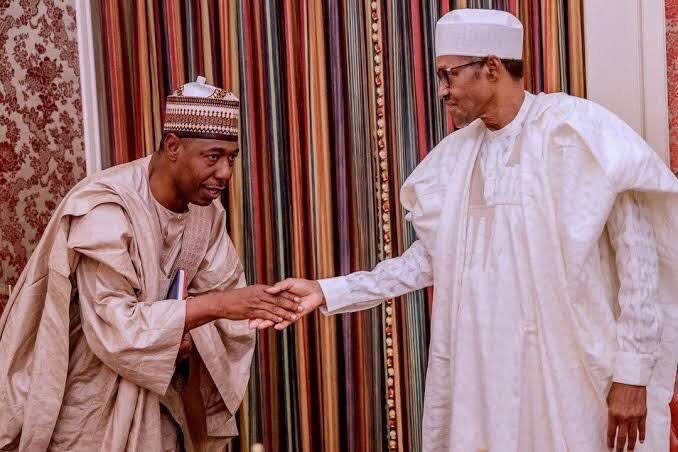
Governor Zulum had, while on an inspection visit to the IDPs’ camp in Baga, Borno state, come under attack from suspected Boko Haram fighters.

And in a reaction to the development, the governor, among other things, said there was sabotage within the military.

Mutawallen

And speaking in similar tone Tuesday, Zamfara state Governor Mutawallen said some politicians were benefitting from the increasing wave of security challenges facing the nation.

He spoke at the Special Army Super Camp 4 in Faskari town in Katsina state.

The governor was of the view that some notable politicians were exploiting the poor state of security the nation currently contends with, and rushed to the media to slam the military.

Although the governor did not name names, he said this class of politicians were making some political fortune from the escalating security challenge, and therefore wanted the status quo to remain.

Contrary to the belief in some quarters, the governor said the politicians were only on self-serving mission and not standing up for the people or even the efforts of the military.

“These unscrupulous politicians would hardly commend the military for their successes at the battlefronts. However, they would be eager to rush to the media to report attacks by bandits or other miscreants.

“For this crop of politicians, politics is not about genuine commitment to the well-being of the people; it is all about power and nothing more,” the governor said.

Speaking further, he said: “Let me at this point stress that the issue of security is everyone’s concern. Safeguarding and ensuring security is not just the responsibility of Mr President, the Governors, the service chiefs and security apparatuses but that of every patriotic citizen.”

“In fact, we, the politicians are to be blamed for the intractable security challenges bedevilling our communities. It is evident that some politicians exploit insecurity for political gains.”

While urging the security agencies to deal decisively with anyone found politicising the nation’s security no matter how highly placed, the governor said: “It is by so doing that we can significantly address the current security challenge confronting not just the North-West, but the entire federation.”

He lauded the Nigerian Army, under the leadership of Chief of Army Staff, Lt. General Tukur Yusuf Buratai, for  consistently being at the forefront of the fight against insecurity.

He said there was need for regular training and exercises to project the military’s prowess and the personnel’s morale to inspire confidence in the public.

“I am particularly pleased to note that the primary objective of Exercise Sahel Sanity is to enhance the combat readiness of our gallant army to root out banditry and various crimes in the north-western part of the country.

“Considering the monumental nature of the challenge in the North-west, and it is our hope that at the end of this exercise, the army personnel would be in a better position to defeat the miscreants causing loss of lives and untold hardships to our people,” Matawalle stated.

He said Zamfara and other north-west states had been battling  cattle rustling, kidnapping, arson and related crimes for many years.

“Even though my administration has succeeded in brokering peace agreement with several groups of the marauders, we are still facing pockets of challenges from those who have not accepted our peace overtures and those infiltrating our communities from other states,” the governor said.

Mutawallen reiterated  his  administration’s belief in peaceful dialogue with the bandits, which he said had yielded significant results.

“But for the defiant groups, we have no option than to confront them with the security forces in order to protect people’s lives, well-being and property.

“We are continually providing various forms of support to the security forces operating in Zamfara state for them to deliver on their statutory mandate effectively. Last two months, we commissioned and presented 200 brand new pick-ups as mobility support to the security outfits, including the Nigerian Army. We will continue to extend our support and collaborate will all security agencies,” the governor further assured.

He praised the gallant soldiers who died in the course of returning to the path of peace and prayed for the repose of their souls.

Bishops on Kaduna killings

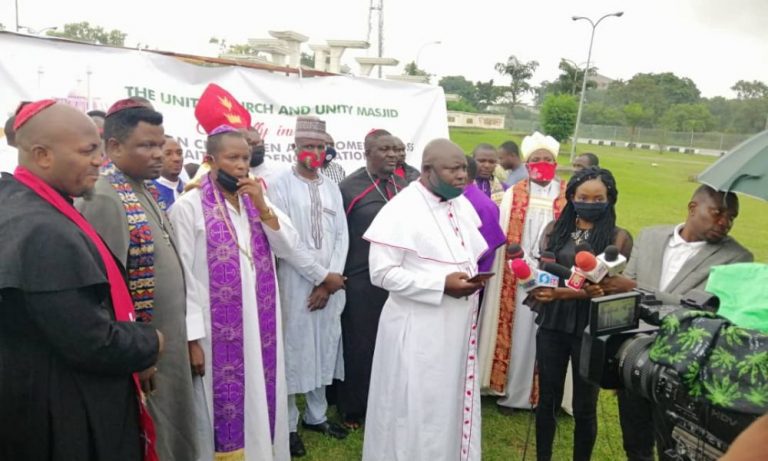
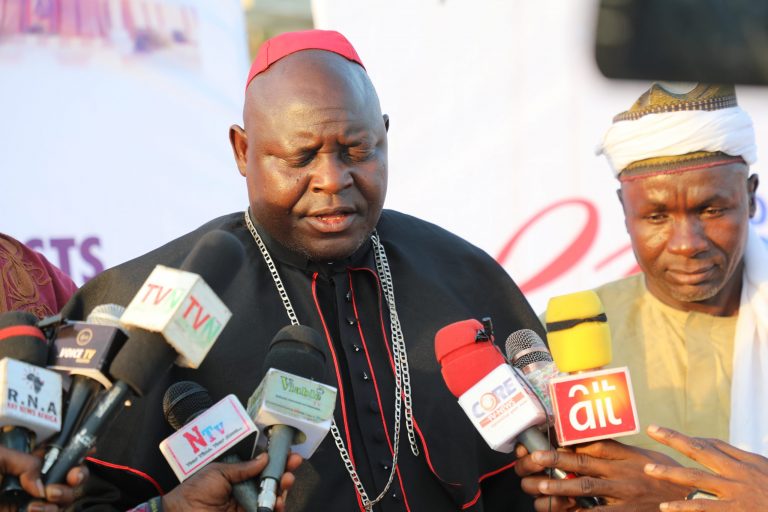
In a related development, the Catholic Bishops’ Conference of Nigeria (CBCN) Tuesday lamented the rising spate of Southern Kaduna killings.

They said the killings persisted because perpetrators were not brought to justice by the appropriate authorities.

While warning politicians against politicising the killings, the clerics urged all Catholics across the country to embark on prayers session to end the menace.

They made the position known in a statement issued in Abuja by the CBCN president, Most Rev. Augustine Akubeze.

“We, the members of the Catholic Bishops’ Conference of Nigeria have been following the recent events in Nigeria closely. We continue to hear of increasing insecurity and unabated acts of terrorism in Northern Nigeria. We are all tired of this situation. We do not want any politician to politicise the killing of Nigerians. There should be one response from everyone, and that is; the killings must stop.

“The perpetrators of the killings must be brought to justice. Where there is no justice or justice is not seen to be done, there cannot be peace. Where there is no peace, there cannot be development. Any Government, State or Federal that wants peace must work for justice for everyone.

“Our hearts are bleeding, and we are more troubled when we hear of the massacre presently going on in Southern Kaduna. We want all the people suffering the incessant attacks in Southern Kaduna to know that all Catholics in Nigeria are praying for them. We call on the Federal and the Government of Kaduna to bring a complete stop to the killing of innocent people. The loss of the life of any Nigerian does not help to further the agenda of any religious ideology or the ambition of any politician.

“There will never be sustained development built upon the bloodshed of innocent people brutally murdered by religious fundamentalists without any recourse to justice for the victims.

“We need not remind Nigerians that the present Federal Government came to power, promising Nigerians, the eradication of corruption, a guarantee of security to life and property, and rapid growth in the economy. The creation of jobs, and an enabling environment that engenders growth of the private sector; a significant increase in the supply of electricity to Nigerians, affordable and quality health care to Nigerians, and the revamping of the educational sector were the promises the Government continues to make,” the statement said.

The body called on all Nigerians to rise in unison and called on the federal government to prioritise the sanctity human lives as a major step to stopping the killings.

To fellow Catholics, he urged them   to  “join in praying, one ‘Our Father’, three ‘Hail Marys’, and one ‘Glory Be to the Father’ every day after the Angelus for 40 days, starting from 22 August 2020 and ending 30 September 2020, the eve of Nigeria’s Independence Day.

“On Independence Day, let us join in praying the five decades of the sorrowful mysteries starting from 12.noon. We appeal to each Bishop to encourage the faithful in his Diocese to participate fully in this prayer for God to save Nigeria.”

Buhari on additional weapons

Meanwhile, President Muhammadu Buhari and governors Tuesday ended their meeting on the state of the nation’s security with calls for a joint strategy to bring various conflicts to an end within time limits, while field commanders would take measures to protect civilian communities as a confidence-building mechanism between the military and those communities.

The president and the governors believed that when the trust that had been lost between the parties is re-established, there would be improved cooperation in intelligence-gathering and sharing.

The meeting also agreed that poverty and youth unemployment were at the root of the nationwide security challenges, and needed to be addressed with greater vigour by all tiers of government.

The three-hour meeting, coordinated by the president, focused on the country’s security policies and approaches in tackling the internal security challenges with a charge that intelligence-gathering and sharing must be optimised for the nation to secure itself.

The president dispelled commonly held assumptions that the terrorists in the North-east had far more weapons and money than the government, stressing that what is left of them are “mere scavengers desperate for food, raiding shops and markets, and killing innocent persons in the process.”

He also expressed concern that in spite of the fact that borders with neighbouring countries had been shut, bandits and terrorists continued to have access to small weapons.

“These terrorists are in the localities. How is it that they are not short of small arms?

“We have said enough on the need for them to rejig their operations. I am glad that there is better synergy and cooperation which are very important. I have directed the Service Chiefs to meet among themselves in-between the National Security Council meetings.

“The services have resources; yes, they need more, and mobility, and are doing their best, but there is a need for better gathering and interpretation of intelligence. Our intelligence-gathering must be improved,” he said.

The president informed the governors of the imminent shipment of military weapons and aircraft from Jordan, China and the United States, and called for patience on the part of the public.

He said the new weapons and aircraft must be manned by trained fighters and pilots who must first receive appropriate training.

The president also expressed satisfaction with the level of support from neighbouring countries in the war against terrorism.

“They are cooperating with us. On Boko Haram, we are making progress with Benin, Niger, Chad and Cameroon,” he said, while restating that intelligence-gathering must improve to be able to track small arms in the Northwest, North Central and Northeast states.

The president also expressed satisfaction with the level of Naval activity in the Gulf of Guinea, using newly-acquired equipment, but demanded that hard-to-reach areas of Lake Chad where Boko Haram terrorists have found new havens, as well as the forests now inhabited by bandits, must be accessed and rid of nefarious elements.

“The Chief of Defence Staff has spoken about their study of the forests and their potential danger to security. We must make sure we follow the bandits and terrorists, but there must not be deforestation in view of the climate situation,” he said.

Govs speak

In their submissions anchored by their chairman, Governor Kayode Fayemi of Ekiti state, and Governor Babagana Zulum of Borno state, the governors highlighted the problems of poverty, unemployment, trust deficit between the military and civilian populations and the inflow of small arms into the country.

The governors also pointed to the problem of coordination among military and security chiefs and played up their own security roles which included USD1 billion they allowed the president to withdraw from the Excess Crude Account for weapons procurement two years ago.

The governors urged the president to consider a “bail out” for security for the states in view of the enormity of the resources they now expended in support of the military and the police.

The meeting was attended by Vice President Yemi Osinbajo, heads of defence, security and intelligence agencies and members of the Security Committee of the Nigeria Governors’ Forum represented by one governor from each of the six geo-political zones in a virtual format.