Home Blog Page 232

Adeleke’s Outburst Exposes APC’s Ignorance of Democratic Values – PDP Demands End to Presidency Insults

0

The Osun State branch of the Peoples Democratic Party (PDP) has cautioned the All Progressives Congress (APC) to stop disrespecting the Presidency regarding President Bola Tinubu’s hosting of Governor Ademola Adeleke.
In a statement from the PDP Chairman, Sunday Bisi, the party characterized the APC’s responses as disgraceful and unbecoming.
They charged the APC with not having a fundamental grasp of governance and intergovernmental courtesy in a democracy.

Bisi stated, “The vitriolic outbursts from APC stalwarts since President Tinubu welcomed Governor Adeleke at His Lagos Residence show a total disregard for decorum and an alarming ignorance of democratic principles. This behavior does not reflect the noble values of mutual respect and civility upheld by the proud Yoruba tradition.

He stressed that Governor Adeleke would persist in utilizing all democratic means, including conversations with the President when needed, to ensure significant development for the people of Osun who elected him as their Governor

The PDP noted that the APC tends to show a lack of respect towards government officials, citing comparable incidents during the visits of the First Lady, Oluremi Tinubu, Ado Doguwa, and Femi Gbajabiamila. Everyone of whom encountered baseless abuse from Osun APC members merely for recognizing the progress made by the Governor in development.

Read Also: Don’t Waste Effort Contesting Tinubu in 2027, APC Bigwig Tells Makinde

Bisi invoked historical precedent to remind the APC of the actions of former Osun Governor Baba Bisi Akande, who, despite party differences, hosted then-President Olusegun Obasanjo for three days. During this time, they engaged in joint project inaugurations and discussions aimed at benefiting the state.

“This is how authentic governance operates. He noted, “Perhaps today’s APC chronic minnows should look to respected figures like Baba Bisi Akande for guidance on the real essence of leadership and statesmanship.”

He ended by calling on the APC to transcend trivial political disputes and prioritize constructive engagement aimed at the welfare of the people, while commending Governor Adeleke for his steadfast focus on peace, progress, and meaningful dialogue.

Don’t Waste Effort Contesting Tinubu in 2027, APC Bigwig Tells Makinde

0

Jude Idimogu, a Lagos chieftain of the All Progressives Congress (APC), has counseled Oyo Governor Seyi Makinde not to succumb to pressures to run against President Bola Tinubu in 2027.

During a Sunday interview with the News Agency of Nigeria (NAN), Idimogu, who is a former lawmaker and deputy leader of Ndigbo in Lagos APC, offered the advice.
He stated that Makinde’s efforts to contest against Tinubu in the 2027 presidential election would be “a waste of time and resources.”

His statement: “The reality is that Gov. Seyi Makinde cannot take power from President Bola Tinubu. By His grace, Tinubu will win again and nothing will prevent it.

“It is essential to emphasize that Asiwaju Bola Tinubu will again win the 2027 Nigerian presidential election by a wide margin.”

Read Also: Tinubu Charts a New Course for Nigeria’s Economic Revival

Idimogu referred to Tinubu as “a game changer, a strategic planner and a master” within the context of Nigerian politics.

Nevertheless, he recognized Makinde’s friendship with the president and voiced skepticism that the governor would contemplate running against him.

He stated that the governor retained the constitutional right to seek any elected position, including that of president.

Idimogu, addressing the increasing collaboration between opposition parties, stated that no coalition could remove Tinubu from office in the upcoming election.

Tinubu Charts a New Course for Nigeria’s Economic Revival

0

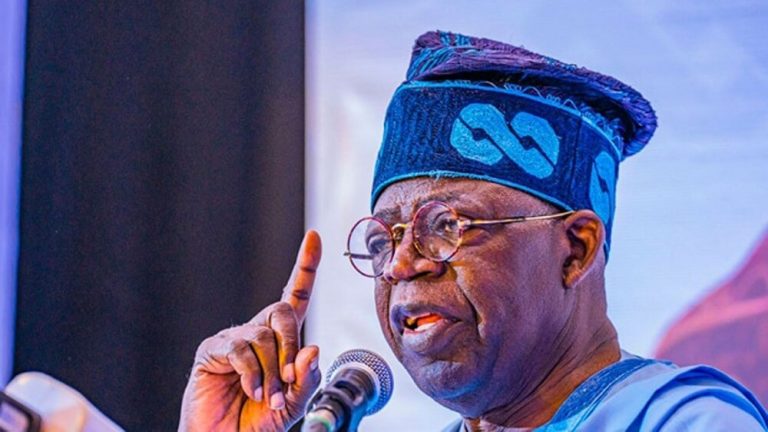
The President stated that his primary goals from the beginning, as outlined in the Renewed Hope Agenda, were to address economic instability, enhance national security, decrease corruption, reform governance, and elevate Nigerians out of poverty.

The President awarded himself a passing mark, stating, “We have stabilised our economy and are now better positioned for growth and prepared to withstand global shocks.

„Die Inflation hat begonnen, sich zu entspannen, wobei die Preise für Reis und andere Grundnahrungsmittel gesunken sind; the oil and gas industry is bouncing back; In 2025, rig counts increased by more than 400% compared to 2021, and commitments for over $8 billion in new investments have been made.

“As we move into 2025, we continue to meet our fiscal targets; gross proceeds per barrel from crude oil are largely in line with our forecasts as we increase our production ramp-up efforts.”

He stated that the fiscal deficit of the country has significantly decreased from 5.4% of GDP in 2023 to 3.0% in 2024.

“We accomplished this by enhancing revenue generation and increasing transparency in government finances; we generated over N6 trillion in revenue during Q1 of this year.

“We have stopped Ways & Means financing, which has significantly contributed to high and persistent inflation.

“The NNPC, freed from the weight of unmanageable fuel subsidies, has become a net contributor to the Federation Account. Additionally, we are ensuring fuel supply security through domestic refining.”

He stressed that the country’s debt situation was getting better.

“Although the revaluation of foreign exchange caused our debt-to-GDP ratio to rise to approximately 53 percent, our debt service-to-revenue ratio fell from almost 100 percent in 2022 to below 40 percent by 2024.

“We fulfilled our obligations to the IMF and increased our net external reserves by nearly 500%, rising from $4 billion in 2023 to over $23 billion by the end of 2024.

“Due to our reforms, the state revenue rose by more than N6 trillion in 2024. This growth has enabled subnational governments to lessen their debt burden, ensure timely payment of salaries and pensions, and increase investment in essential infrastructure and human capital development.”

Maybe that is merely a small part of the President’s wide-ranging evaluation of his administration’s accomplishments.

Experts, both domestic and international, concur with his perspective that the difficult times are genuinely in the past and that Nigerians are starting to gaze forward into the future with hope.

Indeed, this optimism reverberates worldwide, as both the World Bank and the International Monetary Fund (IMF) recognize that the Tinubu administration has put the country back on a growth trajectory within just two years.

As an example, the World Bank anticipates a 3.6 percent growth in Nigeria’s economy in 2025, following a 3.4 percent increase in 2024, and credits this growth to macroeconomic reforms that are stabilising the business environment.

The IMF had indicated as early as November 2024 that the reforms implemented by the Tinubu administration were effective and yielding the expected results.

At the 2024 G20 Leaders’ Summit in Rio de Janeiro, Brazil, Kristalina Georgieva, the IMF’s Managing Director, praised Tinubu for the reforms implemented by his government.

The head of the IMF pointed out that the reforms were both robust and challenging to execute, expressing satisfaction that the government had managed to uphold them.

She had come to the conclusion that the reforms were working and that Nigerians were starting to feel the benefits.

During the World Bank/IMF 2025 Spring Meetings in Washington D.C., Mr. Wale Edun, who serves as both the Minister of Finance and the Coordinating Minister of the Economy, stated that Nigeria was on the right track.

He stated that this confirmation arrived even before Fitch adjusted Nigeria’s credit rating from B minus to B, with a positive outlook.

The minister mentioned that the IMF remarked on Nigeria’s resilience, fostered by macroeconomic reforms, which had helped stabilize the economy and allowed the country to manage the effects of reciprocal tariffs from America and the resulting turmoil.

He noted that during the annual meetings of the World Bank, numerous prominent financiers, leaders, and multilateral organizations voiced their endorsement of Nigeria’s current reforms.

Nigerians are now synchronizing with the favorable international evaluation of the Tinubu administration’s performance at its midpoint.

Dr. Chinyere Almona, who serves as the Director-General of the Lagos Chamber of Commerce and Industry (LCCI), concurred that Tinubu’s courageous macroeconomic reforms had rectified structural distortions that had persisted for a long time.

She observed that two years into the administration, Nigeria had experienced major policy changes—most prominently, the elimination of fuel subsidies, the liberalization of the exchange rate, and efforts to bolster public revenues via tax reforms.

In the same vein, Mr. Kola Adesina, Managing Director of Sahara Group, commended President Tinubu’s reforms in the energy sector, noting that they had enhanced transparency and regulatory consistency while broadening investment opportunities.

Read Also: Tinubu Cautions Police Officers: Power Should Safeguard, Not Threaten

He stated that Tinubu’s bravery in eliminating the fuel subsidy and market distortions had allowed businesses and policymakers to plan with greater confidence and clarity.

“Today, the energy sector is more robust and sustainable. We are able to plan now; “the macro and micro elements are starting to collaborate, and there’s significant potential for long-term benefits,” Adesina said.

In the aftermath of fuel subsidy removal, petrol prices soared to between N1,200 and N1,400 in various locations nationwide. However, these prices have now decreased to between N875 and N890, and the scarcity and long queues at petrol stations have disappeared.

The Tinubu administration has addressed long-standing financial obligations in the power sector by paying legacy debts. This will facilitate the entry of new investors and encourage existing ones to expand their investments.

The government’s energy transition, propelled by an emphasis on natural gas and climate-aware solutions, including the gas-to-power initiative, is advancing.

“CNG is now the focus – the President has made it a priority; the carbon credit scheme is also growing,” Adesina said.

He stated that the work done by the Tinubu administration over the past two years constituted a robust basis for Nigeria’s future, adding that the present energy landscape was based on reliability, accessibility, and affordability.

His audacious tax reform is regarded as one of Tinubu’s most significant accomplishments.

The tax-to-GDP ratio in the country increased from 10% to over 13.5% by the end of 2024, marking an extraordinary advance within a single year.

Experts attribute this to intentional enhancements in tax administration and policies aimed at creating a fairer, more efficient, and more growth-oriented tax system.

It is said that the administration has removed the burden of multiple taxation, facilitating the growth of small businesses and their entry into the formal economy.

It is claimed that the aim of the tax reform is to protect low-income households and support workers by increasing their disposable income.

Fundamental services and goods like education, food, and healthcare will now be subject to a 0% VAT. To further decrease household expenses, rent, public transportation, and renewable energy will be completely VAT-exempt.

Experts also point to the strong performance of the Nigerian Exchange (NGX), regarded as the economy’s barometer, as another sign that the Nigerian economy has turned a corner.

According to Mr. Omoniyi Akinsiju, who chairs the Independent Media and Policy Initiative (IMPI), nearly all companies that posted losses in Q1 2024 returned to profitability, as evidenced by their respective balance sheets for Q1 2025.

He mentioned that the companies listed as having incurred losses, along with others, had experienced a resurgence. They not only recorded profits but also impressive profit margins.

“This clearly indicates the impact of the economic reforms implemented by the Tinubu administration.”

Akinsuyi further emphasized the advancements made in the country’s economic diversification, pointing out that the strategies implemented by the Tinubu administration raised Nigeria’s non-oil exports to 1.791 billion dollars in Q1 2025—a 24.75 per cent increase compared to the equivalent period of the previous year.

“As reported by the Nigeria Export Promotion Council (NEPC), 197 products, such as cocoa, fertiliser, cashew nuts, and sesame seeds, were exported in the first quarter of 2025; this signifies a rise from 162 products in Q1 2024.

“The extension to this is the rise in regional exports to ECOWAS countries by 223.10 per cent, from 19.5 million dollars in Q1 2024 to 63.06 million dollars in Q1 2025, while intra-African trade amounted to 32.73 million dollars,” he said.

According to Dr. Dele Alake, who serves as his Minister of Solid Minerals Development, Nigeria’s solid minerals sector drew in more than 800 million dollars in processing projects in 2025.

According to Alake, the income produced was propelled by the Tinubu administration’s fresh approach of enhancing local value addition and implementing stricter licensing measures.

The minister stated that the sector’s revenue exceeded ₦38 billion in 2024, a significant increase from the previous year’s ₦6 billion, even though it received only 18% of its allocated budget of ₦29 billion.

With the emergence of new security challenges, analysts claim that the Tinubu administration has achieved certain successes in the realm of security.

As Tinubu noted in his statement commemorating two years of his administration, the military has reestablished order in parts of the North-West that were previously dominated by bandits, thereby diminishing and eradicating threats to people’s lives and means of subsistence.

The President stated, “Farmers have returned to land tilling due to the success achieved, and highways that were previously perilous for travelers are now safer.

After two years in office, stakeholders agree that Tinubu’s Renewed Hope Agenda has produced tangible benefits and hope for sustainable growth.
Tinubu Cautions Police Officers: Power Should Safeguard, Not Threaten

0

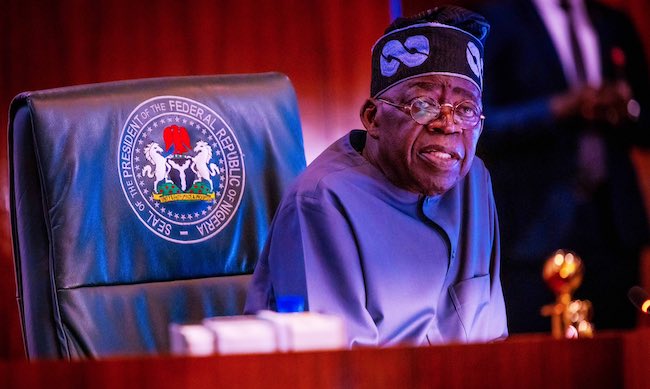
Bola Tinubu, the president, has cautioned members of the Nigerian Police Force not to intimidate or mistreat the general public.
He cautioned that they needed to maintain the rule of law and avoid any type of misconduct.
During the IGP’s Award and Commendation ceremony in Abuja on Wednesday night, which was the second annual event of its kind, the President issued the warning.

He made an appeal, represented by Senate President Godswill Akpabio, for the Force to uphold accountability and professionalism in the performance of their duties.

He said, “Remember that the power you wield is not meant for intimidation, but for protection. It is intended for service, not abuse. It is essential that you follow the highest standards of professionalism and accountability.
“Maintain legal standards, safeguard the rights of all individuals, and dismiss any type of wrongdoing or corruption. It is only then that we will be able to establish a police force that the community it serves genuinely respects and trusts.

He stated, while revealing that “the federal government will continue to do its part,” “I must also charge every police officer, regardless of rank or posting, to uphold the sacred trust bestowed upon you by the Nigerian people.

Read Also: Time to Produce Our Own Drugs, End Health Tourism – Dangote

“We will keep investing in the provision of state-of-the-art equipment, technological support, capacity-building initiatives, and welfare programs designed to improve operational efficiency and uplift morale throughout the ranks.

“This administration is unwavering in its dedication to transforming the Nigeria Police Force. We recognize that modern policing requires contemporary tools, ongoing training, intelligence-driven tactics, and collaboration with the community.

„An unsere Preisträger:innen des Abends: Herzlichen Glückwunsch! You have brought pride to the nation. You have reminded us of the possibilities that arise when duty meets dedication and service is driven by honour.

“However, I implore you not to be complacent. May this acknowledgment motivate you to reach even loftier heights. Allow your example to motivate others in the Force to imitate your dedication, diligence, professionalism, and integrity.

“This ceremony signifies more than just a time of festivity. It is a summons to recommit to service. It is a summons for every officer in the Nigeria Police Force to contemplate the values we need to maintain and the future we must collectively create.

“The people of Nigeria deserve a police force that is responsive, accountable, and respected. We need to meet that challenge together.

Time to Produce Our Own Drugs, End Health Tourism – Dangote

0

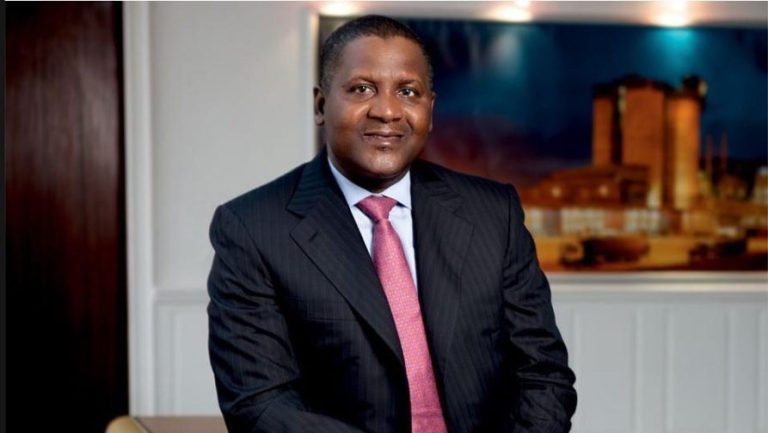
Aliko Dangote, chairman of the Dangote Group, has urged Nigerians to stop engaging in medical tourism and to begin local drug production.
This was stated by the billionaire businessman during a panel discussion at the Goalkeepers event organized by the Gates Foundation, which took place in Lagos on Wednesday.

He stressed that it is vital for all Nigerians to have the ability to treat themselves in Nigeria when they become ill. He suggested that collaborating with Bill Gates and the Gates Foundation was crucial for accomplishing this.

Dangote stated, “Our priority should be to put an end to health tourism and begin manufacturing our own medications.

„Es ist nun wichtig, dass wir im Krankheitsfall nicht alle ins Ausland reisen müssen. Dafür sollten wir eine Kooperation mit Bill (Gates) eingehen.“ ”

He remembered that the Dangote Foundation, in collaboration with the Gates Foundation, has contributed to the eradication of Polio in Nigeria and has made significant efforts to enhance nutrition.

As he sees it, his company has accomplished a great deal in business by turning many things around. He noted that while Nigeria was formerly the world’s second-largest cement importer, it now exports more cement than any other country in Africa.

Read Also: Jigawa Govt Uncovers 7,000 Nonexistent Workers on Payroll

Dangote further emphasized the difficulties farmers once faced in obtaining fertilizer. Today, he has constructed the world’s second-largest fertilizer plant from scratch.

“Currently, Nigeria not only exports but actually sends 37% of our fertilizer to the United States,” he stated.

With regard to petroleum, Dangote asserted that he accomplished something unprecedented by constructing a refinery with a capacity of 650,000 bpd. He disclosed that the Dangote Refinery exported 400,000 metric tons of petrol in May 2025 alone.

He stated that this has eliminated Nigeria’s dependence on imported petrol, as the country no longer brings in the product.

Jigawa Govt Uncovers 7,000 Nonexistent Workers on Payroll

0

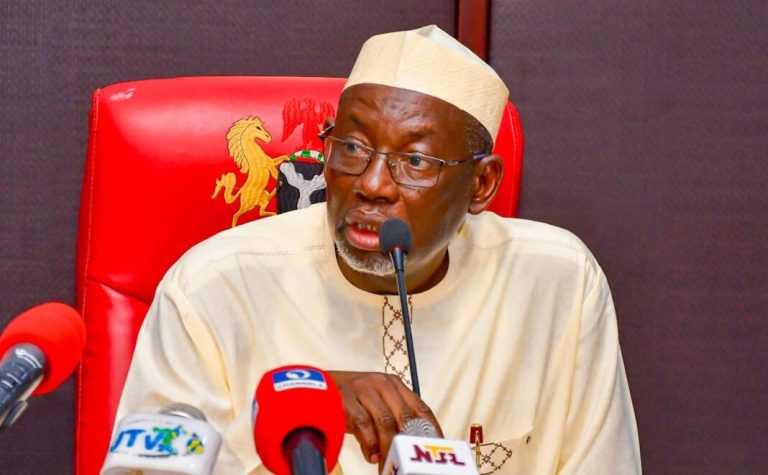
The Jigawa State Government has announced the discovery of around 7,000 ghost workers during a verification process of state employees across different agencies and departments.

During an interview with journalists to commemorate Governor Umar Namadi’s two-year anniversary in office, the state Commissioner for Finance, Hannatu Sabo, disclosed this on Wednesday in Dutse, the state capital.

Sabo states that the ghost workers declined to come forward for verification, resulting in their removal from the payroll.

“The employees who were not real were taken off the payroll as they did not show up for the verification exercise.

She emphasized, “The verification exercise and the removal of ghost workers from the payroll have also demonstrated the government’s commitment to transparency and accountability.”

The commissioner credited the successful verification to the government’s initiatives aimed at workforce optimization and the eradication of fraudulent activities.

She emphasized, “The Jigawa State Government’s initiatives to eradicate ghost workers and optimize its workforce reflect its dedication to transparency and accountability.”

She added, “The exercise also resulted in the recruitment of new staff under the J-Health, J-Teach, and J-Agro programmes.”

Sabo emphasized the government’s dedication to ensuring its employees receive respectable remuneration, noting that the state is financing 100 percent of the new salary framework, thus ranking among the nation’s highest-paying states.

The commissioner disclosed that, aside from the salary payments, the state has received supplementary funds from the federal government, which will enhance the state’s revenue further.

“The additional funds we have received from the federal government through the monthly allocation to the state and local government councils will significantly support our development projects,” she stated.

The commissioner further disclosed that the Jigawa State Government has shown its dedication to punctual salary payments by ensuring that employees receive their salaries before the 25th of each month, in accordance with the governor’s directive.

“As per the governor’s directive, we are disbursing salaries to employees before the 25th of each month,” Sabo stated.

Read Also: Governor Declares Emergency in Akwa Ibom, Assigns Sole Administrator

She stated that the government has invested significantly in multiple sectors, such as education and energy, declaring that “Jigawa State Government under the leadership of Governor Namadi has purchased a privately owned Khadija University in Majia, and the government has also acquired shares in the Kano Electricity Distribution Company (KEDCO) for the benefit of the state’s citizens.

“Buying Khadija University and acquiring shares in KEDCO are anticipated to enhance the state’s income and elevate the quality of education and electricity provision. Additionally, the government’s backing of microfinance banks will extend financial services to a greater number of people, particularly those in rural regions.

She remarked that within the two years of Namadi’s current administration, the state government has backed microfinance banks in certain local governments and intends to establish branches in all other local governments lacking banks.

“The governor has mandated the establishment of microfinance bank branches in all local governments that currently lack banks,” Sabo added.

Governor Declares Emergency in Akwa Ibom, Assigns Sole Administrator

0

The governor of Akwa Ibom State, Umo Eno, has announced a State of Emergency for the newly upgraded Ibom Paint factory (previously Peacock Paints), situated in Etinan Local Government Area.
On June 4, Wednesday, while commissioning the upgraded facility, the governor announced it.

He appointed Ime Uwah, who was his Senior Special Assistant on Entrepreneurial Development, as the Sole Administrator of the company as part of the overhaul strategy.

During the event, Governor Eno emphasized the necessity of concentrated leadership to rejuvenate the lifeless state-owned enterprise.

“A couple of months back, in one of our meetings to review the project, we discussed the topic of reviving Ibom Paint. I inquired of Pastor ImoAbasi Jacob whether it was truly possible to breathe life into this place. His answer was: ‘Yes, we can.’ Eno stated, “What this place needed was a dynamic management free from distractions, and that is what it now has.”

He added: “I have announced a State of Emergency on Ibom Paint, with Honourable Ime Uwah serving as the Sole Administrator. He manages this factory and has delivered results over the past three months. Youth will be engaged by this place, so it is vital we ensure its continuation.

Read Also: NLC Faults Tinubu’s Governance, Cites Harsh Impact on Workers

To enhance local enterprise and job creation, Eno instructed all contractors managing state government projects to start using Ibom Paint products.

He praised Pastor ImoAbasi Jacob, Managing Director of Akwa Ibom Investment Corporation (AKICORP), for his crucial contributions to the factory’s revival and commended his “passionate efforts in translating the government’s vision.”

He assured, “We will keep collaborating with AKICORP to guarantee that all state-owned enterprises operate at their best.”

NLC Faults Tinubu’s Governance, Cites Harsh Impact on Workers

0

As President Bola Tinubu’s administration reached its two-year mark, the Nigeria Labour Congress (NLC) issued a harsh assessment, characterizing the time as one of intensified suffering, economic mismanagement, and increasing repression.
Reports indicate that Joe Ajaero, the President of the NLC, delivered a harsh assessment stating that Nigerians had little to celebrate.
Ajaero stated in a Wednesday release, “Upon assuming office on May 29, 2023, President Bola Tinubu promised a new dawn—courageous economic reforms aimed at rescuing Nigeria from fiscal instability and guiding it toward prosperity.

“However, after two years, the only thing bolder than his rhetoric is how much suffering and hardship his policies have caused for workers and everyday Nigerians. His administration has not renewed hope; instead, it has recycled past failed neoliberal experiments, demonstrating once again that you cannot cure a patient by prescribing the poison that caused their illness in the first place. “ The abrupt withdrawal of the petrol subsidy sent tremors through an economy already in a delicate state, leading to a fuel price surge from N187 to more than N600 per litre overnight. The government asserted it was a necessary sacrifice to allocate funds for development, but where are the outcomes?

“Rather than reinvesting, Nigerians faced an inflationary crisis so brutal that families are now skipping meals, businesses are closing daily, and transport expenses devour the meager wages of workers. When the naira is subjected to the so-called ‘market forces,’ its value has plummeted, making Nigeria a discount haven for neighboring nations, as local industries struggle under the burden of imported inflation.

“The frustration of this pain is compounded by the fact that it’s all familiar. This script is familiar: subsidy removals, devaluations, and IMF-approved austerity have been presented each time as the painful but necessary measures Nigeria must accept for a brighter future. But when has it succeeded at all? The same policies in previous administrations only exacerbated inequality, enriched a select few, and impoverished the majority. Tinubu’s version is not different—except that the suffering is greater, the anger more pronounced, and the government’s response more violent.

Read Also: Tinubu’s Meeting With Adeleke and Fubara Triggers Political Rumours

Ajaero further asserted that the inflation rate for pensioners in the country exceeds 150 percent and that Nigerians are currently experiencing multi-dimensional poverty.

During its two years in power, the labour leader alleged that the current administration has engaged in intimidation and harassment of both Labour leaders and trade unions in Nigeria.

Ajaero added, “The real wages of Nigerian workers have been completely destroyed. Pensioners, SMEs (which are experiencing input inflation exceeding 150%), and 150 million Nigerians are currently classified as multi-dimensional poor. Nigerian Labour leaders and trade unions have faced two years of intimidation and harassment. Open contempt for court orders and the criminalization of union protests and activities have become standard. At the federal level, wage award arrears have not been settled, notwithstanding multiple assurances.

“The only significant initiative is the Federal Government’s provision of compressed natural gas (CNG) buses to facilitate transportation for Nigerian workers. However, this effort is insufficient and hindered by serious deficiencies in gas infrastructure. ”
“The promised discussion with labor unions has been substituted with threats and brutality. As workers asking for a living wage are confronted with threats and batons, the government indulges in luxury. These officials who advocate for sacrifice travel in armored convoys, indulge in extravagant spending, and misuse public funds as if they were their own private savings. In the meantime, factories shut down, employment opportunities disappear, and hunger becomes a hallmark of Tinubu’s Nigeria.

“Whose gain is this foolishness?” Not those millions of Nigerians who can no longer afford food or transportation.

„Nicht die kleinen Unternehmen, die unter den steigenden Kosten begraben liegen. The true beneficiaries are the usual suspects: the oil cartels, currency speculators, political elites with offshore accounts, and their foreign supporters at the IMF and World Bank, who have long viewed Nigeria as a testing ground for their disastrous economic theories.

The NLC President commented on the economic situation of the country under Tinubu’s leadership, stating, “Economic performance can only be measured by how well the citizens feel. The enormous hardship that permeates our country cannot be accounted for by any degree of data manipulation. There is great concern regarding the future among workers and everyday Nigerians.

“Regardless, in the surreal landscape of a country struggling with growing insecurity, delving into the details of economic policy feels comparable to discussing the color of curtains in a house on fire. The widespread danger of mass kidnappings, abductions, and banditry looms large over society, making discussions about the economy seem almost ridiculous in light of pressing, life-threatening emergencies.

“Although economic stability is certainly an essential part of governance, the fact that citizens live in constant fear, with their lives disrupted by the atrocious deeds of criminals, necessitates urgent focus and action. In such an environment, who will invest other than looters and plunderers?

He expresses sorrow over the fact that terrorism has become commonplace in the country, resulting in daily casualties and damage to property nationwide.

Ajaero added, “The number of Boko Haram and other insurgent groups has increased in recent years, and lives and properties are lost every day throughout the country. Our country is engaged in war. Amidst such a climate, the absurdity stems from the glaring disconnection between bureaucratic deliberations on fiscal policy and the immediate, visceral needs of a population ensnared in the turmoil of insecurity.

“The hypothetical advantages of economic strategies and the immediate dangers to citizens’ safety and welfare leave them feeling divided. The immediacy of dealing with the security crisis serves as a clear reminder that, when it comes to priorities, safeguarding life and freedom must come before economic discussions, which calls into question the essence of governance during times of great hardship.

“The truth is straightforward: reforms that bring only suffering without benefit are not reforms at all. They represent distortions—intentional attacks on the impoverished to benefit a system that favors the influential. To genuinely restore hope, this government must forsake these inhumane trials, heed the populace’s voice, and establish a new direction that prioritizes Nigerians over foreign creditors and opportunists in its policymaking. Anything below that level constitutes a breach of public trust.

Tinubu’s Meeting With Adeleke and Fubara Triggers Political Rumours

0

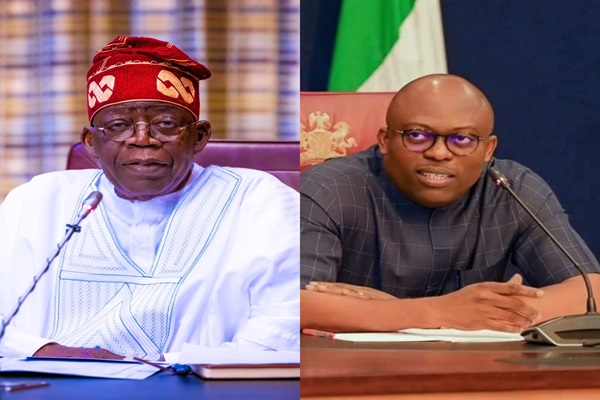
After a significant meeting involving President Bola Tinubu and Governors Ademola Adeleke of Osun State and Siminalayi Fubara of Rivers State, speculation has intensified regarding possible defections from the Peoples Democratic Party (PDP) to the ruling All Progressives Congress (APC).
Reports indicate that the gathering, which took place on Tuesday at the President’s private home in Ikoyi, Lagos, has ignited a fresh discussion concerning the political allegiances of both governors.
Governor Adeleke, accompanied by his brother and business magnate Deji Adeleke as well as Afrobeat icon David Adeleke (known as Davido), was said to have talked about political issues with Tinubu. These issues included the Osun governorship election in 2026 and the general elections in 2027.

Adeleke’s attendance at the meeting follows closely after he visited APC chieftain and former Osun Governor, Bisi Akande, intensifying rumors of a possible switch to the APC.

Read Also: Trump Expands Travel Ban to Cover Chad, Congo, and 10 More Countries

This visit is particularly noteworthy because it comes at the same time that the federal government is withholding Osun’s local government allocations for February, March, and April 2025.

Adeleke, who broke the APC’s 12-year hold on Osun in 2022, also handed the state to the PDP’s presidential candidate in 2023, achieving a clean sweep of Senate and House of Representatives seats. His political influence in the South-West has thus turned into a key focus for both camps.

“Should the party persist in ignoring the interests of governors in its strongholds, it may risk losing its frontline leaders before 2027,” cautioned a PDP insider.

With Oyetola, the former governor who is now part of the federal cabinet, lacking a clear successor, the APC, intent on regaining Osun in 2026, confronts an internal challenge. It is suggested by analysts that Adeleke could be sought after to strengthen Tinubu’s support in the South-West region, particularly with the 2027 presidential election approaching.

According to sources close to the presidency who spoke with the Guardian, Adeleke is reportedly looking for guarantees of non-interference in his 2026 re-election campaign as part of a deal to support Tinubu’s ambitions for 2027. His recent meeting with Attorney General Prince Lateef Fagbemi further signifies strategic consultations.

Fubara in Focus In Rivers State, it seems that Governor Siminalayi Fubara’s political path is aligning with federal interests. His visit to Tinubu follows a resurgence of tensions involving the Minister of the FCT, Nyesom Wike. The crisis, which has arisen from a drawn-out legislative impasse, has led to the suspension of pro-Fubara lawmakers and the reemergence of impeachment threats.

Tinubu mediated a ceasefire in December 2023, but peace is still out of reach. Chief Olusegun Osoba, who served as the governor of Ogun in the past, validated that reconciliation efforts are underway by stating, “The discussions were cordial, but the details remain private.”

Meanwhile, Fubara has not yet made an open comment regarding his political loyalty; According to sources, a potential arrangement could involve the federal government removing sanctions against him in return for his alignment with the APC or support for Tinubu’s re-election.

The political calculations for Adeleke and Fubara are straightforward: a realignment could fulfill their local ambitions and connect them with the federal centre. For the APC and Tinubu, incorporating influential opposition governors could bolster the party’s control over power as they approach the 2027 elections.

Trump Expands Travel Ban to Cover Chad, Congo, and 10 More Countries

0

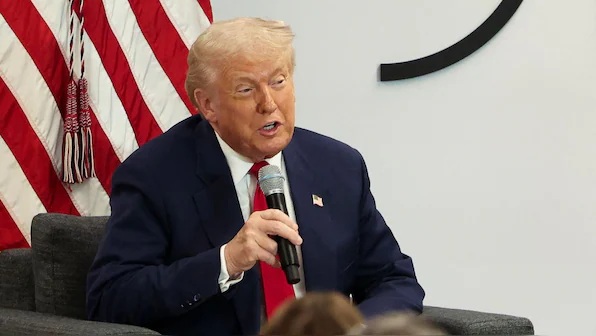
In light of concerns regarding national security, President Donald Trump has enacted a new proclamation that prohibits citizens from 12 countries from entering the United States.

Nationals from Afghanistan, Myanmar, Chad, Congo, Equatorial Guinea, Eritrea, Haiti, Iran, Libya, Somalia, Sudan, and Yemen are impacted by the comprehensive travel ban.

The limitation will come into effect on June 9, 2025.

Alongside the total prohibitions, the proclamation establishes partial limitations on individuals from Burundi, Cuba, Laos, Sierra Leone, Togo, Turkmenistan, and Venezuela.

According to the BBC, there are a few exceptions, such as athletes traveling for major sporting events, certain Afghan nationals, and dual nationals whose other citizenships belong to unaffected countries.

Read Also: Amaechi Denies Offering Wike Finance Commissioner Role, Dismisses Allegations as “Mischievous

Trump indicated that the purpose of the measure is to stop people deemed potential security risks from entering the US.

In a video message posted on X on Wednesday, he stated, “We cannot allow open migration from any country where we cannot safely and reliably vet and screen.”

The White House stated that the countries subjected to the most stringent restrictions were considered to have a “large-scale presence of terrorists,” insufficient cooperation on visa-related security measures, and inadequate systems for verifying travelers’ identities.

The administration pointed to problems like inadequate record-keeping of criminal histories and elevated visa overstay rates as additional contributing factors.

The new directive expands on the broader immigration crackdown initiated by Trump at the start of his second term.

On January 20, the president issued an executive order that required more stringent security checks for foreign nationals and directed federal agencies to assess which countries should be considered for entry suspensions based on insufficient vetting processes.

This action resembles Trump’s contentious travel ban from his first term, which initially affected seven majority-Muslim nations and was confirmed by the US Supreme Court in 2018.

In 2021, President Joe Biden rescinded the ban, calling it “a stain on our national conscience.”