Home Blog Page 230

Sanwo-Olu’s Fallout with Tinubu Tied to Alleged 2023 Election Funding for Atiku

0

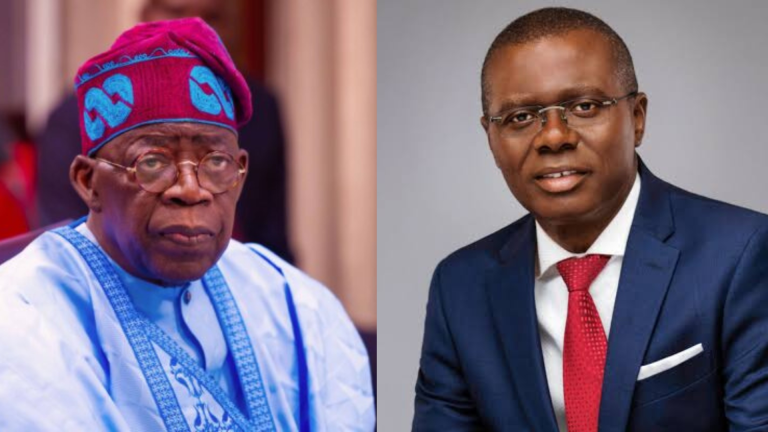
Muraina Taiwo, a member of Lagos State’s Governance Advisory Council (GAC), has stated that President Bola Tinubu and Governor Babajide Sanwo-Olu’s apparent feud has been resolved.
Taiwo, who spoke with Punch over the phone on Sunday, said the misunderstanding had been resolved.
“God has already resolved everything they are saying. The father (Tinubu) has dragged his son (Sanwo-Olu) closer, and the son has hugged his father; we are now together in Lagos.

“It only looked like that, but currently, we are in the meeting, and God has done it,” he told us.

Olusegun Osoba, former Ogun State Governor and APC chieftain, also weighed in, saying party leaders were actively attempting to repair the schism between the two leaders.

“You don’t expect an elder like myself to reveal what we’re doing. But know that we will not remain silent and let the situation spiral out of hand.

After all, I’m involved in the Lagos and Rivers crises. “We are assuring the nation that everything will be fine,” added Osoba.

The reconciliation comes after widespread speculation about the President’s icy attitude toward Sanwo-Olu during his recent trip to Lagos.

On May 31, at the inauguration of the 30km portion of the Lagos-Calabar Coastal Highway, videos leaked on social media showed Tinubu allegedly ignoring Sanwo-Olu’s greeting.

The governor was also absent from the two-day-old commissioning of the 27-kilometer Lekki Deep Seaport Road, adding to fears about deteriorating relations.

Sanwo-Olu’s deputy, Obafemi Hamzat, attended the ceremony but did not speak on behalf of the state, which is unusual for official state ceremonies.

To add to the uneasiness, Sanwo-Olu was not in Lagos for the President’s Sallah celebrations, instead went to Uyo, Akwa Ibom State, to bring Governor Umo Eno into the APC.

Meanwhile, images of Lagos Assembly Speaker Mudashiru Obasa prostrating before Tinubu in Lagos went viral on Saturday, implying a deepening split.

However, on Sunday, the President’s media aide, Bayo Onanuga, shared a group photo of Tinubu with Sanwo-Olu, Hamzat, Obasa, and GAC members on X, implying a restoration to normalcy.

According to sources close to the Lagos political structure, the schism predates the current Lagos Assembly crisis, which resulted in Obasa being briefly removed as speaker before his reinstatement.

According to Punch, Tinubu’s rage was fueled by reports that Sanwo-Olu supported Atiku Abubakar’s 2023 presidential campaign, which both the Presidency and Atiku’s camp have firmly denied.

According to the source, “it is proven that there is a gap (between the President and the governor). According to what I gathered, it was because Sanwo-Olu was reported to have provided Atiku money during his campaign.

“Recall that at one point, Sanwo-Olu sought the court to seek an injunction against the EFCC from investigating him. “The following day, Sanwo-Olu denied it.”

He said that the governor’s decision was the result of a deteriorated relationship.

“The Obasa’s issue is just the last straw that broke the camel’s back,” said one insider.

While allegations of financial ties between Sanwo-Olu and Atiku gained momentum in certain stories, the Presidency, Atiku, and the EFCC all denied them.

Atiku, via his media adviser, Paul Ibe, described it as a “baseless smear campaign.”

In 2024, news appeared that Sanwo-Olu had launched a lawsuit against the EFCC to avoid a possible post-tenure detention. The Lagos State administration, through its Attorney General, Lawal Pedro (SAN), disputed the claim.

The EFCC further denied that its ongoing case against Aisha Achimugu, a socialite who has been proclaimed sought for alleged money laundering, has anything to do with Atiku or Sanwo Olu.
Read Also: Peter Obi Criticizes Tinubu: Coastal Road Can’t Outweigh Security Needs

Peter Obi Criticizes Tinubu: Coastal Road Can’t Outweigh Security Needs

0

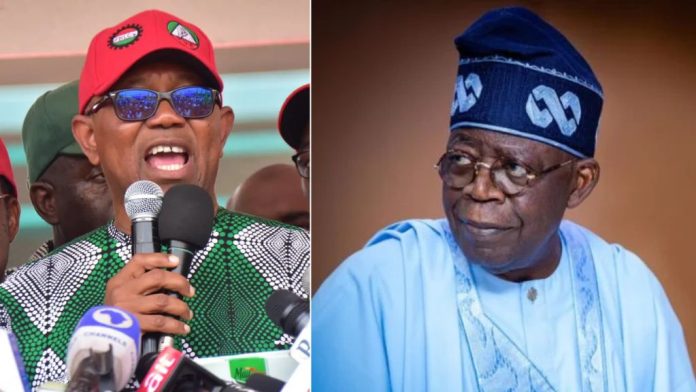
Peter Obi, a former presidential candidate for the Labour Party, has called the current coastal highway project being carried out by President Bola Tinubu’s administration an inappropriate priority.
According to the former governor of Anambra State, the current administration must address more urgent problems including the difficulties posed by insecurity and a faltering economy.
He asked why such massive infrastructure projects are being prioritized above initiatives that directly impact residents’ lives.

In a Monday interview with Arise Television, Obi questioned the project’s timing and justification for the Lagos-Calabar coastal route.

He said it is dubious to spend a lot of money on a number of infrastructure projects that will “lead nowhere when we have crisis.”

He questioned, “Are you saying that securing Nigeria is less important than the coastal road?”

According to reports, the former governor maintained that before starting such large-scale initiatives as the coastal highway project, the problems of insecurity and economic stabilization must be resolved.

Read Also: Political Feud Between Akume and Alia Deepens Insecurity in Benue

“The roads we have across the nation are no longer durable,” he remarked. You secure your nation by using your resources and repairing those roads first. Roads are significantly less important than security. If you couldn’t drive to your village, would you rather have a road? Let’s continue what we are doing if you would like. Therefore, let’s address those issues if you claim that our problem is power, our problem is insecurity, or they are unable to travel to the farm.

As a government, we are. We need to take immediate action to protect our people.

He urged the administration to provide the security forces the authority to respond forcefully to any criminal danger.

“We would proclaim a state of war if we were engaged in combat. I would do everything it took to protect the nation,” Obi declared.

Political Feud Between Akume and Alia Deepens Insecurity in Benue

0

By Nelson Ogbu

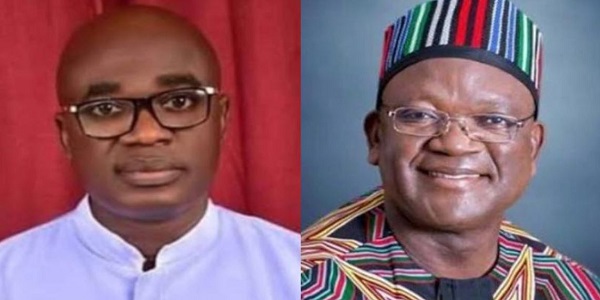
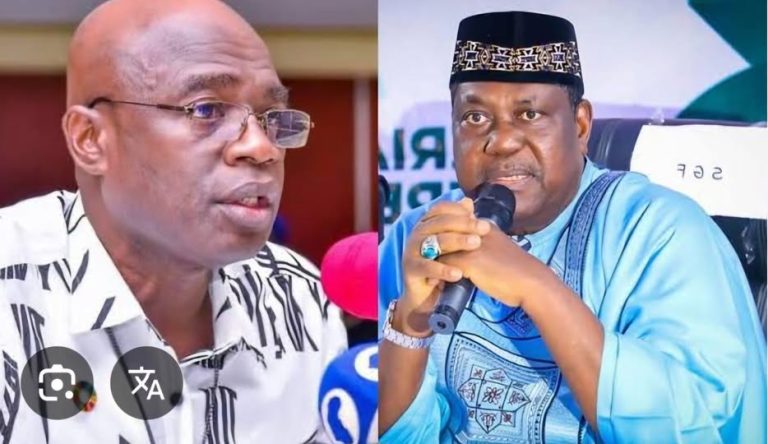
Benue State is facing a dual crisis: a surge in insecurity and a festering political feud between two of its most influential sons—Secretary to the Government of the Federation (SGF), Senator George Akume, and Governor Hyacinth Alia. Their power struggle within the All Progressives Congress (APC) has fractured the party and now threatens to undermine efforts to address the state’s growing security concerns.

Origins of the Feud

The tension between Akume, a long-standing political leader in Benue, and Governor Alia, once his protégé, began over disagreements in party leadership and governance style. The tipping point came in 2023 during the tussle over the Speakership of the Benue State House of Assembly. While Akume backed Mrs. Becky Orpin, Governor Alia outmaneuvered him to install his ally, Mr. Aondona Dajoh, as Speaker—signaling a significant power shift.

Despite Governor Alia’s public denials, dismissing the rift as mere “speculation,” the divide is visible. The APC in Benue now operates in two clear factions: one loyal to Alia, led by Benjamin Omale, and the other to Akume, led by Austin Agada. Attempts by the APC national leadership to mend fences, including forming a caretaker committee with members from both camps, failed after Agada’s group secured a court order to block the dissolution of its executive.

Security Implications of Political Disunity

The timing of this political disarray could not be worse. Benue is once again witnessing a rise in violence, particularly deadly clashes between farmers and herders. In recent weeks, coordinated attacks in Gwer West and Apa Local Government Areas claimed more than 20 lives.

These tragedies highlight the urgent need for cohesive and united governance. Unfortunately, political rivalry has disrupted crucial lines of communication and cooperation. Influential politicians loyal to Akume—many of whom reside in conflict-prone areas and possess valuable grassroots intelligence—are reportedly sidelined by the Alia administration. The reverse is also true, creating an information gap and weakening collective response strategies to the violence.

Governance Paralysis and Fallout

The feud has paralyzed parts of the Benue State administration. Lawmakers aligned with Akume have faced suspensions, denial of official vehicles, and delays in accessing constituency allowances. Meanwhile, federal legislators allied with the SGF remain at odds with Governor Alia, further exacerbating the dysfunction.

This internal strife distracts from the urgent need to secure lives and property. Criminal elements are emboldened by the lack of unified leadership, exploiting administrative gaps to intensify attacks on communities.

Calls for Reconciliation

Recognizing the damage the feud is causing, several stakeholders have appealed for unity. The Tiv Traditional Council, led by the Tor Tiv, Professor James Ayatse, has intervened, urging both leaders to place Benue’s interests above personal or political ambitions. The North-Central APC Forum has similarly warned that continued division could spell doom for the party’s 2027 electoral prospects in the region.

Despite these peace overtures, reconciliation remains elusive. Reports suggest that Governor Alia has resisted efforts by President Bola Tinubu and other APC elders to broker peace. In a recent appearance on Channels Television’s Politics Today, Alia hinted at deeper political undercurrents, revealing that preliminary findings from a Judicial Commission of Inquiry on insecurity point to the complicity of “big Abuja-based politicians”—a veiled reference many believe targets Akume’s allies.

He further vowed to take decisive action against those implicated, stating, “I will deal with them without mercy when the full report is out.”

The ongoing feud between Senator George Akume and Governor Hyacinth Alia is more than a political power struggle—it is a destabilizing force undermining governance and worsening insecurity in Benue State. At a time when unity is vital to confront violence and restore peace, disunity within the ruling party has left the state vulnerable.

Benue’s path to peace, development, and stability hinges on reconciliation and collaboration among its political leaders. Anything less risks plunging the state deeper into crisis, with citizens paying the ultimate price.

Insecurity in Benue State: A Comparative Analysis of Ortom’s Bold Leadership vs. Alia’s Passive Approach

0

Benue State continues to grapple with violent farmer-herder clashes and widespread insecurity. While both former Governor Samuel Ortom and current Governor Hyacinth Alia inherited deeply rooted crises, their approaches to resolving these issues have been markedly different. Ortom is remembered for bold, confrontational policies aimed at defending his people, whereas Alia’s tenure has been characterized by cautious rhetoric and minimal innovation. This report evaluates their leadership styles, policies, and outcomes, revealing why Ortom’s tenure is seen as more effective in the fight against insecurity.

1. Security Philosophy: Transparency vs. Denial

Ortom: Direct and Confrontational
Governor Ortom adopted an unyielding stance on insecurity, openly condemning herder attacks and challenging the federal government’s perceived complicity. He frequently addressed the public during crises, even inviting media coverage of mass burials to highlight the severity of the violence. This transparency built public trust and mobilized support for state-led interventions.

Alia: Ambiguous and Evasive
Governor Alia, on the other hand, projects an image of “relative peace,” often downplaying ongoing violence. His administration has been accused of suppressing information about killings, particularly after declaring peace in troubled areas like Gwer East, where attacks have continued. Farmers and local leaders see this as a denial of reality and a betrayal of their suffering.

2. Policy Implementation: Institutional Innovation vs. Cosmetic Changes

Ortom’s Legislative and Structural Framework
Ortom’s government enacted the Open Grazing Prohibition and Ranches Establishment Law in 2017, a decisive legal step to restrict herders’ movements and prosecute offenders. He also established the Community Volunteer Guards and Livestock Guards, both aimed at localized intelligence gathering and law enforcement.

Alia’s Minimal Adjustments
Alia has retained Ortom’s laws without introducing significant new legislation or enforcement strategies. His main contribution has been the rebranding of Ortom’s security outfits into “Operation Anyam Nyor,” a move critics say is superficial. No substantial institutional reforms have accompanied this change, and operational efficiency remains stagnant.

3. Federal Engagement: Defiance vs. Compliance

Ortom: Confronting the Centre
Ortom boldly criticized the Buhari administration for failing to protect Benue, often accusing it of enabling attacks. While this confrontational approach strained federal relations, it rallied local support and drew national attention to Benue’s plight.

Alia: Silence and Submission
In contrast, Alia avoids criticizing the federal government under President Tinubu, choosing instead to praise federal support despite the persistence of violence. This deference is viewed as political expediency rather than genuine leadership.

4. Operational Outcomes: Measurable Action vs. Rhetoric

Ortom: Localized Security Response
Under Ortom, security forces trained and deployed across rural areas responded rapidly to attacks. The Community Volunteer Guards and Livestock Guards were active in enforcing the anti-grazing law, leading to arrests and deterrence.

Alia: Equipment without Effectiveness
Although Alia has distributed motorcycles and Hilux vehicles to security agencies, he has admitted that no terrorists have been apprehended. His security initiatives have yielded no measurable success, and even his supporters question the effectiveness of these efforts.

5. Humanitarian Response: Empathy vs. Optics

Ortom: Focused on IDP Protection
Ortom maintained IDP camps and acknowledged the displacement of over four million people, attracting local and international support. His administration prioritized safety over public relations.

Alia: Forced Returns Amid Ongoing Violence
Alia has claimed that IDPs have reduced to under one million and has reopened markets in some areas. However, reports indicate that many of these “returns” are premature, with attacks still occurring in local governments like Agatu and Gwer West. Survivors have accused the government of coercing returns to create a false image of peace.

6. Leadership and Accountability: Courage vs. Excuses

Ortom: Political Courage
Ortom survived an assassination attempt and refused to repeal the anti-grazing law despite federal pressure. He stood firmly with Benue farmers, earning widespread respect for his resolve.

Alia: Deflecting Responsibility
Alia continues to blame Ortom for the insecurity he inherited, even though Ortom faced similar challenges from his own predecessors. His aides accuse Ortom of “envy” rather than addressing the current realities. Residents in places like Gwer East describe a growing sense of abandonment and fear.

Leadership Matters

Ortom’s tenure, though not without flaws, was marked by three defining traits that are glaringly absent in Alia’s administration:

  • Transparency: Willingness to expose the harsh realities to mobilize help and demand justice.

  • Accountability: Creation and enforcement of legal frameworks to protect lives.

  • Courage: Readiness to confront political powers to defend Benue’s interests.

Alia’s leadership so far has relied on inherited policies, minimal reform, and public relations narratives. Without concrete results, his claims of peace appear hollow. Until Governor Alia adopts a bolder and more transparent strategy, Benue’s security situation risks further decline.

Final Verdict:
Samuel Ortom stood with the people in their darkest moments, confronting attackers and calling out federal failures. Hyacinth Alia, by contrast, appears more concerned with avoiding controversy and maintaining political alliances. The difference is clear: Ortom fought for Benue’s future; Alia merely manages its perception.

Why the Federal Government Is Constructing a Rail Line to Niger Republic

0

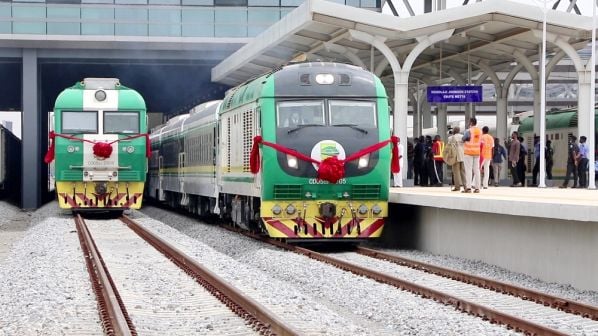
Kayode Opeifa, the managing director of the Nigerian Railway Corporation, has provided additional context for the federal government’s desire to see the Kano-Maradi Railway project completed.
He claims that in an attempt to guarantee food security in the nation, the administration is establishing ties between Nigeria and the Niger Republic.
During an interview on Channels Television on Saturday, Opeifa stated that the Kano-Maradi railway line is a connection that will ensure Nigeria’s food supply chain.
He claimed that Maradi is linked to the food security of Nigeria and West Africa in terms of cattle and cereal, and that it will be simpler to go to other regions of Nigeria if the link to Kano is established.

In accordance with AU 2063, African nations are urged to establish connections with landlocked nations due to their potential. By the way, according to the information I’ve read, Maradi is linked to the cattle and crop security of Nigeria and West Africa. You can see how Kano and Maradi are related.

In addition, food security will not exist if mobility is eliminated from the equation. Nigerian managers of our food security should realize that removing mobility from logistics and supply chains is really a joke.

Read Also: Veteran Musician Mike Ejeagha, Known for ‘Gwo Gwo Gwo,’ Passes On

“The Kano-Maradi, which will now be Kano to Kaduna, Kaduna to Abuja, and Abuja to Lagos, will represent mobility, which is at the heart of food security,” the NRC chief stated.

He claimed that most people are merely wary of the name of Maradi, which is in another nation, and do not comprehend the necessity of resolving the mobility issue in food security.

“Now, the government is also actively pursuing,” he stated. Many people only hear the term Maradi and don’t know what the Kano-Maradi actually is.

Speaking further, it was claimed that Opeifa reaffirmed the government’s commitment to establishing new train lines throughout cities in order to ensure that important cities are connected via a new rail infrastructure map.

He went on to say that because the rail system was added to the concurrent list, states now have more options to get funding for the development of their rail lines.

Veteran Musician Mike Ejeagha, Known for ‘Gwo Gwo Gwo,’ Passes On

0

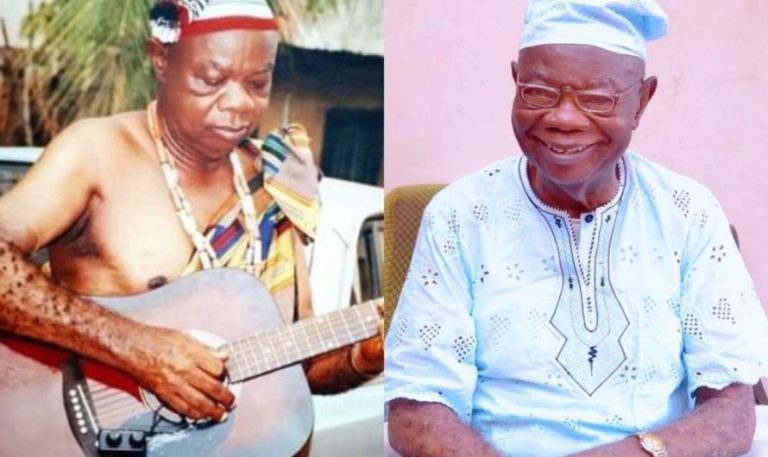
Mike Ejeagha, the well-known Highlife maestro who turned Igbo proverbs and traditions into enthralling music, has passed away.
The “Gwo Gwo Gwo crooner” passed away on Friday, June 6, 2025, at the age of 95, according to reports.
On Friday night, Emma Ejeagha, the musician’s eldest son, confirmed his passing to Vanguard.

It was reported that the singer passed away at the Nigerian Army’s 32 Garrison Hospital in Enugu.

Mike Ejeagha’s distinctive Igbo folk music style, which appealed to all age groups, made him a prominent voice on Nigerian radio in the 1980s.

Other news: Justice Mohammed Lawal Uwais, the former Chief Justice of Nigeria, died at the age of 89.

According to reports, his family released a statement on Friday, June 6, 2025, announcing his death.

Read Also: Mike Ejeagha’s Passing Leaves Huge Gap in Our Culture – Gov Mbah

Uwais, who was born on June 12, 1936, in Zaria, Kaduna State, was known as a reformer dedicated to maintaining the integrity of the bench and a champion of judicial independence. He held the position of Chief Justice of Nigeria (CJN) from 1995 to 2006.

His unwavering commitment to justice, constitutionalism, and democratic governance earned him widespread respect throughout his tenure.

“Inna Lillahi Wa Inna Ilaihir Rajiun.” In a succinct statement, the family wrote, “We announce the passing of our beloved father, Justice Mohammed Lawal Uwais, former Chief Justice of the Federation, with heavy hearts but with immense gratitude to Allah Subhanahu Wa Ta’ala.”

Mike Ejeagha’s Passing Leaves Huge Gap in Our Culture – Gov Mbah

0

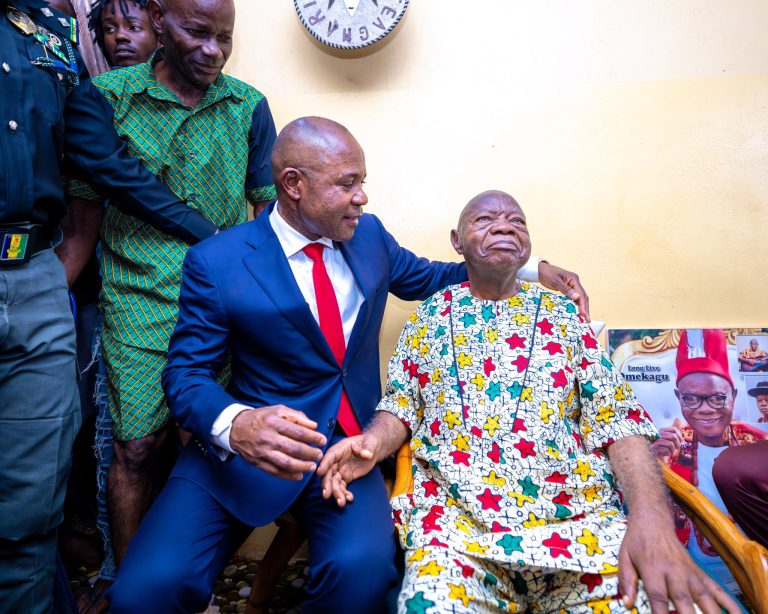
Peter Mbah, the governor of Enugu State, has expressed his sorrow over the departure of Mike Ejeagha, a folklorist and highlife star, calling his passing a terrible cultural loss and a gap that would be hard to fill.
Ejeagha passed away on Friday at the age of 95 following a protracted fight with prostate cancer. He was most recognized for his deep storytelling through music and hit songs like “Gwo gwo gwo ngwo.”

In a message shared on his verified social media account, @PNMbah, the governor praised the Enugu-born music legend’s humility and broad influence.
“I am deeply saddened by the passing of music legend Gentleman Mike Ejeagha,” he wrote.

A beloved son of Enugu State, Mike Ejeagha was a cultural ambassador and a legend.

He had a laid-back demeanor and modesty that belied his enormous fame, making him one of the best artists of his generation.

Read Also: PDP to Alia on Benue Killings: Present Full Report, Stop the Propaganda

“The warmth and wisdom he exuded, the joy he found in the everyday, and the memories I will always treasure of the time spent with him.”

In addition to his personal family, Enugu State, the whole music industry, and the nation as a whole all suffer greatly from this loss.

“Ejeagha’s extraordinary brilliance and creativity were demonstrated by the way he transformed straightforward indigenous folktales into timeless songs that have a universal appeal.

“Ejeagha’s fan base was international. One of the most recognizable voices in music was undoubtedly his.

“His passing creates a massive hole that will be challenging to fill. On the other hand, his legacy will endure forever.

“I extend the Ejeagha family my sincere condolences on behalf of the Enugu State government and promise them our assistance.

We would make sure that his memory is appropriately preserved as a government.

“I pray above all that his family finds the strength to endure the loss and the consoling grace of God’s love to be experienced.”

PDP to Alia on Benue Killings: Present Full Report, Stop the Propaganda

0

The governor of Benue State, Hyacinth Alia, has been charged by the Peoples Democratic Party (PDP) with playing a blame game over the state’s murders.
In a Channels Television interview, Alia reportedly charged that prominent politicians in Abuja and the National Assembly were behind the killings, harboring, and feeding those behind the state’s crisis.
The PDP’s Benue chapter responded on Saturday with a statement signed by Tim Nyor, its publicity secretary, characterizing the governor’s accusations as an attempt at political escapism that is not only reckless but also dangerously diverts attention from the urgent and significant steps that must be taken to address the situation.

Without resorting to careless blame-shifting, the PDP claimed that past administrations acknowledged the issue and referred to it as “attacks by armed herdsmen.”
It is concerning, the opposition party said, that the Alia administration’s attitude to insecurity appears to lack rationale and logic.

The PDP urged Alia to stop using flimsy propaganda and instead submit thorough security reports to the right authorities for appropriate action.

Read Also: He Who Comes to Equity Must Come with Clean Hands: Seyi Ipinlaye Has No Moral Standing

Although the governor may be immune from punishment, the party added, he must remember that the Abuja politicians he disparages do not have the same protection.

It is crucial to remember that Benue’s security issues are not unique to Nigeria, the statement says. Threats to neighboring states like Plateau and Taraba are comparable, but their governments have taken a more responsible stance by recognizing the security situation and acting to resolve it.

On the other hand, rather than addressing the underlying reasons of insecurity, Governor Alia has alternated between blaming foreign invaders, Abuja politicians, and other scapegoats.

We need to know if the attacks in Plateau, Enugu, Taraba, or other places are exclusively the fault of Abuja officials. Or is Benue being unfairly singled out in a witch hunt for political reasons?

As with the administrations of Governors Samuel Ortom and Gabriel Suswam, the attacks by herdsmen in Benue still occurred when Governor Alia took office.

Distractions, unfounded allegations, and propaganda taint the governor’s speech rather than tackling the core problems.

“It is not acceptable to disregard or compromise Benue’s security issues for political reasons.

In addition to being careless, it is risky to misdiagnose the issue by implying or outright asserting that representatives of Abuja are funding herdsmen terrorism.

If he truly believes what he is saying, he should stop using flimsy propaganda and instead submit thorough security reports to the appropriate authorities for appropriate action.

Governor Alia is urged by the PDP to put an end to the blame-game and concentrate on responsible, inclusive, and tangible security measures instead. Since a leader who simultaneously carries the moral burden of a Reverend must possess honesty, accountability, and a unifying spirit, these attributes are essential for genuine leadership at this crucial period.

He Who Comes to Equity Must Come with Clean Hands: Seyi Ipinlaye Has No Moral Standing

0

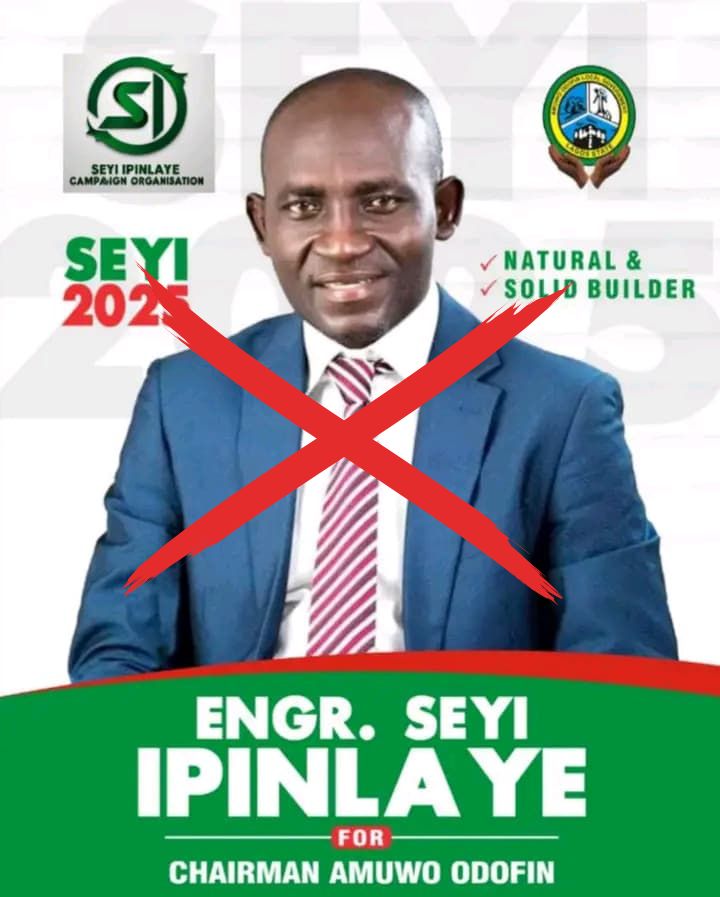
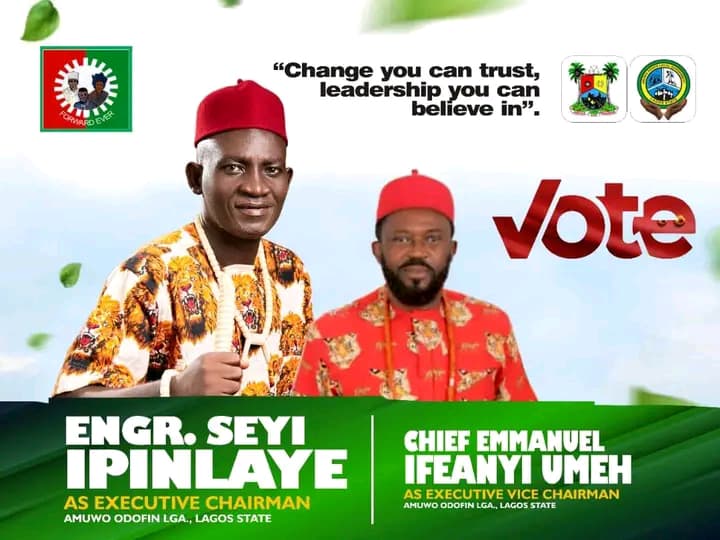
It is imperative to remind the good people of Amuwo Odofin LGA that Mr. Seyi Ipinlaye has a well-documented history of irresponsibility and betrayal of public trust. From the moment he was appointed Secretary to the Local Government, he conducted himself in a manner unbecoming of a public servant. He was found to have leaked official documents for personal gain and engaged in anti-party activities, which ultimately led to his dismissal by the very administration that appointed him as Special Adviser

The height of his misconduct was when it was discovered that Mr. Ipinlaye was simultaneously working for two different government offices — drawing a salary as a Special Adviser at the local government level while also serving as a Senior Legislative Aide to Hon. George Adegeye, the Member representing Amuwo Odofin Federal Constituency in the House of Representatives. This is not just a violation of public service ethics but a clear case of fraud and financial misconduct.

It is both ironic and outrageous that someone with such a tainted record now seeks to position himself as a watchdog of accountability. Mr. Ipinlaye has no moral authority to question the judicious use of local government funds when he himself should be answering questions about embezzlement and abuse of office.

We, the concerned residents of Amuwo Odofin LGA, categorically reject any attempt by Seyi Ipinlaye to masquerade as a whistleblower or moral crusader. His actions speak louder than his words — actions that have demonstrated corruption, dishonesty, and criminal tendencies.
We are using this medium to call on LASIEC to disqualify this incompetent Labour Party Candidate whose records are questionable.

We call for his immediate prosecution and demand that all public funds fraudulently collected by him be returned to the local government.

Signed,
Concerned Residents of Amuwo Odofin LGA

Dangote Refinery Supports U.S. Economy as Oil Posts First Weekly Rise Since Mid-May

0

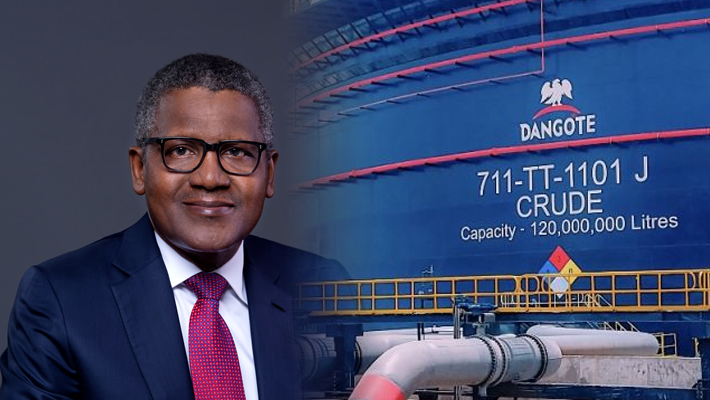
Due to the Dangote Oil Refinery’s increasing demand for the hydrocarbon, Nigeria, Africa’s top producer of crude oil, has increased its imports of U.S. WTI crude.

With an established capacity of 650,000 barrels per day, the refinery is the biggest in Africa and among the most important crude processing plants globally.

Aliko Dangote, the richest man in Africa with an estimated net worth of $28 billion, owns the refinery.
The Dangote Refinery, which is close to Nigeria’s commercial hub, has bought roughly one-third of its oil from the US, mostly the West Texas Intermediate (WTI) Midland grade, according to Bloomberg’s ship-tracking data. Since 2024, when the refinery started increasing its operations, this percentage has almost doubled.

A combination of operational and strategic issues are cited by analysts as the reason for the rise in the purchase of U.S. crude.

In the face of international competition, OPEC member countries have had difficulty scaling up their crude output economically. As the 650,000-bpd refinery approaches full operating capacity, this dynamic has enabled it to purchase more stored U.S. crude, especially WTI.

WTI’s greater production of refined products and gasoline is another factor contributing to Dangote’s preference.

The ongoing trade disputes between the United States and China also caused some areas of the Asian market for WTI crude to decrease this year, which increased the supply of American petroleum for other regions, such as West Africa.

A decrease in the supply of Nigerian crude coincides with the rise in U.S. crude consumption. According to Bloomberg analysis, Dangote’s June imports are anticipated to consist more of U.S. oil than domestic supply.

Fuel production at the Dangote refinery started in 2024. In January, diesel and naphtha were produced, and in September, gasoline.

The refinery’s increased processing levels and the decline in the amount of Nigerian crude available for purchase are in line with the use of U.S. oil.

Midland WTI: The Leading Grade
Out of the six benchmark crude grades, WTI Midland is by far the largest stream. Due to worries that the slow depletion of the other five North Sea-sourced companies—Brent, Forties, Oseberg, Ekofisk, and Troll—could otherwise raise market volatility, it was added to the price basket.

Traders keeping an eye on Dangote’s buying habits predict that this summer, the refinery’s WTI Midland intake will approach 14 million barrels. According to vessel bookings, the biggest provider of these U.S. barrels is the trading behemoth Vitol Group.

By naming the primary access road to the Dangote Refinery after Nigerian President Bola Tinubu, Dangote acknowledged the president’s continued support for the project and for privately controlled infrastructure development. The news was given during the Deep-Sea Port Access Road’s formal commissioning in Lagos State, which links Eleko Junction with the Dangote Fertilizer Plant.

Dangote addressed President Tinubu, saying, “The Dangote Refinery complex is largely your fault. Let me inform you, Mr. President, that the main route to our refinery will now be Bola Ahmed Tinubu Road.

He went on to say that President Tinubu has boosted investor confidence in spite of the difficult economic climate. “You are a courageous leader, Mr. President. I hope you keep up the good work. Thank you for all of your encouragement and support.

Dangote claims that the renamed access road is a component of a wider network of infrastructure connected to the refinery. It is anticipated that this network will link Nigeria with its neighbors, including Cameroon and Chad.

Read Also: Ex-EFCC Chairman Bawa Reveals Nigeria’s $450 Million Loss to Fuel Subsidy Fraud

As a vital logistical route, the infrastructure also connects to the Sagamu–Benin Expressway via the Epe–Ijebu–Ode sector.

For the first time in three weeks, Crude reports weekly increases.
Growth forecasts in the two biggest economies in the world have increased due to a solid U.S. jobs report and the restart of trade negotiations between the US and China.

In the week’s last trading session, crude oil finished up $1 per barrel, its first weekly increase in three weeks. West Texas Intermediate crude had a 2% increase in price, closing the day at $64 per barrel.

The global oil market’s supply dynamics contributed to the price increase as well. In May, nine OPEC nations that are bound by production targets saw lower-than-expected increases in output.

The United Arab Emirates and Iraq either did not raise production at all or only slightly.

Libya, one of the three OPEC members exempt from restrictions, increased its daily production to more than 1.3 million barrels, a 13-year record. Compared to April, OPEC’s total output in May increased by around 200,000 barrels per day to 27.54 million barrels per day.