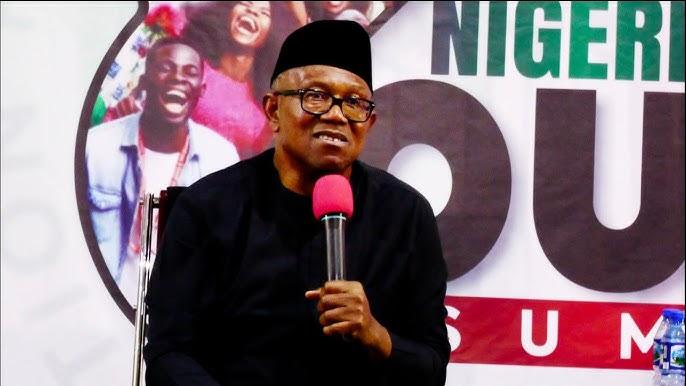
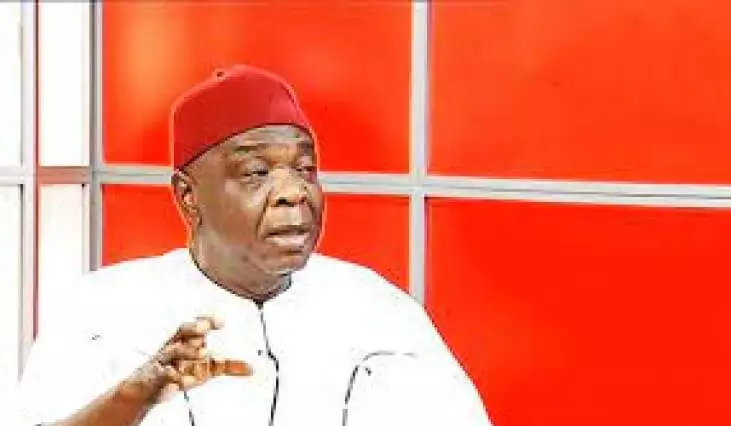
Peoples Democratic Party (PDP) chieftain Dan Ulasi was the party’s previous chairman in Anambra State. He discusses party restructuring in this interview and explains why efforts to persuade Peter Obi to rejoin the main opposition party should be encouraged. In addition, the PDP leader criticizes people who have switched to the All Progressives Congress (APC). These portions are provided by Joy Anibogu:
Mr. Peter has stated that he will only do this once since he is returning to the PDP. Many Nigerians have viewed this promise with skepticism because they believe it to be a simple one. There is a difference in reality when you reach the other face. The second issue I would like you to respond to is Minister Nyesom Wike’s requests to the PDP regarding whether Chief Dan Orbih remains the National Vice Chairman, South-South, and whether or not another event involving another person in the South-South can go forward. He also threatened to cancel the November convention if no one listened to him. The PDP we are discussing is in the intensive care unit, as Senator Suswan once declared. Is this not unmistakable proof?
Our constitution guarantees what we call free expression in this nation. As long as no one is abused or blackmailed, you are free to express what and how you want. However, I must begin by stating that democracy depends on a number of doses of civility. They define civility, which most people, including those in politics, do not comprehend, and as a result, they display a reflecting instinct for self-preservation. Additionally, this introspective instinct causes individuals to become self-protective, which can lead to paranoia, which is quite harmful. There are others who swear allegiance to duty, but in reality, they swear allegiance to money-stealing, which is why the nation hasn’t advanced due to this. Returning to your first query, the majority of the Federal Republic of Nigeria’s elites and so-called educated disregard the constitution’s four-year term clause. The Federal Republic of Nigeria’s constitution grants you a four-year term. Therefore, the constitution assumes that you should be able to leave a lasting mark on your society in four years. When you request a second term, it will provide you the information about your strong points. It states only for four years, but if you have a decent idea and someone else takes over, it will complete it. We currently have one of the Federal Republic of Nigeria’s best governors if you visit Enugu. Over the last 16 to 20 years, the majority of the projects that were put on hold have been finished. It is similar to entering London to travel to Enugu. The governor’s efforts to complete all of the projects and restore the area are evident. Thus, in my opinion, Peter’s declaration that he will serve four years is infallible. According to all accounts, he is a good Christian and a highly honest individual in Nigerian politics. He doesn’t say contradicting things, so I trust him when he says he will complete it in four years. He will do everything he wants to do in four years, although not all of them, if you listen to him. That is the assumption made by the constitution. They would have indicated they were giving it five or six years if they thought you could make it since you promised to finish it in four years. Nothing that Peter has stated is off topic. According to him, you ought to be capable of conducting accurate analysis within a year, even before you take office. Make a thorough study of your vision and how to carry it out. The sole reason is that people constantly imagine ways to steal money and are always considering how to do it.
Not anything that the average person will be affected by.
Concerning Wike’s PDP, what about the suggestion that Mr. Peter Obi rejoin the party?
The issue with Wike is that, in my opinion, it is unfair to reach the conclusion without first examining the origin of the experiment. A few years ago, the entire group of 17 southern governors, including both the PDP and the APC, gathered in Asaba and resolved that all presidential candidates from the two major parties had to be from the south. APC took the same action. PDP didn’t do it. The committee for party office zoning was led by former Benue State Governor Samuel Ortom, who zoned the chairmanship to the north and the secretary to the south, roles that were duly observed. The one led by Ortom was meant to zone elective posts, and it was considered sabotage when he remained mute after becoming president. The fact that his party didn’t zone anything to anywhere allowed Atiku Abubakar to run. Regretfully, he ran and lost. Consequently, the crisis has persisted ever since. Because he and a few others ran in that election, Wike took advantage of the turmoil. He thought he would have won and might have been Nigeria’s president today if he hadn’t been influenced by Atiku Abubakar. Since then, Wike and the PDP have not been on good terms. In fact, two months prior to the 2023 election, I traveled to Port Harcourt and spent hours meeting with him before returning to Enugu to make the case that our party is superior and that we should attempt to win the election. But my plea was not entirely accepted by him. He is entitled to free expression, free association, and free behavior patterns under the constitution, as I mentioned. Consequently, he concluded that the PDP’s actions had destroyed any foundation for confidence.
This idea of enticing Peter Obi to rejoin the PDP—what about it? There is a growing momentum to this discussion. I would like to set aside, though, a few remarks made by Senator Olujimi, who recently switched from the PDP to the APC. She claimed that the PDP offered no one anything, which is why she quit. Intriguingly, there is talk in the public sphere about enticing Peter Obi to join the PDP. Do you believe he would be the best person to represent the PDP? Furthermore, do you believe that the PDP would help or hurt his chances as he moves near 2027?
I appreciate that you brought up Olujimi. She would have been questioned about what he had given the PDP. Because we no longer have a federal government and no money to share, people are constantly searching for a place to share money. Is it not regrettable that a prominent figure in Nigerian politics is abandoning the PDP due to their lack of contributions? In what ways has she improved PDP? We held a meeting of the founders and stakeholders two weeks ago. I did attend. In order to prepare for the upcoming 2027 election, almost all of our governors attended the NEC meeting the following day and formed committees to try to increase the party’s productivity. Some people depart for a single reason, which could be financial or something else entirely. How many years ago did I support the Ekwueme when we were creating the PDP? If I must leave PDP today, I must have a strong justification for doing so that demonstrates why my destination is superior to my current one. Does anyone know if the APC is superior to the PDP in this country, even when they are in opposition? They even use opposition party rhetoric while they are aware that they are in power. So, what will entice me to visit APC? Nothin’. Nothing about the party is exciting, especially with all of its governors. Therefore, if someone is leaving the PDP to go there, that person must be motivated by something other than politics. Thus, as I mentioned before, Wike’s remark stems from the issue that arose in 2023, and the party as a whole has not been happy either since.
What about the Peter Obi issue?
All things considered, Peter has become a national political figure if the party wishes to run a meaningful campaign in this election. The party is establishing a committee to investigate this subject. Now that it’s 2025, we still have plenty of time. From now until the end of the year, the party will begin making choices and exploring possibilities. In one way or another, we’re working to overcome our issues. Our convention, which I am a member of the committee to organize, is the next significant step, and it is scheduled for November. After that, we’ll begin as soon as we have new chairman, secretary, fixed party officers, and everyone else. The next step will be to discuss 2027. Prior to discussing public officials, we would like to reconstruct the party, the National Working Committee, and the NEC. Don’t count two before you’ve counted one. Therefore, as I mentioned before, Peter Obi is a good product that will benefit any party that owns him. It is, by all means, a benchmark in our nation. I will back the PDP if they want to approach him.
Given that Wike currently leads the PDP, do you believe Peter Obi should be included in the debate? What if there were certain PDP members who also brought up Goodluck Jonathan’s remarks? Letting me be the devil’s advocate, you also query why people are attending the APC. Due of the APC’s hold on power, they are going there. For more than ten years, your party has not had sway. The reason they are flocking to APC is because it provides stability. Your party is privately owned. APC has managed to persevere through their difficulties. They believe they have a stronger position now and are joining the APC because it has the president. As we speak, they are therefore pursuing a better alternative. Comparing the APC to your chaotic party, the former is far superior. that the future and the next item are unknown to you. If individuals like you were contacted by the APC today, you most likely would want to confirm as well.
Isn’t APC certain? How would you respond if PDP did not involve uncertainty?
I think your analysis is excellent. But, as you are aware, statistics cannot explain human behavior. One plus one is frequently not two in politics. As soon as people accept it, it becomes the official number, and it may actually be 100. People switching from the PDP to the APC does not prove that the APC is superior to the PDP. People’s lack of values is evident. Because of this, the nation is not progressing. For example, consider the president of the Senate. He had served as Akwa Ibun State’s governor for eight years. The entire state of Delta recently switched to APC. APC just welcomed Akwa Ibom. As a journalist, could you explain what they would discover in the APC that they were unable to accomplish in Delta State or Akwa Ibom State, where they were leading the PDP governorship and functioning admirably? People lack morals, and when they do, they are prone to accepting everything that is put in front of them. Since the beginning of the PDP, I have been a member. I haven’t served as a director or commissioner of anything. But I’m invited to most of their delicate activities. In 2003, the Northeast screening panel had me as its chairman. The entire Northeast was screened by me in 2010. Today, I was the conduit for the majority of our governors. As a party member, you have the determination to contribute in this way. Many people enter this industry in the hopes of earning money. Consequently, the nation is not progressing. The honor and principles you hold dear must be ours. Eight years without government, in my opinion, began with Buhari’s tenure. Not a thing occurred. Next up was President Tinubu. The same issue Tinubu is facing would have been experienced by anyone else who entered that job after Buhari, I remarked. There is just the possibility that he will be able to resolve the issue using a different approach. Magic doesn’t exist since the nation has fallen so far. All it takes to accomplish anything is a certain amount of resolve. If people choose to support Peter Obi because of his track record as governor of Anambra State, his honesty, and his integrity, then that’s great. He is the only governor to whom no one has ever pointed the finger negatively. All of Peter Obi’s references are favorable. And our nation at least needs someone like him to inspire optimism. The role of governance is more than merely building roads. You provide hope. Because stability is necessary for politics. We haven’t observed this steadiness either.
As of 2017, you denounced Peter Obi for dividing Anambra.
Would you mind giving me some perspective? We were in a meeting with him, I mentioned in that interview. After our Enugu meeting, we traveled to Awka. He also expressed his desire to run for president to her. He then switched from the PDP to the Labour Party. And I said it was wrong. That was not a behavior I liked. I informed him that what he had done was regrettable when he had visited my home. However, even though I didn’t appreciate what he did, he was entitled to do it. He was entitled to do so under the constitution. His desire to demonstrate his interest in political leadership was to do just that. But I wasn’t in favor of that. Therefore, my current opinions do not conflict with those I have previously expressed. Did I leave PDP myself since then? Ten governors are in our government. And these ten governors can see a committee that can restructure this party by coming together in an honest and truthful manner. And we’ll have no limits. Effectively, we are opposing the government.
Because of Obi’s time in Anambra, you had denounced that you were always at odds with him. What changed?
Your statement is an example of the fallacy of generalization. I have never opposed the Anambra governorship of Peter Obi. Never once have I criticized Peter Obi.
The PDP will gladly welcome Peter Obi back into its fold, according to Professor Jerry Gana. Now, Nyesom Wike is a great person. Will Wike, who sets terms for the PDP, agree to accept Obi back into the group? You’re also referring to the Convention in November. Wike has stated that the convention can be upheld under certain scenarios. How come you’re so certain?
People that talk from both sides of their mouths are not me. I express and defend what I believe to be true. Taking a backseat has never happened to me. I explained to you why I have a hard time criticizing Wike. due to factors that preceded the events of 2023. After saying this, I don’t see why anyone should find it confusing. He had to respond in this manner because he felt devalued. Perhaps my reaction would have been different up till now. Furthermore, the party was defeated.
We have established a committee within the PDP in Abuja to determine how the majority of our governors will assume specific duties. There is no magic in Wike. Politics is not a magical art. The party made decisions on several issues without consulting Wike. There was no meeting with him. And there were seven of our ten governors. addressing the future of this party in an effective manner. Unfortunately, in this nation, people only attend parties during election seasons. There are many who pay the bills on a regular basis, though. Specifically, we currently only have ten states. We pay employees’ salary in every state. It must be done by somebody. There must be someone to help. Furthermore, before the election, no one is interested. To run for governor or president, they will pay between $50 million and $30 million. That isn’t party management.
The nation is stagnating as a result. The party must have devoted members who are seen to be contributing to its continued existence. In addition to the election.
The party will ultimately prevail if the election is held and they are well-prepared. There is no secret to their success, though, if the party is not well-organized. why Wike acted in that manner. Not that I’m defending it. However, he was justified in his actions. We might have had a Wike or someone from the South as president if Atiku hadn’t run and someone else—like Tinubu—had also emerged in the South. Tinubu, however, had a shot and ended up winning the presidency. He is also seeking a second term. I don’t think anything I’ve said contradicts anything else.