Home Blog Page 2273

Congo heading to polls as Nguesso seeks to extend 36-year reign

0
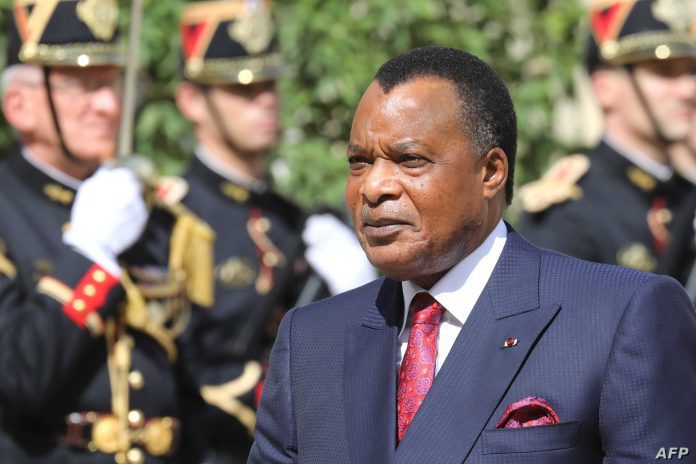
President Denis Sassou Nguesso arrives for a visit at The Elysee Palace in Paris. - Congolese President Denis Sassou Nguesso has been chosen by his party to run again for the top job in 2021, having already led the central African country for a total of 35 years. During its congress in Brazzaville overnight December 30, 2019, his Congolese Party of Labour (PCT) unanimously named Sessou Nguesso, 76, as its candidate for president. (Photo by ludovic MARIN / AFP)

Voters in the Republic of Congo will head to the polls on Sunday to elect a president in a vote boycotted by the country’s leading opposition party.

President Denis Sassou Nguesso, who has ruled the oil-producing country of five million people for 36 years, is seeking a new five-year mandate. The 77-year-old incumbent faces six opposition challengers but is widely expected to win.

Nguesso first served as president from 1979 until 1992, when he finished third in the Congo’s first multiparty vote. But he retook power in 1997, following a brief civil war in which his rebel forces removed then-President Pascal Lissouba, and has ruled ever since.

He was elected in 2002 and then again in 2009, for what was to be his second and final seven-year term. But in 2015, Nguesso pushed through constitutional reforms that removed the 70-year age limit that would have barred him from contesting polls the following year. The referendum also removed the two seven-year term limit and introduced three five-year terms.

The 2016 polls were then followed by violence leading to the deaths of at least 17 people after the opposition accused Nguesso, who garnered 67 percent of the votes cast, of rigging the poll. Two opposition figures, Jean-Marie Michel Mokoko and Andre Okombi Salissa, were later found guilty of “undermining the internal security of the state”.

“The lessons learnt from the 2016 presidential election have led the authorities to protect themselves against any unpleasant surprise,” Alphonse Ndongo, a Brazzaville-based analyst, told Al Jazeera. “Nguesso will be re-elected, but the problems that people face on a daily basis will remain.”

The challengers

In late January, the Pan-African Union for Social Democracy (UPADS), the country’s main opposition party, said it had decided not to field a candidate in Sunday’s vote, arguing conditions were not conducive for polls and that an election would only lead to more divisions in the country.

Instead, UPADS – the party of the late Lissouba, the winner of the 1992 elections – proposed a transitional period and polls in 2023, with long-serving Nguesso not on the ballot.

More than 2.5 million people have registered to take part in the election. Polls will open at 7am (06:00 GMT) and close at 5pm (16:00 GMT). Members of the security forces cast their ballots on Wednesday.

Hoping to unseat Nguesso is Guy Brice Parfait Kolelas, leader of the Union of Humanists Democrats. A 61-year-old economist by training and former minister, Kolelas finished a distant second with 15 percent of the vote in the 2016 election. His father, Bernard Kolelas, was briefly Congo’s prime minister in 1997 during the civil war.

Mathias Dzon, a former finance minister under Nguesso, is also contesting the election on the Patriotic Union for National Renewal ticket. The 73-year-old registered to take part in the 2009 poll but pulled out days before the election day alleging issues with the voter register. Dzon boycotted the 2016 vote, claiming it would not be free and fair.

Albert Oniangue, an evangelical pastor, is also seeking the country’s top seat. The former army colonel is a newcomer to the political scene, contesting the presidency for the first time and has branded himself as the candidate for change.

Three other candidates are also on the ballot: Joseph Kignoumbi Kia Mbougou, a former UPADS member; Anguios Nganguia Engambe and Dave Mafoula, who, at 38, is the youngest challenger.

But analysts and civil society leaders say the six candidates have no chance of beating Nguesso.

“The election is organised by the Independent National Elections Commission, which is anything but independent,” Fonteh Akum, executive director at the Institute for Security Studies, told Al Jazeera. “The ruling [Labour] party will continue to be in power and will govern by divide and rule tactic which it has perfected over 36 years,” he added.

“This election is not seen as one that could usher in a change. Since 2016, there has been a consolidation of power by the ruling Labour Party. The political space, especially for human rights activists, has shrunk.”

Joe Ebina, a human rights campaigner, also said the outcome of the vote is already pre-determined.

“Congo is a dictatorship. It is impossible to have a free and fair election. Two former presidential candidates are in prison. Journalists and civil society leaders have also been jailed,” Ebina told Al Jazeera. “There is no credibility whatsoever in this election. Everyone knows the president will win,” he added.

The issues

The election comes at a time when the coronavirus pandemic and a drop in energy prices have battered the oil-reliant Congolese economy, which contracted by 8 percent last year, according to the International Monetary Fund. Congo’s ever-increasing debt burden is also weighing heavily on the economy. In 2019, the IMF estimated the debt at nearly $9.5bn.

The presidential candidates have all promised to improve the economy and lift more people out of poverty. According to the World Bank, 72 percent of the population in 2018 was surviving on less than $1.90 a day.

“Factories have shut down and unemployment has shot up. Also, the scars of the civil war are still been felt in the country’s bread-basket region,” Akum said.

“But Nguesso has learnt his lesson when a struggling economy, trade unions and dissenting army forced his hand in 1992. Many trade unions and civil groups are thought to have been compromised now. Force and repression are also another way he will continue to retain power,” he added.

Corruption is another major problem, with Transparency International ranking Congo 165 out of 180 countries in its 2020 Corruptions Perceptions Index.

In 2019, Global Witness, an anti-corruption campaign group, accused the president’s son, Denis Christel Sassou-Nguesso, of embezzling $50m between 2013 and 2014.

The group also accused the president’s daughter, Claudia Sassou-Nguesso, of spending $7m of state funds to buy a luxury apartment in the Trump International Hotel and Tower in New York. The Nguesso family denies the allegations.

All the candidates, including Nguesso, have promised to tackle corruption.

“It’s hard to think that he [Nguesso] will change things in five years after he has been managing the Congo for 36 years,” Ndongo, the analyst in Brazzaville, said.


Sunday Igboho: Do not drag us into petty issues – DHQ warns

0

The military high command has warned mischief makers in the country to desist from dragging the Nigerian Armed Forces into petty political issues.

Acting Director Defence Media Operations Brigadier General Benard Onyeuko in a statement reacting to  a trending video clip on the Social Media, and some other media reports alleging that some Nigerian Military personnel were on a spying mission to the residence of one Sunday Adeyemo otherwise known as “Sunday Igboho” before they were apprehended.

General Onyeuko noted that, in the viral video which was released on Friday 19 March 2021, the alleged “soldiers” were seen being accused of having been sent by the Government to do a ‘survey’ of Sunday Igboho’s Soka residence in Ibadan, the Oyo State capital. The self-acclaimed ‘Yoruba activist’ also alleged that the action of the so-called “soldiers” was orchestrated by the Federal Government as a result of comments he made alleging that Yorubas are no longer a part of Nigeria.

“While the Defence Headquarters has no interest dragging or joining issues with Sunday Adeyemo or his associates, it is pertinent to clear the air and address these allegations squarely.

“For the records, it should be noted that the Armed Forces of Nigeria, are highly professional in the discharge of their duties, with well-defined roles, responsibilities and duties in its mandate of securing the territorial integrity of the Nigerian Nation. As such, the Military cannot stoop so low to such extent to “spy” on one individual, as wildly and loosely alleged.

“Secondly, the Armed Forces of Nigeria is a highly disciplined and professional organization with extant laws and regulations which guide the actions of its personnel in the conduct of their duties. As such, it is practically impossible for military personnel on official duty to conduct themselves in such manner as alleged by Adeyemo and his cohorts.

“For the avoidance of doubt, preliminary investigation has so far revealed that one of the alleged “soldiers” is a serial impersonator. Meanwhile credible eye witnesses and sources have also revealed that some associates of Igboho went in pursuit of some individuals when the motorbike conveying the impersonator and one Nigerian Air Force personnel ran into them. The duo were immediately apprehended and taken to the said “IGBOHO House” at Soka before Ibadan toll gate where they were branded as spies. Furthermore, investigations are currently underway by Nigerian Airforce and the Nigerian Army to unravel the actual circumstances which played out on the day.

The Defence Headquarters has therefore warned individuals and groups to desist from disparaging the enviable reputation of the Nigerian Military by dragging it into its petty issues to gain political mileage. Such actions will not be condoned in the future.


EU regulator ‘convinced’ AstraZeneca benefit outweighs risk

0

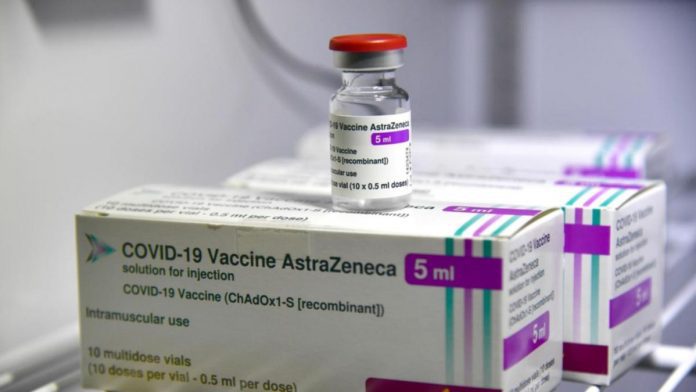
With coronavirus cases rising in many places, governments faced the grimmest of dilemmas Tuesday: push on with a vaccine that is known to save lives or suspend use of AstraZeneca over reports of dangerous blood clots in a few recipients, even as the European regulator said there was “no indication” the shot was responsible.

It has created a jagged divide across the globe, forcing politicians to assess the health risks of halting the shots at a time when many countries, especially in Europe, are already struggling to overcome logistical hurdles and vaccine hesitancy among their populations.

Sweden was the latest to join a swelling group of European Union nations choosing caution over speed, even as the head of the European Medicines Agency said the agency is “firmly convinced” that the benefits of the AstraZeneca shot outweigh the risks.

Emer Cooke noted Tuesday that thousands of people across the EU develop thromboses every year for a variety of reasons and that there were no reports of increased blood clots in the clinical studies of the AstraZeneca vaccine. Still, experts would undertake a “very rigorous analysis” and make a recommendation Thursday, she said.

Europe has the luxury to be able to pick from several vaccine candidates — but the decision is still not an easy one on the continent, where the virus is again surging and where the vaccination campaign has repeatedly stumbled.

The choice is maybe even more fraught elsewhere because many countries are relying heavily on AstraZeneca, which is cheaper and easier to handle than some other shots. The vaccine has so far played a huge role in the global initiative to ensure vaccines get to poorer countries known as COVAX.

The difficulty of the decision was clear in Thailand, the first country outside Europe to temporarily suspend the use of the AstraZeneca vaccine, only to recant on Tuesday — when its prime minister received a dose.

“There are people who have concerns,” Prayuth Chan-ocha said after getting the shot. “But we must believe doctors, believe in our medical professionals.”

Many other countries in Asia have likewise shrugged off concerns, though Indonesia halted use of the shot this week, saying it would wait for a World Health Organization report on the issue.

In addition to the EMA, AstraZeneca and the WHO have said there is no evidence the vaccine carries an increased risk of blood clots. There have been 37 reports of blood clots among the more than 17 million people who have received the vaccine across the EU and Britain, the company said.

“This is much lower than would be expected to occur naturally in a general population of this size and is similar across other licensed COVID-19 vaccines,” the Anglo-Swedish drugmaker said.

But the number of countries in the bloc that are sticking with the shot is falling after heavyweights like Germany, Italy, France and Spain all said they were suspending it.

That left Belgium — and a handful of others such as Poland, Romania and Greece — increasingly isolated in their insistence that halting the shots now would cause a lot more harm that the side effects so hotly debated now.

“When you know how the virus is making the rounds, it would be very imprudent to stop,” Belgian Health Minister Frank Vandenbroucke told VRT network early Tuesday.

Experts have noted that such concerns are inevitable in mass vaccination campaigns — with so many people getting shots, some are bound to get sick even if the vaccine is not to blame. That would mean “we’d have to incessantly interrupt campaigns during the coming months,” Vandenbroucke said.

“We wanted to remain as scientific as possible in the mediatic-political turmoil that is currently agitating Europe,” Belgian virologist Yves Van Laethem said.

In Spain, which announced it was suspending the vaccine on Monday, some medical experts had their doubt about the move. Amós García, president of the Spanish Vaccinology Association, said that countries were being overzealous in halting use of AstraZeneca.

And the decisions seemed to be having a snowball effect. “There’s a cross-border contagion effect,” Garcia said.

“Anything triggers the principle of caution,” García told Spanish broadcaster TVE. “Once it begins it’s like a domino, it becomes very difficult for a country to keep delivering the vaccine,” if others stop, even if only out of precaution.

With the torrent of decisions casting doubt on the AstraZeneca vaccine despite assurances of experts, public opinion was tested once again to believe science over suspicion.

Serbia’s Prime Minister Ana Brnabic says the Balkan country won’t stop the use of Astra-Zeneca vaccines and insisted that “unfortunately, some people are having second thoughts because of a negative campaign.”

So often in disarray during the vaccine drive, the 27-nation EU was once again out of lockstep, with the member states each taking their own decision, as the executive Commission called on all to heed EMA advice. When asked if EU Commission President Ursula von der Leyen would take the AstraZeneca vaccine, her spokesman Eric Mamer said “of course.”