Home Blog Page 2227

Babagana Monguno: Between policy and pomp

0


By Tade Ayomikun

In basic political science, it is well internalized by students that the foremost function of government is the protection of the lives and property of citizens. This function is true for all systems of government. It is as true for constitutional governments as it is for monarchical rules and even illegitimate governments. Providing security is, therefore, the first function of any state. Even the very survival of the state itself depends on adequate security. That explains why one of the first assignments of an emergent state is to build a formidable military force, at least formidable enough to wield a monopoly of coercive authority within the territorial space it calls its own. Although in a democratic state, the dialogue between human rights, personal freedoms, and the need for security remains an inconclusive conversation, it is, however, axiomatic that when human rights and the very survival of the state clash, the latter always most certainly triumphs.

The 1999 Constitution of Nigeria (as amended), like many other constitutions in the world, is well aware of the primacy of security in the state and thus expressly provides that the security of lives and property is the primary function of government. However, the effective performance of this function varies from government to government, and even from system to system. In a federal democracy like ours, the key function of securing both the state itself and the citizens is vested in the President. That is why the Constitution defines him as the commander-in-chief. And for Mr President to successfully carry out this major function, some state institutions like the armed forces, the police, the intelligence services, and other para-military agencies come handy.

Although the entire military apparatus, including the intelligence services, are at the beck and call of the President, there is still a need for some kind of central coordination in terms of prioritizing security reports, policies, and strategies. That is where the Office of the National Security Adviser (ONSA) comes in. There have been about four occupants of that strategic office since the return of democracy in 1999. By far, the most effective by country miles has been General Aliyu Mohammed Gusau (retd). He was hardly seen or heard but had the uncanny ability to nip in the bud brewing security threats before they festered. Col. Sambo Dasuki, who was appointed by former President Jonathan was, apart from allegations of corruption hanging on his neck for which he is being prosecuted, equally taciturn and spoke up only when it became absolutely necessary. But he had the bad luck of serving under a President without any military background at a time insurgency announced itself in our country. As much as some would like to deride Dasuki, it is on record that to his credit, election was possible in 2015 in areas hitherto under the control of Boko Haram after dislodging the insurgents and pushing them into the Sambisa Forest.

However, in 2015, after the election of President Buhari, all eyes were on his choice of NSA given that issues of security were paramount in his campaigns. In fact, the President promised to end insurgency in the country within his first year in power by leading from the front as a retired general. Also, the widespread corruption allegations against the former NSA and how it was said to have set back the war against insurgency made the choice of Buhari’s NSA an object of national scrutiny. And when he finally settled for retired general, Mohammed Babagana Monguno, that choice was deemed a right one at the time given the fact that Monguno came with a rich military background. He was the former chief of defence intelligence and former commander of the brigade of guards. But time reveals all hidden things!

Unlike his predecessors, General Monguno has become too visible for even his own liking. And again, it appears that he likes the sound of his own voice every now and then. If he was not complaining about the late chief of staff to the President, Mallam Abba Kyari, taking over his job, he would be riling the service chiefs. And while the NSA engages in his needless cantankerous outbursts, the government which he was to help Mr President coordinate on the security fronts continues to fall apart. On Monguno’s watch, there have been shameful inter-agency rivalries within the security agencies, which suggest a lack of leadership, synergy and single purpose. There was almost an open shoot-out between EFCC and the DSS operatives over an attempt to arrest a former DG of the DSS. That singular action cast this government in a most despicable light. By the way, it was rumored that the EFCC chairman at the time, Ibrahim Magu, was his protege. Yet again right under his nose, the NSA allowed the former EFCC chairman to embarrass the government of President Buhari in that operations at the Ikoyi flats. Yes, it is the right thing to fight corruption but had Monguno been effective and focused on the important things, that EFCC operations would have been more discreet and at the same time produced the needed result of fighting corruption without compromising the country’s foreign intelligence outfit with all its consequences on national security.

The latest antics of Buhari’s NSA is blowing the whistle on the government he is an integral member of. Speaking recently in his own language, Moguno told a foreign news broadcast agency loudly that the fight against insecurity in the land since 2015 has been hampered by corruption. He was heard clearly accusing the former service chiefs of stealing or misapplying the $2 billion released to them by the government to procure arms and ammunition. Although he later recanted by claiming being misquoted, the NSA apparently had achieved his aim. Somehow, the NSA appears to be extricating himself from the faltering war against insecurity, which he is supposed to be coordinating for Mr President.

General Monguno is a soldier and knows a thing or two about loyalty and fidelity to national goals as adumbrated by his principal, Mr President. In openly accusing the former service chiefs of corruption, is the NSA unaware of the irreparable damage he is inflicting on President Buhari and his government? First, he accused the former chief of staff of usurping security assignments for which he had no experience at all. Thereafter he accused the former service chiefs of looting the arms money and claimed that as a result of this, the country is losing the war with insurgents and bandits overwhelming the army. In all of this Monguno is, perhaps, subtly telling us that President Buhari is not in charge of his government. Coming from the NSA, that’s unputdownable!

As it appears, it seems Moguno has come full circle and clearly has lost his way in Buhari’s government. His visibility and loquacity have embarrassed the APC and Buhari enough. What has come out clearly is that this NSA doesn’t understand the remit of his office. Indeed as two scholars, Ivo H. Daalder and I.M. Destler, argue, “the most important role of the national security adviser is to manage the decision-making process effectively.” And to be effective, they further argued, the NSA must be seen as honest and trustworthy by other stakeholders in the decision-making process. And as Sandy Berger, President Clinton’s NSA puts it, “you have to be perceived by your colleagues as an honest representative of their viewpoint, or the system breaks down”.

The accusations by NSA Monguno against some of his colleagues in the security council and the counter-accusations against him now surfacing in the media portraying him as a bitter fellow who lost the plot to personally corner the business of arms purchase, which was guillotined by the late Abba Kyari, and perhaps supported by the former service chiefs, depicts how the NSA is perceived by his own colleagues. And if what is being written about this NSA and his quest for contracts are true, it means that he refused to heed the warnings of Stephen Hadley, who was President George W. Bush’s national security adviser from 2005 to 2009. He had warned that the adviser needs to advance presidential initiatives within the executive branch of the federal government but “must be careful not to usurp the role of the Cabinet officers — especially the secretaries of defense and state,” who run their departments and have authority over agency budgets. All these on their own are a dizzying hint of the NSA’s ineffectiveness in office.

The direct consequence of the NSA’s ineffectiveness today is the kind of security challenges the country is facing. Bandits are now looking the armed forces in the eye and kidnapping school children for ransom every now and then; ethnic groups are now issuing quit notices and counter-notices to one another across the country, and Boko Haram is still waxing stronger in spite of the best efforts of the gallant soldiers of the Nigerian Army. In short, non-state actors appear to have successfully challenged the monopoly of the Nigerian state in the area of wielding coercive authority. Unfortunately, while Monguno is busy pointing fingers at everyone else but himself on why insecurity ravishes our country, he has forgotten the big office he holds. Again as former United States’ NSA, Hadley says, of an NSA: “you get to spend more time with the president than any other member of the president’s national security team. You are the first person to see the president in the morning when the president shows up for work in the Oval Office and the last person to see the president before he or she makes any major foreign policy or national security decision. You are the person most likely to know the president’s mind on these issues. You are involved in consequential matters that span the globe and affect the world. You spend a higher proportion of your time on policy substance than any other national security principal. If you like policy over pomp, you’ll love this job.”

Policy as we all know involves quite a lot of intellectual heavy-lifting and it does appear that this NSA-Mongunu- is not given to intellectual rigour. No wonder he chooses pomp over policy! His choice has also rubbed off negatively on the entire military/intelligence architecture in the country. To underscore how unserious we are in Nigeria, a military fighter jet on a reconnaissance mission in the northeast got missing around Borno axis, where we have over a dozen theatres, troops, operational teams, with the NSA, strategically positioned to coordinate security and intelligence units to produce hourly updates of situation reports. For days now, the military has yet to come up with the exact report of what happened to the missing plane.

The Nigeria Air Force is only reacting to claims by Boko Haram insurgents that they brought down the plane. Does it mean that the military has yet to spend money on technology-google mapping of the northeast, drones, etc., which is the reason they are fumbling and bumbling in their response to a simple task of knowing exactly what happened to the aircraft after disappearing from the radar. What has happened to the millions of dollars reportedly spent on the procurement of drones? It is either they are lying to the country to have spent it on military hardware or they have corporately chosen pomp over policy, getting huge budgetary appropriations, as they are wont to do annually, and diverting them.

Dr. Tade Ayomikun, a security expert and commentator, writes from Lagos
Those politicising security issues will soon be exposed, says Makinde

0

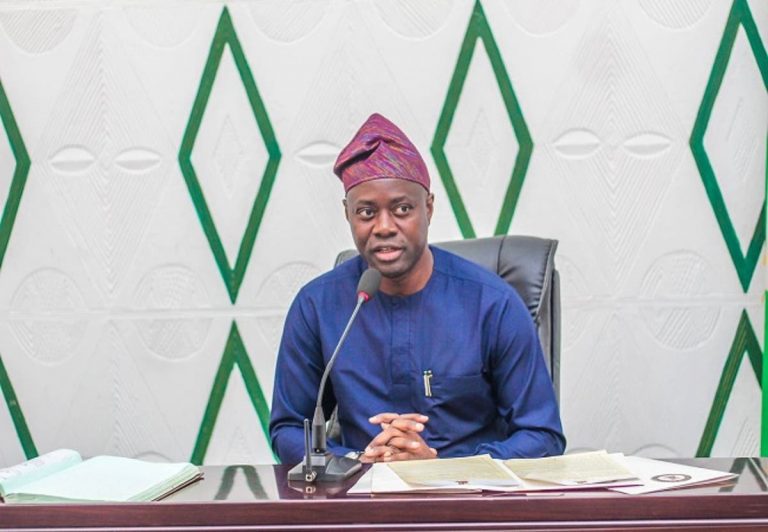
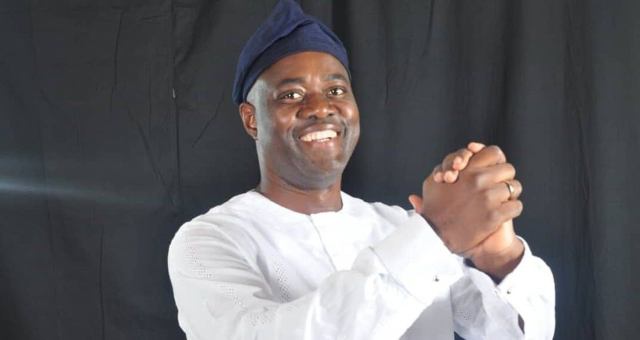
Governor Seyi Makinde of Oyo State has said insecurity is not a problem peculiar to the Pacesetter State but a nationwide challenge.

Makinde, however, said those politicising security issue in the state because of their 2023 ambition would soon be exposed.

The governor stated this while addressing the congregation at the St Peters Anglican Cathedral, Aremo, Ibadan, during the Easter Sunday Service.

The governor said security issues ought not to be politicised adding that “if they are politicising the issue of security because they want to be in power in 2023, they are making a huge mistake.”

Read also: No one cares if you leave party, PDP tells Makinde

He stated that his administration had investigated and proffered solutions to reports of insecurity across the state.

He implored those politicising insecurity “because of their 2023 ambition to jettison the idea and seek the face of God instead of engaging in actions that could trigger fear in the state.

He said, “I want to say happy Easter to the church of God and pray that we shall witness more on earth. It is another Easter season and it is another opportunity for us to say thank you to our Lord and Saviour, who died for us to be saved. The Archbishop has already preached and the only thing I can do is to thank God and say one or two things, which our government is doing.

“Very soon, we will be two years in office and the area of focus of our government remains Education, Health, Economic expansion and Security. When the Archbishop was preaching, he mentioned that there are security challenges. Yes, it is true and I can confirm to this gathering that if there is something that makes me not sleep with my two eyes closed, it is the issue of security.

“As a government, we are doing different things and, as a matter of fact, it is on record that there is no government in Oyo State that has spent more money on security than this current one. When we came in, within the first hundred days, we gave 100 patrol vehicles out to security agencies. We re-established Swift Response Squad, SRS. We re-established Operation Burst as well.

Read also: Ekiti PDP faction tackles Makinde for mocking Fayose

“All the communication gadgets they needed were provided to cover all the areas in Oyo State and they were able to communicate with one another without hindrance. Also, before we came in, there was nothing like Amotekun, but we were able to set it up when we came in. It was just last week that Ogun State set up its Amotekun outfit.

“If you look at those who have set up before now; states like Osun, Ekiti and Ondo, they recruited 300 personnel each, totalling 900 for the three states. But in Oyo State, we recruited 1,500 Amotekun personnel. The issue of insecurity is not peculiar to our state; however, rest assured that this government will not rest until every inch of Oyo State is secure. But I must warn that politics is inherent in this insecurity issue in Oyo State and in the days to come, I will expose the people that are politicising the issue of security.

Read also: I remain in isolation till I fully recover — Makinde

“If they continue to politicise the issue of insecurity because they want to be in government in 2023, they should know that if there is no Oyo State or Nigeria, I don’t know how they want to govern the state in 2023. I also want to beg you that it is not all we read on social media that is true. If we have friends who are aspiring to get into political offices, they should keep looking unto the face of God instead of seeking to destroy our state and country.”

No one cares if you leave party, PDP tells Makinde

0

Some state chairmen of the People’s Democratic Party in the South-West have berated Governor Seyi Makinde for issuing a subtle threat against them over the forthcoming Southwest congress of the party.

The party has fixed April 10 for the congress to hold in Ibadan, Oyo State capital.

The governor, however, in a statement issued by his media aide, Taiwo Adisa, on Friday commended the NWC for allowing to hold the congress in Ibadan but warned the NWC against bowing to pressure to shift the date, saying such would be resisted.

The statement read, “As the only serving PDP governor in the South-West and an invested party in the PDP’s growth and development, I commend the National Working Committee for the decision to go ahead with the South-West Congress.

Read also: Air force denies B’Haram’s claim of downing missing fighter jet

“I am glad that they bowed to superior reasoning regarding the congress. I am also happy that the congress will be held in Ibadan, Oyo State, in line with our party’s constitution and as stipulated in Paragraph 8 (1)(g) of the Guidelines for the Conduct of Ward, Local Government Area, State, Zonal Congresses and National Convention for the purpose of electing Party Executive Committees at all levels which were issued and signed in January 2020. We look forward to hosting other members of the South-West PDP come April 10.

“However, it has come to my notice that some divisive elements within the party are trying to unduly influence party decisions on the national level. It is shameful that while the peace and reconciliation committee is going about trying to bring the party together, some people are determined to factionalise it. The NWC must not reward these individuals who are working against the party’s overall interests.”

The governor added, “I must warn that any attempt to shift the South-West Congress’s date from April 10 is a signal that the hierarchy has been compromised. Such an action would have dire consequences. For one thing, we will be forced to take all necessary measures to take back our party.

“Let me restate that the PDP is the best alternative for Nigerians. At this moment, we should be expending our energies in positioning our party and gearing up for leadership at the national level. We must show Nigerians that we are the real deal.”

Makinde said the NWC should rise to its responsibilities and prevail on the person or persons “acting as clogs in the wheel of the party’s progress.(Sic)”

Easter: Gov Fintiri harps on tolerance, peaceful coexistence

“Remember, the PDP is greater than any individual,” he said.

But the PDP chairmen in some South-West states tackled Makinde for issuing such a warning, saying they found the governor’s alleged threat “unbelievable and disgusting.”

The Chairman of the South-West PDP Chairmen, Dr Sikirulai Ogundele, in a statement on behalf of PDP chairmen in Ekiti, Lagos and Osun states – Otunba Bisi Kolawole, Adedeji Doherty and Sunday Bisi, respectively – said it was shocking that Makinde could insult and threaten “the custodians of the party just because they choose to obey an order of the court.”

The statement read in part, “We read with disgust the statement credited to Governor Seyi Makinde of Oyo State, warning leaders and member of the National Working Committee of our great party, the People’s Democratic Party.

“The Working Committee of this party was duly elected just like the governor, and as stakeholders, we all have our own roles to play – more so that he is only the governor of Oyo State by providence and not the Governor-General of the South-West. Even in Oyo State, the governor is not the only stakeholder of the PDP there.

“To us, threatening that there will be consequences if the party obeys the court order concerning the South-West congress is the height of political rascality and it should be made clear to all lovers of PDP that nothing will be worse than what he has done before by jumping from one political bed to another. It is on record that in 2015, he was persuaded to accept the senatorial ticket, yet, he left the PDP for the SDP (Social Democratic Party).”

Ogundele added, “Who cares if he chooses to leave the PDP this time, too? Is he not even already a sinking ship in Oyo State, placing members of the SDP and ADC (Action Democratic Congress) over and above those of the PDP?

“Without apologies, Governor Makinde can do his worse. He should stop threatening the party because he is not more a loyal and committed member of the party than people like us who stood by the party when he left.”

Stop killings, table your grievances, PFN begs Boko Haram, others

0

The Pentecostal Fellowship of Nigeria (PFN) has called on President Muhammadu Buhari to unite the nation and address the major concerns of all ethnic groups.

The PFN also called on the legislature to concentrate its energy on meaningful legislation rather than on “diversionary” bills that would not move the nation forward.

The association made the call in its Easter message to Nigerians which was signed by its National President, Deputy President, Johnpraise Daniel, Secretary, Cosmas Ilechukwu, and Publicity Secretary, Emma Isong.

The statement read: “We appeal to President Buhari to do more, as the father of all, to rally Nigerians and ensure that the walls of divide that has polarised Nigerians are brought down,” the group said.

Read also: Christians mark Good Friday amid lingering virus woes

“We call on the National Assembly to do more in addressing the issues of insecurity unemployment, infrastructure deficit, the rot in education and health sectors, especially the issue of out-of-school children.

“We believe that the legislature can do much more to deliver better governance through the use of its oversight powers, rather than dissipating energy on diversionary bills that do not address the challenges holding Nigerians back.”

The religious association also appealed to Boko Haram and other terror groups wreaking havoc on lives and livelihoods to submit their arms and table their grievances to the government so as to resolves issues amicably.

“PFN urges the different individuals and groups engaged in all forms of terrorist and violent activities to stop this wanton killing of Nigerians. We urge Boko Haram and other terrorist organisations to lay down their arms and table their grievances so that resolutions can be explored.

“We appeal to the bandit herdsmen, kidnappers and the different elements to desist from their criminal activities and give peace a chance. We are highly concerned about the mindless killings and bloodshed all over the nation.” the statement added.

PFN also urged state governors across the federation to pay more attention to the needs and welfare of their citizens.

It also called for fairness and balance in the appointment for judges to reflect representation across the country.

Christians mark Good Friday amid lingering virus woes

0

The virus is still raging in the Philippines, France, Brazil and other predominantly Christian countries, where worshippers are marking a second annual Holy Week under various movement restrictions amid outbreaks fanned by more contagious strains.

Last year, Jerusalem was under a strict lockdown, with sacred rites observed by small groups of priests, often behind closed doors. It was a stark departure from past years, when tens of thousands of pilgrims would descend on the city’s holy sites.

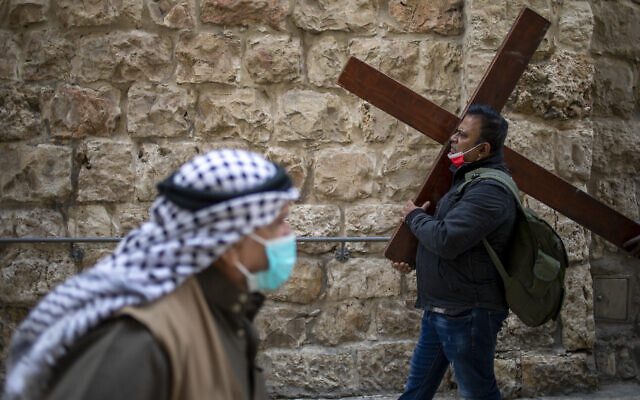
This year, Franciscan friars in brown robes led hundreds of worshippers down the Via Dolorosa, retracing what tradition holds were Jesus’ final steps, while reciting prayers through loudspeakers at the Stations of the Cross. Another group carried a large wooden cross along the route through the Old City, singing hymns and pausing to offer prayers.

“We have to pray for those who can’t be here,” said Alejandro Gonzalez, a Mexican living in Israel. “Those of us who can be here have a responsibility to keep them in mind and to go in this Way of the Cross that they are going through as well.”

The Church of the Holy Sepulchre, built on the site where Christians believe Jesus was crucified, died and rose from the dead, is open to visitors with masks and social distancing.

“Things are open, but cautiously and gradually,” said Wadie Abunassar, an adviser to church leaders in the Holy Land. “In regular years we urge people to come out. Last year we told people to stay at home… This year we are somehow silent.”

Israel has launched one of the world’s most successful vaccination campaigns, allowing it to reopen restaurants, hotels and religious sites. But air travel is still limited by quarantine and other restrictions, keeping away the foreign pilgrims who usually throng Jerusalem during Holy Week.

The main holy sites are in the Old City in east Jerusalem, which Israel captured along with the West Bank in the 1967 war. Israel annexed east Jerusalem and considers the entire city its unified capital, while the Palestinians want both territories for their future state.

In neighboring Lebanon, Christians observed Good Friday under a coronavirus lockdown and amid a severe economic crisis exacerbated by the massive explosion that demolished parts of the capital last year. Even traditional Easter sweets are a luxury few can afford.

“People are not even talking about the feast,” says Majida Al Asaily, owner of a sweets shop in Beirut. “We haven’t witnessed anything like this year, despite the war and other difficulties that we had faced before.”

Pope Francis began Good Friday with a visit to the Vatican’s COVID-19 vaccination center, where volunteers have spent the past week administering some 1,200 doses of the Pfizer-BioNTech vaccine to poor and disadvantaged people in Rome.

The Vatican City State bought its own doses to vaccinate Holy See employees and their families, and has been giving away surplus supplies to homeless people. A masked Francis posed for photos with some of the volunteers and recipients in the Vatican audience hall.

Later Friday, Francis was to preside over the Way of the Cross procession in a nearly empty St. Peter’s Square, instead of the popular torchlit ritual he usually celebrates at the Colosseum.

In France, a nationwide 7 p.m. curfew is forcing parishes to move Good Friday ceremonies forward in the day, as the traditional Catholic night processions are being drastically scaled back or cancelled. Nineteen departments in France are on localized lockdowns, where parishioners can attend daytime Mass if they sign the government’s “travel certificate.”

Fire-ravaged Notre Dame will not hold a Good Friday mass this year, but the cathedral’s “Crown of Thorns” will be venerated by the cathedral’s clergy at its new temporary liturgical hub in the nearby church of Saint-Germain-l’Auxerrois.

In Spain, there will be no traditional processions for a second year in a row, and churches will limit the number of worshippers. Many parishes are going online with Mass and prayers via video streaming services.

In the Philippines, streets were eerily quiet and religious gatherings were prohibited in the capital, Manila, and four outlying provinces. The government placed the bustling region of more than 25 million people back under lockdown this week as it scrambled to contain an alarming surge in COVID-19 cases.

The Philippines had started to reopen in hopes of breathing life into its suffering economy, but infections surged last month, apparently because of more contagious strains, increased public mobility and complacency.

In Kenya, all churches were ordered to close as part of a ban on large gatherings to contain a worsening outbreak. Joseph Karinga went to his church anyway and prayed outside the shuttered doors, in a garden near a shrine to Mary.

“I will just say my rosary here and go home,” he said.

Stranded customers panic over Zenith Bank’s network breakdown

0

One of Nigeria’s foremost new generation banks Zenith Bank PLC has been under fire for days over the bank’s inability to resolve network issues with its mobile applications and other internet services.

Our correspondent observe that many panicked customers besieged the bank Friday, with queries ranging from outrageous deductions, to errors in ATM dispensing and inability to make withdrawals but were promised all issues will be resolved within 24 hours of which as at press time from our findings have not been effected.

Point of Sale (POS) vendors around the FCT have also lend their concerns over the issue as they are unable to transact businesses with their customers using the Zenith Bank’s debit cards.

As the Easter holidays kick in, many Zenith Bank customers have been left stranded as most of them could not access cash to celebrate the holidays or travel to be with their families.

Some customers have however taken to their social media handles to express their disappointment.

See some of the reactions below.

Although the bank has yet to make any public statement to reassure its customers, but many have expressed the desire to embark on mass action against it.

Niger President Bazoum sworn-in after ‘attempted coup’

0

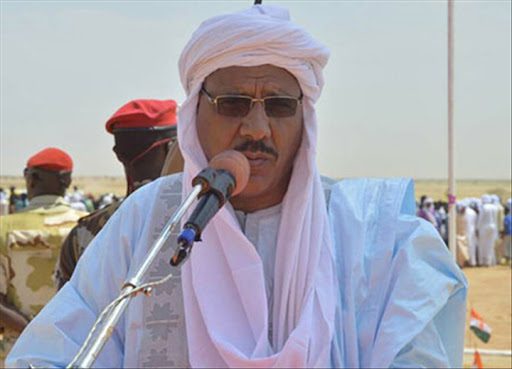
Niger’s newly-elected president, Mohamed Bazoum, is set to be sworn into office on Friday, a democratic watershed overshadowed by jihadist violence and alleged coup bid two days ago.

The inauguration will mark the first-ever transition between elected presidents in Niger’s six decades of independence from France — a historic moment that has been widely praised.

But the Sahel country’s instability and insecurity have been deeply underscored in the runup to Friday’s ceremony.

In the early hours of Wednesday, after gunfire broke out near the presidency in the capital Niamey, the government announced an “attempted coup” had been thwarted — a “cowardly and regressive act which sought to threaten democracy and the state of law”.

The alleged coup leader is an air force officer in charge of security at Niamey’s airbase and is being “actively sought”, a source within Niger’s security services told AFP on Wednesday.

Another security source said “a few members of the army” had been behind the coup but had been prevented from approaching the presidential palace by the elite Presidential Guard.

“Some arrests” were made, the source said.

UN Secretary General Antonio Guterres was among worried foreign leaders, calling the armed forces “to strictly abide by their constitutional obligations”.

President Muhammadu Buhari also condemned the attempted coup, saying “any illegal effort to depose a democratically elected government was not only despicable but also unacceptable to democratic governments around the world.”

Bazoum, 60,  is a former interior minister and right-hand man of outgoing president Mahamadou Issoufou, 68, who has voluntarily stepped down after two five-year terms.

But his most formidable rival, former premier Hama Amadou, was banned from running because of a conviction for baby trafficking — a charge he has branded politically motivated.

Niger is the poorest country in the world, according to the benchmark of the UN’s 189-nation Human Development Index (HDI).

Bazoum won a runoff vote for the presidency in February with 55.6 percent of the ballot, according to official results contested by his opponent, Mahamane Ousmane.

The country has suffered four coups in its history, most recently a February 2010 putsch which toppled then-president Mamadou Tandja.

It has also been ravaged by repeated jihadist attacks, from insurgents who have advanced from Mali in the west and Nigeria in the southeast.

More than 300 people have been killed in three attacks in the west since the start of the year.

Easter: Gov Fintiri harps on tolerance, peaceful coexistence

0

Governor Ahmadu Umaru Fintiri of Adamawa State has renewed his calls for harmony and peace before during and after the Easter festivity.

A statement by Humwashi Wonosikou, Governor Fintiri’s press secretary said, the governor urged the people to imbibe the lessons of sacrifice and tolerance embedded in the festivity.

The governor urged citizens of the state to tolerate each other despite their differences.

“The holy day marks that moment in time when good conquered evil, hope overcame despair and life triumphed over death,” the statement added.

Fintiri stressed that in this age of great challenges of insecurity and coronavirus pandemic, Easter’s timeless message strengthens the people for the tasks before them.

“As we celebrate, let us remember that our lives have great purpose and value, and therefore we must never give up hope of a better Nigeria.

”As citizens of Adamawa State, let us play our roles as true citizens through love and sacrifice for the general good of the society,” the governor noted.

The governor said, the greatest legacy that Jesus Christ left for the people are the legacy of love and sacrifice noting that,

“I believe the best way we can carry on that legacy is to fulfil our obligations to our society.”

He challenged the people to show love and make sacrifices in order to maintain the harmonious and peaceful co-existence amongst them for which the Adamawa people have come to be known.

APC Extends Registration As Matawalle Set To Join Party

0

Fresh moves are on for Governor Bello Matawalle of Zamfara State to join the All Progressives Congress (APC), Daily Trust has gathered.

This is just as the party yesterday announced the extension of its on-going membership revalidation and registration exercise to accommodate new members.

There have been talks about the planned defection of Matawalle, who became governor of the state on the platform of the Peoples Democratic Party (PDP), following the judgement of the Supreme Court on the crisis that trailed the primaries of APC in Zamfara.

Matawalle’s moves to join the APC predated the defection of the Ebonyi State Governor David Umahi to the ruling party in November last year.

A former governor of Zamfara State, Senator Ahmed Sani Yarima, had last year told Daily Trust that plans are on for Matawalle to join APC.

The crisis rocking the APC in the state, a source said, was one of the factors that delayed the defection of the governor. The two warring camps in the state chapter of the party — Abdulaziz Yari and Senator Kabir Garba Marafa factions — had in February reconciled.

A source close to the chairman of the national caretaker committee of the APC, Mai Mala Buni, confirmed the defection moves. “The talks on Matawalle’s defection have gone far but wait for him to formally announce it,” the source said, pleading not to be named.

Also, a former governor of the state said a governor who is a member of the APC in the North West is spearheading the defection.

Another source said former governor of Zamfara State, Abdulaziz Yari and other chieftains of the party in Zamfara State have been notified.

“We were told that he will join our party this month. They also told us that the defection is sanctioned by the presidency. Nocturnal meetings to finalise the arrangement are being held,” he said.

Ahead of the defection, it was gathered that the governor met with top officials of his administration in Zamfara State.

Out of the seven states in the North West, five are governed by APC while Sokoto and Zamfara are of the PDP.

In a chat with Daily Trust on Thursday, the Publicity Secretary of the ruling PDP in the state, Alhaji Farouk Ahmad, said no one had officially informed their party that Matawalle is planning to defect to APC.

“We are just hearing it from the grapevine as you do but I can tell you that PDP as a party is not informed about the decision, so I can’t confirm anything to you,” he said.

In the same vein, the vice chairman of the opposition APC in the state, Alhaji Sani Gwamna Mayanchi, said they were not officially contacted and that APC has nothing to say about it.

On his part, the state Commissioner of Information Alhaji Ibrahim Dosara said “I haven’t discussed anything like that with the executive governor.”

Meanwhile, Secretary of the APC Caretaker/Extraordinary Convention Planning Committee, Senator John James Akpanudoedehe, in a statement on Thursday, said the extension became necessary because of the number of people willing to join the party.

However, the PDP has asked the APC to end what it called ‘’ dance of shame in the name of membership registration.’’

The party, in a statement by its spokesman, Kola Ologbondiyan, said: “Our party urges the APC leadership to listen to voice of reasons coming from elders of their party like former Governor Bisi Akande and end this dance of shame.

“In any case, our party will, at the appropriate time, expose all the shenanigans of the APC, including the roles played by desperate individual APC leaders in this attempt to beguile Nigerians with a fictitious membership register.”

-Daily Trust