Home Blog Page 22

FCT High Court Strikes Out Joinder Motion Of Firm Adversely Affected By Exparte Order

0
Justice Othman Musa of the High Court of the Federal Capital Territory has turned down a request by a firm, EOD Lagos PFM Limited to be joined as a party in a Lagos property dispute pending before the court.

The firm has been adversely affected by the order of the FCT High Court sealing up the premises, at Plot No A Block 12, Lekki Peninsula Scheme, Lagos State, where it carries out it’s business activities.

Officials of the court sealed up a property located at Lekki Peninsula Scheme, Lagos, following an Exparte Order granted by Hon. Justice Othman Musa of the FCT High Court.

The sealed up property houses various business entities including Angelos, Café, Zevis, Pharmaceuticals, EOD PFM Ltd, Lord of Hosts Miracle Church, who have been carrying on their various businesses in the premises for several years.

Following the Exparte Order granted by court to seal up the property, the firm applied to be joined in the suit pending before the FCT High Court with Suit No. FCT/HC/CV/4636/2025 between Mr. Henry Orabuchi V Police and Others but the court turned down the application.

Upon hearing the application for joinder vide Motion No. M/402/2026, the Court on February 19, delivered a ruling refusing to join the interested party in the suit or vary the Order to exclude the area where their business is located.

In its motion, EOD PFM Ltd had prayed the court to be joined or vary the order of the court to exclude the area where its business premises in the property is located but the court dismissed the motion.

Also, the court awarded a punitive damage of N500,000.00 against the party for bringing the motion before the court.

The court was not swayed by the facts showing that the tenant that brought the motion for joinder operates its business on a piece of land that is clearly distinct from the portion of the reclaimed land claimed by the plaintiff or the fact that the affected tenant had been out of business since the Lagos property was sealed up in December, 2025 in line with the Exparte Order of the FCT high Court.

In refusing the application, the Court held that the company did not file a ‘statement of defence’ in the suit even where the Affidavit demonstrated the company’s interest in the property and how the Exparte Order has affected their business.

The award of cost of N500,000.00 against an innocent tenant whose business premises has been sealed up by the Exparte Order of Court granted without jurisdiction, does not serve the interest of justice in any way.

The Hon. Court has no jurisdiction to grant the Exparte Order and has not demonstrated any inclination to equity and fairness in discharge of judicial duty.

The plaintiff had alleged that his fundamental Rights as guaranteed under Sections 34, 35, 36, 37, 41, and 44 of the Constitution of the Federal Republic of Nigeria, 1999 (as amended), and Articles 9 and 14 of the African Charter on Human and Peoples’ Rights (Ratification and Enforcement) Act, have been breached.

He claimed that he purchased 3,000 square meters of reclaimed land situated at the back of Plot No A Block 12, Lekki Peninsula Scheme, Lagos State from the Landlord, Mr. Emecheta Elvis Eze, which has nothing to do with the premises where the business entities are located.

The plaintiff filed the suit to shield him from honouring invitation of the Nigeria Police Force, following a Petition against him by Prof. Mike Ozekhome, SAN, (lawyer to Mr. Emecheta) over Mr.
Henry’s conduct that amounts to criminal trespass, damage to property and threat to life.

In the fundamental Rights suit filed by the law office of Chikaosolu Ojukwu, SAN, on behalf of the plaintiff, it was argued that the Police Invitation infringes on his fundamental Rights and is aimed at compelling him into relinquishing his lawful proprietary and contractual rights over the 3,000square meters of reclaimed land behind the sealed up property.

In his Exparte application before the Court, Ojukwu urged the Court to grant an Exparte Order to seal up the Lagos property.

The court presided over by Justice Musa granted the Exparte Order on November 24, 2025 to seal and secure the entire property, including the reclaimed land at the back of the property measuring 3,000 square meters

He also ordered the immediate stoppage of all construction works, activities, actions, or steps on the said property while ensuring that no person, authority, or entity howsoever described is permitted access to or entry upon the property pending the hearing and determination of the substantive suit pending before the court.

Following the order of the court which was supposed to have been vacated, having elapsed, on December 30, 2025,, all the occupants of the property and their workers were forcefully chased out of their business premises and the property was sealed up by people who introduced themselves as officers of the FCT High Court, from Abuja.

All efforts by the various business owners to explain to the FCT Court officials that their business premises is different from the 3,000square meters of the reclaimed land upon which the plaintiff claim is predicated, met stiff resistance as they were forcefully pushed out of the premises without being allowed any opportunity to remove anything from there.

The institution of this case in FCT Abuja and the grant of the Exparte Order suggests a grand and calculated scheme orchestrated to cause mischief and hardship on the Landlord of the Premises and the innocent occupants who have been deprived of access to their business premises. The Business owners are not parties to the alleged agreement between Mr. Henry Ugonna Orabuchi, and Mr. Elvis Emecheta, over the 3,000 square meters of the reclaimed land behind their business premises and are not parties to the fundamental rights enforcement suit.

The Exparte Order of the FCT High Court over the Lagos property is a manipulation and abuse of judicial process using the instrumentality of the judiciary itself (FCT High Court) which has occasioned great hardship and injustice on the business owners and Landlord.
Ex-President Highlights Need for NOUN Law Programme Revival and Reforms

0

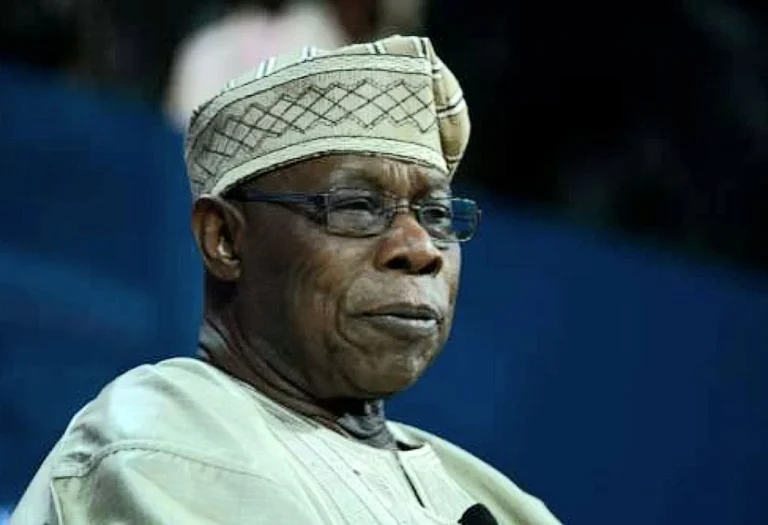
Olusegun Obasanjo, the former president, has urged for changes at the National Open University of Nigeria, including the reinstatement of its legal program and the incorporation of artificial intelligence into its curriculum.

When Obasanjo received Prof. Uduma Uduma, the recently appointed Vice-Chancellor of NOUN, and members of his management team in Abeokuta, Ogun State, he made the call.

He advocated for more students to enroll as well.

Obasanjo cited the importance of innovation and technology-driven academic achievement in a statement released on Sunday in Abuja by Ibrahim Sheme, NOUN’s Director of Media and Publicity.

Obasanjo stated, “I implore the university’s leadership to prioritize modernization and expand access to quality education.”

The university has taken important strides to incorporate artificial intelligence into its academic material, according to Prof. Olufemi Peters, the immediate past vice-chancellor.

International educational groups have recognized the university for its work, Peters continued.

Regarding enrollment, he revealed that NOUN had at least 300,000 registered students, of whom about 190,000 were enrolled at the time of writing. He said that the discrepancy was due to different levels of participation.

He said he was confident in the next vice-chancellor’s ability to maintain innovation and advance institutional growth.

During his speech, Uduma promised to reinforce ongoing reforms at the university and give priority to the resuscitation of the law program.

Additionally, he conveyed gratitude to Obasanjo for his ongoing assistance and contributions to the institution’s development.

Later, the vice-chancellor went to the university’s Abeokuta Study Centre, where he and his entourage were shown around by Mr. Oyekunle Adegboyega, the Centre Director.

SERAP Urges Tinubu to Stop Mass Phone Tapping Immediately

0

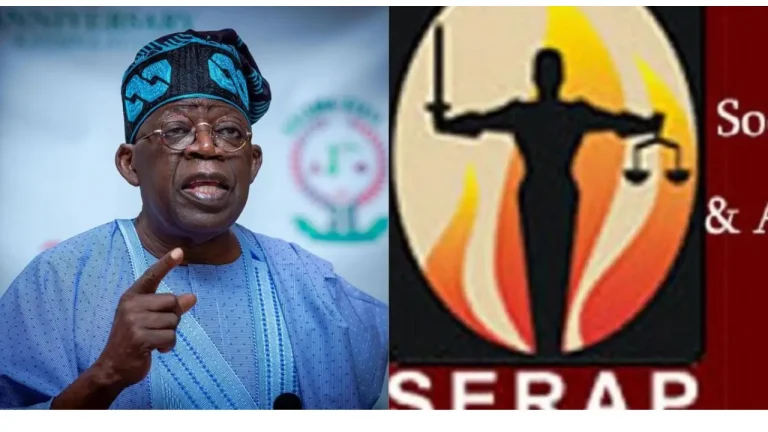
The Socio-Economic Rights and Accountability Project, or SERAP, has urged President Bola Tinubu to direct Bosun Tijani, Minister of Communications, Innovation, and the Digital Economy, to withdraw the Lawful Interception of Communications Regulations, 2019.

The regulations, according to SERAP, are “unconstitutional, unlawful, and entirely inconsistent with Nigeria’s international obligations.”

This was stated in a letter dated February 21, 2026, and signed by SERAP deputy director Kolawole Oluwadare.

The organization stressed the critical need for a transparent legislative process to ensure that any authorized interception framework adheres to constitutional safeguards, judicial scrutiny, and international human rights norms.

The call follows allegations by former Kaduna State Governor Nasir El-Rufai that the National Security Adviser (NSA) Nuhu Ribadu’s phone conversation was intercepted.

El-Rufai reportedly claimed, “The NSA’s call was intercepted.” They do the same with our calls, and we overheard him say, “They should arrest me.”

According to SERAP, the regulations establish “a sweeping mass surveillance regime that violates Nigerians’ constitutionally and internationally guaranteed human rights, including privacy and freedom of expression.”

The organization criticized the regulations for granting “overly broad and vague powers to intercept communications on grounds such as ‘national security,’ ‘economic wellbeing,’ and ‘public emergency,’ without adequate judicial safeguards, independent oversight, transparency, or effective remedies.”

The letter also expressed concern about the forthcoming 2027 general elections, claiming that “broad and weakly safeguarded interception powers create a real risk of abuse during politically sensitive periods.”

It continued: “Surveillance measures that lack strict necessity, proportionality and independent judicial oversight can easily be weaponised against political opponents, journalists, civil society actors and election observers.”

SERAP emphasized the importance of privacy in political processes, stating, “Free and fair elections are dependent on confidential communications, protected journalistic sources, and open democratic debate.”

“Any misuse of intercepted data for intimidation, political advantage or disinformation would fundamentally undermine Nigerians’ right to political participation and electoral integrity.”

The organization advocated for modest, clearly defined interception powers supported by independent judicial authority and adequate remedies, claiming that current legislation “fail all three tests” of legality, need, and proportionality.

SERAP criticized two specific provisions: Regulation 4, which grants “broad discretionary interception power with minimal clarity regarding the scope or limits of such discretion,” and Regulation 23, which allows the Nigerian Communications Commission to designate additional authorities with interception powers, creating “ambiguity and undermines legal certainty.”

The group also criticized provisions that allow interception without a warrant in broad circumstances, the lack of notification to affected individuals, and the requirement to disclose encryption keys, which it said “weakens cybersecurity for everyone and fails to provide safeguards for journalists, lawyers, and human rights defenders.”

SERAP concluded, “While SERAP recognizes the government’s responsibility to address national security and organized crime, such goals must be pursued within constitutional and international human rights limits.” Regulations are neither required nor proportionate in a democratic society.

The organization also sought a response within seven days, warning that failure to comply would force it to take “all appropriate legal actions to ensure the government complies with our request in the public interest.”

Beyond the Noise: Why Akume and Alia Are Not Political Adversaries

0

A curious story has been going around in the often-overheated world of Nigerian politics, where rumors usually take the place of facts, claiming that Senator Dr. George Akume, the Secretary to the Government of the Federation (SGF) and a prominent figure in Benue politics, is engaged in a contest with Benue state Governor Hyacinth Alia.

It is a story that depends more on speculation than on proof, more on political rumors than on any solid fault line.

A more thorough, methodical examination of Benue’s political past—and, in fact, its current state—reveals a different, much more complex reality.

The importance of political history

The long-lasting political structure that George Akume created over almost thirty years must be the starting point for any debate. Akume has not just been a member of the system since he entered partisan politics in 1998; he has helped to shape it.

With his three terms as a Senator of the Federal Republic, when he became Senate Minority Leader, his two terms as Governor of Benue State, and his subsequent appointment as a Minister of the Federal Republic, Akume’s career demonstrates a unique continuity of influence.

Further demonstrating his importance in Nigeria’s government structure is his present position as SGF under President Bola Ahmed Tinubu’s administration.

The foundation of this career is not chance. It is the result of persistent grassroots involvement, the formation of strategic alliances, and an extraordinary ability to maneuver through Nigeria’s convoluted political landscape.

Benue Political Formula

Akume’s influence in Benue State can be shown; it is neither mystical nor overstated. The state’s succession of governors—Gabriel Suswam, Samuel Ortom, and now Hyacinth Alia—indicates a continuity of political structure that has occasionally collided with Akume’s strategic orientation.

This does not take away from these leaders’ credibility or agency. On the contrary, it is to recognize the political environment that enabled their emergence. Politics is rarely an accident, especially in Nigeria at the subnational level; rather, it is frequently the result of established networks, institutional memory, and layered alliances.

Strategy Over Sentiment in 2023

Benue’s 2023 governorship election provides possibly the best illustration. Experienced candidates with significant national influence and substantial political capital filled the field. But in a competition where ancestry alone could not ensure victory, timing, organization, and strategic mobilization were what made the difference.

Therefore, it is necessary to view Governor Alia’s rise within this larger framework, not as a singular political miracle but rather as the result of a concerted effort in which several players, including Akume’s powerful political apparatus, played pivotal roles.

Structure, Capacity, and Mobilization Politics

In Benue State, the recent registration and revalidation of All Progressives Congress (APC) members is equally instructive. Initial attempts produced low results, which raised questions regarding penetration at the grassroots level. But after Akume’s network got the larger party organization going, things changed quickly and dramatically.

The sharp increase in involvement within days highlighted a crucial aspect that is frequently missed in political analysis: that, despite rhetoric, power in Nigerian politics still lies in organization, reach, and the capacity for mass mobilization.

Dispelling the “Battle” Myth

The idea of Akume and Alia engaging in a political conflict becomes more and more implausible in light of this. Relationships inside party systems are frequently defined by the dynamics of political mentorship, hierarchy, and context, all of which are overlooked in this narrative.

It is incorrect to see the two men’s exchange as a contest because it fails to recognize Akume’s political prominence and Governor Alia’s changing position within it. Being relatively fresh to the complexities of party politics, the latter is still establishing himself in a system that has been fashioned for a long time by established players.

This is not an indication of subservience; rather, it represents a continuum where experience and incumbency coexist, albeit not always in a hostile manner.

Parties’ Need for Stability

Amidst Nigeria’s complex governance issues, ranging from national security to economic transformation, the internal unity of the ruling party institutions continues to be crucial. As SGF, Akume has national responsibilities that require administrative concentration, stability, and coordination, going beyond state-level politics.

Therefore, it would be incorrect to assume that he is focused on subnational rivalries. Maintaining governance results and bolstering party unity are currently more profitable uses of his political capital.

Politics Beyond Conjecture

In the end, the assertion that Akume and Alia are involved in a political conflict says more about the politics of the modern world than it does about the actual situation. Narratives can become powerful in their own right, divorced from reality, in a setting where perception is frequently used as a weapon.

But caution is necessary for careful analysis. We must distinguish between noise and nuance, as well as between structure and conjecture.

Senator George Akume’s political career is rich in continuity, depth, and lasting significance. Within that changing environment, the administration of Governor Hyacinth Alia marks a new stage. Presenting their connection as antagonistic is not only oversimplified, but it also lacks sound analysis.

Like in administration, not all disagreements turn into conflicts, and not all silences turn into wars. As he continues to galvanize support for President Bola Ahmed Tinubu not only in Benue State but also throughout the North-central region and the entire country, Akume’s goal must be reiterated: providing high-quality services to the nation while consolidating the necessary stability within the ruling party. His political status is self-evident.

UniAbuja Expels 28 Students Over Exam Malpractice, Cultism

0

28 students have been expelled by the University of Abuja administration for a variety of disciplinary offenses, such as exam misconduct, cult activities, and result fabrication.

The decision was made at an institution Senate meeting, according to reports.

The university’s acting director of information, Habib Yakoob, made this known in a statement issued on Sunday. He clarified that the action came after the Student Disciplinary Committee’s conclusions and suggestions were reviewed.

The statement claims that the impacted students were convicted of a number of crimes, including theft, burglary, conspiracy, assault, and threat to life. Others were connected to hard drug use and possession, as well as cult-related activities. It was also alleged that some of the students had uploaded phony O-Level scores to the university’s admissions website.

Some of the students were invited to come before the disciplinary committee multiple times, but they did not, the statement continued. Consequently, the Senate authorized the revocation of credentials previously granted to fifteen former students who disregarded the committee’s summons despite numerous warnings.

Nine students were exonerated of misconduct by the Senate after it reviewed more cases. However, for offenses like fighting, conspiracy, and hostel racketeering, 33 students were warned.

The university is still dedicated to maintaining a secure and conducive learning environment on campus, according to Hakeem Fawehinmi, vice-chancellor. “The school will continue to enforce its rules and maintain order at all levels,” he said.

Additionally, he expressed gratitude to the Student Disciplinary Committee for their efforts in thoroughly examining the issues that were presented to them. The vice-chancellor counseled students to act appropriately and refrain from doing anything that would interfere with their studies or hinder their academic advancement.

FCT Elections: APC Wins AMAC, Bwari, Kwali; PDP Secures One Council

0

Three area councils have been won by the All Progressives Congress (APC) in the current elections in the Federal Capital Territory.

The FCT, AMAC, Bwari, Kwali, Abaji, Gwagwalada, and Kuje were the six area councils where the Independent National Electoral Commission conducted the votes on Saturday.

According to sources, the APC has won AMAC, Bwari, and Kwali thus far, while the Peoples Democratic Party (PDP) has won Gwagwalada. At press time, the results for Kuje and Abaji were still pending.

In the Abuja Municipal Area Council, the APC’s Christopher Maikalangu was re-elected as the current chairman.

Of the 62,861 legitimate ballots cast, Maikalangu received 40,295 votes, making her the winner, according to AMAC Collation Officer Prof. Andrew Abue.

The African Democratic Congress candidate received 12,109 votes, while the PDP candidate received 3,398 votes, according to Abue.

There were 2,336 ballots that were rejected, he continued, making 65,197 votes cast overall.

Additionally, Abue revealed that AMAC had 837,338 registered voters and 65,676 accredited voters for the election.

The collation officer declared that Maikalangu had been returned elected because she had received the most votes.

The APC’s Joshua Ishaku was proclaimed the victor of the nomination for chairman of the Bwari Area Council.

Ishaku received 18,466 votes, according to the results announced by the Returning Officer, Prof. Mohammed Nurudeen, on Sunday.

“On February 21, 2026, I was elected as the returning officer for the 2026 FCT Area Council, Bwari chairperson.

According to Nurudeen, Joshua Ishaku is deemed the winner and re-elected after fulfilling all legal prerequisites.

The candidate of the Zenith Labour Party received 3,515 votes to finish third, while the ADC candidate received 4,254 votes.

Bwari Central, Igu, Shere, Dutse, Ushafa, Byazhin, Kuduru, Kubwa, Usuma, and Kawu were the ten wards in which the election was held.

With 17,032 votes, APC candidate Daniel Nuhu won the leadership position on the Kwali Area Council.

With 8,575 votes, PDP candidate Haruna Pai, his closest opponent, came in second.

The APC has won three of the six councils that have been named thus far, giving them an early advantage in the FCT polls.

As the results are anticipated to be announced at any time, observers say the focus now turns to Abaji and Kuje.

Police Foil Bandit Attack on Security Operatives in Kebbi

0

An attack by bandits on security personnel along the Maje border road in the Bagudo Local Government Area has been reported by the Kebbi Police Command.

This was revealed in a statement released in Birnin Kebbi on Saturday by SP Bashir Usman, the command spokesperson.

According to Usman, the attack happened on February 20 at approximately 9:45 p.m. The attackers allegedly moved with a herd of cattle to hide their approach as they advanced in the dark.

He claimed that vigilant Police Counter Terrorism Unit (CTU) agents quickly engaged the assailants and compelled them to flee.

Despite several temporary security structures being damaged during the incident, Usman said, no one was killed and no injuries were reported.

He claimed that since then, border security had been strengthened and that everything was still under control.

He cited Umar Mohammed-Hadeija, the state’s commissioner of police, as advising citizens—especially herders and livestock owners—to avoid moving cattle at night in ways that criminals could take advantage of.

The commissioner stated that any suspicious movement or illegal activity related to night grazing will be met with firm and legal action by security services.

Usman further urged the public to maintain their vigilance and notify the closest police station or security formation right away of any suspicious activity.

Usman reaffirmed the Kebbi Police Command’s dedication to safeguarding people and property throughout the state.

ADC Chieftain Criticizes ICPC, Demands Immediate Release of El-Rufai

0

The Independent Corrupt Practices and Other Related Offenses Commission (ICPC) has been urged by Usman Okai Austin, a leader of the African Democratic Congress (ADC), to either prosecute former Kaduna State Governor Nasir El-Rufai with a crime or to free him right away.

He criticized the ICPC in a statement released on Saturday for holding El-Rufai in custody before wrapping up its probe.

He compared this to the Department of State Service’s (DSS) recent actions, pointing out that the DSS has put the legal system ahead of “drama and a show of power.”

Okai asserts that the DSS’s choice to go to court instead of using arbitrary imprisonment is both democratic and civil.

“Letting the court make a decision based on merit-based arguments is the appropriate way to handle such matters.” On the other hand, it seems that the ICPC is above the law given its current course.

Detaining someone before finishing an investigation is “retrograde, undemocratic, and illegal,” according to Okai.

El-Rufai freely accepted an invitation from the EFCC, demonstrating complete cooperation and demonstrating that he is not a flight risk, he said.

The lack of transparency behind El-Rufai’s shift between agencies was also questioned in the statement.

The EFCC has not yet disclosed if Mallam El-Rufai was re-arrested following the issuance of administrative bail or if he was formally turned over to the ICPC. The rule of law is undermined by this ambiguity,” he stated.

Okai emphasized that a key component of international best practice is defending the rights of the innocent until and unless found guilty.

He cautioned anti-corruption organizations against turning into “tools of oppression.”

“It is a flagrant violation of the right to a fair hearing to detain a suspect before starting an investigation.

The norms of a civilized society must be upheld by the ICPC. Make an argument in court if there is a case against El-Rufai. If not, he ought to be freed right away,” he continued.

INEC Officials Decry Low Voter Turnout at Aso Estate, Sabon Lugbe

0

In the Area Council elections on Saturday, the poor voter turnout has been criticized by Independent National Electoral Commission officials based at Polling Unit 097 in Aso Estate and Polling Unit 098 at LEA Primary School in Sabon Lugbe.

Both polling stations reported a peaceful and orderly procedure, despite the low participation and early logistical difficulties, INEC officials stated.

They claimed that no violent situations were noted and that the Bimodal Voter Accreditation System operated effectively.

As of the time this report was filed, just roughly 60 of the more than 900 voters who were enrolled at the polling place had cast ballots, according to speaking correspondent Clement Adugo, the Assistant Presiding Officer at Aso Estate.
Although there are over 900 registered voters in this area, only about 60 people have cast ballots thus far, which makes the voter turnout quite low.
However, when we arrived in the morning, voters were already present and prepared to cast their ballots. At 10:30 am, voting began here, and it has gone smoothly ever since. She added, “The voters have also been very cooperative.”

Sabon Lugbe, the Assistant Presiding Officer at Polling Unit 098, LEA Primary School, also said that less than 50 people had cast ballots out of the 715 registered voters, despite his plea for anonymity.

Voting materials arrived at the polling station just after 11 am, which delayed the start of voting, according to the official, who also voiced dissatisfaction at the late delivery of the supplies.

“They couldn’t find this location, so they were moving around with the voting materials,” he claimed, adding that the supplies didn’t arrive until after 11 am. However, everything went smoothly as soon as the voting process started. The BVAS performed admirably.

He claimed that although there are 715 registered voters, only 50 people actually showed up to cast their ballots.

ADC Condemns Wike’s Alleged Interference in FCT Elections

0

Nyesom Wike, the Minister of the Federal Capital Territory, has been accused by the African Democratic Congress (ADC) of meddling in the current Area Council elections in Abuja.

The party criticized Wike’s activity around different polling stations in the FCT under what it called “monitoring” in a statement signed by Bolaji Abdullahi, its national publicity secretary.

The ADC claimed that the minister had directly interfered with the election process.

The party contended that Wike had no constitutional role in the election’s conduct because he is a well-known partisan and cabinet minister.

Additionally, it said that he is not a voter in the Federal Capital Territory and that his presence at polling places runs the danger of frightening both voters and election officials.

Following his unilateral imposition of a curfew on prospective voters, “Wike’s’monitoring’ exercise represents direct interference in the election,” the statement said.

The minister’s presence during voting was deemed “vexatious and meddlesome” by the ADC.

The party also claimed that some security guards were working with governing party agents to suppress and intimidate voters in various areas of the Federal Capital Territory.

Concerns were also expressed regarding interruptions to the Independent National Electoral Commission’s Result Viewing Portal (IReV), which it claimed was unavailable during the results compilation process.

The party said, “We find this to be a curious coincidence and call on INEC to restore full IReV functionality as soon as possible, with a clear public explanation of the disruption.”

Throughout the process, the ADC asked its party agents and supporters to maintain composure while exercising caution.

It suggested that they thoroughly record any anomalies or occurrences seen at polling places throughout the FCT.

The party reaffirmed its dedication to upholding what it called the electoral process’ purity.