Home Blog Page 2196

Ex Buhari’s minister, Solomon Dalung hits Buhari

0

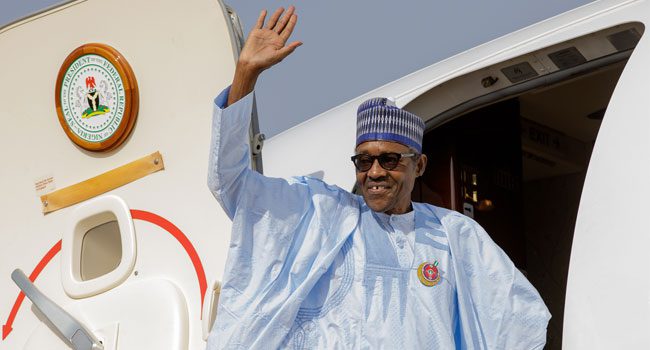
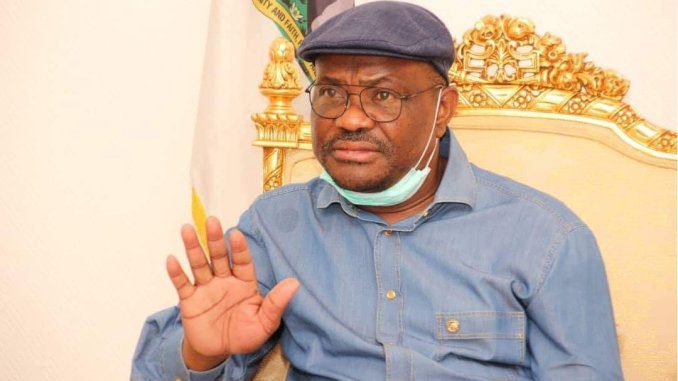
A former Minister of Sports, Barr. Solomon Dalung has highlighted what he described as the major problems of President Muhammadu Buhari.

According to him, majority of the people in Buhari administration do not seem to work along the President’s ideology but rather prefer to fold their arms and watch him fail.

The former Minister spoke at the Army Resource Centre, Abuja on Tuesday, during the presentation of a book entitled ‘Buhari in Us’ written by Haruna Abdullahi.

He said, “When I finally met Mr. President, he said, ‘I know you are somebody who can tell someone how it is. I would want you to tell me anytime, anything however bitter or however hard it is.’

“My covenant with him is to tell him whenever he is right and also whenever he is wrong. The President has remained the man I know since then.

“Buhari has not changed. But Buhari is like an angel who is invited to dance in the mould and Nigerians expect him to return to heaven with a clean robe. Certainly, it would not happen.

“The second problem of Buhari is that he believes so much on himself and insists on doing what is right. But he also does not believe that the environment upon which he operates is different from what he is.

“The last problem is that Muhammadu Buhari is one of the most unfortunate leaders who meant well for the country but so many people who are supposed to help him succeed are just folding their arms watch him and say ‘do it let’s see!’

“And it is the ‘do it let’s see’ syndrome that has made the Buhari government subject of attacks from Nigerians…”

Outrage as U.S. seizes websites linked to Iranian government

0

The Justice Department moved Tuesday to seize more than 30 Web domains linked to Iranian state media, as American officials continued their efforts to counter what they say is Iranian propaganda and disinformation at a time of simmering tensions between the two countries.

A number of the domains, including some used by English-language Press TV, an Iranian state-owned news channel, posted notices Tuesday indicating they had been taken down by U.S. authorities. The websites for Al-Alam TV, another Iran-owned news channel that broadcasts in Arabic, and the website for Al-Masirah, a Beirut-based outlet that serves as a mouthpiece for an Iranian-allied rebel group in Yemen, posted similar notices.

Thirty-three websites used by the Iranian Islamic Radio and Television Union, and three websites operated by Kataib Hezbollah, were seized, the Justice Department said in a release. The United States imposed sanctions in late 2020 on IRTVU for what it has called the Iranian government’s interference with the U.S. election through disinformation aimed at U.S. voters. Tuesday’s seizures were aimed at those Web domains owned by a U.S. company, which means that the outlets’ webpages operating on non-American domains are still functioning.

The move by the Justice Department came during delicate negotiations between Iran and the United States to revive a 2015 nuclear deal, and a day after Iran’s new president-elect, Ebrahim Raisi, took a hard line toward the United States, ruling out the possibility of meeting with President Biden and declaring he would not negotiate over his country’s ballistic missile program.

Iran’s government had no immediate response to the U.S. action.

Press TV and Al-Alam are owned by the official Islamic Republic of Iran Broadcasting, or IRIB, and carry content that often reflects the views of more hard-line factions in Iran’s leadership. In recent weeks, Press TV has reported extensively on nuclear negotiations between Iran and world powers in Vienna and aired several exclusive interviews with Tehran’s lead negotiator in the talks.

The site, which remained accessible from some places Tuesday, carried a breaking news story calling the seizures “a coordinated action.” The news service, which often criticizes American foreign policy, “has repeatedly fallen victim to censorship on multiple fronts, including Twitter and Instagram besides Google and its services,” the story said.

Al-Alam, which was also partly accessible, ran a brief item saying its website had been blocked, a move the channel called contrary to “freedom of opinion.”

Last year, federal prosecutors in the United States seized more than 100 domain names that officials said were unlawfully used by Iran’s government to engage in a “global disinformation campaign.”

Court papers filed in that case said the domains were used by Iran’s Islamic Revolutionary Guard Corps. Four of the sites seized in that action purported to be genuine news outlets. Some of the seized sites, the U.S. government said, spread Iranian propaganda in the hopes of influencing U.S. policy, in violation of the Foreign Agents Registration Act, while others spread Iranian propaganda in other countries.

Those sites, U.S. officials said, also violated U.S. sanctions against both the Iranian government and the IRGC.

Local Gov’t Autonomy: Buhari to meet, interact directly with 774 Chairmen

0

As calls for the restructuring of the country reechoes, there are indications that President Muhammadu Buhari will be meeting with the entire 774 local government chairmen on a date soon to be announced.

The meeting will discuss devolution of powers to the third tier of government.

Sources disclosed to Television Nigerian  the meeting became necessary owing to the overbearing attitudes of some state governors who muscle funds meant for the development of local governments.

President Muhammadu Buhari has on Monday warned all local government council chairmen against handing over local government funds to their state governors.

He insisted that any local government council chairman that is found culpable of handing over funds to the state governor will give account at EFCC or Kirikiri maximum prison.

“You people are just wasting your time; we have sent money directly to Local Government Account this week. And if you like, withdraw the money from that account and hand over to your Governor; you will give account of it properly at EFCC or Kirikri Maximum Prison.” President Buhari said.

This statement is coming after, a call for restructuring and devolution of power among the three tiers of government. Buhari-led administration had said through Abubakar Malami, the Attorney General of the federation, that what restructuring means to the administration is the functionality of all democratic structures.

Atiku Tasks FG To Engage Ex-Servicemen Fight Boko Haram, Others

0

A former Vice President, Abubakar Atiku, has tasked the Federal Government to engage ex-servicemen fight Boko Haram terrorism, kidnapping and banditry in the country. According to him, the insecurity situation has deteriorated to an extent that many people are living in fear, with losses of several lives daily.

Atiku raised that alarm Wednesday in a statement issued to journalists on how to overcome security challenges to people’s lives and property. While lamenting incessant attacks and killings, he said: “The security situation has been deteriorating rapidly, while the people continue to live in fear, including their loved ones.

“No any part of this country seems to be safe in the last two years.” He added that farms, markets, schools, mosques, churches in urban and rural centres are also not protected against Boko Haram terrorism, kidnapping and banditry.

According to him, terrorists are spreading their areas of operation beyond the Northeast and have crossed into Niger state of the North-Central geopolitical zone. He said the ex-servicemen are willing to return and render their services to fight the terrorists, until they are defeated by rolling them back. He said that Nigeria has a sizable number of military veterans, who are alive and active to fight to the finish.

He noted that as they were fully trained professionally; it serves no purpose to allow the security national assets lie fallow; since there is a lingering threat to the nation. “Call the ex-servicemen up immediately by mobilizing them to the frontlines of Sambisa Forest and the Lake Chad region,” he said.

Continuing, he added: “the time has come for us to put in all our efforts and stamp out this menace from the nation,” noting that serving and retired soldiers had also restored peace in Lebanon, Liberia, Sierra Leone and Sao Tome and Principe and they should be engaged to restore peace in Nigeria. He said that for them to achieve this, they however need modern arms and ammunition.

According to him, the federal government should develop a more efficient means of sourcing for weapons and deliver them to troops. Besides, he added: “We also need to urgently improve the conditions of service of the men and women of our armed forces. And not just the government.” He said the Federal Mortgage Bank of Nigeria (FMBN) in collaboration with primary mortgage institutions to offer members of the Armed Forces special concessionary mortgage loans to own houses.

While the private sector, he added should be encouraged to offer discounted services to appreciate their services. “There is no sacrifice greater than to lay down your life for the motherland,” he said, stating that when the military is properly rewarded, they will fight gallantly,” adding that a country that rewards courage is one that avoids outrage.

Food insecurity worse than insurgency, we must create more access to farmlands – Zulum

0

The Borno state Governor, Prof. Babagana Zulum has said that “food insecurity is worse than insurgency, if we want to end this insurgency, we must to create more access to farmlands. We shall work together to see that we create more access to farmland, so that our people will go to farm.”

Governor Zulum said the only way to address Boko Haram insurgency is to address the roots cause of the insurgency through social and economic empowerment by creating success to more farmlands, stressing that farming is critical to ending the decade long insurgency.

Governor Babagana Zulum who stated this when the new theater Commander Operation Hadin Kai, Major General Christopher Musa paid him a courtesy call at the Government House, Maiduguri yesterday, said ‘ we must address the the roots cause of insurgency by addressing social and economic needs of the people by creating more access to farmlands for people to farm.

He also said there is need to relocate Interanally Displaced Persons (IDPs) back to Kareto, Kirawa, Ashigashiya, Abadam, Gudumbali Mallamfatori and Mainari, as well as opening up Maiduguri-Damboa road among other roads, stressing the state government will support the military to achieve that.

Earlier, the theater commander , Operation Hadin Kai, Major General Christopher Musa said ” the Boko Haram insurgency has been on for almost 12 years . We are determined to do everything possible to bring to an end this menace and madness.”

“We are going to use both kinetic and non kinetic means. This rainy season we shall do everything possible to ensure that people go out to farm”, the theater commander added.

General Musa further said ” the military will work with the police, NSCDC, CJTF, Vigilante and hunters to see that we end this over decade long insurgency. We also assured you we are going to respect human right and international best practices in our commitment to restore peace back to Borno, Northeast and the nation at large”.

While urging the law abiding citizens to go about their normal duties, General Musa also urged them to cooperate with the military in providing useful information to the security agencies.


Kebbi abduction: I will storm forest with rescue team ~ Gov Bagudu Vows

0

Governor Atiku Bagudu of Kebbi State on has vowed to lead the rescue operation of teachers and students abducted from the Federal Government College (FGC), Birnin Yauri, in Ngaski Local Government Area of the State

Bagudu, who is also the Chairman, Progressives Governors’ Forum, spoke when local hunters visited him on Tuesday, June 21, 2021.

Recall that armed men suspected to be bandits had abducted students and teachers of the Federal Government College in Birnin-Yauri, on Thursday in the state.

One of the students abducted from the school was shot dead during a gun duel between soldiers and the abductors.

However, the Nigerian Army had confirmed that five of the abducted students and two teachers have been rescued.

Also, the Chairman, Nigeria Governors’ Forum (NGF) and Ekiti State Governor, Dr Kayode Fayemi, and his Jigawa State counterpart, Alhaji Badaru Abubakar, also paid a solidarity and sympathy visit on Gov. Bagudu.

Bagudu assured that some other governors and stakeholders will join him in the ongoing search operations for the abducted students and staff of the school.

According to him, he will discuss with his colleagues and security agencies in this direction, so as not to jeorpardise the ongoing commendable operations to rescue the abducted students and staff.

He said, “But, we will go out there and like I promised, the day we will move out, I will not be in the office because we will join you in the field.”

The Kebbi State Governor said that this would be done regardless of the consequences

Bagudu argued that: “It is not weapons that win wars, but it is the will that bad people cannot triumph and we will show that, we have enough willpower.

“President Muhammadu Buhari and the security agencies have been doing the best they could with limited resources.

“But, we also need to mobilize, kit ourselves and take on these bandits. Our various scriptures as Muslims and Christians allow us to put our lives at risk in defence of our honour, property and our faiths.

“In what the bandits are doing, they have challenged all of us, so, we can’t let them.”

Bagudu asked the hunters to go back and fully mobilise, pending when he gets the necessary clearance from the security agencies, adding, “we will meet in the field.”

The governor maintained that governors were not sworn in only to sit down in the office and work.

He stated that they are aware that one day, they would be required to lead in the field, even though they are not military or police personnel.

He said that if hundreds of thousands of people can be mobilised during campaigns, same should be done now to join the search party.

“What happened in Birnin Yauri should be the last straw. We should follow these bandits wherever they are and take them on.”NAN quoted him as saying.

In West Africa, Climate Change Equals Conflict

0

By 

One of the many injustices of climate change is it hits the world’s poorest countries hardest. African nations, many of which register the highest levels of poverty and emit the least carbon dioxide, are already being ravaged by global warming. The reasons for this are straightforward: With roughly 60 percent of the sub-Saharan population depending on agriculture to survive, food insecurity is intensified by disruptions to rain cycles, planting seasons, and harvests. Making matters worse, new forecasts predict that rising sea levels will threaten vulnerable coastal communities due to flooding and erosion, salinizing arable land, and disrupting inland and coastal fisheries. As people migrate and tensions over diminishing resources escalate, the threats of social unrest and organized violence are already apparent.

West Africa is the poster child for insecurities associated with global warming, as the Igarapé Institute described in a recent report. Globally, the period from 2011 to 2020 was the hottest decade ever recorded. West Africa’s Sahel—the vast zone of semi-arid grasslands that lies south of the Sahara Desert—was affected more than most regions, with temperatures rising 1.5 times the international average. Scenarios developed by the Intergovernmental Panel on Climate Change suggest that temperatures could climb up to 6 degrees Celsius by the end of the century. Across the region’s 17 countries, intensifying heat is contributing to more prolonged droughts and rainfall, which in turn affects land-use patterns for farmers, herders, and their livestock. The World Bank believes a situation of deteriorating environmental conditions and weak governance could tip some fragile countries into outright conflict. Many of the states categorized by the World Bank as fragile are also ranked among those most vulnerable to climate change, whether in terms of exposure to extreme weather events or the extent of population affected.

Social scientists describe climate change as a “threat multiplier” because of how it exacerbates the risk factors that already give rise to instability. In countries already impacted by searing inequalities, fast-growing and youthful populations, overreliance on agriculture, serious corruption, and weak governance, the risks of climate change triggering the onset, escalation, and resurgence of armed conflict are especially high. While intensely debated by climate scientists, the complex relationships among rising temperatures, ecosystem resilience, seasonal rainfall variability, changes to arable land, shifting livestock grazing, and violence are increasingly hard to ignore.

West Africa’s coastal populations face especially worrying risks from climate change. Demographers predict that as many as 85 million people could inhabit the region’s coastal cities by 2050. The World Bank likewise estimates that around 6,500 square kilometers of the region’s coastal areas could be severely degraded by rising sea levels. The social and economic costs are mounting. Storm surges and rain-triggered floods are damaging cities, setting back development, and generating the spread of disease that has killed thousands and displaced millions in Benin, Ivory Coast, Senegal, and Togo. The relocation of populations is generating pressure on cities and villages with limited capacities to service new arrivals. The economic burden of environmental degradation in these four countries totaled $3.8 billion, or 5.3 percent of their combined GDP, in 2017 alone.

Rising seas and a greater likelihood of storm surges are affecting food production for vulnerable coastal populations. Changes in water temperature and erosion are triggering the migration of fish stocks while salinization is contaminating arable land and ground water reserves. Due to a combination of climate impacts and severe overfishing—including from Chinese and European trawlers—the maximum catch potential for fish could decline by 30 percent or more in the Gulf of Guinea, a region where around 4.8 million people rely on fishing to sustain their livelihoods. Senegalese fishermen are increasingly crossing the border to Mauritania to fish, which has led to violent exchanges with the Mauritanian coast guard. Violent spats over fishing grounds are not new, but as sea levels rise, such altercations will multiply, provoking further conflict.

Climate change is also accelerating migration and displacement in West Africa, especially in the Sahel. Today, roughly 25 million Sahelian herders of cattle, sheep, goats, and other livestock travel south with their animals during the dry season and then back north during the wet season. Prolonged dry seasons, shortened rainy seasons, and less regular rainfall are generating new uncertainties for pastoralists, requiring new herd management methods and undermining delicate ecosystems. Competition over grazing land, reduced access to water, and the erosion of customary dispute resolution mechanisms are accelerating retaliatory cycles of violence.

Flash points include the border between Burkina-Faso and Mali as well as Nigeria’s so-called Middle Belt region. Studies by early warning organizations such as the International Crisis Group and Search For Common Ground, as well as regional bodies such as the United Nations Office for West Africa and the Sahel, underline how multifaceted these conflicts are. There are frequent cases of military, militia, and police clashing with pastoralists who are forced to graze their livestock in contested terrain. Disputes often turn violent due to competition for water and pastoralists overusing farmers’ fields or crops. Extremist networks are taking advantage of the violent competition between farmers and pastoralists to advance their causes. These tensions flare up when local governance and traditional customs for resolving disputes fail. Many times, political and economic elites are also involved in exacerbating violent conflict.

Notwithstanding the fiendishly complex challenges ahead, a wide range of governments and organizations are experimenting with ways to alleviate these threats, including through geoengineering. The most ambitious project is the Great Green Wall, a $14 billion initiative spanning 21 countries. The wall was initiated in 2007 to restore 247 million acres of degraded land by planting trees and bushes, which will have the added effect of sequestering some 275 million tons of carbon. Supported by the African Union and funded by the European Union, United Nations, and World Bank, the wall is expected to be completed by 2030. Additionally, in 2019, the African Development Bank launched a $1.3 billion investment in the Sahel Commission’s investment plan and a $20 million solar energy initiative. The entire West African region aims to increase the share of renewable energy in the electricity supply from 35 to 48 percent by 2030.

Progress on the Great Green Wall, however, is slower than expected. Nigeria and Senegal, for example, have reforested thousands of acres of land, though similar efforts in Burkina Faso and Mali have been hampered by extremist violence. Heavy-handed interventions to quell tensions between farmers and pastoralists, as well as government operations to combat extremist violence such as Nigeria’s Operation Cat Race and Operation Whirl Stroke, have yielded mixed results. Likewise, the Nigerian government’s introduction of so-called cattle colonies to provide protection and services for pastoralists has struggled to deliver positive outcomes. Growing numbers of international and national agencies are advocating for environmental peace building to encourage competitors to tackle shared environmental threats, but these proposals have yet to gain traction.

, a principal at the SecDev Group and co-founder of the Igarapé Institute.

Source: Foreign Policy

Mikel Obi Hints At Possible Collabo With Aliko Dangote

0

Former Super Eagles captain, John Mikel Obi has hinted at a possible collaboration between him and business mogul, Aliko Dangote.

The ace Chelsea midfielder revealed on Tuesday that he had a meeting with the businessman which he described as ‘remarkable outreach.’

“Exceptional gratitude to Alhaji Aliko Dangote GCON! it was a remarkable outreach and a unique honour that you hosted my team and I. We had the opportunity to share our joint commitment to bettering lives and supporting dreams of the Nigerian Youth, Mikel wrote.

Recently, Mikel was appointed by the Federal Government of Nigeria as a Youth Ambassador.

After his appointment, he had met with governor of Lagos State before meeting Dangote.

The midfielder said he had a “unique strategic engagement towards youth enablement and the advancement of sports in Lagos State with Governor Babajide Sanwo-Olu.”

National Traffic Radio as a Legacy of Road Safety Advocacy in Nigeria

0


By Assistant Corps Marshal Bisi Kazeem, fsi.

When the Federal Road Safety Corps (FRSC) was established by the military administration in Nigeria on 18 February 1988 in response to the menace of road traffic crashes, one of the cardinal strategies adopted by the founding fathers and enshrined in the enabling law was the use of public enlightenment tools as instruments for creating the desired changes and achieving the goal of a safer road environment. The idea was to complement the civil approach which the Corps sees as its value and upon which it has been relying to patrol the wide network of road since its establishment.

The pioneer Chairman of the FRSC Board, Professor Wole Soyinka saw road safety campaign as an inevitable activity that must be undertaken to keep the roads safer. He described FRSC as, “a preventive medicine.” He also saw road safety campaign as a shared responsibility which no single person or organisation can handle while maintaining the superiority of civility over coercion.

According to him, “motorists obey the Marshals not out of fear of the rifles they carry, but the believe in the rightness of their actions.” To him, when motorists obey traffic rules and regulations out of the enlightenment and realisation that their actions and inactions could determine how safe or unsafe the road could be, they would be persuaded to drive with care to achieve the goals of safety even without the presence of law enforcement officers.

To achieve these novel ideas of changing people’s attitude without necessarily relying on coercive instruments but on the powers of education and enlightenment, FRSC’s operational activities have continued to revolve around how to harmonise public enlightenment programmes with enforcement strategies. And the successes recorded from embracing these ideals as evidenced by the trending down of the rates of crashes and deaths have been inspiring.

In its incremental approach to issues of civility, FRSC continues to engage motorists and members of the public in initiating and enforcing road safety rules and regulations towards ensuring a safer road environment. Thus, how to make the Corps to achieve its goals of creating safer roads through the use of public enlightenment and enforcement strategies has always been the challenges facing the successive Management of the Corps.

The current Corps Marshal, Dr Boboye Oyeyemi, inherited the challenge which he has been managing since the last seven years of his administration. The outcome of his unrelenting search for a veritable medium to communicate road safety ideals and obtain feedbacks that could meet the shared nature of road safety campaign is the initiative of the National Traffic Radio, 107.1fm which was inaugurated by the Vice President, Professor Yemi Osibanjo on 15 June, 2021.

The conception of the National Traffic Radio by the FRSC Management under Corps Marshal Oyeyemi was a fallout of his growing desire to broaden the scope of public enlightenment, enhance the existing sensitisation programmes, ensure continuous education of the motoring public on safe road use and, promotion of better road culture. These measures, according to him, are expected to change the behavioural pattern of all categories of road users, and give real-time traffic updates to the travellers.

It was also out of the realisation that all over the world, Radio being a critical medium for reaching out to a mass audience, has been used extensively as a tool for national integration, community development, promotion of policies and programmes of the government, and creating general awareness on wide range of life saving issues. To this end, the Oyeyemi-led Management first conceived the idea of the station on 14 January 2016, when the Corps Marshal, Dr. Boboye Oyeyemi made a formal request to the Honourable Minister of Information and National Orientation, Alhaji Lai Mohammed, to seek his support for the establishment of a Traffic Radio with the primary purpose of advancing road safety education, enlightenment and sensitisation programmes.

According to Corps Marshal Oyeyemi, “radio advocacy programmes do not only help to educate, inform and entertain the audience and all categories of road users, but also has an effective power of combining ‘edutainment and infotainment’ functions which expressly capture the attention of the listeners, sustain it, and prompt them into taking a desired action.” That was why the motto of the station was rightly chosen as, ‘Promoting Better Road Culture.’ And in line with the shared nature of road safety campaign and the need for stakeholders collaboration in building effective coalition and synergy that could address the growing apathy of road users towards road safety matters, strategic stakeholders were brought on board to ensure the success of the project.

Among such stakeholders are corporate organisations like Diamond Bank (Now Access bank), Nigerian Maritime Administration and Safety Agency (NIMASA), and Nigerian Ports Authority (NPA), which provided the transmission and broadcast equipment that aided the speedy and smooth take-off of the Station. The federal government under President Muhammadu Buhari, GCFR, in demonstrating the required political will and playing its strategic role as the custodian of national safety provided the funds that made the the eventual take-off of the station possible.

Towards ensuring the realisation of the project, the FRSC completed the installation of broadcast equipment on 10 October, 2019 and commenced official test transmission on Tuesday, 12 November, 2019. And following the swift success recorded in the test transmission, the Station immediately switched to 18 hours daily broadcast on 12 February, 2020. It has since been transmitting on 18/7 basis in English, Yoruba, Igbo, Hausa and Pidgin English as a public service radio station (non-commercial).

Suffice to state that the highly educative and entertaining programmes running on the radio has broadened the scope of listenership with many who do not understand English language leveraging either on the availability of indigenous languages or pidgin English to hook up to the station to satisfy their education, enlightenment, information and entertainment needs.

Impressed by the continuing improvement recorded by the personnel of the Corps anchoring the programmes, and the professionalism displayed on air, the Corps Marshal promptly issued a directive for the immediate commencement of 24/7 broadcasting which kicked off on 1st January, 2020. The station, with a total of 44 staff members comprising the Head of Station, Head of Administration, 23 Presenters, 10 Reporters, 2 technical Staff and others, has brought credibility to radio broadcast as a potent instrument of road safety advocacy within the short period of its existence.

Since commencing the programmes, the station has been broadcasting and hosting between 181-184 programmes weekly. Among them are: Rush Hour, Super Highway Cruise, Connecting With The Grassroots, Popori, Sports Update, Rhythm. Others are: Blues, Whispers, Serenade, Ona Arinye, Extra Time (Sports), Igbo Ndi Oma, Tambari, A Disc For You, Ema Ya Se, Corper Shun, Main Bowl, and Morning Drive, among others.
With the commencement of 24/7 broadcast and in line with the vision of the Station, several programmes were introduced to ensure that listeners are thrilled with varieties of information and top notch entertainment.

Among the flagship programmes of the station are: “The Road Managers’, a programme that brings in Zonal Commanding Officers and Sector Commanders to give relevant information about road safety in their areas of jurisdiction; ‘Vision for the Road’, a programme that’s carried out in collaboration with Optometrist Association of Nigeria, which focuses on sensitising the motoring public on how to maintain excellent vision. Others include: ‘Motor Vehicle Administration Half Hour’, a programme that gives detailed information about National Drivers License and Vehicle Registration, while the ‘FCCPC Half Hour’ creates awareness on the rights of consumers. There’s also “The Special Marshal’ which discuses the activities of the Special Marshals and ‘The FRSC and You’ which gives a comprehensive explanation on what the FRSC does.

The rest of the programmes being hosted by the station include: ‘NCC Digital Signature’, ‘Ruby Talk Show’, and ‘Give Someone a Chance to live’ which promotes blood donation. In addition to being on the Frequency Modulation band, the station can also be accessed through live streams on FRSC website: www.frsc.gov.ng; National Traffic Radio App on Android and I-Phone devices; social media handles: www.facebook.com/trafficradio1, www.Twitter.com/trafficradio1, www.Instagram.com/trafficradio1and WhatsApp 08052997848. And to ensure sustained improvement through effective feedback mechanism, listeners are expected to call in or report traffic situations, crashes or obstructions for prompt rescue through the studio live lines Glo 08052998090 MTN 09067000015.

There’s no doubt that within the short period of its operation, the FRSC National Traffic Radio has lived up to its mandate of serving as a potent instrument for promoting road safety ideals through highly educational and enlightenment programmes, while serving as a legacy of road safety advocacy which the FRSC has been known for locally and internationally as the nation’s lead agency. It is ,therefore, expected that Nigerians would embrace the ideals of civility being pursued by the station through attitudinal and behavioural change.
Through this, our vision of zero death which aligns with the second UN Decade of Action For Road Safety:2021-2030, could be vigorously pursued and realised.

Assistant Corps Marshal Bisi Kazeem, fsi, is the Head of Public Education Office at the FRSC National Headquarters, Abuja.

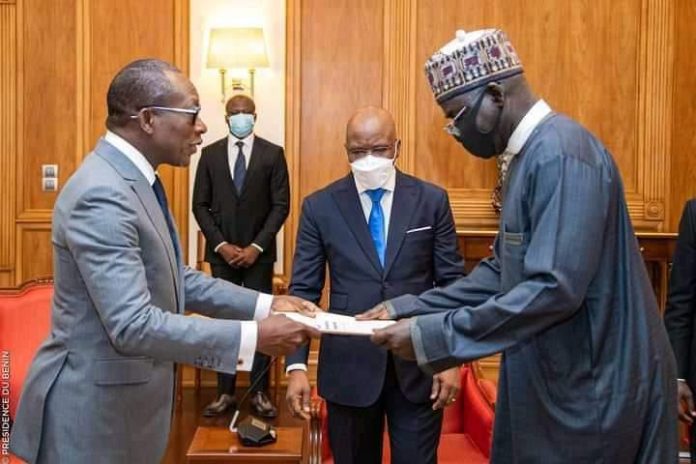
Photos: Ambassador Buratai, Olonisakin receive letters of credence

0
Today, the Honourable Minister of Foreign Affairs, H.E. Geoffrey Onyeama presented Letters of Credence to their Excellencies, Ambassador-Designate of Nigeria to the Republic of Cameroon, Amb. Abayomi Gabriel Olonisakin and the Ambassador-Designate of Nigeria to the Republic of Benin, Amb. Tukur Yusufu Buratai.