Home Blog Page 2180

National Assembly rejects electronic results transmission, Lawan chastises “rabble rousers.”

0

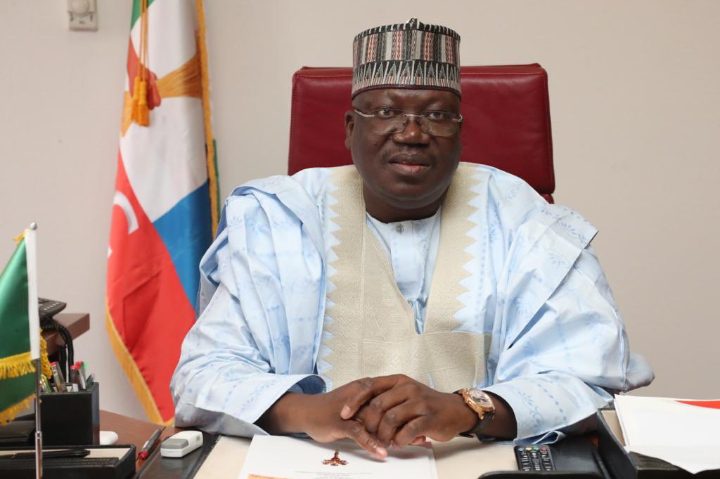
Ahmad Lawan, the President of the Senate, warned on Wednesday that some thugs and rabble-rousers were blackmailing the National Assembly leadership over the Electoral Act (Amendment) Bill.

When the Chairman of the Committee on the Independent National Electoral Commission, Kabiru Gaya, presented his panel’s report, Lawan stated this in plenary.

The Senate President bemoaned the fact that his and Speaker Femi Gbajabiamila’s phone numbers were made public as part of the process.

He expressed regret for receiving over 900 text messages in one day.

“On the Electoral Act Amendment Bill, there have been various accusations, insinuations that the leadership of the Senate, and at one point, the leadership of the National Assembly, tampered with the report of the INEC committee of both chambers,” Lawan said.

“Some of those accusing the National Assembly leadership of being misinformed are simply mischievous and rabble rousers, while others are simply mischievous and rabble rousers.

Read also: FCT corps members begin enumeration exercise for the national home grown school feeding programme

“This is the first time the report has been laid here, and this is the committee’s report.

“Because this is a decision of the INEC committee, everything that is discussed or considered about the bill will be based on what has been presented to the committee here.

“Rather than blackmailing our leadership, anyone who feels strongly about something should meet with senators to canvass for their positions.

“This is because my and the Speaker’s phone numbers were made public, and on one day, I received over 900 text messages accusing us of tampering with the report, which we did not. We’ll do the right thing. We have procedures in place, and lobbying is an important part of democracy.”

PDP rejects the plot in order to prevent electronic data transfer.

Meanwhile, the Peoples Democratic Party has urged National Assembly members to put Nigeria’s interests ahead of their own when amending the Electoral Act.

Kola Ologbindiyan, the party’s National Publicity Secretary, made the appeal on behalf of the party in Abuja on Wednesday, in a statement titled, “PDP Rallies Nigerians Against Plots To Pass Prohibition of Electronic Transmission of Election Results On Thursday.”

“The PDP calls on Senators and members of the House of Representatives to put partisanship aside and vote in the national interest on section 50 (2) of the Electoral Act Amendment Bill, which deals with electronic transmission of results,” according to the statement.

According to the party, it has come to its attention that certain interests are planning to block the electronic transfer of results on Thursday on the floors of both chambers of the National Assembly.
According to the PDP, every Nigerian, particularly federal lawmakers, should work to improve our electoral processes so that we can have free, fair, transparent, and credible elections.

It argued that there is no part of Nigeria or any local government headquarters where a communication network does not exist and function, so electronic transmission of election results should be exempted from the law.

“It is imperative to add that with the technology proposed by the Independent National Electoral Commission, even if the network is slow, the transmission process does not stop arriving at the collation Centre,” the party added.

“As a result, the PDP urges lawmakers not to be swayed by anyone or any interest interested in conducting our election in the manipulative manner desired by undemocratic elements.

The party urges all Nigerians to remain vigilant and ready to resist this attempt to further suffocate the electoral process by using all legitimate means available and permissible under our laws.

Meanwhile, the Joint Committee on the Independent National Electoral Commission and Electoral Matters in the National Assembly has failed to include mandatory election results transmission in the Electoral Act (Amendments) Bill 2021.

According to a copy of the bill seen by our correspondent on Wednesday, the federal parliament gave the INEC the option of conducting electronic voting or any other method it deems appropriate in the conduct of elections.

It also gave the electoral umpire the authority to transmit results electronically only when it was practical.

“Voting at an election under this Bill shall be by open secret ballot,” reads Section 52(1) of the amended Act.

“52(2) Voting at an election held under this Bill shall be conducted in accordance with the Commission’s procedures, which may include electronic voting.

“52(3) Where and when practicable, the Commission may transmit election results by electronic means.”

The INEC joint committee report, which was distributed to lawmakers on Wednesday and chaired by Senator Kabiru Gaya (Senate) and co-chaired by Aisha Dukku (Reps), will be discussed today (Thursday)
Abia Assembly expects to enact a disability measure.

0

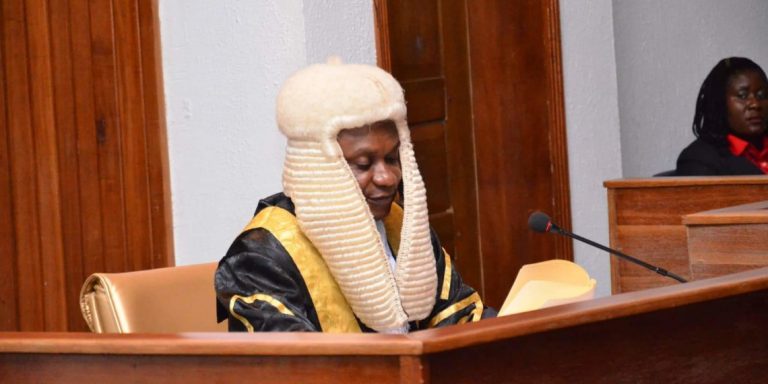
The Speaker of Abia State House of Assembly, Chinedum Orji has promised that the State’s 7th Assembly would soon pass the Persons with Disability Bill into law.

Orji stated this when the wife of the Governor of the state, Deaconess Nkechi Ikpeazu and wife of the Deputy Governor, Lady Vivian Ude Okochukwu-led advocacy team visited members of the State House of Assembly.

Wife of Abia State Governor had, in an address presented during the advocacy visit begged the Speaker and his colleagues to consider passing into law the Widows and Disabled Persons Bills which had been with them.

Deaconess Ikpeazu also solicited lawmakers to review 2006 Child Rights Law which she noted has some grey areas that needed to be amended.

Mrs Ikpeazu appealed to the lawmakers to consider the review of the 2006 Abia State Child Rights law.

Deaconess Ikpeazu made the appeal when she appeared before members of the State Assembly on Tuesday with her Advocacy Team.

She thanked the House for being proactive in its legislative affairs and commended them for passing into law so many bills which directly affect children and women.

She said the bills are people-oriented and will have a greater positive impact on children and women of Abia State.
She then requested that the House reviews the Child Rights Law which was passed in 2006.

She also requested that the House give attention to the Widows and Disabled Persons Bills.

NASS proposes a change to the National Health Act.

0

The Federal Republic of Nigeria’s National Assembly is attempting to alter the National Health Act to address gaps in healthcare access.

The Speaker of the House of Representatives, Femi Gbajabiamila, made the announcement in Abuja at the start of the West African College of Physicians (WACP) Nigeria Chapter’s 44th/45th Annual General and Scientific Meeting (AGSM).

Hon. Gbajabiamila is representing Gbajabiamila. According to House Committee on Health Chairman Tanko Sununu, provisions were established in the amended laws for healthcare service providers to collect cash used to treat gunshot victims during emergencies.

He went on to explain that Nigeria’s health indicators remain poor, and that the national assembly will play a part in addressing the causes of the country’s poor health delivery system, one of which is accessibility, through legislation.

“In the next days, we will discuss amending the National Health Act, which sets the foundation for the development of healthcare in the country,” he stated.

“On the question of emergency treatment for gunshot victims, the House of Representatives is awaiting approval from the executive branch of government. In the modified Health Act, we attempted to address the issue of shooting injuries.

“There was a vacuum in the prior Act regarding how this type of emergency should be handled when presented at a hospital. Payment and services provided to gunshot victims have become a cause of concern.

“We tried to propose alternatives in the modified Health Act where practitioners can claim expenses for services rendered to a gunshot victim. This will allow victims to receive emergency medical care as soon as possible.”

Read also: 2 die as troops repel ESN attack on their location at Adani

The speaker went on to say that the country is presently dealing with three big crises: Coronavirus Disease (COVID-19), insecurity, and limited resources, all of which have had a substantial impact on health indices.

“NASS is striving to solve the difficulties through effective legislation, oversight, and representation,” he stated.

“We only had four laboratories to diagnose COVID-19 when it arrived in Nigeria, but because to aggressive budgetary allocation, we now have over 130 laboratories nationally that can diagnose the virus.

“We are also attempting to address challenges affecting the health sector by making healthcare coverage through the country’s health insurance plan mandatory.

“The bill has already passed the national parliament, and we are seeking for presidential assent so that every Nigerian would have a basic minimum package that they can use to maintain their health.

“Not only will the Basic Healthcare Provision Fund provide a basic package, but it will also increase the health sector’s capacity to respond to catastrophes.

“We’re also looking at the Infectious Diseases Control Bill, which aims to improve the country’s emergency preparedness.”

While praising the WACP, the speaker promised that the NASS will evaluate all of its proposals after the AGSM and use them to influence legislative efforts.

FCT corps members begin enumeration exercise for the national home grown school feeding programme

0

CORPS Members in the FCT have commenced the Enumeration exercise of the National Home Grown Feeding Programme.

The exercise which commenced on Tuesday July 13th saw the Enumeration exercise take place across a section of the FCT. These include schools in Bwari Central, Karshi, Gwagwalada Central and Lokogoma.

The LEA School Kutunku, LEA Gwako, Jahi Kadi Kuchi , LEA School for the blind Jabi and LEA Primary School Wuse, among others across Area Councils in the FCT, were issued the Enumeration Forms to start off the exercise.

The corps members are expected to carry out the enumeration process till Monday 19th July when the Programme closes. The following are photographs of the event.

Nigerian Navy’s ongoing recruitment exercise is unfair and in violation of the Constitution’s federal character principle

0

The Nigerian Navy’s ongoing recruitment exercise is unfair and in violation of the Constitution’s federal character principle, according to the House of Representatives, which has asked the military agency to halt the process.

This came after a report revealed that the Navy’s supplementary list of successful candidates, which was recently released, only included northerners.

The newspaper obtained a list of candidates from the core northern states, with only a few from North Central (Kogi and Niger states).
“Normally, after recruitment, they release a list, and those on that list are sent to training; the list is divided into two batches, A and B.

“They recently released a supplementary list. All 44 candidates on that list will be from the North, which has never happened before. They are primarily from the core North, not just the north.

“Normally, every state is given an equal number of slots on the recruitment list, but I’m not sure why this isn’t the case here. Batch A of the supplementary list has resumed, while Batch B will resume in January. These are the select few who will join those who have already arrived. Every zone and state should be included as far as it is supplementary.

“In the previous ones, they included all states in equal numbers except the Federal Capital Territory (FCT); the FCT is the only one that usually gets fewer slots because the majority of those who apply through the FCT are not from there.”

“My question is why is only the North represented on this supplementary list? It should represent the entire country, not just a specific region,” says the author.
The lower chamber unanimously adopted a motion of urgent public importance on Wednesday, calling for an investigation into the Nigerian Navy Supplementary Recruitment of 44 candidates “for being contrary to the principle of federal character and in gross violation of Section 14 of the 1999 Constitution.”

Read also: Ogun LG poll: Group accuses APC chairmanship candidate of double registration

The Navy was also asked by the House to provide details on all recruitments from 2014 to date, as well as their geographic distribution.

It also ordered the Committee on Navy to “investigate the exercise and recommend appropriate measures to avoid similar constitutional violations in all future government recruitment, and report back within 12 weeks for further legislative action,” according to the bill.

All of the successful candidates who are to report for training in two batches at the Nigerian Navy Basic Training School Onne, Port Harcourt, Rivers State, according to the motion’s sponsor, Ben Igbakpa, “are all from a particular part of the country,” negating the federal character principle of all-inclusiveness, equity, and fair play.

“The House is concerned that the principle appears to have been observed more in breach in practice,” Igbakpa said. Appointments and recruitment into various ministries, departments, and agencies at the federal and state levels appear to be treated as a matter of political discretion by successive administrations, and those with appointment and recruitment powers do not feel a legal obligation to ensure an equitable distribution of appointments and recruitment into the various government bodies.

“The House is also concerned that since the publication of the Supplementary list of 44 candidates, there has been a lot of tension, apprehension, and discussion among the young and old from the deprived section.

“The House believes that proper observance and application of the federal character principle will, in no small part, allay ethnic minorities’ fears of dominance and denial, and will invariably foster national unity.”

FEC approves N8.6 billion for construction of a vaccine laboratory, HIV/AIDS text kits and medical equipment procurement

0

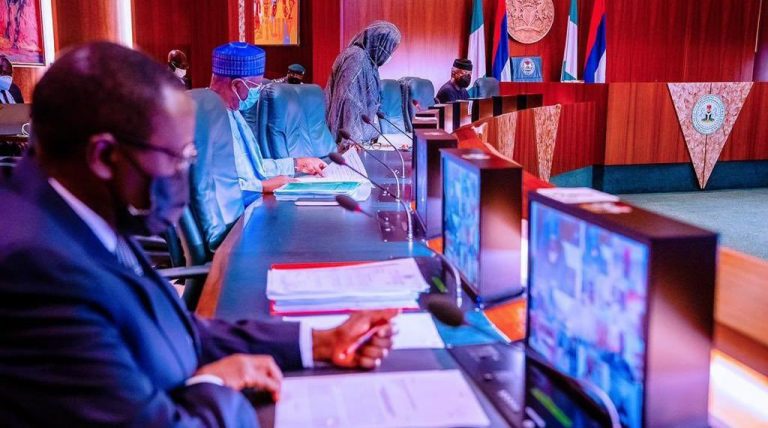
The Federal Executive Council (FEC) has approved a budget of N8.6 billion for the construction of a vaccine laboratory, HIV/AIDS text kits, and medical equipment procurement.
Dr. Osagie Ehanire, the Minister of Health, made the announcement while briefing State House correspondents on the outcome of President Muhammadu Buhari’s Council meeting in Abuja on Wednesday.

According to the minister, N3.06 billion will be spent on the construction of a vaccine laboratory, N1.2 billion will be spent on laboratory equipment, and N4.3 billion will be spent on HIV/AIDS and Syphilis text kits.

“The Ministry of Health presented three memos, all of which were approved,” he said. One of them was for the purchase of HIV/AIDS test kits.

Read also: The EFCC explains the Parktonian Hotel operation and condemns the “media narrative.”

“As you all know, Nigeria has successfully reduced HIV prevalence from 3% to 1.3 percent,” he said, adding that the government was prepared to conduct more tests, particularly of mothers who may be carrying HIV that could be passed on to their unborn children, thanks to the nationality indicator and the impact survey conducted recently.

“This is referred to as the prevention of mother-to-child transmission, as well as the lack of routine tests that will be performed on people who may have no symptoms but are HIV carriers.

“So, we’re procuring these test kits, and we’re also including test kits that can detect syphilis.

“As you are all aware, syphilis is a sexually transmitted disease. As a result, this memo was presented today and approved by the Council,” the minister explained.

The Council also approved two other memos from the National Agency for Food and Drug Administration and Control, he added (NAFDAC).

“One of them was a memo that was intended to purchase equipment for six laboratories across the country, and it was also passed without comment.

He went on to say, “It’s to update and upgrade NAFDAC’s laboratories.”

Nigerian authorities say to have detained five men over the weekend after accusing them of being gay

0

Nigerian authorities are said to have detained five men over the weekend after accusing them of being gay. The arrests are part of a growing trend of police violence against LGBTQ+ people.

The men were apprehended by the State Hisbah Board, an Islamic police unit set up by the local government in Kano, Nigeria’s second largest city, on Sunday. The circumstances leading up to the incident were kept under wraps for a long time. According to the Nigerian news site Vanguard, the board’s commander general, Dr. Harun Ibn-Sina, said the police’s actions were prompted by reports of unspecified activity from local residents.

Ibn-Sina stated that the suspects would be charged in court, but he did not specify a date for the trial. He is accused of urging young people, whom he referred to as “leaders of tomorrow,” to “shun unwholesome practices” such as homosexuality.

Similar arrests have been made in the past by Kano’s Islamic police force. According to the website Punch Nigeria, the Hisbah unit apprehended 15 people suspected of being gay at a party hosted by college graduates in January 2020. Authorities announced at the time that those arrested would be taken to a “correctional center” to be “re-oriented,” implying that the harmful and discredited practice of conversion therapy would be used.

Individuals detained on suspicion of being gay could face a sentence of up to 14 years in prison under Nigerian law. While LGBTQ+ Nigerians have long been criminalized due to colonial-era anti-gay sex laws, the situation has become more precarious in recent decades.

Read also: Governor Fayemi, Aregbesola, Ojudu meet in Ekiti

With the passage of the Same-Sex Marriage Prohibition Act in 2013, Nigeria strengthened its anti-homosexuality laws (SSMPA). While the law’s name implies that it only applies to marriage equality, it has a much broader scope. The legislation, according to Human Rights Watch (HRW), prohibits gay couples from cohabiting and any kind of “public show of same sex amorous relationship.” It also prohibits LGBTQ+ organizations from operating openly in the country.

According to reports, police violence against Nigeria’s LGBTQ+ community has increased dramatically in the eight years since the law was enacted.

In 2018, at least 47 people were arrested on suspicion of being gay after police raided a birthday party and claimed that attendees had engaged in “homosexual initiation.” Although the men were eventually released last year, their case was dropped due to the prosecution’s lack of responsiveness rather than a full acquittal. That means those who have been charged could be arrested again at any time on the same charges.
Many of the men told Reuters that fighting the case for two years had taken its toll, with them being shunned by their families and communities. Chris Agiriga, 23, said, “Everyone in the area knew about it.” “All because of this, I lost my job, my family, and a lot of my friends.”

According to the Initiative for Equal Rights (TIER), a human rights organization based in Nigeria, persecution of LGBTQ+ Nigerians has increased significantly under the presidency of anti-gay leader Muhammadu Buhari. Despite low reporting rates among trans people, intersex people, and women, a 2020 report found a total of 482 human rights violations in the previous year.

COVID-19 restrictions, which kept vulnerable populations at home with potential abusers, are also said to have increased anti-LGBTQ+ violence. Entrapments of gay men have also increased, with police faking their sexual orientations in order to lure victims into a situation where they can be caught and arrested.

Homosexuality is legal in only 22 of Africa’s 54 countries, according to a global review conducted by the LGBTQ+ rights organization ILGA in 2020. Anti-gay criminal codes, as in Nigeria, are frequently relics of colonialism.

Get the best of queer culture. Here is where you can sign up for their weekly newsletter.

Nigeria’s Economic and Financial Crimes Commission (EFCC) unveiled an electronic Mobile Application for reporting economic crimes

0

On Wednesday, Nigeria’s Economic and Financial Crimes Commission (EFCC) unveiled an electronic Mobile Application for reporting economic crimes.
He said this in Abuja, shortly after launching the ‘Eagle Eye’ app, while fielding questions from journalists.

He urged Nigerians not to be afraid to expose corrupt individuals, particularly those who launder money through real estate.
“As you can see, anyone who is malicious or uses the App with malicious intent will be dealt with in accordance with the law.

“We understand there is a lot of secrecy there, and you can report something without mentioning your name,” he explained.

Bawa described the App, which is the first of its kind by any Nigerian law enforcement agency, as the result of the Commission’s staff’s ingenuity.

Read also: North-East Vanguard aims to distract NEDC, Alkali with alleged corruption scandal – CSOs

The EFCC conceived, designed, and developed the app, he said, adding that it would make reporting economic and financial crimes easier.

According to him, the initiative is a clear demonstration of his promise, made upon taking office, to lead a technology-driven agency.

“The Eagle Eye represents a new experience in information sharing and crime reporting between the general public and the EFCC,” he continued.

Apart from complementing existing channels for reporting economic crimes, the EFCC Chairman explained that the unique advantage of this application is that it eliminates direct person-to-person interface in the reporting process and ensures anonymity, which is an added incentive to effective whistleblowing.

“Those who were previously afraid to report corruption cases to the Commission either for fear of being identified by the culprits or having their identities revealed, can now do so with the assurance of full anonymity,” Bawa said, appealing to members of the public to use the App to bring cases of corruption and economic crimes to the attention of the EFCC.

The EFCC explains the Parktonian Hotel operation and condemns the “media narrative.”

0

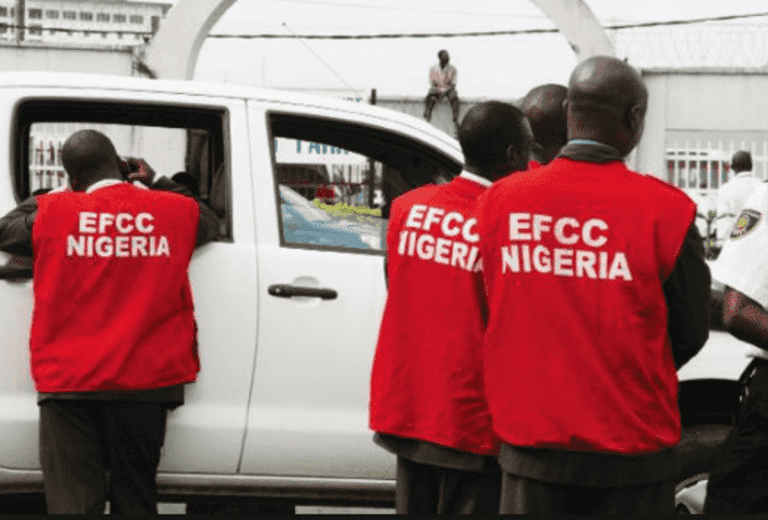
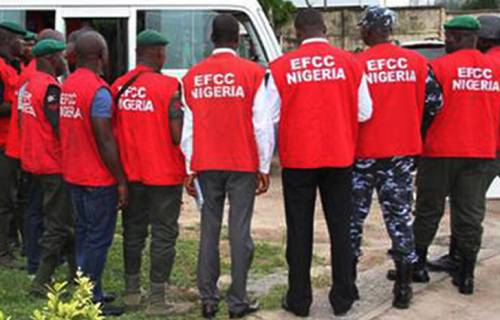
The Economic and Financial Crimes Commission (EFCC) has provided a detailed account of the raid at the Parktonian Hotel in Lagos’ Lekki neighborhood.

After receiving intelligence on the activities of a suspected internet fraud syndicate, agents stormed the hotel in the early hours of Tuesday.

In a statement released on Wednesday, EFCC Head of Media Wilson Uwujaren said the sting operation was the culmination of weeks of surveillance during which the suspects’ rooms were identified.

He said that a total of 30 people were arrested, with 24 of them already confessing to being involved in cybercrime and related activities.

The agency stated that no incident occurred because the hotel management, after being served with the relevant warrant, allowed agents to carry out their lawful duties.

The women in some of the rooms, according to Uwujaren, pleaded nudity to prevent the EFCC from arresting their targets.

According to the spokesman, the excuse has become a favorite of cyber fraudsters who pay women to claim nudity in order to buy time to delete incriminating items from their devices before being arrested.

“The commission will not fall for such a ruse designed to prevent it from carrying out its legal responsibilities. During the operation, there was no break-in, no molestation, and no violence of any kind.”

Read also: Gunmen allegedly stormed the neighborhood and engaged in sporadic shootings

Uwujaren expressed regret that a section of the media presented a narrative of a Gestapo operation, complete with a forceful break-in and invasion of nude guests’ privacy.

According to reports filed against the EFCC, the hotel owner and his manager refused to speak about what happened.

“However, the claim is clearly a game of ostrich, as their role in spreading the false narrative can be seen.

“Perhaps the hotel owner is unaware that allowing his premises to be used for cybercrime, in violation of section 3 of the Advance Fee Fraud and Other Fraud Related Offences Act, could make him an accomplice and make him liable.”

The EFCC also warned hoteliers against making their properties and facilities havens for cybercrime.

Who wants the NYSC DEAD?

0

By Rowland Abaji

Can it be contested, if anyone dares to declare that a large number of politicians in Nigeria are bold, fearless and courageous forgers of certificates? And for the initiates in this scam, they tread even where the proverbial devils dread and can defeat Lucifer in a contest together with his army of bodyguards.

But after successful deals, the possessors of fake certificates live with perpetual fear in the aftermath. The consequences are grave. Upon prove of certificate forgery, a politician looses his plomp position, faces public ignominy and sometimes, spend some regrettable time in jail.

Educational institutions, certificate-awarding professional bodies, like ICAN etc and lately, the NYSC have been platforms some politicians manipulate to forge certificates to meet essential conditions of qualification and eligibility to hold public office. The scam is waxing stronger because public office in Nigeria is not merely, an attraction, but a means to one’s personal fulfilment in life, reflected in diverse outcomes.

The wealth, affluence and high social status accorded a politician or political officer holder everywhere is an irresistible alluring bait. So, everything, legal or illegal is done to grab any opportunity to hold a public office. Those into the business of certificate forging have a booming trade today. The traffic in the shrines of certificate forgers is consistently high and seems reserved for political power brokers and elites alone.

Nigeria’s return to democracy in 1999 to date has marked a crescent of certificate forgers in the country. It started with ex Speaker, House of Representatives, Alhaji Salisu Buhari whose glorious entry into Nigeria’s elitist club was terminated abruptly because of certificate forgery, after just 49 days of his reign.

The ebullient Salisu Buhari made claims to possession of multiple academic/ other certificates. But virtually all were sourced from the famed “Oluwale Center” in Lagos. Salisu Buhari did not spare the NYSC either. He faked both the year of service and NYSC discharge certificate of 1991. It was the albatross he prepared with his hands.

The pressure forced Salisu Buhari to resign his position and after resignation, the ex Speaker was convicted on multiple counts of certificate forgeries and sentenced to two years imprisonment, but with an option of a fine. He bailed himself out by opting for the later option. Nigerians appreciated and pardoned Salisu’s strength of character for his unreserved apology to the nation for what he termed his “mistakes.”

But much as Nigerian politicians dread the disgraceful outcomes of certificate forgery upon discovery, the habit is still perversively endemic in the polity. The hapless ones have been caught, time and time again. But others have escaped or still dodging the eagle eyes of the law and have continued to roam the corridors of power with mercurial elegance!

However, what is difficult to discern is the passion of Nigerian politicians in forging NYSC documents and certificates. These unscrupulous politicians are doing everything possible to discredit the scheme or even scrap it, hence it’s difficult to manipulate the system, once NYSC is involved; but easier to influence and twist records of educational institutions enmeshed in forged certificate scandals.

Certificate forgery has become an unfairly massive trend among some Nigerian politicians. But they always get caught, especially when NYSC is factored into the forgery racket,as it has always refused to bulge to inducements.

Even in July 2019, Nigeria’s Supreme Court sacked a House of Reps member, Hon Abdulra’uf Abdulkadir Modibbo from Adamawa state from National Assembly. His offence was failure to participate in the one-year mandatory NYSC program. The apex court did not only declare Modibbo unfit to contest the election he won, but ordered him to vacate his seat in the Green Chamber for the next highest votes scorer in the election.

That’s the mystery and credibility of NYSC which dubious politicians today are finding it extremely difficult to penetrate or manipulate to their favour. And there are many such veiled violators of the sanctity of the NYSC in the corridors of power who are dead scared of the next action which might consume and throw them out of their juicy positions. So, they have waged war against NYSC’s continued existence.

If Nigerians recollect vividly, about three months ago, an odious Reps member, Hon. Awaji-Inombek Abiante from Rivers state, backed by co-travellers moved to cause a scrapping of the NYSC scheme. He cited spurious, hollow and comedic reasons for the action.

Nigerians rose in unanimous uproar and objections. Abiante’s dream to edge the NYSC out of relevance and save the scheme’s certificate forgers from any nightmare, crashed after the obnoxious bill reached the second reading.

But some politicians are very energetic in the pursuit of evil. They are tireless and explore unimaginable fields in the satanic desire to conquer at all cost! Therefore, a spotlight of the recent judgement of a High Court in Abuja, on the NYSC discharge or Exemption certificates scandal case of Nigeria’s ex Finance minister, Ms. Kemi Adeosun rankles as a likely morphing of the battle of pro- NYSC scrapping campaigners into the judicial realm.

Accepted, the legalise of the presiding Judge’s discretion, as reflected in the verdict is within his jurisdiction. However, it is utterly incredible to declare that NYSC certificate whether it is discharge or exemption are not compulsory for Nigerian graduates who fall within the age limit to serve the nation. Even a pupil would dispute it.

And what happened in the course of the trial was that Kemi Adeosun’s age was pegged at 34, above the age limit of participation in the scheme, which is below 30 years. But records show that at age 22 when Kemi Adeosun obtained her first degree in London, she had agreebly lost her citizenship of Nigeria to United Kingdom; but regained it at age 25, when she finally came back to her fatherland. That age was within the stipulated age limit of NYSC participation.

But the court in it’s wisdom declared Kemi free of any guilt, but consciously rubbished the essence and esteem of the NYSC scheme with the thoughtless verdict. Is the court advocating that NYSC participation is now optional for graduates within the specified age limit? Or public employers should not request same from applicants?

Suspiciously, the court declined from even mentioning the forged NYSC Exemption certificate presented by Kemi Adeosun to the Senate for her ministerial screening in 2015. And she earlier, publicly admitted forging it. Probably, the lawyers or judges could argue that it is not part of the brief before the court.

Nonetheless, the whole drama exudes with manifestation of the orchestrated plots, and a carefully crafted agenda in the aggressive pursuit of the destruction of the shadows of NYSC scheme in order to cripple it’s efficacy or render it legally impotent requirement in public service.

Politicians who didn’t participate in the NYSC scheme, and haunted by the phobia of Kemi Adeosun’s fate befalling them in the nearest future and possibly, send them packing from public office are leaving nothing to chance. They are still assiduously working behind the scenes to sacrifice NYSC to appease their dubious instincts and protect their offices.

But God has already deserted them. The 2019 judgement of the Supreme Court in the case of improper participation in NYSC by Hon Abdulra’uf Abdulkadir Modibbo is a standing precedent which has invalidated whatever pronouncement from the lower court.

In a unanimous judgment by a five-man panel of the apex court, in the appeal marked: SC/790/2019 read by Justice John Okoro (SCJ), the learned Justices were succinct that Modibo was not qualified to even contest an election, ab initio, by his failure to properly participate in the mandatory one-year National Youth Service Corps (NYSC), scheme.

So, the politicians still parading fake exemption letters or even certificate of participation should not go to bed yet. The battle is just beginning and no culprit will be spared.

And the incumbent NYSC Director-Gen. Brigadier Gen. Shuaibu Ibrahim is more determined than any of his predecessors in fighting the menace of fake NYSC certificates. He actually started fighting this forgery syndicate about two years back by blocking fake results holders from being called to orientation camp, after flushing out internal collaborators.

It’s time for Nigerians in this scandal to turn a new leaf. Nigerians will never allow anyone to kill the NYSC scheme; at least, not in this generation.

Abaji is a public affairs analyst based in Lagos.