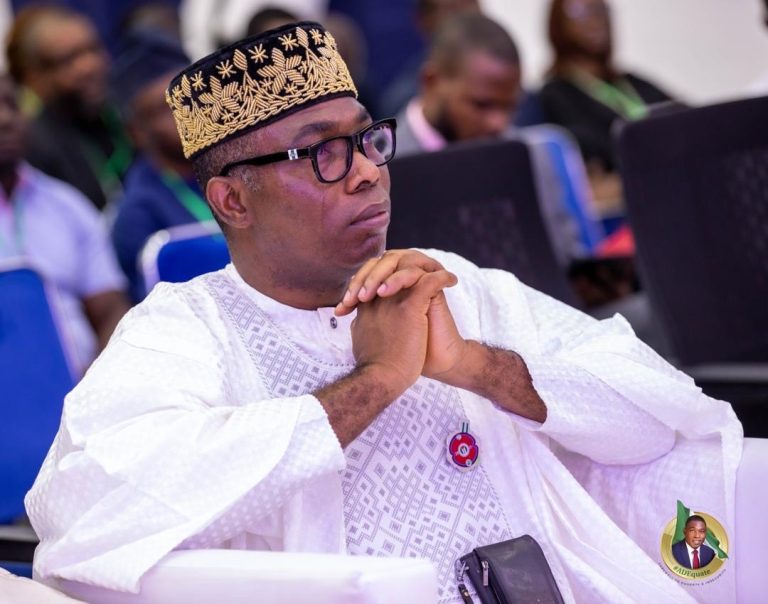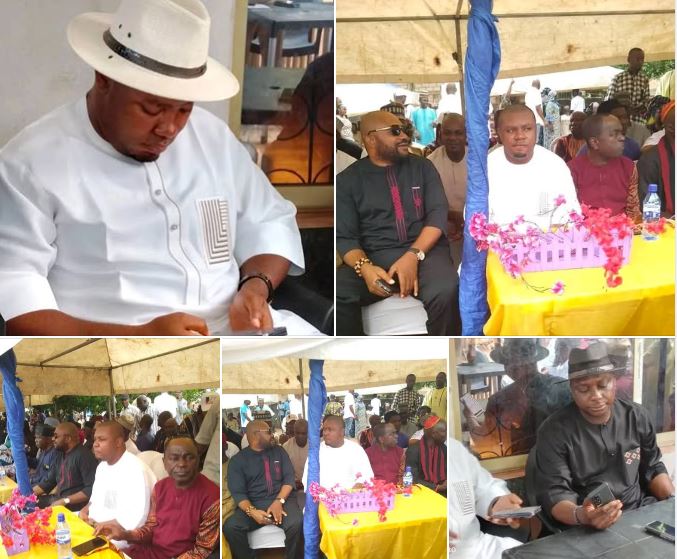
Igumale Stands in Solemn Reverence as Agada, Okanga and Prominent Others Grace Hon. Thomas Oduh’s Father‑in‑Law’s Funeral.

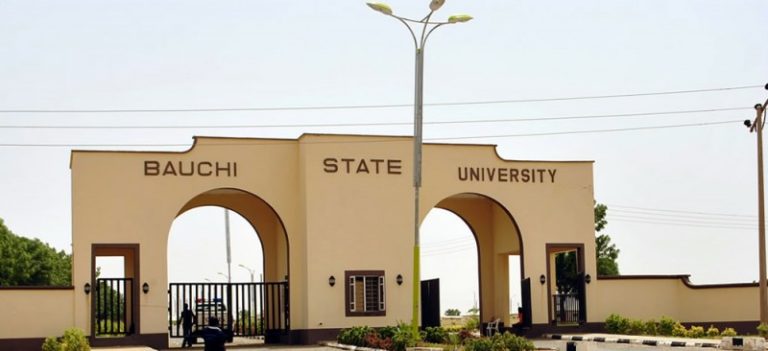
ASUU Accuses Bauchi University of MoU Breach
Just six months after terminating an indefinite strike based on a Memorandum of Understanding (MoU), the Academic Staff Union of Universities (ASUU), Sa’adu Zungur University branch, has accused university management of breaching the agreement.
The union voiced concern over what it characterized as the university’s purposeful stalling of the MoU implementation in a communique issued at the end of its congress and signed by the branch chairman and assistant secretary, Comrades Auwal Nuhu and Yahaya Yakubu, respectively.
“The congress watched with alarm the university administration’s planned efforts to stymie the progress of the MoU within the agreed-upon schedule.
“Half the duration of the agreement has passed, yet a significant portion of outstanding claims remain unpaid, despite increased funding to the university in recent months,” according to the release.
Read Also: Tinubu Receives ECOWAS Heads of State as 67th Summit Begins in Abuja
ASUU also claimed that management has been evasive, continuously adjusting timeframes and withholding essential information about computed arrears intended for verification, which the union perceives as attempts to postpone complete implementation of the agreement.
The union also accused the institution of deliberately withholding members’ pay as part of its stalling strategy. Despite this, ASUU vowed to continue its unwavering demand for the MoU’s full implementation.
Efforts to reach the university’s spokesperson, Auwal Hassan, were fruitless because he did not answer at the time of submitting this report.
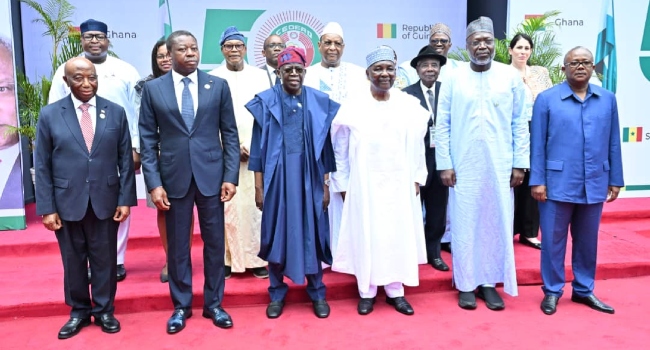
Tinubu Receives ECOWAS Heads of State as 67th Summit Begins in Abuja
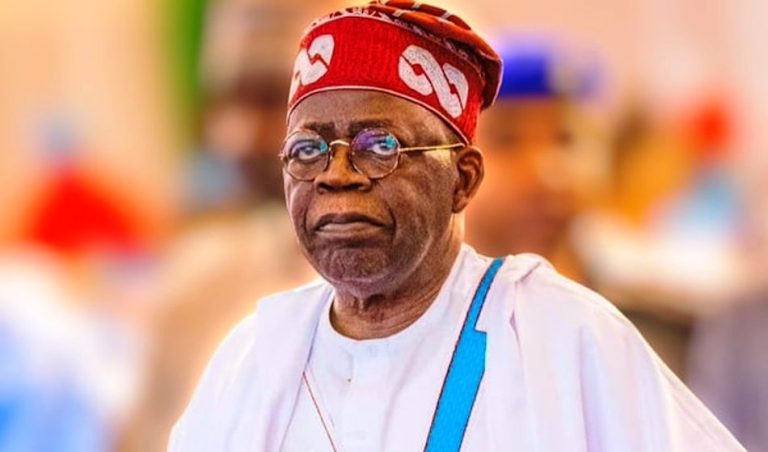
The 67th Ordinary Session of the Authority of Heads of State and Government of the Economic Community of West African States (ECOWAS) was hosted by President Bola Tinubu on Sunday in the Banquet Hall of the State House in Abuja.
President Tinubu’s second tenure as Chairman of the ECOWAS Authority comes to an end with the high-level summit, which takes place six months after the last session in December 2024. He was re-elected to the position on July 7, 2024, after first taking office on July 9, 2023.
The 67th Ordinary Session was called at a crucial moment as the regional bloc still struggles with the announcements made earlier this year by the military juntas of Mali, Burkina Faso, and the Niger Republic that they were leaving ECOWAS.
The summit is anticipated to cover topics such as the bloc’s internal problems, rising insecurity, democratic regression, and the necessity of greater economic integration among participating nations.
Speaking earlier on Saturday at the first-ever West Africa Economic Summit (WAES), which was held at the recently opened Bola Ahmed Tinubu International Conference Centre, the president of Nigeria demanded a change in the way the area handles its mineral resources.
“The warm pit to the port era must end,” Tinubu declared. We need to transform our mining wealth into industry, jobs, technology, and domestic economic value.
Noting that the region’s potential for sustainable growth is only constrained by the current raw material export status quo, he emphasized the necessity of value addition and localized manufacturing.
Read Also: Wole Soyinka: Honourees of June 12 Awards Represent a Larger Democratic Fight
The low intraregional commerce among ECOWAS member states, which is currently less than 10%, is another issue that the president raised.
“Change is not always ensured by opportunity. He cautioned, “We shouldn’t wait for West Africa to get its act together; the world economy won’t.”
To realize its full economic potential, Tinubu stated that the region needs give priority to infrastructure investment, regional supply networks, and policy cooperation.
Tinubu emphasized that West Africa’s youth were its greatest asset, but in the absence of significant investments in entrepreneurship, education, and technology, the population might become a liability.
Regional supply chains, energy networks, and data frameworks are essential to our economy. He warned that if we don’t create them jointly, they will fall apart.
President Tinubu called on ECOWAS leaders to deliver “concrete deals” that will transform regional blueprints into tangible change, saying that they should go beyond statements.
“Our collaborative projects, ranging from the Lagos to Abidjan highway and the West African Power Pool to creative industry initiatives, demonstrate what is achievable when we collaborate,” he said.
“However, we need to go from assertions to tangible agreements — from policy frameworks to real-world execution.”
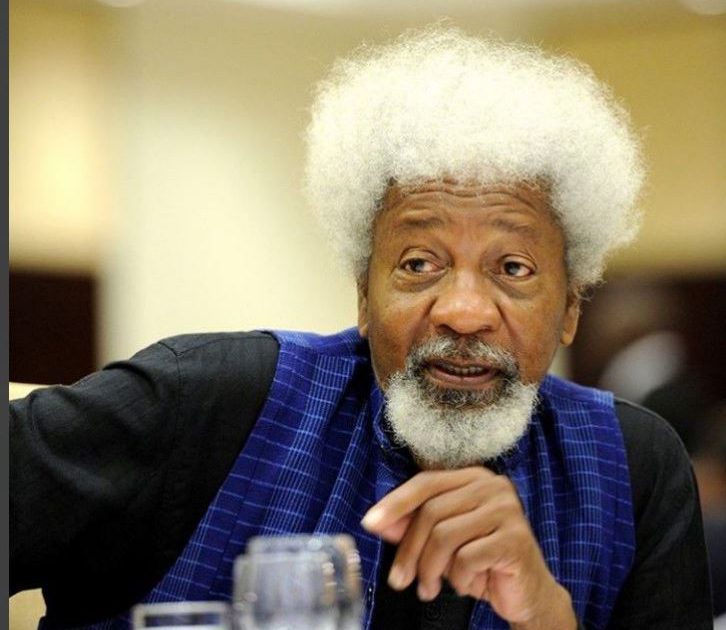
Wole Soyinka: Honourees of June 12 Awards Represent a Larger Democratic Fight
Professor Wules Shuyena has voiced solidarity with Nigerians who felt overlooked by the latest National Honours awards, acknowledging that any single honours list will inevitably omit worthy contributors across the nation’s myriad professions—from the military and clergy to academia, market traders, factory workers, and beyond.
Speaking on the enduring significance of June 12, 1993, Shuyena urged recognition of all honourees as “mere representatives of a past movement,” and invited reflection on Nigeria’s democratic journey since that watershed date. He noted that every state in Nigeria now operates under democratic rule, yet raised concerns about free speech and the recent pattern of arrests, questioning whether the country has genuinely deepened its democracy over the past three decades.
Shuyena also pondered the phenomenon of widespread acquiescence to military rule, both in Nigeria and across West Africa. He suggested that some segments of society may possess a “slave gene,” willingly accepting authoritarian governance—pointing to the enthusiastic popular reception military regimes have at times enjoyed. He recalled that, even during the political unrest of two years ago, some Nigerians first turned to military headquarters for resolution.
Through his remarks, Professor Shuyena invited Nigerians to both honor the June 12 heroes and critically assess the nation’s democratic health, reminding listeners that true progress requires vigilance, inclusion, and the courage to demand accountability.
APC Zonal Meeting Chaos Fuels 2027 Ticket Uncertainty
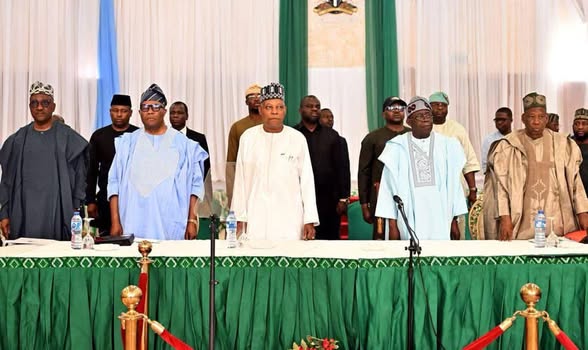
The All Progressives Congress (APC) faced unexpected turmoil at its zonal meeting in Gombe this week, sparking concerns over President Bola Tinubu’s 2027 re‑election strategy and the role of Vice President Kashim Shettima. While party loyalists downplayed the disruption as manufactured dissent, political analysts warn the incident may expose deeper divisions within the ruling party.
Key Takeaways
-
Gombe Meeting Mayhem: Supporters clashed during routine business, prompting questions about APC unity ahead of the 2027 campaign.
-
Shettima’s Status: Rumors of marginalization fueled speculation that Vice President Shettima could be sidelined on the next presidential ticket. His omission from early discussions is seen as an unusual break in tradition.
-
Historical Context: Tinubu’s Lagos tenure saw three deputy governors dismissed amid acrimony, suggesting a pattern of fraught president‑deputy relationships.
-
Political Implications: Early jockeying over the ticket risks alienating key voter blocs—the predominantly Muslim North and the Middle Belt, where Christian representation could be crucial.
Strategic Analysis
Political analyst Dr. Sam Amadi of the Abuja School of Social and Political Thought argues that overt infighting is counterproductive. “Publicly debating the vice‑presidential slot this far from election day invites unnecessary factionalism,” he says. Dr. Amadi recommends a balanced ticket—potentially pairing Tinubu with a North‑Central Christian running mate—to reinforce support in the Middle Belt without undermining Northern strongholds.
Experts note that modern Nigerian voters, especially younger electorates, are less influenced by traditional religious alignments and more attuned to governance performance, transparency, and economic conditions. Overemphasis on purely strategic ticket balancing may backfire if seen as cynical power‑play.
Moving Forward
To mitigate fallout, the APC should:
-
Reaffirm Party Unity: Issue clear statements underscoring solidarity between the President and Vice President.
-
Tone Down Public Jockeying: Postpone internal debates on the 2027 ticket until after primary consensus.
-
Engage Stakeholders: Conduct closed‑door consultations with regional and faith‑based leaders to ensure broad-based support.
Man Breaches Security During Tinubu’s Kaduna Speech Identified as Mentally Ill APC Supporter
The Kaduna State Police Command has confirmed that the man who momentarily disrupted President Bola Tinubu’s address in Kaduna on June 20, 2025, is Umar Mohammed, a native of Anguwan Muazu and a registered member of the All Progressives Congress (APC).
During President Tinubu’s televised speech at a stadium event in Kaduna, video footage captured the moment an intruder dashed toward the stage, causing the President to pause mid‑sentence as bodyguards swiftly intervened. The People’s Gazette first reported the incident, describing it as a “security breach” that left attendees and viewers momentarily alarmed.
Police Identification and Background
Police Spokesperson Mansir Hassan released a statement on June 21, 2025, confirming that the intruder was indeed Umar Mohammed. According to Hassan:
-
Mental Health: Mohammed “was born with psychiatric disorders; he is of unsound mind.”
-
Political Affiliation: Despite his condition, he is “an ardent supporter of Mr. President and the governor.”
-
Motivation: Upon interrogation, Mohammed admitted he acted “out of anxiety and emotional excitement,” driven by a longtime desire to meet both the President and the Kaduna State Governor.
How He Gained Stadium Access
Security protocols at the venue involved screening thousands of APC supporters who entered wearing campaign T‑shirts and carrying banners. Mohammed passed the same screening process, blending in with the crowd until his sudden sprint toward the podium. The incident highlights potential vulnerabilities in large‑scale political event security, especially when mental health factors are at play.
Official Response and Next Steps
Major steps taken by the Kaduna State Police Command include:
-
Medical Evaluation: Mohammed has been transferred to a psychiatric facility for evaluation and treatment.
-
Security Review: Authorities are conducting a comprehensive review of screening procedures to prevent similar breaches.
-
Public Assurance: Spokesperson Hassan emphasised that the President’s safety was never at serious risk and that “any breach of this nature will be thoroughly investigated.”
Implications for Political Event Security
This event underscores the need for:
-
Enhanced Mental Health Screening: Integrating basic psychological assessments into security checks for large gatherings.
-
Targeted Training: Equipping event security teams to recognise and respond to non‑violent disruptions caused by individuals in distress.
-
Crowd Management: Balancing open access for genuine supporters with robust protocols to identify potential risks.
Nigeria Graduates 197 Peacekeepers for ECOWAS Deployment to The Gambia
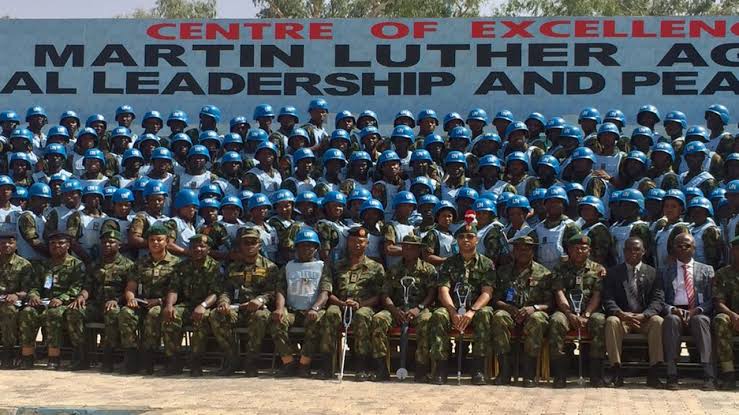
In a significant boost to regional stability, the Martin Luther Agwai International Leadership and Peacekeeping Centre (MLAILPKC) in Jaji has commissioned 197 Nigerian soldiers for an upcoming ECOWAS peacekeeping mission in The Gambia. Over the past five weeks, these troops completed intensive pre‑deployment training designed to prepare them for the complex security challenges they will face.
During Friday’s graduation ceremony, Major General Ishaya Maina—speaking on behalf of the Army Chief of Operations, Major General Uwem Bassey—congratulated the newly trained contingent, designated “Nigerian Contingent 10.” He reminded them that they carry Nigeria’s reputation across the continent and must uphold the highest standards of professionalism and discipline. Major General Maina issued a firm warning that any form of misconduct, especially sexual exploitation or abuse, would not be tolerated.
Commandant of MLAILPKC, Major General Ademola Adedoja, outlined the training curriculum, which adhered to the United Nations’ Core Pre‑deployment Training Manuals but was specially adapted for the Gambian theatre. Beginning on May 17, the programme covered critical skills including:
-
Counter‑improvised explosive device tactics
-
Unmanned aerial vehicle operations
-
Base‑camp establishment and security
-
Convoy drills and route planning
-
VIP protection protocols
-
GPS navigation
-
Medical evacuation procedures
Major General Adedoja noted that each soldier underwent a full medical assessment before and during training to ensure peak readiness. He expressed confidence that Nigerian Contingent 10 will excel in their duties and continue the proud legacy of their predecessors.
The graduation drew senior representatives from Defence and Army Headquarters, various military academies, and security agencies across Kaduna State. In his remarks, Adedoja extended gratitude to Lieutenant General Olufemi Oluyede, Chief of Army Staff, for providing the resources that made the rigorous training possible.
As they prepare to deploy, the 197 peacekeepers will join fellow ECOWAS forces in The Gambia, tasked with supporting the country’s efforts to maintain political stability and protect civilians. Their departure underscores Nigeria’s ongoing commitment to peace and security in the West African region.
Hon. Chief Dr. Philip Agbese Mourns the Passing of Hon. Prince Sunday Ikpa
Hon. Chief Dr. Philip Agbese, Member of the House of Representatives for the Ado/Okpokwu/Ogbadibo Federal Constituency, has expressed profound sorrow over the death of Hon. Prince Sunday Ikpa, describing him as a dedicated community leader and advocate for progress.
In an official condolence message, Dr. Agbese extended his deepest sympathies to the Ikpa family, praising the late Prince Sunday Ikpa for his unwavering integrity, compassion, and selfless service. “Hon. Prince Sunday Ikpa was a man of vision and empathy whose legacy will continue to inspire us all. My thoughts and prayers are with his loved ones during this difficult time,” Dr. Agbese said.
Dr. Agbese urged the community to honour Prince Ikpa’s memory by upholding the values he championed—leadership, unity, and commitment to public welfare. He encouraged constituents to draw strength from Prince Ikpa’s life of service and to carry forward his work in promoting social development.
The late Hon. Prince Sunday Ikpa will be remembered for his tireless efforts in improving education, healthcare, and youth empowerment within Benue State. His passing marks a significant loss to both his immediate community and the wider region.
NAHCON Airlifts Over 14,000 Nigerian Pilgrims from Saudi Arabia in 2025 Hajj Return Operations
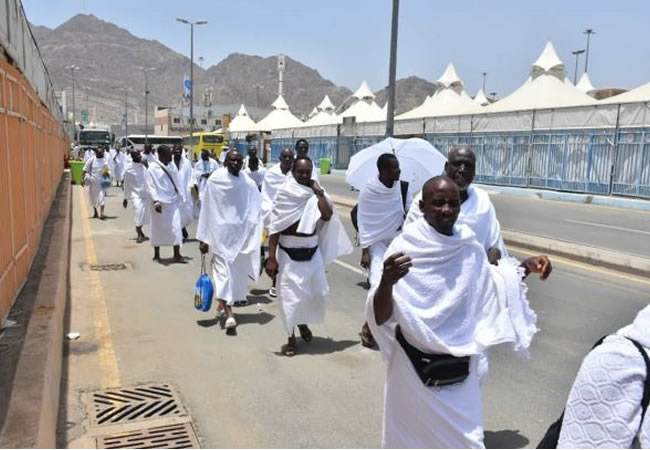
The National Hajj Commission of Nigeria (NAHCON) has successfully airlifted more than 14,000 Nigerian pilgrims from Jeddah, Saudi Arabia, as part of the ongoing 2025 Hajj return operations. This was disclosed by the NAHCON Command and Control Centre in Makkah in an official update.
According to the report, Flynas flight XY9082 departed Jeddah for Sokoto at 07:51 hrs (local time), transporting 422 Sokoto pilgrims and 4 officials. Shortly after, Flynas flight XY9022 left Jeddah for Abuja at 10:33 hrs, carrying 425 FCT pilgrims and 4 officials. These flights increased the total number of pilgrims airlifted so far to 14,014 across 33 flights.
NAHCON reaffirmed its commitment to delivering a smooth and timely Hajj experience. “Our commitment to a smooth Hajj airlift remains unwavering. We are steadily progressing in conveying all Nigerian pilgrims to the Holy Land for their spiritual journey,” the Commission stated on its official X platform.
The Commission continues to coordinate operations from its Makkah control centre, working with airlines and authorities to ensure safe, timely, and efficient airlift for all Nigerian pilgrims.