Home Blog Page 2173

Nigeria lost $50 billion as a result of the PIB’s delay – Buhari

0

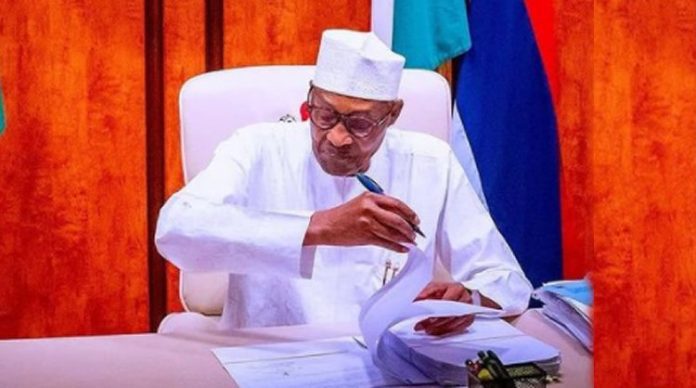
President Muhammadu Buhari claims that the absence of the Petroleum Industry Act has cost the country $50 billion in the petroleum industry since 2011.

This was stated by Buhari today in Abuja at a ceremony commemorating the passing of the PIA, which preceded the Federal Executive Council meeting.

Femi Adesina, the President’s Special Adviser on Media and Publicity, stated this in a release headed, “Nigeria Lost Estimated $50 Billion in Investments in 10 Years Due To Stagnation, Uncertainty Over Petroleum Industry, Says President Buhari.”

According to the President, the loss was caused by the uncertainty surrounding the non-passage of the Petroleum Industry Bill, as well as a lack of progress and stagnation in the petroleum industry, which he attributed to previous administrations’ lack of political will to implement the necessary changes.

According to the President, the signing of the Petroleum Industry Bill on August 16, 2021, will bring an end to decades of uncertainty and underinvestment in Nigeria’s petroleum industry.

“We are all aware that previous administrations have recognised the need to further align the industry for global competitiveness, but there has been a lack of political will to bring this transition to fruition,” he said.

“This lack of advancement has stymied the industry’s growth and our economy’s prosperity. Nigeria has lost an estimated $50 billion in investments over the last ten years as a result of the PIB’s failure to pass.

“This administration thinks that passing the Petroleum Industry Bill in a timely manner will assist our country in attracting investments across the whole oil and gas value chain.

“In light of the value that a solid fiscal framework for the oil and gas industry would provide to our country and investors, our administration has determined that it is vital to cooperate with both houses of the National Assembly to achieve the approval of the PIB.”

Read also: NVBF invited 54 players to a training camp for the 2021 Africa Nations Cup

The bill’s signing, according to the president, is part of the regime’s commitment to developing a competitive and resilient petroleum industry that will attract investment, increase income, generate jobs, and promote the economic diversification strategy.

He went on to say that the PIA was required because Nigeria’s petroleum business is mostly governed by laws enacted more than 50 years ago, such as the Petroleum Act of 1969 and other outdated legislation.

He urged host towns to accept the new legislation, claiming that it would help them in the long run.

“The Act also establishes a direct benefit system to support the long-term growth of Host Communities. I urge the host communities to carefully examine the substance of the Bill, which, if implemented, will provide them with substantial and long-term benefits.

“Furthermore, the Act calls for a purposeful halt to gas flaring, which would help Nigeria meet its Paris Agreement Nationally Determined Contributions by providing a financing mechanism to encourage gas flare out of the project in host communities,” he added.

He asked all key stakeholders to comply and reposition for full activation within 12 months while demanding the prompt execution of the PIA framework.

Timipre Sylva, Minister of State for Petroleum Resources, will lead the implementation team, according to him, and has urged all Ministries, Departments, and Agencies to acclimatize to the transition, which is intended to reorient the economy.

“To reaffirm this administration’s commitment to delivering the law’s value proposition, I’ve approved an implementation structure that will begin immediately to ensure the industry envisioned in the new law takes shape.

“The implementation process, which will be led by the Hon Minister of State for Petroleum Resources, has been given a 12-month deadline to complete the implementation of this legislation. As a result, I am directing all relevant government Ministries, Departments, and Agencies to fully cooperate in guaranteeing the law’s successful and timely implementation,” he stated.

Buhari also commended the 9th National Assembly for passing the bill in a spirit of fraternal cooperation with the Executive.

Dr. Ahmed Lawan, Senate President; Ovie Omo-Agege, Deputy Senate President; Ahmed Wase, Deputy Speaker; and other lawmakers, members of the Federal Executive Council, and Mele Kyari, Group Managing Director of NNPC, were in attendance.

NEDC: Appraising House of Reps Accountability Report

0

By Onuche Odoma

The Managing Director (MD) of the North East Development Commission (NEDC) Alhaji Mohammed Goni Alkali is a rare breed. His honesty, transparency and uprightness in the discharge of his responsibilities at the NEDC are seldom in most Nigerians. His public actions in the management of people and resources are unlike the general known character of Nigerians.

Months back, the House of Representatives bowed to pressures and conducted investigation into the alleged misappropriation of N100 billion at the NEDC by the management, headed by Mohammed Alkali. Some NGOs blew the alarm and the Nigerian media amplified the message.

A motion raised in plenary by Minority Leader, Ndudi Elumelu accused the NEDC boss of multiple corrupt acts and financial infractions at the commission, which was created to jumpstart massive infrastructural developments in the Northeast ravaged by years of Boko Haram insurgency. The House of Reps conducted a scrupulous investigation into the allegations against Alkali, but only found an empty bag of accusations.

Its submitted and adopted report on the probe indicated that the allegations against Mohammed Goni Alkali were spurious, frivolous, fabricated and baseless. Pleasantly too, the Reps committee also commended the Alkali-led management of the NEDC for its impressive and credible performance in projects execution in the communities covered by the mandate of the commission.

This is an uncommon applaud of a public servant in Nigeria who came under the investigative searchlight of national parliamentarians. Most Nigerians who find themselves in such probes hardly escape, without a scratch on the skin, like in the case of Alkali. They are found complicit in many ways and handed over to anti-graft agencies for prosecution.

Those conversant with this country, cannot argue that Nigerians are variously very ingenious. Test a Nigerian on anything, he excels exceedingly. Nigeria parades many best world class recognized professionals in virtually every disciplines. Nigerians are industrious and productive. The never-dying spirit in a Nigerian has opened rare doors for him and in strange climes globally.

However, like established by social scientists, every being is a blend of the contents of good and evil. The evil side of some Nigerians is also strappingly amazing. Nigerians have a high content of corruption. It’s nearly impossible to demand from many Nigerians holding public offices to adhere to the doctrinal tripod of transparency, accountability and probity in service.

Therefore, looting, embezzlement, diversion, pilfering, plundering, siphoning of the nation’s commonwealth and other financial crimes generally are the cherished pastime of most public office holders or Politically Exposed Persons (PEP) in the country. Financial crimes are very commonplace and the ingenuity it is executed, sometimes, marvel anti-graft agencies in the course of investigations.

There is hardly any day, one picks a copy of daily newspaper in Nigeria, without the headlines screaming with words like “Billions of naira missing in NPA;” “Probe spending of N881bn by 367 MDAs without appropriation, SERAP tells Buhari;” “Multi-billion-naira fraud rocks NDDC management;” “Over $ 2 billion arms procurement funds looted” and so forth.

Nigerians with the proclivity of corruption hardly ruminate while committing these crimes. But once the whistle blows, they indulge in all manner of subterfuge to subvert justice to the Nigerian state and the people. Courts trials of suspected fraudsters and parliamentary sessions digging into allegations of frauds have experienced some humorous scenes.

Some fraud suspects under trial or probes turn the courtrooms or venues into dramatic theatres. They play the thespian to invoke pity from the same public they shortchanged for personal enrichment, merely to evade justice. Some even feign illness.

There are notable examples! Of course, Nigerians have not forgotten how ex-PDP national publicity scribe, Mr. Olisa Metuh, who was standing trial for alleged money laundering collapsed in court in one of his trial sessions. He was accused of partaking in the diversion of N400 million from the $2.1 billion arms procurement fund. Former Bayelsa State Governor, Chief Diepreye Alamieyeseigha had to redefine gender fashion by disguising as a woman and escaped the shores of Nigeria when he faced alleged corruption charges.

Likewise, the Acting Managing Director of the Niger Delta Development Commission (NDDC) Prof. Kemebradikumo Pondei, dramatically slumped and fainted during a financial sleaze investigative hearing at the National Assembly (NASS). He was drilled by NASS committee over his alleged mismanagement of N40 billion funds of the commission. The riddle is yet to be resolved.

It was at the heat of the national uproar generated by Prof. Pondei’s battling with the hammer of parliament investigation that the allegations against the NEDC management sprouted. But as an upright and incorruptible public servant, Alhaji Mohammed Goni Alkali was not panicked by it. He calmly told reporters of his willingness to appear before the Reps Committee anytime he was invited to render accounts of his stewardship.

From the outset, Alkali trusted his clean records. Strikingly, the case of the management of the NEDC is however different. The parliament did its investigation and gave Alkali a pat on the back for his flawless handling of public accounts and projects. But the charges against him were multiple. His accusers alleged corrupt practices such as high handedness, over inflation of contracts, awards of non-existent contracts, massive contract splitting and brazen abuse of procurement laws in the award of contracts.

Quite honestly, the dragnet was expansive. But none of the allegations had any worthwhile substance to nail Alkali or implicate his leadership of the NEDC. This is an apt indication of a genuine and accountable public leadership by Alkali. Those close to the NEDC boss have attested to his personage as a stickler to personal positive morality. He combines it with the dictates of the law, anywhere he dispenses public leadership.

Today, if Nigerians are amazed at the rapid infrastructural rejuvenation of the Northeast, which was devastated and ruined by terrorists, the shadows of the NEDC under Alkali’s leadership reflects conspicuously everywhere. Through Alkali’s focused and honest leadership, the NEDC has strongly waded into the humanitarian crisis and infrastructural deficit caused by by Boko Haram insurgency.

The NEDC-MD has adopted the Multisectoral Crisis Recovery Project (MCRP) approach, as supported by the World Bank in tackling the disparate problems in the Northeast. The commission is into sensitization of the locals on the reality of fleeing remnants of Boko Haram insurgents and the dangers of sheltering escapee insurgents. And Alkali has trained select natives on techniques of dismantling unexploded landmines in communities for a more protective environment.

The commission has launched and is aggressively pursuing the Education Endowment Fund, agenda in the region. The scholarship benefits over 20,000 youths at the cost of N6 billion yearly. It has enabled the beneficiaries to access academic or professional capacity training and development in different fields of studies.

The NEDC is implementing the rehabilitation of drinking water and sanitation facilities in the states of the Northeast. Within his short duration in office, Alkali has implemented various humanitarian reliefs projects numbering 1, 310 under the broad scheme of “Rapid Response Intervention” (RRI) in all the 112 local governments of the Northeast region.

The commission also provide farmers with agricultural machinery and equipment, seeds, fertilizers, agrochemicals and extension services logistics vehicles annually under a programme tagged; “Integrated Agriculture Programme” (IAP). It covers the whole 112 LGAs in the Northeast. The NEDC is also into skills acquisition, training and provision of starter packs to Information Communication Technology (ICT), trainees.

Alkali has given entrepreneurship, and vocational skills a boast. Each of the 1,028 wards of the Northeast region, The NEDC has empowered women and youths in order to divert attention from the attractions of conscription into Boko Haram. The NEDC’s ambitious project of the construction of 10,000 housing units spread across 10 Borno LGAs for the resettlement of the internally displaced persons (IDPs) are the many signposts of the Alkali-led management of the NEDC.

Therefore, a public administrator engaged in such lofty and populist programmes as exemplified by Alkali’s leadership of the NEDC will not see the extra public funds to embezzle, even if he is tempted. Consequently, it was a heart-warming external blend with the reality in the management of NEDC, when the House of Reps applauded the NEDC for due diligence in the execution of projects, after the probe of alleged looted N100 billion.

Certainly, NEDC’s initiatives, operations and its impact on the communities in the Northeast region are speeding up the recovery process of the traumatized people and recovery of the entire devastated region. Mohammed Goni Alkali is accordingly encouraged to sustain and possibly, accelerate the tempo, as funds keep coming into the coffers of the commission.

Odoma wrote this piece from Abuja.

Gunmen kidnap the son of the former NMA Secretary and demand N20m in ransom

0

Ademola, the son of Dr Adewunmi Alayaki, the former National Secretary of the Nigeria Medical Association, has been kidnapped by gunmen in Ogun State.

According to our source, Adedamola’s kidnappers have demanded a ransom of N20 million to release the victim.

He was kidnapped on his father’s farm in the Isaga-Orile community in Abeokuta North Local Government Area of Ogun, according to reports.

Abimbola Oyeyemi, the State Police Public Relations Officer (PPRO), confirmed the incident to reporters in Abeokuta on Thursday morning.

Read Also:  Orientation: NYSC will continue to prosecute fake graduates – DG

Adedamola, he claims, is the manager of one of his father’s farms.

The police were on the lookout for the kidnappers, according to the PPRO.

“We have a handle on the situation. “Our men are on the lookout for the assailants,” he said.

Accepting the worthiness and expediency of an NYSC Trust Fund

0


By Emmanuel Kolawole

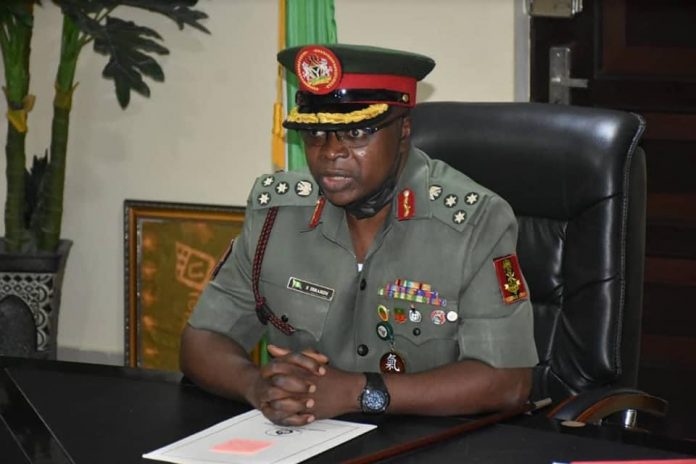
The Director- General ( DG) of National Youth Service Corps (NYSC) scheme, Brigadier General Shuaibu Ibrahim is a foresighted administrator. He is an administrative pathfinder of admirable qualities. In matters of public administration, he is like the famed seers of ancient days. He sees tomorrow with crystal clarity and begins to work on any obstacle today. His inclination to a prosperous Nigerian youths is unbeatable.

Since assumption of office, as the NYSC boss, Brigadier Gen. Ibrahim has been in ceaseless motion in the search for better ways to reposition the scheme to fully discharge its mandate. The DG has reactivated NYSC investment platforms; upgraded and modernized the Skills Acquisition and Entrepreneurship Development (SAED) programme. Obviously, corps members are savouring the gains of his repositioned NYSC in diverse ways.

Today, and in further pursuit of his dreams to bequeath a better scheme to Nigeria, the Brigadier General Ibrahim has launched a vigorous campaign for the establishment of the NYSC Trust Fund. When he first voiced the idea, skeptics might have probably assumed he is bluffing. But the national endorsements and acceptability of this proposal now is amazing, which is only comparable to the Biblical mustard seed.

The DG’s idea of an NYSC Trust Fund is to create partial or full financial autonomy for the scheme in funding its administrative operations and also, to assist graduate Nigerians privileged to pass through the scheme, a window to draw capital for their entrepreneurial exploits, after the post-service era. The investment capital which will be offered by the NYSC Trust fund to graduated Corps members is a formidable backup to the knowledge acquired in SAED. This is the motivation of Brigadier-General Ibrahim for his recommendation and loud preachments for the creation of a trust fund that would ensure the financial empowerment of all corps members after the national service year.

Graduate unemployment is one of Nigeria’s greatest headache. Brigadier General Ibrahim has envisaged an NYSC Trust Fund which will be backed by legislation and draw it’s funding from a stipulated percentage of profits of corporate bodies operating in Nigeria. It’s a simple, but brilliant idea that would change the fortunes of the scheme and its participants dramatically.

Surely, once the NYSC Trust fund is adopted, the number of young Nigerians who pass out from the scheme to face a bleak future by roaming the streets, and knocking on the doors of government offices in search of white-collar jobs would reduce drastically. The NYSC Trust Fund is designed to assist them with seed capital based on the stipulations of the Act establishing it, in order to try their entrepreneurial skills and possibly, morph into employers of labour. It’s a foundation to self-reliance and financial independence.

Truly, the moments of joblessness after graduation and the mandatory service year are frustrating and quite traumatic. It blights the joy and pride of citizenship. So, the DG conceived this idea as another method of tackling massive youth employment in the country.

The pride of every patriotic citizen is to render service to his nation. In Nigeria, the NYSC provides a veritable platform for the actualization of this aspiration for educated Nigerian youths below 30 years of age. And the excitement of service year, lingers long in the minds of young Nigerian graduates. Besides, the scheme has served as weapon for cultural and social integration among Nigerians.


But like other initiatives of the FGN, the NYSC has also faced it’s fair share of setbacks. From poor funding to maladministration, the scheme has tottered over the years. Notwithstanding, it has not closed its doors to innovations and improvements, with successive administrations in Nigeria. And from all indications, the NYSC’s moments of glory have berthed eventually under the leadership of Brigadier General Ibrahim.

This assertion also finds expression in the favorable disposition of President Muhammadu Buhari who is passionate about youth engagement and empowerment. Therefore, the President has seen the NYSC as a platform to railroad the transformation of Nigerian young graduates into formidable and productive citizens. His appointment of Brigadier General Shuaibu Ibrahim to head the scheme was a conscious attempt at re-engineering and repositioning organization for the maximum benefits of Nigerian youths and Nigeria.

Therefore, the idea of the NYSC Trust Fund which started like a whisper is now trumpeted by all stakeholders and leaders. Almost every notable Nigerian has lent a voice in its support. They are at the forefront of reeling out the benefits of the NYSC Trust Fund.

The former Head of State, and founding father of the NYSC scheme, Gen. Yukubu Gowon (rtd) has not only accepted the idea of an NYSC Trust Fund, but has anointed himself a Chief campaigner for its immediate establishment. He is personally reaching out to the various arms of government, opinion leaders and stakeholders to ensure the idea comes to fruition. Gowon believes that the establishment of the NYSC Trust Fund will further strengthen the scheme through robust funding.

To the Chairman, House of Representative’s Committee on Youth Development, Hon. Yemi Adaramodu, an NYSC Trust Fund will conveniently address the subsisting challenges of infrastructural decay and funding which have strangulated the smooth operations of the scheme over the years. He sees the proposed NYSC Trust Fund as a vault that will provide ‘seed money’ for graduate youth entrepreneurs after the service year for the effective utilization of knowledge taught at the SAED.

Other foreseeable and solid impacts of an NYSC Trust Fund includes; unburdening State Governments from financial commitments on the scheme in the magnitude presently obtained. It is also another frontal attack on the menace of unemployment in Nigeria and an instrument of curbing the increasing rate of crime in the country by meaningfully engaging youths. The NYSC Trust fund will also provide funds for the expand NYSC Orientation Camps and the renovation of dilapidated camp facilities.

And most pleasantly, it is contemplated that the beneficiary will require no collateral or godfather to access the seed money offered by the trust fund. All Nigerians can attest to the viability of the scheme and how it has helped young Nigerians in various. That’s why when some members of the House of Representatives tinkered with the idea of scrapping the NYSC, Nigerians stood up in unison to resist the move. Earlier in the year, a report released by data bank and research organization (NOIPolls) indicated that over 83% of Nigerians resoundingly rejected the scrapping of the NYSC scheme for whatever reason.

So, some Nigerians are therefore, canvassing that when the NYSC Trust fund is eventually established, the duration of service should be extended to two years because of the significant roles teg scheme now plays in the life of the average Nigerian graduate. Nigeria’s National Assembly is implored to do the needful by initiating the Bill for the NYSC Trust Fund and expediently passing it into law for its take-off.

Kolawole is former PRO, National Association of Nigerian Students and wrote from Lagos.

NVBF invited 54 players to a training camp for the 2021 Africa Nations Cup

0

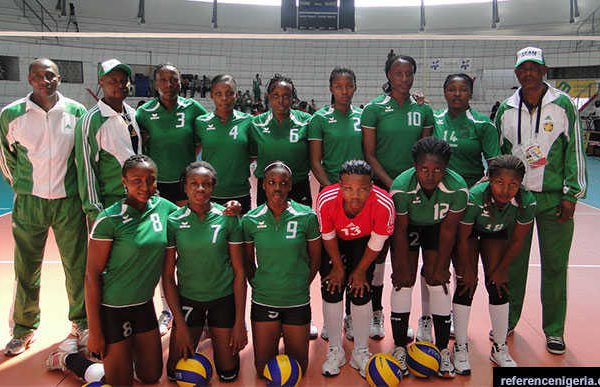
In preparation for the African Nations Volleyball Championships in Rwanda next month, the Nigeria Volleyball Federation (NVBF) has invited 30 male and 24 female players to camp.

On August 19, all invited players must report to camp at the Ahmadu Bello Stadium in Kaduna State.

Bruno Ibeh (Nigeria Police); Tobi Oladipo (Correctional Service); Patrick Davou (Nigeria Customs Service); Philip Stephen (Kano Pillars) and Daniel Nathaniel (Sunshine Spikers); Morris Dikiyai (Nigeria Customs Service); Izuchukwu Nwachukwu (NSCDC); Prince Anyasodike (Nigeria Imm); Dauda Saje (COAS Spikers).

Philip Akande (Nigeria Customs Service); Moses Gana (Kano Pillars); Levy Lortyon (COAS Spikers); Army Ferdinand (Nigeria Police); Usman Ismail (Kano Pillars); Samuel Ogwuche (NSCDC); Matthew Ejeh (Nigeria Customs Service); Emmanuel Okeke (NSCDC); Godwin Shekarau (Kano Pillars); Chinadu Pascal (Correctional Service (OFFA VC)

Sharon Achi, Chinenye Nwosu, Mercy Promise, and Comfort Amaonwu are among the female players invited. NSCDC representatives Theresa Okoamah, Albertina Francis, Happy Wushilang, and Jummai Bitrus.

Read Also:  Delta CP Deploys 1,000 Policemen for Olu of Warri Coronation

Others include Nigeria Customs officials Aisha Umar, Tochukwu Nnorugu, Helen Umeh, Eunice Ejeauba, Rafiyat Mustapha, and Ene Odoh. COAS Spikers’ Ijeoma Akpabi, Prisca Nkennakwu, and Chinedu Nnachi; Nigeria Immigration Service’s Ose Anamaki and Deborah Umoren; Benue Queens’ Jessica Terwase, and Nigeria Police’s Ruth Wariboko were also invited.

The 2021 African Volleyball Championship will be held in Kigali, Rwanda, from September 5 to 20.

Nigeria and Saudi Arabia seek to form drug-war partnership

0

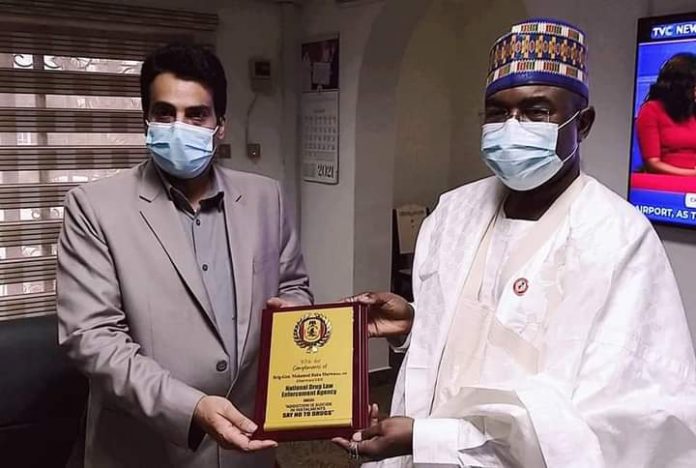
The National Drug Law Enforcement Agency (NDLEA) and the General Directorate Of Narcotics Control (GDNC) of Saudi Arabia have agreed to expand their cooperation in the battle against illicit drug trafficking between the two nations.

This is according to Femi Babafemi, the NDLEA’s Director of Media and Advocacy, in a statement released on Wednesday.

According to the announcement, the Chairman/Chief Executive of the NDLEA, Brig. Gen. Mohamed Buba Marwa (Retd), and a representative of the GDNC, Colonel Naser Hajid Al Otaibi, met in Abuja on Monday and Tuesday to explore the relationship.

Gen. Marwa commended Saudi authorities for their previous cooperation as he welcomed the official official.

“We suggest a Nigeria, Saudi Arabia Seek Partnership On Drug War,” he said, citing the necessity for a long-term partnership.

Nigeria, Saudi Arabia seek partnership on drug war - Vanguard News

Memorandum of Understanding (MoU) on cooperation between the two agencies in combatting trafficking in narcotic narcotics, psychotropic substances, and their precursors to the GDNC for consideration and signature, similar to what we did recently with the Gambia’s Drug Law Enforcement Agency.”

The head of the NDLEA reaffirmed Nigeria’s commitment to combating drug misuse and trafficking, stating that President Muhammadu Buhari is behind the agency in its efforts to eradicate the problem.

Read Also:  Kaduna government has ordered JSS 3 students to return to class

He requested aid from the Saudi government, particularly in the areas of technical assistance and equipment donations, such as scanners, forensic laboratories, and the construction of rehabilitation centers.


The GDNC representative, on his part, invited Gen. Marwa to visit the Kingdom of Saudi Arabia to further discuss various areas of the NDLEA-GDNC collaboration.

The NDLEA Chairman accepted the invitation in the hopes of signing the Memorandum of Understanding on the anti-narcotics partnership between the two agencies.

Constituents lament the fate of 14 Edo legislators-elect two years later

0

People in the electorates of the 14 members-elect of the Edo State House of Assembly have complained about the lawmakers’ ongoing delay in being sworn in.

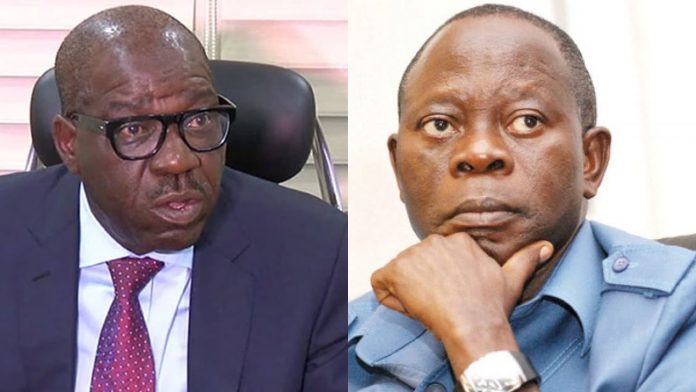
Governor Godwin Obaseki’s political spat with his erstwhile godfather, Adams Oshiomhole, has been blamed for the prolonged delay in the inauguration of 14 members-elect two years after the state legislature was inaugurated.

The leadership of the house declared the seats of the 14 members-elect empty on December 14, 2019. Victor Edoror (Esan Central), Washington Osifo (Uhunmwonde), Vincent Uwadiae (Ovia North East 2), Ugiagbe Dumez (Ovia North East 1), and Sunday Aghedo are among those who have been affected (Ovia South West).

Crosby Eribo (Egor), Chris Okaeben (Oredo West), Kingsley Ugabi (Etsako East), Ganiyu Audu (Etsako West 1), Seidu Oshiomhole (Etsako West 2), Oshomah Ahmed (Etsako Central), and Michael Ohio-Ezomo (Etsako Central) are among the others (Owan West).

Uyi Ekhosuehi (Oredo East) and Henry Okaka (Owan East) are also affected, as they were sworn in but could not meet the 181-day sitting minimum for a member in a calendar year.

While some sections of the public blame Obaseki for the House situation, others believe the members-elect should not have listened to their godfathers.

Mr. John Igbinovia, one of the participants, stated that the members-elect should have attended the inauguration in June 2019.

“It’s impossible to fight from the outside. They were duped by their godfathers, who promised them heaven on earth, and now they are fighting to get to the house,” he explained.

He stated that legislators were elected to make legislation for the benefit of their constituents.

“Rather than listening to godfathers, they should have considered the interests of their citizens. Two other members-elect arrived after the initial inauguration and were also inaugurated,” he continued.

Dada Ayokha, for one, condemned the development as disappointing, claiming that political intrigues between two political gladiators had prevented them from being represented.

“The constituency is losing so much because it doesn’t have representation in the House of Assembly, and I hope it doesn’t reach to the point where the people make laws,” he said.

Another citizen, identified only as Mr. Odion, said the Edo Assembly tragedy was a wake-up call for the country’s judicial reforms.

“The members-elect have been in court for about three years. The lawsuit is still pending, and by the time it is resolved, the four-year period will have passed,” he stated.

Meanwhile, Washington Osifo, the member representing Uhunmwode Constituency, has stated that the case is still pending in court and that the case will be pursued to its logical conclusion because the political solution has failed.

“We explored political solutions even when we were in the same party. Party leaders, governors, and the president intervened, but he stated, “I don’t understand why people who don’t want us to represent our constituents are so hell-bent on keeping us out of the assembly.”

He claimed that their removal from the House has caused a significant void in governance in the state, citing the docile nature of the House as a result of their absence.

Read Also:  Federal Executive Council approved N16.7 billion for the Yobe Airport and other projects

“When the house is finished, it will reflect in terms of quality contributions, discussion, and monitoring roles, as well as pressuring the executive to do what will benefit the state. “In Edo, the legislative arm exists to present an alternate voice and reasoning to the executive,” he remarked.

Our correspondent was unable to obtain a comment from the state government since Governor Godwin Obaseki has yet to designate a media aide since his re-election.

However, the PDP claims that the state of Assembly’s declaration of the 14 legislators’ seats as vacant stands.

Chris Nehikhare, the party’s media secretary, stated that the Independent National Electoral Commission (INEC) is responsible for holding a by-election to fill the vacant seats.

Chris Azebamwan, the APC’s state publicity secretary, said the case is in court.

The 14 legislators have battled a number of legal fights to force the assembly’s leadership to swear them in.

In January 2020, a Federal High Court in Abuja barred the Independent National Electoral Commission (INEC) from holding by-elections to fill 14 Edo State House of Assembly seats that had been declared vacant in December.

This came after counsel for the lawmakers, all of whom are Obaseki allies, filed an ex parte plea to halt the election to replace them in the legislature.

The lawmakers also got a restraining order from the Federal High Court in Abuja in August 2019 to stop both the Senate and the House of Representatives from taking over the legislative functions of the Edo State House of Assembly.

Delta CP Deploys 1,000 Policemen for Olu of Warri Coronation

0
In Ondo, police prevent a robbery attempt on a bullion truck.

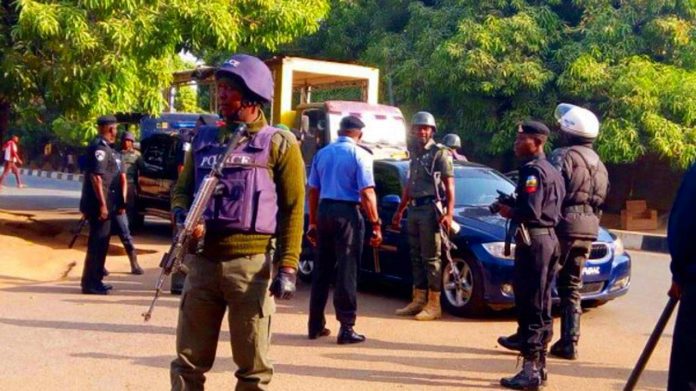
Ari Mohammed Ali, the Delta State Commissioner of Police, has deployed 1,000 officers to ensure adequate security prior to, during, and following the coronation ceremony on August 21, 2021.

Two bomb squads have been deployed to report 48 hours before the coronation day in order to sweep the venue and ensure it is completely safe, according to a statement signed by the acting Police Public Relations Officer (PPRO), Delta State Command, DSP Bright Edafe.

Two units of mobile police officers and conventional police officers, including traffic officers, have also been deployed in Warri to ensure watertight security, according to the statement.

“The CP warns mischief makers to stay away from the coronation as the police command is more than ready to deal decisively with anyone who tries to disrupt or cause any form of mischief,” the statement reads.

Read also: Federal Executive Council approved N16.7 billion for the Yobe Airport and other projects

“Everything that needs to be done to ensure that the event is itch-free and free of violence has been done. To that end, the CP has directed the Warri Area Commander, Divisional Police Officers, and Command Tactical Operations Officers to leave no stone unturned in ensuring thorough supervision of personnel deployed to ensure peace and tranquility during and after the coronation ceremony in Warri.”

‘Amosun was never Okupe’s campaign coordinator,’ says one source.

0

Mr. Francis Gbenga Adenmosun, a former Secretary of the Peoples Democratic Party (PDP), Ogun Central Elders Caucus, and Campaign Coordinator for Senator Ibikunle Amosun during his Senatorial Campaign between 2001 and 2003, has refuted Dr. Doyin Okupe’s claim that Amosun was his campaign coordinator.

Former presidential aide, while appearing on ARISE NEWS’ Morning Show a few days ago, claimed that Senato Amosun, the former Governor of Ogun State and two-term Senator of the Federal Republic of Nigeria, was his (Okupe’s) campaign coordinator in the Ogun Central Senatorial District during the run-up to the 2003 gubernatorial election.

However, Adenmosun refuted that claim, saying he was taken aback by Okupe’s strange claims made in a public forum.

“It is on record that I was the Secretary of the PDP, Ogun Central Elders Caucus, and Campaign Coordinator for Senator Ibikunle Amosun during his Senatorial Campaign between 2001 and 2003, and I can confidently state that Senator Amosun was not the campaign coordinator for Okupe. Indeed, as a candidate, he (Amosun) would not have been able to serve as Okupe’s or any other candidate’s campaign coordinator,” he said in a statement.

According to him, if any of the 2003 Ogun State gubernatorial candidates received Amosun’s overt and covert support, it was Otunba Gbenga Daniel, whom Amosun openly identified with and supported during the run-up to the gubernatorial election.

“Of course, I am aware that Amosun, like many of the other aspirants and candidates, financially supported Okupe’s governorship bid, but he was never his coordinator in Ogun Central or anywhere else in the state,” Adenmosun said.

Gauging the Forex Market

0
Gauging the Forex Market

The Central Bank of Nigeria has been suspending forex allocation to bureau de change operators and adopting weekly supply to commercial banks for more than two weeks in order to save the naira’s value and maintain its integrity. Using customer experience to gauge the forex market shows how well the apex bank has done in achieving the system’s desired goals and objectives. Kunle Aderinokun contributes to this report.

Customers have been turning to commercial banks to meet their forex needs after the Central Bank of Nigeria suspended forex allocation to bureau de change (BDC) operators for more than two weeks.

The apex bank released $200 million to commercial banks as soon as it cut off supply to the BDCs and has continued to provide them with weekly forex liquidity. This was part of an effort to meet legitimate end-user dollar demand in the country.

With the CBN’s mandate to accept cash deposits of foreign exchange from customers, banks have already taken on more responsibilities to open forex desks in their branches across the country to serve end-users.

As business picked up, however, some banks began to break forex rules by actively conspiring with unscrupulous customers to defraud the system. Customers and banks in this group have been warned to stop engaging in such nefarious behavior or face stiff penalties from the banking regulator.

Following the 357th Bankers Committee meeting, which took place virtually last Thursday, bank CEOs stated that they would use digital means to detect fraud in the forex system, citing unwholesome practices by some customers.

On behalf of the banks, Yemisi Edun, Managing Director of First City Monument Bank (FCMB), and Segun Agbaje, Group Managing Director of Guaranty Trust Holding Company (GTCO), spoke.

Customers who visited the banking hall to obtain forex for various needs under the new forex regime have a mixed bag of stories to tell.

Mr. Tope Fasua, Chief Executive Officer, Global Analytics Derivatives, described his experience as a bank customer, saying, “All banks have implemented the policy to create FX tellers, and initially queues have disappeared.” On Monday, I was in a bank and saw people depositing dollars into their DOM accounts, which is a sign of trust in the system.”

“As someone who uses forex so much for my business, because I import gold and other jewelry, this CBN suspension of forex to the BDCs has only made it more difficult for me to access dollars at a reasonable rate,” another bank customer, who requested anonymity, said. As can be seen, the price has risen since the suspension; from the N420 I used to get to N515-N520 today. That’s not right!

“The CBN’s policy has only served to frighten the market, making the dollar far more expensive than it was prior to the new directive.

“So, what’s the advantage now?” When you go to the bank, they tell you that they don’t have any dollars, but if you don’t mind, they can arrange some other options for you; which always leads to the Mallam on the street selling dollar.

“With BDCs, the business was always direct, easier, and less expensive, plus you could get it at any time. They have their own offices and are members of an organization called ABCON or something similar.

“So, if I have a problem with one of their members, I know who to call and where to go without all the red tape and jargon that banks used to use when you complained to them. Why can’t the CBN simply collaborate with that body to resolve the issue?”

Furthermore, a bank customer in Lagos, Mr. Jide Thomas, suggested that the CBN collaborate with the BDCs group to effectively regulate and refine their operations by developing guidelines for them to follow.

The apex bank, according to Thomas, has the authority to discipline erring members of the forex traders’ body, as well as to impose sanctions on the association if its members commit infractions that endanger the system. Suspending allocation to BDCs, he believes, is not the answer. The way to go is to work with the BDCs association to reduce their excesses.

For some, the CBN’s decision to suspend allocations to bureau de change (BDC) operators was a welcome development, while for others, it was a rude awakening. The CBN’s intended consequence, however, is to save the naira, the national currency, regardless of how it is taken or viewed, even though, as with any decision, there are unintended consequences.

The Central Bank cited a number of regulatory violations and other unethical practices as reasons for ending the forex sale to BDCs.

Following the decision, which was announced by the apex bank’s Governor, Mr. Godwin Emefiele, the apex bank stated that it would no longer process or issue new BDC licenses, and that all current licenses, regardless of their stage of processing, would be suspended. He stated that the CBN would channel weekly BDC allocations to commercial banks.

These measures, according to the apex bank, were taken to enable it to carry out its mandates more effectively and efficiently, as well as to ensure the preservation of the commonwealth and the hard-won financial system stability for the benefit of Nigerians.

As a result of the panic caused by the policy change, the naira-dollar exchange rate on the parallel market rose to N525/$1 from N495/$1 twenty-four hours after the announcement. But that did not last long, as the naira rose after the greenback was exchanged for N510. The naira, on the other hand, remained under pressure as manufacturers and forex end-users maintained their demands.

The BDC operators assured their customers and the general public that they were still in business as soon as the CBN announced its decision. The Association of Bureau de Change Operators of Nigeria (ABCON), which represents BDCs, said in a statement that they were still providing foreign exchange services.

The assurance was given by ABCON’s President, Dr. Aminu Gwadabe, who stated that the recent CBN pronouncement did not prevent BDCs from providing foreign exchange services as permitted by their operating licenses and operating guidelines.

Since then, the CBN has been supplying commercial banks with foreign currency. The value of the naira improved as a result of the CBN’s intervention, but the national currency has remained under pressure, losing N5 on the parallel market last Tuesday as the dollar, which exchanged for N505, rose N510 in the face of rising volatility.

While most analysts agreed that the CBN made the right decision, some said the new policy direction left a lot to be desired.

Prof Uche Uwaleke, an economist and Professor of Capital Markets at Nassarawa State University, Keffi, believes the parallel market’s forex rate will fall in the long run as long as the CBN ensures forex liquidity at the official end of the market. He emphasized that, in light of other anticipated developments, the CBN’s ability to intervene in the forex market would be strengthened.

“As a matter of fact, the downward journey of the parallel market rate has commenced,” Uwaleke, a former commissioner for finance, believes. Speculators betting that the CBN will not be able to match the level of forex demand now redirected to Commercial Banks are to blame for the current volatility in that market.

“However, I believe they will be disappointed, given the recent gradual accretion of external reserves, particularly since the suspension took effect, the FG’s plan to issue Eurobonds on the international capital market, and the prospect of crude oil prices remaining strong in the near-to-medium term.”

Mr. Abiodun Sopitan, a retired CBN director in charge of commercial banking, believes that the CBN should work with the BDCs association to manage their affairs by monitoring their activities and ensuring that the BDCs complete proper documentation.

“Since the policy decision, the market has calmed a bit,” Fasua said. The naira has strengthened to around N510 per dollar, down from N525 previously, with promises of further cooling as the policy takes hold.”

“BDC operators are coming together to contemplate the future and organise themselves for mergers where necessary,” he said, adding that “the ‘Mallams’ on the road as we know them are doing business as usual because the banks cannot match their speed of service delivery and the drive thru advantage.”

“It’s also worth noting that some bank CEOs have expressed confidence in the policy and forecast further naira strength. Mr. Rewane, one of Nigeria’s leading economists, echoed this sentiment yesterday (Wednesday). As a result, the future appears to be promising. “At this time, all invisible trade transactions are being met seamlessly,” he added.

Dr. Obadiah Mailafia, the former CBN Deputy Governor, has a different viewpoint. According to him, the new CBN forex policy may depreciate the naira. He also warned the apex bank against entrusting dollars to commercial banks.

“If we are not careful, that decision will actually depreciate the naira because you can normally walk into any BDC, anywhere, and they will attend to you within five minutes, but with banks, you have to drive to your nearest bank and queue the majority of the time.

“The CBN hasn’t told us the rate; banks will want to make a profit over the official rate; we don’t know whether they will make a decent profit or profiteer,” he said, adding that “bankers were the biggest experts in round-tripping.” I don’t believe old habits change. Leopards aren’t known for changing their spots.”

Read also: Kaduna government has ordered JSS 3 students to return to class

Mailafia also cautioned the CBN against entrusting forex allocations for customers to banks. “How can you put your faith in these commercial banks when most of them want to corner the dollar for themselves and then share whatever is left with the market at whatever rate they want?

“On the naira, it is not just the underlying economic fundamentals that matter, such as interest rate, inflation, and so on, these things matter, and the level of debt affects it, but there are also non-quantifiable elements like violence, instability, rural banditry, and terrorism, which undermine the economy’s productive capacity,” he added. They also deplete social capital, or the trust that binds a community together in order to conduct business.”