Home Blog Page 2169

Prof. Ibe offers scholarships to Youths in Abia Skills Gap

0

Professor Gregory Ibe, the Chancellor of Gregory University Uturu (GUU), has lamented the sad scarcity of skilled professionals in key professions in Abia State.

The unfavorable condition, according to the famous professor of entrepreneurial science, who also serves as the director of research and development for the Abia Elders Council, poses a significant threat to the state’s growth and wholesome development.

Prof. Ibe told journalists on the 30th anniversary of Abia State’s founding that the gaps caused by the lack of these experts in the Abia workforce had the potential to stifle rapid growth and prevent the achievement of future social goals.

“In the course of my duties as Abia Elders Council’s director of research and development, I recently observed the apparent lack of a good stock of professionally trained Abians in such critical careers as Petroleum Engineering, Physiotherapy, Radiology, Public Health Science, Medical Laboratory Science, Physical and Health Science, Insurance, Theatre Arts, and Mass Communication,” he said.

Read also: Cholera Outbreak: Kano Records 5,221 Cases,169 Deaths

Prof Ibe claims that this revelation has influenced his choice to use this year’s grant of his yearly scholarship scheme to begin the process of repairing the career shortfall he has identified.

“In order to begin the process of reversing the potential negative effects of the current unfortunate situation of existing yawning gaps in the data bank of certain needed trained professionals on our labor demography in the future, I have directed our Scholarship Board to offer tuition-free education in Gregory University Uturu to desire Abia youths from the 17 Local Government Councils during the academic year.

As a result, he urged Abia youngsters to take advantage of the opportunity to acquire skill sets that will not only set them apart but also make them relevant to societal demands.

It will be recalled that the Prof Gregory Ibe Scholarship Board had previously provided many youths with tuition-free education awards, culminating in the extension of similar grants to 150 indigent people from the state’s seventeen Local Government Councils during the 2020/2021 academic session, who are currently studying various courses at Gregory University Uturu.

Page And His Futile Attempt To De-market President Buhari

0

By Toby Prince

Truly, from the outset, Nigeria’s President Muhammadu Buhari knew Aso Rock is a hot seat and Nigeria, a very complex country to govern. He has millions of admirers, and enough political adversaries too.

President Buhari is not a leadership neophyte. So, despite the toughness of the game, he has refused to succumb to the fusillade of internal or external agents and forces of destabilization amassed against the nation. The surfeit of insecurities plaguing the country unyieldingly remains a big setback. But Mr President has refused to bulge, much as the anti-state antagonists are also ruthless and relentless.

Yet Buhari’s greatest burden emanates from the veiled external forces whose actions and utterances over time have betrayed sinister motives against the progressive ideals and continued existence of the country as one indivisible entity. So, they are quick to side with non-state actors back home in their crafted evil designs to destabilize Nigeria; but at the same time, portray President Buhari as Nigeria’s worst leader citing indiscernible reasons.

Under a democratic government, there is bound to be a clash of pro and anti-government forces. This posture borrows its strength from the inherent free exercise of citizens’ rights of association and expression which are doctrinal to democratic practice. The visible presence of Non-Governmental organizations (NGOs) in the civil space under the Buhari Presidency reflects state respect for these appendages of democracy.

It is easily observable that on both sides of the coin, the NGOs in Nigeria have indulged in rancour-free exercises of their might in the defence of democracy, partisan interests, rule of law, and good governance. No human institution or system is perfect and so, no one expects the NGOs to be 100 per cent perfect either.

However, what is strange is the adroit defence of what a researcher, Mr Matthew T. Page, termed mainstream NGOs and his outright declassification or hard punches on those he considers “pariah” NGOs, tagged as pro-government, “dubious” or “briefcase entities.”

Mr Page is a non-resident scholar with the Carnegie Endowment for International Peace and some other foreign organizations. He is also a non-resident Fellow with the Centre for Democracy and Development in Abuja. On July 28, 2021, Mr Page published a paper with the title, “Fake Civil Society: The Rise of Pro-Government NGOs in Nigeria.”

He devoted time to throw darts at President Buhari for fueling pro-government NGOs through his appointees, sponsored mainly to choke the genuine civil society space in Nigeria and divert attention from poor leadership policies or other manifestations. “After a fifteen-year lull, pro-government NGO activity has reached new heights since Buhari took office in 2015,” Mr Page asserted.

One is not necessarily frowning at the thrust of the researcher’s paper on operations of NGOs in the country. It is, however, difficult to believe or even vouch for Mr Page’s postulated reasons for the existence of the NGOs he brands as “criminal” enterprises or state-sponsored “cookie-cutter” groups.

It’s ironic that the researcher was unconcerned with the defective nature or operations of NGOs he dubbed as mainstream in the country, but conferred on them the aura of perfection, despite their apparent gaffes most time. But in contrast, he specifically backlashed and tongue-lashed the other civil society groups simply because their views support President Buhari’s administration. That’s a partisan stand already.

Therefore, it is in bad taste for Mr Page to fail to perceive the existence of the mainstream and pro-government NGOs as exciting discourses on the democratic plane with the incongruent positions they take on national issues such as security, good governance, corruption, human rights and the rule of law. It is faulty for the paper to unbending project that pro-government NGOs are satanic on the simplistic basis of registration irregularities or defects; whilst their mainstream counterparts are exemplary messiahs in the views they canvass because they are lawfully registered.

To exculpate his preferred NGOs, Page backed it up with a few lines of hogwash that the “genuine” NGOs eulogize worthy government policies or actions when necessary. It is an implausible argument to claim the interpretation of government’s actions or policies as right or wrong in the sight of Nigerians can only be determined by Mr Page or his clan of so-called credible NGOs.

It is misplaced for Page to reason that President Buhari is such an awfully bad leader to the extent that himself or cronies must hire the services of these “fake” NGOs or briefcase entities to unjustifiably launder their public image, repress human rights abuses, scuttle popular opinions, serve as platforms for syncopating government officials’ illiberal causes for either political or financial gains. Or they are established to attract funds from international donors. Most times, the so-called credible NGOs also indulge in glaring subversive activities to sabotage the Buhari administration or commit deliberate destructive blunders.

But Page poured out his mind bizarrely; “Pro-government NGOs also frequently champion illiberal causes, pushing back against calls for reform, defending state repression, and absolving the government of responsibility for human rights abuses. Yet they also try to appear legitimate by adopting the mannerisms and lexicon of mainstream NGOs. Pro-government NGOs are also, by definition, opaquely funded, most likely by political appointees close to senior officials who seek to generate media attention for their views.”

This piece is hinged on two main aspects of the researcher’s ad hominem on discredited NGOs. Firstly, that pro-government NGOs engages in praise-singing of President Buhari, the Nigerian Military and its Service Chiefs, especially on issues of security. He singled out Chief Philip Agbese, a London-trained lawyer, public affairs analyst and rights activist as the kingpin of the pro-government NGOs in North of Nigeria, together with a handful of others who deploy them as platforms to meaninglessly applaud the performance of the President and the military handling the anti-terrorism operations in the country.

Like even the published paper hinted, Agbese performs this chore because of his abiding faith in the Buhari Presidency and the competence of the Nigerian military to defeat Boko Haram and allied insurgencies in Nigeria. Page and his sponsors must also acknowledge the existence of cyberspace terrorism, which is basically propaganda inclined and also lethal as battlefield terrorism. The activities of Agbese and his other compatriots should rather be seen as patriotism to one’s country in assisting the military to deflate the fake propaganda of cyberspace terrorists against Nigeria.

Nigerians must also know that there is no perfect administration anywhere in the world. But a leader who is meeting the minimal benchmarks in leadership should be supported and emboldened by the ruled to accomplish more. It is what makes leadership what it is and what it should be. Perhaps, Mr Page and his sponsors are unaware of the extent to which Boko Haram and banditry penetrated Nigeria before the Buhari Presidency, so he cannot notice the positive impact now.

Page needs another research to understand the efforts of Buhari and the Nigerian military, in pushing back these tormentors, reclaiming territories and the current stage, where insurgents are held to a standstill by soldiers. No sane Nigerian or anyone else anywhere can conscionably stoop low as to say the former Service Chiefs of the Armed Forces of Nigeria (AFN) has failed to perform credibly in quelling the multiple insurgencies in Nigeria under President Buhari.

That is not to say, President Buhari is a saint and Philip Agbese has never ascribed such status to him either. And it is doubtful if Agbese will ever say President Buhari is a saint. But if there is one national challenge that President Buhari has handled impressively is the fight against insurgencies. Nobody can take that away from Buhari and the likes of Matthew Page must also take time to commend, rather than squabble with NGOs trying to assist the country in battling cyberspace terrorism in wartimes like now.

The fixation of Page’s so-called credible NGOs to also undermine Nigeria most times is undisguised. Amnesty International (AI) for instance, had on several occasions morphed into a mouthpiece of terrorists in Nigeria. They also transcended to a parallel or opposition government in Nigeria, administering its Country Office in Abuja like a daily newspaper, churning out news reports only favourable to the insurgents to dampen the morale of troops.

This is the same AI, which twice, declined appearance before a probe panel to testify or substantiate its bogus claims of human rights violations by the Nigerian Military in the prosecution of counter-insurgency operations in the Northeast. Even if AI considered the composition of the probe panels as lopsided, one expected AI to respect the Nigerian Government by testifying and thereafter, writing and publishing its observations or report on the probe. But it failed disrespectfully.

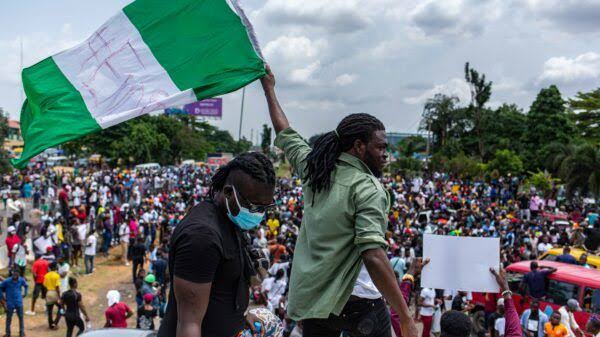
So, outsiders thinking this posture by AI never angered Nigerians are untruthful to themselves and it is certain, they will never tolerate such an organization in their home countries. Again, let unbiased minds consider the haste with which AI reported killings at Lekki tollgate during the #EndSARS protests and the death toll? In the end, the organization could not even provide evidence of the 10 persons allegedly shot with live bullets by soldiers.

The CNN was later conscripted into this conspiracy by reporting staggering and uncertain figures of casualties in the Lekki incident ranging from the initial 78 to 35 persons, as brutally killed by soldiers. But to this minute none of these organizations has proven any death from the Lekki incident. That’s an unprofessional and mercantile display of journalism practice by CNN. In other climes, CNN would have been sanctioned. But truly, the U.S. State Department’s 2020 Human Rights Report on Nigeria over the October 2020 alleged killings of unarmed #EndSARS protesters by soldiers at the Lekki tollgate, by its unambiguous declaration of lack of evidence vindicated the Nigerian Army.

So, indubitably, the outcome of this research work advertises Matthew T. Page and his sponsors at the Carnegie Endowment for International Peace as a mutation of the external conspirators against the security, peace, stability and unity of Nigeria, like the other identified foreign organizations. It is curious why Page is blinded to the contributions of pro-government NGOs in pairing up with the military in fighting cyberspace terrorism, but unreservedly applauded international organizations whose operations bolster the terrorists’ tormenting Nigeria. Page should revisit the fallouts from the paper by exploring the deliberately excluded angles hinted in this piece or he will be reckoned as one of these paid foreign writers, who has also finished the job very poorly like CNN.
Seplat’s second-quarter financials show an improvement above last year’s operating loss of N13.7 billion

0

COVID-19 isn’t finished with Chemical and Allied Products (CAP), as the company continues to lose money due to the pandemic, which disrupted the global business environment for almost the entire year of 2020.

CAP increased its revenue by 202 percent in the second quarter of this year, earning N3.54 billion, compared to N1.17 billion in the same quarter last year.

Its profit was also on the rise, with an increase of 110 percent. The paint maker’s gross profit for Q2 2021 was capped at N1.03 billion, compared to N493 million for the same period in 2020, according to the company’s financials.

Between April and June (Q2), CAP’s operating profit increased to N350.9 million, surpassing the N168.58 million reported during the same period the previous year.

During the three months under review, however, the profit margin was held in check by the cost of production and operating expenses.

According to reports, the cost of sales increased by 268.1 percent in Q2 2021, to N2.51 billion, far exceeding the N682.83 million spent on production in Q2 last year [note that operations in Nigeria were partially halted due to COVID-19].

Also see: Makinde is being urged by a Muslim group to compensate the families of late lawyers

In addition, after rising by 158.5 percent in Q2 2021, operating expenses lowered the profit margin. Operating expenses for the period under review were N879 million, exceeding the N340 million reported for Q2 2020, according to CAP financials.

The high cost of materials and other services required for the continued operation of CAP had an impact on the increase in cost of sales and operating expenses.

The Managing Director, David Wright, commented on the impact of the COVID-19 pandemic on CAP’s earnings, saying, “the impact of the COVID-19 pandemic on our business, which resulted in a global shortage of raw materials and a significant increase in input costs, continues to affect profitability margins.”

Lalong goes on a revenue drive to make way for more projects to be executed

0

Governor Simon Bako Lalong of Plateau state launched a high-powered revenue drive on Thursday, just weeks after signing the newly passed Revenue Law, Property and Land Use Charge Law, as well as the Plateau Geographic Information Systems Law. The goal is to increase the state’s monthly revenue base to about 5 billion monthly.

Governor Lalong, who flagged off the exercise at the Plateau State Internal Revenue Service Headquarters in Jos, said the revenue drive aims to change the state’s income in order to fund more projects and programs that are currently hampered by a lack of funds.

Lalong, who paid his personal property’s ground rent, said he chose to lead by example in order to show citizens that no one is above the law or will be left out of the process.

“I’m not asking citizens to do what I say; I’m asking them to do what I DO,” he said. As required by law, I am not only Governor, but also Chairman of the Plateau State Revenue Council. Leaders, as the saying goes, “lead from the front.” Nobody will default now that I have personally demonstrated this level of civic responsibility as the State’s most important citizen.”

“We are all subject to the law, and those who break it will suffer the consequences. As a result, I expect all citizens, particularly elected and appointed political leaders, to rally behind me and do the same. The time has come for you to lead.”

Governor Lalong stated, “I plead with every citizen, particularly the “big men,” to comply because “I will not entertain anyone begging me to intervene when the law catches up with you.” This is about the law, not about me or anyone else. I’m paying for myself today because I don’t want to beg or embarrass anyone,” he explained.

He explained that he recently signed the Plateau State Revenue (Consolidation) Law, the Plateau Property and Land Use Charge Law, and the Plateau Geographic 1Information Services Law, among others, all of which are aimed at providing legal support for all revenue-generating activities and improving the tax environment.

Read also: Breaking: A well-known Highlife musician die

Governor Lalong, on the other hand, warned against default, warning that anyone intending to use some Plateau State Government services will soon be needed to produce proof of tax payment. This is critical because we cannot enjoy or claim rights or benefits without taking responsibility for them.

Dashe, the PSIRS’s Executive Chairman, emphasized that the effort, which includes taxpayer sensitization, awareness creation, and on-the-spot checking of registration licenses and permits, will continue indefinitely.

He urged all stakeholders to perform their civic responsibilities by paying all taxes, levies, fees, and fines freely in order to increase our IGR.

A juju doctor arrested with a ‘homemade’ explosive

0

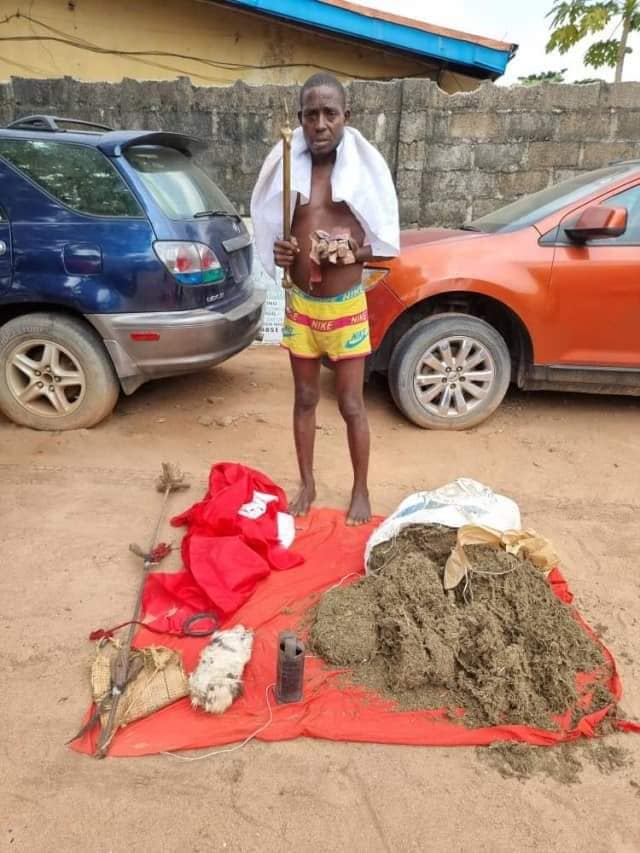
Benneth Okoli, an alleged member of the Eastern Security Network (ESN), was detained in Imo carrying an improvised explosive device (IED).

Mr Abutu Yaro, the Commissioner of Police, confirmed this on Thursday.

”After a meticulous forensic and technical intelligence gathering, the suspect, Benneth Okoli, 49, was detained in his shrine at Akuma in Oru East LGA of Imo, according to a statement from the CP’s office.

“During the examination of the shrine, one locally built IED, charms, and cannabis-like marijuana were discovered.

Read also: Breaking: In Ondo, police prevent a robbery attempt on a bullion truck

“During interrogation, the suspect provided important information and is now assisting the police in apprehending the remainder of his group, who are currently on the run.”

”The arrest comes just a few days after bandits in the region had a run-in with the cops.

The CP despatched the command’s tactical teams led by ACP Benjamin Osuji in response to the attack on the Omuma Police Station in Oru East by bandits thought to be remnants of the proscribed Indigenous People of Biafra (IPOB) and ESN terror organisations.

“The crew was told to conduct a quiet investigation and apprehend the bandits who attacked the police station.”

The CP praised the command’s commanders and troops for their bravery and urged them to keep up the pace.

The CP also expressed gratitude to the people of Imo for their cooperation and requested an all-society approach to maintaining the state’s substantially strengthened security architecture.

Cholera Outbreak: Kano Records 5,221 Cases,169 Deaths

0

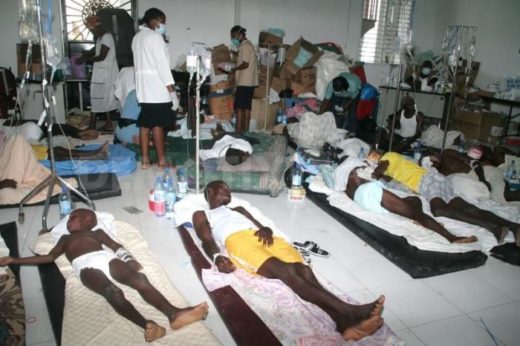
Kano State said it has recorded no fewer than 169 deaths in the state, following the outbreak of cholera that affected 41out of the 44 local government areas of the state.

READ ALSO: Makinde is being urged by a Muslim group to compensate the families of late lawyers

This was disclosed by the Kano State Director of Public Health, Dr. Ashiru Rajab, on Thursday.

Rajab explained that the casualties were recorded within the last three months in the state.

“A total of 5,221 persons were affected by the disease, while about 4,860 had so far been treated and discharged.

” 191 affected persons are currently receiving treatment in various health facilities across the state.

“We have recorded 5,221 cases in the last three months. About 4,860 were treated and discharged. Currently, we have 191 active cases in different facilities across the state, while 169 deaths were recorded across 41 LGAs of the state,” he said.

NCC urges PPP model to bridge digital infrastructure gap

0

To bridge the digital infrastructure gap, the NCC recommends a public-private partnership (PPP) strategy.

The Nigerian Communications Commission (NCC) has proposed the Public-Private Partnership (PPP) model as a means of closing the country’s massive digital infrastructure gap.

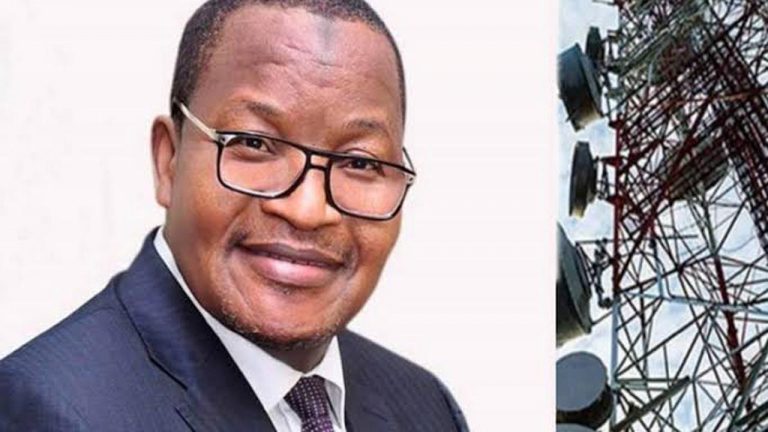
According to Prof. Umar Garba Danbatta, the company’s Executive Vice Chairman and Chief Executive Officer, PPP should be used to build resilient infrastructure that will help the country achieve its digital goals.

Read also: 2023.: CAN advocates for a Christian president

The NCC chief said the concept of PPP has become one of the most commonly used models of collaboration during a keynote during a panel session during a two-day 2021 virtual conference and exhibition on Information Communication Technology and Telecommunications (ICTEL) organized by the Lagos Chamber of Commerce and Industry (LCCI) with the theme: “Disruptions, Resilience, and Governance in Digital Economy.”

Danbatta, whose presentation focused on how Public Private Collaboration (PPC), also known as PPP, is fostering long-term collaboration between the private and public sectors for the advancement of the country’s digital ecosystem, said the importance of PPP in infrastructure development cannot be overstated.

According to him, the bedrock of communal and societal development is adequate, robust, resilient, and functional infrastructure.

Read also: 2023.: CAN advocates for a Christian president

“As a result, in order to meet future challenges, we must upgrade our industries and infrastructure by developing a long-term PPP model that serves all sectors of the economy,” he said.

The government’s concern and search for an alternative means of providing infrastructure for the teeming population, according to Danbatta, is due to the high level of infrastructure deficit and its effect on the country’s socioeconomic development.

He recalled that the Federal Government established the Infrastructure Concession Regulatory Commission (ICRC) in 2005 with the goal of accelerating national infrastructure investment through private sector funding and assisting the Federal Government of Nigeria and its Ministries, Departments, and Agencies (MDAs) in establishing and implementing effective PPP processes.

“It’s encouraging to see state governments adopting PPP models to address infrastructure challenges in their jurisdictions,” Dambatta said.

Read also: NNPC: Mallam Mele Kyari pledged that the current 614-kilometer Ajaokuta-Kaduna-Kano (AKK) gas pipeline project will be completed on time

“If the telecom and ICT sector is the true ‘Infrastructure of Infrastructure,’ as it is often referred to due to its impact, efficiency, and effectiveness on the growth of other sectors, it follows that the telecom sector is the most important sphere in which PPP should be used.

“Intriguingly, a 2012 World Bank report already documented how public-private partnership (PPP) projects have been used to provide broadband access nationally, regionally, or in rural areas to improve broadband access to unserved and underserved locations to improve broadband access to unserved and underserved locations.”


Breaking: A well-known Highlife musician die

0

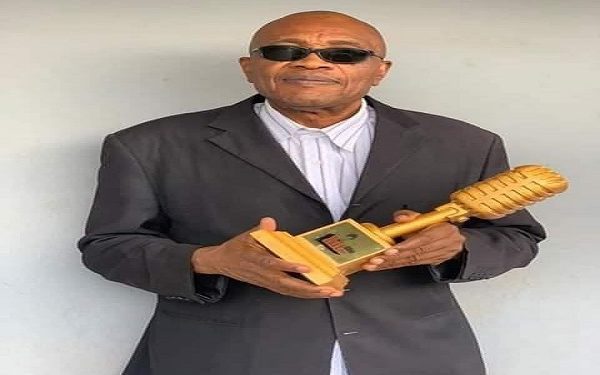
Felix Odey, aka ‘Feladey,’ a veteran Highlife musician, has died.

In the early hours of Thursday, July 29, his death was reported.

Before he died, the multi-talented musician who gave Rex Lawson’s hit song “Sawale” and the succeeding single “Band Boys” national popularity in the 1990s suffered a brief illness.

He will be recognized for his excellent achievements and works in the music business, including the popular and original NTA 2 Channel 5 trademark song.

Since then, condolences have poured in for the late music maestro.

Read also: Breaking: In Ondo, police prevent a robbery attempt on a bullion truck

Makinde is being urged by a Muslim group to compensate the families of late lawyers

0

Makinde is being urged by a Muslim group to compensate the families of late lawyers who were denied judgeships.

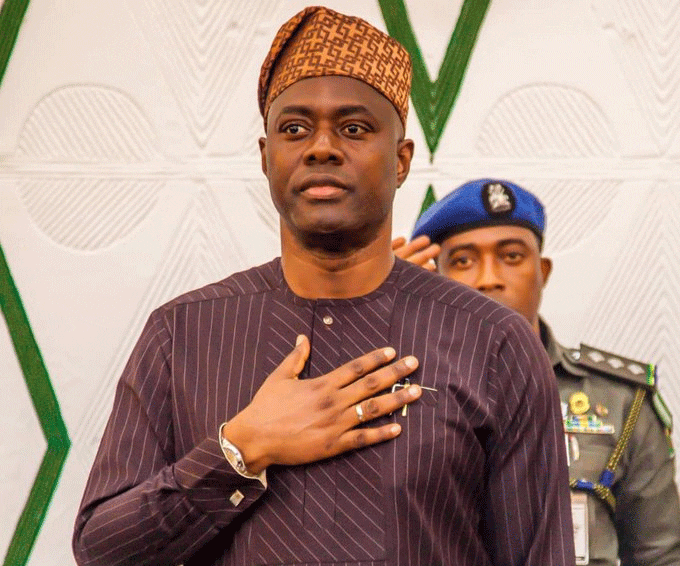
On Thursday, the Political Awareness Group urged the Oyo State Government to honor three Muslim attorneys who were nominated as high court judges but died when Governor Seyi Makinde blocked their confirmation.

Dr. Moruf Yusuf, Vice-Chairman of PAG, an Association of Muslim Professionals and Technocrats for Good Governance, made the appeal during a news conference at Ibadan’s Secretariat, Ososami.

The attorneys’ names were Alhaja Fatima Badirudeen, Mr. Wasiu Adetunji Gbadegesin, and Mr. AbdulRasaq Bolaji Agoro, according to him.
Apart from immortalizing them for depriving them of the prestigious advancement from the bar to the bench, Dr Yusuf believes their families should be appropriately paid, and the Muslim Ummah should be consoled by the Oyo State Government.“It’s terrible to think that the three Judges-denied had finally, and miraculously, given up the ghost. Fatimo passed away in December 2020, Gbadegesin in April 2021, and Bolaji in July 2021. Is being a Muslim a capital offense in Oyo State, Makinde? Now that they’ve all died, it’ll be critical to immortalize them, recompense their families, and offer condolences to the Muslims of Oyo State.”

Dr Yusuf explained that the state had introduced an examination for the first time to fill the three vacant positions of judges of the high court, with a cut-off mark of 70%, and it was agreed that the most qualified applicant in each of the State Judiciary, Ministry of Justice, and Nigeria Bar Association, NBA would be selected.

“Around mid-year 2019, the Government of Oyo State was recommended to nominate three more eligible people to fill the empty position of Judges of the State’s High Courts. As a result, the State Judicial Service Commission sought applications from adequately competent legal practitioners, and 36 lawyers applied. As requested by the then Attorney General of the State, Professor Oyewo, the Commission, chaired by the Chief Judge of the State, conducted a thorough examination for the applicants (first of its kind in the history of the State) in order to meritoriously select the most creditable three of the applicants. The Commission also decided to choose the best competent applicant from each of the State Judiciary, Ministry of Justice, and NBA.”

Read also: Bill introduced in the legislature to extend the term of the chairmen of the FCT council to four years

He said that out of the 36 candidates, Alhaja Badirudeen, Mr. Wasiu Gbadegesin, and Mr. Agoro were the first to be approved by the State Judiciary, Ministry of Justice, and NBA, and questioned why their confirmation by the National Judicial Council was halted by the state government.

“Alhaja Fatima Badirudeen (of blessed memory) was not only a qualified candidate and lawyer with a score of well over 70%, but she was also the State’s Chief Registrar. As a result, she was chosen as one of the three Judges-nominees from the Judiciary. Mr. Wasiu Adetunji Gbadegesin (of blessed memory) was not only a successful applicant and lawyer with a score of well over 70%, but he was also the Solicitor General and Permanent Secretary of the Oyo State Ministry of Justice. As a result, he was chosen as one of the three Judges-nominees from the Ministry. Mr. AbdulRasaq Bolaji Agoro (of blessed memory) has a wide range of abilities. He received a score of well over 80%. He was a wise elder who was also a member of the NBA’s Ibadan Branch. As a result, he was chosen as one of the three Judges who would never be by the Commission from the Nigerian Bar Association. The three successful Judges-nominees were all Muslims, by chance.

Read also: EFCC arrests an ex-governor and his wife on corruption charges

“The Commission forwarded the list of three Judges-nominees to the National Judicial Council for its recommendation to Governor Oluseyi Makinde for appointment as Judges, as provided for in Section 271 (2) of the Constitution. Surprisingly, the then-Attorney General of Oyo State, Prof. Oyewo, petitioned for the list to be removed on the Governor’s orders. Why? The Governor has yet to respond to this query. Prof. Oyewo, on the other hand, justified his behavior by claiming that the duo of Fatimo Badirudeen and Wasiu Gbadegesin, who climbed through the ranks of their cadre to the top, were from the same Oyo community, and that the three Judges-nominee were Muslims. Is it a hardship to be a Muslim?”

Breaking: In Ondo, police prevent a robbery attempt on a bullion truck

0

Armed thieves attempted to attack a bank bullion truck in Ondo State, but were unsuccessful.

The robbery was claimed to have occurred in Ondo town, the seat of the Ondo West Local Government, when the thieves attempted to rob an old generation bank’s bullion truck.

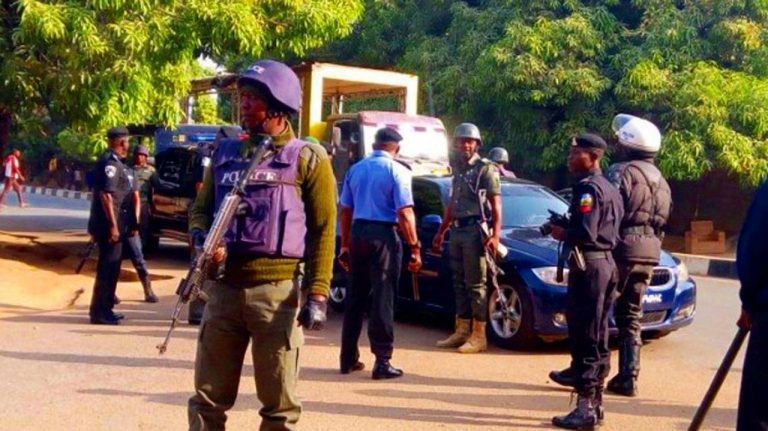
Security personnel were stationed in several areas following the unsuccessful attempt, generating alarm among locals.

Read also: Bill introduced in the legislature to extend the term of the chairmen of the FCT council to four years

“It was a failed attempt on a Bank’s bullion vehicle traveling to Akure,” one of the residents said. One individual was injured and was sent to the hospital. The thieves were unsuccessful, but no arrests have yet been made. “For the time being, the situation is calm.”

DSP Tee-Leo Ikoro, the state’s Police Public Relations Officer, confirmed the event, saying the thieves’ attempt was thwarted.

This comes only two weeks after thieves held a bank in Ilara-Mokin in the state’s Ifedore Local Government Area, killing three people, including journalist Bunmi Afuye.