Home Blog Page 2154

Patrons are appointed by Owode Egba PCRC

0

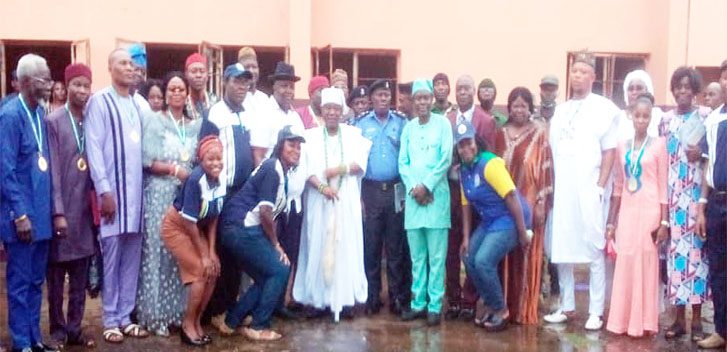
New patrons have been appointed by members of the Owode Egba Police Community Relations Committee (PCRC) to add value to their services.

Despite the country’s current economic difficulties, they have expressed their desire to continue serving humanity without fear or favor.

Pastor Joshua Olanrewaju, Chairman of PCRC, Owode-Egba Area Command, advised members to be more committed while imploring new patrons to put in their best effort to help the group achieve its goals.

Read also: Guinea confirms first Marburg Virus Case in West Africa

Mr. Olukunle Emmanuel Ishola, Chief Babatunde Akeem Safari, Chief Taiwo Alli Balogun, Amb. Babatunde Akeem Safari, Amb. Babatunde Akeem Safari, Amb. Babatunde Akeem Safari, Amb. Babatunde Akeem Safari, Amb. Babatunde Akeem Safari, Amb. Babatunde Akeem Safari, Amb Sir Godwin Nosa Ehigiator, KSM; Engr. Robert Adeleke, Mr. Wasiu Olaitan Adumadeyin, Mr. Wasiu Olaitan Adumadeyin, Mr. Wasiu Olaitan Adumadeyin, Mr. Wasiu Olaitan Adumadeyin Mr. Ohumenou John; Prince Atoba Adewale Taofeeq; Chidi Nnadi; Alhaji Prince Dr. Abdul Rahman T Adeyemi; Suvr. Isijola, Kehinde

This was one of the success stories from the PCRC Week, which ended last Wednesday at Owode Egba Area Command, Obafemi Owode Local Government, Owode, Ogun State.

Mr. David D. Tuksa, the Ogun State Director for the State Security Service (DSS), expressed delight at the PCRC’s achievement in the Command.

“Without a good synergy between the people and the police, no success can be achieved. I’d like to express my heartfelt gratitude. I must say, you guys are doing a fantastic job,” he said.

Read also: Four notorious bandits are killed by troops in the Kaduna forest valley

Mr. Osofisan Abimbola, Deputy Secretary, Owode-Egba Area Command, explained why patrons are handpicked and what they do for the command. He said the patrons are chosen not only for monetary support but also to equip the group with immense moral sensibility.

“Sometimes minor issues become major issues as a result of escalating disputes. They don’t always need to be taken to the police station to settle. Our royal fathers, priests, Imam, and patrons are all present. These people come together to support and build a society that is healthy and free of crises. “However, we do require some of them for financial assistance,” he explained.

Dangote, Africa’s richest man, may forfeit a refinery project to a Nigerian debt collection agency due to rising debts and a long delay

0

The Dangote Oil Refinery, Africa’s largest oil refinery, may soon face a deep financial crisis as a result of a $7 billion debt burden, indicating that the project could be taken over by the Assets Management Corporation of Nigeria (AMCON).

The Dangote Refinery is an oil refinery under construction in Lekki, Nigeria, owned by the Dangote Group.

The Dangote Group, founded by Aliko Dangote, Africa’s richest man, is a Nigerian multinational industrial conglomerate with interests in a variety of sectors in Nigeria and across Africa.

According to a Money Management Series analysis, the Dangote Oil Refinery, a 650,000-barrel-per-day (BPD) integrated refinery project under construction in the Lekki Free Zone of Lagos, Nigeria, was set to start production in 2016 with $3.3 billion in financing secured in 2013.

Dangote Group’s debt to financial institutions is expected to reach $8.4 billion by 2025, with the refinery expected to start operations in 2025.

Read also: To Obasanjo, a Yoruba group says, “Ignore the Igboho issue and stand for a united Nigeria.”

This debt burden has now risen to $7 billion, with debt servicing costing nearly $700 million per year.

The refinery’s completion date has been pushed back eight times.

While some may argue that this is out of character for Dangote Industries and their numerous projects in various industries, the problem is systemic.

Poor planning, underpayment of contractors, and a lack of proper project management with over 40 contractors on site, according to a contractor at the delayed refinery project who spoke on the condition of anonymity, have caused the majority of the delays. He also stated that none of the 40 are willing to be commissioned because there is no clear delegation of duties and over-decentralization, resulting in complete chaos.

With the constant delays, some financing banks have already called in their loans, fearing a liquidity crisis, while others are ecstatic at the prospect of huge interest payments once the refinery is operational.

Dangote has been able to restructure the facilities from various local and international banks twice so far, but most banks have flatly refused to do so a third time, with principal repayment and annual interest payments due.

The Nigerian National Petroleum Corporation (NNPC) has contributed $3.8 billion to the project as part of the federal government’s 20% equity stake, with $1 billion in cash and the remaining $2.8 billion in crude supply.

Analysts have pointed out, however, that the Dangote refinery is overvalued at $19 billion due to NNPC’s 20% equity of $3.8 billion.

When Aliko Dangote unveiled early refinery plans in September 2013 and announced that he had secured $3.3 billion in financing for the project, the refinery was expected to cost $9 billion, with $3 billion coming from the Dangote Group and the rest coming from commercial loans, with production starting in 2016.

However, due to the refinery’s relocation to Lekki, excavation and infrastructure preparation did not begin until 2016, and the planned completion date was pushed back to late 2018.

The refinery is expected to be mechanically complete in late 2019 and commissioned in early 2020, according to Dangote, who started major structural work in July 2017. Experts, on the other hand, believe that the project will take at least twice as long as Dangote has stated, with refining capability not expected until 2025.

Read also: War against insecurity and COAS Yahaya’s leadership style

Meanwhile, Timipre Sylva, Minister of State for Petroleum Resources, reiterated last week that the Federal Executive Council (FEC) had approved the NNPC’s purchase of a 20% minority stake in the Dangote Petroleum and Petro-Chemical Refinery.

While briefing State House correspondents after the virtual FEC meeting presided over by Vice President Yemi Osinbajo at the Presidential Villa last Wednesday, Sylva stated that the acquisition cost $2.76 billion.

“The Executive Council also approved the NNPC’s $2.76 billion acquisition of a 20% minority stake in the Dangote Petroleum and Petro-Chemical Refineries,” he said.

Industry observers have described this development as unusual because $2.76 billion is less than 20% of the Dangote project, which is valued at $16 billion by the sponsor. Analysts have expressed dissatisfaction with the disparity between the project’s value and the NNPC’s funding, based on the $16 billion value.

Mr. Johnson Chukwu, the Managing Director of Cowry Assets Management, told MMS Plus that the banks would not face any challenges in funding the Dangote refinery because Dangote would be responsible for the interest payments.

“I don’t believe the banks will be unable to meet their liquidity needs as a result of the Dangote refinery funds. Finally, if the investment is financially viable, it should be able to pay off the debt when it begins operations. I believe the banks involved in this project were aware of some of these constraints and did not use their balance sheets to fund the Dangote refinery. I don’t think any bank will face liquidity issues as a result of their investment in the Dangote refinery. If there is a problem, it will be caused by Dangote, but it should be resolved once the project gets off the ground,” he said.

Chukwu speculated that NNPC may be looking at an enterprise valuation while the other value could be the net value when it comes to the possibility that it over-valued or under-valued the project in its 20 percent equity.

Read also: US government filed a 97,000-page document in court as evidence of alleged fraud against Abidemi Rufai’s aide

“The enterprise value of the project could be higher than Dangote’s investment. However, because I was not involved in the decision-making process, anything I say will be entirely speculative,” he explained.

Despite the Nigerian government’s strong support for the refinery project, the billionaire’s finances have deteriorated to the point where even income from his other businesses may not be enough to cover the interest rates, let alone the principal.

The $8.4 billion debt represents 75% of Dangote’s $11.1 billion net worth, and Africa’s richest man now needs to find creative ways to keep his business afloat as the refinery project continues to be delayed.

Guinea confirms first Marburg Virus Case in West Africa

0

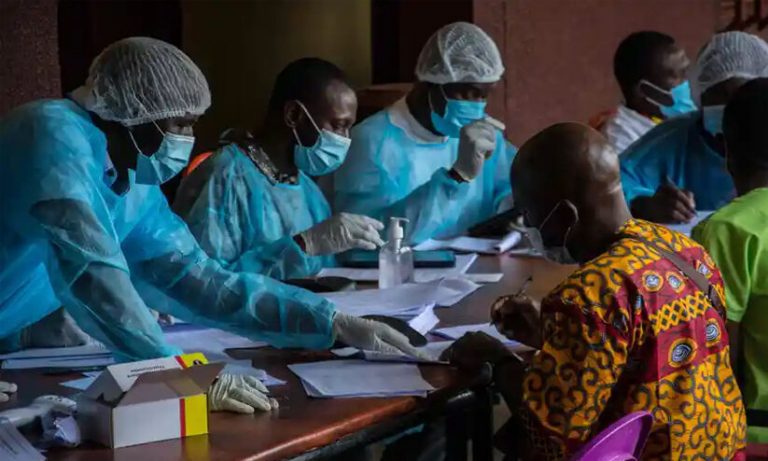
Guinean health officials have confirmed the first case of Marburg in West Africa, a highly infectious disease related to the virus that causes Ebola.

The virus needed to be “stopped in its tracks,” according to the World Health Organization (WHO).

Fruit bats transmit the Marburg virus disease to humans, which spreads through bodily fluids.

Fever and bleeding disorders are common symptoms of this severe, often fatal illness.

Samples taken from the patient, who has since died in Guinea, were tested in the country’s laboratories, and the Marburg virus was found to be present.

Read also: War against insecurity and COAS Yahaya’s leadership style

The virus, according to WHO’s Dr Matshidiso Moeti, has the potential to spread far and wide.

People who may have come into contact with the man are being sought, and the systems in place in Guinea and neighboring countries to control recent Ebola outbreaks are being reactivated in response to the Marburg virus.

Ibrahim, BBC/Lateefah

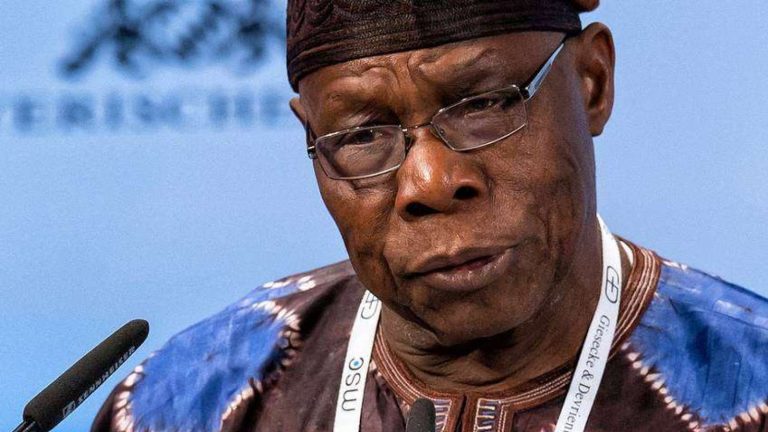
To Obasanjo, a Yoruba group says, “Ignore the Igboho issue and stand for a united Nigeria.”

0

A socio-cultural group, Yoruba for One Nigeria Forum (YONF), has asked former President Olusegun Obasanjo to clear his name following reports that he is lobbying the Benin Republic to protect Sunday Adeyemo, better known as Igboho, from prosecution.

In a statement signed by Seun Adebayo Lawal, the group’s national president, titled “Olusegun Obasanjo is the greatest beneficiary of Nigeria’s Unity,” the group said the call was necessary because of the significant benefits the former president and the Yoruba nation as a whole have reaped from a united Nigeria.

“Our organization has been alerted to media reports that former President Olusegun Obasanjo is on a mission in Benin Republic to protect Sunday Adeyemo, also known as Igboho, who is currently facing multiple criminal charges in the country and is on the DSS wanted list in Nigeria. “Recall that the self-described violent agitator has been on the run since the Department of State Services invited him,” the group said.

Read also: Group warns Amnesty International, NGOs against demoralizing troops curtailing insecurity

“While we hope that this unpatriotic act is untrue, we expect the former President to make a clear statement on the allegations so that Nigerians are aware of his position. This is significant because of the potential for misunderstandings as a result of his silence on the subject. As a native Yoruba indigenous organization, we believe that Obasanjo’s alleged move should be censored in order to set the record straight for posterity and history.

“In its current form, Nigerian history records the Yoruba people as the greatest beneficiaries of the country’s unity since independence. Former President Olusegun Obasanjo is a Yoruba man who, ironically, has reaped the greatest benefits from Nigeria’s unity. Obasanjo is the only Nigerian of pure Yoruba ancestry to have ever ruled the country, both militarily and politically. What else could Nigeria have given him and the Yoruba people? What were the Yoruba nation’s dues that Obasanjo could not pay during his time as President and Head of State? He doesn’t need to be reminded of the importance of Nigeria’s unity in his rise to power, both as a military and civilian President; therefore, the least he owes this country is to preach peace, promote, and advocate for a single, united, and inseparable Nigeria.

Read also: CSOs adopt House of Reps Resolution on NEDC

“If Obasanjo truly wants to build a sustainable and united Nigeria, he should put his international contacts to work for the Nigerian State and its people. Patriotic Nigerians will not forgive Obasanjo or any other group for attempting to sabotage legitimate efforts by the Nigerian government to ensure that Igboho is brought to justice. “As a Yoruba indigenous group, we will not look the other way when those who have profited from Nigeria’s unity turn to sabotage government peace efforts,” the group added. We urge former President Olusegun Obasanjo to use his international influence to promote the country’s unity. After all, he received those benefits as a result of Nigeria’s unity.”

“Perhaps it is too late for anyone in former President Olusegun Obasanjo’s echelon to consider a divided Nigeria at this time. As a result, we must issue this Clarion Call to all Yoruba indigenous people to show solidarity with the Nigerian government in order to realize the long-awaited dream of a united, peaceful, and prosperous Nigeria,” it said.

The dilemma of the NYSC

0

By Ernest Adadu

I do not know whether the NYSC acknowledges the ‘fame’ it has achieved as a Government Agency that has trudged on for close to five decades. Secondly, I do not know whether critics of the Scheme have carried out any objective assessment on whether the NYSC should continue to exist or not. Thirdly, I am not certain what role, if any, the 2023 Elections have in the current travails facing the NYSC.

In as much as I do not have answers to the above, I know that the NYSC was established as part of solutions in a period of crisis in the country. Controversies and protests against its establishment soon followed. Therefore, it may be safe to advise the Scheme to strengthen the resolve to live and probably die mired in controversies.

Currently, there is a lot of debate on the Scheme with the most uncharitable, calling for its outright proscription. The debates revolve around the many aspects of the Scheme . For instance, many have argued that the current insecurity bedevilling the country makes it ‘unwise’ for the government to continue exposing the lives of innocent children to danger. Others argue that the poor state of Nigerian roads makes it ‘reckless’ for the Government to continue subjecting graduate youths to travel on these roads to various states of posting for National Service.

Others say the conduct of Orientation exercise for Corps members amid the resurgence of the third wave of COVID-19 is reckless. In fact, agents of fake news have since found another avenue for selling their stock in trade spreading news of killing of corps members and the infection of a large but unspecified number with COVID-19, as well as other calamities befalling corps members.

At the heart of this debate however is the dilemma of the NYSC as to whether these resentments represent the opinion of the silent majority in the country. Whether the opinions are right or wrong, the sentiments from most Government officials at all levels, beneficiaries of the services of corps members and even Countries who have approached the NYSC for technical assistance in the establishment of similar institution gives the NYSC the impression that it is delivering in its mandate of serving as catalyst for national development especially at the grassroots.

A case in point is that those at the helm of affairs of the NYSC are always under pressure from Governments at various levels and other private entities requiring the services of Corps members.

For instance, at the onset of the Boko Haram insurgency in the North-east, Management of the NYSC took the wise decision of suspending the posting and conduct of orientation exercise in the affected States in the North-east.

However, the NYSC Management was under serious pressure from Governments of the affected States for the return of the posting and hosting of the orientation of the corps members in such states. I recall when this was extended to one of states, the then governor of the State, took the NYSC up and demanded the immediate return of NYSC activities in his State.

While this resulted in the restoration of activities of the corps members in the affected States, it also made the return of posting and conduct of orientation in those states – albeit, with the dislodgement of the orientation exercise to other States.

Even though NYSC orientation exercise for corps members posted to security challenged takes, place in relatively more peaceful states, the Governors of the dislodged states and/or State Government officials have always visited them on camp, with a view to encouraging them not to seek redeployment out of the states. These visits have always yielded the desired results as a good number of the corps members opt to stay back and serve their fatherland in their original states of deployment.

Therefore, whereas it is not the question of the importance and contributions of the NYSC that is in question, it is perhaps the divisions that were hitherto buried through its establishment and the many successes the Country has recorded in the close to the five decades of the existence of the NYSC that is giving people who do not mean well for the Country cause for concern. It may also be safe to speculate that some Nigerians who for one reason or another circumvented the law by not participating in the one-year compulsory national service and have their eyes on elective or appointive positions in 2023 may be part of those sponsoring these campaigns so that the NYSC will be weakened and/or distracted.

In the end, the dilemma of the NYSC is, do we scrap it so that Nigeria will live in peace again? Do we scrap it so that nobody will die again? Do we scrap it so that there won’t be crises in any part of the country again? Do we scrap it so that southerners will have no reason coming to the north, and vice versa? Do we scrap it so that nobody will be kidnapped again? Do we scrap it so that the Corona virus will not spread? Maybe, without the NYSC, Nigeria will be better off – just maybe.

If power, education and other sectors receive the critical attention the NYSC is receiving from the polity, I think Nigeria would have attained greater heights. The NYSC has been subjected to all shades of opinion from the mundane to the downright hypocritical which does nothing but add to the dilemma of whether to heed the calls of the detractors or the overall interest of bringing development across all sectors through the services of the corps members.

Amidst all these, I recommend that results of opinion surveys, as well as statements and comments from individuals, governments and non-governmental organizations on the contributions of the NYSC be compiled and made available to the public. Also, the statistics of non-corps members involved in road accidents and those of the corps members. The NYSC should also provide, alongside the NCDC, the statistics on corona virus infections on corps members and non-corps members or even the number of students kidnapped right in their schools.

Only if we can decipher all these, then we will know that our problem is not the Scheme. Finally, the Federal Government should mandate the NYSC Authorities to publish names of those that have issues with the Scheme along with names of VIPs that attempted to circumvent the system for us to know who are behind the recent attacks on the NYSC. This, if done, will make the public get a clearer picture of the motives behind the recent rantings and whether they are justified.

Adadu is a researcher in peace and conflict resolution writing from Abuja.

War against insecurity and COAS Yahaya’s leadership style

0

 By Nkechi Odoma

The presence of peace isn’t truly the absence of war, but the reflection of true leadership and effective security measures existence.

Whenever I look back in history and try to select a renowned exemplary military leader, Napoléon Bonaparte is the first person who comes to my mind. His recorded feats and accomplishments are testament to how great the man was. Lt. Gen. Farouk Yahaya indeed has many similarities to the great Napoléon Bonaparte. Like the French military and political leader, Yahaya is an exceptional military strategist and a firm leader. He is also a motivator and possesses contagious charisma. I call it contagious owing to the effect it has had on the Nigerian Army .

Since his appointment, Gen. Yahaya has shown us why Nigerians should trust and support the decisions made by the current administration. He is doing everything to meet the expectations that has been set down for him. He has not only managed to follow standards set by his predecessors, but has also managed to set his own standards in the operations of the army in a joint environment with other sistee agencies.

The shape and architecture of the Nigerian Army is now taking a new look. It is currently in the process of undergoing such modernization that would be sure to finally make the Nigerian Army stand out even amongst the likes of the world powers. Nigeria is the giant of Africa, and it is only fitting that it’s military should be one of the very best in the world.

The ideas and innovations being pumped into the military by Yahaya is going a long way in ensuring the armed forces is more than capable of facing all evils of insecurity and banditry plaguing the country.

In the past, inadequate cooperation amongst security agencies has been one of the major causes of the drawbacks suffered by the Nigerian armed forces . This has had mutilating effects on not just the operations of the military but also on the collective interest of the nation especially regarding National security. Since Gen. Farouk’s appointment, there has never been as much collaboration and teamwork as there is currently between the security agencies. The war against insurgency cannot be won by a single unit but rather by a united group of units who work in one accord.

Gen. Yahaya’s pragmatic modus operandi has been the key factor in the current winning form of the Army in a joint environment . Despite the fact that his appointment is still recent, he has already seen to the military gaining an upper hand in the fight against terrorism. Many leaders who assume such important positions begin to miss it right from the start, but that isn’t the case with this man. He collected the mantle handed over to him with such ease that one would think that he was a reincarnated chief of army staff from the past.

Gen. Yahaya has so far ensured that the military carries out its activities and operations while abiding by municipal and international humanitarian principles and laws. He has so far ensured that the military protects the human rights of every individual.

It is without doubt that at this current pace, the Nigerian Army would soon go through massive revolution that would see it become a major force to contend with in the world. The Chinese did it, the Soviets did it, Nigeria can also do it. Gen. Yahaya has begun to lay down the footprint for such massive evolution. I strongly believe that very soon, insecurity will be a thing of the past. Bandits and terrorists or whatever they call themselves would no longer have a habitat where they can breed evil. They would no longer act with so much violence and impunity without their heads being cut clean by the sword of justice of the Nigerian army. Gen Yahaya is in the process of polishing and sharpening the old rusty blade of that sword.

There are very few exceptional leaders who lead from the front, and Gen Yahaya is one of them. He has chosen to lead from the trenches to make sure that the army totally wipes out terrorism and other national security distractions created for the Nigerian troops in the aftermath of the 2019 general elections. He has been visiting the troops to motivate them and ascertain what their challenges might be and what they might need to carry out their duties effectively. This action has helped motivate and raise the moral of the troops.

One is not surprised at the gains being recorded by the Nigerian Army and other sister agencies lately. One is also not surprised at the high morale of troops.
The new chief is living up to his calling. Leading from the front and trenches. Following the standard set by his predecessors and proving to be a dependable officer.

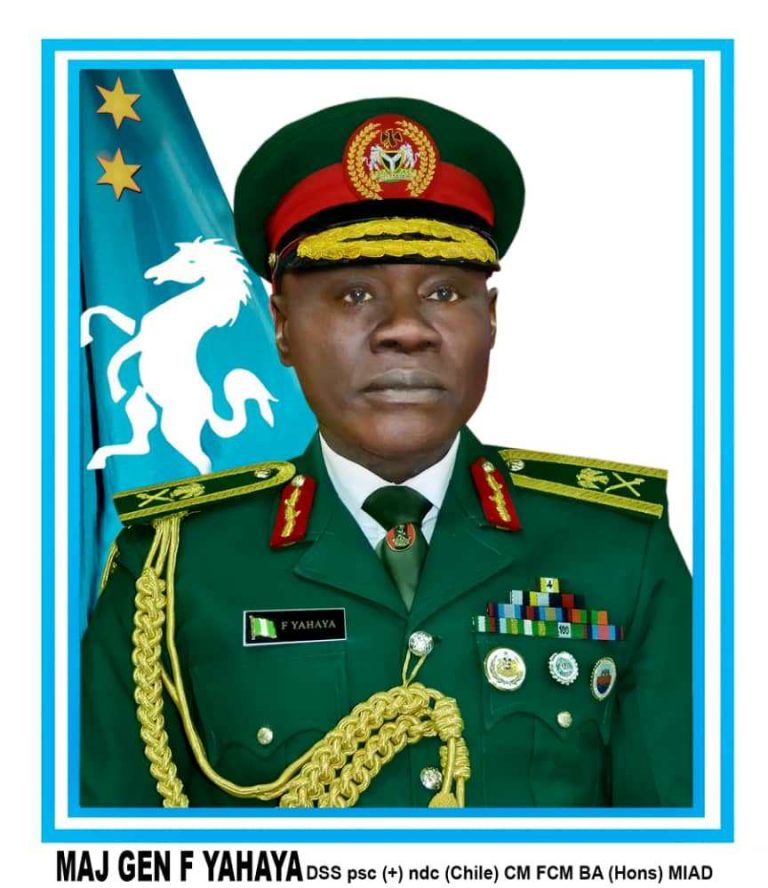
The Chief of Army Staff (COAS), Maj.-Gen. Farouk Yahaya, has proven to have the requisite requirements by showing a wealth of experience and commitment in working in synergy with other service chiefs to fight insecurity in the country.

It is worthy of note that those who deliberately manipulate facts for the purpose of sabotaging the military should be mindful that only a thin line separates what they see to be harmless mischief and commission of crimes.
For the sake of tranquillity in the nation, we advise detractors and their agents to leave the Chief of Army Staff alone, so that he can give maximum concentration to his works. He needs to be given the enough support to prove himself beyond all doubts as an exceptional leader, who is ever ready to give optimal discharge of his duty any time the clarion call to action is being heard. This is a man that will never compromise for terrorists to take over the country, because he holds the interest of the country very dear to his heart.

The Chief of Army Staff (COAS), Maj.-Gen. Farouk Yahaya is a relentless, and hardworking mission-accomplisher. He needs to sustain the tempo.I sincerely commend the good job that Gen Farouk has been doing and I urge him to sustain this tempo and lead the army to victory against all adversaries that it would be faced with. I urge him not to relent in the good fight and bring the war to a final and conclusive victory in favour of the Nigerian armed forces and Mr. President’s vow to stamp out insecurity . I also urge my fellow Nigerians to abstain from dissension and give the new chief of army staff all the support he needs to carry out the mandate we the Nigerian people handed over to him in order to make this nation a safe place for all Nigerians to live in. We must all support the new COAS as he leads the troops to final victory. God Bless Nigeria.

Odoma wrote from Abuja.

CSOs adopt House of Reps Resolution on NEDC

0

… urge agency to uphold transparency

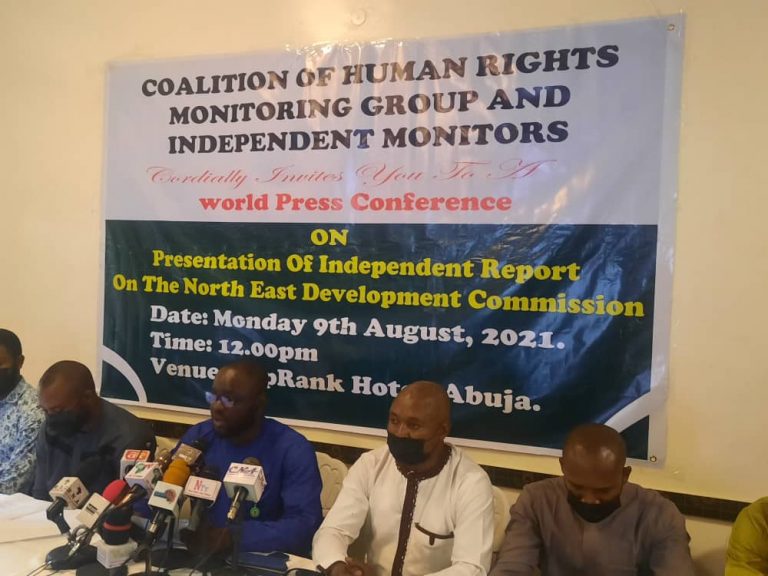
No fewer than 21 civil society organisations have adopted the resolution of the House of Representatives on the North East Development Commission (NEDC).

The CSOs under the auspices of the Coalition of Human Rights Groups and Independent Monitors, therefore, urged the commission to sustainin its mantra of accountability and transparency.

The group, which made this known at a press conference on Monday in Abuja, said it came to this conclusion after a systematic appraisal of the activities of the agency.

In a report co-signed by convener, Comrade Bassey Ukpong, secretary, Barr Joy Gonzwak alongside the heads of other groups, the CSOs hailed the NEDC for its strategic interventions, urging international partners to maintain their relationship with the agency.

According to the report, the NEDC under the leadership of its MD/CEO, Mohammed G. Alkali, has been outstanding in the areas of accountability/ transparency, project implementation, organisational structure among others.

The group said after it embarked on an assessment tour of the region, it discovered an overwhelming presence of the agency in most communities, especially in terms of infrastructures.

On the report of corruption, the CSOs said the allegations was sponsored by some disgruntled politicians given Alkali’s tough stance with regards to the finances of the agency.

As part of its recommendation, the group however, urged the NEDC to constantly engage critical media constituency in carrying out of its various interventions in North-East Nigeria.

Read Full Report Below

The Coalition of Human Rights Groups and Independent Monitors is a coalition of 21 civil Iociety organisations devoted to the preservation of human rights, which includes but not limited to scrutinizing the efforts of government and her institutions in the conservation of the rights of its citizens as enshrined in the Constitution, as well as the actions of the government in the rendering of humanitarian assistance to communities in need across the country.

In fulfilment of one of its strategic mandates, the Coalition of Human Rights Groups and Independent Monitors undertook a systematic appraisal of the North East Development Commission in its efforts to address the developmental challenges in North-East Nigeria, occasioned by several years of Boko Haram insurgency.

Its strategic importance informed the choice of North East Development Commission in addressing the humanitarian challenges in North-East Nigeria and also to put issues in proper perspective for the general public to form their opinion on the journey so far in the NEDC through its various intervention in addressing the myriad of developmental challenges in North-East Nigeria.

For the records, The North-East Development Commission (NEDC) is the focal organisation charged with the responsibility to assess, coordinate, harmonise and report on all intervention programs and initiatives by the Federal Government or any of its Ministries, Departments and Agencies (MDAs), States; and other Development Partners and for the implementation of all programs and initiatives for the North East states; Adamawa, Bauchi, Borno, Gombe, Taraba, Yobe, respectively.

Key Governance Indices:

In assessing the impact of the NEDC since inception, the Coalition of Human Rights Groups and Independent Monitors scrutinised the NEDC using the following governance indices:

Organisational Structure

The act establishing the NEDC was explicit in its organisational structure, which was designed to ensure productivity and ensure checks and balances amongst the various departments in the organisation. After a detailed scrutiny of the organisation l s operations, it was realised that the various departments operate under an open policy that emphasizes accountability and transparency.

The Managing Director of the NEDC though the administrative head of the organisation, is also subjected to scrutiny and supervision by the board that constitutes Nigerians with impeccable personalities that have distinguished themselves in their various careers. The management team also consists of three executive directors and representatives of each geopolitical zones in the country.

From our findings, it was observed that there had been an excellent relationship between the management staff and the generality of the staffers. Duties are well spelt out, and the various checks and balances mechanism in place ensures strict adherence to the rules.

Project Implementation:

It was also observed that the NEDC has in place a robust project conception and implementation policy that ensures that projects embarked on achieve the desired objectives. This is indeed a plus for the organisation in the sense that white elephant projects are not undertaken, which would lead to a waste of the resources of the organisation.

The organisation also has in place a project monitoring team that consists of staffers from all the departments. It was designed to ensure that the project monitoring team must certify such before monies are disbursed for projects that reach completion. It is instructive to state that the managing director is not a part of the project monitoring team. In his capacity as the managing director, he only relies on the judgement of the project monitoring team.

Accountability and Transparency:

From our findings, the NEDC is a bastion of accountability and transparency. This much was evident in the way and manner the resources of the agency are judiciously utilized. This much was gathered after extensive interaction with contractors, staffers, religious and community leaders in communities in North-East states, and other relevant stakeholders.

It is not business as usual in the agency due to the robust institutional framework that ensures that processes are adhered to. All staffers are constantly reminded of the overarching objective of the agency, which is bringing succour to the people of North-East Nigeria that have suffered years of hardship and socio-economic losses as a result of the Boko Haram insurgency.

Commendable Feats:

In the appraisal of the activities of the NEDC since inception, the Coalition of Human Rights Groups and Independent Monitors undertook an on the spot visit to select communities in North-East Nigeria, and the result was overwhelmingly positive. The impact of the NEDC in North-East Nigeria within a short period was very commendable as its presence was felt in almost all communities straddling the states in North-East Nigeria.

The provision of critical infrastructures topped the list of projects embarked on by the NEDC. The educational and health sectors were also not left out. It was recorded that the NEDC has been proactive in the areas mentioned above. Our findings also revealed that the NEDC has continually engaged the host communities in their various projects. It was discovered that it put in place to accommodate inputs from beneficiary communities. In most instances, this methodology has given them a sense of belonging, which is mainly responsible for the successes recorded in achieving the agency’s mandate.

Stories of Corruption at the NEDC:

The Coalition of Human Rights Groups and Independent Monitors also took out time to investigate some of the allegations of corrupt practices at the agency. It was realised that the allegations were of mischief purposes. The generality of the allegations was not based on any substantial evidence but rather insinuations, given the tough stance of the managing director with regards to the finances of the agency. It was also observed that some politicians with ulterior motives were responsible for the news making the rounds as it appears it is not business as usual, a prevalent practice in most government agencies.

Recommendations:

As a result of the appraisal of the operations of the NEDC with regards fulfilling its mandate, e herby make the following recommendations:

That the NEDC should constantly engage the critical media constituency in the carrying out of its various interventions in North-East Nigeria.

That the NEDC should convoke a periodic town hall meeting with critical stakeholders to keep them abreast of its activities.

The NEDC should strengthen its public relations unit through training to strengthen its capacity for strategic communication.

The NEDC should set up advocacy units to drum support from international partners for its activities in North-East Nigeria.

Conclusion:

In conclusion, the Coalition of Human Rights Groups and Independent Monitors gives the management of the NEDC a pass mark for its strategic interventions in North-East Nigeria. We are also calling on international partners to continue to have confidence in the activities of the NEDC as one of the best and most accountable intervention agencies in Nigeria, given the above mentioned.
Group warns Amnesty International, NGOs against demoralizing troops curtailing insecurity

0


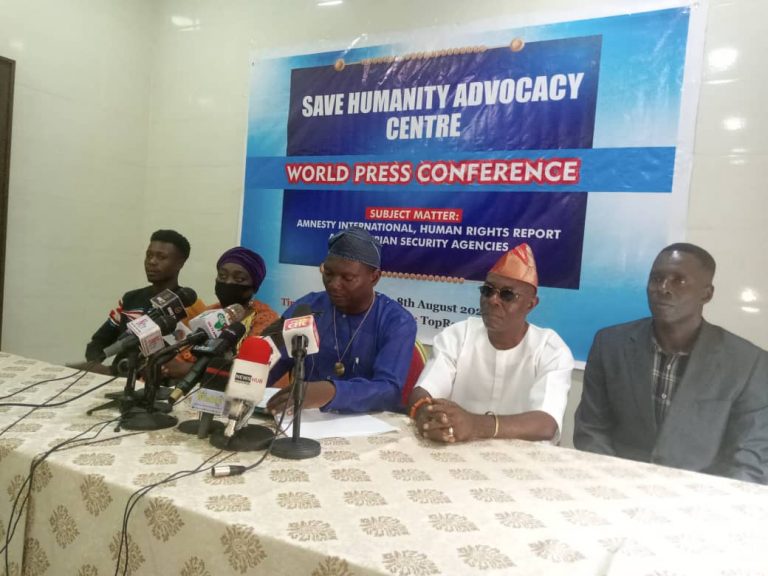
The Save Humanity Advocacy Centre (SHAC) has cautioned Amnesty International and other non-governmental organisations in the country against attempts to distract and undermine the troops on the frontline.

According to the centre, the allegation of excessive use of force by security agents in the South-East is another scheme targeted at dampening the morale of security personnel helping to restore sanity across the country .

The group made this known at a press conference on Monday in Abuja to address the systematic attack on the Armed Forces’ efforts in addressing the security challenges in the country.

Comrade Paul Ikyado, the Executive Director of the SHAC, said that the rights group have consistently displayed deep-seated anger against the security agencies in Nigeria for inexplicable reasons.

Ikyado noted that in the past, this has given insurgents and other criminal elements the impetus to further carry out deadly attacks on innocent Nigerians, including women and children in the North-East

The group wondered why the heinous crimes committed by the Eastern Security Network, the militant wing of the proscribed Indigenous People of Biafra has been overlooked by the rights group.

The SHAC, therefore, warned Amnesty International that any more act of sabotage against troops will not be tolerated.

It further charged the leadership of the various security agencies in the country to continue to give their best in this critical point by not succumbing to the cheap blackmail perpetrated by Amnesty

The centre, however, advised Amnesty International to be circumspect in its public outings and retrace its steps, calling a spade a spade and not taking sides with terrorists and criminal groups under the guise of human rights advocates

Read the full statement below:

The leadership of the Save Humanity Advocacy Centre warmly welcomes you all to this press conference put together to put issues in proper perspectives with regards to the recent press statement credited to Amnesty International on the excessive use of force by security operatives in South-East Nigeria.

Amnesty International has consistently displayed deep-seated anger against the security agencies in Nigeria for inexplicable reasons. It is on record that Amnesty International, over the years, have engaged in acts that undermine national security in Nigeria and the efforts of the security agencies in addressing the security challenges in the country.
This act is worrisome because whenever the security agencies are recording gains in the fight against insurgency and other acts of criminalities, Amnesty International would come up with trumped-up allegations that aim to cause a distraction for the security agencies.

The recent press statement alleged that the security agencies employed excessive force in South-East Nigeria. This is an example of the ignoble role of Amnesty International in festering conflict in Nigeria.

This trend has in times past given insurgents and other criminal elements the impetus to further carry out deadly attacks on innocent Nigerians, including women and children in North-East Nigeria and other parts of the country.

The Save Humanity Advocacy Centre frowns at such disposition from an organization that claims to be advocating for respect for human rights across the globe, whereas it has been covertly providing intellectual support for terrorist groups and fueling conflict in countries where they operate.

This recent case is indeed an assault on the sensibilities of Nigerians and a systematic attack on the Armed Forces’ efforts in addressing the security challenges in the country. This is indeed condemnable and an act of terrorism in itself.

The Save Humanity Advocacy Centre is indeed alarmed that Amnesty International could issue such a statement accusing the Armed Forces of using excessive force in its operations to rid South-East Nigeria of criminal elements.

The tactic support for the Eastern Security Network by Amnesty International leaves a lot to the imagination in the sense that they have either by commission or omission refused to condemn the atrocities perpetrated by this group of an armed militia group, whose activities have resulted in arson, looting, and destruction of government infrastructures in some states in South-East Nigeria.

Amnesty International has also feigned ignorance to the heinous crimes committed by the Eastern Security Network, the militant wing of the proscribed Indigenous People of Biafra and tactically given their support for the rise of militancy and insurrection in Nigeria.

Amnesty International is quick to assert “human rights violations and crimes under international law in Anambra, Imo, Ebonyi and Abia state from January 2021”, but it is blind to the burning down of police stations, courts, killing of security agents, and attack on government properties by members of the Eastern Security Network.

This is indeed conceivable and a reason for the generality of Nigerians to see through the veiled deceit in the activities of Amnesty International in Nigeria over the years.

The Save Humanity Advocacy Centre views the statement of Amnesty International as deliberate and too much of a coincidence in its constant criticism of the Armed Forces, especially in times where gains are recorded in the prosecution of the war against crime and criminalities in Nigeria. It is thus succinct to state that enough is enough for Amnesty International and their conspirators in Nigeria, for we shall no longer tolerate acts of sabotage.

The Save Humanity Advocacy Centre indeed stands with the renewed efforts of the security agencies in addressing the security challenges in South-East and Nigeria at large, especially when the terrorist, bandits and other criminal elements are already feeling the heat.

We consequently charge the leadership of the various security agencies in the country to continue to give their best in this critical point of our existence by not succumbing to the cheap blackmail perpetrated by Amnesty International and their sponsors.

The Save Humanity Advocacy Centre also encourages those patriotic and dedicated security operatives in the line of duty to continue to render selfless service to the country by not been distracted by the disjointed narrative of Amnesty International that aims to give support to terrorists and militant groups in the country.

The Save Humanity Advocacy Centre wishes to use this medium to advise Amnesty International to be circumspect in its public outings and retrace its steps by calling a spade a spade and not taking sides with terrorists and criminal groups under the guise of human rights advocates. The era of masquerading as human rights advocates is gone as Nigerians are now aware of their antics and more committed to resisting their shenanigans.

The Save Humanity Advocacy Centre extends its appreciation to all present. It wishes to pledge its unalloyed support to the security agencies in their noble effort at the riding country of terrorist and criminal elements.
Thank you all, and God bless Nigeria.

Abba Kyari and the troubles of extradition by Pelumi Olajengbesi Esq.: What the law says

0

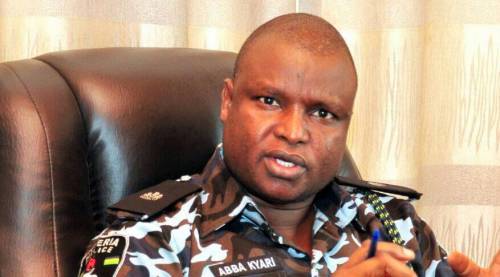
The Federal Bureau of Investigation (FBI) released a 69-page court document on July 28 revealing that Deputy Commissioner of Police (DCP) Abba Kyari had been under intense investigation as an accomplice of Ramon Olorunwa Abbas, also known as Hushuppi, who had already pleaded guilty to fraud related charges. According to the document, Abba Kyari is one of six people accused of being involved in a $1.1 million international fraud scheme. The FBI asked a US District Court in California to order Kyari’s arrest within 10 days in a case marked 2:21-CR-00203, USA VS Abba Alhaji Kyari, dated April 29, 2021, and the court agreed. As a result, Kyari is wanted in the United States for criminal prosecution.

Several resource persons have argued that a Nigerian citizen who enjoys the full force and protection of the constitution can be extradited to the United States to face criminal charges, despite the fact that Nigeria is a sovereign state and, under the doctrine of sovereignty, no state or country can interfere in the activities of another state or arrest its citizens. As a result, it is critical to comprehend what extradition entails.

Extradition is the legal process by which a person accused or convicted of a crime is transferred to the country (Receiving State) where he or she has been declared wanted for trial or sentenced to serve a sentence by a court of law. Extradition is the process of returning someone accused of a crime by a different legal authority to the requesting authority for trial or punishment, as defined by the Court of Appeal in George Udeozor v Federal Republic of Nigeria CA/L/376/05. To begin extradition proceedings, a person must be wanted for trial and have a warrant issued by a court requiring that the person be brought to court to answer criminal allegations.

Read also: Breaking: The arrest warrant for Abba Kyari has not been served on us – AGF

It is important to remember that no country can exist in isolation, as all countries engage in one or two bilateral relationships in order to strengthen their economic strength, military capability, and international influence, which are the three goals of sovereign nations. Countries sign or enter treaties to satisfy these needs, resulting in a legally binding document containing terms and agreements to ensure and maintain cordial relations at all times.

Nigeria has an extradition treaty with the US, which was signed on December 22, 1931, by the United Kingdom, Nigeria’s colonial masters, and the United States. It went into effect on June 24, 1935, and was applicable to all British colonies, including Nigeria.


The Extradition Act of 1966, which was enacted on December 31, 1966 and went into effect in January of 1967, is the primary law governing extradition in Nigeria. It was passed to repeal all previous extradition laws enacted by or applicable to Nigeria, as well as to establish a more comprehensive legal framework for the extradition of fugitive offenders. The Federal Ministry of Justice also issued the Extradition Modification Order 2014, Federal High Court (Extradition Proceedings) Rules 2015, and Guidelines. The court in General Sani Abacha & 3 Ors v Chief Gani Fawhenmi (supra) emphasized the applicable laws to extradition in Nigeria, holding, among other things, that: the extradition treaty between the United States of America and the United Kingdom, dated December 22, 1931, and made applicable to Nigeria by a Legal Instrument on June 24, 1935, is an existing law by virtue of the provisions of section 315(4); (B). As a result, Nigeria remains bound by the treaty, which was ratified in subsequent legislation such as the Extradition Act of 1966, the (Extradition Modification) Order, 2014, the Extradition Act (Proceedings) Rules, 2015, and other International Protocols.

Read also: Abba Kyari replied to claims linking him to infamous fraudster Hushpuppi

According to Article 1 of the Treaty, the contracting parties agreed to hand over persons in their territories who are accused or convicted of committing specific crimes within the jurisdiction of one of the parties. Then, under Article 3 of the Treaty, there are offenses for which accused persons or convicts can be extradited in accordance with the agreement, including obtaining money or other assets through fraudulent means and bribery, including receiving bribes, both of which are elements of the crime for which Kyari has been declared wanted in the United States.


It’s worth noting that the Dual Criminality Principle, which governs extradition, states that offenses are extraditable if they’re punishable under both parties’ laws by imprisonment or other deprivation of liberty for at least two years or a more severe penalty. When extradition proceedings are based on a treaty, the extraditable offenses will be specified in the treaty. By virtue of section 1, the Advance Fee Fraud and Other Related Offences Act of Nigeria 2006 criminalizes the same offence that Abba Kyari is accused of in the United States, putting it in line with this principle.


The US must formally apply to Nigeria for Kyari’s extradition through the Attorney General’s office, which will first determine whether there is sufficient evidence to initiate an extradition proceeding in the Federal High Court. In the case of GEORGE UZOR V FEDERAL REPUBLIC OF NIGERIA (ibid), it was emphasized that the Attorney General, not the court, has the responsibility and powers to determine the conditionality for granting an extradition request. The Attorney General, who is also the Chief Legal Officer of the Federal Republic of Nigeria, has the authority to initiate extradition proceedings under the Act’s provisions. The court emphasized that it is the AG’s responsibility to receive a request for a fugitive criminal’s surrender in Nigeria.

Read also: Dignitaries converged on Abuja to honour late Abba Kyari at book launch

However, not all circumstances or alleged crimes committed by an accused person will result in extradition. Article 6 states that a fugitive criminal may not be surrendered for extradition if the crime for which extradition is sought is of a political nature, or if the subject can show that the demand for extradition was made to punish him for a political crime. However, it is clear from the FBI document that the crime for which Abba Kyari is wanted is not a political crime. As a result, if sufficient evidence in connection with the charge is presented in a Nigerian court, the court will issue an extradition order in accordance with Article 9.


It’s worth noting that this isn’t the first time Nigeria has faced an extradition request. Extradition proceedings were filed in some cases, and the application was found to have merit, and the accused persons were extradited to face their crimes, while others were not. The following are some of these examples:

mmanuel Ehidiamhen Okoyomon

The United Kingdom requested that he be extradited so that he could face charges under the Prevention of Corruption Act 1906 of the English Law. The court found the application to be valid, and an order for his extradition was also issued.

Adedeji Adeniran

Adedeji Adeniran, 56, was extradited to the United States District Court for the Northern District of Florida. On November 3, he arrived in the United States. Adeniran was the leader of a criminal organization that perpetrated a $4.1 million bank fraud, mail fraud, and wire fraud scheme that involved 42 victims.

Kingsley Edgebe

The Netherlands filed an extradition request to bring him to face the charges brought against him by the National Public Prosecutor’s Office in Rotterdam, which include: Commission of Human Trafficking, Commission of Human Smuggling, Falsification of Travel Documents, Acts of Forgery of Documents, Abduction of Minors from the Authority Having Legal Custody/Supervision over them, Partition of Minors from the Authority Having Legal Custody/Supervision over them, Partition The court dismissed the extradition application as incompetent after a thorough examination of Section 1 of the Extradition Act and Section 12 of the Constitution.

Read also: US government filed a 97,000-page document in court as evidence of alleged fraud against Abidemi Rufai’s aide


Lawal Babafemi

Lawal Olaniyi Babafemi, alias Ayatollah Mustapha, was extradited to the United States to face charges related to al-Qaeda in the Arabian Peninsula, a militant Islamist group, according to documents. He was allegedly paid $8,600 (N3.5 million) to return to Nigeria and recruit English-speaking individuals for AQAP’s English-language media operation. He was extradited to the United States and charged with conspiracy to provide material support to a foreign terrorist organization and illegal firearms use.

Buruji Kashamu

In Nigeria, Buruji Kashamu was a senator. Kashamu was charged with conspiracy to import heroin, a controlled substance, into the United States by a grand jury in 1998. Three of his alleged co-conspirators provided incriminating evidence, which led to his indictment. Kashamu, on the other hand, has denied the allegations. The US was adamant in its demand that Kashamu be extradited to the country. Kashamu was ordered to answer his drug charges by a US Court of Appeal in Chicago, Illinois, in 2016. In light of existing judgments and orders in favor of the plaintiff that had gone unchallenged, the Federal High Court in Abuja ruled that neither the Federal Government nor any of its agents could validly initiate extradition proceedings against Kashamu. However, he died of COVID-19 complications in August 2020.


It is clear from the foregoing that the Nigerian government has an extradition treaty with the United States.

US government filed a 97,000-page document in court as evidence of alleged fraud against Abidemi Rufai’s aide

0

The US government has filed a 97,000-page document in court as evidence of alleged fraud against Abidemi Rufai, an aide to Ogun State Governor Dapo Abiodun who has been suspended.

According to court filings obtained by Premium Times, the prosecution presented the evidence on July 26 in the US District Court for the Western District of Washington in Tacoma.

Both the prosecution and the defense have requested that the August 31 trial date be postponed, citing the “voluminous and complex” nature of the evidence presented.

On August 3, 2021, the agreed-upon application was filed.

The document also stated that “much of the material may need to be redacted before it can be provided to the defendant.”

Read also: The Senate is not in a position to create new states, according to a spokesman

The government is currently executing two additional electronic search warrants, according to the document, because much of the material “contains personal identifying information or sensitive financial information.”

On May 24, 2021, Rufai was apprehended in New York while attempting to flee the country.

During the Covid-19 pandemic last year, prosecutors say he stole $350,000 in unemployment benefits from the Washington State Employment Security Department (ESD) using the identities of more than 100 Washington residents.