Home Blog Page 2154

15 Delta pilgrims tested positive for Coronavirus

0

The Commissioner blames Buhari for herders’ and farmers’ clashes.
No fewer than 15 of 315 pilgrims from Delta State, who should have been airlifted to Jordan, have tested positive for the COVID-19 virus, while 77 of them were unable to travel due to the late release of their test results.
The Commissioner of Information, Charles Aniagwu, who disclosed this yesterday in Asaba, said 223 travelled from the Port Harcourt International Airport.

Aniagwu, however, expressed dismay with the decision of the Nigerian Christian Pilgrims Commission (NCPC) to centralise COVID-19 tests for intending pilgrims in the state.

He said the centralised COVID-19 test ordered by the NCPC caused untold hardship for intending pilgrims, as 77 of them were not airlifted to Jordan because of the haphazard release of their test results.

Aniagwu said it was disappointing for the intending pilgrims, especially as the state had accredited centres for the COVID-19 test.

Read also: Forensic audit reveals massive mismanagement of N6 trillion in NDDC funds

He apologised to the affected pilgrims for the inconveniences suffered due to the botched arrangement and assured them that efforts were being made to remedy the situation. Meanwhile

Aniagwu blamed President Muhammadu Buhari for not providing adequate leadership in resolving the crisis of open grazing, which has resulted in constant clashes between herders and farmers across the country.

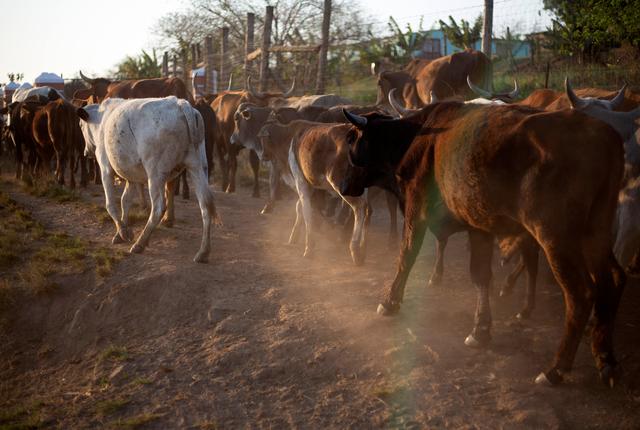
Aniagwu, who spoke on The Morning Show on Arise TV yesterday, said the anti-grazing law was not targeted at any section of society, but to provide healthy living among stakeholders in the farming and cattle rearing businesses.

“Let’s remove politics and primordial sentiments from the crisis. I do not blame the individuals who are opposed to the ban on open grazing. I blame the President, because I assume that he should be able to understand. Those who advise him have a clearer picture of what is obtained in advanced societies.

“Subjecting the cattle to some form of unwarranted exercise is not healthy, because the cattle are shedding weight and, therefore, are not able to provide all the proteins we desire, as they are usually subjected to wandering thousands of kilometres,” he stated.

He said the state of Texas in the United States of America alone has more cattle than the entire Nigeria, yet cattle roam the streets and cause havoc on other people’s means of livelihood, especially farmers.
Buhari is to blame for herder and farmer clashes, according to the commissioner.
A total of 15 of the 315 Delta State pilgrims who were supposed to be airlifted to Jordan tested positive for the COVID-19 virus, with 77 of them unable to travel due to the late release of their test results.
223 people traveled from the Port Harcourt International Airport, according to Commissioner of Information Charles Aniagwu, who revealed this yesterday in Asaba.

Aniagwu, on the other hand, was disappointed by the Nigerian Christian Pilgrims Commission’s (NCPC) decision to centralize COVID-19 tests for aspiring pilgrims in the state.

According to him, the NCPC’s centralised COVID-19 test caused untold hardship for intending pilgrims, as 77 of them were unable to fly to Jordan due to the haphazard release of their test results.

It was disappointing for the intending pilgrims, according to Aniagwu, especially since the state had accredited centers for the COVID-19 test.

Read also: 4 Banks Owe FG N10.6bn in Customs Duty — Reps

He expressed regret to the pilgrims who had been inconvenienced as a result of the faulty arrangement and assured them that efforts were being made to rectify the situation.

President Muhammadu Buhari, according to Aniagwu, has failed to provide adequate leadership in resolving the open grazing crisis, which has resulted in constant clashes between herders and farmers across the country.

Aniagwu, who spoke on Arise TV’s The Morning Show yesterday, said the anti-grazing law was not intended to target any particular group of people, but rather to promote healthy living among stakeholders in the farming and cattle-rearing industries.

“Let’s get politics and primal emotions out of this crisis.” I don’t blame those who oppose an outright ban on open grazing. I hold the President responsible because I believe he should be able to comprehend. Those who advise him have a better understanding of how advanced societies work.

“Subjecting the cattle to unwarranted exercise is not healthy,” he explained, “because the cattle are losing weight and, as a result, are unable to provide all of the proteins we require, as they are typically subjected to wandering thousands of kilometers.”

He claims that the state of Texas in the United States of America alone has more cattle than Nigeria, yet cattle roam the streets, wreaking havoc on other people’s livelihoods, particularly farmers’.

JUST IN: How Buhari stopped the PDP from selling NNPC to cronies — Adesina

0

Last week, the news hit us like a storm. The Nigerian National Petroleum Corporation (NNPC) earned a profit for the first time in its 44-year existence.

Following the conclusion of the mandatory Annual Audit process, net profit after tax was N287 billion in 2020. What year is it? 2020. The year of the Coronavirus epidemic, when much of the globe was under lockdown, including Nigeria! And here was NNPC, making a profit for the first time in its existence. What caused that to happen? How is it possible?

It occurred because, for the first time in the country’s and the NNPC’s history, there is a President who is not utilizing the place as a personal automated teller machine. He is neither amassing vast sums of money by fiat, nor is he issuing orders for any underhanded transactions. That President also serves as the Minister of Petroleum Resources.

Before we get into how Muhammadu Buhari broke the curse, examine how the skeptics reacted to the good news. They claimed it didn’t happen at first. The news came, and it was met with silence. They did not extensively disseminate it on social media, and several conventional media outlets did not even print it. Those that did so unwillingly made it seem more like an obituary notice. What a place!

Remember, they stated they would sell NNPC before the 2019 elections, which they expected to win. They were defeated. Flat. And, understandably, would-be sellers and potential purchasers were dissatisfied that the oil company had earned a profit: under Buhari.

Read Also:  TMG calls on government to tackle security issues ahead of 2023 elections

After first attempting to minimize the news, they started to poke holes in it. Profit existed solely on paper and did not exist in reality. It was money that should have gone into the Federation Account but was kept back by the NNPC. Blah, blah, blah, blah, blah, blah, blah, bla It was the identical NNPC they intended to sell to their pals.

I appreciate two friends and patriots’ internet contributions to the progress. According to novelist and publisher Simbo Olorunfemi, “to constantly question good news while never hesitating to embrace bad news is an expressive evidence of the condition of mind.”

Profound. Deep. Consider this food for thought. Oil prices had been skyrocketing for years, and NNPC had been losing money, they said. They were shocked to learn that the same company earned a profit during a lockdown year. Thomases! Doubters. I wouldn’t believe that until I saw the nail marks on his hands and the spear wound on his side. “Then he said to Thomas! Be not deafeningly deafeningly deafeningly deaf

Kurtis Adigba, a lawyer and ‘one man battalion’ supporting Buhari and Nigeria, makes his second internet intervention. He said, “Hate is not a stock or equity in which we must have a stake.” It yields rewards solely in the form of murder and destruction.”

Yes. They despised the news of NNPC profit since it came from an unexpected source. How could he? Who gave him permission? Nothing we don’t do can be done by anybody else.

So, how did Buhari pull it off? What did he do differently to make NNPC a successful corporation? Allow me to go back to this article I wrote in November of last year, which addresses the most of the questions. It was titled The Essential Buhari: NNPC GMD’s Testimony:

Read Also:  FG will make a subsidy provision in 2022, according to the NNPC boss

Mallam Mele Kolo Kyari, Group Managing Director of Nigeria National Petroleum Corporation (NNPC), met with energy editors from various media platforms last Friday. Yours truly had been invited.

I am now President Muhammadu Buhari’s media advisor, but I am still primarily a newspaperman. There is nothing I like more. And, by God’s grace, when done in government, the media still beckons. So I felt quite at home at the NNPC event, which was intended to keep the media up to speed on the latest advances in the petroleum sector.

When a General Officer Commanding (GOC) changes command, the brigade commanders and all other brass hats follow. There were managing directors of subsidiaries, group general managers, and Who’s Who in NNPC at that excursion with the GMD. The data gathered was worth its weight in gold.

Mele Kyari said that NNPC is transitioning from an integrated oil and gas corporation to an energy firm. And, in contrast to the secrecy of the past, the energy company’s activities are as clear as possible. In his own words:

“Over the last year and a half, we have attempted to fulfill that commitment by continuing to publish our Monthly Financial and Operations Report (MFOR). To the best of my knowledge, no business does this.

“We have taken our transparency push a step further by releasing our Audited Financial Statements for the 2018 and 2019 fiscal years on our website for all interested parties to witness the remarkable turnaround in our performance, which recorded 99.8 percent year on year.”

What company was the GMD referring to? NNPC? Didn’t we know it as the automated teller machine of presidents, oil ministers, and any political party in power, as well as the target of looting by those who operate it? However, under President Muhammadu Buhari, it is a new energy company, since a new broom has arrived in town and is cleaning so thoroughly. There will be more on it later.

Read Also:  Gov. Yahaya, Revenue Allocation: Why We Deserve an Upward Review

Kyari said that no information regarding NNPC activities could be obtained that was not previously available in the public domain, adding, “I can say that we have maintained our promise in terms of openness and accountability.” We will keep working until the term “opacity” is no longer connected with the Nigerian oil and gas industry.”

According to the GMD, some of NNPC’s exploration achievements include commercial quantities of oil discovered in the Upper Benue Trough and a very high potential of oil discovery in the Kolmani River III. While seismic data gathering in the Bida Basin continues, “we are resuming exploratory activities in the Chad Basin.”

The world is shifting its emphasis away from petroleum and toward gas as the energy of the future, and the NNPC CEO said that Nigeria would not be left behind:

“We are actively investing in gas to capitalize on the energy shift and prepare Nigeria for the future in the face of the declining fortunes of petroleum liquids.”

“You may be familiar with the NLNG Train 7 and other gas infrastructure projects…

All of this is intended to ensure that Nigeria takes its due position in the developing global energy system, in which natural gas is expected to play a critical role.”

The Yuletide season is often marked by acute fuel shortages. However, the GMD stated that the energy firm has strong plans in place to ensure consistent fuel delivery throughout the nation. , “and we are certain that we will maintain zero gasoline lines during the Christmas and New Year holiday season until 2021.”

Read also:  Bandits kidnap 73 students in gov’s community, prompting Matawalle to call for self-defense

Can there be a deal between the media and the NNPC at this time without deregulating fuel prices? It would undoubtedly be insufficient. “Even though gasoline prices in Niger are as high as N464/liter and more than twice our N160/litre range in other West African nations, we will continue to guarantee Nigerians benefit from the lowest comparable pricing in West Africa and beyond,” says the GMD.

He provided comparable fuel prices in various West African nations as of November 16, 2020, as follows: Senegal, N549. Mali, Chad, Sierra Leone, N274, Liberia, N328, Ghana, N325, Cameroon, N446, and many more countries.

The GMD took advantage of the parley to refute accusations that NNPC neglected to submit monies that should have accrued to the Federation and unlawfully removed cash from the NLNG Dividends Account.

“Such an arrangement is not feasible under the TSA (Treasury Single Account) structure,” he said.

In addition, he said that President Muhammadu Buhari, who also serves as Minister of Petroleum, “has never made any demand of us, has never asked for a single item for himself, or for any individual.”

“Whenever I meet him, and we need to make a choice, he simply says, ‘Is this in the interest of the average Nigerian?’” he said. Is it in our country’s best interests?’ He grants his approbation once we can justify it. He has never asked for anything personal.”

What about in this Nigeria? A President would not issue instructions to the NNPC to cut shortcuts and pull out millions of dollars to finance private projects or just store such money away? This Buhari is certainly unusual, a great example of probity, openness, and accountability. It’s no surprise that the Hausa guy refers to him as Mai Gaskiya (the honest one).

He was in charge of the military. For more than three years, he served as Minister of Oil. For 20 months, he was the President of the United States. Chairman of the Petroleum Trust Fund For the last six years, he has served as President. Despite this, he does not own a single gas station, much alone an oil company. Do they still manufacture things like this? I have my doubts.

Read Also:  CBN chose Bitt as the technical partner for the CBDC project

I remember Mr Babatunde Raji Fashola, former two-term Governor of Lagos State, testifying as Minister of Power, Works, and Housing. He said that not once, not even half of the time, did President Buhari send anybody to him for any sort of favor, nor did he show preference for anyone. And I’ll ask again: do they still manufacture them like this? I have my doubts.

A last reminder. I had paid a social call to the President at his house one night. It was about 8 p.m., and there were just two of us in his waiting room. The other guy is ex-this, ex-that in the nation, having held a variety of high-ranking posts. “Look at this vast place,” he said. There were just two of us waiting to meet the Big Boss. It wasn’t always like this. This area would be like a market until about 3 a.m. every day, as people came to make deals and get a piece of the National cake. President Buhari, on the other hand, makes no deals. That is why there are just two of us here.”

What a gentleman! What a variety of testimonies! They don’t manufacture things like these anymore, I’m sure. Unless they don’t?
 

Ranches in some countries are larger than states in Nigeria: Bagudu

0

Governor of Kebbi State, Atiku Bagudu, claims that some countries have ranches larger than some Nigerian states.

On Channel Television, he said this while discussing the farmers-herders conflict.

Bagudu said that mapping out grazing routes will help to identify the scale of the herder-farmer crisis, thus justifying President Muhammadu Buhari’s order on grazing reserves.

Buhari recently appointed a committee to examine 368 grazing sites in 25 states to assess the extent of encroachment.

In some parts of the country, this was met with fierce opposition.

However, Bagudu stated that the president’s directive does not rule out the possibility of ranching.

Read also: ASUU threatened to sue SSS for assaulting member

“The committee’s job is to find grazing routes and map them with the help of the states.” It’s not about reclaiming grazing routes; it’s about determining the scope of the problem.

“An audit of grazing reserves is something Mr. President is interested in.” It’s a voluntary and cooperative effort between the states. People claim we discussed ranching. But what exactly is a ranch? Ranching takes place on a piece of land, not in the air.

” Ranches are comparable to grazing reserves in size. Some ranches in some countries, such as Australia, are larger than some Nigerian states.

“How do you know what’s available, what can be supported to host those roving, herding communities that require modernization assistance?”

The governor went on to say that the Fulanis are victims of banditry as well, but that many of their stories go untold.

He claimed that many Fulani people are decent and peaceful, but that some Nigerians do not listen to the Fulani side before accusing them of crimes.

“I’ve met with a number of Fulani communities in my state who have told me that they, too, are victims.” They are the first to be kidnapped and have their castles robbed.

“It’s easier for a drunk child or someone abusing drugs to kidnap his cousin or sister and demand cattle be sold or money be given to him in a community where there is no road, no police, no infrastructure.”

Read also: Forensic audit reveals massive mismanagement of N6 trillion in NDDC funds

They are the primary victims of kidnapping, which is carried out by Fulanis and non-Fulanis who have banded together to form criminal gangs.

Cattle rustling is a crime committed against people who transport or own cattle. Many Fulani are unavoidably victims, and they are impoverished as a result.

“We don’t even hear their stories,” says the narrator. We don’t hear their side of the story. We simply believe they are complicit. No, they aren’t. “The vast majority of them are peaceful, decent people trying to make a living,” he continued.

Buhari praises Boss Mustapha, who is 65 years old

0
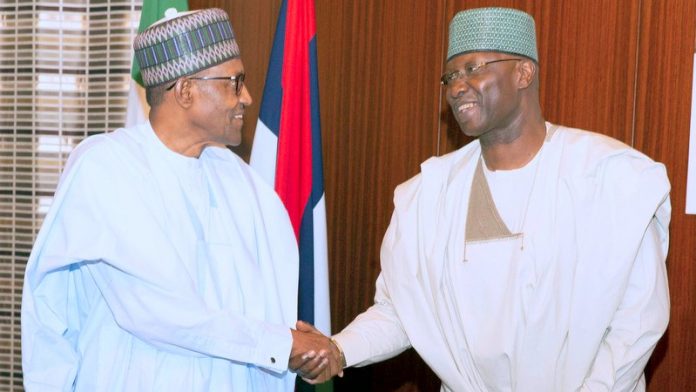
President Muhammadu Buhari in a handshake with the SGF Mr. Boss Mustapha during an audience with Founder of Dana Air the State House, Abuja. PHOTO; SUNDAY AGHAEZE. JULY 3 2019.

President Muhammadu Buhari has praised the nation’s COVID-19 management under Secretary to the Government of the Federation, Boss Mustapha, as a committed public worker.

Buhari made this known in a statement on the occasion of Mustapha’s 65th birthday celebration on Friday in Abuja, according to Garba Shehu, the President’s spokesperson.

“Since his appointment as SGF, my regard and admiration for Mustapha has grown even greater and deeper because of the passion and intensity with which he performs his job,” the president said.

Read Also:  ASUU threatened to sue SSS for assaulting member

“Mr Mustapha is a very skilled individual who has the trust and support of his colleagues.”

Mr. Buhari praised the SGF for “playing a significant role in the nation’s unprecedented achievement in fighting the COVID-19 epidemic.”

He encouraged “other public employees to take a page out of Boss Mustapha’s book, who performs his work with enthusiasm and an extraordinary aptitude for details.”

CBN denies claims made by the Senate Finance Committee that it did not remit 80 percent of its operational surpluses to CRF

0

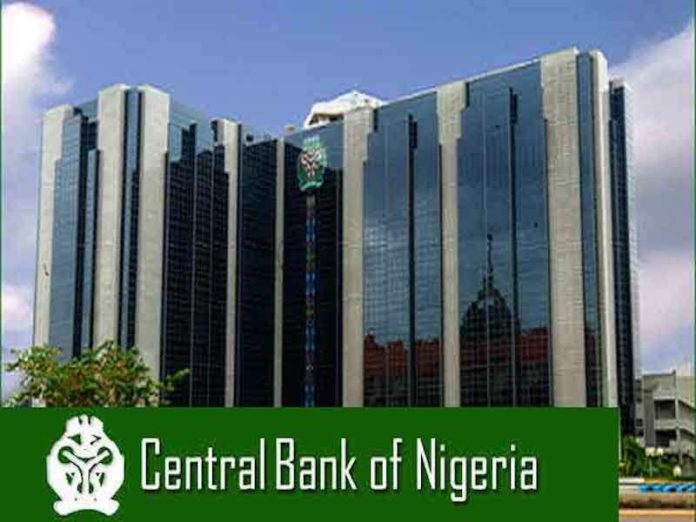
The Central Bank of Nigeria (CBN) has denied claims made by the Senate Finance Committee that it did not remit 80 percent of its operational surpluses to the Consolidated Revenue Fund (CRF) in the last five years.

At an interactive session with revenue-generating agencies, the Chairman of the Committee on Finance, Solomon Adeola Olamilekan (APC Lagos West), said: “Nigeria would not have had the problem of insufficient revenue to fund its annual budget if revenue-generating agencies were remitting 80 percent of their operational surpluses into the CRF as required by the Fiscal Responsibility Act.”

“Specifically, the Central Bank of Nigeria has not remitted any revenue from its operational surpluses into the Consolidated Revenue Fund in the last five years, despite having a yearly budget of N2.3 trillion.”

But, in a swift response, Dr. Kingsley Obiora, the CBN’s Deputy Governor in charge of Economic Policy, debunked the claim, claiming that 80 percent of the Apex bank’s operational surpluses have always been remitted to the CRF on a yearly basis.

Read also: EFCC designates Lekki as a hotbed of cybercrime in Nigeria

He explained that the remittance is made in accordance with the Fiscal Responsibility Act rather than the CBN Act, which requires a 75 percent remittance.

“With all due respect to the Senate and, in particular, this committee, the CBN had never defaulted on the remittance of its operational surpluses as a law-abiding government agency.”

“Despite the fact that the CBN Act only requires us to remit 75 percent,” he said, “we do this on a yearly basis as required by the Fiscal Responsibility Act.”

The committee’s Chairman, on the other hand, has given the CBN until Friday this week to produce documentary evidence of its remittances from the previous five years.

He also requested that the Apex Bank produce its audited financial statements for the previous five years, as well as its monetary policy position paper on the 2022-2024 Medium Term Expenditure Framework (MTEF) and Fiscal Strategy Paper that the committee is considering.

“Whoever seeks equity must do so with clean hands.” Since you have declared in front of the entire world that CBN has been remitting 80% of operational surpluses to CRF, we need to see the documentary evidence to put the controversy to rest.

He directed, “Let’s have these documents by 11:00 a.m. on Friday.”

The committee chairman’s attempt to compel the Director General of the Budget Office, Mr. Benjamin Akabueze, to confirm or deny the CBN’s claims was unsuccessful, as Akabueze stated that verification will be determined through an ongoing process.

Why Lawmakers Will Not Support Cannabis Legalization – Marwa

0

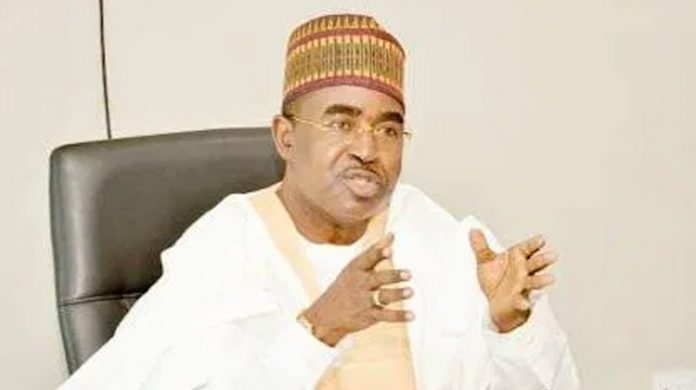
Brig Gen. Buba Marwa (rtd), Chairman of the National Drug Law Enforcement Agency (NDLEA), has said that any member of the National Assembly who supports legislation legalizing cannabis usage would find it impossible to visit his or her district.

Marwa told State House reporters about this after meeting with President Muhammadu Buhari at the Presidential Villa in Abuja.

According to him, the anti-drug campaign is being carried out in schools, and he laments the fact that children are starting to use drugs as early as elementary school.

“Now, the World Health Organization has stated cannabis damages the brain and changes brain function,” he added. It destabilizes and influences behavior. It also has an effect on the body’s organs and, at some time, may lead to death.

“So, although we applaud those who seek to legalize it for financial benefit, we must exercise caution in reconciling it with life. So it comes down to money vs life. And, as of now, science has not progressed to the point where it can reduce the THC content of cannabis to zero.

“As a result, cannabis is detrimental to human health and a hazard to society. Its legalization must never be permitted. Furthermore, Nigeria has the largest number of cannabis users in the world, with 10.6 million. Isn’t it tragic?

“We should be the best in science, technology, mathematics, physics, and other areas that are regarded as the best; that is what we need.

Read Also:  EFCC designates Lekki as a hotbed of cybercrime in Nigeria

“We can never support legalization, and I don’t see how the National Assembly would pass the act because I know 90 percent or more of the Honorable and Distinguished members of the National Assembly are aware of the implications of this legalization, and they dare not return to their constituencies if anyone signs legalization because we are seeing the implications on the ground.

“Cannabis and narcotics are destroying the young and the families. By the grace of God, it would not be legalized.”

Marwa said that he addressed the idea of constructing barracks for NDLEA agents in each of the federation’s 36 states.

“Finally, and most significantly, I brought up the subject of barracks. The NDLEA has been around for 32 years. All other agencies, including the armed forces, police, customs, and immigration,

Except for the NDLEA, all of the road safety agencies have estates and barracks.

“And today, because of the dangerous nature of the job that we perform, we capture and imprison the offenders and then live among them. When you send agents into the jungle to track down criminals, they will be encouraged if they know their own families are safe in a barracks nearby.

Read Also:  NDDC audit report reveals 13,000 abandoned projects in the Niger Delta: Akpabio

“Clearly, we had a good reaction on that, for which we are thankful, and we look forward to carrying it out as quickly as possible. “I’m confident the economy will allow,” he said.

When asked where the barracks will be located, he stated, “We have, as you know, personnel in 36 states of the Federation and FCT, therefore, we expect barracks in all the locations that as we have to travel the country, the budgetary provisions is something that I will not comment on at this point.”

When asked whether he has received any threats since taking office, the NDLEA chief said, “Several times, it’s practically a daily occurrence since my phone number is available.” Messages can arrive via relatives, coworkers, and occasionally individuals we don’t know but who reside in the area. Having said that, we also take precautions.”

CBN chose Bitt as the technical partner for the CBDC project

0

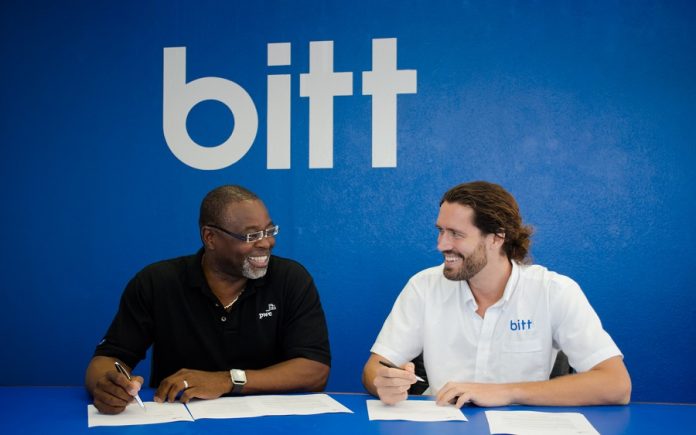
The Central Bank of Nigeria (CBN) has chosen Bitt Inc., a Barbados-based fintech firm, as the technical partner for its Central Bank Digital Currency, dubbed eNaira, which is set to launch later this year.

Bitt was chosen from a pool of highly competitive bidders for its technological expertise, efficiency, platform security, interoperability, and implementation experience.

CBN will choose Bitt based on the company’s proven and tested digital currency experience, which is already in use in several Eastern Caribbean countries. Bitt was instrumental in the development and successful launch of the Eastern Caribbean Central Bank’s (ECCB) CBDC pilot in April 2021.

The CBDC will enable increased cross-border trade, accelerated financial inclusion, cheaper and faster remittance inflows, easier targeted social interventions, and improvements in monetary policy effectiveness, payment system efficiency, and tax collection, according to CBN Governor Godwin Emefiele.

When compared to existing mechanisms such as wire transfers, cheques, inter-bank transfers, bill payment, and so on, CBDCs enable lower-cost transactions, lowering the overall cost of doing business.

Following the bank’s decision to digitize the Naira in 2017, the Nigerian CBDC pilot, dubbed Project Giant, was the result of extensive research and explorations. More than 85 percent of Central Banks are now considering adopting digital currencies in their countries, prompting the CBN’s decision.

Read also: Gov. Yahaya, Revenue Allocation: Why We Deserve an Upward Review

CBDCs are expected to save Central Banks up to 90% on the costs of minting and issuing physical notes and coins, as well as secure transportation, storage, and distribution, as well as the collection and replacement of damaged notes and coins.

The cryptographically produced digital currencies can also be traced because they have their own digital serial number and watermark, which Central Banks can track and audit. Each transaction is recorded and can be viewed and tracked in real time, making it easier to comply with anti-money laundering (AML) and counter-terrorist financing (CFT) regulations.

Every transaction taking place in CBDCs is instantaneously verified for authenticity on blockchain’s distributed ledger, and it will not be processed unless it is issued by the Central Bank.

Bitt’s Central Bank Management Panel software is designed to provide detailed information and reports on transaction activity in real time, including the number of transactions, transaction speed, and money circulation velocity. This enables central banks to precisely monitor the impact of monetary policy actions and make adjustments as needed.

ASUU threatened to sue SSS for assaulting member

0

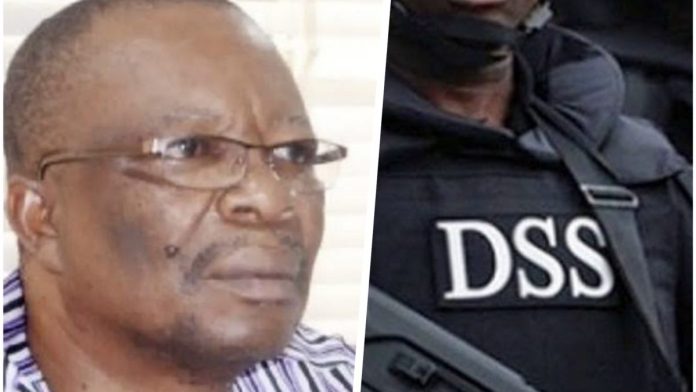
The Academic Staff Union of Universities (ASUU) has vowed to sue the State Security Service (SSS) after one of its members was assaulted.

This was revealed by Rabiu Nasiru, chairman of the Ahmadu Bello University (ABU) branch of the union, during a press conference on Friday in Zaria, Kaduna.

He said that the purpose of the press conference was to draw the attention of the authorities and the public to the “unwholesome actions of some DSS employees.”

Mr Nasiru said that while on a union assignment, the SSS attacked Abdulkadir Mohammed, the Kano Zonal Coordinator of ASUU.

He said that SSS agents attacked Mr Mohammed as he was driving to Katsina in his car along Kano’s Hadejia Road by-pass.

Read Also:  TMG calls on government to tackle security issues ahead of 2023 elections

“His sin, if any, was that he drove in front of a DSS-escorted motorcade.

“The incident happened on August 18 at about 2:00 p.m. on Hadejia Road by-pass Kano, and the assault was carried out by DSS personnel in a Hilux truck belonging to Kano State Government House.

“In addition to the physical attack, they shattered Mohammed’s car’s windshield and destroyed the side mirror in a display of force for no fair cause,” Mr Nasiru added.

He urged the SSS’s leadership to take severe action against the officers implicated for casting a negative image on the organization.

Mr Nasiru requested that the SSS force the employees who committed the breach to repair the damaged vehicle or face legal action.

Read Also:  NAFDAC: Unregulated Goods and Health Hazardous Products

He requested that the National Assembly reorganize the SSS or reconsider Section 315 of the 1999 Constitution, which included the military’s 1986 Decree 19.

He said that the assessment would guarantee that the organization adhered to democratic principles and the rule of law.

EFCC designates Lekki as a hotbed of cybercrime in Nigeria

0

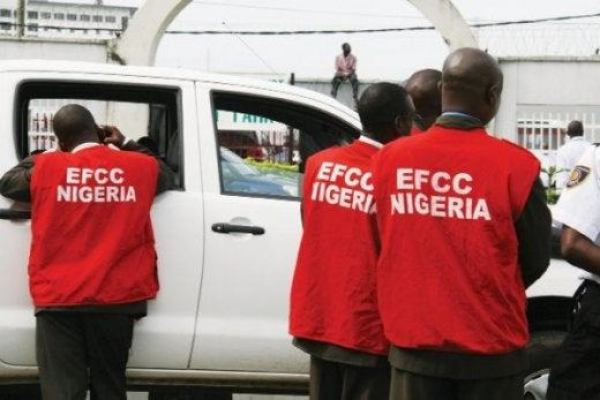
The Economic and Financial Crimes Commission (EFCC) has declared Lagos’ Lekki neighborhood a hotbed of cybercrime.

The EFCC revealed that 402 suspects were arrested in the area in three months in a post titled “Lekki now hotbed of cybercrime – EFCC” posted on its Facebook page on Friday.

The EFCC has identified the Lekki neighborhoods of Ajah, Badore, Victoria Garden City, Sangotedo, and Oniru as hotspots for internet fraudsters in the state.

Many of the suspected fraudsters arrested in the area were between the ages of 25 and 34, according to the anti-graft agency.

“Lekki, Lagos Metropolis’ fast-developing upper-middle-class area, is emerging as the new hub of internet-related fraud in Nigeria,” it wrote.

According to data from the Economic and Financial Crimes Commission’s (EFCC) Lagos Command’s investigation activities for the second quarter of 2021, the Lekki District is the preferred location for all types of cyber fraud syndicates.

Read also: TMG calls on government to tackle security issues ahead of 2023 elections

“The Advance Fee Fraud and Cyber Crime Sections of the Command made a total of 402 internet-related fraud arrests between April and June 2021. The Advance Fee Fraud Section was responsible for 243 arrests, while the Cyber Crime Section conducted 18 sting operations that resulted in 159 arrests and 13 convictions so far.

“The Cyber Crime Section arrested 159 suspects, 70 of whom are from Lekki, including communities such as Ajah, Badore, Victoria Garden City, Sangotedo, and Oniru.

“There were 24 suspects in Ajah, and 14 and 13 in Oniru and Sangotedo, respectively. Badore had a total of eight suspects. Ikoyi and Eko Atlantic, respectively, had two and one suspect. On the Lagos Mainland, Ikorodu and Alagbado make up the rest.

“The suspects are mostly millennials, with 82 of them being between the ages of 25 and 34, indicating that the majority of those arrested are still in school, recent graduates, or university dropouts.”

Gov. Yahaya, Revenue Allocation: Why We Deserve an Upward Review

0

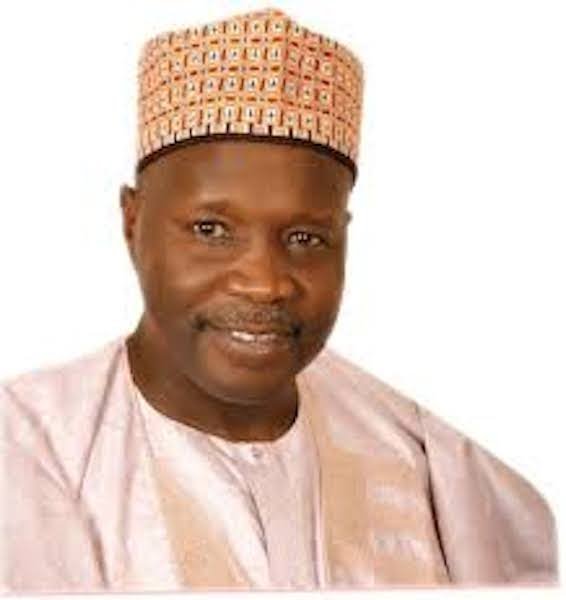
Alhaji Muhammad Inuwa Yahaya, Governor of Gombe State, has said that the consistently increasing responsibilities of state and local governments over the past 29 years have necessitated an upward review of income allocations to the two levels of government.

According to the governor, there has been a great deal of pressure, particularly on state governments in Nigeria, to address difficult problems such as insecurity, environmental degradation, deteriorating infrastructure, and insufficient financing for primary healthcare and basic education.

“Over the last decades, the responsibilities of state governments have grown, but our income distribution has stayed the same,” he says.

The governor made the remarks yesterday during a national sensitisation on the Revenue Mobilisation, Distribution and Fiscal Commission’s (RMAFC) assessment of the current revenue allocation formula for Gombe State.

He said that as the duties of state governments grow, there is a need for a thorough review of the allocation mechanism to ensure states have the resources they need to carry out new and current tasks.

Read also: NDDC audit report reveals 13,000 abandoned projects in the Niger Delta: Akpabio

Yahaya also urged the federal government to give the state particular attention, as it has done for Borno, Yobe, and Adamawa states, all of which have been plagued by insurgency.

“Given Gombe State’s unique location in the heart of the North-east region, we act as the regional shock absorber in witnessing the influx of internally displaced people (IDPs) from frontline insurgency states of Borno, Adamawa, and Yobe,” he said.

“This has placed enormous strain on our fundamental infrastructure and services. It is thus only reasonable that the particular attention given to these three states be extended to Gombe State in order for us to meet new challenges.”

He stated that his administration had accomplished much by increasing revenue generation through fiscal efficiency, discipline, transparency, and accountability in governance, adding that “the fact that we are able to achieve far more than even the richest states attests to our remarkable level of financial efficiency and prudence despite being among the bottom states in terms of federal allocation.”

Earlier, Malam Mohammed Usman Kukandaka, the Federal Commissioner representing Gombe State in the commission, stated that the goal of the sensitization was to educate stakeholders on the importance of participating and making relevant contributions in the review process in order to assist the commission in developing a fair, just, equitable, and acceptable revenue formula for the country.

Read also: Bandits kidnap 73 students in gov’s community, prompting Matawalle to call for self-defense

According to him, as a constitutional requirement, RMAFC is tasked with conducting periodic reviews of the revenue distribution formula and principles in place to guarantee compliance with changing circumstances.

“In 1992, the vertical share of revenue to be allocated to the three tiers of government as proposed by the RMAFC was as follows: federal government 48.5 percent, states 24.0 percent, local governments 20.0 percent, stabilisation 0.5 percent, derivation 1%, FCT 1%, development of mineral resource areas 3%, and ecology 2%,” he said.

He stated that, despite President Olusegun Obasanjo’s administration’s upward revision of the vertical formula to meet current realities, the horizontal sharing formula that takes care of the country’s states and local government areas is based on equality in population, land mass, social development factors, and Internally Generated Revenue (IGR).