Home Blog Page 2148

Samuel Kalu of Nigeria faints during a Ligue 1 match in France

0

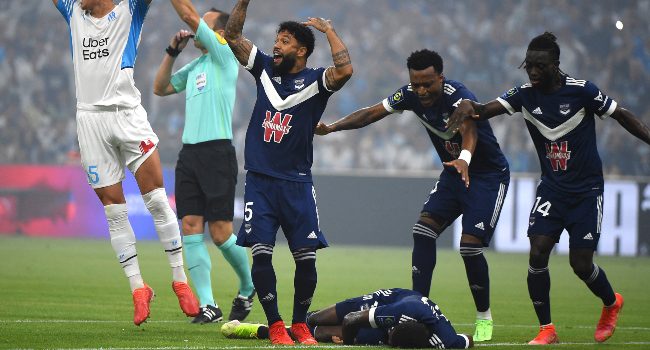
On Sunday, Bordeaux attacker Samuel Kalu fell on the pitch in a scorching 30 degree French Ligue 1 match at Marseille.

During the early phases of the contest, the 23-year-old Nigerian international passed out and sank to the Stade Velodrome floor.

Concerned teammates swarmed around Kalu, waving their hands furiously to the bench, requesting medical assistance.

Kalu managed to stand up after a few heart-stopping minutes, but Remi Oudin was called in to take his place.

Christian Eriksen of Denmark suffered heart arrest in a Euro 2020 match just two months prior to this incident.

“We were both shaken by Kalu’s occurrence. It’s usually a little frightening for fans and players on the field,” added Oudin, who went on to score in the 2-2 tie.

“We’re thinking about it after what happened with Eriksen at the Euros. Everyone was a little frightened at this point. It all worked out in the end.

“The doctors say it’s just a minor annoyance, but he’ll be tested on Monday.”

Kalu was admitted to the hospital in June 2019 after becoming dehydrated while training with Nigeria during the Africa Cup of Nations in Egypt’s scorching heat.

Coach Vladimir Petkovic of Bordeaux stated, “I was thinking about what happened during the Euro.”

Read Also:  DJ Cuppy is suffering from an unknown illness

“We decided to replace him with the help of the medical staff so that we wouldn’t take any chances. Football is put on hold in these situations.”

Increasing the availability of domestic resources

0

According to Obinna Chima, raising domestic revenue is critical to promoting economic growth and the quality of public services.

Nigeria’s revenue to gross domestic product (GDP) ratio, at under 8%, is widely acknowledged as the lowest in the world.

Algeria, for example, has a revenue-to-GDP ratio of 33%; South Africa has a ratio of 29%; Morocco has a ratio of 26%; Tunisia has a ratio of 24%; Angola has a ratio of 22%; and Egypt has a ratio of 21%.

Cote d’Ivoire has a revenue-to-GDP ratio of 20%; Zambia has a revenue-to-GDP ratio of 19%; Kenya has an 18% revenue-to-GDP ratio; Cameroun and Uganda have a 16 percent revenue-to-GDP ratio; Ghana has a 14 percent revenue-to-GDP ratio; and Ethiopia has a 13 percent revenue-to-GDP ratio.

As a result, the federal government has taken attempts to increase revenue, particularly from non-oil sources.

The federal government’s declaration last week of a plan to reinstate toll collecting on designated dual carriageways across the country was one of these initiatives.

Babatunde Fashola, the Minister of Works and Housing, made the announcement following a meeting of the Federal Executive Council (FEC) in Abuja. Tollgates are set to be reintroduced 18 years after former President Olusegun Obasanjo’s administration destroyed all toll plazas on federal roadways across the country in 2003.

Analysts, on the other hand, have emphasized the importance of transparency and accountability in the process of reopening the toll gates.

Only 5, 005 kilometers of dual carriageways, or 14.3% of the country’s 35,000 kilometers of federal roads, will be eligible for tolling, according to Fashola.

Vehicles would pay between N200 and N500 every journey, according to him, depending on their make.

Diplomatic, military, and paramilitary vehicles, as well as tricycles and motorbikes, would be exempt from paying the toll, according to the ministry.

“The complete network of roads eligible for tolling on the federal network today, assuming we were to start today, will be 14.3 percent of the total network,” he explained.

“As a result, 85.27 percent will be ineligible for tolling. The majority of such dual carriageways have alternate highways, but they are single carriageways. That’s why we abandoned them.

“Some bridges are the only exception to single carriageway, and they are noted in the regulation.”

With the council’s permission, mechanisms were being worked out to establish when the tolling system would go live, according to the former Lagos State governor.

“The Ministry of Works and Housing presented a policy paper for the approval of federal highways, bridges, and tolling policy, as well as a rule that would provide legal basis for the tolling policy,” he stated.

Between January and May 2021, the federal government spent 98 percent of its revenue on debt service, up from 83 percent in 2020.

“We’ve taken another step forward. To be clear, tolls will not be implemented tomorrow. Let’s be crystal clear about this.

“However, the big step toward actual tolling was done today by presenting for approval the broad policy that will guide tolling, so that local people, states, local governments, all those who manage roads, and potential investors would know what our tolling policy is. That will serve as the foundation for their financial modeling and investment decision.”

Fashola stressed that the open tolling system would not start until the affected roads were passable, and that agreements on the plazas’ construction would be arranged with relevant government agencies.

“First and foremost, tolls will not begin until roads are motorable,” he explained. Let’s be clear about something.

“Agreements with the government will need to be handled through the Ministry of Works and the Infrastructure Concession Regulatory Commission.

“Some of the highlights include the adoption of an open tolling policy rather than a closed tolling strategy. The difference is that with an open tolling policy, as we were used to, you pay at a barrier over a fixed or predetermined distance.

“You will pay tolls based on the distance you travel and the size of your car under the closed toll system. We’ve never done anything like this before. So we’re going back to the basics. We also agreed that dialogues should take place. Before specific routes are tolled, willingness to pay polls must be conducted.”

Increasing Profits

The federal government spent N3.10 trillion on debt service in the first 11 months of 2020 (January-November), out of N3.48 trillion in retained income. This accounted for 89 percent of the company’s revenue.

In its medium-term expenditure framework and fiscal strategy paper (MTEF & FSP) for the years 2022-2024, the federation’s budget office anticipated that debt repayment would use N48 out of every N100 revenue during the next four years.

That is why analysts have emphasized the importance of diversifying the government’s revenue sources away from oil, which has been a resource curse for the country in numerous ways.

Clearly, this was one of the reasons why the federal government launched the Strategic Revenue Growth Initiative (SRGI), which includes key elements such as revenue sustainability, enhancing existing and creating new revenue streams, revenue ecosystem cohesion, cost optimization, and liquidity enhancement.

The initiative’s primary goal is to raise the revenue-to-GDP ratio to 15% by 2025.

After leaving a recession in the fourth quarter of 2020, the Nigerian economy continued to improve in the first quarter of 2021.

According to data from the National Bureau of Statistics (NBS), real GDP increased by 0.51 percent in the first quarter of 2021, compared to 0.11 percent in the fourth quarter of 2020.

As a result, the World Bank has recommended the federal government to concentrate on low-hanging and revenue-yielding fruits in order to boost non-oil earnings.

These, according to the bank, will help the government make significant gains, increase Nigeria’s tax-to-GDP ratio to around 7%, and generate roughly N10 trillion in revenue over the next three years.

The bank recommended that the government boost “sin taxes,” charge fees for electronic money transfers, rationalize tax expenditures, close tax loopholes, and improve tax compliance through more disciplined revenue administration.

It further stated that tax funds were required to operate important services, provide citizens with security, aid in the fight against famine and poverty, and offer critical health and education services.

Furthermore, the Washington-based organization claimed that the COVID-related economic slowdown, as well as the severe drop in oil prices in 2020, highlighted the need for Nigeria to expand non-oil revenue, even as investment, jobs, and growth were all needed to increase.

“This necessitates a finely tuned set of legislative and administrative initiatives that can increase revenues without deterring investment.

“This precludes any increases in traditional ad valorem taxes such as the value-added tax, but it does provide a chance to fully implement existing tax policies and reform tax administration to close compliance gaps.

“Further down the road, significant tax reforms will be required to boost post-pandemic investment and economic growth. As Nigeria attempts to “rebuild better” following the COVID crisis, a more strategic approach to revenue mobilization would be required: “not simply taxing more, but taxing better; not just how much to collect, but how to collect, what to collect, and from whom,” according to the bank.

Mr. Edward Adamu, Deputy Governor, Corporate Services Directorate, Central Bank of Nigeria, stated that fiscal actions must be aimed at supporting a wide range of activities, including contact-intensive activities that have been severely impacted by the COVID-19 pandemic, in order to spur overall economic recovery and brighten the outlook for overall growth.

This, he argued, was critical because the total output horizon remains unknown, owing in large part to fears about the epidemic.

“As I previously stated, monetary policy at this moment must be based on a balanced assessment of the various economic factors. While adhering to the principle of price stability, Adamu stressed, “the choice of tool must be carefully considered to prevent compromising the fragile economic recovery gains.”

Prof. Adeola Adenikinju, a member of the Monetary Policy Committee (MPC), stated that the economy needed to diversify its economic and income base in order to limit sensitivity to external shocks and prepare for the worldwide move from fossil fuel to green economy.

“Our economic managers should not go about their business as usual. In order to offset external volatility, the economy also requires a robust buffer, according to Adenikinju.

Ahmed Aliyu, another MPC member, emphasized the importance of promoting non-oil exports and building vital infrastructure in the energy/power and transportation sectors.

“I am well aware of the limited budgetary space available, which necessitates broadening the revenue base to satisfy the government’s expenditure profile. The fiscal authorities’ recent attempts to strengthen revenue collection methods are excellent, and all stakeholders should support them,” he said.

Similarly, Mr. Mr. Folashodun Shonubi, Deputy Governor, CBN Operations Directorate, stated that the growing need to refocus the economy and look beyond oil is staring us in the face.

Many jurisdictions, he claims, have pulled back additional expenditures concerning the use of fossil fuels.

Read Also:  Win the Anambra governorship, the PDP needs Uba and Ukachukwu – Ekwunife

“As a result, we must take more initiatives to boost domestic investment and productivity, as well as strengthen the economy’s internal stabilizers,” he added.

Dr. Baba, Director-General of the West African Institute of Financial and Economic Management (WAIFEM), spoke for himself.
Usifo Ataga, the family behind Super TV hired a senior lawyer

0

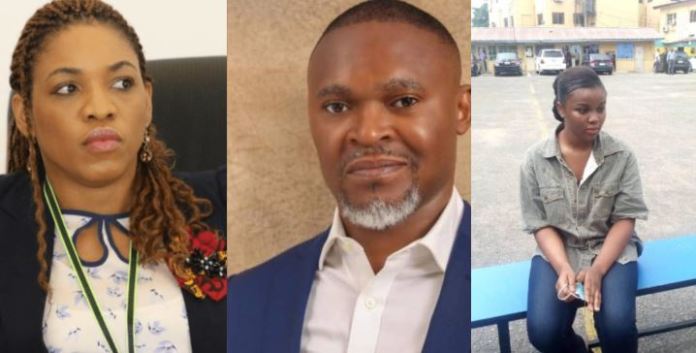
On Sunday, the family of Usifo Ataga, the slain Super TV CEO, hired Mike Ozekhome, a well-known senior lawyer, to ensure that the murderers are brought to justice.

Ataga’s body was discovered in a flat in Lekki, Lagos, just days after his family reported him missing, according to Gistlover.

Ataga’s body were discovered with several stab wounds by the Lagos State police command.

In connection with his killing, the police also arrested Chidinma Ojukwu, a woman, and numerous others.

The suspect had allegedly booked the apartment two days prior and fled the site of the alleged murder around 5.30 p.m., according to the police.

Mr Mike Ozekhome (SAN) said the mourning family hired him “to protect and defend the interests of the Ataga family and his teeming friends, admirers, kinsmen, and business acquaintances, to ensure that justice is duly served in the matter,” in a statement released on Sunday.

Read Also:  Tensions are rising in the Osun APC secretariat as the appeal committee meets for the first time

In a letter to Ozekhome, the Ataga family criticized the police for their alleged lack of professionalism in apprehending and prosecuting the alleged perpetrators of “Ataga’s unprovoked and cold-blooded murder.”

In a shocking government collapse, the Afghan president flees as the Taliban seize Kabul and prepare to take power

0

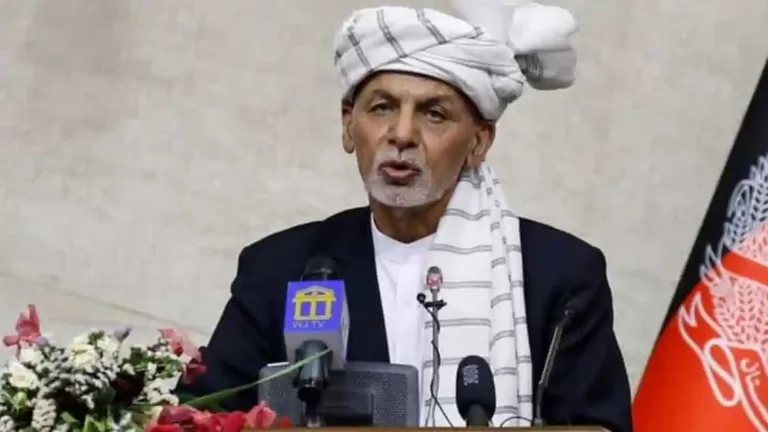
In a dramatic government collapse, Afghanistan’s president escapes as the Taliban seize Kabul and prepare to take power.

On Sunday, the Taliban appeared to be on the verge of seizing control of Afghanistan, as militants neared the outskirts of Kabul and said that they were hoping for a “peaceful transfer” of the capital after agreeing not to seize it by force.

Meanwhile, Afghans and foreigners alike rushed for the exit, heralding the end of a 20-year Western experiment to reshape Afghanistan.

Meanwhile, the embattled central government hoped for an interim administration but was running out of options. Civilians rushed to leave the nation, queued up at cash machines to withdraw their life savings, fearful that the Taliban would reimpose the kind of ruthless rule that had all but abolished women’s rights.

According to a BBC reporter, the Taliban issued a statement congratulating themselves on their “win” and stating that they will not invade the Afghan capital.

According to an Afghan official who spoke on the condition of anonymity for fear of retaliation, Taliban negotiators went to the presidential palace to discuss the transfer. It was still unclear when the transfer will take place. Get The Times of Israel’s Daily Edition sent to your inbox every day and never miss a story. Email address for the newsletter You agree to the conditions by signing up.

After the Taliban ordered its fighters to stay out of Kabul, Afghan Interior Minister Abdul Sattar Mirzakwal claimed there would be a “peaceful transfer of power” to a transitional government.

“Afghans should not be concerned… “There will be no attack on the city, and authority will be transferred to the transitional administration in a peaceful manner,” he stated in a recorded speech.

Residents in Kabul, meanwhile, were fleeing in droves, with workers abandoning government offices and helicopters landing outside the US Embassy. Employees at the American University were reportedly destroying documents holding identifying information about students to protect them, according to a Wall Street Journal writer.

The Taliban has stated that their militants will not enter homes or businesses.

They further stated that people who worked with the Afghan government or international forces would be granted “amnesty.”

The militants stated, “The Islamic Emirate guarantees all its inhabitants that it will, as always, protect their lives, property, and honor and build a tranquil and secure environment for its beloved homeland.” “No one should be concerned about their lives in this regard.”

Despite the pledge, people who can afford a ticket have been rushing to Kabul International Airport, which has become the sole option out of the country after the Taliban gained control of the last government-controlled border crossing at Torkham on Sunday.

Pakistan’s Interior Minister, Sheikh Rashid Ahmed, told local network Geo TV that after terrorists took the area, Pakistan halted cross-border commerce.

Despite receiving some air backing from the US military, the Taliban have destroyed, coopted, or forced Afghan security forces to evacuate large sections of the country in a remarkable national onslaught that has taken just over a week.

Many people have been surprised by the rapidity of the push, which has sparked questions about why Afghan forces have crumbled after years of US training and billions of dollars spent. Only a few days ago, an American military assessment predicted that the capital would be under rebel attack in a month.

In a video address, Acting Defense Minister Bismillah Khan sought to comfort the population.

“A delegation has been given authority to go to Doha (Qatar) tomorrow to secure a deal on Afghanistan,” he said. “I can tell you that Kabul is safe.”

Jalalabad, Afghanistan’s last major city not controlled by terrorists save the capital, fell to the Taliban on Sunday. Militants posted images of themselves in the governor’s office in Jalalabad, Nangarhar province’s capital, on the internet. A few hours after insurgents captured the nearby city of Jalalabad, rapid shuttle flights of Boeing CH-47 Chinook helicopters near the US embassy began.

Diplomatic armored SUVs were observed departing the post’s immediate vicinity. Questions about the movements were not immediately answered by the US State Department.

According to two American military sources who spoke on the condition of anonymity because they were not allowed to discuss the situation, wisps of smoke could be seen near the embassy’s roof as diplomats hurriedly destroyed vital documents.

The smoke in the neighborhood, which also houses other countries’ embassies, grew thicker over time.

Later, Sikorsky UH-60 Black Hawk helicopters, which usually transport armed troops, landed near the embassy.

At least one assault helicopter could be seen flying overhead, launching flares to divert missile fire. The US decided a few days ago to send in tens of thousands of troops to assist with the evacuation of some embassy workers.

According to a pilot who spoke on the condition of anonymity to discuss security considerations, Afghan forces abandoned the field at Kabul International Airport to Western militaries. The pilot reported an Afghan flight from Kandahar landed at the airport earlier with troops who surrendered to the Taliban despite shrapnel injuries from a mortar bombardment.

According to Bagram district administrator Darwaish Raufi, Afghan forces at Bagram air base, which houses a prison with 5,000 inmates, surrendered to the Taliban. The base’s prison, which was once the country’s largest US military base, housed Taliban and Islamic State fighters.

Thousands of people have taken up residence in parks and open areas throughout Kabul, fearful of a Taliban regime reimposing a cruel rule that has all but destroyed women’s rights. Hundreds of people gathered in front of private banks to withdraw their life savings, causing several ATMs to stop dispensing cash.

Several times, gunfire erupted, however the Afghan government attempted to downplay the incident.

In the midst of the pandemonium, the presidency stated, “The defense and security forces, as well as international troops, are working for the security of Kabul city, and the situation is under control.”

According to Abrarullah Murad, a provincial politician, the insurgents captured Jalalabad after elders negotiated the fall of the administration there. As the city surrendered, Murad reported there was no fighting.

Read Also:  Lagos joins forces with a US corporation to investigate the $50 billion global solar sector

According to Afghan politician Hamida Akbari and the Taliban, terrorists also stormed Maidan Shar, the capital of Maidan Wardak, on Sunday, around 90 kilometers (55 miles) from Kabul. According to a member of the provincial council who spoke on the condition of anonymity for fear of retaliation, another provincial capital in Khost was also taken over by the Taliban.

The rebels took control of all of northern Afghanistan after the fall Saturday of Mazar-e-Sharif, the country’s fourth largest city, which Afghan soldiers and two prominent former warlords had sworn to defend.

DJ Cuppy is suffering from an unknown illness

0

DJ Cuppy, the daughter of a Nigerian millionaire, has spoken out about experiencing multiple sorts of COVID-19 symptoms.

DJ Cuppy bemoans the fact that she doesn’t know what’s wrong with her health in a video she published on Snapchat.

Cuppy claims to have a lot of COVID-19-like symptoms, but I don’t. She went on to say that she had taken the Covid-19 test four times and that they had all come out negative.

The female disc jockey shared a screenshot of her COVID-19 test and expressed her dissatisfaction with the results.

She wrote: Fourth PCR, so what the hell is wrong with me, I’m so sick.

What we do know is that Florence Ifeoluwa Otedola, better known as DJ Cuppy, is not pregnant, as she has dispelled pregnancy rumors sparked by a viral photo of her large belly.

DJ Cuppy uploaded a snapshot of herself and her brother, Fewa, enjoying fun at the swimming pool over the weekend on her Twitter account.

Read Also:  Corps members tasked on Covid-19 safety campaign

However, because her tummy was protruding in the photo, it appeared that the effervescent entertainer was two or three months pregnant, and a curious fan known as @D’Easterner questioned if she was pregnant.

DJ Cuppy responded to the follower by stating that she is not pregnant and embracing her huge belly with her full chest, admitting that she has a naturally large stomach.

Plateau killings: CP confirms the identities of those responsible

0

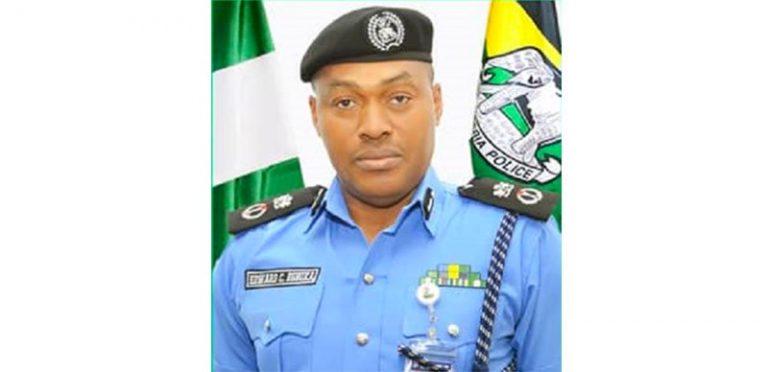
The attack on commuters in Jos on Saturday was carried out by miscreants and hoodlums who sought to take advantage of the state’s security crisis “to cause problems and pilfer,” according to Plateau State Commissioner of Police Edward Egbuka.

According to a statement released by Dr Makut Maham, the Governor’s Director of Press and Public Affairs, Egbuka said this at a weekend briefing by the state’s top security agencies to Governor Simon Lalong.

Remember that the meeting was called in response to the attack on commuters along Rukuba Road in Jos North Local Government Area, which claimed the lives of 23 people and injured another 23.

“These are miscreants and hoodlums who intended to take advantage of the circumstances to cause havoc and loot,” Egbuka explained.

“This isn’t the first time something like this has happened. We are not going to name names.”

According to Egbuka, 36 persons were rescued from the incident unharmed and are in good condition.

He also stated that investigations are still on and that arrests are being made.

Read Also:  NDLEA arrest of one Muffat Ekong, a former military officer

The CP urged civilians to observe the 6 p.m. to 6 a.m. curfew in Jos South and Bassa local government areas, as well as the 24-hour curfew in Jos North, noting that the order was being strictly enforced and that violators would be prosecuted.

Zambian opposition leader Hichilema beats President Lungu in election

0

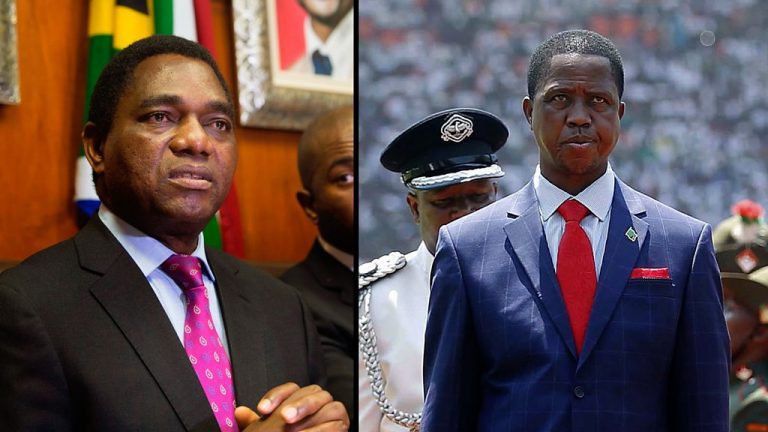
Zambian opposition leader Hakainde Hichilema has won a decisive victory in the presidential election.

The results were announced by the Electoral Commission in Lusaka, Zambia’s capital, on Monday.

With all but one of the 156 seats counted, Hichilema received 2,810,777 votes to President Edgar Lungu’s 1,814,201.

“As a result, I declare Hichilema to be the President of Zambia,” declared Esau Chulu, the head of the Electoral Commission.

It would be the third time since the country’s independence from Britain in 1964 that power has changed from the ruling party to the opposition.

Read Also:  Corps members tasked on Covid-19 safety campaign

Hichilema’s fans are ecstatic all throughout the country.

The candidate for the United Party for National Development (UPND) was previously the CEO of an accountancy firm.

Lungu, 64, has refused to accept loss and may contest the 59-year-old President-election. elect’s

Following violence against agents of the ruling Patriotic Front Party (PFP) in three provinces, Lungu said that the election was “not free and fair.”

Nigerian President-elect Moghalu’s Proposal

0

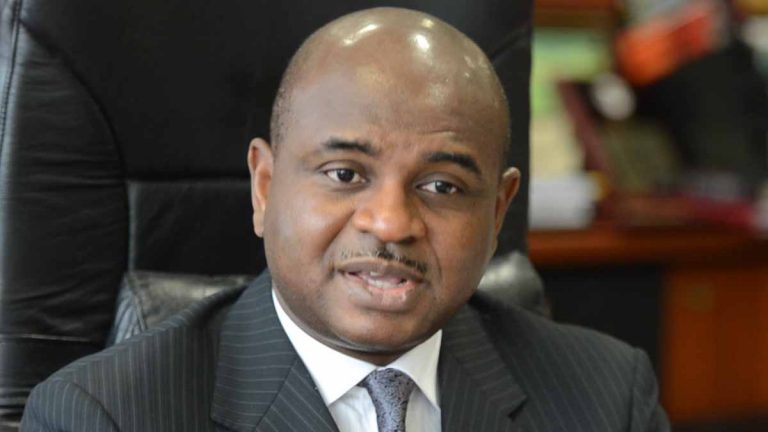
Professor Kingsley Chiedu Moghalu, founder of the Moghalu 4 Nigeria Movement, has cautioned that playing politics as usual will not serve Nigeria’s interests in the 2023 presidential election, writes Nduka Nwosu.

Professor Kingsley Chiedu Moghalu, one of the candidates in the race to succeed President Muhammadu Buhari, has decried a situation in which the country has spent five decades, including 22 years of democracy since 1999, “chasing shadows because we have failed or neglected to focus on the question of leadership.”

Moghalu has called for a constitutional reordering of Nigeria, stating that it will improve leadership and governance by bringing government accountability closer to Nigerian citizens by returning the country to real federalism, including devolution of powers to regions.

Moghalu, who spoke at the 10th Emeka Anyaoku Annual Lecture series in Awka, Anambra State, reminded the packed audience of politicians and technocrats that only true leadership, not politics, will save the country from its political quagmire, including its ranking among the world’s most corrupt countries and as a global poverty capital, among other issues.

“We face an urgent leadership problem that we must confront,” he added, “with nations like Malaysia and South Korea, which were on par with Nigeria in the early 1960s, now well ahead of Nigeria in economic and technological development, and with 100 million Nigerians living in abject poverty.”

“Politics as usual will not do the job,” the founder of the Moghalu 4 Nigeria Movement stated. We must recognize that the 22 years of democratic politics since 1999 have not generated any meaningful democratic dividends in terms of economic and political development.

“As a result, we must return to the foundations. The main driver of human society’s evolution is leadership, not just politics.

“As a society, we must move away from divisive politics that makes us poorer and weaker collectively, and instead focus on finding real leadership that will unite our country and lead it to prosperity.

Moghalu, who was recently named one of the presidential candidates to watch in an ARISE News ranking as a follow-up to its interview with former military President Ibrahim Babangida, went on to say that for a government to be truly effective, it must have a leadership capacity that will enable it to deliver on the promises it has made, or on deliverables that are necessary for effective governance.

Read Also:  Varane has signed a four-year contract with Manchester United

On the one hand, he continued, these deliverables include protection of people and property, and on the other, economic development-human development indicators like health care, education, and drinkable water supplies. “ The Nigerian Constitution mandates this in section 14(2)(b), which states that “the fundamental objective of government should be the security and wellbeing of the people.”

According to Moghalu, “the waste created, and efficiencies destroyed by the huge costs of governance in Nigeria across the board, at the levels of both federal and state governments, is a predominant aspect of bad governance in Nigeria.” A responsible and effective all inclusive, transparent, and participatory government, backed by respect for the rule of law and accountability to citizens, will not tolerate “the waste created, and efficiencies destroyed by the huge costs of governance in Nigeria across the board, at the levels of both federal and state governments, is

Moghalu urged political leaders to move away from the current dominance of politics without governance and toward politics that prioritizes good governance as a priority for electoral platforms and candidates. “Party selection for presidential elections, for example, should prioritize aspirants who are knowledgeable about the economics, country development, international relations, and foreign policy,” he argued.

“We need to focus on political education of voters so that they know what to look for and can make informed voting decisions,” he continued. This is an important aspect of a shift in focus away from politics and toward elections as a democratic quest for true leadership, without which good governance will remain a mirage. Political education is primarily a duty of INEC, but it also serves political parties and civil society organizations.

He also stated that non-partisan actors such as clergy, traditional rulers, civil society, and professional organisations, as well as Nigeria’s live past heads of state and administration, must now begin to play a more active role in leadership selection in Nigeria.

“They can do this through public declarations, endorsements, or discreet recommendations,” he added. Every country’s democracy must be tailored to its specific circumstances. Politics is far too crucial to be placed only in the hands of politicians.

“A recent encouraging example of the potential involvement of elder statesmen is former military President Gen Ibrahim Babangida’s intervention in a media interview to honor his 80th birthday on the profile of a prospective future president of Nigeria.”

He continued by stating that Nigeria’s development failures after 60 years of independence, with our country placing near the bottom in every metric of corruption, healthcare, education and human capital development, policing, state instability, and others, can no longer be dismissed or rationalized. “Asian developmental states were also colonized at similar times in history, but they are now powerful and capable of being stable states,” he said.

Moghalu urged political leaders to move away from the current dominance of politics without governance and toward politics that prioritizes good governance as a priority for electoral platforms and candidates.

Doris Chima, popular Nollywood actress, is dead

0

Doris Chima, a popular Nollywood actress, has died.

She died following a battle with breast cancer, according to reports.

According to reports, the actress was diagnosed with the disease in 2020 and had her breast removed to prevent additional damage.

Emeka Rising Ibe, Chairman of the Actors Guild of Nigeria, Lagos State Chapter, confirmed her death on Monday.

Ibe, who was saddened by the passing, described the dead as a loyal member and a good woman.

Read Also:  The death of Rep member Adedayo Omolafe was sad – Akeredolu

“She phoned me last week and pleaded with me not to remove her from the verification exercise I was conducting in Lagos to determine legitimate members of the guild,” he explained.

”I got a call yesterday morning saying she had died. Despite the fact that I have yet to visit the family, it is a significant loss for us. I pray for her soul’s tranquility. Amen, may her soul rest in peace.

Obi proposes that the FG invest in SMEs rather than infrastructure

0

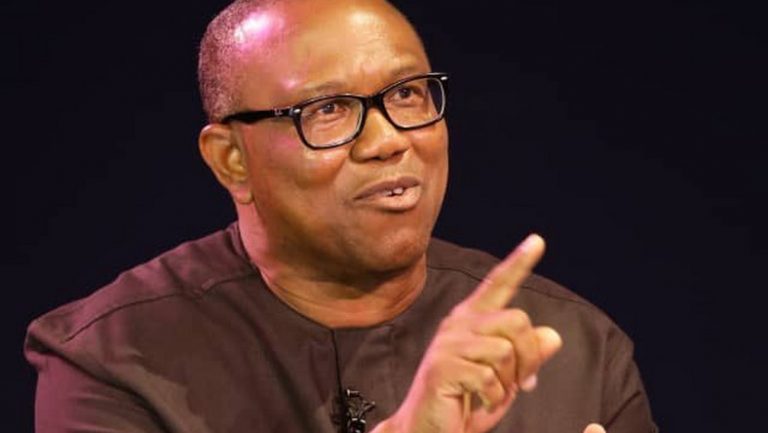
Former Governor of Anambra State, Peter Obi, has criticized the federal government’s policy of focusing more on infrastructure development while allegedly overlooking small and medium businesses (SMEs).

Obi spoke out against such policies on the Arise News network’s Morning Show yesterday.
Many countries that have addressed their problems, he claims, have not relied on infrastructure to propel their economies.

The vice-presidential candidate in Nigeria’s general election in 2019 said that poverty should not be viewed as a frightening concept; rather, he cautioned, the focus should be on whether the country is making prudent and proper investments.

“I have said it countless times that SMEs drive the economy of every country,” he says. Poverty is an issue that affects people all over the world. It took place in China. Everyone knows that China has rescued almost 400 million people from poverty. It happened in India as well, but almost 200 million people were lifted out of poverty in just five years. It also happened in Vietnam.”

He highlighted Bangladesh as an example of how any country may boost its economy by investing in education and small businesses.

According to Obi, Bangladesh’s GDP was $101 billion in 2008, with a per capita income of $753 and a debt of $50 billion, accounting for half of the country’s GDP.

According to the Peoples Democratic Party (PDP) vice presidential candidate for the 2019 elections, Bangladesh’s economy is now worth over $300 billion, per capita income has increased thrice from $753 to over $2,000, and the country’s national debt is $102 billion.

Read Also:  Police rescue 33 as IGP deploys Joint-Crack Team to Jos

“Their debt has really decreased because it is currently at 30% of their GDP, rather than 50%,” Obi added. What went wrong? Bangladesh allocated the funds to small and medium-sized businesses. Bangladesh is now the world’s second-largest exporter of textiles.

“Bangladesh has over 5,000 textiles and produces over $35 billion in textiles and textile products, which is roughly equivalent to what we produce from oil.

“I looked to see if other countries had done the same. They put money into SMEs and invest in education as well. They did not continue to construct further infrastructure.”