Home Blog Page 2145

HURIWA reacts to the death of Ibrahim Mantu

0

Senator Ibrahim Mantu was described as an elder statesman, erudite politician, and friend of journalism and journalists by the Human Rights Writers Association of Nigeria, HURIWA.

HURIWA recalled the former Deputy Senate President’s significant contributions to the socio-political development of Plateau State and the nation at large, emphasizing that the former federal lawmaker’s sudden death is a great loss to his state and Nigeria as a whole.

According to HURIWA, late Senator Mantu was a grassroots politician whose life was all about the people’s interests, as he did everything in his power to serve them through empowerment and quality representation.

Mantu earned his place in Nigerian politics through active participation, according to the human rights organization, and he also had a strong bond with the youth, whom he mentored not only in politics but also in other fields, particularly humanitarian service.

“Until his death, the deceased made his resources, a wealth of experience and knowledge, available to the practice of journalism in general. We Journalists will miss the late Deputy Senate’s voice of peace and unity, as well as an advocate for social cohesion and tolerance, which he represented particularly during the country’s most trying moments,” HURIWA said.

“One of the things that struck me about the late Senator was his non-tribal approach to national issues. He was a Muslim, but no one would know because he accommodated everyone; he was friends with the Igbos and generous to all.

“Mantu was welcoming to all, and during his early years in Gindiri, he played a role in bringing people together. He considered the greater good. He was a charismatic politician, and other northern leaders should emulate his qualities while he was still alive.

Read also: Mimiko believes that healthcare should remain a fundamental human right

Mantu was a member of the People’s Democratic Party’s Board of Trustees before his death (PDP). He held a variety of political positions, including Director-General of the defunct National Republican Convention during the 1993 presidential campaign; National Chairman of the defunct Peoples Democratic Alliance; and National Publicity Secretary of the defunct United Nigeria Congress Party.

”In 1999, he was elected Senator of the Federal Republic of Nigeria for the Plateau Central Constituency on the Peoples Democratic Party (PDP) platform, and in 2000, he was named Deputy Senate President.

”In his autobiography, released in 2020, former Abia governor Orji Kalu said Mantu was the true hero in the efforts to stop ex-President Olusegun Obasanjo’s third-term agenda in 2006. This was an example of true representation that was not influenced by political affiliations.

PFN advises FG to stop bullying genuine agitators and to address insecurity

0

The Pentecostal Fellowship of Nigeria (PFN) has urged the federal government to engage genuine agitators in dialogue rather than bullying them.

The group also tasked the federal government with addressing insecurity in various parts of the country, citing events in the country as the catalyst for ethnic nationalist agitation.

The group’s Anambra State chapter, led by Bishop Moses Ezedebego, made the announcement on Monday at a press conference in Awka, Anambra State.

He expressed concern about the country’s agitations and insecurity. They urged the federal government to wake up and work hard to protect the people while also restoring their faith in the country.

“The Federal Government should address agitations and insecurity in the country with purpose. The government should not bully and suppress legitimate protests, but should instead humbly listen and dialogue when necessary.

Read also: Nasarawa’s government will begin demolishing illegal structures, according to an official

“We believe the greatest challenge we face in the country is massive systemic corruption, which the government has woefully failed to address,” Ezedebego said.

While congratulating the candidates of various political parties on their victory in the upcoming Anambra governorship election, the group said it has established a ‘PFN for Good Governance Committee’ to ensure that the group’s interests are represented in government.

“One of us, Dr. Amaechi Nwachukwu, is the chairman of that committee. PFN wants to make sure that whoever becomes governor of this state is a god-fearing man or woman who will put the state’s interests first.

“PFN is the umbrella body for all Pentecostal churches in the country, and we have a large membership, so whoever becomes governor of Anambra State will not be able to ignore us,” he said.

CBN will arrest and prosecute Naira abusers

0

The Central Bank of Nigeria (CBN) has stated that it is working with the Nigerian Police Force and other law enforcement agencies to apprehend and prosecute anyone caught abusing the Naira.

Osita Nwanisobi, CBN’s Acting Director of Corporate Communications, announced this in a statement on Tuesday.

He did, however, issue a warning to Nigerians, particularly those attending social functions such as birthday parties, weddings, and funerals, not to disrespect the Naira or face arrest by law enforcement.

Read also: Nasarawa’s government will begin demolishing illegal structures, according to an official

”The Central Bank of Nigeria (CBN) has been alerted to the activities of individuals who openly abuse the legal tender system by hurling wads of Naira notes into the air and stamping on the currency at social functions.

“There have also been instances where people mishandle the Naira, deface it, hawk it at parties, and in some cases, reject the money. It should be stated that, contrary to the practice of these unpatriotic individuals, disrespecting the currency in which citizens trade is neither cultural nor moral.

For the avoidance of doubt, Section 21(3) of the Central Bank of Nigeria Act 2007 (as amended) states that “spraying, dancing, or matching on the Naira or any note issued by the Bank during social occasions or otherwise howsoever shall constitute abuse and defacing of the Naira or such note and shall be punishable under the law by fines, imprisonment, or both.”

“As a result, the Central Bank of Nigeria (CBN) is working together with the Nigerian Police Force, the Federal Inland Revenue Service (FIRS), the Economic and Financial Crimes Commission (EFCC), and the Nigerian Financial Intelligence Unit (NFIU) to combat the unpatriotic practice.

“As a result, we warn Nigerians, particularly those attending social functions such as birthday parties, weddings, and funerals, not to disrespect the Naira or face arrest by law enforcement agencies. Our legal tender and a symbol of national pride is the naira. Let us treat it with respect and care,” the statement said.

Ibrahim Mantu, a former Deputy Senate President and Senator from Plateau Central, is died

0

He died in the early hours of Tuesday morning.

Senator Ibrahim Nasiru Mantu was born on February 16, 1947, in Chanso village, Gindiri District, Mangu Local Government Area, Plateau State. From 1955 to 1961, he attended Gindiri Demonstration Primary School and graduated with a First School Leaving Certificate.

He worked as a Stores Requisition Clerk for the Public Works Department (PWD) Jos from 1962 to 1963 before enrolling at Gindiri Teachers College in 1964. After leaving Gindiri in 1967, he worked as a Quality Checker for the Nigerian Tobacco Company in Zaria in 1968. In 1971, he became a Kalamazoo Specialist Salesman for BEAM, a division of UAC Nigeria.

Mantu studied on his own to earn his O’ level GCE and Diploma in Professional Salesmanship, which helped him get a job as a Trainee-Manager at John Holt Ltd. in 1973. Later, he was confirmed as a permanent Manager. Mantu joined John Holt Ltd. Maiduguri Venture as General Manager in 1976. In 1977, he was promoted to Deputy General Manager, Building Materials Division, John Holt Ltd., and relocated to Lagos. In mid-1977, he resigned to become the first Commercial Manager of Plateau State Supply Company Ltd.

Read also: Nasarawa’s government will begin demolishing illegal structures, according to an official

Mantu graduated from Washington International University with a B.A. (Hons.) in Political Science. Federal University of Agriculture, Makurdi, University of Jos, Madonna University, Okija, and University of Applied Sciences and Management, Port Novo, Benin Republic, all bestowed honorary doctorates on him.

Senator Mantu began his political career in 1978. In 1980, he was elected as the NPN’s Deputy State Chairman in Plateau State.

He was a member of the Liberal Convention from the beginning. Mantu’s massive popularity led to him running for the National Chairmanship of the N.R.C. in 1990, but he was defeated in a covert power play. Mantu was the Director General of the Presidential Campaign Organization of the National Republican Convention in 1993. In 1998, he was elected as the defunct UNCP’s National Publicity Secretary, and later as a Senator on the same party’s platform.

The regime of General Abdusalam Abubakar halted the election. Mantu was re-elected to the Senate in 1999 on the platform of the Peoples Democratic Party (PDP) to represent Plateau Central Senatorial District.

Mimiko believes that healthcare should remain a fundamental human right

0

Dr. Olusegun Mimiko, the former governor of Ondo State, has stated that healthcare is a fundamental human right and an important investment.

Dr. Mimiko said this in Abuja after receiving the Association of General and Private Medical Practitioners of Nigeria (AGPMPN”individual )’s achiever” award.

Every leading voice in the country must advocate for healthcare for all, according to the former governor, whose eight-year tenure as governor saw unprecedented achievements in the health sector.

“No one should have to lose their life due to a lack of funds to access care,” he says.

“You don’t realize how poor you are until you need money to save your life and can’t come up with it.

Read also: The first Ebola outbreak in Cote d’Ivoire since 1994 has been declared

“The truth is that health is a fundamental right that we must recognize and work toward.”

The former governor said as he dedicated the award to his team, who he said helped him achieve his goal of making Ondo Nigeria’s best-run state.

Dr. Iyke Odo, President of AGPMPN, earlier stated that the award ceremony was held as part of the association’s centennial celebrations and to honor individuals, groups, and organizations who have made significant contributions to Nigeria’s health sector.

Odo recalled his visit to Ondo State and how Mimiko was adored by the people for implementing effective and pro-masses health-care programs, projects, and policies.

Dr. Mimiko received the award for his unrivaled interventions in maternal and child health through the award-winning Abiye, Agbebiye, and Orirewa programs, which have become models for reducing infant and maternal mortality around the world, according to him.

The former governor was also honored for his work with the Emergency Medical Services (EMS) to reduce the number of people killed or injured in car accidents, as well as for founding Ondo’s first specialized university of medical sciences, UNIMED.

Dr Kayode Fayemi, Governor of Ekiti State and Chairman of the Nigeria Governors’ Forum, Chief Afe Babalola (SAN), Chief Kessington Adebutu, MD/CEO DESOPADEC, Hon. Bashorun Askia Ogieh, Prof Onyebuchi Chukwu, who served as President Jonathan’s Health Minister, and Dr Ifeanyi Okoye, MD/CEO, JUHEL Pharmaceuticals Ltd

Nasarawa’s government will begin demolishing illegal structures, according to an official

0

Nasarawa’s government will begin demolishing illegal structures, according to an official.

From August 17, the Nasarawa State Urban Development Board (NUDB) will begin demolishing over 200 illegal structures in Lafia.

Mr Wada Yahaya, the board’s Managing Director (MD), made the announcement during a press conference in Lafia on Monday.

According to him, the board had served three different notices to the owners of the structures in accordance with the state’s urban development laws.

He claimed that the owners were supposed to have taken advantage of the notices by registering or showing proof of registration, but that they had failed to do so.

“The laws give us three weeks to demolish the property after the third notice is served.

“As a result, by Tuesday, Aug. 17, the board will be out on enforcement with Mobile Courts, trying defaulters in accordance with the laws,” he said.

Read also: The first Ebola outbreak in Cote d’Ivoire since 1994 has been declared

Apart from the non-registration of some of the structures, Yahaya claims that others were built in complete disregard of the approval granted.

He pointed out that some of the structures were built for residential use, but the owners converted them to commercial use.

He explained that, in addition to Lafia, other structures in other parts of the state had been marked for demolition for the same offense.

Those operating illegal motor parks in the state, particularly in the Lafia and Karu Local Government Areas, have been warned to vacate their sites immediately or face prosecution, according to the MD.

“All traders along the major highways in Karu and other urban areas should leave immediately as well.

“We will begin operations in Karu LGA next week to ensure that no traders are permitted to sell along the highway.

“Because the state government has provided a space for the traders at the Muhammadu Buhari International Market Karu, we can no longer tolerate them operating in unlicensed areas,” the MD added.

As a result, he advised members of the public who are interested in constructing structures of any kind to register with the board before beginning their projects in order to avoid breaking the law.

Zambia’s elections were peaceful, according to UN Secretary-General Ban Ki-moon

0

Zambia’s elections were peaceful, according to UN Secretary-General Ban Ki-moon.

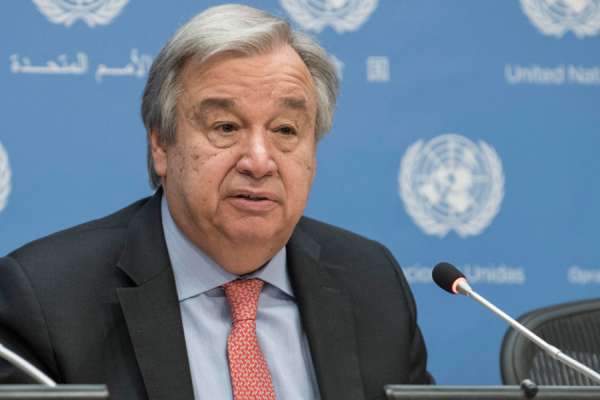
António Guterres, the UN Secretary-General, congratulated Zambia’s government, people, and electoral authorities on the successful general elections.

This was stated by Stéphane Dujarric, the UN Secretary-spokesman, General’s while briefing reporters at the UN headquarters in New York on Monday.

“The secretary-general congratulates the Government on the conduct of the 12 August general elections,” Dujarric is quoted as saying by the UN correspondent of the News Agency of Nigeria (NAN).

“The election’s overall peaceful conduct demonstrates the Zambian people’s continued commitment to maintaining Zambia’s democracy, peace, and stability.

“The United Nations will continue to assist Zambia’s government and people in their efforts to build a democratic, stable, and prosperous nation.”

The opposition leader, Hakainde Hichilema, won a stunning landslide victory over incumbent, Edgar Lungu, in Zambia’s presidential election on Monday.

With all but one of the 156 constituencies counted, Hichilema received 2,810,777 votes to Lungu’s 1,814,201, according to the electoral commission.

The electoral commission chairman, Esau Chulu, said in a crowded results centre in the capital Lusaka, “I, therefore, declare Hichilema to be President of Zambia.”

This would be the third peaceful transfer of power from a ruling party to the opposition since the country gained independence from Britain in 1964.

Read also: Increasing the availability of domestic resources

Hichilema’s supporters, dressed in the red and yellow of his United Party for National Development (UPND), danced and sang in the streets across Zambia.

Before entering politics, Hichilema, 59, was the CEO of an accounting firm. He now has the task of trying to turn around Zambia’s fortunes.

Improper rates cost FG, Aircraft Ground Handlers N14.2 billion per year

0

According to Daily Independent investigations, the Federal Government and ground handling companies in the Nigerian aviation industry lose about $28,350,000 (N14, 175 billion) annually due to improper handling rates in the country.

This comes as stakeholders have warned that if the current rates charged by handling companies to airlines are not reviewed, ground handlers may soon collapse, putting safety and security at risk.

According to an investigation by the Daily Independent, handling companies still charge between $300 and $1000 to handle a narrow body aircraft, rather than the $1400 to $1600 charged in other African countries, and about $3000 to handle a wide body aircraft, rather than the $5,000 charged in other African countries.
Further investigation revealed that ground handling companies handle no less than 45 narrow-body aircraft on regional and international routes, including Boeing B737, Airbus A320, ER 135 and ATR aircraft, on a daily basis at the country’s international airports.

Ground handling companies handle at least 20 flights per day for wide-body aircraft such as the B767, A330, B777, and B747.

Read also: OPEC congratulates Buhari on his ratification of the Petroleum Industry Bill

For example, in other West African countries, the average handling rate for a narrow body aircraft is $1500, whereas in Nigeria, it still varies between $300 and $1,000 per aircraft.

Wide-body aircraft are handled by handling companies at least 20 times per day across the country’s international airports, with 600 handled monthly and 7,200 handled annually.

The companies handle 45 narrow body aircraft per day, 1,350 per month, and 16,200 per year.

The estimated annual revenue loss of N14.2 billion is in addition to the handlers’ losses on the domestic scene.

Ground handling companies handle at least 150 aircraft per day. Domestic aircraft are still handled for a pittance of N15,000 to N20,000 by handling companies, according to an investigation.

Overall, the combined handling companies in the sector, Skyway Aviation Handling Company (SAHCO) Plc, Nigerian Aviation Handling Company (NAHCO) Plc, Swissport Handling Company, and Precision Aviation Han­dling Company Limited (PAHCOL), are striving to stay in business, according to the investigation.

It was discovered that whatever revenue the ground handling companies currently generate is half of what they were expected to earn on a daily, weekly, monthly, or annual basis.

Apart from the huge losses incurred by the handlers, the Federal Government loses revenue from the handlers through the Federal Airports Authority of Nigeria (FAAN).

FAAN receives 5% of total annual turnover from han­dling firms.

In order to prevent the handling companies from collapsing and jeopardizing security and safety in the sub-sector, players in the Nigerian aviation industry have called on the Nigerian Civil Aviation Authority (NCAA) to intervene.

They also warned that unless the authority intervened, the gains made in the civil aviation sector over the previous eight years could be jeopardized.

The current rates in the sub-sector, according to Dr. Sam Oduselu, pioneer Commissioner, Accident Investigation Bureau (AIB), were due for review.

He described the current rates as “backward,” emphasizing that the outbreak of the COVID-19 pandemic had added to the woes of industry organizations, including the ground handling industry.

Oduselu insisted that the rates were unsustainable, fearing that the Federal Government was losing massive revenues from the sub-sector, in addition to the safety and security implications.

Read also: In a shocking government collapse, the Afghan president flees as the Taliban seize Kabul and prepare to take power

“When I was the Director of Airworthiness at NCAA, the division was known as economic regulation, and when you talk about economics, this is a part of it, and it will tie into safety. The purpose of economic regulation is to ensure that whatever you charge for an airline ticket is sufficient to maintain your airline ticket, maintain your equipment, and pay your employees properly.

“However, the ground handling company will find it difficult to operate optimally and effectively under lowregime handling rates. Furthermore, government sites are not reaping the economic benefits that they should, particularly from foreign carriers. Those airlines are aware of the handling rates they pay in the countries to which they fly, but when compared to what we charge, it is clear that they prefer the rates in Nigeria to those in those countries.

“I believe the most significant challenge we face is that these ground handling companies were established by airlines, but now that they are in private hands, they have discovered that the charges are too low and are affecting their profit margins. As a result, ground handler activities may jeopardize safety. If employees are not adequately compensated or paid on time, you will find that they will not give it their all on the job.”

He warned that, given the current situation, criminals could easily compromise the airside personnel of the handling companies.

He also charged the ground handling companies to lobby the National Assembly through their association, the Aviation Ground Handling Associ­ation of Nigeria (AGHAN), to back up the anticipated new rates with legislation.

Mrs. Olatokunbo Fagbemi, NAHCO Plc’s Group Managing Director, bemoaned the fact that handling company rates had been stagnant or declining in recent years, while foreign exchange and the living index had been skyrocketing.

Despite the difficulties of low handing rates, she said, NAHCO had ensured that the safety and security of its clients was not jeopardized, and that the company had continued to invest in equipment to improve its services.

She emphasized that the rates should be reviewed for safety, security, and economic reasons, noting that the handling companies had spent a significant amount of money to train personnel, obtain international certifications, and purchase cutting-edge equipment to improve their services.

Fagbemi, like Oduselu, believes the NCAA should intervene in the situation.

“We have benchmarks that are given even in deregulated economies around the world; some may not be nuanced while others are announced. What we’re saying is that you can charge whatever you want, but you can’t go below a set of guidelines that will harm the industry, business, and public safety.

“As we move forward, we must invest in our GSEs, facilities, and people; we have done so and will continue to do so, but we must review our rates in light of these astronomical changes that have not been matched with recent changes. Is it possible for us to continue in this manner and remain viable as a company? “No,” says the author.

Despite the fall in the naira and rise in the prices of GSEs, Mr. Basil Agboarumi, the Managing Director of SAHCO Plc, expressed regret that the current rates had remained unchanged for over two decades.

Though he agreed that the industry was deregulated, he stated that the NCAA could not leave price fixing to the ground handling companies alone.

He bemoaned the rate of inflation, which he claimed had continued to rise over the past two decades while handling rates remained unchanged.

“Between 2020 and now, we have seen a significant increase in the value of the currency, which used to be N350 to now over N500 to a dollar, and we are a significant forex consumer. Nobody wants to hear that ground handling services have failed. So, we have a responsibility to provide not just ground handling services, but the best ground handling services in the world, and in order to do so, we need the equipment to do so, because the world of equipment is changing.”

Buhari is criticized, but he deserves praise for signing the PIB into law

0

President Muhammadu Buhari’s signing of the Petroleum Industry Bill 2021 into law on Monday drew mixed reactions.

While President Buhari has been chastised for signing the Bill into law despite concerns about the 3 percent host communities fund, others have praised him for finally opening up the petroleum sector to more investment, boosting economic growth.

Despite the public outcry that greeted the PIB’s passage, the Pan Niger Delta Forum (PANDEF) claimed that Buhari has demonstrated that he has no regard for the people of the region by signing it into law.

PANDEF’s Publicity Secretary, Ken Robinson, said in a statement on Monday that Buhari’s assent to the PIB was insensitive, and that he had sent a clear message to the Niger Delta people that they didn’t matter in the country.

Read also: The first Ebola outbreak in Cote d’Ivoire since 1994 has been declared

“It’s quite unfortunate that President Muhammadu Buhari went ahead to assent to the Petroleum Industry Bill, despite the overwhelming outcry and condemnation that greeted its passage by the National Assembly, especial­ly with regard to the paltry 3% provision for the Host Communities Development Trust Fund and the brazen ap­propriation of an outrageous 30% of the oil revenue,” the statement read.

“This PIB falls far short of the hopes of oil and gas-producing communities who bear the brunt of unethical industry practices.

“President Buhari’s assent simply reflects the abhorrent attitude of disregard, propelled by arrogance, disdain, and contempt, with which issues relating to the Niger Delta region are treated, particularly by the current administration.

“What this act represents is an unequivocal message to the people of the Niger Delta that how they feel and what they say have no bearing on the Nigerian project.

“The people of the Niger Delta will speak soon, after thorough consultations, about this heinous act and the best legal and political response.”

There’s a trade-off between modular refineries and fuel security

0

Obu ihe ojo mmadu ihapu ara nneya wee nua akpu (it’s an abomination for a child to suck the boil on its mother’s chest instead of its mother’s breast) is a popular saying among people from the South Eastern part of Nigeria. People standing in the middle of an ocean and washing their hands with saliva (O bu aru mmadu ino n’etiti oshimiri wee jiri asu kwuo aka) is an abomination (aru).

The two axioms are examples of Nigerians’ negative experiences with petrol, a by-product of crude oil with which God has blessed the country abundantly. After agriculture, which had “breastfed” the country, was abandoned, crude oil became the beginning and end of all socio-economic activities. Nigerians will occasionally be engulfed in one of several petrol-related squabbles.

Most of the time, fuel scarcity will keep us on our toes. When this occurs, Nigeria’s poor will suffer excruciatingly as the cost of food skyrockets. Because everything in Nigeria is fuel-dependent, including, arguably, making one’s wife pregnant, this is the case.

As the late Professor Chinualumogu Achebe put it, if a man can’t tell where the rain started beating (drenching) him, he won’t be able to tell where it stopped. When the four refineries in Nigeria stopped operating as a result of criminal neglect by successive administrations, Nigeria and Nigerians began to experience problems related to the oil and gas sector.

When the federal government refused to address the issue of oil pollution, which resulted in environmental degradation, things came to a head. Those from the region, particularly their youths, began to agitate, and every time the government promised them a better life, the youth could no longer take it and began breaking down the pipelines to find out what the government had hidden.

Some of them, with little technical know-how, built illegal refineries that the government continued to destroy without considering that they could have been legalized by issuing licenses to some operators, converting them to government property, and improving them for crude oil refining since our refineries were consigned to the trash can of history.

However, as religious gatekeepers would say, there appears to be a season for everything, and there appears to be a season to end Nigeria’s crippling fuel and gas wahala. President Muhammadu Buhari has promised to fix the country’s oil and gas sector, so that time may have come. To back up his words, he appointed Chief Timipreye Sylva as Minister of State for Petroleum Resources to work alongside him to move the sector forward.

Read also: Buhari congratulates Babangida on his 80th birthday

Nigerians have noticed a significant difference since the duo took over the sector. They have developed several methods to make things work in order to fix the sector. Unlike previous administrations, the APC administration has been quick to support efforts to build modular refineries to increase the country’s refining capacity.

President Buhari announced in 2016 a roadmap of short and medium-term priorities aimed at developing a stable and enabling oil and gas landscape with improved transparency, efficiency, a stable investment climate, and a well-protected environment, dubbed “7big wins,” as part of his strategy to reposition the oil and gas industry. The roadmap’s fourth initiative, “Refineries and local production capacity,” aims to transform Nigeria from an importer to a net exporter of refined petroleum products by using modular refineries as a vehicle.

This is seen as one of the options for dealing with the lack of petroleum products. This was demonstrated on January 21, when President Buhari presided over the virtual inauguration of the National Oil and Gas Excellence Centre. Modular refinery was one of the topics he discussed. He mentioned the opening of the Waltersmith Modular Refinery in Imo State, which has a capacity of 5,000 barrels per day and is the world’s largest modular refinery.

After receiving a license from the Department of Petroleum Resources (DPR) in June 2015, phase one of the refinery began operations in November of last year. The country is set to begin a phase of reduced petroleum imports following the expansion of the refinery to 50,000bpd capacity in November last year. Because the refinery’s crude oil storage capacity is approximately 60,000 barrels, the refinery is expected to deliver 271 million litres of refined petroleum products per year.

There are signs that the project will be a success, with President Buhari instructing DPR and the Nigerian National Petroleum Corporation, NNPC, to provide all necessary support in securing oil and condensate feedstock for the second phase. Although Edo is not Imo, what is going on in Imo with the modular refinery is also going on in Edo, as the Edo Modular Energy refinery is set to increase crude oil production from 6,000 to 60,000 barrels per day (bpd).

The project will improve Nigeria’s fuel security and alleviate Nigerians’ suffering in every way. According to projections, some of its products will be exported to boost foreign exchange earnings, and the company will be able to meet more than 80% of Nigeria’s diesel demand by the time it expands operations into different phases.

The investment will also benefit Edo residents by creating jobs, increasing revenue, and relieving pressure on other refineries. Another modular refinery, the Atlantic Modular Refinery on Brass Island, Bayelsa State, will begin operations before the end of the year if Sylva’s commitment to making life easier for Nigerians does not wane. Sylva, based on his pedigree, is unlikely to fail if he keeps his word, as his name is quickly changing to Ekwueme (doing what he says).

If Chief Sylva’s intentions with the modular refinery initiative are to increase the availability of petroleum products in the country, conserve foreign exchange for petroleum product importation, promote socio-economic development to reduce restiveness, criminal and illegal refinery activities, and maintain peaceful coexistence in the Niger Delta,

Despite the fact that there are differing opinions on the economic viability of modular refineries, Chief Sylva should not be distracted by these tenuous arguments because there is evidence that the industry’s average net profit margin was 6.8% in January of last year, according to data from NYU Stern School of Business.

Read also: Increasing the availability of domestic resources

Chief Sylva should not be deterred by any insignificant setback to the sector caused by shale oil competition, excess supply, generous financial markets, or the coronavirus pandemic, which harmed the sector’s net profit margins. Is there a silver lining to Sylva’s plans for the industry that supports arguments for modular refineries?

Nigeria has insufficient refining capacity and meets all of the criteria, creating an opportunity for modular refineries, which are simple to set up, quick to start up, and typically operate at full capacity. This is, in theory, a competitive advantage over larger refineries. It can also start with a small capacity of 5,000 or 10,000 BPSD and gradually increase capacity by adding more modules.

Huge investment opportunities in the mid-downstream sector, which will result in GDP growth and job creation, are just a few of the many advantages of the modular refinery initiative. The government’s support for the establishment of third-party-financed Greenfield and modular refineries for in-country petroleum product sufficiency, which will stimulate product export, is one of the most important aspects of this initiative.

To make this a possibility, the refineries will be scalable and located within refinery clusters for efficient operations and low environmental impact. The government has devised an excellent strategy. As Minister of State for Petroleum Resources, Chief Sylva has a date with history in terms of freeing Nigerians from the shackles of perpetual fuel scarcity and coldblooded petroleum product importers who rob the country of billions of Naira in the form of petrol subsidies.

Chief Sylva must inscribe his name in the minds of Nigerians. Now, in the era of modular refineries, is the perfect time to do so. If he succeeds, he will be known as the Beast Slayer. Nigerians would have reason to sing that Chief Sylva has accomplished what no one else has, much like the Israelites sang for David when he killed Goliath on their own flesh.