Home Blog Page 2144

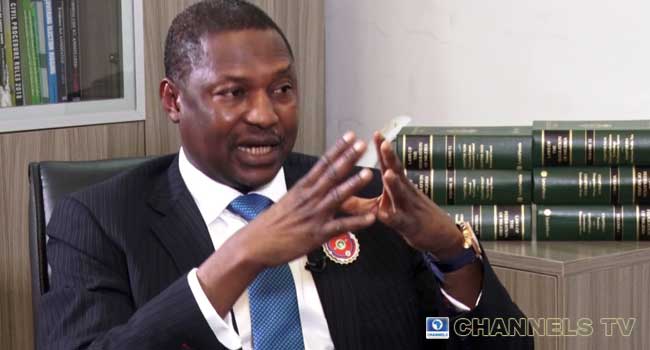
Igboho: Malami is fined N50,000 by the court

0

The order prohibiting the Department of State Services from arresting Yoruba Nation activist Chief Sunday Adeyemo aka Sunday Igboho, issued by an Oyo State High Court in Ibadan, has been extended.

Justice Ladiran Akintola, who issued the order on August 4 at the resumed hearing yesterday, also awarded N50,000 in costs to the Attorney General of the Federal Republic, Abubakar Malami (SAN), who is the first respondent in Igboho’s lawsuit.

He was fined for filing his response to Igboho’s lawsuit after the deadline had passed.

Igboho, who had beefed up his legal team with two more Senior Advocates of Nigeria: Adekola Olawoye and Oladipo Olasope, had requested a cost of N250,000 against Malami, but the court only granted N50,000.

The AGF, who was represented in court on Wednesday by Abdullahi Abubakar, prayed for the restraining order to be lifted.

He also asked the court to dismiss Igboho’s case because the court lacked jurisdiction to hear the case.

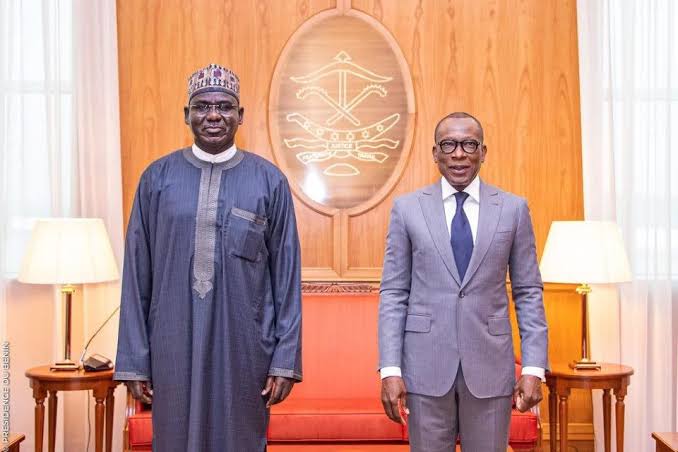
Read also: Nigeria-Benin Relations in Ambassador Buratai’s Era: An Opportunity for Economic Boom

T. A. Nurudeen, Counsel for the DSS, and T. A. Nurudeen, State Director of the DSS, are the second and third respondents who support Malami’s position.

In a notice of preliminary objection to the suit filed by Igboho through his counsel, Chief Yomi Alliyu, the AGF made the request (SAN).

Malami argued in his preliminary objection that Igboho’s claims of unlawful killing, trespassing, assault, and battery could not be brought under the Fundamental Rights (Enforcement Procedure) Rules 2009.

He also stated that affidavit evidence could not resolve claims for damages for invasion of privacy, unlawful killing, trespass, assault, battery, and discrimination and secessionist allegations without calling witnesses, tendering documents, and possibly visiting the scene.

The DSS had the right to block Igboho’s accounts, according to Malami, but the action could only be challenged before a Federal High Court under Section 251 (r) of the 1999 Constitution (As Amended).

The decision on Malami’s application has been postponed until August 30 by Justice Akintola.

On July 1, the DSS raided the Igboho residence in Ibadan, killing two people.

They also detained 12 of his aides, claiming to have recovered firearms and other weapons from the residence. Igboho, on the other hand, has refuted the claims.

After escaping the bloody raid, he went underground and was apprehended on July 19 in Cotono while attempting to travel to Germany.

In Benin Republic, Igboho is still on trial.

Nigeria-Benin Relations in Ambassador Buratai’s Era: An Opportunity for Economic Boom

0


By Rotimi Johnson

When he served, as Nigeria’s Chief of Army Staff (COAS) and leader of the counter-insurgency operations, His Excellency, Ambassador Lt. Gen. Tukur Yusuf Buratai (rtd) stretched his last energies, to save his country, from the twinges of insurgencies and insurrections. He donated his life and strength to the cause of liberating humanity to the best of his capacity and conscience for six years in leading the battle in the trenches.

But life has mixed experiences; some pleasant and others unpleasant. So, Amb. Buratai has been publicly arbitrated maliciously or accurately eulogized based on who holds the other end of the stick, as ennobled by his personal perceptions.

Nonetheless, he is not exhausted yet. There are still a lot of treasures embedded in Gen. Buratai (rtd) unknown to many Nigerians. He is a mystique of some sort, with multilayered ingeniousness. Its easy to describe him as a soldier of the trenches or a warmonger of the finest breed. And it’s also very appealing to denote Gen. Buratai as an administrator of rare configuration in military circles. His service records yawns with uncommon accomplishments.

But these are just the elementary understanding of Nigeria’s envoy to the Republic of Benin, His Excellency, Amb. Tukur Y. Buratai. He created wonderous impacts and made indelible imprints in Nigeria’s battles with Boko Haram terrorism. In just 5 years, he set unimaginable records in the anti-terrorism combats in the country. His shadows while he served his fatherland in the warfront were acknowledged by national and international bodies/ world leaders.

President Muhmmadu Buhari’s appointment of Gen. Buratai (rtd) and his posting to the Republic of Benin was for strategic reasons. Fighting and defeating terrorism requires more than just having a properly trained army and warfare weapons. It transcends such basic considerations. It needs international alliances, collaboration and partnership with other foreign nations.

Benin Republic is strategic to Nigeria for several reasons. As a nation which shares a major commercial border with Nigeria- the Seme border, the country has come with its enough blessings on the economic front; and much as the concomitant burden. Both legitimate and illicit trade transactions occur on the border. The Seme border’s most terrifying nightmare to Nigeria includes, trans-border crimes such as smuggling of firearms and contraband goods into the country.

While smuggled weapons have exacerbated insecurity in Nigeria; smuggled goods deny the Nigerian Government of its essential revenue or tax levies on imported goods. Importation of banned items also destroys the local economy and kills productivity. Nigeria has battled with these malaises for years.

Angered by the danger posed by such sabotaging acts, President Buhari closed Nigerian borders, including the Seme border in August 2019, to curb smuggling of goods and weapons by these economic criminals.

Nigeria’s greatest problem on insecurity is battling banditry and terrorism, which has lasted for over 10 years. Much as the country has attempted to weaken terrorists and bandits operations within, they resurge from time to time, exalting more powers through smuggled weapons into the country.

Through subtle talks and persuasions, Benin Republic joined the Multi-National Joint Task Force (MNJTF), a regional security outfit set up to confront the madness of terrorism in the West African sub-region. The original countries in this arrangement are Nigeria, Niger and Chad republics. But the needed cooperation for better gains has to be constantly activated or renewed by Nigeria.

And there is a bright hope to end these tribulations with Gen. Buratai (rtd), a soldier who demonstrated his zeal, passion and determination to see to the greater security and peace for humanity, especially in Nigeria, now serving as a bridge between Nigeria and Benin, one of the countries which greases the problem. It is therefore right to say, from the trenches, Gen. Buratai (rtd) has taken up the battle against terrorism and banditry on the diplomatic plane.

Considering that the international community is focal in the fight against armed gangs, in addressing the security challenges in Nigeria, the posting of Amb. Buratai to the Republic of Benin has countless blessings. He is in a better position and more experienced to search for diplomatic solutions to Nigeria’s porous borders which facilitate smuggled weapons from that axis by striking a mutual understanding with the country to checkmate the trend.

Not everything is achieved through brute force or laws. So, diplomacy and international relations on smooth template comes handy in resolving certain problems. Negotiations and dialogue between nations have solved knotty problems which years of wars or conflicts have failed to resolve.

Therefore, Lt. Gen Tukur Buratai’s (rtd) ambassadorial mission in Benin republic will harvest and sustain multilateral ties with the West African country. As attested by his impeccable credentials in public service, Buratai is trusted to galvanize international support from this country in the final defeat the Boko Haram insurgency and allied insurgencies in Nigeria.

Gen. Buratai is famed for his passion for multiple approaches in fighting terrorism. While in the service of the Nigerian Military, he was a consistent exponent of the adoption of non-kinetic weapons in fighting terrorism in the country. His service now as Nigeria’s ambassador to Benin republic is a good icing on the cake, hence a standard platform has been raised for him to utilize his competence on embalming the multi-dimensional security issues afflicting Nigeria for peace, progress and security of the country.

Nigerians who know the worth and treasures in Gen. Buratai, applauded his diplomatic sojourn to Benin Republic jubilantly. The timing is also auspicious. Due to sustained pressures, the Federal Government of Nigeria reopened its closed borders in December 2020, after it nearly broke international relations between the two countries. By implication, while Government is desirous to encourage legitimate or authentic trans-border trade and commerce, it must also necessarily confine the operations within the prisms of approved international laws.

Consequently, Amb. Buratai’s first duty or challenge in this direction is how to renew the broken trade relations between Nigeria and Benin in terms profitable to both countries, in accordance with prescriptions of the ECOWAS Protocols. No magic can work better, rather than diplomatic engagements, which Amb. Buratai is poised to vigorously pursue.

Again, Amb. Buratai has started working round the clock to promote national security through the Nigeria/Benin border. Topmost on his agenda is how to curb smuggling of arms and other dangerous weapons into Nigeria through the Benin border. It is a germane issue and uppermost on the minds of Nigerians. His initial steps are commendable in less than two months in office.

Amb. Buratai has also engaged the Government of Benin Republic on ways to curb the large scale smuggling of goods into the country. It is a practice orchestrated by economic wolves and saboteurs’ which has deprived Nigeria of critical revenue in billions of naira annually for the development of public infrastructure. With these loopholes blocked, it would open the sure path to a greater and more rapid development of Nigeria under the Buhari Presidency. Individuals engaged in the business of importation will also have robust transactions in a competitive and protected environment.

Gen. Buratai performed incredibly, as Nigeria’s Chief of Army Staff (COAS) in the very few months of his resumption of duty. He is again replicating the same feat in Benin. Nigerians are looking forward to more of such exploits in his mission in Benin Republic. And the quick wins have started trickling into Nigeria, evident in the curtailing of the flow of smuggled weapons into the country. The reduced tempo in acts of terror or banditry. The series of surrenders by terrorists and armed gangs to the Nigerian Army is an apt indication of their suffocation in various ways, including weapons supply.

Amb. Buratai has hit the ground running in his usual fashion. And as a friendly and likeable leader, the Nigerian Embassy staff in Benin Republic are in high spirits to work with him. They are excited with his vision of service and willing to actively assist him to re-energize his foreign mission in that country. Gen. Buratai’s (rtd) reign will definitely birth prosperity for both nations.

With Amb. Buratai at the helms of affairs, Nigeria is bound to see a new form of healthier bilateral engagements with Benin. He has already set modalities in motion to entrench a culture of mutual benefits of the trans-border trade between the two countries. Amb. Buratai is ensuring that not only Benin Republic’s Cotonou smiles in the long run; but Lagos and indeed, Nigeria count multiple gains from the business interactions.

Rotimi is a Nigerian development expert writing from Cotonou.
Secondary schools in Kaduna have reopened for basic certificate exams

0

Secondary schools in Kaduna State have been ordered to open on August 18 in order for students in Junior Secondary School III to sit for their Basic Education Certificate Examinations.

The directive was issued by the Commissioner for Education, Dr Shehu Muhammad, in a statement made available to journalists in Kaduna on Wednesday.

“The Kaduna State Ministry of Education has approved the resumption of JSS III students scheduled to write the National Examination Council’s BECE in 2021 between August 23 and September 6, 2021.

“With effect from August 18, Secondary Schools are hereby directed to resume operations, but only for JSS III students,” he said.

Read also: Over 600,000 doses of AstraZeneca have been donated to Nigeria by UK

Students should be informed to appear in mufti, according to Muhammad.

According to the Nigerian News Agency, the state government ordered all primary and secondary schools to remain closed until the security situation in the state improved on August 9.

The schools were originally scheduled to reopen on Aug. 9, but the ministry had not received clearance due to an ongoing security operation across the state, according to the commissioner.

Orientation: NYSC will continue to prosecute fake graduates – DG

0


The National Youth Service Corps has again restated that it would not bow to pressure to compromise its mobilisation process.

It said anyone caught with fake certificates during registration would be prosecuted as enshrined in the NYSC Act.

The Director-General, Brigadier General Shuaibu Ibrahim disclosed this today, when he hosted the Registrar/CEO of Health Records Officials Registration Board of Nigeria, Alhaji Babagana Mustapha who paid a courtesy visit to him in his office in Abuja.

He said NYSC would not relent to do the needful in line with the NYSC Act.

“I want to assure you that we will move our collaboration to the next level and will continue to post graduates of Health Information Management to medical facilities”, he said.

Speaking earlier, the Registrar of the Board, Alhaji Babagana Mustapha who described the NYSC as one of the critical stakeholders of the Board expressed gratitude to General Shauibu Ibrahim for his support to the Board since assuming duty as the NYSC helmsman.

He commended the DG for preventing unqualified persons from being mobilised by the Scheme for service.

He also expressed gratitude to the Corps in respect of having graduates of Health Information Management licensed before mobilisation for service in order to forestall quackery and posting of unqualified persons to health institutions.

“Considering the fact that Health Records Professionals are critical to any effort at healthcare delivery, therefore, if left in the hands of quacks, it will jeopardize the confidentiality of patients’ data and management of patients’ care in general.

I am here to inform you sir, that since approval, our graduates are now gladly and wholeheartedly posted to hospitals and health centres which has helped in no small measure in combating quackery and exposing our graduates to the practical aspects of all they learnt while in school”, he added.

The Registrar hinted that one major challenge facing the board is the presentation of licence by its graduates at Orientation Camps.

“We had stated categorically in our Memorandum of Understanding that only Higher National Diploma certified licences are to be presented at camps for acceptance/clearance from camp officials, not National Diploma licences as presented by some of the graduates.

We entreat you to kindly give consideration and action in this regard at future camps which we are confident you will oblige”, Babagana stated.

Nigeria lost $50 bn investments over the last ten years due to stagnation and uncertainty in the petroleum industry, according to Buhari

0

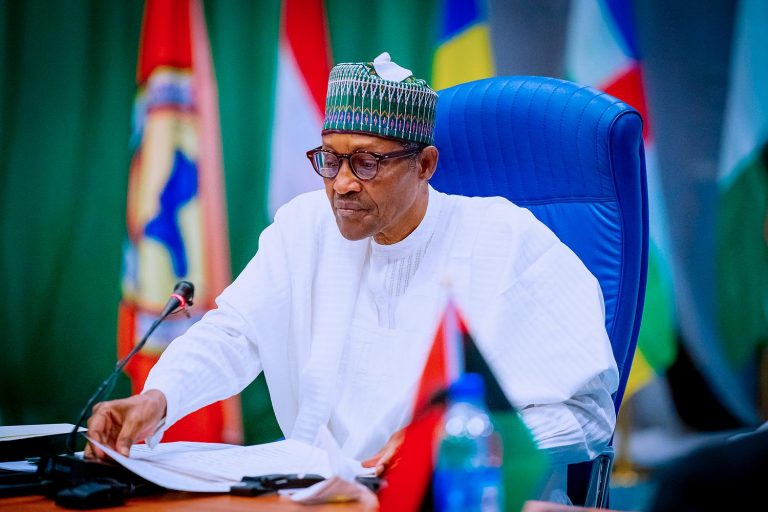
President Muhammadu Buhari said in Abuja on Wednesday that the uncertainty created by the non-passage of the Petroleum Industry Bill (PIB), lack of progress, and stagnation in the petroleum industry has cost Nigeria an estimated $50 billion in investments over the last ten years.

The President said the stagnation was affecting the economy’s growth during remarks at a ceremony commemorating the passage of the PIA, which preceded the Federal Executive Council (FEC) meeting. He cited a lack of political will on the part of previous administrations to implement the necessary changes.
According to the President, the signing of the Petroleum Industry Bill on August 16, 2021, will put an end to decades of uncertainty and underinvestment in the industry.

“We are all aware that previous administrations recognized the need to further align the industry for global competitiveness, but there was a lack of political will to make the necessary changes.

“This lack of progress has stymied the industry’s growth and our economy’s prosperity. Nigeria has lost an estimated US$50 billion in investment over the last ten years as a result of the PIB’s failure to pass.

“This administration believes that passing the Petroleum Industry Bill in a timely manner will assist our country in attracting investments across the entire oil and gas value chain.

“In light of the value that a stable fiscal framework for the oil and gas industry will provide to our Nation and investors, our Administration has determined that it is necessary to work with the two chambers of the National Assembly to ensure the passage of the PIB,” he said.

The bill’s signing, according to the President, is part of the administration’s commitment to building a competitive and resilient petroleum industry that will attract investment, improve our revenue base, create jobs, and help us achieve our economic diversification goals.

As a “nation that relies on oil resources for the development of other sectors, Nigeria operates a petroleum industry that is largely governed by laws enacted over 50 years ago, such as the principal legislation, the Petroleum Act of 1969, and other obsolete legislations,” the President stated.

He stated that the President’s assent to the “Petroleum Industry Act 2021″ marked the start of a journey toward a competitive and resilient petroleum industry that will attract investments to help the country’s Economic Recovery and Growth Plan.

“The Petroleum Industry Act 2021” establishes a regulatory environment that ensures efficiency and accountability throughout the oil and gas value chain, as well as repositioning NNPC as a commercially driven National Petroleum Company accountable to the Federation.

“The Act also establishes a direct benefit framework to support the long-term development of Host Communities. I urge the host communities to carefully examine the contents of the Bill, which, if implemented, will provide them with real and long-term benefits.

“Furthermore, the Act calls for a deliberate end to gas flaring, which would help Nigeria meet its Paris Agreement Nationally Determined Contributions by providing a funding mechanism to support gas flare out projects in host communities,” he added.

The administration believes that passing the Petroleum Industry Bill in a timely manner will help our country attract investments across the oil and gas value chain, according to the President.

The President, while directing immediate implementation of the framework for the Petroleum Industry Act (PIA), urged all relevant stakeholders to comply and reposition themselves for full activation within 12 months.

Mr Timipre Sylva, Minister of State for Petroleum Resources, will lead the implementation team, according to the President, who urged all Ministries, Departments, and Agencies (MDA) to adjust to the transition, which is intended to reposition the economy.

“To reaffirm this administration’s commitment to delivering the law’s value proposition, I’ve approved an implementation framework that will begin immediately to ensure the industry envisioned in the new law takes shape.
“The implementation process, which will be led by the Hon Minister of State for Petroleum Resources, has been given a 12-month deadline to complete the implementation of this act. As a result, I am directing all relevant government Ministries, Departments, and Agencies to fully cooperate in ensuring the law’s successful and timely implementation,” he said.
The President praised the 9th Assembly’s leadership for continuing to pursue national aspirations and demonstrating mutual harmony with the Executive in the pursuit of a patriotic outcome in the passage of the PIB.

Read Also:  Investors Will Be Attracted By New Petroleum Industry Law – Minister

“I also commend the entire executive team for their tireless efforts to ensure the passage of this critical legislation for our country. I appreciate the contributions and support of Nigerians and other industry stakeholders in achieving this historic milestone,” he said.
The Senate President, Dr. Ahmed Lawan, the Deputy Senate President, Ovie Omo-Agege, the Deputy Speaker, Hon. Ahmed Idris Wase, and other lawmakers, members of the Federal Executive Council (FEC), and the Group Managing Director of the Nigerian National Petroleum Corporation, Mele Kyari, were all present at the ceremony.

Over 600,000 doses of AstraZeneca have been donated to Nigeria by UK

0

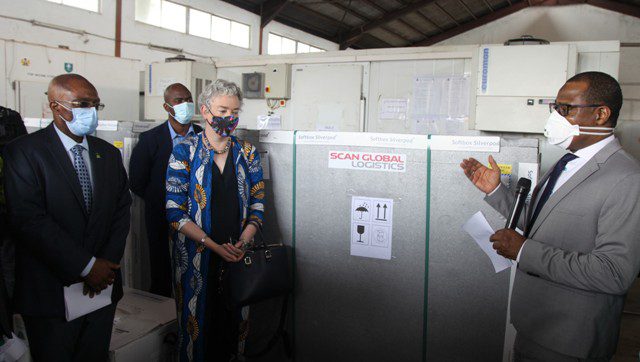
The UK government has donated 699,760 doses of AstraZeneca vaccines to Nigeria through the COVAX Facility in order to combat the global spread of COIVD-19.

Dr. Faisal Shuaib, Executive Director/CEO of the National Primary Health Care Development Agency, who unveiled the vaccines on behalf of the Federal Government of Nigeria, said the “vaccine will be deployed immediately to the states and would be administered as the second dose to those who had previously received only the first dose of the vaccine during the first phase of the vaccination rollout.”

He advised anyone who had received the first dose of AstraZeneca to go to the nearest vaccination site and get the second dose to ensure complete protection.

“AstraZeneca is a vaccine that we are all familiar with, and our health workers are experienced in its administration and management,” Dr. Faisal explained. It must be stored at temperatures of +20°C +8°C, just like the majority of our routine vaccines.”

“All vaccines certified by NAFDAC are highly effective against COVID-19 virus, including the Delta variant,” he assured Nigerians, adding that “WHO does not approve mixing of different brands of COVID-19 vaccine.” Both the first and second doses of the vaccine must be taken.”

Dr. Faisal promised that the agency would “continue to strengthen our collaboration with all stakeholders and partners, under the guidance of the Presidential Steering Committee on COVID-19 and the Federal Ministry of Health, to ensure we surpass the first phase’s achievement.”

“We have also received communications from the COVAX facility indicating the availability of an additional 801,600 doses of AstraZeneca vaccines,” he added. The Canadian government has agreed to donate these doses, which will be delivered by the end of August.

“We will continue to count on your partnership and support to get the factual message about the vaccine and vaccination across to the people,” the ED said, charging journalists as stakeholders in getting the truth about vaccines to the public.

Gill Atkinson, UK representative and Acting British High Commissioner to Nigeria, said the UK was one of the first countries to support COVAX, pledging 548 million pounds.

Read Also:  AstraZeneca vaccine not from Bill Gates, Fani-Kayode says after vaccination

“We have consistently pushed for a global effort that helps every country receive the COVID-19 vaccine,” she says. I’m thrilled to see Nigeria receive 699,760 doses of the vaccine through COVAX, thanks to a donation from the United Kingdom. This is the first of 1,299,760 doses that the UK is expected to donate through COVAX. We can only end the global coronavirus pandemic by vaccinating more people around the world.”

She also stated that as one of the largest donors to COVAX and through its engagement with the Nigerian-led response, the UK will continue to play a global role in promoting an effective rollout of the vaccines.

Dr. Walter Kazadi Molumbo, WHO Country Representative in Nigeria, said in a goodwill message that the portfolio of COVID-19 vaccine in Nigeria is growing, opening the possibility of covering a larger population and achieving herd immunity for the country.

Dr. Molumbo urged those who had received their first doses of the AstraZeneca vaccine to seek second doses at a health facility near them.

He claimed that all of the vaccines given to Nigeria have been approved by the World Health Organization and are safe and effective, as well as preventing hospitalization and death.

Mr. Rahman Kelani, Director Vaccine Program, CHAI, thanked the UK government for the donation and urged all stakeholders to work together to ensure the vaccines’ successful rollout in the country.

Nigeria’s U-20 team qualifies for the Mixed 4x400m final at the World Athletics Championships

0

At the U20 World Athletics Championship in Nairobi, Kenya, Nigeria’s mixed 4x400m quartet advanced to the final after winning Heat 2 of their race in a Championship Record (CR) time of 3:21.66.

The men’s and women’s 400m heats were scheduled for the morning session, with individual heats starting in under two hours. Regardless, Nnamani Johnson, Ella Onojuvwevwo, Opeyemi Oke, and Bamidele Ajayi won their heat by a comfortable margin.

Read Also:  AFN: Ibrahim Gusau begs sports ministry for Reconciliation

Italy U20 and South Africa U20 finished second and third, respectively, and qualified for the final. They will reassemble in the finals, with Nse Imaobong and Dubem Amene possibly joining them to claim Nigeria’s first medal of the Championships.

Egypt’s coach expects difficult group with Super Eagles

0

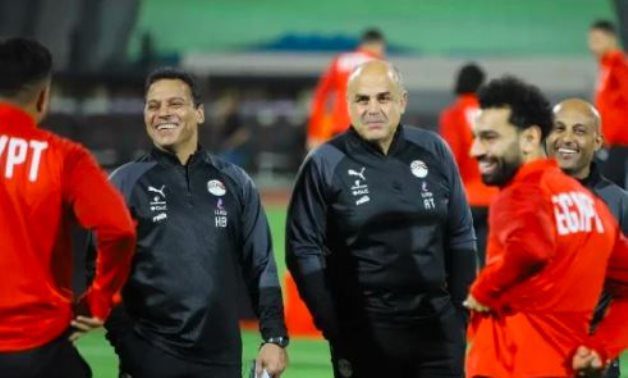
Hossam El-Badry, the head coach of Egypt’s national football team, believes that qualifying from Group D, which includes the Super Eagles of Nigeria, Sudan, and Guinea-Bissau, will be a difficult task for the Pharaohs.

The Super Eagles, three-time African champions, were seeded first in Group D of the 2021 Africa Cup of Nations tournament.

Egypt With Nigeria, Sudan, and Guinea-Bissau in their group, Coach El-Badry has warned that qualification will be difficult for the Pharaohs. Only two teams will advance from a group that includes three former African champions, and the Pharaoh’s head coach is wary of the other three nations’ challenge.

“Our group was quite balanced and not easy due to the improvement of all these teams, all of whom have great players,” El-Badry said after the draws were made in a press conference.

“I have a lot of faith in God and the players’ abilities to overcome this group and perform well enough to meet the expectations of the Egyptian fans.”

Read more: Nigeria Draws Egypt, Sudan, and Guinea Bissau for AFCON 2021
Egypt’s Pharaohs will be favorites to win their 2021 Africa Cup of Nations (AFCON) group in Cameroon, based on their pedigree and the fact that they have one of the best players in the world in two-time African best player Mohamed Salah.

Read Also:  NLC: Allow market forces to determine the price of gasoline

The TotalEnergies Africa Cup of Nations will be held in five cities across Cameroon from January 9 to February 6, 2022.

President Buhari appoints Petroleum Industry Act Steering Committee

0

President Muhammadu Buhari has approved a steering committee to oversee the implementation of the recently signed Petroleum Industry Act (PIA).

Timipre Sylva, Minister of State for Petroleum Resources, is the chairman of the steering committee.

Permanent Secretary, Ministry of Petroleum Resources, Group Managing Director, NNPC, Executive Chairman, FIRS, Representative of the Ministry of Justice, Representative of the Ministry of Finance, Budget and National Planning, Senior Special Assistant to the President on Natural Resources, Barrister Olufemi Lijadu as External Legal Adviser, Permanent Secretary, Ministry of Petroleum Resources, Group Managing Director, NNPC, Executive Chairman, FIRS, Representative of the Ministry of Justice, Representative of the Ministry of Finance, Budget and National Planning, Senior Special

The steering committee’s primary responsibility will be to guide the effective and timely implementation of the PIA during the reform program’s transition to the petroleum industry, and to ensure that the new institutions created are fully capable of carrying out their mandate under the new legislation.

Read Also:  Investors Will Be Attracted By New Petroleum Industry Law – Minister

The committee will have 12 months to complete the task, and the President will be updated on a regular basis.

Investors Will Be Attracted By New Petroleum Industry Law – Minister

0

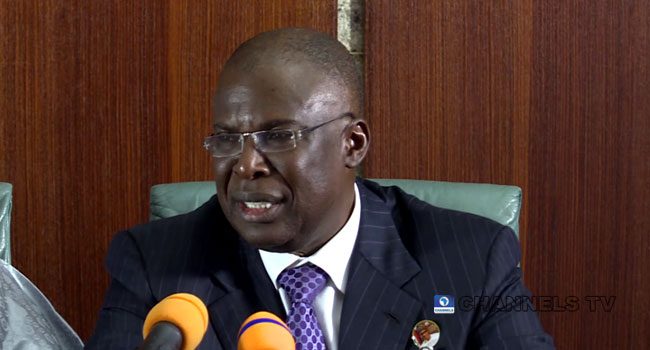
Chief Timipre Sylva, Minister of State for Petroleum Resources, stated that the goal of the President’s signing of the Petroleum Industry Bill (PIB) into law was to attract investors.

On Tuesday, the minister revealed this while responding to questions about the 3% allocation to host communities in the PIB in Abuja.

President Muhammadu Buhari, according to Sylva, will speak extensively on the Act on Thursday, which will aid in the development of the oil and gas sector.

“As a country, we have a course that we are following. So, for us in the Niger Delta, if you talk about three percent in the Act, I’ll ask, three percent of what? Isn’t that preferable to knowing 100% of what you don’t know?

“What we want to accomplish is the philosophy behind this bill, which is to attract investors to Nigeria and produce as much crude as possible on the ground. That’s what we’re aiming for.

“We must measure everything against this philosophy, so that if activities are not taking place in the Niger Delta, nothing happens because investors look at the numbers to see if they add up for them to operate,” he said.

According to Sylva, the percentages are usually charged to operation costs, and a lot has been added to the operation costs in Nigeria.

He pointed out that there was a need to be cautious about adding more costs to the operation because the impact would be felt in other areas.

He claimed that the country’s high operating costs would deter investors.

Sylva pointed out that the problems with frontier exploration funds were not limited to the North, as some had suggested, but affected all areas where oil is being explored.

“Every frontier territory aspires to be a host community, and they are not all in the same place in the country; they are in Cross River, the North East, the South West, and so on, so when people think of frontier territory as being in one place, they are mistaken.

“We must come together as a country, as a frontier and host community, and for host communities; we must realize that, at the end of the day, it is about the philosophy of bringing investment to the territory,” he said.

According to Sylva, the country has had about 37 billion barrels of oil reserves for the past ten years and has not added to them, and production, which was about three million barrels, has decreased until recent work was done.

Sylva stated that the system needed to be reenergized and that the country needed to look forward to a positive outcome.

Read Also:  Petroleum ministry spent N14.5m to buy ‘biros’ in one year, Auditor-General reveals

On the price of gasoline, he stated that the sector had been fully deregulated since the PIB was signed into law.

He did say, however, that the deregulation would not happen right away.

Sylva explained that products would be sold at market-determined prices, and that the cost would be shared by all parties involved in the PIB signing.

He stated that the government was aware of the potential for hardship and difficulties for Nigerians.

“As a result, we will not rush to implement it; instead, the implementation framework will address how we will alleviate the suffering that this may cause.

“We will work with labor to ensure that a framework exists that allows us to implement deregulation,” he added.