Home Blog Page 2142

China Enacts Strict New Online Privacy law

0

On Friday, China enacted a broad privacy law aimed at barring firms from gathering sensitive personal data, as the country grapples with an increase in internet frauds and Beijing pursues tech giants hoarding personal information.

State and private businesses managing personal information will be compelled to restrict data gathering and get user agreement under new rules imposed by China’s highest legislative body.

However, the Chinese state security apparatus will continue to have access to large amounts of personal data. Beijing has long been accused of using technology to speed up repression in the northwestern province of Xinjiang and elsewhere.

The new restrictions are also anticipated to shake China’s internet sector, which has seen businesses like Didi, a ride-hailing giant, and Tencent, a gaming juggernaut, in the eyes of regulators in recent months for misusing personal data.

Following the announcement on Friday morning, Chinese IT companies such as Alibaba and Tencent fell.

A representative for the National People’s Congress told official news agency Xinhua earlier this week that the law intended to protect those who “feel strongly about personal data being exploited for user profiling and by recommendation algorithms, or the use of big data in setting [unfair] prices.”

It will restrict businesses from charging varying pricing for the same service based on a customer’s previous purchases.

According to China’s consumer protection agency, tens of thousands of people have complained about having to pay more for hailing a cab using an iPhone than a cheaper mobile phone model, or for tickets if they are classified as a business traveller.

The regulation is based on the General Data Protection Regulation of the European Union, which is one of the most stringent online privacy rules in the world.

Kendra Schaefer, a partner with Beijing-based consulting firm Trivium China, said, “China’s new privacy regime is one of the harshest in the world.” “With this law, China is not really looking at the immediate term.”

Instead, it aims to “lay the groundwork for the digital economy over the next 40 or 50 years,” according to her.

The law, which takes effect on November 1, also states that personal data of Chinese citizens cannot be transferred to nations with worse data security standards than China – requirements that foreign enterprises may find difficult to comply with.

Companies who do not comply could face fines of up to 50 million yuan ($7.6 million), or 5% of their yearly revenue.

According to the law, sensitive personal data includes information such as color, ethnicity, religion, biometric data, and a person’s location that, if released, might lead to “discrimination… or gravely jeopardize the safety of individuals.”

Read Also:  World Health Organization has officially declared China malaria-free.

However, surveillance cameras abound in Chinese cities, some of which are equipped with facial recognition technology and collect biometric data on a daily basis.

Residents in the restive region of Xinjiang, which is home to the majority of China’s Uighur ethnic minority, are reportedly forced to put software on their phones that allows police to see their location, images, and text messages, according to rights groups.

INEC Confirms Date For Final Candidate List In Anambra Election

0

The date for the distribution of the final list of candidates for the Anambra governorship election on November 6, 2021 has been reaffirmed by the Independent National Electoral Commission (INEC).

The Commission agreed to publish the final list on October 7 during a meeting on Thursday.

Mr Festus Okoye, INEC’s National Commissioner and Chairman, Information and Voter Education Committee, said in a statement that the date is the same as the one in the election’s calendar and program of operations, which was issued previously.

Mr Okoye stated that the Commission’s approved itinerary and schedule of activities on January 18, 2021, allows for the withdrawal/substitution of candidates in accordance with Section 35 of the Electoral Act 2010. (as amended).

As a result, by the Commission’s July 30 deadline, 11 of the 18 political parties had substituted seven governorship and 11 deputy governorship candidates.

In addition, the Commission received notice of a decision by the Court of Appeal (Kano Division) overturning the High Court of Jigawa State’s decision on the leadership of the All Progressives Grand Alliance and the nomination of its candidates for the Anambra Governorship election.

The Commission has issued an amended list of candidates on its website as a result of the substitutions and court rulings, and the final list will be published on October 7.

Meanwhile, INEC Chairman Professor Mahmood Yakubu has stated that the electoral body will continue to improve its use of technology in elections across the country.

Professor Yakubu made the remark during the opening ceremony of a two-day retreat for commission officers in Nasarawa State’s Keffi.

INEC, he claims, does not require new legislation to implement some technology.

As a result, he stated that the Commission will use “new and innovative” technology for the Anambra election.

He explained, “We may have different instruments, but they all strive toward the same goal.”

“There are some activities, some pieces of technology that we have implemented, and the regulations are already adequate for us to continue to use these tools,” says the author.

“For example, we don’t require any specific legal provisions to deploy the EMSC (Election Monitoring and Support Centre).”

Read Also:  President Buhari has given his approval for the review of 368 grazing reserves

His remark comes only weeks after the National Assembly passed an Electoral Act change measure, sparking heated debate over whether election results should be transmitted electronically.

Kyari urges Greenfield Refinery to stop importing products

0

Mallam Mele Kyari, the Group Managing Director of the Nigerian National Petroleum Corporation (NNPC), has asked members of the NNPC Greenfield Refinery Limited (NGRL) Board of Directors to investigate all possible solutions to end the current petroleum product importation crisis.

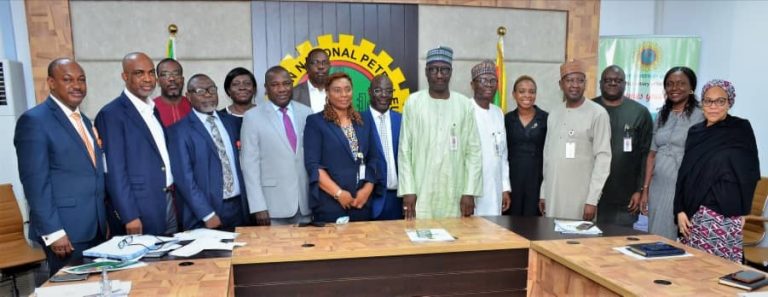
Mallam Kyari gave the charge at the NNPC Towers in Abuja yesterday, when he inaugurated the Board of the Corporation’s newly registered subsidiary, NNPC Greenfield Refinery Limited (NGRL).

The NNPC Greenfield Refinery Limited is a Corporation subsidiary that was established in December 2020 with the mission of overseeing the construction and management of new refineries.

The GMD, who also serves as Chairman of the NGRL Board of Directors, pushed members of the Board to focus on profitability in order to stay afloat and prevent collapse.

Mr. Garba Deen Muhammad, the NNPC Group General Manager, Group Public Affairs Division, said in a statement, “As a business, this is a tremendous opportunity for us, and this company’s balance sheet must improve favorably.” Going forward, I can tell you that under the Petroleum Industry Act (PIA), if you continue to post negative for three years, you are out. So there isn’t much of an excuse.”

He urged the new business’s Board of Directors and Management Team to put in place a solid structure with the necessary talents, technology, and funding to drive the company’s operations, and he expressed optimism that the company will be able to fulfill its mission.

“Our company needs to grow, and we won’t be able to do so unless we can process our product, whether it’s liquid or gas. We have accomplished nothing if we do not monetise it. This is a brand-new chapter for us, and we’re determined to make it work,” he said.

All of the NNPC’s actions in the areas of new refineries, condensate refineries, and equity purchase in credible private refineries, according to the CEO, are aimed at maintaining the country’s energy security.

Read also: President Muhammadu Buhari will pay a visit to Adamawa State

Engr. Mustapha Yakubu, Alternate Chairman of the Board and Group Executive Director, Refinery and Petrochemicals, stated in his remarks that the company’s operations would be guided by cost-effective principles in accordance with the new Petroleum Industry Act (PIA), with profitability being the primary focus.

Engr. Bege Talson, Group General Manager, Greenfield Refineries and Project Division (GRPD) and Managing Director of the NGRL, said the Division was collaborating with third-party investors to build greenfield, modular, and condensate refineries with a combined capacity of 250,000 barrels per stream day (bpsd).

Twitter has agreed to 7 out of 10 petitions for suspension Says Lai Mohammed

0

Nigeria’s Minister of Information, Lai Mohammed, has stated that the federal government has made headway in its negotiations with Twitter, the world’s largest social media platform.

The Nigerian government temporarily halted Twitter’s operations in the country after President Muhammadu Buhari’s account erased a message referencing genocidal carnage.

Read also: Twitter suspension: Peace talks with the Nigerian Government have been confirmed

He told Reuters that the Nigerian government had achieved agreements with Twitter on seven of ten requests, but that the business had yet to respond on the remaining problems, such as opening a local office, paying local taxes, and helping with the government to police content and damaging tweets.

“By the end of the year, we definitely want to put this behind us,” Mohammed added.

Mohammed defended the suspension, claiming that Twitter “made their platform the platform of choice for separatists” and that it was suspended because it posed a threat to national unity.

President Muhammadu Buhari will pay a visit to Adamawa State

0

President Muhammadu Buhari will travel to Adamawa State in North-East Nigeria on Friday.

The purpose of the visit is to express condolences to the state government and people on the death of late Ahmed Joda, one of Adamawa’s prominent sons.

Before President Buhari took office in 2015, Joda was the Chairman of the President’s transition team.

The 91-year-old statesman passed away on August 13th.

Read also:

President Buhari will then go from Yola to Kano to attend his son Yusuf Buhari’s wedding fatiha.

After the wedding, he will return to Abuja.

On Monday, a high-powered delegation led by the Secretary to the Federation’s Government, Boss Mustapha, paid a visit to Joda’s family to express their condolences.

EFCC released Theodore Orji, the former governor of Abia State on bail

0

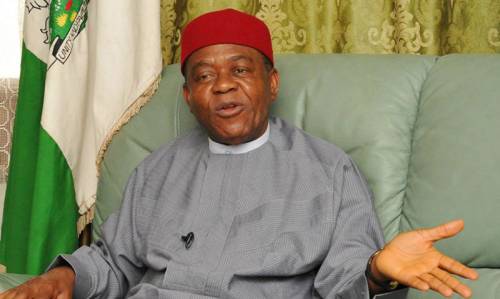
Following his arrest on Thursday, Theodore Orji, the former governor of Abia State, was released on bail by the Economic and Financial Crimes Commission (EFCC).

Senator Orji was taken into custody at Abuja’s Nnamdi Azikiwe International Airport. He was said to be on his way to London for a medical examination.

After hours of interrogation at the EFCC headquarters in Abuja, EFCC agents granted him administrative release, according to reports. On Friday, the interrogation will resume.

Orji was interrogated alongside his son, Chinedu, the Speaker of the Abia State Assembly. When the Speaker learned of his father’s detention, he turned around.

It was unclear whether the Speaker was also released on bond.

Orji and his son are accused of stealing N521 billion from the government.

The probe was prompted by a petition submitted by the Fight Corruption: Save Nigeria Group on March 17, 2017.

The petitioners claimed that Orji diverted “N383 billion from the Federation Account, N55 billion from excess crude, N2.3 billion from Sure-P, N1.8 billion from ecological funds, N10.5 billion from a loan, N12 billion from a Paris Club refund, N2 billion from an agricultural loan, and N55 billion from ASOPADEC money while in office.”

President Buhari has given his approval for the review of 368 grazing reserves

0

PRESIDENT Muhammadu Buhari has given his approval for the review of 368 grazing reserves in 25 states throughout the country.

Garba Shehu, the President’s Senior Special Assistant on Media and Publicity, said the evaluation would establish the extent of grazing reserve encroachment in a statement released yesterday in Abuja.

“The President’s instruction came after he approved the recommendations of a committee convened by the President’s Chief of Staff, Prof. Ibrahim Gambari,” the statement stated.

“Among other things, the committee advised collecting field data on 368 Grazing Reserves across 25 states to assess encroachment and encroachers, stakeholder interactions, and sensitization,” according to the report.

“The Committee also advised that maps and geo-mapping/tagging of sites be produced, that findings be analyzed and reports be prepared, and that suitable communication on Grazing Reserves and activities be designed.

“Based on existing security concerns and other pre-existing socio-economic factors, the number of Grazing Reserves and states was calculated.

“The President requested that the task be completed as soon as possible in order to improve understanding and implementation of the Grazing Reserves.

Governor of Kebbi State and Vice Chairman of the National Food Security Council, Atiku Bagudu, Governor of Ebonyi State and Chairman of the NEC Sub-Committee for National Livestock Transformation Plan, David Umahi, Minister of Water Resources, Suleiman Adamu, Minister of Agriculture and Rural Development, Sabo Nanono, Minister of Environment, Dr. Mohammad Mahmood Abubakar and D. Mohammad Mahmood Abubakar are

Read also: Accepting the worthiness and expediency of an NYSC Trust Fund

“The Technical Sub-Committee is made up of representatives from the main committee’s seven members, as well as the Ministry of Justice, the Surveyor General of the Federation, the National Agricultural Land Development Authority (NALDA), and the National Space Research Development Agency” (NASRDA).

“Among the Committee’s Terms of Reference was to collect information from states and confirm the status of all Grazing Reserves, as well as assess the percentage of available land and those with existing encroachment issues for case-by-case resolution in collaboration with state governments and the FCT.

“The Committee will also make suggestions for ungazetted Grazing Reserves to be gazetted, as well as build a database of National Cattle Herders and guarantee that Grazing Reserves are adequately communicated to all stakeholders.

The Committee’s first meeting was conducted on May 10, 2021.


Nigeria lost $50 billion as a result of the PIB’s delay – Buhari

0

President Muhammadu Buhari claims that the absence of the Petroleum Industry Act has cost the country $50 billion in the petroleum industry since 2011.

This was stated by Buhari today in Abuja at a ceremony commemorating the passing of the PIA, which preceded the Federal Executive Council meeting.

Femi Adesina, the President’s Special Adviser on Media and Publicity, stated this in a release headed, “Nigeria Lost Estimated $50 Billion in Investments in 10 Years Due To Stagnation, Uncertainty Over Petroleum Industry, Says President Buhari.”

According to the President, the loss was caused by the uncertainty surrounding the non-passage of the Petroleum Industry Bill, as well as a lack of progress and stagnation in the petroleum industry, which he attributed to previous administrations’ lack of political will to implement the necessary changes.

According to the President, the signing of the Petroleum Industry Bill on August 16, 2021, will bring an end to decades of uncertainty and underinvestment in Nigeria’s petroleum industry.

“We are all aware that previous administrations have recognised the need to further align the industry for global competitiveness, but there has been a lack of political will to bring this transition to fruition,” he said.

“This lack of advancement has stymied the industry’s growth and our economy’s prosperity. Nigeria has lost an estimated $50 billion in investments over the last ten years as a result of the PIB’s failure to pass.

“This administration thinks that passing the Petroleum Industry Bill in a timely manner will assist our country in attracting investments across the whole oil and gas value chain.

“In light of the value that a solid fiscal framework for the oil and gas industry would provide to our country and investors, our administration has determined that it is vital to cooperate with both houses of the National Assembly to achieve the approval of the PIB.”

Read also: NVBF invited 54 players to a training camp for the 2021 Africa Nations Cup

The bill’s signing, according to the president, is part of the regime’s commitment to developing a competitive and resilient petroleum industry that will attract investment, increase income, generate jobs, and promote the economic diversification strategy.

He went on to say that the PIA was required because Nigeria’s petroleum business is mostly governed by laws enacted more than 50 years ago, such as the Petroleum Act of 1969 and other outdated legislation.

He urged host towns to accept the new legislation, claiming that it would help them in the long run.

“The Act also establishes a direct benefit system to support the long-term growth of Host Communities. I urge the host communities to carefully examine the substance of the Bill, which, if implemented, will provide them with substantial and long-term benefits.

“Furthermore, the Act calls for a purposeful halt to gas flaring, which would help Nigeria meet its Paris Agreement Nationally Determined Contributions by providing a financing mechanism to encourage gas flare out of the project in host communities,” he added.

He asked all key stakeholders to comply and reposition for full activation within 12 months while demanding the prompt execution of the PIA framework.

Timipre Sylva, Minister of State for Petroleum Resources, will lead the implementation team, according to him, and has urged all Ministries, Departments, and Agencies to acclimatize to the transition, which is intended to reorient the economy.

“To reaffirm this administration’s commitment to delivering the law’s value proposition, I’ve approved an implementation structure that will begin immediately to ensure the industry envisioned in the new law takes shape.

“The implementation process, which will be led by the Hon Minister of State for Petroleum Resources, has been given a 12-month deadline to complete the implementation of this legislation. As a result, I am directing all relevant government Ministries, Departments, and Agencies to fully cooperate in guaranteeing the law’s successful and timely implementation,” he stated.

Buhari also commended the 9th National Assembly for passing the bill in a spirit of fraternal cooperation with the Executive.

Dr. Ahmed Lawan, Senate President; Ovie Omo-Agege, Deputy Senate President; Ahmed Wase, Deputy Speaker; and other lawmakers, members of the Federal Executive Council, and Mele Kyari, Group Managing Director of NNPC, were in attendance.

NEDC: Appraising House of Reps Accountability Report

0

By Onuche Odoma

The Managing Director (MD) of the North East Development Commission (NEDC) Alhaji Mohammed Goni Alkali is a rare breed. His honesty, transparency and uprightness in the discharge of his responsibilities at the NEDC are seldom in most Nigerians. His public actions in the management of people and resources are unlike the general known character of Nigerians.

Months back, the House of Representatives bowed to pressures and conducted investigation into the alleged misappropriation of N100 billion at the NEDC by the management, headed by Mohammed Alkali. Some NGOs blew the alarm and the Nigerian media amplified the message.

A motion raised in plenary by Minority Leader, Ndudi Elumelu accused the NEDC boss of multiple corrupt acts and financial infractions at the commission, which was created to jumpstart massive infrastructural developments in the Northeast ravaged by years of Boko Haram insurgency. The House of Reps conducted a scrupulous investigation into the allegations against Alkali, but only found an empty bag of accusations.

Its submitted and adopted report on the probe indicated that the allegations against Mohammed Goni Alkali were spurious, frivolous, fabricated and baseless. Pleasantly too, the Reps committee also commended the Alkali-led management of the NEDC for its impressive and credible performance in projects execution in the communities covered by the mandate of the commission.

This is an uncommon applaud of a public servant in Nigeria who came under the investigative searchlight of national parliamentarians. Most Nigerians who find themselves in such probes hardly escape, without a scratch on the skin, like in the case of Alkali. They are found complicit in many ways and handed over to anti-graft agencies for prosecution.

Those conversant with this country, cannot argue that Nigerians are variously very ingenious. Test a Nigerian on anything, he excels exceedingly. Nigeria parades many best world class recognized professionals in virtually every disciplines. Nigerians are industrious and productive. The never-dying spirit in a Nigerian has opened rare doors for him and in strange climes globally.

However, like established by social scientists, every being is a blend of the contents of good and evil. The evil side of some Nigerians is also strappingly amazing. Nigerians have a high content of corruption. It’s nearly impossible to demand from many Nigerians holding public offices to adhere to the doctrinal tripod of transparency, accountability and probity in service.

Therefore, looting, embezzlement, diversion, pilfering, plundering, siphoning of the nation’s commonwealth and other financial crimes generally are the cherished pastime of most public office holders or Politically Exposed Persons (PEP) in the country. Financial crimes are very commonplace and the ingenuity it is executed, sometimes, marvel anti-graft agencies in the course of investigations.

There is hardly any day, one picks a copy of daily newspaper in Nigeria, without the headlines screaming with words like “Billions of naira missing in NPA;” “Probe spending of N881bn by 367 MDAs without appropriation, SERAP tells Buhari;” “Multi-billion-naira fraud rocks NDDC management;” “Over $ 2 billion arms procurement funds looted” and so forth.

Nigerians with the proclivity of corruption hardly ruminate while committing these crimes. But once the whistle blows, they indulge in all manner of subterfuge to subvert justice to the Nigerian state and the people. Courts trials of suspected fraudsters and parliamentary sessions digging into allegations of frauds have experienced some humorous scenes.

Some fraud suspects under trial or probes turn the courtrooms or venues into dramatic theatres. They play the thespian to invoke pity from the same public they shortchanged for personal enrichment, merely to evade justice. Some even feign illness.

There are notable examples! Of course, Nigerians have not forgotten how ex-PDP national publicity scribe, Mr. Olisa Metuh, who was standing trial for alleged money laundering collapsed in court in one of his trial sessions. He was accused of partaking in the diversion of N400 million from the $2.1 billion arms procurement fund. Former Bayelsa State Governor, Chief Diepreye Alamieyeseigha had to redefine gender fashion by disguising as a woman and escaped the shores of Nigeria when he faced alleged corruption charges.

Likewise, the Acting Managing Director of the Niger Delta Development Commission (NDDC) Prof. Kemebradikumo Pondei, dramatically slumped and fainted during a financial sleaze investigative hearing at the National Assembly (NASS). He was drilled by NASS committee over his alleged mismanagement of N40 billion funds of the commission. The riddle is yet to be resolved.

It was at the heat of the national uproar generated by Prof. Pondei’s battling with the hammer of parliament investigation that the allegations against the NEDC management sprouted. But as an upright and incorruptible public servant, Alhaji Mohammed Goni Alkali was not panicked by it. He calmly told reporters of his willingness to appear before the Reps Committee anytime he was invited to render accounts of his stewardship.

From the outset, Alkali trusted his clean records. Strikingly, the case of the management of the NEDC is however different. The parliament did its investigation and gave Alkali a pat on the back for his flawless handling of public accounts and projects. But the charges against him were multiple. His accusers alleged corrupt practices such as high handedness, over inflation of contracts, awards of non-existent contracts, massive contract splitting and brazen abuse of procurement laws in the award of contracts.

Quite honestly, the dragnet was expansive. But none of the allegations had any worthwhile substance to nail Alkali or implicate his leadership of the NEDC. This is an apt indication of a genuine and accountable public leadership by Alkali. Those close to the NEDC boss have attested to his personage as a stickler to personal positive morality. He combines it with the dictates of the law, anywhere he dispenses public leadership.

Today, if Nigerians are amazed at the rapid infrastructural rejuvenation of the Northeast, which was devastated and ruined by terrorists, the shadows of the NEDC under Alkali’s leadership reflects conspicuously everywhere. Through Alkali’s focused and honest leadership, the NEDC has strongly waded into the humanitarian crisis and infrastructural deficit caused by by Boko Haram insurgency.

The NEDC-MD has adopted the Multisectoral Crisis Recovery Project (MCRP) approach, as supported by the World Bank in tackling the disparate problems in the Northeast. The commission is into sensitization of the locals on the reality of fleeing remnants of Boko Haram insurgents and the dangers of sheltering escapee insurgents. And Alkali has trained select natives on techniques of dismantling unexploded landmines in communities for a more protective environment.

The commission has launched and is aggressively pursuing the Education Endowment Fund, agenda in the region. The scholarship benefits over 20,000 youths at the cost of N6 billion yearly. It has enabled the beneficiaries to access academic or professional capacity training and development in different fields of studies.

The NEDC is implementing the rehabilitation of drinking water and sanitation facilities in the states of the Northeast. Within his short duration in office, Alkali has implemented various humanitarian reliefs projects numbering 1, 310 under the broad scheme of “Rapid Response Intervention” (RRI) in all the 112 local governments of the Northeast region.

The commission also provide farmers with agricultural machinery and equipment, seeds, fertilizers, agrochemicals and extension services logistics vehicles annually under a programme tagged; “Integrated Agriculture Programme” (IAP). It covers the whole 112 LGAs in the Northeast. The NEDC is also into skills acquisition, training and provision of starter packs to Information Communication Technology (ICT), trainees.

Alkali has given entrepreneurship, and vocational skills a boast. Each of the 1,028 wards of the Northeast region, The NEDC has empowered women and youths in order to divert attention from the attractions of conscription into Boko Haram. The NEDC’s ambitious project of the construction of 10,000 housing units spread across 10 Borno LGAs for the resettlement of the internally displaced persons (IDPs) are the many signposts of the Alkali-led management of the NEDC.

Therefore, a public administrator engaged in such lofty and populist programmes as exemplified by Alkali’s leadership of the NEDC will not see the extra public funds to embezzle, even if he is tempted. Consequently, it was a heart-warming external blend with the reality in the management of NEDC, when the House of Reps applauded the NEDC for due diligence in the execution of projects, after the probe of alleged looted N100 billion.

Certainly, NEDC’s initiatives, operations and its impact on the communities in the Northeast region are speeding up the recovery process of the traumatized people and recovery of the entire devastated region. Mohammed Goni Alkali is accordingly encouraged to sustain and possibly, accelerate the tempo, as funds keep coming into the coffers of the commission.

Odoma wrote this piece from Abuja.
Gunmen kidnap the son of the former NMA Secretary and demand N20m in ransom

0

Ademola, the son of Dr Adewunmi Alayaki, the former National Secretary of the Nigeria Medical Association, has been kidnapped by gunmen in Ogun State.

According to our source, Adedamola’s kidnappers have demanded a ransom of N20 million to release the victim.

He was kidnapped on his father’s farm in the Isaga-Orile community in Abeokuta North Local Government Area of Ogun, according to reports.

Abimbola Oyeyemi, the State Police Public Relations Officer (PPRO), confirmed the incident to reporters in Abeokuta on Thursday morning.

Read Also:  Orientation: NYSC will continue to prosecute fake graduates – DG

Adedamola, he claims, is the manager of one of his father’s farms.

The police were on the lookout for the kidnappers, according to the PPRO.

“We have a handle on the situation. “Our men are on the lookout for the assailants,” he said.