Home Blog Page 21

APC Crisis in Benue as Alia, Akume Factions Announce Parallel LG Executives

0

Parallel local government party excos have been established by rival factions of the All Progressives Congress (APC) in Benue State, which are commanded by Governor Hyacinth Alia and Secretary to the Government of the Federation (SGF), George Akume.

This came after the state’s weekend’s parallel APC Local Government Congresses.

Every camp claimed to be an actual member of the faction during the Saturday exercise, which was held in Benue state’s 23 local government areas.

Remember how last Wednesday’s distinct ward congresses generated parallel excos for the camps loyal to the state’s two APC leaders?

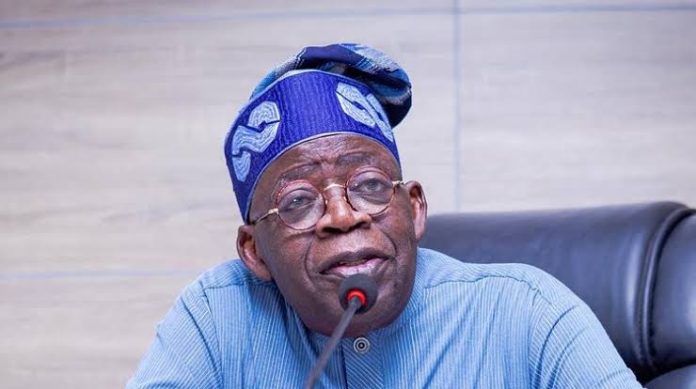
However, our correspondent learned that President Bola Tinubu and Prof. Nentawe Yilwatda, the party’s national chairman, will now have to make a decision in the battle for the APC’s survival in Benue State.

According to supporters of the two APC camps in the state, President Tinubu and Prof. Yilwatda, the party’s national chairman, will make the final decision about the Benue congresses and parallel exco lists.

APC State Organising Secretary James Ornguga, who is loyal to Governor Alia, commented on the local government congresses. He said that any congress held in Benue State without the support and approval of the party’s national working committee (NWC) was pointless and a waste of time, and that their own congress was “equally peaceful and credible.”

In a statement released over the weekend, Akume-aligned APC State Publicity Secretary Dan-Morgan Ihomun said that the non-elective congresses were peaceful, transparent, and well-organized. “The Benue State Chapter of the All Progressives Congress (APC) would like to thank party members in all 23 Local Government Areas for the outstanding attendance at the Local Government Congresses on Saturday, February 21, 2026.”

“The great degree of discipline, unity, and organizational capacity inside the party was reflected in the calm, peaceful, and transparent conduct of the Non-elective Congresses throughout the state. The large number of participants demonstrates their ongoing faith in the APC’s principles and leadership in Benue State.

We congratulate all current Local Government Party Executives who were lawfully confirmed by their respective Congresses to serve another four-year term in office,” the statement continued.

This reaffirmation is a resounding validation of your leadership and the faith that party members have placed in you. You are urged to continue being open, honest, and dedicated to bolstering the party’s grassroots infrastructure in accordance with the party’s constitution and core values as you take on this renewed mandate.

“Sen. Dr. George Akume, CON, Secretary to the Government of the Federation and Leader of the APC in Benue State and the North Central Zone, is greatly appreciated by the party for his steady leadership, direction, and stabilizing role. His dedication and experience continue to give the state party direction and unity.

Senate Demands Answers from Tinubu’s Economic Team Over N58.47trn Proposal

0

A high-stakes battle that could change the country’s fiscal direction and political accountability has been sparked by Nigeria’s N58.47 trillion 2026 budget, which has deepened tensions between the Senate and the federal government’s economic team over assumptions about oil revenue, mounting debt, and persistent capital implementation failures. Aborisade reports on Sundays.

The yearly allocation ceremony is frequently cloaked in hope amid Nigeria’s unstable fiscal environment. Forecasts of growth shine. Benchmarks for oil look boldly to the future. Rather of being presented as goals, revenue objectives are presented as inevitable. However, the script suffered a severe setback at the National Assembly on Thursday.

An ordinary meeting between the Senate Committee on Appropriations and the federal government’s economic managers descended into a heated argument on political accountability, realism, and legitimacy.

The N58.472 trillion 2026 Appropriations Bill, the biggest in the nation’s history, was at issue.

The committee chairman, Senator Olamilekan Adeola, spearheaded the legislative effort. Wale Edun, the Minister of Finance and Coordinating Minister of the Economy, was seated across from Atiku Bagudu, the Minister of Budget and Economic Planning; Doris Uzoka-Anite, the Minister of State for Finance; Zacch Adedeji, the Chairman of the Nigeria Revenue Service; and Shamsedeen Babatunde Ogunjimi, the Federation’s Accountant General.

President Bola Tinubu’s economic reform plan and the question of whether the administration’s lofty fiscal estimates are based on sound or optimistic math loomed large over the exchange.

The Senate made a clear and uncompromising complaint: Nigeria cannot keep passing large budgets based on revenue estimates that consistently fall short of expectations.

Adeola reminded the economic team that the government, not the legislature, was the original author of the 2026 budget proposal. Since the oil benchmarks, income projections, and assumptions were executive proposals, they must stand up to scrutiny.

He brought up concerning discrepancies in recent fiscal cycles’ performance. The performance of oil revenue fell to roughly 18 percent in a single year.

It was 36.5% in another, well below the estimates that had supported preparations for large expenditures. For legislators, these figures were more than just numbers. They were proof of systematic overestimation.

“How do we account for such poor performance?” Adeola posed a pointed question. “Should we cut this budget or keep it in place?”

The question echoed around the room. It was not theater of rhetoric. If the government cannot offer more robust assurances of revenue realities, the Senate is actively considering cutting the N58.47 trillion budget.

The benchmark of 1.84 million barrels of oil per day, which is part of the 2026 proposal, is at the heart of the disagreement. Edun called it a “stretch target,” contending that challenging standards promote greater achievement as opposed to complacency. He insisted that fiscal stability would be maintained as long as the government did not spend more than it brought in.

“It is a stretch target so that authorities do not settle for lower output, but as long as we do not spend what we do not have, we are within safe limits,” Edun stated.

Senators, however, are still cautious. Theft, pipeline vandalism, inefficient operations, and fluctuations in world oil prices have all been problems for Nigeria’s oil industry. Without matching structural guarantees, a stretch objective could become a financial mirage for lawmakers.

The Senate focused on a more politically sensitive topic—implementation failures—than estimates.

Budgets are passed each year with large capital expenditure components intended to finance development, social services, and infrastructure. Capital releases to Ministries, Departments, and Agencies have not been sufficient year after year.

Adeola asked the economic team what would happen to the capital components for 2024 and 2025. What caused initiatives to stall? What caused the contractors to be delayed? Why did releases not match the allocations?

The committee was not entirely satisfied with Edun’s initial statement, which said that funding for the capital components was continuing. Uzoka-Anite provided stronger guarantees. She announced that MDAs had been instructed to upload their funding plans for 2025 in order to facilitate timely disbursement, and that payments for unfinished 2024 capital projects were starting right away.

“The financial management system is operational again. The MDAs need to finish their documentation requirements, but we are prepared to begin,” she promised.

She made a firm promise that the 2024 and 2025 capital components would be fully implemented by March 31, 2026.

The commitment was appreciated by a legislature weary of constant delays, but it will be evaluated based on implementation rather than intent.

An intriguing development was that Adedeji, the head of the NRS, agreed in general with the Senate’s concerns over revenue realism. “Effective budgeting is about what can be done, not how big the appropriation is,” he remarked.

“If we plan with 100 naira in mind and think we have 10 naira, we will cause ourselves problems,” he cautioned.

His actions highlighted a fundamental change in Nigeria’s system of oil revenue.

He clarified that the Nigerian National Petroleum Company is currently a limited liability company in accordance with the Petroleum Industry Act.

He asserts that taxes and royalties, not direct crude sales, are the main sources of government revenue from oil production, and that the government’s net take decreases if production costs increase or operational efficiency falls.

According to forecasts, roughly 47% of oil firm output is converted into government revenue under the current arrangements, Adedeji revealed.

Lawmakers pointed out that ratio highlights the necessity of strict expense control and realistic income forecasts.

Spending on security introduced an additional level of complication. Edun maintained that the 2026 plan had made security a top priority and that emergency funds had been regularly made available for important military purchases, including those made abroad. He clarified that while some of these expenses might not be readily apparent under traditional categories, they were nonetheless within authorized Federation Account limitations.

Such expenditure is politically inevitable in a country that is struggling with insurgency and pervasive insecurity. However, it competes for limited financial resources with social welfare, health, education, and infrastructure.

Senators understand that trade-offs become more severe when debt servicing increases.

Adeola estimated Nigeria’s debt stock at over N152 trillion and made the audacious suggestion to sell off assets in order to reduce the debt portfolio and future borrowing expenses.

He contended that lowering the principal might lessen long-term financial strain.

Edun retorted that the high cost of debt on global markets, rather than Nigeria’s debt-to-GDP ratio, is the country’s main problem.

He maintained that high interest rates disproportionately increase borrowing costs in developing nations. He revealed that Nigeria is now serving as the chair of a G24 technical group meeting where the main topics of conversation are pricing distortions and debt sustainability.

However, senators seemed skeptical that domestic fiscal difficulty can be explained solely by global injustices. To prevent repeating cycles of poor performance, they are advocating for stricter budgetary restraint and more cautious forecasts.

Edun gave a cautiously upbeat assessment of the economy. According to him, growth is about 4%. The tendency for inflation is declining. Foreign reserves are increasing. The stability of the exchange rate is growing. He referenced a reported $20 billion contribution from Shell and restored investor confidence as proof of reform progress.

The administration’s overarching goal is to increase investment to 30% of GDP and accelerate yearly growth to 7%, which could significantly lower poverty and increase opportunity.

Edun stated that increased private sector involvement in infrastructure would relieve strain on governmental borrowing.

Legislative skepticism is still present, though. Senators argue that macroeconomic metrics need to be translated into real improvements, such as finished roads, completed projects, paid salaries, and low household market inflation.

The interaction moved behind closed doors after over two hours of public discussions. The ultimate structure of the 2026 Appropriations Bill may be influenced by what happened there.

Will the executive reevaluate its benchmarks for oil? Will estimates of revenue be tempered? Will there be stricter oversight and ring-fencing of capital implementation? Or will the Senate finally approve the stretch goals while enforcing more stringent oversight procedures?

One thing is for sure: the National Assembly is resolutely claiming its constitutional jurisdiction over the purse power.

In addition to being a financial document, the 2026 budget serves as a political yardstick for the legitimacy of the Tinubu administration’s reforms.

Nigeria finds itself at a precarious financial juncture. Despite uncertainty, oil is still crucial. Although substantial, debt is controllable with self-control. The reform process is under progress but not yet complete.

Can ambition outstrip arithmetic? This fundamental challenge was crystallized by the showdown in the Senate chamber.

The N58.47 trillion proposal will either be strengthened and refined, or it will be reduced in the interest of realism, when parliamentarians examine the figures in the coming weeks. Nigeria’s fiscal destiny and the fate of a budget are both at stake in that choice.

Dangote Cement Boosts Community Safety with New Security Posts in Kogi

0

Two security outposts in Iwaa and Apata communities have been opened by Dangote Cement Plc, Obajana Plant in Kogi State, as part of its dedication to improving security and bolstering efficient community policing in its host communities.

A statement released by the Corporate Affairs Unit and handed to reporters in Lokoja yesterday included this information.

Azad Nawabuddin, the Obajana Plant Director of Dangote Cement Plc, stated during the inauguration event that the improvements were carried out as part of the company’s dedication to community development and enhancing security in the host and affected communities.

The community of Iwaa has a special place in the company’s priorities, despite its geographical distance from the plant, Nawabuddin said, adding that the company is still careful to make sure that security interventions and development projects reach beyond the communities closest to the plant.

He emphasized that “a community that is not secure is deprived of meaningful progress and development,” underscoring the continued importance of security as a basis for growth and sustainable development.

Nawabuddin added that the recently announced security infrastructure strengthens the security architecture management partnership between Dangote Cement Plc and the communities while also marking an important milestone in efforts to protect lives and property.

Traditional leader Oba Fredrick Balogun, the Olu of Apata, thanked the firm for providing the village with what he called “impressive structures and other amenities,” adding that the town was one among many who benefited from Dangote Security’s assistance.

He said that Alhaji Aliko Dangote was a God-sent individual with a good heart.

The Elesho of Iwaa, HRH Obafemi Abel Alade Alaofin, thanked Dangote Cement Plc in his own message for what he described as a “demonstration of love.”

The monarch expressed his community’s deep gratitude for the new security facility and pledged their unwavering support for the company and the Plant Director.

According to him, Iwaa has benefited much from Dangote Cement and Obajana Plant, and the partnership is friendly and advantageous to both parties.

A requirements assessment carried out in 2024 also showed that security infrastructure was a key need in both the Apata and Iwaa communities, according to Prince Adeyemi Ademola, General Manager, Social Performance.

As a socially conscious company, Dangote Cement Plc started and finished the security post projects in response to this pressing community need, according to Prince Ademola.

Through ongoing involvement and priority-based initiatives, he reiterated the company’s dedication to sustainable community development.

APC Spokesman Praises NASS for ‘Pragmatic’ Approach to Electoral Act

0

Felix Morka, National Publicity Secretary of the ruling All Progressives Congress (APC), has stated that the Electoral Amendment Act was passed by the Senate and the House of Representatives in a practical and realistic manner.

As you may remember, within twenty-four hours after the National Assembly passed the Electoral Act, 2022 (Repeal and Re-Enactment) Bill 2026, President Bola Tinubu signed it into law.

However, Tinubu has come under fire from many parts of the nation for the Act’s hasty signing.

However, in response to the news, Morka defended NASS in an interview on Channels Television’s “The Morning Brief,” claiming that their choice was founded on the difficulties the nation’s communication technology presented.

“The Senate and the House of Representatives were being very realistic and pragmatic in passing the Electoral Act, taking into account the state of communication technology in our country,” he stated.

It is important to remember that there are other parties in our National Assembly besides the All Progressives Congress, or APC. We have other gatherings there.

Therefore, any decision made after discussions and laws enacted by the National Assembly must be viewed as the result of the combined work and will of all legislators.

“As a people, we need to be practical. As a people, we may strive for the highest standards and the best possible conditions.

But I believe that when we look at our nation, I’m talking to you from Asaba, Delta State, and I literally went through three networks before I was able to locate a reliable connection so that I could be on this show.

“I’m not sure if Nigerians believe that the amenities in Lagos and Abuja are the same as those in the rest of the nation.

“I also wish things were different. I hope that all of the connectivity problems have been resolved so that we may upload election results in real time electronically.

Why ADC Lost AMAC Seat in FCT Poll — Sambo Speaks

0

Sumner Sambo, Director of News and Political Editor of Arise News, has outlined the reasons why the African Democratic Congress (ADC) could not win the Abuja Municipal Area Council (AMAC) election.

According to reports, the All Progressives Congress, or APC, won five of the six area council chairmanships in the FCT.

These are the recently elected chairmen:

Bwari: With 18,466 votes, Joshua Ishaku (APC) was elected chairman.

Chris Garki (APC), Abuja Municipal Area Council (AMAC)

Gwagwalada: PDP Kasim Mohammed

Kuje: Shekwolo Samuel Danjuma (APC)

Kwali: Daniel Kwali Nuhu (APC)

Abaji: Abdullahi Umar Abubakar (APC)

With just Gwagwalada Area Council going to the opposition Peoples Democratic Party, or PDP, the elections confirmed the APC’s hegemony in the FCT and left the ADC with nothing.

Speaking on Arise News, Sambo stated that the party’s prospects may have been impacted by the ADC chairmanship and vice chairmanship candidates’ lack of indigenous ancestry.

“After that, it was more of a Christian, Christian ticket,” he stated. Thus, that might have in some way infuriated individuals to cast their votes in the manner that they did,” he continued.

Now critically examine the results of the presidential election that have been released from the FCT since 2011. Goodluck Jonathan won the FCT election in 2011 and again in 2015. Despite his national victory in 2019, Buhari lost. Voters in the Federal Capital Territory would then switch to a third political party in 2023—the Labour Party—instead of the PDP or the APC.

As you can see, there is a trend of voters choosing the Labor Party in the FCT in 2023, similar to how they did in the presidential election. The PDP won the National Assembly elections in 2011, 2015, and 2019.

The same holds true for the seat in the House of Representatives. Furthermore, these two individuals are not native to the area.

Let’s now discuss why the ADC would not have won the AMAC election. Because the Presidency is located there, the Abuja Municipal Area Council serves as both the administrative center of the Federal Capital Territory and Nigeria. It has settlements that are attached to it because it is a cosmopolitan area.

Now, the ADC did not campaign in many of these villages. The ADC was still in its infancy, thus they were unable to reach the roughly 49 villages that separate our regions.

OKANGA HOSTS OWOBI TO CELEBRATE RE-ELECTION AS ADO APC CHAIRMAN

0

OKANGA HOSTS OWOBI TO CELEBRATE RE-ELECTION AS ADO APC CHAIRMAN

The Member representing Ado, Okpokwu and Ogbadibo Federal Constituency, Hon. Chief Dr. Philip Agbese, on Sunday hosted the re-elected Chairman of the All Progressives Congress (APC) in Ado Local Government Area, Hon. Josiah Owobi, in a special celebration marking his renewed mandate.

The reception, held at the congressman’s residence in Apa‑Agila New Jerusalem, popularly known as Apa London, reflected what observers described as the lawmaker’s consistent tradition of identifying with and supporting loyal party faithful and grassroots leaders.

The gathering was a casual but symbolic celebration attended by notable APC stakeholders and party members, including Hon. Richard Oriri, Hon. Barr. Godwin Onwe, Hon. Alegwu Adadu, Hon. Clement Ogbu, Evangelist John Unogwu Oche, and Hon. Joseph Onwe Obulose, among others.

Highlight of the event was the toasting ceremony performed by Hon. Richard Oriri, who offered prayers for divine protection, wisdom, and sustainability in the leadership of Owobi. He commended the APC chairman for what he described as a credible and impactful first term in office and encouraged him to remain focused while redoubling his efforts for the growth and unity of the party.

Speaking informally during the celebration, attendees praised the chairman’s energy and commitment to strengthening party structures at the grassroots level, noting that his re-election reflected the confidence party members have in his leadership.

The event further underscored the unity within the APC leadership in Enone Federal Constituency, as party stakeholders reaffirmed their collective commitment to consolidation, inclusiveness, and continued political progress in the area.

APC, Gov. Mbah Praise Enugu Members for Peaceful, Democratic LG Congresses

0

The party’s Enugu State branch has received praise from the All Progressives Congress, APC, national panel, and Governor Peter Mbah for holding a democratic and peaceful local government congress.

The chairman of the national panel for APC Ward and Local Government Congresses in Enugu State, Hon. Solomon Funkekeme, spoke after observing the election of a new local government party executive and three-man national delegates at Amagunze, Nkanu East LGA, on Saturday. He praised the unity, camaraderie, and transparency that were evident and described the state’s APC chapter as an example that other states should follow.

I’ll start by praising the governor for his leadership inside the party. Uniting is the first step towards moving forward, and that is what we have witnessed here today. The panel has noted that attempts have been made to guarantee that individuals travel together.

“Once more, the congress’s behavior here is excellent. It’s an electric scene. Since we did not witness any dissension, everyone is content and our work was made easier. I applaud the citizens of this local government, and I don’t have any objections.

I would like to urge all other local governments to follow the example set by Nkanu East Local Government, which has calm congresses and allows the governor to continue to deliver the benefits of democracy. “No state can be developed without peace and harmony,” he said.

Governor Mbah also praised party leaders and supporters for proving that the Enugu APC had become a single, large family during the congress where Hon. Abel Nwigwe was elected as the new party chairman in Nkanu East.

“I think that everyone should follow the example that we just saw here. We have shown a strong sense of solidarity and that this convention is a fraternal event.

Additionally, this paradigm is not unique to Nkanu East; according to the information I have heard thus far, what we have seen here today is exactly what is happening throughout Enugu State’s other 16 LGAs.

“We are not here to fight for dominance. We have decided who we would like to represent us in our local government as party executives. Additionally, we have chosen the national delegates we wish to represent us. And you all got up and confirmed it.

Therefore, when we discuss consensus in action, we mean this. I want to give you all a lot of credit. Additionally, from the chairman to every other member, I would like to congratulate all of the executives who were chosen to serve as our party’s executives. “I also want to congratulate my fellow national delegates,” he said.

Mbah was greeted by Hon. Okechukwu Edeh, the chairman of the Nkanu East Council; Hon. Okey Mbah, the member for the Nkanu East State Constituency, as well as other prominent local government officials, assured the populace that democracy would continue to benefit all areas of the state.

Governor Mbah had already visited Agbani, the site of the Nkanu West LGA APC conference, and he praised the party leaders and delegates for prioritizing the party.

Mbah, who was greeted by Hon. John Ogbodo, the chairman of the council, and several other party leaders, including Hon. Nnolim Nnaji, the member for the Nkanu East/Nkanu West Federal Constituency, and Chief Onyemuche Nnamani, the secretary of the Police Service Commission, among others, characterized the amity and peace in the Nkanu West APC as a great asset.

Lagos APC Describes Rivers, FCT, Kano By-Elections as Referendum on Tinubu

0

The Lagos State All Progressives Congress (APC) has described the outcome of the recent by-elections in Rivers, Kano, and the Federal Capital Territory (FCT) as a referendum on Bola Tinubu’s administration.

The Lagos APC’s spokesperson, Mogaji Seye Oladejo, stated in a statement titled “The results of the by-elections as a referendum on Tinubu Presidency” issued on Sunday that people are growing more confident in the president’s leadership and the party’s policy direction.

The party says the results validate support for ongoing federal and state reforms and the administration’s Renewed Hope Agenda.

Oladejo claimed that the electorate’s decision demonstrated its support for “audacious institutional strengthening, infrastructure development, and economic changes.”

It read: “The All Progressives Congress, or APC, Lagos State Chapter would like to sincerely thank the good citizens of Rivers and Kano States, the Federal Capital Territory, or FCT, and all Nigerians for their tremendous support of our great Party in the recently held by-elections.””The outcomes of the by-elections in every affected constituency constitute a clear and unmistakable referendum on the leadership of President Bola Ahmed Tinubu and the progressive ideals that still guide our nation’s governance.”The electorate’s faith in the Renewed Hope Agenda and the groundbreaking laws being passed at the federal and state levels is further demonstrated by our candidates’ resounding victories.At a time when opposition forces and opponents have tried to skew the nation’s direction, the people have used the voting process to make their voices heard. These results demonstrate that Nigerians pay attention when they observe robust institutional development, economic changes, infrastructure expansion, and daring leadership. They also show an understanding that nation-building requires guts, tenacity, and perseverance.

In actuality, the results of these elections represent the final straw for an opposition that has largely remained uninspired and undeserving of careful consideration by informed and intelligent voters.

Rather of offering workable answers, the opposition has resorted to obstruction, sensationalism, and bravado. The people have now made a democratic and decisive choice.

Furthermore, the events surrounding these elections have once again shown that social media may not be as powerful a platform for political activism as it first appears. The opposition’s amplified voice on digital media did not lead to real electoral penetration or public acceptability when it mattered most—at the polls. Democracy is ultimately decided by voters, not internet trends. Manufactured indignation, internet theatrics, or daydreaming cannot overthrow a well-founded and performance-driven ruling party.

The current APC may have an easy time winning the upcoming 2027 national elections given the caliber of its performance and the implicit confidence that Nigerians have in it.

It is no accident that these by-elections have acquired momentum; rather, it is evidence of the confidence that bold reforms and determined leadership have fostered.For the efforts it made to organize the elections, the Independent National Electoral Commission (INEC) is deserving of recognition. We also want to express our gratitude to the security services for their professionalism, vigilance, and commitment to maintaining peace and order throughout the electoral process. Their deeds ensured that citizens could carry out their civic responsibilities in a safe environment.We are grateful to the volunteers, campaign teams, and party loyalists whose dedication, restraint, and grassroots participation enabled this exceptional outcome.

We remain committed as a Party to promoting democracy, promoting unity within the Party, and ensuring that all citizens enjoy the advantages of democracy. Beyond mere political victories, the by-elections’ outcomes signify a renewed dedication to putting in more effort for the good of the people.

APC Win in FCT: Tinubu Praises Wike’s Role

0

Nyesom Wike, the Minister of the Federal Capital Territory, has received praise from President Bola Ahmed Tinubu, who claims that his accomplishments in the region have benefited the ruling All Progressives Congress politically.

The President’s comments came after the Independent National Electoral Commission held elections in the six FCT area councils on Saturday. There were also by-elections held in the Kano Municipal and Ungogo constituencies in Kano State, as well as in the Ahoada East II and Khana II state constituencies in Rivers State.

In the majority of the positions contested, the APC earned victory.

Tinubu praised all who participated in the election process and congratulated the election winners in a statement released on Sunday by Bayo Onanuga, the Special Adviser to the President on Information and Strategy.

The President thanked INEC, security forces, and voters for making the exercise credible and peaceful, the statement said.

“President Tinubu commends Nyesom Wike, the Minister of the Federal Capital Territory, for his remarkable achievements in the territory, which have yielded political dividends to the governing All Progressives Congress (APC),” Onanuga said.

“The president congratulates the APC national leadership, the leaderships of Kano and Rivers, and all party members on their electoral victories.”

Tinubu urged the elected to approach their mission with a sense of responsibility and obligation.

He urged the victorious individuals to serve with “humbleness, patriotism, and dedication and to view the mandate given to them by the people as a sacred trust.”

The candidates’ behavior during the polls was likewise praised by the President.

The statement also said, “He further commends the courage and discipline displayed by all the contestants, stating that democracy is enriched with the vibrancy of participation and competition.”

Tinubu urged INEC to keep enhancing its procedures while reaffirming that the elections’ successful conduct further reinforced democratic institutions.

“To keep improving its efforts to deliver even more exemplary electoral processes,” the president urged the electoral authority.

Fayose Urges Nigerians to Seek Divine Intervention Ahead of 2027 Elections

0

Isaac Fayose, a businessman and internet celebrity, questions whether the change of government that some Nigerians are calling for can be accomplished through the electoral process, claiming that only divine intervention can change the current political course.

In response to the results of the recent Federal Capital Territory area council elections, Fayose made the comments in a post that was posted on his official Facebook page on Sunday.

According to the Independent National Electoral Commission (INEC), the ruling All Progressives Congress (APC) won most of the chairmanship posts in the council elections.

But according to opposition leaders, the exercise was tainted by voter intimidation, violence, and vote buying.

In response to the news, Fayose voiced his disquiet about upcoming elections and criticized the voting process.

“Electoral irregularities and malfeasance abound at INEC. I find it amusing that any Nigerian would be fooled by yesterday’s Abuja local government election,” he tweeted.

The billionaire went on to say that the FCT election’s result might be similar to those of upcoming national surveys.

He said, “The results of yesterday’s Abuja local government election will not really differ much from the results of the upcoming presidential election.”

When Nigerians are unhappy with President Bola Ahmed Tinubu’s administration, he advised them to turn to spiritual guidance instead of depending only on the democratic process.

“Any Nigerian who is dissatisfied with the Bola Ahmed Tinubu-led APC government should use this Lenten season to seek God’s intervention for Nigeria and beg God to divinely remove APC because, as it stands today, the votes of the Nigerian electorate are incapable of terminating or dislodging them from office in 2027,” Fayose wrote.

In spite of his criticism, Fayose concluded his speech with the words, “It’s well with Nigeria and Nigerians.” Thank you, IJN.