Home Blog Page 2086

We didn’t advocate $200m loan for malaria nets — NPHCDA

0

The National Primary Health Care Development Agency (NPHCDA) has rubbished reports that it demanded a $200 million loan for the importation and local production of mosquito nets in the country.

In a statement through Mohammad Ohitoto, Head, Public Relations Unit, today, the agency said its Chief Executive Officer, Dr. Faisal Shuaib, never discussed nor granted an interview on the malaria programme.

Recall that the Senate Committee on Local and Foreign Loans had yesterday rejected the proposal by the Federal Ministry of Health to borrow $200m under the Malaria Programme to buy mosquito nets in the 2022 budget.

The Permanent Secretary in the Ministry, Mahmuda Mamman, had justified the proposal before the panel.

He said, “The loan , if approved by the National Assembly and accessed, will be used to medically fight malaria in the 13 orphan states which cover 208 local government Councils and 3, 536 primary health care centres “,

But Senator Ibrahim Oloriegbe and other lawmakers rejected the proposal.

In reaction, the NPHCDA said it has no business with the malaria programme, noting that it is the responsibility of the National Malaria Elimination Programme (FMOH).

“The attention of the National Primary Health Care Development Agency has been drawn to an online publication quoting the ED/CEO NPHCDA, Dr. Faisal Shuaib as advocating for a $200 million loan for the importation and local production of mosquito nets in the country,” the statement said.

“This is to inform Nigerians that this statement is not only untrue, it is a figment of the imagination of the writer as the CEO never discussed the malaria programme nor granted any interview on the malaria programme.

“It is pertinent to state that the Malaria programme is the responsibility of the National Malaria Elimination Programme (FMOH). Therefore, the NPHCDA Chief Executive has no reason whatsoever to discuss or advocate for funding for such intervention. This news is outrightly unfounded and fake and should be disregarded by all well meaning Nigerians”.

Ambassador TY Buratai and echoes of truth on insurgency

0

By Linus Ojoko

“ (Military) is not only the force that should be used, what about the non-kinetic approach? What about development? So many places don’t have roads, several places don’t have schools. There is low level of education, high illiteracy. These are what breed insecurity and criminality”- Gen. TY Buratai (rtd) in an interview with ThisDay and Arise TV in Maiduguri, February, 2020

Nigeria, like other countries of the world has been enmeshed in multi-dimensional terrorism for years. The nation has incurred unimaginable losses in precious human lives, destructions, waste of critical national resources on curbing insecurities and the overall instability it has birthed in the country. The pains, sorrows and agonies terrorists inflict on the people is another pain in the neck.

And in Nigeria’s efforts to contain the plague of terrorism, the country has adopted multiple measures, at different times, including anointing crack and seasoned Military Generals to lead the counter-insurgency operations. But the army officer who has demonstrated the clearest vision and discerns the matrix of insurgency deeply, is Lt. Gen. Tukur Yusuf Buratai (rtd). He is now Nigeria’s Ambassador to Benin Republic. He broke new grounds, set global records in battling terrorism and recorded countless success stories while he led counter-insurgency operations in Nigeria.

Even in his diplomatic assignment, His Excellency, Ambassador TY Buratai has continued to trumpet his convictions and perceptions on how best to tackle terrorism, which is now domiciled its tentacles in the West African sub-region, Africa and a nagging nightmare to the entire globe. While still in active Military service, Ambassador Buratai sermonized on the inadequacy of Nigeria’s over reliance on kinetic approaches to resolve the terrorism conflagrations.Some people maliciously classified him a prophet of doom. But reality and truth and unchangeable human phenomenon.

However, Buratai never relented in preaching the adoption of wholistic and collective efforts to tackle Boko Haram terrorism, armed banditry and its numerous variations or mutations. He canvassed for the use of the non-kinetic approaches in blighting terrorism fires in the country. Ultimately, Ambassador Buratai believes that terrorism will not just disappear from Nigeria simply because armed soldiers engage insurgents in brutally crippling combats in the war trenches or fighter jets drop missiles on terrorists camps, exterminating them in numbers.

But Gen. Buratai (rtd) keenly studied and grasped the sociological and psychological character of Boko Haram terrorists; their recruitment styles and baits in luring innocent Nigerian youths into the sect as footsoldiers. The youths easily subscribe to Boko Haram ideology because it assures them of ending an existential ennui.

Mainly, Buratai believes gross underdevelopment, awful deficits in infrastructures, near zero empowerment of Nigeria’s productive population, festers Boko Haram terrorism and also frustrates or impedes the needed Military actions to completely blight operations of the sect, especially in the Northeast region.

Ambassador Buratai has remained appalled at the level of underdevelopment of the Northeast region, the hotbed of Boko Haram terrorists campaigns. Its unbelievable, but some Local Government Areas in the Northeast are inaccessible by road. But they receive monthly allocations from the federation account.

A few days back, His Excellency, Ambassador Buratai again drummed the same message at Yola, Adamawa state, when he spoke as the Guest Lecturer at the of the 24th, 25th and 26th combined convocation lecture of Modibbo Adama University. He bemoaned loudly that the Northeast lacks development and it is incredibly fuelling insurgency and insecurities in the geopolitical region.

Ambassador Buratai pricked the conscience of leaders and the influential, as he declared; “ Any country that does not ensure the development of its people would have security challenges. We should not rely on the military option as the only way to resolve our security challenges. We must address the ideological, economic, social, and political factors. My recent diplomatic foray has further sharpened my views on the urgent need for military, as well as non-military solution to the lingering and needless conflict.”


Gen. Buratai (rtd) has lived with this mindset even while he was in active Military service and actually took profound steps, by using the platform of the Nigerian Army to berth desperately needed succour Thus, while he rendered patriotic service to his country, Gen. Buratai (rtd) manifested in policies and actions that embraced both the kinetic and non-kinetic measures to battle Boko Haram terrorism. He introduced the “stick and carrot” approach; and activated the Nigerian Army’s Corporate Social Responsibility (CSR) component in host communities.

The CSR initiative, which was the first ever in the history of the Nigerian Army, funded from its meagre budget, impactfully bridged development gulfs in all Army host communities’ or anywhere soldiers conducted special Internal Security (IS) operations. It to the credit of the Nigerian Army and the excitement of Nigerians who are beneficiaries of the Army’s CSR projects in roads construction, bridges, water supply, health, agriculture, education , electricity and many others. The Army through the CSR platform, even reached communities which have never experienced the presence of government in the history of their existence.

By his recent outbursts and emphasis on the poor development base of the Northeast, Ambassador Buratai for the umpteenth time, has persuaded a synergic approach to this challenge. He has persuaded the commitment of government at all tiers, as well as the needed actions from political leaders, traditional rulers, religious leaders, individuals and all stakeholders to assist the Military in ending the terrorism conflict in the Northeast through development initiatives.

The singular dependence on the Military and weapons alone would only momentarily blight the fires of terrorism. The people must be lifted from their gross underdevelopment, poverty and penury to embolden them to abandon the allures of terrorism. Very often, Boko Haram recruiters brainwash the people into believing, the sect can offer a better alternative to existence, as they encounsed such preachments government’s visible neglect. Today again, leaders are tasked to change this narrative by consciously re-doubling fresh energies and resources to the issues of development in the region.

A consistent frank talker, Gen. Buratai (rtd) once told a select team of media executives at the Nigerian Army Day Celebration (NADCEL) 2020, observed in Faskari, Katsina State that; “ But, overall, we must see criminality as a collective responsibility. It is a collective burden and it requires collective solutions. We are doing our own kinetic aspect and the civil authorities at the local level, at the state level need to do their own and of course, we must support the kinetic actions of the security agencies…,”

Truth is constant, but not easy to voice out by most people. But Ambassador Buratai has wittingly developed himself into a great human resource to Nigeria on counter-terrorism and knows where the problem of terrorism is nourished. So, he does not dread telling the truth he knows.

If only leaders can listen to him and apply his ideas, Nigeria would be finally extricated from the fangs of terrorism. As a nation, Nigerians must wake up to take his sermons very seriously. It is not too late to rejig the narrativd. He spoke and has always spewed the gospel truth, regardless of who hates or is angered by it. But only truth can set anyone free.


President Muhammadu Buhari and international donors deserve special commendation for their numerous efforts in the rebuilding and reconstruction of the Northeast in the post-insurgency era. But these efforts must be complemented by the natives, whether low or mighty. The burden is heavier on their necks than anyone else.

Truthfully, the Northeast has no reason to be confoundingly underdeveloped as known today. The Northeast is a region which is also home to many wealthy Nigerians. It is the ancestral place of some of Nigeria’s topmost millionaires and billionaires. They must partner and synergise to tackle the issue of underdevelopment to end the bait of easy recruitment of footsoldiers or support for Boko Haram terrorists.

Ojoko PhD wrote this article from
Modibbo Adama University of Technology, Yola.
The Economist And Its Misadventure On The Nigerian Army

0

By Philip Agbese

I read the London-based Economist magazine’s editorial, the crime scene at the heart of Africa, and I ended having mixed feelings about Nigeria. The title of the editorial was well cast to elicit a wide readership. That was brilliant. It ran historical about Nigeria with flashes of the civil war. In the usual manner, it dwelled on historical disjoint regarding the remote and immediate causes of the war. This is a topic for another day.
The editorial board of the magazine sanctioned such publication without recourse to the sensibilities of its readership. It went on a foray of invectives that could be used in blogs and startup news mediums. This was what the Economist did, and it is somewhat indicative that editorial competence has eluded the organization.

My grouse with the editorial was the gross misrepresentation of facts regarding the prosecution of the war against insurgency in Nigeria and other forms of criminalities. “The Nigerian Army is mighty on paper. But many of its soldiers are ghosts” it stated. How could one possibly explain this statement? Was it a statement of fact or the usual attempt at jabbing the successes recorded in North-East Nigeria and other parts of the country?
What was the source of information? A product of detailed field research or outright insinuations and illogical conclusions? I will go with the latter because the Economist got it wrong in all ramifications. A visit to the theatre of operations in North-East Nigeria would help a great deal in understanding that the publication of the Economist relied on outdated data that dates back to 2009 when the Boko Haram group began its violent campaign in Nigeria.

I also need to add that the Economist must be educated to know that in the year 2016, while Lt Gen T.Y Buratai, now Ambassador of Nigeria to Benin Republic, held sway as the chief of army staff, the Nigerian Army gained ascendency over the Boko Haram group, that led to their dislodgement from Sambisa Forest. So much so, that it was common knowledge that the activities of Boko were restricted to the fringes of the Lake Chad basin region.

What about the super camp strategy introduced in 2019, that involved taking the fight to the enemies in their hideouts after dislodging them from their operational headquarters in Sambisa Forest. Again, the successes recorded were outstanding. But the Economist was not aware of these feats because its editors were probably holed up in their comfort zones in London.

This is 12 years after, and a medium as respectable as the Economist magazine is caught pants down. The conclusion is this: either the editorial was in return for a plate of porridge or a deliberate attempt to boost readership on its platform. Whichever motive was responsible, it remains that the Economist magazine is only mighty in name but meagerly in editorial content.

The death of Abubakar Shekau and Abu Musab al-Barnawi, known factional leaders of Boko Haram and the Islamic State of West Africa Province, ought to have sent a message to the editorial team at the Economist. Did they deliberately ignore or they were not privy to the recent happenings in North-East Nigeria?
Let me digress a little. The real crime scene was at the editorial boardroom of the Economist magazine, where the publication of such misinformation about the Nigerian Army was okayed without due diligence. It, therefore, indicates that the tendency for readers to be misinformed by the Economist is high. Or could it be that the Economist has joined forces with the global network of terrorism promoters by promoting news stories that give terror gangs psychological advantages?

Back to the crux. The Nigerian Army remains a highly professional force, whose impact in Nigeria on addressing the myriads of security challenges has been noteworthy. The fact remains that the Nigerian Army has been extensively involved in Internal Security Operations across the country.
The editors at the Economist must come to terms that the Nigerian Army’s role in internal security operations does not only have robust precedence; it has now become a national security imperative. And why is this so?

The Army’s readiness and availability suffices in this regard. Therefore, as The Economist put it, I am not convinced that “ghost” soldiers could attain such a feat.
I also wonder how it eluded the editors at the Economist, the political undertone to the security challenges in Nigeria. I would suggest that they lay hold of the profile of the Chief of Army Staff in Nigeria. After that, I believe they would have a rethink with regards to the term “ghost soldiers.”
For the records, Lt. Gen. Farouk Yahaya was the commander of the counter-insurgency operations in North-East Nigeria before he was appointed Chief of Army Staff. And the records are in the public domain for their perusal. I am tempted to believe that the editors at the Economist are intolerant about Nigeria as a country for reasons best known to them. This intolerance they have recently transferred to the operations of the Nigerian Army.

For the records, almost 6000 insurgent commanders and foot soldiers have recently surrendered due to improved counter-insurgency operations in North-East Nigeria. And many more exploits that are in the public domain that the Economist elected to ignore.
My takeaway from the editorial is that the Economist was economical in their analysis. It smacks of mischief and a deliberate attempt to misinform and create a crisis of confidence within the Nigerian Army. But did they succeed? The answer is no. and were there lessons to be learnt?

There are indeed lessons to be learnt in the sense that readers should be circumspect with content from the supposed mighty news mediums such as The Economist. Most of them have lost editorial standards. The staying power is the name and not the content, as evident in the analysis in “the crime scene in the heart of Africa”.
“The crime scene in the heart of Africa” is fiction. The Nigerian Army is not mighty on paper; it is a professional force with verifiable exploits in counter-insurgency and internal security operations. I would have availed more details about the achievements of the Nigerian Army in recent times. However, I will leave that for the army authorities.

This piece is not a structured response but an opinion from a concerned citizen who is conversant with the operations of the Nigerian Army and its numerous contributions to peace and stability. And I say in unequivocal terms that there are no “ghost soldiers” in the Nigerian Army. The Economist must do well to recant their stance.

Agbese is a human rights law researcher at the Middlesex University London.

Development as panacea to ending insecurity- Buratai

0

The former Chief of Army Staff, Gen. Tukur Buratai (retd), said under-development was responsible for the Boko Haram insurgency in the North-East.

The ex-army chief, who is Nigeria’s Ambassador to the Benin Republic, stated this during the convocation lecture of Modibbo Adama University in Yola, Adamawa.

Buratai retired from service in February following his removal and three other service chiefs by President Muhammadu Buhari.

He said: “Any country that does not ensure the development of its people would have security challenges.

“We should not rely on the military option as the only way to resolve our security challenges.

“We must address the ideological, economic, social, and political factors.

NEDC and its exploits in two years of existence

0
By Donald Okpeh The North East Development Commission (NEDC) has slightly clocked two years of its existence. Absolutely, in the last two years, NEDC has been on a progressive odyssey in the execution of its mandate in Nigeria’s Northeast region. It is a region hitherto, severely ravaged and devastated by multilayered, bloody jihadists campaigns of insurgency for over a decade. Established by an Act of the National Assembly (NASS), and signed into law by President Muhammadu Buhari in May 2017, the NEDC’s Governing Board was inaugurated in May 2018 by Mr. President. Thereafter, it commenced full-scale operations under the leadership of the Managing Director, Alhaji Mohammed Goni Alkali. Sequel to the Buhari Presidency, Boko Haram insurgency totally paralyzed or crumbled economic activities and infrastructural facilities in the Northeast region. Many Nigerians never imagined that insurgency would be blighted to the point of mandating the NEDC or any other agency with the arduous task of succor to the displaced, traumatized and distraught populations in the Northeast region, comprising Adamawa, Bauchi, Borno, Gombe, Taraba, and Yobe states. Information on the NEDC website, disclosed its main mandate as; “among other things, is to receive and manage funds from allocation of the Federal Account and international donors for the settlement, rehabilitation and reconstruction of roads, houses and business premises of victims of insurgency as well as tackling menace of poverty, illiteracy level, ecological problems and any other related environmental or developmental challenges in the North-East states”. The statistics of devastations in the region were quite scary. Multiple media reports corroborated that between 2009 and 2015 insurgents’ atrocities in the region destroyed more than 900 schools and forced at least, another 1,500 to abrupt closures. And by early 2016, close to 1 million school-aged children fled the violence -prone areas of the region and the UN estimated a frightening figure of IDPs in excess of 2.4 million people, housed in various camps across the region, with its connected humanitarian crisis. Therefore, NEDC’s immediate actions were directed at the reconstruction of the damaged physical infrastructures, reducing the humanitarian crisis faced by IDPs, evolving a solid peace-building, reconciliation, and de-radicalization framework. The NEDC management understood that issues such as illiteracy, poverty and unemployment were the bane of unending insecurity in the Northeast region. In spite of the enormous responsibilities of the commission, the management has so far, glaringly proved its mettle, with meagre funds in the kitty, to the applause of Nigerians, especially, people of the Northeast region on execution of its official mandate. The Board has in the last two years, met so many popular expectations, remedied many infrastructural deficits across board, recording many success stories in projects execution and humanitarian services. To its credibility today, there have been unprecedented achievements in the reconstruction of housing units, hospitals, roads, bridges, portable water supply, schools, scholarship grants to indigent students, empowerment and skills acquisition programmes, among others. In Borno state for instance, the NEDC has completed the construction of 1,000 housing units and equipped numerous Technical and Vocational/Skills Centres around the state based on the approvals it obtained from the FGN in 2019 to construct 10,000 houses, as well as establish Technical and Vocational Skills Acquisition Centres for the IDPs across all the six states in the region. Ngowom Village, Mafa LGA of Borno state now bore the bold the imprimatur of NEDC’s first 1,000 housing units in the region. The completed housing units have since been handed over to the Government of Borno state, led by Professor Babagana Zulum. This is aside other resettlement programmes, infrastructural as well as scholarship programmes granted indigenes of the state, in tertiary institutions by the commission, a direct attack on the sermonized ideology of Boko Haramists. The NEDC has also constructed and commissioned a world class Burn Centre at the University of Maiduguri Teaching hospital (UMTH) to treat burns from bomb explosions or fire incidents. It has since been put to use to address incidences of burn injuries and other related matters in the state. Similarly, in Yobe State, the NEDC identified the magnitude of destroyed infrastructures in the educational sector orchestrated by insurgency. The commission discovered that from the primary schools to the tertiary institutions, the scale of destruction as a result of the Boko Haram crisis was mindboggling. School buildings, furniture, and other equipments were destroyed by the insurgents. But with the Rapid Response Intervention (RRI) programme of the NEDC in Yobe state, the last two years, has experienced massive renovations and constructions of new classrooms, offices, stores and supply of furniture across the 17 local government areas of the state. Yobe state has also benefited from the commission’s initiative to provide affordable housing units for the people of the Northeast region. So far, 500 housing units have been completed in Yobe state. Out of this number, 250 units are located in Damaturu the state capital; 50 units in Buni Yadi; 50 units in Geidam; 50 units in Potiskum; 50 units in Gashua, and another 50 in Nguru. The commission has also repaired and converted over 28 boreholes to solar hybrid and subsequent drilling and installation of 34 hybrid solar boreholes across Yobe, in order to meet the water and sanitation needs of the rural folks in the state. This is aside from the state-of-the-art molecular laboratory the commission has established at the Yobe State University Teaching Hospital (YSUTH), for easy testing of Lassa fever, COVID-19, Yellow fever as well as other diseases and outbreaks in the state. The agricultural sector in Yobe state too has enjoyed the commission’s intervention, as many dry season farmers in the state have benefited from the 1,500 participants in the Agricultural Support Scheme of NEDC in the state and the region. The state has also enjoyed the ICT and other trainings sponsored across all the states in the region by the commission’s management. Also, in Bauchi State, the NEDC commenced the infrastructural rebuilding process after it had in September 2021, flagged off the construction of 500 housing units in the state. The distribution of food and non-food items to Internally Displaced Persons (IDPs) in the state also took place the same day as the commission targeted tackling the issue of imminent food insecurity in the region. Furthermore, the NEDC has commenced the construction of two major roads in Bauchi, which previously resisted the attention of successive administrations in the state. The roads are Alkaleri – Futuk road in Alkaleri LGA and Alkaleri -Kirfi- to Gombe Abba road in Kirfi LGA of Bauchi State. Construction work is also ongoing at the Soro cattle market in Ganjuwa LGA as well as at Fistula Hospital in Ningi LGA. The NEDC is determined to complete these projects in the next fiscal year. In Adamawa, the NEDC has also taken over the reconstruction of three critical bridges in Kudzum, Dilechim and Wurro Ngayandi, all destroyed by the Boko Haram insurgents in Michika and Madagali LGAs of the Northeast region since 2014. These bridges serve as links between Adamawa and Borno state and its destruction grounded socio-economic and commercial activities between the two states. NEDC established another Burn Centre at the Federal Medical Centre (FMC ) Yola as well as infectious laboratory for testing Covid 19 at the state Specialist Hospital Yola, among many other life- saving or uplifting projects in Adamawa state have been completed by the commission, fully equipped and are ready to be put to public use. Notably, the NEDC boss, Mohammed Alkali led other top management members of the commission, the Governing Board, the minister of works, NASS members and other stakeholders to Adamawa state on a two-day official working visit, where the completed projects were commissioned and handed over to the Borno State Government while new ones were equally flagged off for execution on same day. At the time of the visit too, the commission also flagged off the construction of 500 housing units for IDPs in the state; distributed various food and non-food items to victims of insurgency, handed over the well-equipped Burn Centre built at FMC Yola as well as the infectious diseases laboratory to the Adamawa State Government. The NEDC has initiated similar projects in Gombe and Taraba states respectively. The construction of MEGA Schools, the reconstruction and rehabilitation of education sector’s infrastructures to address the high deficit in classroom blocks in both primary and secondary schools throughout the Northeast region is a commendable initiative by the Commission. These and many more have been achieved within just two years of the NEDC under its pioneer management. Therefore, it is not surprising that the North East Youths and Elders Peoples Forum, (NEYEF)recently expressed satisfaction with the leadership of the NEDC under Alkali, commending the commission for making giant strides in its mandate of rebuilding and redeveloping the Northeast zone. NEDC has accomplished more than can be captured in a single piece. But with these stated exploits, the NEDC has made within a short span of two years, the process of rebuilding the Northeast region is on course under the Buhari Presidency. And cynics are shamed that indeed, it is possible, the devastated region can regain its lost status, despite the afflictions of years of insurgency under focused leaders. Okpeh is a public affairs ansyst and wrote this piece from Abuja.

How I saved my NYSC allowance, invested in agriculture – Corps member

0

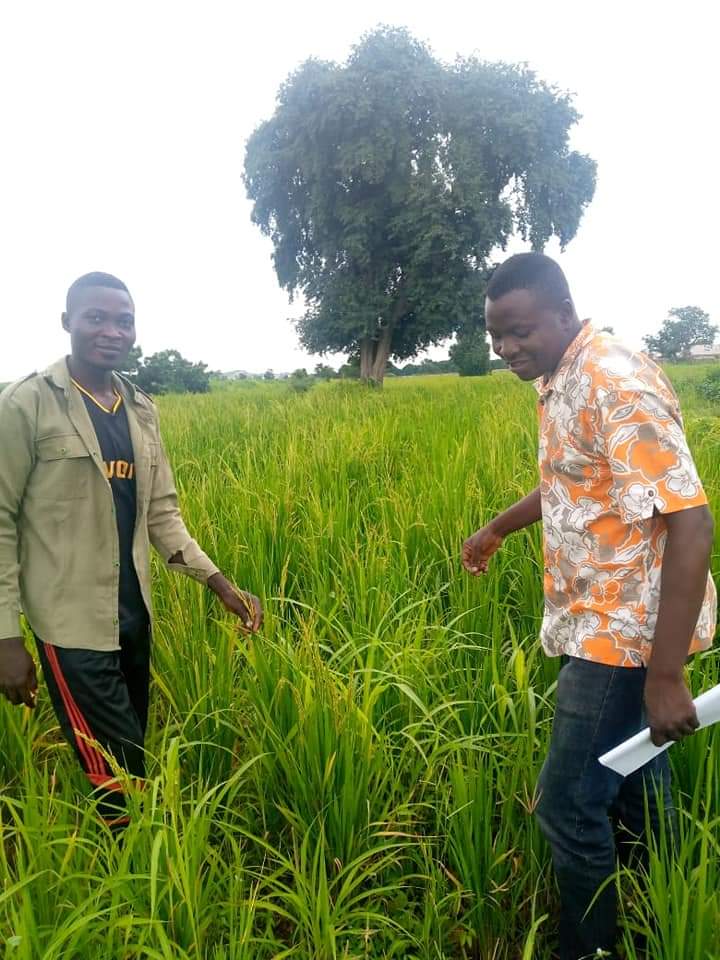
My Name is Amos Usman I am a Corps Member serving in Yauri Local Government Area of Kebbi State with the State code Kb/20B/0218 I am serving in Government Girls Science College Yauri. I saved up my allowee to invest in green season rice farming.

Before my deployment to serve in Kebbi State, I run only a subsistent farm back in my state of origin, coming to Kebbi and being posted to Yauri Local Government, made me abolish my desire to further re-apply for relocation which was not granted to me while on camp.

Coupled with the consistent advices offered me by my Local Government Inspector Mr Femi Dada and my Zonal Inspector Mr Timothy Dikko on need to continue with SAED post camp training and also not to neglect the little idea I had in my yard farming, I decided to dabble into rice farming.

I had to follow the Principal and VP to their farms to learn about the plantation of rice. They eventually thought me alot on rice farming and helped me to secure a hectare of land at #10000. This alone served as push to put all my savings from my allowance to get every necessary thing done.
Rice seed…… #37,000
Tractor’s-work.#14,000
Planters……… #25,000
Weeding……… #22,000
Chemicals…… #12,800
Fertilizer…….. #39,000
Grand total 159000, while IAM expecting at least 40 bags of rice.

I am most thankful to the National Youth Service Corps for giving me this opportunity to be able to build on my passion .

Ndume threatens to leave Nigeria over FG’s rising recurrent expenditure

0

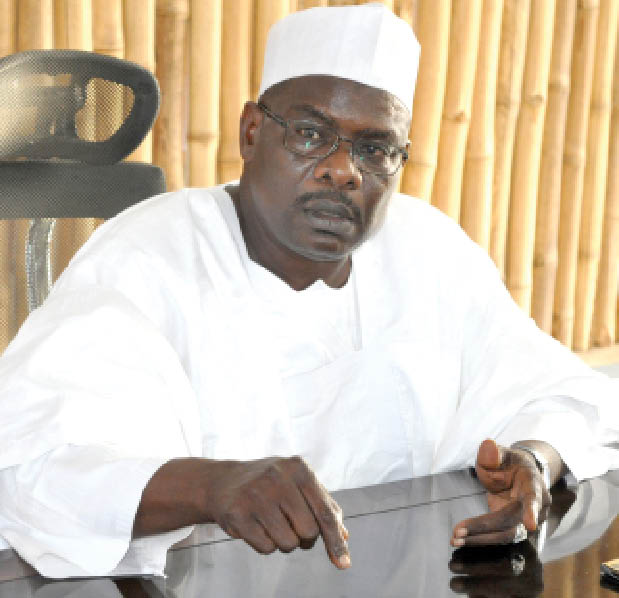
THE lawmaker representing Borno South, Senator Ali Ndume, has threatened to quit Nigeria over the rising recurrent expenditure in the annual national budget of the Federal Government.

He threatened to leave the country if relevant authorities refused to put necessary arrangements in place to arrest the ticking time bomb.

This was during the submissions by the Chairman of the National Salaries, Income and Wages Commission, Ekpo Nta while defending his agency’s 2021 budget before the Senate Committee on Establishment yesterday.

Ndume said the NSIWC boss was supposed to know the total wage bill of the Federal Government workers.

He said such information would have helped the legislature to arrest the dangerous trend of increases in yearly recurrent expenditure component of the budget.

He said the rising increment of wages and salaries without new recruitments and constant retirement of workers on yearly basis, was unjustifiable.

According to the Senator, “Honestly speaking, a time bomb is ticking out there with this policy because of the doors shut out against millions of youths seeking for employment through the embargo .

“Making it worrisome is the fact that despite the policy , since 2018 till now, recurrent expenditure components of yearly budget have been increasing .

“In 2018, it was N3.5trn; N4trn in 2019; N4.5trn in 2020; N5.6trn in 2021and N6.83trn in the projected N16.39trn in the 2022 budget .

“It is bad for recurrent expenditure to be increasing on yearly basis without increase in the number of workforce through required recruitments .

“The embargo is turning to a time bomb that can explode at anytime as witnessed in some countries in recent past.

“Personally, I’m already thinking of where to run to if the avoidable crisis is not averted. I visited Ghana and Niger recently in this regard,” he said.

APC congress in Sokoto, Wamakko, and the Judases

0

Democracy is unquestionably the end result of a globally acclaimed process in which those with the majority take command and/or control. This means that the vote is carried by the majority. In all transparent and acceptable political processes, this has been the case.

The meaning of the above maxim or submission is that in all democratic endeavors around the world, including Nigeria and Sokoto state, those with the majority will always win.

As a result, democracy has come to be defined as government of the people, by the people, and for the people. Democracy is the most widely accepted form of government worldwide, and any other system is reviled. The electorate owns the mandate of leadership in a democracy, and they only borrow or lend it to elected leaders and, by extension, appointed leaders, albeit indirectly.
Through the ballot boxes, the electorate entrusts their mandate to elected officials. This includes electing party leaders and those who will represent the electorate in national and state legislatures, as well as presidents, governors, chairmen, and councillors. Overall, those with the majority of votes secure the positions in question, while those in the minority are powerless to do so.

Democracy is thus essential to any society seeking even socioeconomic development, as it ensures the efficient and timely delivery of democratic dividends to the electorate, who defy all odds to cast their priceless votes for the leaders.

As a result, we cannot exist in a society without a thriving democracy.

In Nigeria, there are numerous political parties, but the ruling All Progressives Congress (APC) and the main opposition Peoples Democratic Party (PDP) are the most powerful and influential (PDP). This is the national situation, as well as the situation in Sokoto state.

Senator Aliyu Magatakarda Wamakko, who represents Sokoto North Senatorial District and is a former governor of the state, is undeniably one of the most powerful and indispensable figures in the current political landscape of Sokoto state. Wamakko is synonymous with the APC, and no sane and discerned member of the party can argue or disagree with Wamakko’s position as the party’s leader.

With the indefatigable Senator Wamakko at the helm of affairs of the leading political party in Nigeria and Sokoto state, the APC, the lone voices of some destructive, dissenting, and diabolical hired mercenaries cannot in any way sway the political pendulum in Sokoto state.
The crux of the matter is that the party’s recent wards, LGs, and state congresses have reaffirmed the Wamakko factor’s dominance and formidability in Sokoto politics, particularly in the APC, where he serves as its unshakeable, iconic, and dependable leader. Throughout, the former governor of Sokoto state has had a smooth sailing, with all of his supporters coming out on top. In fact, in Sokoto state, the APC is completely intact and united.

Hon. Abdullahi Balarabe Salame, an enraged and politically bankrupted Judas Iscariot, and his other doubting Thomases are even unknown. These are a few politically inert vessels with no clout or followership in their villages’ local politics. Indeed, these are spoiled political mediocres biting the finger that gluttonously fed them, and only time will tell as 2023 approaches. Only then, in sha Allahu, will they reap the venomous seeds they are sowing now and those they have already sown.

Because he has remained a senator without borders and a chieftain of the APC in the state, the North, and the nation, the recent congresses have also demonstrated that Wamakko remains the unassailable, selfless, and truly reliable leader of the party and, by extension, the people of the state. Wamakko successfully managed the exercises throughout, deploying the consensus strategy.

Instructively, the successful state APC congress in Sokoto has further exposed the party’s Judases in the state, just as they were humiliated and left in the open by the highly and religiously loyal delegates to the three tiers of transparent and open exercises.

Balarabe Salame and his nefarious associates were finally put to rest at the state congress held on Saturday, October 16, 2021. They have indeed been politically buried, with nowhere to go but the safe havens of their obnoxious sponsors’ political parties, particularly the PDP.
On Friday, October 15, 2021, at the party headquarters in Sokoto, a meeting of major stakeholders of the Sokoto state APC leaders preceded the historic state congress. The meeting was attended by the who’s who of the state’s political scene, particularly the APC.
The pre-congress shareholders’ meeting’s roll call is endless, with Wamakko, the state party’s leader, proudly leading the pack. The need to reduce acrimony and maintain unity guided the choice of consensus, according to the meeting.

On the D-Day, Saturday, Oct. 16, 2021, 36 officials were elected by consensus to run the affairs of the APC, Sokoto state chapter. This was announced by Iyan Akko, the chairman of the delegation from the party’s national headquarters, Alhaji Suleiman Abubakar.
Senator Ibrahim Abdullahi Gobir had earlier moved the motion for the adoption of the state executives by consensus, which was approved by the delegates of the state’s twenty-three local government areas. Hon.p. Musa Sarkin Adar, a member of the House of Representatives representing Gada/Goronyo, seconded the motion.

Alhaji Muhammadu Maigari Dingyadi, the Minister of Police Affairs, in his goodwill message, urged elected officials to ensure the APC’s unity and success in Sokoto state.
The congress was overseen by officials from the INEC and various security agencies. This adds to the credibility and legality of the information. As a result, the location of the so-called parallel congress is laughable. This highlights the need for INEC and various security agencies to act quickly and effectively to bring Senator Abubakar Umar Gada to justice by referring to himself as a serving senator of the APC (as quoted by AIT). This is a heinous act of impersonation, and he will be prosecuted as a result.

The Iyan Akko, the leader of the team dispatched to the state to conduct the crucial exercise, has categorically denied any parallel congress and reiterated that only the Isa Achida-led leadership, as elected, is the legally recognized executive committee. This brings everything to a close without any animosity or acrimony. The funeral of Abdullahi Balarabe’s rantings, as well as his faceless and voiceless cronies, was also completed. Congratulations and good luck, Your Excellency Wamakko.

Corps members refurbish abandoned boreholes in Osun community

0

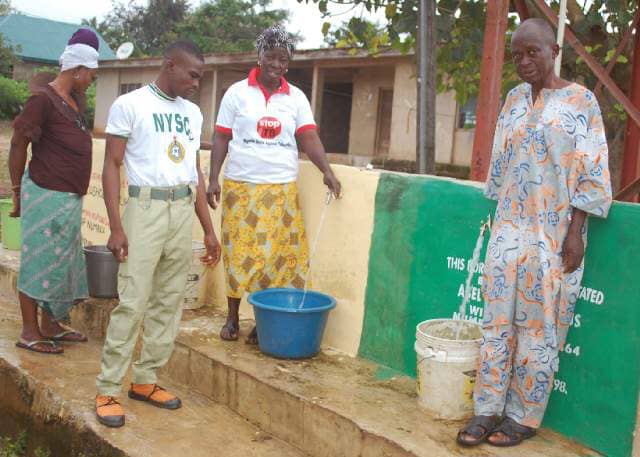
Corps members serving in Òkè-ìlà community in Ifedayo local government area have put smiles on the faces of the people of the community by refurbishing two long abandoned boreholes in the community.

The project which was carried out on Thursday was commissioned by the Orangun of Òkè-Ila, HRM, Oba Adedokun Omoniyi Abolarin.

Ọba Abolarin commended the Corps members for their selfless contribution to the community stating that their presence has always been a great source of motivation and inspiration for the youths and children in the community.

“you have indeed shown to me and my people that the NYSC Scheme is not a sham and that your training was indeed worthwhile.

” Aside your imparting knowledge in our children in the classrooms, you have surprised us further by working towards making portable water available for our people. You have done well”, he said.

Ọba Abolarin added that the people had given up hope of ever getting portable water from the boreholes because it had been abandoned for a very long time. He appreciated the scheme for believing in the unity of the nation and working towards achieving it.

“most of the Corps members who have carried out one project or the other are mostly from different states, tribes and climes but the scheme succeeds in bringing them together and they as a team work in harmonious symphony to achieve the mandates of the NYSC”.

Earlier, the State Coordinator, Mrs Winifred Shokpeka, who was represented by the Local Government Inspector, Mr Oniye Damilare appreciated the Orangun of Oke-Ila and the good people of the community for the warm reception accorded the corps members when they first resumed, this, according to him, had made them feel at home in the community.

He stated that based on the training recieved by the members, it was expedient for them to reciprocate the hospitality of the people by leaving a positive landmark such as they had done.

The programme also had in attendance the LGIs of Ejigbo and Isokan local government, Mr Akin Owoseni and Mr Rotimi Onatade respectively.

Osinbajo encourages young people to get involved in politics in order to make a difference

0

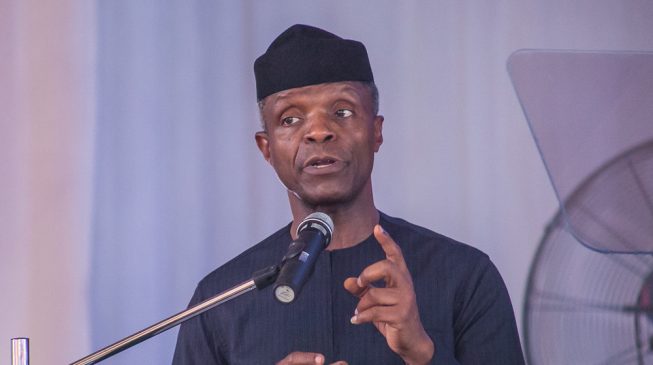
Vice-President Yemi Osinbajo (SAN) has urged young people to enter politics in order to make a difference in Nigeria.

The Vice President made the remarks during a virtual forum with Nigerian Fellows of the Mandela Washington Fellowship for Young African Leaders in Abuja on Wednesday.

‘Osinbajo woos young Nigerians, ‘our best minds’: join politics to make a difference,’ said Osinbajo’s spokesman, Laolu Akande, in a statement.

His words came on the same day that Nigerian youths took to the streets to commemorate the #EndSARS protest from last October.

“Youths need to go the extra mile if you are not already involved, get involved in politics—while civil society can achieve a lot, government still holds the ace in terms of capacity and resources to bring social goods to the greatest number of people,” the VP was quoted as saying. “Besides, being decision-makers rather than pressure groups at the table in policy formulation are vastly different positions.” Our great ideas to transform our societies will ultimately be carried out by ‘those politicians,’ as we mockingly refer to them.”

Read also: Buhari honors Gowon at the age of 87

“African nations, particularly our country, cannot afford to have its best minds and most committed social activists remain only in the civil space,” the VP continued. We simply cannot afford it; instead, you must become involved in politics. You must be able to make the required difference on the scale.”

“Of course, many people will not get involved in politics, but those who do should, and there will be many challenges, even in winning or being heard in politics.” But I want to tell you that getting involved in politics at whatever level you can so that you can make the difference on the scale that is required should be a goal you set for yourself,” Osinbajo added.

“It took public office for me to be able to get the scale of change that is required to make a difference,” the VP said, recalling his days in civil society and later in politics as Lagos State Attorney-General.

“Without public office, I would have remained a pressure group activist, doing some nice things, but not being able to make the changes that my country required.”