Home Blog Page 2012

Nigeria’s democracy is under threat, APC party is on the verge of collapsing

0

To say the ruling All Progressives Congress (APC) is at odds with itself would be an understatement. The party is on the verge of collapsing, casting serious doubt on its long-term viability.

Make no mistake, the APC has not portrayed itself to Nigerians as a party that will lead them to the axiomatic Promised Land. In fact, even as the party’s founders prancing around in February 2013 giddy with excitement over the new organization, it wasn’t hard to deduce from some of their fleeting antecedents that the party was merely a gathering of power-mongers seeking a stronger platform to realize their dream.

This was a fact that many people already knew. Nigerians gave it a chance despite what turned out to be a dummy sold to the electorate in the person and character of its standard-bearer in the 2015 general election, Muhammadu Buhari, against the backdrop of the then ruling People’s Democratic Party’s (PDP repeated )’s disappointments. The APC, on the other hand, did not take long to establish a reputation for being outlandish in appearances but lacking in substance.

As the late Senate President, Dr. Chuba Okadigbo, sarcastically observed, what existed in Nigeria were not political parties, strictly speaking, but rallies, the APC fits into this category.

Read also: Senate Cowers, Suspends Move to Override Buhari’s Veto on Electoral Act Amendment

Even Buhari, who is being hailed as the party’s savior in some quarters, cannot be exempt from the rot eating away at its foundation. Even as he enjoys the hilarity of messianic garb hung on him by adoring aides, allegations of nepotism, poor economic management, and actions that further expose the country’s flaws are issues he cannot avoid.

Though he still has his supporters who praise him for his infallibility, it is clear that the President has lost much of his reputation and public standing that he had prior to taking office. The level of danger on the platform is explained by the fact that such a person is seen as the poster boy of a political organization.

The APC’s problem is the challenge that successive ruling political parties in the country have faced. It’s a case of arrogance and hubris. The adage “power corrupts, and absolute power corrupts absolutely” resonates loudly among Nigeria’s ruling parties. They put up every imaginable carriage of simplicity and humility when seeking power, asking the people for a chance. ‘Change,’ with a buffet of promises, is the slogan in such situations.

When power changes hands, the story changes. In its stupor, the now-disgraced PDP boasted that it would rule for 60 years without interruption. But, as fate would have it, it did not live to see even a third of the time it had set aside to be in command. APC does not appear to have learned anything from this. It is even more arrogant and obnoxious, relying on propaganda and outright lies to survive.

The assumption was strong that a party that had advertised a 10-point agenda for a new Nigeria when it was formed was taking a decisive step into issue-oriented politics.

Job creation, anti-corruption efforts, free, relevant, high-quality education, agriculture, a housing plan, and a healthcare plan for children and adults were among the highlights of its road map.

Among the organization’s priorities are a social welfare scheme for the less fortunate, massive road construction and rehabilitation, and power plans, as well as strengthening peace, security, and foreign policy.

Read also: Nigeria Needs N348trn for Realistic 5-Year Nat’l Devt Plan, says Buhari

“Roughly one in four Nigerians, and half of young job seekers, are unable to find work,” the road map stated. The number of people whose jobs do not pay enough to cover their food and housing expenses is even higher.

“Moreover, major industries that pay higher wages account for just over 5% of the economy.” The most pressing problem confronting Nigeria today is a lack of jobs, which affects every community and prevents us from becoming the truly vibrant and prosperous nation we deserve. Our top priority is to create a diverse economy that allows every Nigerian to earn a living and better care for his or her family.”

Its plan to combat unemployment called for the immediate creation of 20,000 jobs per state for those with a secondary school diploma or higher who would participate in technology and vocational training. There was also talk of setting up technology/industrial estates across the country, complete with ICT, power, and other support, to attract and encourage small-scale technology businesses and other entrepreneurs.

The party also unveiled a detailed plan to combat corruption in the public and private sectors. Strengthening legal provisions to prevent stay of proceedings and other delays in corruption trials was one of its strategies in this regard.

Nearly seven years later, the jury is still out on whether the APC-led federal government has delivered on any of its promises. To put the situation in perspective, a non-governmental organization, the Chandler Good Government Index, ranked Nigeria as the world’s third worst-governed country earlier this year. The report, which was released in Singapore, the organization’s headquarters, rated the country poorly in terms of governance, leadership, and foresight, ranking it 102 out of 104 countries with a score of 0.319, ahead of Zimbabwe and Venezuela.

In evaluating the countries, the index looked at seven pillars: leadership and foresight, robust laws and policies, strong institutions, financial stewardship, attractive marketplace, global influence and reputation, and helping people rise.

Nigeria received a 0.44 in leadership and foresight, 0.45 in anti-corruption, 0.47 in long-term vision, 0.41 in strategic prioritization, and 0.4 in innovation in the first ranking in the series.

Read also: I’m willing to reconcile with Ganduje – Kwankwaso

The verdict is a damning but accurate reflection of Nigeria’s current state of affairs. Nigeria is virtually deficient in all indices of good governance, including rule of law, health services, social service delivery in electricity, roads, education, employment, and ease of doing business. Nigeria is the World’s Poverty Capital, according to the latest statistics.

The current state of insecurity is especially terrifying. Due to the fluidity of the assault on citizens and other interests in the country, secrecy is literally flat on its back, offering bleak prospects for recovery. Nigeria has been lumped in with Iraq and Afghanistan as the world’s most terrorized countries under the APC.

These are the kinds of concerns that a ruling party and its handlers should have. They are a danger to the country’s democracy. They don’t matter to the APC, however.
Stain on Our Soul: Global Covid Vaccine Rollout

0

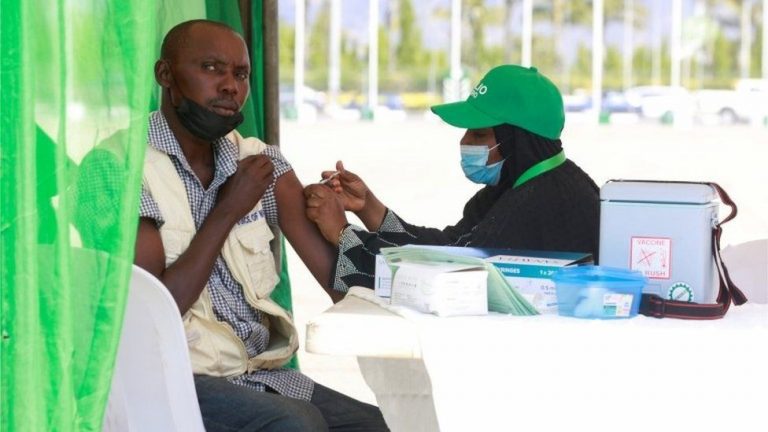
The failure to distribute vaccines to poorer countries, according to former Prime Minister Gordon Brown, is a “stain on our global soul.”

Without a push to get the entire world vaccinated next year, he said, coronavirus would “come back to haunt” every country.

Eight billion Covid vaccines have been distributed worldwide to date.

However, the vast majority of these have been distributed in high- and middle-income countries.

According to the World Health Organization, 98 countries have yet to reach the target of vaccinating 40% of their populations.

Read Also:  In two weeks, Nigeria records 500% increase in Covid-19 infections, putting viruses into 4th wave

In the United Kingdom, the United States, and France, about three-quarters of the population has received a vaccine, compared to 80 percent in Japan. Only one in every 20 Nigerians has been stabbed, while only 8% of Ethiopians have been stabbed.

Only one out of every four African healthcare workers is immunized.

Low vaccination rates have been linked to the emergence of new coronavirus variants like Omicron, which was first discovered in South Africa and is now spreading rapidly around the world.

Unbalanced Distribution
Mr. Brown told the BBC World Service that the unequal distribution of Covid vaccines was caused by wealthy countries hoarding and stockpiling vaccines, and that it was “one of the greatest policy failures of our time.”

If better vaccine access is not achieved soon, he predicts that another five million people will die from the virus around the world.

Mr. Brown served as Prime Minister of the United Kingdom from 2007 to 2010. “It’s a stain on our global soul, and it affects us all,” she says. “I think people are starting to realize that if we let the disease spread in poor countries and the virus mutates, it will come back to haunt even the fully vaccinated.” He stated

Read Also:  Buhari receives COVID-19 booster shot

“We have the technology,” he said, arguing that the task was doable. We’ve got the know-how, and we’re now producing 1.5 billion vaccines per month. We could get them out to people, and if we don’t, we’ll all suffer.”

Some vaccine supplies in Nigeria arrived too close to their expiration date and had to be discarded.
Mr. Brown expressed his hope that world leaders would come together and agree to make vaccine distribution a priority starting in 2022.

He also wants more funding for healthcare systems that are already underfunded, as well as better distribution of Covid-19 testing equipment and treatments.

He felt sorry for the young who had lost a year or two of their lives as a father of teenage boys. He continued,

Given the trillions of dollars at stake in global trade, he argued that ensuring more equitable access to vaccines would be well worth it in terms of both economics and improving everyone’s mental health.

Read Also:  Nigeria Confirms 2123 New Cases at COVID-19

A top WHO official stated on Wednesday that the world was still in the “middle” of the pandemic.

“Getting vaccines to those who need them most must be a priority for every government – not just some,” said Dr. Maria Van Kerkhove.

“If we don’t, the virus will continue to evolve and threaten us in ways that bring us closer to the beginning rather than the end.”

Senate Cowers, Suspends Move to Override Buhari’s Veto on Electoral Act Amendment

0

Deji Elumoye, Chuks Okocha, Adedayo Akinwale, Juliet Akoje, Deji Elumoye, Emma Okonji, and Nosa Alekhuogie in Abuja, and Emma Okonji and Nosa Alekhuogie in Lagos

Despite many senators’ determination and threat on Tuesday to overturn President Muhammadu Buhari’s veto of the Electoral Act Amendment Bill, the Senate backed down yesterday. Instead of proceeding with the signature gathering, the upper chamber decided to consult with the House of Representatives on how best to deal with the president’s rejection of the electoral reform bill.

Read Also:  Buhari refuses to sign the Electoral Amendment Bill: National Assembly

The Senate also agreed to engage their constituents in the consultation process over the holiday break before making a final decision in January.

Buhari had refused to sign the Electoral Act Amendment Bill, citing concerns about the bill’s direct primary provisions.

The president’s reasons for not assenting to the bill, according to members of the main opposition Peoples Democratic Party (PDP) caucus in the House of Representatives, were merely a ruse to prevent the Independent National Electoral Commission (INEC) from transmitting results electronically, using direct primaries as a peg.

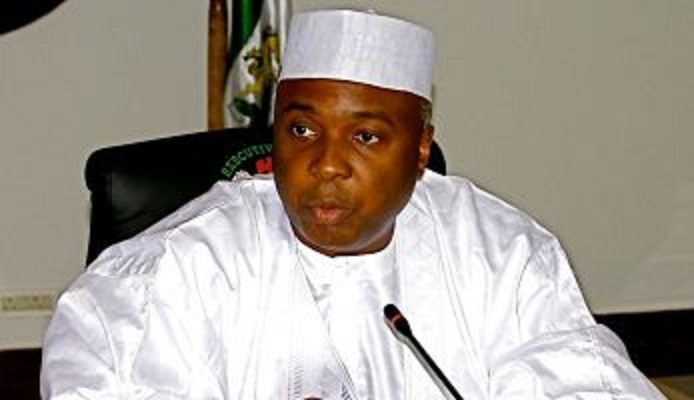
Dr. Bukola Saraki, the former President of the Senate, has identified two viable options currently before the National Assembly. Saraki suggested that the legislature either veto Buhari’s refusal to assent or remove the contentious provisions on direct primaries and resubmit the bill to the president for his signature.

Read Also:  NYSC Trust Fund will empower youths, develop Nigeria – Group

Some senators expressed their displeasure with the president’s rejection of the electoral bill at the end of Tuesday’s plenary, claiming they had gathered over 75 signatures ahead of a plan to veto the president at Wednesday’s plenary. However, the threat was not carried out, as Senate President Dr Ahmad Lawan said the senate would now consult with the House of Representatives on how to respond to Buhari’s letter on the Electoral Act (Amendment) Bill, while summarizing the outcome of their closed-door session.

The provisions of the 1999 Constitution (as amended), according to Lawan, do not allow the upper chamber to act solely on such matters in the absence of the House of Representatives, which had already gone on vacation. When both chambers reconvene in January after the Christmas recess, he assured Nigerians that a joint position with the House would be reached after due consultation with the people to determine the appropriate course of action.

“The senate in a closed session deliberated on matters relevant to the workings of the senate, in particular, and the National Assembly, in general,” the senate president said of the executive session.

“The Senate also discussed how to respond to Mr. President’s letter on the electoral bill amendment in closed session.” As a result, the Senate decided to meet with the House of Representatives in January, when both chambers will be in session.

“Right now, the House of Representatives is on recess, and as we all know, the Constitution requires the Senate and House of Representatives to work together to take appropriate action.

“During our January recess, the Senate also resolved to consult with our constituents.” The Senate believes that as major stakeholders in the laws that we pass in the National Assembly, our constituents have a role to play.”

In a statement released yesterday, the leader of the PDP caucus in the House, Hon. Kingsley Chinda, claimed that the president was attempting to avoid electronic transmission of results by using direct primaries as a ruse.

Read Also:  DEPOWA Distributes Food items To Widows Of Fallen Heroes, military families

When the matter was brought up for discussion, the caucus assured Nigerians that it would ensure that its members used their constitutional right to veto the president.

“The unspoken reason for declining is to avoid electronic transmission of results, which would improve the electoral system’s credibility,” Chinda said. Though contemplated, this refusal has left Nigerians perplexed by a president who continues to show utter contempt for the constitution and the reform of state institutions.

“Under him, our state institutions have regressed to the point where the gains of previous institutional reforms undertaken by Our Great Party while in power have either been lost to his inaction or to his deliberate ploy to leave our country in a worse state than when he arrived.” We are not convinced that he is interested in electoral reform based solely on this point.

“As an opposition caucus, we will ensure that our members exercise their constitutional right to veto the president under Section 58(5) whenever the National Assembly deems it appropriate to debate the issue.”

Before the legislature, Saraki identifies options.

Dr. Bukola Saraki, the former President of the Senate, spoke out against Buhari’s decision to throw out the entire amendments to the electoral bill, saying that federal lawmakers have two options.

Read Also:  In Yola, Gunmen kidnap head of federal agency, four members of his family

Saraki said in a statement that lawmakers could override the president’s refusal to sign the bill or remove the contentious provisions on direct primaries and send it back to him for signature.

“Now that Mr. President has conveyed his decision to decline assent to the Electoral Act [amendment] Bill, I am confident that I speak on behalf of millions of Nigerians in urging the National Assembly to act quickly,” the former Senate president said. This is because we cannot sit back and allow a single contentious clause in the proposed Electoral Act (amendment) Bill to negate all of the Bill’s positive aspects.

“At this time, the National Assembly has two options. They can either override the president’s veto or remove the contentious provision on direct primaries and send it back to him for his signature. Regardless of which option our legislators choose, it can be completed in the shortest amount of time possible. In January 2022, we may have a new electoral law.

“Anyone who has been paying attention to the mood of the country knows that Nigerians want a new electoral law that will lead to a credible, free, fair, and peaceful election process.” They want a system that ensures that their votes in the election of those who govern them are truly counted.

“This proposed electoral law is expected to reassure youths, many of whom avoid participating in politics because they lack faith in the system.” They believe that the system is frequently rigged and tainted. Enacting a new law that gives them hope in our country is one way to bring this active demography into the political system. This Electoral Act [Amendment] Bill accomplishes this goal.

Read Also:  Bandits kill 7 people near military checkpoint, kidnap many others in Katsina, Kaduna

“This is why the National Assembly, as the representatives of the Nigerian people, must make a decision in the best interests of our country and its long-term democracy.” The option of doing nothing after the president’s refusal of assent is not an option. Our legislators in both chambers of the National Assembly, as well as Mr. President, must work quickly to make it a law.”

For Fear of 2023, the APC is scuttling electoral reform, according to the PDP.

The opposition Peoples Democratic Party (PDP) has accused the ruling All Progressives Congress (APC) of sabotaging the Electoral Act Amendment Bill because it contains key provisions that would prevent them from rigging the general election in 2023. According to the PDP, its investigations revealed a fear of failure in the 2023 general election, as well as the positive implications that the electoral bill would have by ensuring electronic transmission of election results.

The opposition party recalled that the APC had been wary of the Electoral Act amendment because it included provisions for electronic transmission of election results, which would completely eliminate election manipulation and alteration.

The PDP’s National Publicity Secretary, Hon. Debo Ologunagba, said in a statement that it was clear that the APC and the Buhari administration were never committed to amending the Electoral Act to ensure credible elections. The PDP accused the APC of instigating a debate over the mode of political party primaries as a ruse to kill the entire amendment, which included provisions for electronic transmission of results.

Read Also:  Nigeria Governors’ Forum Applauds President Buhari for NDP 2021-2025

“It is imperative to remind Nigerians of how the APC, in collusion with their leaders in the National Assembly, fought hard to stop the bill’s electronic transmission of results provision, but were resisted by Nigerians, supported by the courageous action of the PDP Caucus in the House of Representatives, which staged a walkout only for the APC to orchestrate controversies and set the stage for Mr. President’s withholding of assent,” the PDP said.

“The APC’s main motivation for manipulating the legislative process is to prevent the electronic transmission of results, allowing it to continue its culture of rigging and electoral impunity, which includes altering results at collation, snatching ballot boxes, and destroying data, among other things, in order to cling to power against Nigerians’ will.”

“This is consistent with the APC’s well-known machinations in the last six years to undermine every genuine effort to instill credible, transparent, free, and fair elections in Nigeria.” The APC thrives on electoral fraud, deception, shady dealings, violence, and political brigandage as part of their heinous plan to enslave Nigerians in perpetuity.”

PDP claimed that the APC had completely lost its capacity and goodwill for electoral contest after being rejected for its failures and having also self-decimated its structures across the country, and as a result sought to subvert any process that could guarantee credible elections in 2023.

The fact that the APC obstructed the passage of the Electoral Act Amendment Bill further validated the fact that the party was opposed to Nigerians’ aspirations and did not believe in democratic principles of fair elections, according to the PDP.

Read Also:  Buhari’s aide, Ojudu, clarifies that Osinbajo will run for president in 2023

More Nigerians are reacting…

Meanwhile, Nigerians from all walks of life have continued to express their displeasure with President Muhammadu Buhari’s refusal to sign the electoral bill into law.

Henry Nwawuba, a member of the House of Representatives, said he didn’t see any power struggle in the situation.

“It is part of the process that as it goes through the rounds in the House, we expose the law to public dialogue, and then we send it off for access,” Nwawuba said on the ARISE NEWS Channel’s Morning Show yesterday. The speaker has stated that “when we return in January, we will take another look at the electoral bill because it is not yet finished.”

In response to reports that nearly 80 senators had agreed to override the president, Nwawuba emphasized that the bill was in the hands of the National Assembly, which would come together and make the best decision in Nigeria’s best interests.

“This is a critical piece of legislation on our legislative agenda, and we are determined to see it through,” he said. By the grace of God, we’ll deal with the Electoral Act when we return in January.”

Read Also:  Nigeria Needs N348trn for Realistic 5-Year Nat’l Devt Plan, says Buhari

Oluwole Osaze-Uzzi, a lawyer who also spoke on the Morning Show yesterday, clarified the issue of indirect primaries, saying that each political party has the right to choose between direct and indirect primaries.

Direct primaries, according to Osaze-Uzzi, allow every member of a political party to vote and choose the candidate for a specific election.

“There are many positive aspects of the bill,” he said, “and we must not overlook them.” There are also some issues that the president did not address, which some people find concerning. The deadlines for holding primaries have been extended to allow for all of the legal steps to be taken.”

Kunle Adegoke, a Senior Advocate of Nigeria (SAN), said on the ARISE Morning Show that political parties had complete autonomy over their internal affairs. Adegoke explained that the legislature’s recent intervention to regulate political party affairs stemmed from the fact that the power granted to political parties to regulate their internal affairs had been widely abused, resulting in a lot of agitation.

Read Also:  Libya’s presidential election postponed

“The National Assembly knows that the Nigerian constitution recognizes only the legislature to make a final decision in this regard,” Adegoke said. We can simply pass the act again, and the president will be forced to make a decision. We can’t just say we have power and are free to use it; we have to consider all factors that are relevant to the process we’re trying to undertake.”

Libya’s presidential election postponed

0

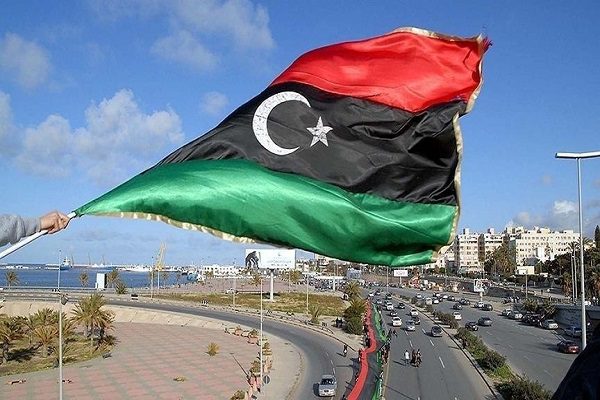
Libya’s election commission has called for a month’s postponement of the country’s first presidential election, which was set to take place on Friday.

The commission proposed the new date of January 24 after “consulting” with parliament, according to the commission.

A parliamentary committee had previously stated that holding elections on Friday would be “impossible.”

Read Also:  Real Madrid interested in signing Liverpool defender Steven Gerrard – Joe Gomez

The run-up to the election has been marred by disagreements over candidate eligibility and rising security concerns.

Libya has been in turmoil since Muammar Gaddafi, the country’s long-serving ruler, was deposed and killed in 2011.

The United Nations and Western powers had hoped that the election would boost efforts to bring ‘peace and democracy’ to Libya, a strategically important country that is a major oil producer and a transit point for migrants seeking asylum in Europe.

Richard Norland, the US ambassador to Libya, said the US shared the “disappointment of Libyans who wanted to vote.”

Read also:  Buhari’s aide, Ojudu, clarifies that Osinbajo will run for president in 2023

“All legal and political obstacles to holding elections, including finalizing the list of presidential candidates,” he said Libyan leaders should “address expeditiously.”

The electoral commission had rejected Col Gaddafi’s son, Saif al-Islam, as a candidate, but his lawyer claimed that the decision had been overturned by a court.

There was also no word on whether Gen Khalifa Haftar, the country’s military strongman, could run for president.

According to military prosecutors, the electoral commission should hold off on processing his application until he is interrogated about allegations of human rights violations.

He was sentenced to death in absentia by a court in Misrata, western Libya, last month for bombing a military college in 2019.

Read Also:  Saraki calls on the government, private sector to ensure all Nigerians have access to health insurance

Security concerns have been raised in Tripoli’s capital, where armed groups took up positions in the city’s suburbs on Tuesday.

Four oilfields in the south were shut down on Monday.

Real Madrid interested in signing Liverpool defender Steven Gerrard – Joe Gomez

0

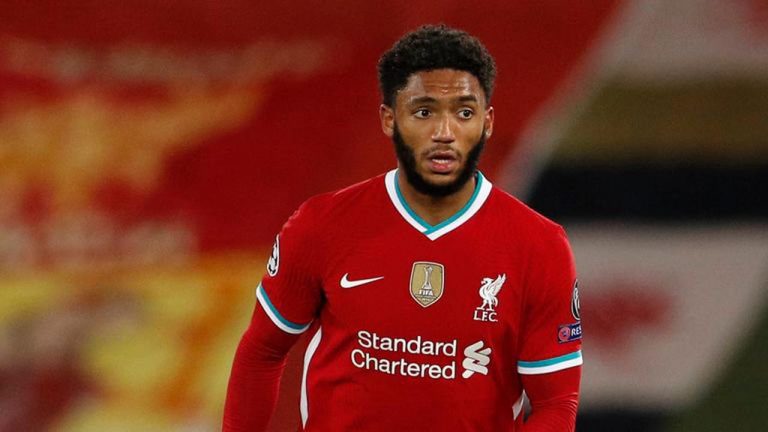
According to BBC Sport, Real Madrid is’monitoring’ Liverpool defender and England international Joe Gomez.

Gomez has fallen out of favor with Reds manager Jurgen Klopp, who has started both Joel Matip and newcomer Ibrahima Konate ahead of him. This is due in large part to Gomez’s inability to stay healthy and available after missing the majority of last season.

Read Also:  Osimhen declares himself fit for the Super Eagles At AFCON

The 24-year-current old’s Liverpool contract is set to expire in over three years. There is no indication that Real Madrid is interested in pursuing a transfer with the Merseyside club.
According to BBC Sport, while Real Madrid is interested in signing Gomez and a centerback, the club believes it will be impossible to do so in the January transfer window. The club has also been linked with a summer transfer for Chelsea defender Antonio Rüdiger, who will become a free agent if he is not re-signed by the end of 2022.

Nigeria Needs N348trn for Realistic 5-Year Nat’l Devt Plan, says Buhari

0

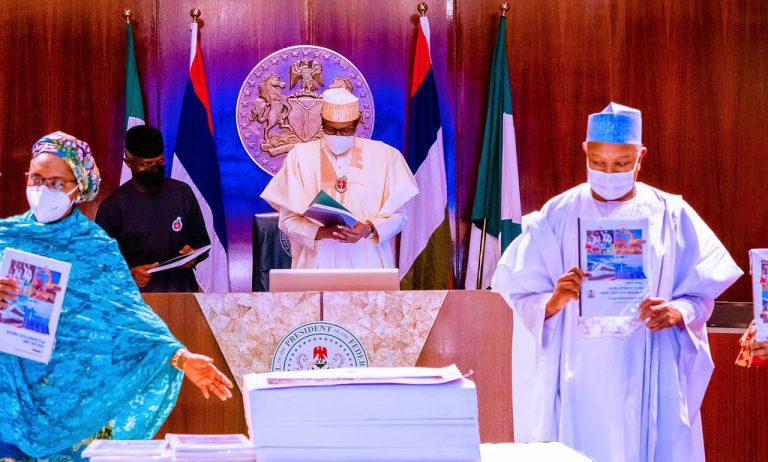
President Muhammadu Buhari has stated that Nigeria will require N348.1 trillion in investment to meet the goals set out in its five-year National Development Plan (NDP) for the years 2021 to 2025.

The government would contribute 14.3% (N49.7 trillion) of the projected investment portfolio, he said, while the private sector would contribute 85.7 percent (N298.3 trillion).

The president spoke at the formal launch and public presentation of the NDP yesterday in Abuja, which is the successor to the Economic Recovery and Growth Plan (ERGP) 2017-2020, which expires in December 2020.

According to him, the plan’s overall goal was to achieve a broad-based real Gross Domestic Product (GDP) growth rate of 5% on average over the Plan period, create 21 million full-time jobs, and lift 35 million people out of poverty through inclusive growth.

He went on to say that this would pave the way for the government’s National Poverty Reduction with Growth Strategy goal of lifting 100 million Nigerians out of poverty in ten years (NPRGS).

Read Also:  Saraki calls on the government, private sector to ensure all Nigerians have access to health insurance

As a result, a strong partnership between the public and private sectors will be required for the Plan’s successful implementation.

“In this regard, a Development Plan Implementation Unit will be established in the Budget and National Planning arm of the Ministry, headed by the Vice President, with the Honourable Minister of State, Budget and National Planning as Vice-Chair, to ensure overall coordination with Ministries, Departments and Agencies; sub-national governments; private sector operators and Civil Society Organizations,” he said.

The Federal Executive Council (FEC) approved the Draft National Development Plan, 2021-2025, on November 10, 2021, which is the first of the envisaged Medium Term Development Plans to implement the Nigeria Agenda 2050.

“The Plan, as a result of deliberate efforts, is comprehensive and has the capacity to accelerate and sustain national development as well as the achievement of various Regional and Global Agendas, such as the African Union Agenda 2063, the ECOWAS Agenda 2050, and the United Nations Sustainable Development Goals for 2030.

“I have no doubt in my mind that with effective and sustained implementation, Nigeria will achieve a quantum leap in unlocking its potentials in all sectors of the economy for a sustainable and inclusive national development,” the President said before the weekly FEC meeting began.

The president praised the Ministers of Finance, Budget, and National Planning, as well as the leadership of the National Steering Committee, the Central Working Group, and the Technical Working Groups, for their sacrifices and efforts in achieving this milestone, noting that the ERGP not only helped the country exit the 2016 economic recession, but also maintained a modest growth until the emergence of recent global economic challenges caused by the outbreak of the Ebola virus.

Read Also:  Aviation Authority shut downe of Globacom telecommunications service tower in Abuja

“The ERGP’s continued implementation ensured the execution of our social investment programs and infrastructure improvement across the country,” he said.

“It became necessary to prepare a successor plan to the Economic Recovery and Growth Plan in order to ensure a smooth transition and continue the implementation of government policies, programs, and projects.”

“As a result, on September 9, 2020, I inaugurated the National Steering Committee (NSC), which is co-chaired by Mr. Atedo Peterside and Dr. (Mrs) Zainab Ahmed, the Honourable Minister of Finance, Budget, and National Planning.

“In addition to the NSC, the Plan’s institutional arrangement included the Central Working Group (CWG), Technical Working Groups (TWGs), and a strong Secretariat to support the process.”

“The Plan’s preparation process was not only participatory and consultative, but also inclusive, involving all segments of society, including Key Political Parties, Government Agencies, Labour Unions, Youth Organizations, Civil Society Organizations, Women Society, Farmers’ Association, ALGON, Traditional and Religious Leaders, and Representatives of People with Special Needs, as well as Development Partners.”

Read Also:  Governor of Nasarawa swears in 14 new commissioners,18 advisers

According to him, the Plan’s broad objectives include laying a solid foundation for a diversified economy with strong MSME growth and a more resilient business environment, as well as investing in critical physical, financial, digital, and innovation infrastructure.

The president went on to say that the Plan would help to create a strong framework for security and good governance, as well as a vibrant, educated, and healthy population.

Minister of Finance, Budget, and National Planning Zainab Ahmed, who presented the plan to President Muhammadu Buhari, said the plan would focus on massive infrastructure investment, ensuring economic stability, improving the investment environment, and improving social indicators and living conditions of Nigerians, among other goals.

She went on to say that the plan was a blueprint for the kind of Nigeria that all Nigerians want, and that it would promote the use of science, technology, and innovation to achieve the desired growth.

“In order to achieve the future we all want, the plan is being developed to play a significant role in the international product complexity space and to adopt measures to alleviate constraints that have prevented the economy from reaching its full potential, particularly in the product mapping space.”

Read also:  I kidnapped 9-year-old girl from school and demanded N1.5 million in ransom from parents- Suspect

“The plan calls for major infrastructure and other development projects to be implemented across the six geopolitical zones, as well as opportunities for rural areas to ensure balanced development and increased competitiveness,” she added.

“Among other things, the plan aims to invest heavily in infrastructure, ensure macroeconomic stability, improve the investment climate, improve social indicators and living conditions, and address climate change mitigation, adaptation, and resilience strategies,” she said.

Meanwhile, the Nigeria Governors’ Forum (NGF) has praised Buhari’s administration for the initiative that has resulted in the creation of a series of economic development plans thus far, noting that no administration in Nigeria’s history has been as inclusive as this one.

Dr. Kayode Fayemi, Chairman of the Forum and Governor of Ekiti State, who was represented by Alhaji Atiku Bagudu, Governor of Kebbi State, said the new NDP 2021-2025 was the result of collaboration and consultation between the federal and state governments.

“We congratulate Mr. President on the launch of the 2021-2025 Development Plan, which was expertly introduced by the Minister of National Planning,” he said.

“We had an economic recovery growth plan that expired in 2020, which achieved the goal of, among other things, helping Nigeria exit the recession twice, and now we have a plan in place for 2021-2025 that is primarily aimed at ensuring that the gains have been consolidated and Nigerians continue to be included.”

Read also:  Don’t tamper with your tithe during the yuletide, don’t make excuses – Ibiyeomie, Pastor

“This government, more than any other, has taken deliberate, active steps to include all economic groups and support them more than ever before in order for them to achieve their economic goals, for the country’s economy to continue to provide for all, and for us to see more prosperity.” We congratulate you, and I am confident that all of us in the 36 states and the FCT are overjoyed.

“Some of us who are members of various committees have been consulted.” It’s a consultative program, and we appreciate both the President and Vice President because, under their leadership, the National Economic Council, the Federation’s major economic decision-making body, has been quite inclusive; it’s not a monologue, and states are given pride of place,” he added.

Saraki calls on the government, private sector to ensure all Nigerians have access to health insurance

0

Dr. Abubakar Bukola Saraki, the former Senate President, enrolled 1000 Kwarans in the Kwara State Health Insurance Scheme through his Abubakar Bukola Saraki Foundation (ABS Foundation) in the 16 local government areas of Kwara.

Dr. Saraki, the program’s launcher, called for public and private sector participation to achieve 100 percent universal healthcare coverage across the country, speaking at the program’s launch, which has beneficiaries from 193 wards in Kwara.

Read Also:  Governor of Nasarawa swears in 14 new commissioners,18 advisers

“Four days ago, at a Chatham House Health Summit in Abuja, I challenged Nigerians to scrutinize the healthcare manifestos and promises of all candidates seeking national and state leadership before the next general election.”

Nigeria’s health-care system is in desperate need of reform today. Our average lifespan is 55 years. The maternal mortality rate in our country is 917 deaths per 100,000 live births. For children under the age of five, our child mortality rate is 201 per 1000 live births. Our annual mortality rate from malaria is 300,000, the highest in the world. While we have confirmed nearly 3,000 deaths from COVID-19, the true number is likely to be much higher.

Read Also:  Borno Governor explains why IDP camps are closed

“This is why, on my 59th birthday, I am proud that, once again, we are leading from the front on healthcare — and backing up our ‘talk’ with deliberate action,” Saraki said.

Governor of Nasarawa swears in 14 new commissioners,18 advisers

0

Abdullahi Sule, the governor of Nasarawa State, swore in 14 new commissioners and 18 Special Advisers in the state yesterday.

Members of the state House of Assembly were also praised by the governor for expediting the screening and confirmation of the new members of his cabinet.

“I applaud the Honourable Speaker and members of the state Assembly for expediting the screening and confirmation of the nominees,” Sule said. This demonstrates our shared commitment to providing purposeful leadership and providing excellent service to our people.”

Read Also:  Aviation Authority shut downe of Globacom telecommunications service tower in Abuja

The governor, on the other hand, told the new appointees that they were arriving at a particularly trying time in his administration because the public is yearning for more democratic dividends, and the administration was nearing the end of its first term.

“This has put a heavy burden on you as new appointees,” the governor said, challenging his new political appointees. You must carry out your responsibilities in accordance with our principles of accountability, probity, loyalty, and prudent use of public funds.

“You must be dedicated, patriotic, and capable of meeting the challenges that lie ahead.” This is the only way we will be able to leave a legacy that will last.”

Sule expressed his displeasure with recent security breakdowns in some parts of the state, saying he was alarmed to see some threats to the state’s security and stability caused by the actions of some disgruntled elements.

Read Also:  I kidnapped 9-year-old girl from school and demanded N1.5 million in ransom from parents- Suspect

“I need to make it absolutely clear that the government will not take anyone who is bent on causing dissension and instability in any part of Nasarawa State lightly,” he said.

“I assure you that the perpetrators, no matter how powerful, will be apprehended and made to face the full force of the law.” Because we are one people bound by a common destiny, we cannot allow what is happening in other states to happen in our state.”

Aviation Authority shut downe of Globacom telecommunications service tower in Abuja

0

The Nigeria Civil Aviation Authority, NCAA, has shut down a Globacom telecommunications service tower in Abuja, Nigeria’s capital, due to an outstanding debt of 4.7 billion Naira.

The tower has been turned off, according to NCAA Director General Captain Musa Nuhu.

Since 2007, all other telecommunications service providers, except Globacom Limited Company, have been paying, according to Captain Nuhu. He did, however, acknowledge that the company had paid only 500 million naira out of the total of 5.2 billion naira.

Read Also:  Nigeria will soon manufacture its own vaccines – NAFDAC

“My Agency is under tremendous pressure from the Nigerian Government, and Globacom Limited is supposed to be paying tax to the Nigerian Civil Aviation Authority, and we have contacted and negotiated with them severely, but they have ignored us until recently when they paid 500 million, and the Government has mandated all federal agencies to recover all debts both at the executive and legislative levels,” he said.

“Globacom Limited is refusing to cooperate, and we have the authority to shut down their facilities. We’re starting by turning off a few of their towers until they pay, and if they don’t, we’ll use our full power under the Civil Aviation Act.”

Read Also:  Borno Governor explains why IDP camps are closed

“The NCAA ensures the safety of the airspace by determining the location of each telecommunications service tower in accordance with the location of each telecommunications service tower so that we can have flight safety, and the process entails payment of some fees by any telecommunications service providers.”

Globacom telecommunications limited’s management has yet to respond to the Nigerian Civil Aviation Authority’s action against them.

Borno Governor explains why IDP camps are closed

0

Babagana Zulum, the Governor of Borno State, met with international and local non-governmental organizations to explain the State Government’s decision to close IDP camps and restrict food aid distribution in resettled communities.

The meeting took place as Governor Zulum distributed billions of Naira to 115,000 IDPs who had been safely resettled in 11 communities.

Each household consisting of a husband, wife, and a few children received N200,000, while widows received N150,000 and a large amount of food.

Read Also:  I kidnapped 9-year-old girl from school and demanded N1.5 million in ransom from parents- Suspect

The intervention was intended for IDPs who were given newly constructed or reconstructed homes to use as livelihoods by operating small businesses, while a committee was formed to monitor their progress on a regular basis and to deploy food aid intervention as needed.

Rather than lining them up every day and taking their pictures during the distribution of food rations, Governor Zulum wanted the resettled IDPs to be assisted in growing businesses as long-term sources of income.

“You are all aware of the (horrible) situation in the IDP camps, and the conditions of people in these IDP camps in the State, the threat of increased drug abuse, prostitution, Gender Based Violence, increased risk of epidemics such as cholera and meningitis, as well as increased risk of COVID 19,” the governor said. Muna camp, for example, is widely considered to be one of the worst camps in the world.
“It’s a camp where many of you wouldn’t want to keep your dog or a pig in terms of amenities,” Zulum said.

He explained that “people living in IDP camps in Borno are tired, and many have decided to return to their communities.” People from Nganzai, for example, decided to move on their own, and people from Damasak moved from Niger’s camps on their own, and we were told with facts that people were determined to return and restart their lives, with or without the government.

“We set out to voluntarily return and resettle our people where security permits, in accordance with the Borno State Resettlement Plan and the Return Strategy as agreed by the Government and our partners.”
We offered three options for our brothers and sisters in the voluntary resettlement and return efforts:

Read Also:  Nigeria Governors’ Forum Applauds President Buhari for NDP 2021-2025

1. People can leave the camp and relocate to Maiduguri township, where we will provide them with money to rent a house for a year as well as food to last them about three months.

They are eligible to apply for our SME Microcredit Grant Program.

2. People can safely return to their newly constructed homes in their LGA headquarters or villages, where the military has granted us security clearance and other civil security agencies are ready to deploy civil security.

3. People can choose to stay in an IDP camp, in which case we will relocate them to a new camp that has been merged to allow for the return of public services. In some of these camps, such as the Mohammed Goni College of Legal and Islamic Studies (Mongolis), the camp was re-established as a school and the NYSC camp was re-established as a National Youth Service camp.
“Camp Merger is a well-known international practice,” Zulum explained.

Governor Zulum also explained to humanitarian partners that, while humanitarian workers were encouraged to continue supporting IDPs in camps that still exist, the government imposed food aid restrictions in 11 communities that were rebuilt with the help of some foreign humanitarian and development partners, including the UN, after the communities were deemed safe for civilian reoccupation.

Read Also:  Buhari’s aide, Ojudu, clarifies that Osinbajo will run for president in 2023

Ajiri, Kalari, and Ngom in Mafa LGA, Kawuri in Bama, Baga town, and Cross Kyawa in Kukawa, Shuwari in Jere, Ngoshe in Gwoza, Marte town in Marte, Wulgo Town in Ngala, Gubio Town in Gubio, and Magumeri Town in Nganzai LGA were among the 11 communities named by the Governor.