Home Blog Page 1921

Indonesian President Joko Widodo Calls for Cease-fire in Ukraine, Talks With Russia Over Sanctions.

0
CANBERRA, AUSTRALIA - FEBRUARY 10: Indonesian President Joko Widodo and Australian Prime Minister Scott Morrison give a joint statement at Parliament House on February 10, 2020 in Canberra, Australia. Indonesian President Joko Widodo is on a two-day visit to Canberra, his fourth visit to Australia. (Photo by Rick Rycroft - Pool/Getty Images)

Instead of economic sanctions, Indonesian President Joko Widodo has called for a ceasefire in Ukraine and continued dialogue between Moscow and the West to resolve the crisis.

“It is critical for all countries to push for a reduction in tensions, de-escalation, and increased negotiation.”

“This is vital information. Negotiation, then a cease-fire, and then the war is over. I believe that any difficult problem can be solved if we are willing to communicate with one another and listen to one another,” Widodo said.

He said this in an interview with Nikkei Asia, a Japanese news agency, published on Wednesday.

Widodo stated that Western economic sanctions against Russia were not the best solution to the problem because “people and civilians” would be the victims.

Read also: Why sack of Umahi, deputy cannot stand…..

Indonesia’s reluctance to criticize Russia’s actions in Ukraine, according to the president, stems from the country’s non-alignment policy, and both “Ukraine and Russia are friends of Indonesia.”

On February 24, Russia launched a special operation to demilitarize and “denazify” Ukraine in response to the Donetsk and Luhansk people’s republics’ requests for assistance in combating Ukrainian troops’ aggression.

According to the Russian Defense Ministry, the special operation is only targeting Ukrainian military infrastructure, and civilians are not in danger. (Xinhua/NAN)

Why sack of Umahi, deputy cannot stand…..

0

A COURT OF LAW CAN REMOVE NEITHER A GOVERNOR NOR A DEPUTY GOVERNOR FROM OFFICE FOR DEFECTING FROM HIS POLITICAL PARTY TO ANOTHER.

MIKE, THE CHIEF SAN, OFR, FCIArb, LL.M, PH.D, LL.D A. A. OZEKHOME, SAN, OFR, FCIArb, LL.M, PH.D, LL.D wrote –

I just finished reading social media posts about the Federal High Court of Abuja’s judgment delivered today by the respected Honourable Justice Inyang Ekwo.

I am convinced that the judgment, stripped of all legal and factual details, will fail to pass the constitutionalist litmus test, as well as the crucible of appellate court scrutiny. This is due to the fact that a Governor’s and his Deputy’s terms of office are governed by the Constitution.

Governor David Umahi and his Deputy, Eric Kelechi Igwe, are said to have been fired as a result of the ruling. He cited Section 221 of the Constitution, which merely prohibits certain non-political organizations from canvassing for votes or contributing to any candidate’s election expenses. The judge ordered the PDP to send the names of replacements to INEC as soon as possible so that new elections could be held. He also ordered INEC to stop recognizing Umahi and Igwe as the Governor and Deputy Governor of Ebonyi State, respectively.

The learned trial Judge also ruled that Umahi’s 393, 042 votes in the March 9, 2019 governorship election belonged to the PDP and could not be legally transferred to the APC in the event of a defection, and that there is no constitutional provision that allows voters to transfer their ballots from one party to another. In order to comply with section 177(c) of the Constitution, he has ordered INEC to hold a new election. The enforcement of this judgment, however, should not be rushed. The Governor and his Deputy have 90 days to appeal this decision under section 25(2)(a) of the Court of Appeal Act, which they have the right to do under sections 240 and 241 of the Constitution, despite the fact that the judgment is final.

Read also: Ukraine invasion kills over 2000 Russian soldiers – US Defense Department

APPELLATE SCRUTINY WILL NOT SURVIVE THIS JUDGMENT.

Perhaps the Jurist’s learned attention was not drawn to appellate decisions on this type of matter, which he should have meticulously followed under the doctrine of stare decisis and judicial precedent. He might not have known about the explicit provisions of sections 180 and 188 of the 1999 Constitution.

IN AN ELECTION, WHO VOTES?

Voting for a President, Vice President, Governor, or Deputy Governor is not limited to registered voters of a political party. Many people who are not politically partisan vote, just as members of the opposition party may prefer a candidate who is not in their party. As a result, it is incorrect to assert that a candidate’s votes are tied to a political party and thus cannot be transferred. Since the case of Amaechi V. INEC, where the Supreme Court ruled that votes cast in an election belong to a political party, the courts have moved on. Section 141 of the Electoral Act of 2010 amended that section by requiring a candidate to participate in all stages of the election in order to be elected Governor. This includes the governorship primaries as well as the general election.

INDIVIDUALS, NOT POLITICAL PARTIES, HAVE VOTES.

Votes cast in an election belong to a live candidate, not a political party that merely serves as a vehicle to enthrone candidates, as the appellate courts have repeatedly held.
The Judge agreed with the PDP, which relied on sections 221, 177(c), 106(d), and 65(2)(b) of the Constitution to support its argument that votes belong to political parties and that candidates cannot exist without the support of a political party. This position was overruled in the case of NGIGE V. AKUNYILI (2012) 15 NWLR (PT.1323) 343 @ 357-376, which was decided much later. “…it is my considered opinion that the Appellant, in relying on the provision quoted above (section 211 of the Constitution), has conveniently lost sight of the underlined words which show that a political party canvasses for votes on behalf of the candidate,” the court said in that case. To put it another way, a political party is nothing more than a candidate’s agent for obtaining votes in an election. In light of this, it is my opinion that the Electoral Act (Supra) requires the candidate (and not the candidate’s political party) who receives the highest number of votes at an election to be declared the winner of the election, and further provides for the means of challenging the candidate’s (and not his political party) return…” (Emphasis added by the author.)

In a more recent case, NWANKWO & ANOR v. INEC & ORS (2019) LPELR-48862(CA), the Court of Appeal held: “… It is trite that only a natural person can be lawfully declared and returned as a winner of an election.” The Electoral Act of 2010 (as amended) only deals with declaring and returning a candidate in an election, not a political party.”

For all intents and purposes, the authorities cited above have settled the question of whether the votes belong to the candidate or the party. The party is merely a means of transportation. As a result, the decision is likely to be overturned on appeal.

As a result, the Amaechi case has been superseded by the 2010 amendment to the Electoral Act, as well as recent decisions of the Court of Appeal and Supreme Court, which have now vested the votes in the candidate, rather than the political party, as Justice Ekwo incorrectly held. The Supreme Court held in CPC & ANOR v. OMBUGADU & ANOR (2013) LPELR-21007(SC) that “Section 141 of the Electoral Act 2010 (as amended) provides in unmistakable terms: “An election tribunal or court shall not under any circumstances declare any person Winner of an election in which such a person has not fully participated in all stages of the said election.” The National Assembly has overturned this court’s decision in Amaechi v. INEC (2008) 5 NWLR (Pt. 1080) page 227 at 296 under the aforementioned provision. The implication of section 141 of the Electoral Act, 2010 (as amended), contrary to this court’s decision in Amaechi’s case, is that while a candidate at an election must be sponsored by a political party, the candidate who stands to win or lose the election is the candidate, not the political party that sponsored him. To put it another way, parties do not directly contest, win, or lose elections; they do so through the candidates they support, and before a person can be declared elected by a tribunal or court, he or she must have fully participated in all stages of the election, from nomination to voting.” NWALI SYLVESTER NGWUTA, JSC (Pages 51–51, paragraphs B–F). (Emphasis added by the author.)

Read also: Agro-processing firms get a N73 billion credit risk guarantee from NIRSAL.


In the case of OZOMGBACHI v. AMADI & ORS (2018) LPELR-45152(SC), the Supreme Court, relying on the aforementioned judgment, held as follows: “…I believe the Supreme Court has laid to rest the contention that it is the political party that contests and wins an election.” The court stated categorically in C.P.C. v OMBUGADU (2013) 18 NWLR (Pt. 1385) that “individuals as candidates win elections, not political parties.” MARY UKAEGO PETER-ODILI, JSC (Pages 48–49, Paragraphs E–A).
“In other words, parties do not contest, win, or lose election directly; they do so through the candidates they sponsor, and before a person can be returned as elected by a tribunal or court, that person must have fully participated in all stages of the election, starting from nomination to actual voting,” the Court of Appeal held in HARUNA v. APC & ORS (2019) LPELR-47777(CA). J.C.A. UGO (pp. 12-27, paras. F-F) (Emphasis supplied).
“The implication of section 141 of the Electoral Act 2010 (as amended) is that while a candidate must be sponsored by a political party, the candidate who stands to win or lose the election is the candidate, not the political party that sponsored him,” the court continued. J.C.A., according to UGO (Pp. 12-27, Paras. F-F). (Emphasis added by the author.)

As a result, I respectfully submit that a political party is nothing more than a vehicle in which a candidate can ride to contest an election (as held by appellate courts). The candidate receives the votes, not the political party. A person who has won an election and been sworn in as a legislator, Governor, or President of the entire people, who are far larger than a mere political party, loses the political party’s relevance or insolence.

THE OPINION OF THE APEX COURT

More poignantly, the Supreme Court has since answered the question of whether the President and Vice President (and, by extension, Governor and Deputy Governor) can switch parties after being elected. AG, Federation v. Atiku Abubakar (2007) 10 NWLR (Pt.1041) 1, 29 was the case.

The facts of this case are that Abubakar Atiku (then Vice President) and his boss, President Olusegun Obasanjo, had a tense relationship after they were both sworn in on May 29, 2003. While still in office as Vice President, Atiku resigned from the PDP and joined the Action Congress (AC). Obasanjo was unconcerned about any of this, declaring Atiku’s seat as Vice President of the Federal Republic of Nigeria vacant right away. After being wronged, Atiku filed a lawsuit in the Court of Appeal against the Attorney General, the Inspector General of Police, and INEC.

After exchanging briefs and hearing arguments, the intermediate court unanimously ruled in favor of Atiku. Atiku could defy without losing his seat, according to the ruling. The Attorney General and others were dissatisfied and filed an appeal with the Supreme Court, which was unanimously dismissed.
The Vice President can only be removed from office if he dies, or if he is succeeded after four years in office, or if he is removed from office through impeachment proceedings under Section 188 of the 1999 Constitution. Indeed, the Supreme Court ruled in that case that section 143 of the Constitution grants the power to remove the President and Vice President (as well as the Governor and Deputy Governor by parity) (read section 188 in the case of Governor and Deputy Governor). The Supreme Court of the United States ruled as follows:

“The 1999 Constitution does not provide for the removal or removal from office of the President or Vice-President of the Federal Republic of Nigeria if he defected from the political party on whose platform he was elected to that office and joined another political party…

“It is clear from the provisions of sections 68(1)(g) and 109(1)(g) of the 1999 Constitution that the framers intended to; and indeed made punishable the defection of a member of the Senate, House of Representatives, or House of Assembly from the political party that sponsored him into another party before the expiration of the period for which the legislative house was elected by declaring the member’s seat vacant.” The Vice-President, on the other hand, is not covered in the same way. To put it another way, if the framers of the Constitution had intended for the Vice-President or the President to face the same fate as a member of the Senate or House of Assembly, they would have made it clear in the Constitution… ……
“It appears to me that the Latin maxims: expression unius personae vel rei, est exclusion alterius or inclusion unius est exclusion alterius- when translated into English mean: the express mention of one person or thing is the exclusion of another; respectively- are very much applicable here; see the cases of military governor of Ondo State v. Adewunmi (1988) 3 NWLR (Pt. 82) 280 and Attorney-General Bendel St.
“Had the legislators been of the mind that the punishment or consequence of political cross-carpeting should be applicable to the President or Vice-President, as they have done in respect of a member of the Senate or of the House of Representatives or even a member of the House of Representatives or even a member of the House of Assembly in the aforesaid provisions of sections 68(1)(g) and 109(1)(g), they would have stipulated same in an unmistakable

“It is unconstitutional to deny a citizen of Nigeria the right to opt out of any political party, or the right to join or belong to any political party, trade union, or other association for the protection of his interests,” the Supreme Court continued, “provided that the political party is recognized by the Independent National Electoral Commission.” The fact that the political party to which the 1st respondent defected was not recognized by the Independent National Electoral Commission was not demonstrated by credible evidence in this case. In this case, the first respondent should not be punished for joining a political party.”
“The first respondent is accused of defecting or cross-carpeting to a different political party.” Although defection or cross-campaigning to another party or abandoning the original party that sponsored one for election to a constitutionally created office, or, in a similar vein, condemning or criticizing that party or its members who hold constitutionally created offices by virtue of the same election, is painful, unconscionable, and immoral, it is not illegal. I see no reason to disagree with the lower court’s interpretation of Section 40 of the Federal Republic of Nigeria’s 1999 Constitution, Chapter IV, which guarantees a citizen of this country freedom of association.” (I’ve highlighted mine for emphasis.)

ISN’T IT POSSIBLE THAT THE GOVERNOR AND HIS DEPUTY WERE SUED IN THE FIRST PLACE?

Section 308 of the Constitution, which grants absolute immunity to the President, Vice President, Governor, and Deputy Governor in all civil and criminal proceedings, will be another bump in the road for the current judgment. Only section 308(2) allows proceedings against this group of people when they are sued solely in their official capacity or as a nominal party.

The case against Umahi and his Deputy was brought in their individual capacities as people who had defected from the PDP to the APC. Tinubu v IMB Securities Plc (2001) LPELR -3248(SC), I.C.S. (Nig) Ltd v. Balton B. V. (2003) 8 NWLR (Pt.822) 223, Fabunmi v. IGP & Anor (2001) LPELR -3248(SC).

As a result, no civil or criminal proceedings could ever be brought against this group of people while they were still in office. “No civil or criminal proceedings shall be instituted or continued against a person to whom this section applies during his period in office,” says section 308(1). “No process of any court requiring or compelling the appearance of a person to whom this section applies shall be applied for or issued,” says the statute.

This is why, in Global Excellence Communications Ltd & Ors v. Donald Duke (2007) LPELR – 1323 (SC), the Supreme Court bemoaned the fact that “section 308 of the Constitution confers absolute immunity on those therein mentioned, without a corresponding disability on them to institute actions in their personal capacities in any relevant court of law for redress during their tenure of office.”

It is the “lex Lata” (the law as it is) that we are discussing here, not the “delege ferenda” (the law as we would like it to be). There are no sentiments or lachrymal effusions to be found here. Because this was not a pre-election or post-election matter covered by the Fourth Amendment to the Constitution, which expired well over two years ago, the Governor and his Deputy could not have been sued and removed from office for defecting. In EJURA V. IDRIS & ORS (2006) LPELR -5827 (CA), the court stated unequivocally:

“Only a successful petition heard by an Election Petition Tribunal can remove the 1st Respondent, the Governor of Kogi State.” Where, as in this case, the Appellant sought to remove the Governor through an Originating Summons filed before the Federal High Court, the Governor is protected by section 308 of the Constitution, despite the provisions of section 21(5) of the Electoral Act. In light of the clear provisions of Section 308 of the Constitution, the trial judge was correct in declining jurisdiction.” According to RHODES-VIVOUR, J.C.A. (as he was at the time) (Pp. 15-19 paras. F). (Italics mine.)

This is exactly what happened in the Umahi case.

Based on the aforementioned body of precedent, I respectfully submit that a Governor who has already been sworn in cannot be removed by the Federal High Court via an Originating Summons. It will almost certainly be overturned on appeal. Take note of what I’m saying.

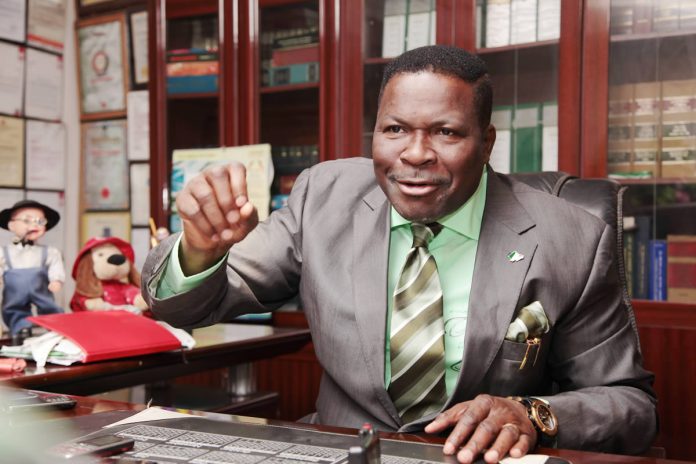
Ukraine invasion kills over 2000 Russian soldiers – US Defense Department

0

In Moscow’s nearly two-week-old invasion of Ukraine, between 2,000 and 4,000 Russian soldiers are estimated to have died.
On Tuesday, the US Defense Department informed lawmakers.

The assessment came as US defense and intelligence officials painted a stark picture of an aggressive and aggrieved Russian President Vladimir Putin, and the likelihood that he would continue to propagate a full-scale invasion of neighboring Ukraine despite massive global opposition, according to AFP.

When asked at a House Intelligence Committee hearing how many Russian troops have died so far in the military operation, Lieutenant General Scott Berrier, director of the Pentagon’s Defense Intelligence Agency, said “somewhere between two (thousand) and 4,000.”

Berrier did say, however, that the estimate was of “low confidence” because it was based on a mix of intelligence sources and open source data.

Read also: Agro-processing firms get a N73 billion credit risk guarantee from NIRSAL.

According to the report, Russia announced on March 2 that 498 of its soldiers had died in a rare release of military death figures. Ukraine claimed at the time that the figure was higher.

Director of Central Intelligence William Burns told a House panel that he believes Putin’s support for Ukraine and the Moscow-backed war is based on “deep personal conviction.”

“He’s been stewing in a combustible mixture of grievance and ambition,” Burns said, adding that he expects “an ugly next few weeks” in Ukraine “with scant regard for civilian casualties.”

He also expressed confidence in Ukraine’s ability to “resist tenaciously and effectively.”

Putin did not anticipate the full scope of the global economic, trade, and diplomatic pushback against Russia, according to Avril Haines, the Director of National Intelligence.

Putin is “unlikely to be deterred by such setbacks,” she added, and sees the conflict as “a war he afford to lose,” according to DNI.

Agro-processing firms get a N73 billion credit risk guarantee from NIRSAL.

0

The Nigeria Incentive-Based Risk Sharing System for Agricultural Lending (NIRSAL) Plc has facilitated the flow of over N73 billion into Nigeria’s agro processing industry to date from various sources, including deposit money banks, development financiers, private equity investment firms, and other fiduciaries, in order to carry out its mandate of creating a stronger linkage between segments of Nigeria’s Agricultural Value Chain (AVC) and subsequent AVC-linkage to commercial bank finance.

Farmers in the upstream AVC segment have a reliable market in the form of agro processors who offtake farmers’ produce, thanks to NIRSAL Plc’s strategic support for agro processors operating in the midstream segment of the AVC.

The support of NIRSAL Plc comes at a time when developing economies are increasingly shifting away from just producing raw materials and toward both production and value addition in order to boost foreign exchange earnings and social development.

Read also: 2023 Presidency: Osinbajo Finally Breaks Silence, Says I’ll Declare My Position Soon

Pre-upstream, upstream, and downstream AVC operators involved in inputs production and supply, mechanization service provision, primary production, and logistics are also beneficiaries of NIRSAL Plc’s financial assistance.

This accomplishment, which has made a significant contribution to the federal government’s agricultural promotion efforts, was made possible by NIRSAL Plc’s efficient use of its credit risk guarantee instrument.

The core product of NIRSAL was used to share up to 75% of agribusiness-related credit risks with commercial banks and financiers, depending on the segment in which applicants operate. The higher the percentage of risk NIRSAL Plc shares, the riskier the farmer group or agribusiness operations.

NIRSAL Plc has increased financiers’ and investors’ confidence in lending to players in the Agric sector, which was once widely regarded as a no-go area in finance circles, by protecting them from possible losses in a credit transaction.

With the support of the NIRSAL CRG, farmer groups and agribusinesses that previously struggled to obtain loan approvals from commercial banks now have a faster approval process for the loans they need to expand their operations, increase profits, and improve their livelihoods.

NIRSAL Plc’s Interest Drawback (IDB) scheme goes the extra mile to reward diligent borrower behavior by providing discretionary rebates of up to 40% of interest paid on NIRSAL CRG-backed agribusiness loans, providing additional support to Nigeria’s farmers and agribusinesses. NIRSAL Plc has paid out over N1.64 billion to date, effectively lowering the effective interest rate for borrowers with good credit histories.

NIRSAL Plc’s constant engagements with commercial banks and training of their officers are also crucial in the creation of NIRSAL CRG-backed loans. Over 4,250 bank officers have been trained on the NIRSAL CRG guidelines and efficient agric lending to date, resulting in a better understanding of the two, improved bank attitudes toward Agric lending, and increased bank lending.

Bank lending to agriculture stood at 1.4 percent at the time NIRSAL Plc was founded. Since then, the NIRSAL CRG has helped to raise this figure to 5.4 percent in Q3 2021.

Aliyu Abdulhameed, managing director of NIRSAL Plc, said the organization’s support has benefited financiers, borrowers, and the nation’s economy. He claims that financiers can now invest with confidence in profitable agribusiness ventures.

Read also: PDP Submits Umahi’s Replacement To INEC, Declares Igariwe New Ebonyi Governor

NIRSAL Plc’s injection of finance into the agricultural sector, according to Abdulhameed, has resulted in broad socio-economic growth. Agribusinesses have been able to expand their operations and staff, with NIRSAL CRG beneficiaries reporting increases in capacity utilization, productivity, number of markets served, and sales value of 20-60%.

Through agricultural products/outputs and other value chain economic activities, NIRSAL Plc’s finance facilitation efforts have generated an additional $2.5 billion in economic activity, created 360,000 direct jobs, and positively impacted the lives of 1.8 million Nigerians.

Commercial banks have pledged a total of $500 million to fund agriculture and agribusiness as a result of the success of NIRSAL Plc’s risk-sharing model. In addition, other African countries have approached NIRSAL Plc for assistance in establishing and implementing Risk Sharing facility models in their respective jurisdictions.

The latest achievement of NIRSAL Plc also coincides with the development of the Nigeria special agro-industrial processing zones program, which NIRSAL Plc is supporting across the country. “SAPZ will mobilize private sector investment into the selected zones to enhance productivity and integrate production, processing, and marketing of agric commodities,” he said, citing NIRSAL Plc’s finance-facilitation mandate.

2023 Presidency: Osinbajo Finally Breaks Silence, Says I’ll Declare My Position Soon

0

Vice President Yemi Osinbajo’s spokesperson, Laolu Akande, has stated that the vice president will soon officially declare his candidacy for the 2023 presidential election.

On the occasion of Osinbajo’s 65th birthday, Lalolu revealed this on Tuesday while answering questions from State House Correspondents.

Lalolu told reporters that Osinbajo is currently focused on his job of collaborating with President Muhammadu Buhari.

Well, as he has stated previously, he is dedicated to the work for which he was elected vice president and to supporting the president.

“That is what he is focused on right now,” he said, adding, “and as I also said in my last tweet, whatever his activities or whatever he does will be communicated officially.”

Mr Akande said the vice president was motivated by the idea that government, governance, and leadership should have a heart of justice and a heart of service, based on his observations over the last seven to eight years.

Read also: PDP Submits Umahi’s Replacement To INEC, Declares Igariwe New Ebonyi Governor

“In almost all of our meetings, he says that the reason we’re here is because people put us here.

“We are here to serve the people,” he says, “so he is someone who is committed to that notion of public service, whether in government, as a pastor, or as a lawyer.”

“He fully grasps the concept that we are here to serve in every aspect of his life.”

Mr. Osinbajo, he said, had always emphasized the importance of making an impact on the people.

The vice president, he claims, is very inspiring and deserving of leadership.

“As you can see, there are a lot more Nigerians today who want to say, ‘This is the kind of man I want to follow.'” So, vice president, happy birthday,” he said.

PDP Submits Umahi’s Replacement To INEC, Declares Igariwe New Ebonyi Governor

0

Following a court order that Governor David Umahi and his deputy immediately vacate the position of Governor of Ebonyi State, the People’s Democratic Party (PDP) has submitted the names of Iduma Igariwe as the new Governor and Fred Udogwu as his Deputy.

On Tuesday, our reporter reported that a Federal High Court in Abuja had ruled that Governor Dave Umahi and his deputy, Dr Kelechi Igwe, defecting from the PDP to the APC was illegal.

In his ruling, Justice Inyang Ekwo stated that the votes that elected Umahi as governor belonged to the party and could not be transferred to another.

The court made the ruling in a case brought by the Peoples Democratic Party (PDP) seeking the removal of Umahi and Igwe from office.

Read also: 2023: A UNIBEN professor enters the presidential Race

While Umahi chastised the judge and insisted on remaining the state governor at a press conference in Abakaliki, the PDP National Chairman, Iyorchia Ayu, said the party had forwarded Umahi and Igwe’s replacements to the Independent National Electoral Commission (INEC).

Meanwhile, the Federal High Court in Abuja ruled that the central issue in the case was the third defendant’s (governor) and fourth defendant’s (deputy governor) defection from the PDP to the APC.

The third and fourth defendants’ declarations, according to the judge, did not address the issue of defection properly and directly, instead relying on general denial and affidavit evidence.

The third and fourth defendants’ depositions in their counter-affidavit were “evasive and insufficient” to competently challenge the plaintiff’s originating process, according to Justice Ekwo.

He claimed that Section 308 of the Constitution’s “immunity clause” is not absolute. Section 308 is a constitutional fortress,” and not for political reasons.

According to the court, Umahi and Igwe did not refute the deposition that all votes cast in an election belonged to a single political party.

There was enough evidence, according to Justice Ekwo, that the second defendant (the APC) ran its own candidates in the Ebonyi State governorship election in March 2019.

“It should be noted that the constitution does not take the issue of defection lightly,” he said. The plaintiff’s votes and victory on March 9, 2019, cannot be transferred to the APC by the third and fourth defendants.

“The PDP holds the governor’s and deputy governor’s offices in Ebonyi State. The court declared that Umahi and Igwe’s only option is to vacate office and wait until the next election to run on the platform of their new party.

As a result, the court determined that, under Nigeria’s democratic system, the plaintiff received a majority of votes during the election and was entitled to continue to do so until the end of the term of office for which the election was held.

As a result, the court barred Umahi and Igwe from acting as governor and deputy governor of Ebonyi State in the future.

On the same grounds that the governor was removed, the judge sacked 15 members of the state House of Assembly who defected from the PDP to the APC.

2023: A UNIBEN professor enters the presidential Race

0

Godspower Ekuobase, a professor at the University of Benin, has entered the presidential race on the platform of the All Progressives Congress (APC).

Nigerians should be wary of moneybag aspirants who have nothing to offer Nigerians but to buy their way into the state’s resources, according to the Professor of Services Computing.

In a press conference in Benin, Edo State, he bemoaned the fact that Nigerians place a premium on politicians with deep pockets who have nothing to offer the country.

The don stated that the time had come for those with technical expertise to be given the opportunity to lead the country.

“Nigeria is not for sale; we want people who have intellect, brains, and a love for the country, not people who have money.” When you say you’re looking for someone who has money, he’ll be eager to get it back. “We are not selling Nigeria,” he stated emphatically.

Read also: Buhari appoints a coordinator for the project to clean up hydrocarbon pollution.

He claimed that the country is where it is because leaders are chosen based on their wealth rather than their knowledge.

According to Ekuobase, the country has failed to measure up to other countries around the world due to poor leadership in the past.

“I want to run for president because I have the strength, age, and support of both the elderly and the young,” says the candidate.

“That is why I intend to make Nigeria a member of the League of Nations.” We are too sluggish, and we need to improve; knowledge must be introduced. He stated, “We need people who can think.”

If elected, he said he would focus on agriculture, security, job creation, education, health, and technology, among other things, in order to make Nigeria a producer rather than an importer.

Buhari appoints a coordinator for the project to clean up hydrocarbon pollution.

0

President Muhammadu Buhari has approved the appointment of Dr Giadom Dumbari as the Project Coordinator for the Federal Ministry of Environment’s Hydrocarbon Pollution Remediation Project, HYPREP.

This is according to a statement released by the ministry’s Press Director, Saghir el Mohammed, on in Abuja.

Mr Dumbari holds a PhD in Environmental Geology and a Bachelor of Science in Geology, both from the University of Port Harcourt in Rivers State.

Rivers State University awarded him a Master of Philosophy in Environmental Management.

Dumbari, according to Mr Mohammed, had over 20 years of experience conducting impact assessments and baseline studies of Brownfields and Greenfields, as well as proven expertise in the development of Conceptual Site Models for a variety of environments.

Read also: DIG Joseph Egbunike has passed away.

“Dumbari also has experience evaluating natural attenuation processes and effective remediation technologies for a variety of contaminants, including petroleum hydrocarbons, heavy metals, and other chemicals of concern.”

“He is a specialist in remediation project management and a UN Environment Programme (UNEP) consultant on the implementation of the UNEP report on Ogoniland’s environmental assessment,” he said.

Dumbari is a Chartered Environmental Geologist and a member of the Nigerian Mining and Geosciences Society, as well as the Nigerian Association for Engineering Geology, according to Mr Mohammed.

His appointment is for a four-year term and takes effect right away.

In the case of Umahi, deputy, we have yet to receive a court decision- INEC

0

The Independent National Electoral Commission (INEC) said on Tuesday that the certified True Copy of the Federal High Court order sacking Ebonyi State Governor Dave Umahi and his Deputy, Chief Kelechi Igwe, had not yet been served.

In an interview with the News Agency of Nigeria (NAN) in Abuja, Mr Festus Okoye, the INEC National Commissioner and Chairman, Information and Voter Education Committee, revealed this.

When the commission receives the certified true copy of the court judgment, Okoye said the commission would meet and make a decision.

“A copy of the said judgment has not been served on the Commission.”

“When the Commission is served with a Certified True Copy of the judgment, it will meet and make a decision,” Okoye said.

On Tuesday, a Federal High Court in Abuja, presided over by Justice Inyang Ekwo, ordered Gov. Umahi to vacate office following his defection from the PDP to the APC (APC).

Read also: Senate Asked INEC To Allow Eligible Prisoners To Vote In Elections

In his ruling, Justice Ekwo also ordered Dr. Eric Igwe to stop posing as the state’s deputy governor.

The duo were deemed to have resigned from the office after defecting from the PDP, the platform on which they came to power, according to Justice Ekwo, and were thus no longer entitled to be referred to as governor and deputy governor.

The judge ruled that it was unconstitutional for a candidate elected on the platform of one political party to switch parties while still in office.

He claimed that the votes cast for Umahi and Igwe on March 9, 2019, were for the PDP, not the APC.

According to NAN, the PDP has submitted the names of Iduma Igariwey, a serving member of the House of Representatives, as a nominee to replace Umahi, and Fred Udogwu as Deputy Governor to replace Igwe to INEC in response to the Court’s decision.

Sen. Iyorchia Ayu, the PDP National Chairman, said at a press conference in Abuja that the decision was reached after extensive consultation with party stakeholders at the national and state levels, in accordance with the Federal High Court’s ruling on Tuesday.

In response, Umahi stated that he will not relinquish his position as governor of the state to anyone else.

DIG Joseph Egbunike has passed away.

0
Joseph Obiajulu Egbunike, the Deputy Inspector General of Police in charge of the Federal Criminal Investigation and Intelligence Department (FCIID), has died.


According to a police source, Egbunike died on Tuesday night after collapsing and being rushed to National Hospital in Abuja, where he was pronounced dead.


Until his death, the senior police officer chaired the Special Investigation Panel set up by the Inspector-General of Police, Usman Baba, to look into the money laundering allegations leveled against Abba Kyari, the suspended head of the Police Intelligence Response Team.


Egbunike,
a native of Onitsha in the state of Anambra, had been a member of the Nigerian Police Force for 33 years.

Read also: Buhari Condemns Assassination Of Kebbi Vigilantes, calls On Security Agencies To Be More Proactive


He
holds a Bachelor of Science (Hons) Accounting degree from the University of Nigeria, Nsukka, as well as a Bachelor of Laws (LLB Hons. ), B.L., a Masters in International Law and Diplomacy (MILD), and a PhD in Criminology.

DIG
Egbunike was a member of the International Association of Chiefs of Police (IACP), the Association of National Accountants of Nigeria (ANAN), the Nigeria Bar Association (NBA), the Institute of Cost Management (ICM), the Nigeria Institute of Management (NIM), and the Chartered Institute of Fraud Examiners, among others.