Home Blog Page 192

Datti: Obi Can Run in 2027 With or Without Me

0

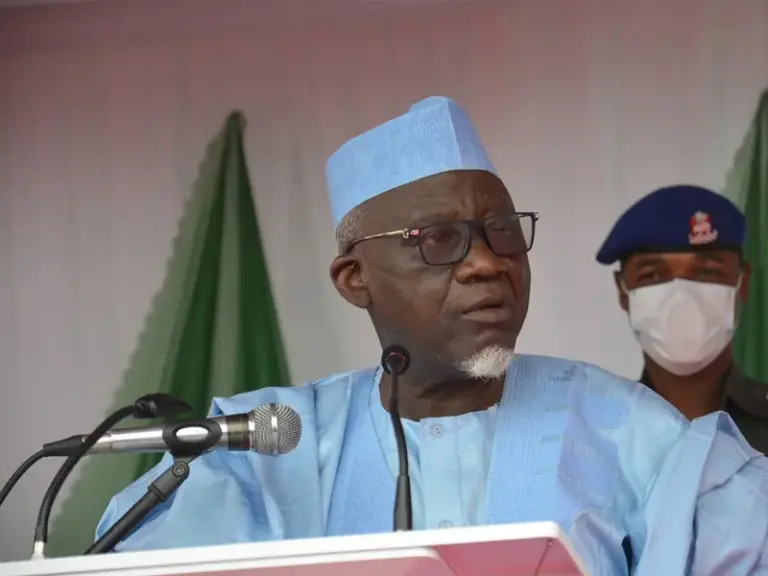
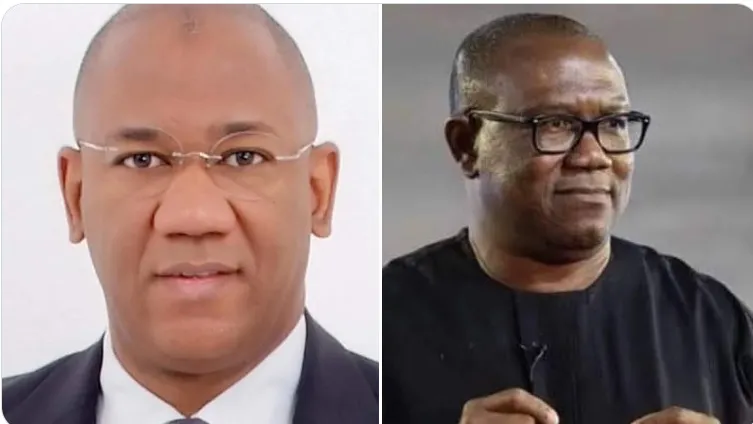
Peter Obi can fly the party’s flag in the 2027 presidential election with or without him as his running mate, according to Datti Baba-Ahmed, the Labour Party’s vice presidential candidate in the general elections of 2023.

Baba-Ahmed stated this on Wednesday when making an appearance as a guest on Channels Television’s “The Morning Brief.”

“There are two important people whom I greatly like; Peter Obi is one of them. I’m open to having him.

“With or without me, the Labour Party encourages him to continue coming, keep the Labour Party ticket, and run in 2027. Baba-Ahmed added, “The ADC is free to choose a candidate from the South.”

Read Also: Tenants in Southeast Nigeria Decry Soaring Rental Prices

He asserted that Nigeria required a leader who would bring about government rather than catastrophe.

Baba-Ahmed went on to say that Obi’s affiliation with the coalition on the African Democratic Congress platform was a developing circumstance rather than an anti-party action.

“This behavior is not anti-party. The situation is developing. A coalition is the result of individuals, interest groups, and political parties joining together. The scenario is developing.

“I went to coalition meetings. “Peter Obi is free to keep going to those coalition meetings,” Baba-Ahmed continued.

Ahead of the 2027 presidential election, Baba-Ahmed expressed his opinion on the zoning issue, saying he believed the South should produce the president.

Tenants in Southeast Nigeria Decry Soaring Rental Prices

0

People in the Southeast region of Nigeria are feeling increasingly overburdened by the rising cost of housing; many have called the situation oppressive and oppressive.

Tenants from big cities and small towns claim they are feeling desperate and financially burdened due to the constant increase in rent prices.

Tenants in key towns like Enugu, Awka, Onitsha, Umuahia, and Aba are complaining about the steep rise in annual rent costs. Some landlords are now asking for up to two or three years’ rent up front.

In Awka, the capital of Anambra State, a three-bedroom apartment that used to cost between ₦450,000 and ₦800,000 per year can now cost up to ₦1.5 million in some places.

Similar trends are reported by inhabitants of Enugu and Abia States, where a two-bedroom apartment that used to cost ₦300,000 now sells for over ₦700,000.

“The ordinary wage earner can no longer afford the rent. A teacher in Onitsha named Chinyere Ndukwe stated, “You have two options: either you get a house in a far-off village or you just go back to your father’s compound.”

Tenants contend that the increases are capricious and frequently predatory, while landlords and real estate brokers have blamed the rent rise on inflation, the overall economic crisis, and the growing cost of building materials.

Inflation is no longer a factor. Some landlords simply have avarice. “They raise the rent every year, but they don’t improve anything or renovate the houses,” another Umuahia tenant said.

Additionally, agents have been criticized for inflating rates and demanding exorbitant commissions and legal fees, which can sometimes match or surpass the rent.

Many families are currently experiencing financial difficulties, high unemployment, and stagnant income, which is compounded by the rising cost of housing. Students, traders, artisans, and civil servants are among those most impacted.

Nigeria has a housing shortage of more than 28 million units, and the Southeast region is a major contributor to that number, according to real estate experts.

Read Also: NiMet Pushes for Law Review to Improve Revenue and Services

A seller’s market that greatly benefits landlords has resulted from the low supply of reasonably priced homes, which has maintained demand high.

Some state governments have responded by introducing measures to restrict rent, especially in Enugu. The state assembly is now debating a plan that would limit rent hikes and shield renters from evictions without warning.

Urgent measures are also needed to stop the problem, according to the Real Estate Developers Association of Nigeria (REDAN). The group is promoting tax breaks for developers, subsidized building supplies, and increased funding for affordable homes.

Many Southeast residents say the pain of skyrocketing rents won’t go away anytime soon unless state governments, through their various Houses of Assembly, take serious and intentional action. They hope for quick and long-lasting solutions to lighten their load, but for now, they are left with few options and growing pressure.

NiMet Pushes for Law Review to Improve Revenue and Services

0

A public hearing on a bill that would change the 2022 version of the Nigerian Meteorological Agency’s Establishment Act and was sponsored by Hon. Isiaq Abiodun Akinlade, the former chair of the House Committee on Aviation Technology, was held at the agency.

A clear and comprehensive framework for the Agency’s cost recovery across the economy, particularly the non-aviation industries, is one of the main goals of the proposed revisions.

The objective is to increase the Agency’s ability to carry out its purpose, encourage efficiency, upgrade facilities, guarantee security, and improve employee well-being.

In his presentation at the public hearing, which was organized by the House Committee on Aviation Technology, Director-General/CEO Professor Charles Anosike stressed that cost recovery is a widely recognized practice and a vital component of the Agency’s long-term viability.

Representatives from WMO, NIMASA, FAAN, NCC, trade unions, and former Director-Generals of the Agency—Engr. Dr. Jide Adeniji, Dr. Anthony Anuforom, and Professor Mansur Matazu—were among the other important participants from a range of socioeconomic sectors who attended the hearing.

Read Also: SSDC’s New Managing Director Gets Appointment Letter, Readies to Take Over

Additionally, previous Agency directors submitted both orally and in writing.

The Speaker of the House, through the Deputy Chief Whip, opened the hearing by restating the National Assembly’s commitment to a people-oriented legislature that guarantees MDAs like NiMet have the ability to support public growth, maintain transparency, respond to national needs, address climate change and hazardous weather, and fortify the resilience of vulnerable communities.

In his concluding remarks, the committee’s chairman, Hon. Tajudeen Kareem Abisodun, gave attendees his word that the committee will take into account all written and spoken contributions in a comprehensive manner and produce legally compliant revisions. He emphasized the significance of NiMet’s mission in protecting human life on land, in the air, and on the sea—an undertaking that calls for everyone’s support.

SSDC’s New Managing Director Gets Appointment Letter, Readies to Take Over

0

The Secretary to the Government of the Federation (SGF), Senator George Akume, gave the newly appointed board members and Ms. Usoro Akpabio, the Managing Director of the South-South Development Commission (SSDC), their official appointment letters at his Abuja office on Tuesday.

SGF Akume gave the appointees congratulations during the ceremonial event and asked them to fulfill the Federal Government’s renewed hope agenda for the South-South. “President Bola Ahmed Tinubu’s confidence in their ability to accelerate transformation in the oil-rich region is evident in their appointments,” he stressed. In carrying out their purpose, Akume urged dedication, creativity, and integrity.

Read Also: Nigerian Senate Insists on Natasha’s Ongoing Suspension

Ms. Akpabio responded by promising that the Commission will give top priority to enhancing primary healthcare systems, modernizing educational facilities, and empowering women and the elderly through focused training programs. The new board’s commitment to making the South-South Commission a model for regional development organizations nationwide was reaffirmed by her.

Each member received their letters of appointment at the event, which signaled the official start of the board’s responsibilities. For the people of the South-South, the SSDC is now poised to usher in a new age of sustainable development, inclusive growth, and regional prosperity with the support of the Federal Government and revitalized energy.

Nigerian Senate Insists on Natasha’s Ongoing Suspension

0

According to the Senate, Natasha Akpoti-Uduaghan, a member from Kogi Central, would stay suspended till the Senate returns from recess in two months.

Yemi Adaramodu, the red chamber of the National Assembly’s spokesperson, made this claim on Tuesday during an appearance on Channels Television’s Politics Today show.

This came just hours after the Senate forbade the suspended member from returning to the National Assembly in Abuja to resume his legislative duties.

“The entire National Assembly, including the Senate, has a responsibility to play. We are lawmakers, not bystanders who watch others create content and perform skits. The content was first produced and is now deteriorating into seasoned movies.

Read Also: Wike’s Trusted Friend Turned Against Him – Datti Baba-Ahmed Alleges

“Until the Senate returns from recess in two months, the Senator will continue to be suspended,” he stated.

Recall that in March 2025, Senator Natasha was suspended for allegedly violating Senate rules following a dispute over seat arrangements with Senate President Godswill Akpabio, whom she accused of sexual assault. Akpabio refuted the accusation.

On Tuesday, July 22, 2025, the lawmaker attempted to continue Senate business but was denied access.

Wike’s Trusted Friend Turned Against Him – Datti Baba-Ahmed Alleges

0

The FCT Minister, Nyesom Wike, may be stung by the treachery he experienced from a close friend, according to Yusuf Datti Baba-Ahmed, a former Labour Party vice presidential candidate.
Speaking on Tuesday’s Prime Time show on Arise Television, Baba-Ahmed suggested that this hurt would make Wike’s involvement in the ongoing leadership crisis engulfing the PDP more acceptable.
He claimed that Wike was not treated fairly by the PDP, but that the FCT Minister kept the party going when others were abroad.

At the most crucial point during the PDP’s presidential primary, Wike’s friend betrayed him, according to the former vice presidential candidate.

Read Also: NUC Officials Face Heat as Education Minister Pressured to Act on Contempt Allegations

As you can see, Wike has some justification for his actions, even though I disagree with them all. Baba-Ahmed stated, “I’m attempting to pretend that whatever he’s doing, deep within his mind, I’m trying to remotely psych how he thinks and all that.”

He hosted a party in Eagle Square in front of the entire world while others were abroad, but at the most crucial time, a very close friend of his betrayed him.

“These are two Northerners who deceived me; these are two Hausa-Fulanis; these are two Muslims who deceived me, and I will teach them a lesson,” he says. Wike is this person.

From a human perspective, I want to treat him fairly. When someone is treated that way, they will undoubtedly fight back. It wasn’t just.

“I used to advise these folks to use caution while engaging in political maneuvering, to be cautious when requesting betrayal, and to use caution when employing deceptive tactics. Sometimes you can fix someone more than you could have ever imagined.

“You know, the people who did this to Wike have a very lengthy history because of what he did for them in 2011. Since then, their connection and relationship have grown stronger, and at last, they did this to him. He is going to ruin the celebration. There is a person in him.

NUC Officials Face Heat as Education Minister Pressured to Act on Contempt Allegations

0

Due to their alleged noncompliance with court orders requiring the reinstatement of a former employee, Prof. Abdullahi Ribadu, the Executive Secretary of the National Universities Commission (NUC), and four other senior officials have been urged to face disciplinary action from Education Minister Dr. Tunji Alausa.

Former commission employee Mr. Kunle Rotimi made the call, accusing the NUC leadership of ignoring a number of valid court decisions that instructed the payment of all accumulated entitlements since March 1996 and reinstated him to duty.

Rotimi called the ongoing non-compliance as an act of contempt of court in his plea to the Education Minister. He also revealed that he has started criminal contempt and committal proceedings against the officials.

Additionally included in the court proceedings and cited in the petition are Mr. Paschal Eruaga (Deputy Director of Legal Services), Mrs. Victoria Omorodion (Director of Human Resources), Mrs. Hauwa Amos (Director of Finance), and Mr. Chris Maiyaki (Deputy Executive Secretary).

On July 6, 2020, a National Industrial Court ruling supported Rotimi’s reinstatement and compensation. The Court of Appeal maintained the lower court’s verdict and mandated immediate compliance on June 28, 2024, defeating the NUC’s appeal.

More than a year after the appellate ruling, Rotimi asserts that the NUC has not yet put the decision into effect, which has led to additional legal actions and official notification to the Federal Ministry of Education.

The Public Service Rules (PSR) allow for the suspension or interdiction of public officials who are being investigated for crimes, and he encouraged the Ministry to implement these measures. His own words:

As a result, I respectfully request that the Hon. Minister of Education, Dr. Tunji Alausa, use the PSR against the NUC officials in light of the aforementioned facts.

Read Also: State Governments and Their Growing Influence in the Power Sector

Rotimi, a former journalist, contended that keeping the officials in office while the legal process is ongoing might be considered administrative apathy and harm public institutions.

Adhering to the rule of law and demanding accountability, he declared, “It is unacceptable that public resources may be used to defend acts perceived as contemptuous of court.”

He added that if nothing is done against the officials in spite of the court processes still in progress, the Ministry might be seen as complicit.

Rotimi emphasized that the 1999 Constitution and the ethical duties of public officials under Nigerian law are both violated by the extended reluctance to follow court decisions.

State Governments and Their Growing Influence in the Power Sector

0

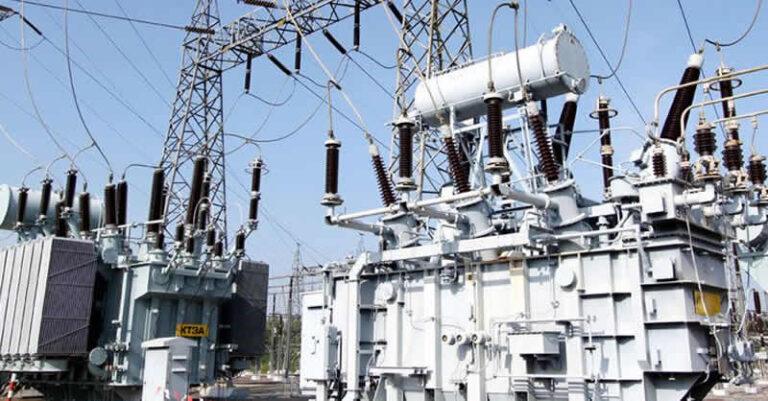
Among other things, the Fifth Constitution Alteration Bills, which former President Muhammadu Buhari signed into law before he left office in 2023, moved electricity from the Exclusive Legislative List to the Current Legislative List, allowing state governments to invest in electricity generation, transmission, and distribution in areas that were connected to the national grid.

The Nigeria Rural Electrification Agency (REA), which is owned by the Federal Government and has been supplying electricity to certain rural and urban areas, may become obsolete as a result of this, but it should allow state governments to supply energy to their citizens in the same manner that they do water.

According to Seye Opeleye, Director General of the Development Agenda for Western Nigeria (DAWN) Commission, “No legislation has excited Nigerian development stakeholders as much since 1999.”

State governors are now forced to be more bold in the establishment and management of their own energy firms, or persuade private organizations to do so inside their states, as the nation’s power industry has been devolved.

The situation has been escalated by President Bola Tinubu beyond what President Buhari did. The Electricity Amendment Bill, 2023, which he signed, gives state governments the authority to control not only the production, transmission, and distribution of electricity within their borders, but also its generation.

Tinubu has taken a tiny but significant step that should help decentralize the electricity industry, give states more authority over their energy infrastructure, attract private investment, and increase the reliability of the nation’s electricity supply.

Currently, the power markets are controlled by seven states: Edo, Ekiti, Enugu, Imo, Kogi, Ondo, and Oyo. Before September 2025, the states of Lagos, Niger, Ogun, and the Plateau are anticipated to finish their own transitions.

Wet blanket critics are already criticizing the development, of course. Oddly, officials from the Nigerian Electricity Regula­tory Commission (NERC) are voicing concerns about some states’ capacity to control their markets, and some purported industry experts also appear to have a rather pessimistic outlook on the situation as a whole.

The more upbeat observers, however, stress the significance of expanding agency and staff capability, NERC-state regulatory coordination, and the latter’s financial preparedness to make sufficient investments.

Although we fervently remember the boldness of previous Governor Tinubu to build a power plant in Lagos State, we dare hope that the Niger Dam power facility can be turned over to the Niger State government in accordance with established payment procedures.

He negotiated a $800 million deal with Enron to operate an independent power plant that would deliver 90 megawatts in the first phase and an additional 5409 megawatts of thermal power in the long run. However, Olusegun Obasanjo’s military inclinations prevented him from fulfilling his duties as Nigeria’s democratically elected president, destroying this magnificent attempt.

Governor Tinubu wanted to regularly supply energy to Lagos State’s residents and businesses, but President Obasanjo’s centralized strategy thwarted his plans.

Read Also: Curbing Japa Trend: BANC Outlines Solutions to Youth Unemployment, Migration Crisis

However, the President’s recent actions have left state governors in a difficult position. After the elimination of the gasoline subsidy, they now receive a larger allocation from the Federal Accounts Allocation Committee, therefore they might not be able to justify not building or expanding power infrastructure in their states.

The creation of jobs is the most direct benefit of the state’s increased ability to produce electricity. Then, naturally, as economic activity increases, the states will eventually receive more Internally Generated Revenue.

The model that divides generation, transmission, and distribution into silos is the reason why the electrical industry, which was partially privatized during the Clinton administration, is struggling. The financial, managerial, and technical ineptitude of the investors who purchased the traditional electrical firms is clearly evident.

One company that produces, transmits, and distributes its own power should be able to operate in each market in order to facilitate the operationalization of the new law.

Within their geopolitical zones, states should combine their resources to provide consistent electricity. States in the Southwest, for example, might create a massive electrical corporation by pooling their resources and utilizing economies of scale.

Civil society organizations and the media are urged to closely monitor the new electricity laws’ implementation and hold state governments accountable for power delivery.

Curbing Japa Trend: BANC Outlines Solutions to Youth Unemployment, Migration Crisis

0

According to Dr. Chibuzor Onyeama, founder and CEO of Black Ancestral Native Communities (BANC) and an expert in labor migration, irregular migration and unemployment issues may be resolved if the Nigerian government implements a robust industrial system to engage its people.

During the Professional Public Speaking & Leadership Academy’s (PPSLA AFRICA) 2025 Nelson Mandela Leadership Lecture and Impact Makers Award in Abuja, Onyeama gave the advice. He emphasized the importance of keeping young Nigerians, whom he described as having a lot of talent, involved in local activities that would allow them to support themselves rather than looking to migrate abroad to work.

Buttressing his point, he claimed that when communities are industrialized, young people can work where they need to and that there won’t be any haphazard issues related to their desire to leave Nigeria.

“I have outlined a solution that I refer to as the Cirxuitious Industrialization Scheme, which is a program that can build small community industries within where people live,” he said. Due to its indirectness and internality within our societies, it is circuitous. It is small-scale but manufacturing-based, allowing young people to find work in their communities.

Young people have been kept at home if the employment issue has been resolved. However, if you don’t have the chance to interact with everyone who is qualified, including those who aren’t, and if you haven’t helped them develop the skills they need to solve problems, you’re giving them tickets or even making them want to leave, which is what the Japanese are all about.

Peer pressure, according to the BANC founder, is a major cause of irregular migration and criminal activity, particularly cybercrime.

He believes that the Nigerian government could improve his job by establishing opportunities for young Nigerians to contribute to the country’s socioeconomic structure.

“Everyone starts evaluating your accomplishments and comparing you to your friends when you get older, which is how you discover a group of them committing crimes and figuring out strategies to stay alive, which is how you have today’s Yahoo Yahoo boys.”

They are dangerous despite their insignificance, and they are also making other young Nigerians feel very ashamed. You would almost question whether you have committed any crimes as a Nigerian when you leave the country and observe how people treat your passport.

“Therefore, we are stating that it is feasible to retain young people by consciously constructing infrastructure and solution-based industrial systems that can keep the young people involved so that they can unleash their talent and be prepared to work for themselves.”

In his eloquent homage to Nelson Mandela, Onyeama called on Nigerian leaders to fight and work toward improving the nation by electing leaders who would be dedicated to developing young people with ability and competence.

Read Also: Echono Vows to Tackle Mismanagement of Funds in TETFund

In the run-up to the general elections in 2027, he called on Nigerians to “look to find the best of the best.” And place them where they belong. You have the best measurement ever when you follow the instructions to place square pegs in square holes and round pegs in round holes.

He lamented that the multiple leadership and policy crises that the young Nigerian population was currently facing in the nation were caused by “political distancing,” in which the leaders are elderly and have few years to live.

Sometimes you wonder how long some of our leaders will have to live to witness the chaos and destruction they have wrought in our country. Subsequently, you discover that these individuals are in their later years and are taking the lead.

The migration specialist said that ending the growing trend of “money politics,” which was impeding active youth participation in politics, was a necessary first step in electing young people to leadership roles as a means of resolving the numerous issues Nigeria was now facing.

“How will you consciously contribute to the improvement of a future in which you both know and clearly refuse to participate? It can occasionally impact leadership quality, thus we know that young leadership will address this issue.

It is important to minimize money politics. because young people in Nigeria lack the financial resources necessary to participate in politics.

“You are an ambitious young guy with a proven track record who has tried his hand at successful endeavors. It’s money politics, so when you want to move into a certain role, someone asks you how much money you have in the bank.

In order to solve this nation’s problems, we should stop engaging in money politics and start taking practical measures. Given that we have all the necessary resources to address Nigeria’s current issue, it is not difficult for us to fix.

African leaders were encouraged by Dr. Lotanna Okoye, Director General of the Professional Public Speaking & Leadership Academy (PPSLA AFRICA), to take inspiration from Nelson Mandela’s selfless life and leadership style.

“Today is Nelson Mandela’s international day.” We hope to teach the present leaders about Mande­la’s way of life, the leadership style and system he employed when he was alive, and all of the sacrifices he made for Africa.

“In addition, we wish to improve the Teens Resource International Center, which is a piece of infrastructure here in Abuja. where we shall raise and educate young people who will follow Mandela’s example as global leaders.

Echono Vows to Tackle Mismanagement of Funds in TETFund

0

The Tertiary Education Trust Fund’s (TETFUND) executive secretary, Sonny Togo Echono, would most likely have been known as the “action administrator” if Nigeria had been under military rule. Nigeria’s governance vocabulary was enriched with various modifications and infusions by successive military governments over the course of several years and decades. “Action Governor” was one such remedy that rose to and remained popular in public discourse in the past. It was a reference to proactive military superintendents who may have been overbearing in their attitude to public service. The Army Colonels Mobolaji Johnson, David Bamigboye, Robert Adebayo, and Osaigbovo Ogbemudia, who oversaw Lagos, Kwara, Western, and Midwestern states, were selected as Action Governors in recognition of their contributions to the advancement of infrastructure development in their respective areas. Similarly decorated was Mohammed Buba Marwa, the current chairperson of the National Drug Law Enforcement Agency (NDLEA), a Brigadier-General who oversaw Lagos State from 1996 to 1999.

Marwa was in the forefront of crime prevention, health institution reform, and road rehabilitation. He established a police-military task force called Operation Sweep as a crime-containment measure, and many other states followed suit. He completed all of these under his honorific title of “action administrator.” A few other states followed Marwa’s example, most notably Oyo under Colonel Ahmed Usman and his Kogi State counterpart, Bzigu Lassa Afakirya, who initiated Operation Gbale (gbale is the Yoruba word for sweeping) and Operation Hot Chase, respectively. Because of his Yoruba accent on the word “action,” Raji Rasaki, a former military administrator of Lagos State, was also known as the “akson” governor. His extensive demolition of illegal buildings is what people remember him for, as it greatly reduced the number of slums and shanties in Lagos. The state’s real estate market would then be impacted by this.

Ever since he was appointed to his current position a little more than three years ago, Echono has proven that he can speak tough and follow through with equal tenacity. Echono has made it a point to emphasize over and over again that a new sheriff is working at TETFUND. He started his reformation program by addressing long-standing cabals in the organization that had taken over the authority to decide contract awards. In order to change our memories, Echono was among the first civil servants to be put through the paces of a new due process and public procurement system in the early years of the current democratic age. Prior to his current schedule, he served in a number of ministries and has “preached the gospel” at his many “bus stops” in public service. He has never been discouraged, regardless of how the establishment responds.

Read Also: Ohanaeze Lagos Tensions Rise: Ogbonna Justifies Actions, Ubochi Announces Suspension

He made enemies on his own initiative because he insisted on reforms and reorientation. In an effort to manipulate the story, “victims” of Echono’s new teaching launched a fierce media campaign against him. The national assembly was notified of the war’s escalation and was presented with multiple petitions accusing Echono of massive fiscal violations and corruption. As was to be expected, anti-corruption organizations, particularly the Economic and Financial Crimes Commission (EFCC) and the Independent Corrupt Practices and Related Offenses Commission (ICPC), were interested in the undesirable information that was coming from TETFUND. Echono’s traducers were upset to learn that every time TETFUND’s systems and his personal profile underwent the rigorous testing of serial integrity, he consistently returned positive test results and clean bills of health. As he took action to halt the pre-existing market in TET­FUND under his supervision, Echono encountered this situation.
The huge stick has subsequently been wielded by Echono for scholars who have chosen to “defraud” the government after taking advantage of the government’s kindness by receiving grants and scholarships to study abroad. Across all universities, certain instructors and lecturers have benefited greatly from government financing for additional study overseas. By continuing to serve their primary employers, they are typically expected to return to Nigeria and give back to the system that provided them with such benevolence. On the other hand, many times, some students use bad currency to pay back the government, who helps them. In a sense, they “defect” or flee. In light of the nation’s current economic circumstances, which are influenced by inflation and currency devaluation, Echono has now announced that the government will no longer operate as Santa Claus.

Instead, the government would now encourage its researchers and intellectuals to develop their capacity domestically. Nigerian military institutions, for example, provide basic and advanced training to military officers from many foreign nations. The Nigerian Defense Academy (NDA) and Nigerian Defence College (NDC) have a small number of international students in almost every graduating class. Why wouldn’t advanced instruction be provided to indigenous scholars in home-based institutions that have been retooled and recalibrated? Indeed, faculty members from Nigeria make up a large number of universities and training centers worldwide. These include popular locations such as South Africa, the United Arab Emirates, the United States of America, the United Kingdom, and Canada. Within reasonable financial constraints, Nigeria can look inward and influence colleagues who want advanced exposure and retraining from experienced Nigerian technocrats and academicians back home.

Echono has also investigated forensically how big tertiary institutions are in relation to the amount of money they can get. In an area where some citadels have populations in the upper five figures, Echono thinks it odd that other institutions have far fewer pupils than the pitiful 100! The example of a polytechnic with only 30 students that had been in operation for four years and was still receiving public financing was once brought up by an anxious Echono. According to him, the government’s goals as expressed through the TETFUND are incompatible with such an example. He added that accountability is crucial when it comes to allocating funds. In the event that unused funds are found in the accounts of benefiting organizations, they will be retrieved and transferred to educational institutions with higher performance ratings. Echono’s frequent criticism of abandoned projects at the country’s public tertiary institutions is equally aggressive. His supervision will no longer let such unattractive stumps in institutional landscapes or monuments to waste.

Recent warnings from Echono cautioned TETFUND-administered organizations against misusing and abusing intervention funding. Echono issued a warning during a two-day strategic workshop for directors of academic planning, physical planning, and ICT that started in Abuja on Monday, July 7, 2025, that failing to use resources to their full potential could result in defaulting institutions being removed from the list. He reiterated the government’s resolve to support the country’s postsecondary education system by filling in procedural loopholes and making sure that institutions are fully aware of the agency’s intervention guidelines. Underperformance and poor management would not be tolerated, the head of the TETFUND stated. “Institutions that fail to access, use, or retire funds in accordance with TETFUND guidelines, or those that underperform in key academic or operational benchmarks, may be delisted,” Echono reaffirmed.

With his thoughtful interventions, Echono has elevated a public service that is typically perceived as dreary, uninspired, and tepid. His administration style has been defined by frequent interactions and interfaces with important tertiary education mill owners. The Echono milieu has broadened the range of engagements, since previously the only frequent attendees at meetings with the leadership of TETFUND were vice chancellors, rec­tors, and provosts at the top of universities, polytechnics, and colleges of education. Under Echono’s direction, other important players in the tertiary institutions’ top crust—particularly the heads of the administrative, finance, and developmental departments—have also gained the support of TETFUND. The organization’s meeting room in the Abuja headquarters building is constantly bustling with activity. The goal of all of them is to improve the performance of the nation’s tertiary education system so that it can produce the skilled labor required to propel growth and development.

Future research will focus on Echono’s metamorphosis because he was a dedicated public servant who gained his start in the back of the bureaucracy, where he excelled for three and a half decades prior to his current job. He retired in early 2022 after entering the federal civil service in 1987. Throughout his years of service, he held a variety of positions in a number of ministries. “Civil servants can be seen but their voices are not to be heard,” according to the civil service’s rulebook. It was from that same system that Echono developed. But as he continues to serve the country, his current job description has brought out the more outspoken, outgoing side of him.

*A Fellow of the Association of Nigerian Authors (FANA), Olusunle, PhD, FANA, teaches creative writing as an adjunct professor at the University of Abuja.