Home Blog Page 1859

CBN top officials will meet on Monday to discuss the naira crisis

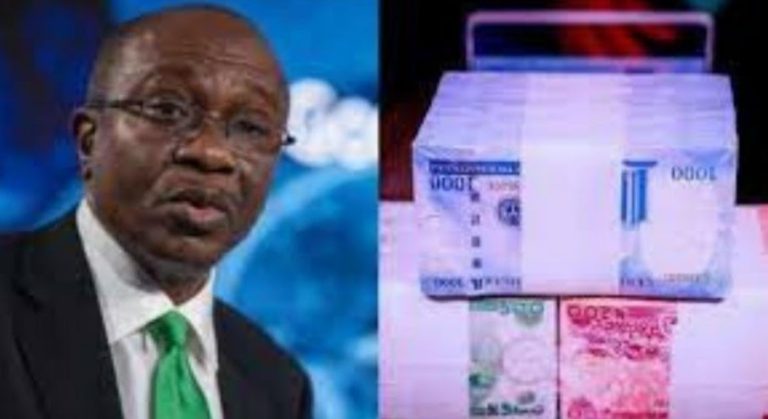
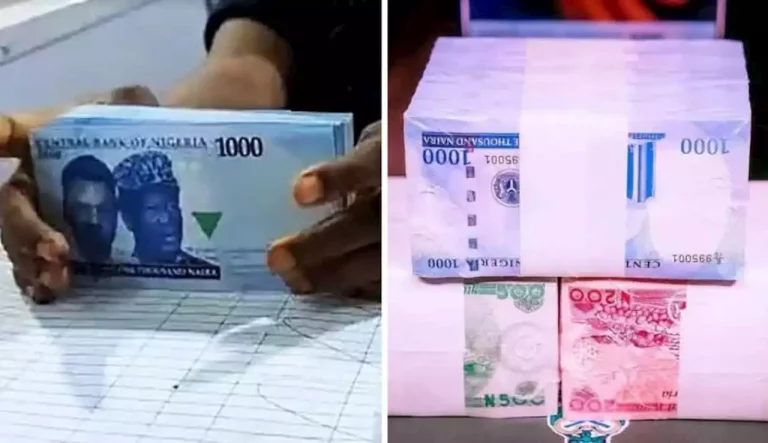
On Monday, the management team of the Central Bank of Nigeria will meet to discuss the crisis that the naira redesign program has brought about and to come up with solutions for the severe cash shortage that has nearly brought the country to a standstill.

The National Council of State’s suggestion that the central bank print more newly created N1,000, N500, and N200 notes or reissue the older notes that were taken out of circulation will also be covered at the meeting in order to alleviate the current cash shortage.

A new directive on whether or not to continue accepting deposits of the old notes from deposit money banks may be given at the meeting, which is expected to take place at CBN headquarters in Abuja.

One of our correspondents was informed on Saturday by a CBN representative that a decision would likely be made at the meeting regarding the continued use of the old notes.
He asserted, however, that logistical challenges and the Nigerian Security Printing and Minting Plc’s capacity limitations for the printing of the new notes would make it challenging to put the suggestion to increase money production into action.

The CBN was considering hiring foreign firms to print the redesigned naira notes due to the Mint’s inability to keep up with demand and the resulting current nationwide shortage.

The CBN reportedly removed approximately N2.1 trillion worth of the previous notes from circulation, while the Mint was able to print N1,000, N500, and N200 notes worth N500 billion. However, the Mint may not be able to print any more notes at this time.

In light of the security implications of the notes’ continued scarcity, the cost of printing new notes while reissuing the old ones, and the execution of the Supreme Court’s interim order that the old notes should be permitted to circulate alongside the new ones, the head of the central bank stated on Sunday that the Council of State’s recommendations would be carefully considered.

Read also: Terrorists murdered 10 troops from Niger

There is uncertainty.
Bankers, traders, and ordinary Nigerians are unsure whether the old notes should be recognized as legal tender in light of recent events, though.

Attorney-General of the Federation and Minister of Justice Abubakar Malami (SAN) declared that the Supreme Court’s order would be complied with but that it would also be appealed.

A manager of a Tier-1 bank told one of our correspondents, under the condition of anonymity, that confusion was rampant because the CBN had not issued a counter-directive to its earlier directive that the old notes not be reintroduced into circulation beginning on Friday, February 10, 2023.

The bank supervisor said, “We don’t know what to do about the situation as a whole. The most recent communication from the CBN to us stated that we should begin paying customers up to N20,000 over the counter and that the old note withdrawal deadline of February 10 is still in effect.

“Older naira deposits from customers are no longer accepted. On Friday, we came to an end. For instance, we did not open today (Saturday) to accept deposits, in contrast to earlier directives from the central bank. We were advised to stop compiling previous Friday notes by our zonal head. Unless a new directive is issued on Monday, we won’t accept deposits of old naira notes any longer.

In the meantime, some gas stations in the states of Lagos and Ogun on Saturday insisted only on new notes, transfers, and point-of-sale payments instead of old naira notes from customers.
A similar situation occurred in supermarkets and fast food restaurants, despite some traders in different markets rejecting the old notes.

Residents of Abakaliki, Ebonyi State, have urged the federal government to speak out immediately in favor of suspending or extending the deadline for exchanging old naira notes.

Residents claimed that the need for the appeal resulted from the state’s merchants and gas stations refusing to accept the old naira notes in separate interviews with the News Agency of Nigeria on Saturday.

Concerned citizens pointed out that the recent Supreme Court decision suspending the February 10 deadline set by the CBN was violated by the Abakaliki business community’s refusal to accept the old notes.

Mr. Lawrance Onwe, a lawyer, asserted that Nigerians deserved to know from the government the true position of the naira swap in order to prevent the confusion, chaos, and panic the development has caused since the deadline passed on Friday.

Civil servant Mr. Silas Nkpuma claimed that he nearly got into a physical altercation with a commercial motorcycle driver because the latter insisted on being paid with a brand-new naira note.

The man refused to send me a mobile transfer, and I didn’t have any new naira notes with me “He asserted. I was held hostage by the cyclist until I was rescued by a sympathetic bystander.

“I think the confusion brought on by the rejection of the old notes could have been prevented if the public had been properly informed by relevant government organizations.

The fact that gas stations and large corporations started rejecting the old money on Friday is more worrisome than the rejection’s apparent basis in ignorance.

Mrs. Chika Iteshi, a food vendor, claimed that she stopped collecting old naira because okada and keke (tricycle) riders refused to accept it. The Ophoke-Abba, Kpiri-Kpiri Market is where you can find her.

Similar to this, on Saturday some Enugu citizens started to reject the old naira notes.

According to a NAN investigation, many residents who still had old naira notes in their possession had trouble using them.

When he offered a bus driver the old N500, which he rejected, Mr. George Nweze, a resident of Awkunanaw in the state’s Enugu South Local Government Area, claimed to have witnessed the incident.

“The fact that the driver refused the old note surprised me because I had assumed he could use it to pay for gas without any issues. He flatly rejected it, “said Nweze.
A small-time trader named Mrs. Marta Chukwu claimed that her customer had rejected the old naira notes, totaling N25,000, that she had used to pay for provisions.

Chukwu claims that her client declined to accept the notes from her and claimed that he had stopped collecting old notes on Friday.

NAN observed that before boarding, tricycle drivers would inquire as to whether potential passengers had recent cash.

Mr. John Nwabueze, a civil servant, claimed that despite giving an outdated note to a taxi driver on his way to work on Friday, things had changed by the time he arrived home that evening.

A tricycle driver named Mr. Ejike Ogbodo asserted that the problem started when a NNPC mega station started refusing old naira notes.

When we were waiting in line to purchase fuel yesterday, the NNPC mega station employees refused to accept our old notes; as a result, Ogbodo stated, “We decided not to take old notes again.”

Similar to this, the Amalgamated Union of Northern Traders commended Bello Matawalle, the governor of Zamfara State, for directing security personnel to detain anyone who refused to accept the old naira notes for use in transactions on Saturday in Sokoto.

One of the governors who requested a restraining order from the Supreme Court to stop the Federal Government’s naira redesign policy was Matawalle.

The governor of Zamfara State received praise from Alhaji Sanusi Daudu-Nufawa, the union’s youth leader, for directing security personnel to closely monitor all business transactions close to markets in an effort to lessen general suffering.

Daudu-Nufawa claimed that drastic measures would be required if leaders wanted to successfully compel people to transact using both the old and new notes.

The effort, according to him, would further lessen and ease the suffering that ordinary Nigerians were currently experiencing as a result of the shortage of both the old and new naira notes.

He expressed the hope that the circulation of old notes and their gradual replacement with new notes would lessen the suffering of the populace.

Unions suggest a strike threat.
The National Union of Banks, Insurance, and Financial Institution Employees and the Association of Senior Staff of Banks, Insurance, and Financial Institutions have threatened to fire their members if they receive abuse from irate customers.

According to NUBIFIE President Anthony Abakpa, “Nigerians are suffering” and “Bank workers are also the target.” Customers are sending angry messages to our staff members who work in the staff department. The CBN is the only regulatory body in charge of monitoring banks. So, if it gives Bank A or Bank B a certain sum, it ought to be able to keep an eye on them and figure out which bank is acting morally. If nothing is done after a week, I think we will plan a shutdown.

Olusoji Oluwole, President of ASSBIFI, said in a similar vein that banks could only give customers the amount of cash that was made available to them.

The sad fact is that although banks are receiving funds, there isn’t enough of it going around, according to Oluwole. The only thing that can be issued is what the banks have. But we are extremely concerned because it essentially undermines public confidence in the banking system and puts the workers in danger by informing an already agitated public that banks are the ones holding the money. That is currently the sad part of it.

Beyond that, I think that people simply want access to money, regardless of how recently designed or even how old they are. To the N100, N50, and N20, respectively (notes). The CBN should distribute them.

“We are confident that it has them on hand, and when it delivers them, it ought to bring the distributable ones rather than the damaged ones. That ought to be doable, or at the very least, contribute to some relief from the tension.

No problems – CBN
According to the CBN, the NSPMC has the capacity and resources to produce the required number of indented naira notes.

The nation’s top bank continued by saying that it was working to disseminate the new notes more widely.

The apex bank’s director of corporate communications, Osita Nwasinobi, claimed in a statement dated Friday but distributed on Saturday that the bank’s governor, Godwin Emefiele, had been misquoted regarding the Mint’s capacity to print the required banknotes.

According to some news sources, Emefiele reportedly admitted that the Mint lacked the resources to print the new notes, which explained the current shortage.

Nwasinobi asserts that the CBN governor never stated this during his Friday presentation to the National Council of State.

For the record, Mr. Emefiele said during the meeting that the NSPMC was working to print all naira denominations to meet the needs of Nigerians who wanted to conduct transactions.

The CBN stated, “We are alarmed at the extent to which vested interests are trying to manipulate the facts and turn the public against the bank,” while acknowledging the concerns voiced by all parties regarding the distribution of the naira.

Nwasinobi continued by saying that the CBN was committed to upholding the CBN Act of 2007 as it related to the CBN’s monetary policy responsibilities (as amended).

We also want to restate that the NSPMC has the ability and resources to produce the required amount of naira, the speaker said.

The bank therefore wishes to make an appeal to the public to disregard the said reports and exercise more restraint as we work diligently to increase the circulation of the new notes in the country.

The director of the CBN denied the claims and claimed that they were illogical and inconsistent with how the banking system functioned in response to a voice note that was making the rounds on social media and claimed that the CBN intended to close some banks, particularly in a geopolitical region of the country.

Nigeria sues the FG
The Niger State Government has filed a lawsuit against the Federal Government in the Supreme Court over the naira redesign policy.

Nasara Danmallam, the state’s attorney general and commissioner for justice, said in a statement on Saturday that the case with suit number SC/CV/210/2023 was reportedly filed on Friday.

The CBN’s deadline for the currency swap was to be extended, and the old N200, N500, and N1,000 notes should be taken out of circulation, the state government reportedly asked in the statement.

The three-month deadline set by the Federal Government for the nationwide withdrawal of old notes was unjustified, the statement claims, and it violated sections 13, 14(2)(b), and 17(1)(c) of the 1999 Constitution as amended.

The state government alleged that the absence of the redesigned notes had caused untold hardship and suffering to state residents, particularly those residing in rural areas, in the affidavit supporting the original summons.

The state government expressed its concern for the hardships the policy had brought on the people in the statement and pledged to keep pursuing legal avenues to lessen their suffering.

economists and attorneys respond
Economics professor Cletus Agu asserted that the Supreme Court’s ruling was unimportant and that the shortage of the naira was a manufactured issue created by the community and fed by banks and the general public.

According to Agu, it’s a problem that the general public and politicians have placed on the commercial banks, not the central bank. It is not a legal issue; it is pure economics. Customers keep withdrawing cash without depositing it, and bank managers are busy selling naira outside of the banks. The economics discussion has been injected with politics.

“When there are consistent lines at Automated Teller Machine galleries every day, something is wrong. It would be simpler if the money were moving. People are withdrawing and storing the money, and bank executives are dispersing it to well-known politicians and business leaders. Why are only the poor in pain and the wealthy are not wailing?

He continued by saying that the Supreme Court would never settle a dispute by imposing sanctions and that one of the CBN’s objectives is to put money back into circulation so that cash can flow.

“In this case, the Supreme Court shouldn’t have made a decision. What do they want to achieve? What happens after a five-day extension, which is the only one available? He continued, “Let’s wait until they bring up the next judgment.

Professor of Economics at Afe Babalola University in Ado-Ekiti, Ekiti State, Samuel Igbatayo described the implementation of the cashless policy as a strategy to collapse the economy.

He claimed that the military strategy had destroyed the economy and left Nigerians stranded without access to their money.

Igbatayo said that even though he supported the cashless policy, he believed it should be implemented gradually for the economy’s sake.

Given that the Supreme Court properly considered the effect on the masses, he said, “it is hardly surprising that it has ruled in the litigants’ favor.” Due to the limited supply of the new notes and the transitional period, the economy will suffer. It will be worse for those who reside in areas without access to financial services.

“There aren’t many banks and other financial institutions in rural areas, and some residents there don’t have bank accounts. These people must be taken into account when implementing the policy. Unquestionably, a cashless society must be implemented, but there must be a gradual transition.

“To make sure there is enough money in circulation to support economic activity across the entire country, I think the CBN needs to start over and implement the plan over a considerable amount of time. That makes sense, and I believe the CBN will be aware of the importance of its actions as well as their inherent danger.

He argues that the dearth of the naira and the high cost of fuel have sparked social unrest, which has caused riots to break out all over the place, as well as bank robberies and other types of vandalism. He pleaded with the government and those in charge of formulating policy to consider everything and to carry out the plan for a sufficient amount of time.

The CBN’s cash withdrawal cap, according to Nnamdi Aduba, a professor of international law and human rights at the University of Jos, will promote vote-buying during the general elections.

Aduba asserted that the policy was ineffective and added that the suffering it had inflicted on the populace was sufficient to make them fall prey to low-cost inducements during the elections.

He claimed that politicians would use the funds from the comfort of their homes and devise other strategies to influence voters.

Aduba alleged that “the CBN and the banks are just out to punish poor Nigerians.” I doubt that a free and fair election will be possible given the current situation. People now get up early to go to gas stations or banks and stand in line for their own hard-earned money, making it impossible. Who will people vote for if you suggest they cast ballots?

I want to know who you are preventing from using this money. Purchasing food, paying for transportation, and other goods all present problems. Could you please elaborate on what you mean when you say it will stop vote-buying? Is the only factor money?

“If you were living in poverty, you would expect that when the election was just a few days away, someone would pay for your transportation and food. Would you vote against that candidate in the upcoming election, please?

“If they target politicians, they are aware that the majority of them will remain in their homes and collect the cash; instead, ordinary Nigerians will line up. Therefore, if the policy’s intention is to catch politicians, it has not been successful.

“Why then the rush? You’ve had seven years to think about this; why are you acting so quickly and establishing such a tight deadline now?
Northern traders applaud Matawalle’s order on old naira

0

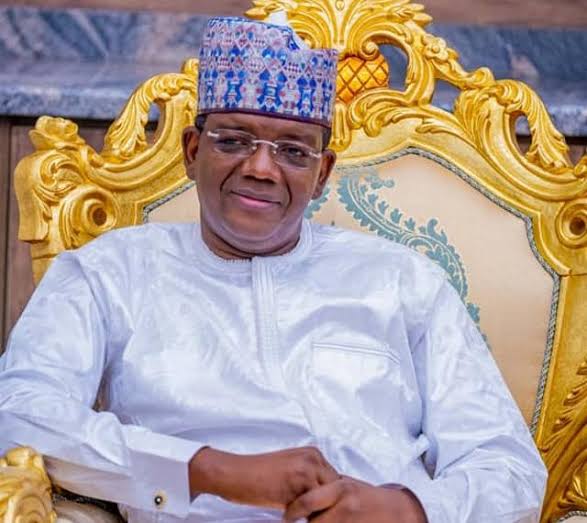
The Amalgamated Union of Northern Traders has agreed with the governor of Zamfara State, Bello Matawalle, who ordered security personnel to detain anyone who refuses to accept outdated naira notes during transactions.

During a news conference in Sokoto State, the traders expressed their opinions on the subject.

According to sources, Matawalle and his counterparts from the states of Kogi and Kaduna took the Federal Government before the Supreme Court in order to request an order extending the validity of the previous N200, N500, and N1000 notes.

The Supreme Court, in its ruling on Wednesday, stopped the CBN from implementing the February 10 deadline for the validity of the old notes as legal tender.

The group’s youth leader, Alhaji Sanusi Nufawa, noted that the informal sector could only be revived if leaders took drastic decisions to make people do transactions with both old and new notes just like Matawalle noted.

He expressed optimism that the circulation of old notes and gradual withdrawal and replacement of old with new notes would ease people’s sufferings.

According to him, he was convinced that those against Matawalle’s action and victory at the Supreme Court are either misguided or blinded by political chauvinism.

The trader leader further commended the governor for openly standing behind his people than becoming a burden like others doing now; using the suffering for political gains.

He also commended the National Council of State in their resolution to the government on producing more naira notes and considering people’s plights.

He said the effort would further reduce and relieve the pains that ordinary Nigerians are experiencing in the face of scarcity of both the old and new naira notes.


Terrorists murdered 10 troops from Niger

0

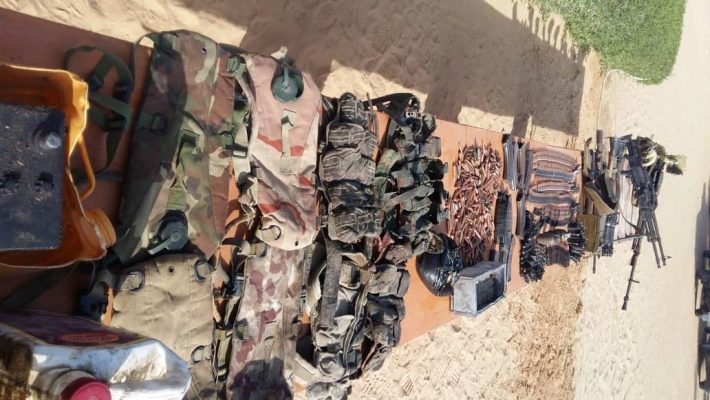
The defense ministry reported on Saturday that at least 10 soldiers were killed in an ambush by some “armed terrorists” in southwest Niger, not far from the Mali border.

According to a ministry statement, 16 individuals are still missing and 13 soldiers were hurt in the attack on Friday, thus the death toll could go up.

The soldiers “came under a complicated ambush by a number of armed terrorists” while on patrol in the north of the Banibangou province, it claimed, making reference to jihadist organizations.

The statement did not clarify how many assailants were slain, only that they were killed during the fighting.
The attack happened in Tillaberi, a vast region in western Niger that borders Burkina Faso and Mali, two nations that have experienced jihadist insurgency. Since 2017, armed groups with ties to Al-Qaeda and the Islamic State have frequently attacked Tillaberi.

The area is close to the Tahoua region, where last week, heavily armed terrorists raided a camp sheltering migrants from nearby Mali.
That attack, which a local official claimed was carried out by “heavily armed terrorists” on motorcycles who escaped back into Mali, claimed nine lives.
According to the United Nations, Tahoua and Tillaberi are home to more than 61,000 Malian refugees.

Only 3,000 French troops will be stationed in the unrest-plagued Sahel region, which includes Niger and Chad and is home to terrorist organizations, following the withdrawal of French forces from Mali last year and the upcoming withdrawal from Burkina Faso.

The participating nations were all once French colonies.

Breaking: Hoodlums attack Obi supporters in Lagos

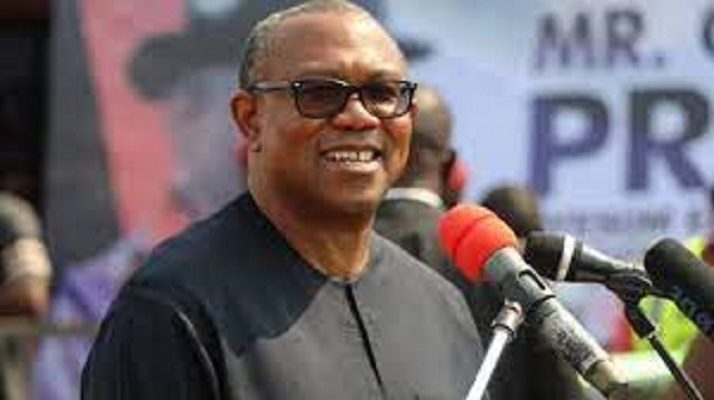
On their way to the Lagos rally for Labour Party presidential candidate Peter Obi, members of the Obidient Movement were attacked by suspected hoodlums.

The Obi-Datti Campaign Council’s spokesperson, Tanko Yunusa, shared this with our correspondent in a WhatsApp message on Saturday.

The Obidient Movement is being attacked in Lagos, he declared. Our people are being prevented from attending the TBS rally by them.

Read Also: We Don’t Have Capacity To Print New Notes – Emefiele

A movement whose time has come cannot be stopped by anything. Security personnel, pay attention. We continue to move “obediently and successfully.”
Photos that were sent to our correspondent showed cars with broken windscreens and a man with blood on his shirt.
See the images below:


We Don’t Have Capacity To Print New Notes – Emefiele

0

Amidst the cash crisis bedevilling the country and the expectations of Nigerians that President Muhammadu Buhari would resolve the matter in seven days as promised, the governor of the Central Bank of Nigeria (CBN) has said the apex bank does not have the capacity to print adequate new naira notes.

Emefiele made the disclosure on Friday when he briefed the emergency meeting of the National Council of State.

On Friday, Mr Emefiele told the leaders that the Nigerian Security Printing and Minting Plc (The Mint), suffers capacity constraints, resulting in the failure to print adequate new notes to replace the old N200, N500 and 1,000 notes.

“The Mint has run out of papers to print N500 and 1,000 notes. They have placed orders with a German firm and De La Rue of the UK (for papers) but they have been placed on a long waiting list, so their orders cannot be met now.

“The Mint had received CBN’s request to print 70million copies of the new notes, totalling N126billion to be pumped into circulation by today (yesterday), The Mint doesn’t have the capacity,”

Meanwhile, Mr Buhari was non-committal at the meeting and barely spoke, the source added. He left the meeting as the time for the Muslim’s Jummah prayer drew close and his deputy, Vice President Yemi Osinbajo, took over.

Osinbajo said the president would take a decision.

Meanwhile, seven days after President Muhammadu Buhari promised to address the cash crisis that hit the country following the naira redesign and old notes swap policy of the Central Bank of Nigeria (CBN), the new and old naira notes have remained elusive.

Read also: New naira: Confusion deepens as CBN deadline ends today

advised him to postpone the deadline, which he refused.

“It is inexcusable that President Buhari continues to turn a blind eye while the country burns due to the unpopular naira redesign policy, which is seriously affecting the health of the economy and sending hundreds of citizens to premature graves on a daily basis,” Zikirullahi said.


 Petty traders in dilemma over old naira notes in Jos

Petty traders in Jos, the capital of Plateau State, were Friday thrown into confusion on whether or not to accept old naira notes from their customers as February 10, the deadline by the CBN on the collection of old naira notes.

The traders said they were rejecting the old notes in order not to lose their capital.

The confusion by the traders began a day before the February 10 deadline announced by the CBN governor, when he said people should use the opportunity to deposit their old naira notes before the expiration of the date.

Jamilu Abubakar said, “Honestly, we are in a difficult situation. When I came out in the morning I refused to collect the old notes from my customers, but I later started collecting it when I listened to the news on the issue. But even with that, we don’t have a clear direction on the naira notes. Today, the federal government would say something and comes out to say another thing tomorrow.”

Lawn Sarkinpawa, another Jos trader said, “It is true that people have been thrown into confusion.”


Court Jails Student for Cybercrime

0


The Kaduna Zonal Command of the EFCC has secured  the conviction of one Stanley Morrkua, aka Michael Scales before Justice Darius Khobo of the Kaduna State High Court on a one count charge bordering on internet fraud.

New naira: Confusion deepens as CBN deadline ends today

0

Nigerians, particularly bank customers, were baffled and uncertain as to whether the Central Bank of Nigeria’s deadline of today for the phase-out of the old naira notes was still in effect or had been suspended as a result of the Supreme Court injunction obtained by some northern governors.

The Supreme Court had ruled on Wednesday that the deadline should be postponed while the Kaduna, Kogi, and Zamfara State governors’ appeal of their case was being heard.

The case will be heard on February 15 by the court. Abubakar Malami, SAN, the Attorney-General of the Federation and Minister of Justice, claimed, among other things, that the Supreme Court lacked jurisdiction over the case in his response to the lawsuit later on Wednesday.

However, on Thursday, a day before the deadline, commercial banks in the nation and bank customers were in the dark as to whether the old N1000, N500, and N200 would cease to be legal tender by Friday (today), or if they would continue to be so until the Supreme Court has had a chance to review the governors’ lawsuit.
The Friday deadline is uncertain, according to a number of senior bank executives who spoke on the record because they were not authorized to discuss the situation.

They based their defense on the fact that banks still hadn’t received instructions from the CBN, the body that regulates the banking industry.

The governors, they added, did not join the banks in their lawsuit.
Upon being contacted, a senior Access Bank executive who did not wish to be named said, “I cannot say yes or no. You are aware that a court decision has been made; as of right now, it is a Supreme Court decision, and the CBN has not updated us on it.

In response to questions, a top source for Ecobank stated, “We don’t yet know what will happen. You are aware that today is the deadline, so we will continue to collect old naira notes on Friday. However, after that, we are unsure of what will happen.

Further, a senior management representative of Zenith Bank said, speaking on the condition of anonymity, “Friday is the deadline as it stands, but there is a Supreme Court ruling so we are unsure of what will happen. As of right now, the CBN has not issued a new circular announcing an extension.

Additionally, a Polaris Bank executive stated that the lender was awaiting word from the CBN regarding the situation.

As of right now, the official said, “We’re not sure if Friday is the cutoff date for the phase-out of old notes or if we need to wait until next week when the Supreme Court will hear the case.

A top executive of a tier-2 bank also commented on the situation, stating that the CBN had not given any instructions regarding whether or not to adhere to the February 10th deadline. As things stand, new notes should be arriving from the CBN, but they aren’t.

“The banks can’t even pay out any of the few old notes they have in their vaults. Unfortunately, instead of loading their ATMs three to four times per day due to the lack of new notes, some banks only do so once.
Cash-strapped POS operators
The development happened on Thursday, when many banks were closed and cash-strapped Point of Sale operators closed their shops.

As the situation deteriorated, officials warned that Nigerians might experience hardship due to a cash shortage in the days ahead.

The CBN allegedly restricted the amount of cash distributed to banks, according to some bankers.

The bankers revealed, under the condition of anonymity, that the CBN could do more to ease the cash shortage that Nigerians are experiencing.

The CBN is hoarding supply for branches, according to a banker who spoke with our correspondent. The new naira notes were not released by them. They are currently providing banks with older, lower denominations, but in limited quantities.

Cash is scarce, a different banker said. Although we are aware that the goal is financial inclusion, there will be problems if users are unable to use their accounts for the intended purpose and demand that we adopt a technological approach. The CBN can do more in terms of the cash supply.

A banker rejected the idea that there was any sort of pressure, saying, “People are not moved by the CBN’s deadline. In contrast to the previous one, when people believed that if they deposited old notes, they would be able to exchange them for new ones or deposit N500 million and receive the same amount in new notes. No one is stirred. Nothing I’ve seen indicates that people will comply, but we’ll see how tomorrow goes.

One of the bankers responded, “No, customers are not bringing in their old naira notes before the deadline. In fact, banks are pleading with clients to bring cash so they can fund cash-related activities.

The responses have been varied, according to another banker who went by the name Emese. Consider the decision made by the Supreme Court in this case.

“Cash is being brought in by customers. There are a few people there, but only between 2 and 3 p.m. People began entering the bank to deposit their cash today (Thursday).

One of the top banks’ banker continued, “It is not what we anticipate, but it is in keeping with the CBN cashless policy. One trillion dollars won’t simply be taken out of circulation and put back in.

On Friday of last week, President Major-General Muhammadu Buhari (ret.) pleaded with Nigerians to give him seven days to end the naira crisis.

But as the crisis persisted, Thursday was a difficult day for Nigerians. Even after the country’s recent naira shortage subsides, traders and business owners have stated that they would think about keeping their money at home rather than using the banks.

Nigerians have been waiting in line for empty automated teller machines and crammed into banking areas where they can hardly get the cash they require for weeks.
Some Lagos State traders who spoke with our correspondent on Thursday expressed skepticism toward the banking system, while others claimed they had no choice but to keep using the banks.

Because things have to get back to normal before Mrs. Fatima Oyebisi, who sells building supplies at the Maza-Maza plank market, can bank her money.

Even when everything returns to normal, she declared, “I’m not keeping money in the bank again. I’ll keep an eye on things.

At the Trade Fair Market near the Lagos-Badagry Expressway, a shoe vendor named Mr. Emmanuel Osita bemoaned the negative effects of the new naira policy on him. He declared he would keep his cash at home.

We are already dejected, Osita said. Yesterday (Wednesday), my sister spent the entire morning at the bank but left empty-handed. People won’t be able to carry large amounts of cash, like N300,000 or N500,000, to the bank. I’ll store it at home.

Other traders, on the other hand, were concerned about the risk associated with keeping money at home.

traders bemoan
Adaku Nkwor, who sells cosmetics at the Trade Fair market, asserted that she would never carry cash with her.
Wosilat Taiwo, who sells perishable foods at the market in Ketu, has no intention of going to the bank once more.

She asserted that she wouldn’t be going to the bank anyhow because she didn’t have much money.

In the meantime, the World Bank stated in a report published in 2022 that the percentage of unbanked Nigerians had increased to 45% in 2021.

About 64 million of Nigeria’s nearly 200 million people still do not have an account with a financial institution or mobile money platform, according to the report titled “The Global Findex Database 2021: Financial Inclusion, Digital Payments, and Resilience in the Age of COVID-19.”

Nigeria was listed as one of the seven nations with the highest percentage of unbanked citizens in the report. Bangladesh, China, India, Indonesia, Mexico, and Pakistan are the additional nations.

David Owumi, an inclusion consultant with the Salt House—Institute for Inclusive Governance and Sustainable Development, expressed concern about the impact of the naira shortage on the Central Bank of Nigeria’s efforts to promote financial inclusion in a conversation with our correspondent.

“The lack of money has a significant impact on people and businesses,” he said. Our understanding of economics and how financial institutions operate will change as a result of these experiences. Nigerians will look for more effective methods and tools to maximize control over their money.
Our correspondent noted that major banks in the area of Redemption Camp did not open for business as the CBN policy deadline went into effect today.

Frank Boku, a GTbank client, claimed that the residents were unconcerned about the deadline.

Bolanle Lukman, another Access Bank client, added, “I am managing the cash I have at the moment; I don’t care any more. I’m so grateful I was able to get the new notes. The deadline will still be extended, I am aware of that.

Fatima Jaiye, a UBA client, expressed her dissatisfaction with the system.

Our source reported that the Fidelity Bank in Lagos State’s Palm Grove neighborhood closed at 2:00 pm on Thursday. Several ATMs were also not working.

According to an accountant named Nike Olusanya, the GTB and Wema Bank in Ogun State’s Ago-Iwoye axis had to close due to the influx of people out of concern for rioting.

An employee of a point of sale who asked that her name not be published said she was gradually going out of business because she lacked the operating capital.
Nigerians in fear stormed the banks in the Federal Capital Territory on Thursday to deposit their old notes, taking no chances.

At Guaranty Trust Bank in the Central Business Area, First Bank in the Jabi area, and United Bank of Africa at the NICON Luxury Hotel, our correspondents observed an increase in the number of people depositing old naira notes.

Several banks in Garki, Area 3, including Access Bank, Keystone Bank, and Eco Bank, were experiencing the same issue.

However, some banks appeared to be out of the new money as cashiers were seen dispensing N50 bills.

Due to the lack of the customary heavy foot traffic, many ATMs in the city center were inoperative.

However, at the First Bank ATM, people could be seen waiting in vain for the bank to reload the machines with cash.

The Association of Mobile Money and Bank Agents in Nigeria had declared it would not shut down in the midst of the naira shortage crisis.

grocery stores and gas stations
“The issue is not peculiar to point of sale agents alone,” Osaro Ekhator, Chairman of the Association of Mobile Money and Bank Agents in Nigeria, said in an interview. “However, some of the agents are able to source funds from unconventional sources like going to the filling station, and supermarkets, among others.”

The apex bank acknowledged on Thursday that the ongoing shortage caused by the redesign of the naira and the cash withdrawal policy was not anticipated, especially given the ongoing uncertainty surrounding the CBN policy.

The admission was made at the 22nd fellowship conferment lecture and ceremony, which was held in Abuja and was organized by the Nigerian Society of Engineers. It was made by Folashodun Shonubi, the bank’s deputy governor in charge of operations.

The complexity of the naira redesign and its advantages for Nigerians was the subject of the lecture.

Contrary to popular belief, he clarified, the redesign plan, which had been in the works for two years, was not intended to punish anyone but rather to boost the economy.

Read Also: Breaking: Atiku’s Rivers campaign DG avoids assassination, venue destroyed

The deputy governor revealed that many advantages have been realized, including the return of N2 trillion to the banking system, despite claiming that difficulties were brought on by a new industry started by native Nigerians.

“As you know, Nigerians are very intelligent,” he said. And we developed a completely new sector of the economy for people that we had never imagined. Queuing is a part of that, where you exchange your place in the line for cash. Night crawling is a practice in which you wait until it is dark, gather numerous cards from friends and family, go to an ATM, empty the cards using various cards, and then take the money to sell.

To be honest, it has been a little stressful because we did not expect this kind of behavior.

Shonubi further pleaded for the apex to allow it to do everything in its power to salvage the current situation, adding that the required challenges would soon be a thing of the past.

Osita Nwanisobi, the CBN’s Director of Corporate Communications, was sent WhatsApp messages on Thursday, but he never replied, making it impossible to get a response from him.

A top CBN official, who spoke on the record under the condition of anonymity because he was not authorized to speak on the subject, claimed that as of Friday, the central bank had not yet informed commercial banks of the situation.

In due course, he promised, the CBN’s position would be made clear. “At this time, the CBN has no position on it,” the official declared. We haven’t also issued any instructions to the banks in this regard. In due course, the bank will state its position on the issue.

Inquiries regarding the deadline received no response from Shehu Garba, the presidential spokesperson.
FG to conform
However, the AGF declared on Thursday that the Federal Government would abide by the Supreme Court’s decision.

He stated on Thursday night’s episode of Arise TV that “there is no doubt that the Supreme Court’s decision, regardless of the current situation, is binding, and that you can equally take steps that are available to you within the context of the spirit and circumstances of the rule of law”

He claimed that because the government was dissatisfied with the order, it was being challenged.

It is all about the rule of law, he continued. According to the rule of law, the Supreme Court’s rulings and orders must be obeyed. We’ll behave submissively. In accordance with the rights and privileges granted to us as a government, we are equally considering it from the perspectives of challenging the order and seeking for it to be set aside. The rule of law provides that when you are not happy with a ruling, you can now file an application, among others, for setting aside.

“So, it all comes down to the rule of law, both in terms of obedience and compliance and in terms of filing an application to have a judgment or order set aside. The rule of law governs how we conduct our business.

Despite the AGF’s assurance that the Federal Government would follow the Supreme Court’s decision, banks claimed on Thursday that they had not yet received any instructions from the CBN.

In a related development, the Edo State Government has distanced itself from the remarks and actions made against the currency swap policy by Mallam Nasir El-Rufai, the governor of Kaduna State, and some other governors.
The state government said the governor of Kaduna State does not speak for Edo State and urged “guided utterances and inferences in such critical matters, especially in the heat of the political season” in a statement by Crusoe Osagie, Special Adviser to the Edo State Governor on Media Projects.

However, the governor of Zamfara State, Bello Mattawalle, referred to the negative remarks that followed the Supreme Court’s ruling as merely political retaliation.

Speaking through his Special Adviser on Media, Zailani Bappa, Matawalle declared that he was absolutely certain that anyone who opposed their action and subsequent victory at the Supreme Court was either misinformed or oblivious to political chauvinism.

According to Matawalle, “I and my counterparts from the states of Kaduna and Kogi found it necessary to approach the Supreme Court in order to prevent the economy of Nigeria from degenerating further into crisis.”

Read Also: 2023: Peter Obi top pick for president, fresh Bloomberg poll shows

As a result of the shortage of both the old and new naira notes, “our action will also ease the agonizing pain the average Nigerian is feeling.”

Malam Salihu Lukman, national vice chairman of the All Progressives Congress (North-West), has expressed concerns about the naira swap policy, pointing out that over 300 of the 774 local governments, particularly those in the North, lack banks.

2023: Peter Obi top pick for president, fresh Bloomberg poll shows

0

Peter Obi, the Labour Party, LP’s presidential candidate, is still the clear favorite to succeed Barack Obama as the country’s next leader, according to a new Bloomberg poll conducted just two weeks before the election.

Premise Data Corporation’s survey results for Bloomberg News were released on Friday.

In a race that other front-runners Bola Tinubu of the All Progressive Congress, APC, and Atiku Abubakar of the Peoples Democratic Party, PDP, will fiercely contest, the poll found that two-thirds of respondents said they intended to vote for Obi.

Read Also: Ganduje, Akeredolu sue Buhari, CBN to court over Cash Withdrawal limits

The San Francisco-based Premise claimed to have conducted a smartphone app survey of 2,384 Nigerians from January 26 to February 4; submissions were chosen from quotas established by age, gender, and location across the country’s six geopolitical zones.

Bloomberg added that in order to ensure national representation, the results were weighted in comparison to the initial quotas.

In the poll’s results, Obi received 66% of the votes from those who had already made up their minds, while Tinubu received 18% and Atiku received 10%.

Obi received 47% of the undecided vote; Tinubu received 27%; and Atiku received 9%.

According to Bloomberg, 66% of those who said they had already made up their minds about their vote for Obi.

Read Also: Peter Mbah: Former governor Nwobodo says Enugu isn’t known for destructive politics

Recall that in an earlier Premise poll conducted by Bloomberg in September as the official election campaign began, Obi received a slightly higher 72% of the respondents who were decided.

Peter Mbah: Former governor Nwobodo says Enugu isn’t known for destructive politics

0

Senator Jim Nwobodo, a former governor of the former Anambra State, has denounced what he calls an anti-government campaign of slander in Enugu State.

According to reports, Nwobodo responded to the certificate forgery accusation made against Peoples Democratic Party, PDP, guber candidate, Barr. Peter Mbah, by speaking with journalists in his Amaechi country home.

Mbah has refuted the accusation that he presented a fake National Youth Service Corps, or NYSC, discharge certificate.

Read Also: BVAS will be turned off from the back end, when snatched

Speaking to journalists, Nwobodo stressed that despite having problems, neither he nor the late C.C. Onoh engaged in a campaign of smears during their political careers.

The former governor claimed that after learning of Mbah’s alleged certificate forgery, he became extremely concerned.

“I was worried, very worried, when I heard the news. Tell me the truth, I demanded when I called Peter. He assured me that it wasn’t real. He confirmed to me that he did indeed complete the NYSC and receive a certificate.

Additionally, he sent me photos that he took while at the NYSC orientation camp in Lagos State. All of the evidence is present.

He said, “I am pleading with politicians to stop this kind of politics; we did not practice this in our own time.

Read Also: Breaking: High court dismisses Mohammed Abacha, declares Wali as Kano PDP Guber candidate

Nwobodo urged the media to always go above and beyond when verifying reports before going public. He was surrounded during the media chat by party chieftains, including the State PDP Chairman, Augustine Nnamani, and the DG, PDP Campaign Organization, Ikeja Asogwa.

He said, “The media shouldn’t permit itself to be used in promoting falsehood.

Breaking: High court dismisses Mohammed Abacha, declares Wali as Kano PDP Guber candidate

0

The decision of a High Court recognizing Muhammad Abacha as the Peoples Democratic Party (PDP) candidate for governor of Kano State was overturned by the Court of Appeal in Kano State on Friday.

The Independent National Electoral Commission (INEC) had initially recognized Sadiq Wali as the PDP’s legitimate candidate for governor in the state, but the Appeal Court ruled that he must continue to serve in that capacity.

The appellate court stated that the law is clear and that the National Executive Committee (NEC) of the PDP is authorized to conduct a party’s gubernatorial primary elections in a three-man panel’s unanimous decision, which was read by Justice Usman Musale.

Read Also: In Ondo, Kidnappers kill farmer after wife delays ransom payment

The panel also stated that Abacha lacked locus standi to contest the NEC’s primary election that produced Wali because he didn’t take part in it.

Recall that Abacha and Wali, two parallel candidates for governor of Kano State, emerged as a result of a leadership crisis within the PDP.