Home Blog Page 184

Victor Osimhen Completes €75 Million Transfer to Galatasaray Following Impressive Loan Stint

0

Ending months of rumors and completing one of the biggest moves of the summer, Nigerian sensation Victor Osimhen has officially joined Turkish powerhouse Galatasaray SK in a huge €75 million transfer from Napoli.
On the evening of Wednesday, July 30, 2025, 26-year-old Victor Osimhen arrived in Istanbul, where he was greeted by thousands of joyful Galatasaray supporters.
The night was illuminated by fireworks, and as supporters yelled his name, Osimhen, who was clearly moved, grinned and waved.
Shortly after, Galatasaray made an official announcement on social media that he had permanently joined the team. He included a dramatic video montage of Osimhen’s arrival as well as behind-the-scenes airport footage.
A livestream of the Nigerian international’s flight into the city had been used by the club to tease supporters for hours prior to that.

The situation is nothing new to Victor Osimhen. The Nigerian striker reportedly spent the previous season on loan at Galatasaray, where he established himself right away by scoring important goals and winning over many supporters.

Due to his impressive 2024–2025 season, the club’s board decided to make a long-term commitment.

Read Also: ‘Top Agent of Disruption’ – Nwosu Accuses Kachikwu of Undermining Coalition

An initial payment of €40 million this summer, an extra €35 million due in 2026, and an additional €5 million in performance-related add-ons make up the transfer structure, which indicates Galatasaray’s calculated investment.

Osimhen walks out of Napoli with a swagger. He was an important member of the team that won the Scudetto in 2023, a historic victory that put an end to the team’s decades-long title drought. He gained worldwide reputation as one of Europe’s best strikers thanks to his performance in Italy.

‘Top Agent of Disruption’ – Nwosu Accuses Kachikwu of Undermining Coalition

0

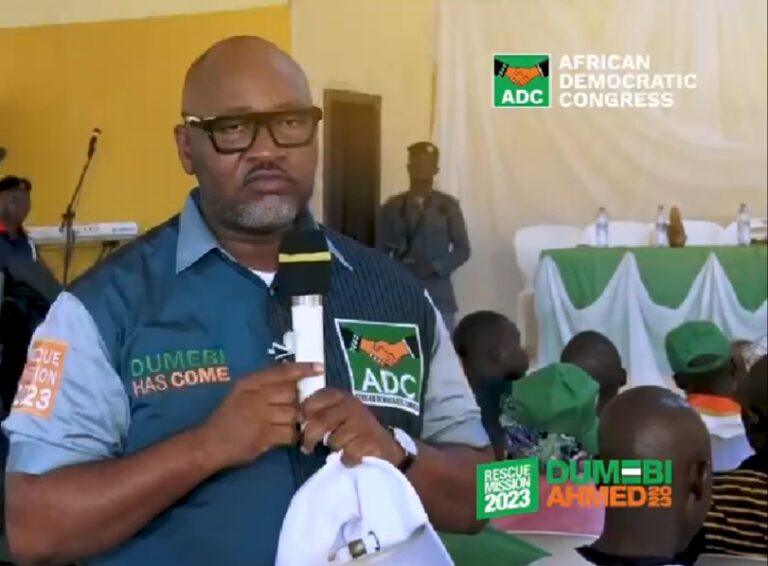
Dumebi Kachikwu, the party’s 2023 presidential candidate, has been charged by ADC founder Ralph Nwosu with being the primary agent employed to destroy the alliance.
According to reports, Nwosu emphasized that the party no longer wants Kachikwu and confirmed his expulsion in an interview on ARISE Television.

Nwosu claims that Kachikwu has been utilizing funds from various sources to finance the effort to dismantle the alliance.

We recalled those individuals from our ADL, which was organized by our NEC,” he stated. And yesterday, we forgiven them for everything in our NEC. On his behalf, however, we stated that we no longer wanted Dumebi Kachikwu.

Read Also: Markets in Lagos, Onitsha, Aba Targeted as NAFDAC Rakes in N2.5bn

In terms of gathering resources from all sources and financing the process to undermine our efforts to fortify our alliance, he has been the most effective agent.

Additionally, Nwosu voiced concern that the ruling All Progressives (APC) was reportedly attempting to weaken the alliance rather than engage in fair competition.

“There are individuals in APC who believe that if we provide this and they think it’s too little, we just up it,” he said. But they didn’t succeed this time.

In highlighting the party’s increasing power, the ADC pioneer chairman emphasized that the party’s system had to be relocated to a foreign server due to the quick rise in online membership registration.

“Babachir Lawal called me and said they want 2.5 million membership cards for just the Northeast,” he continued. They had previously just purchased 500, roughly two weeks prior.

“Our website is now located on Amazon.com. After it crashed twice, we had to relocate it to one of the more advanced international warehouses.

Markets in Lagos, Onitsha, Aba Targeted as NAFDAC Rakes in N2.5bn

0

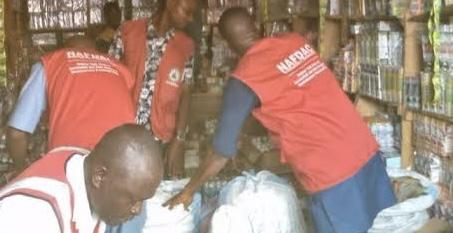
According to information released by the National Agency for Food and Drug Administration and Control (NAFDAC), recent enforcement raids targeting illegal drug sales in three major cities—Lagos, Onitsha, and Aba—generated N2.5 billion in fines.

Prof. Mojisola Adeyeye, the agency’s director general, revealed this on Wednesday when he appeared before the House of Representatives’ Committee on Food and Drug Administration and Control.

“It was collected as penalties from vendors who were caught selling counterfeit and substandard pharmaceutical products in open markets across the country,” she said.

She explained that all of the money was transferred to the official NAFDAC account.

While N159 million had to be borrowed from a donor-funded grant to support the endeavor, N996 million of the N2.537 billion earned was utilized to carry out the enforcement actions.

The agency’s remaining balance was roughly N206 million after an extra N1.175 billion was spent on regulatory expenses.

“The operation, which involved the deployment of over 1,300 security personnel, uncovered a wide array of violations, including the sale of expired drugs, unregistered medicines, and poor storage practices,” Prof. Adeyeye added.

She claimed, “The charges were paid straight into NAFDAC’s account.” “We invested close to N1 billion in activities in Aba, Onitsha, and Lagos. We had to borrow N159 million from a donor grant since we didn’t have enough funds.

Approximately N207 million was left over after N1.175 billion was spent on regulatory actions.

She mentioned that some dealers were discovered to be selling dangerous narcotics and prohibited medications like tramadol.

She emphasized that the fines were essential for upholding standards and were not punitive.

To promote compliance, the default penalty for breaking Good Distribution and Storage Practices (GDSP) was reduced to N500,000 in many instances.

Adeyeye bemoaned the Federal Government’s revenue restrictions, which have seriously weakened the agency’s ability to maintain comparable enforcement activities.

She clarified that while NAFDAC had N19 billion in its account at the end of 2023, only N4.5 billion was ultimately released because N9 billion had been taken out before the agency could access it.

Adeyeye spoke on NAFDAC’s 2024 operation in Kano, describing it as a special court-ordered intervention that was very different from the enforcement measures in southern cities.

The raid, she added, came after a Federal High Court ruling on February 16, 2024, which ordered open drug market vendors to move to the recently constructed Kanawa Pharmaceutical Centre, a Coordinated Wholesale Centre (CWC).

The traders objected. Violent threats were issued. We replied by using heavier padlocks to secure their stores once they locked them, she claimed.

“They had to consent to move to the regulated CWC before they could reopen.”

Due to the legal mandate and the unstable security environment, no fines or administrative charges were collected in Kano, in contrast to the southern operations.

Following the traders’ relocation, post-marketing surveillance was carried out.

She remembered that around the beginning of January 2024, “our accounts had just been frozen and reopened with a zero balance.”

“We had to relocate more than 1,300 stores to the regulated facility in accordance with the court’s order, despite the financial strain.”

Read Also: Port Harcourt Refinery Rehabilitation Nears Completion, NNPC Assures

Noting that it was the only state that had complied with the presidential direction long before her term, she praised the Kano State government for creating the CWC.

In contrast, NAFDAC had to examine and punish violators in Lagos, Onitsha, and Aba because these cities lacked CWCs.

Adeyeye responded to parliamentarians’ worries about what they saw as preferential treatment of Kano traders by stating that the agency’s actions were motivated by the court’s haste and the danger to its employees.

“More inspections or charges might have been ideal in hindsight,” she remarked. But things were too tense; one of our lawyers was almost attacked.

Safety and adherence to the court’s ruling had to come first.

Adeniji Nma, the Director of Finance and Accounts for NAFDAC, also informed the committee, indicating that NAFDAC may now automatically remove a sizable amount of its earnings because the Office of the Accountant-General of the Federation (OAGF) reclassified the organization as a revenue-generating agency.

“Since 2024, half of all payments made to NAFDAC have been withheld and transferred to the federal treasury due to an order from the OAGF,” she stated.

This deduction rose to 75% by 2025. Because the majority of our payments are service-based and directly related to inspections and other activities, this makes it very difficult for us to finance our operations.

Following the presentation, committee member Hon. Emeka Idu requested a thorough, site-by-site analysis of the money obtained from the enforcement operations.

The committee’s chairperson, Hon. Regina Akume, deemed the presentation lacking and instructed the agency to submit a comprehensive report detailing all income received and distributed, including precise numbers from every location.

“A comprehensive picture of the inflows and expenditures is still lacking,” she stated. “Go back, clean up your records, and then return with a proper breakdown.”


Port Harcourt Refinery Rehabilitation Nears Completion, NNPC Assures

0

The Nigerian National Petroleum Company Limited (NNPCL) has formally declared that it would not sell the Port Harcourt Refining Company and has reaffirmed its intention to retain the plant and carry out excellent rehabilitation.

The corporation said in a statement on Wednesday that Bashir Bayo Ojulari, the Group Chief Executive Officer (GCEO) of NNPC Limited, made the announcement during a town hall meeting held for the entire business on Tuesday at the NNPC Towers in Abuja.

“It’s not a shift situation,” he said. Instead, the refineries in Port Harcourt, Kaduna, and Warri are the subject of continuous, in-depth technical and financial analyses.

According to the ongoing study, the previous choice to run the Port Harcourt refinery before its rehabilitation was finished was ill-informed and sub-commercial, Ojulari stated.

Even though all three are making progress, the statement added, the new view necessitates more sophisticated technical collaborations to finish and upgrade the Port Harcourt refinery’s restoration. Selling is therefore quite improbable because it would cause more value depreciation.

His comments at the 2025 OPEC Seminar in Vienna, Austria earlier this month, where he told Bloomberg that “all options are on the table,” sparked a lot of conjecture before the announcement.

Regarding the country’s refining assets, the remark generated headlines and conjecture.

Hundreds of work members responded to the announcement with cheers, characterizing the role as a revitalized feeling of business-oriented guidance throughout the company.

The town hall was more than just a performance review, according to the statement; it was a chance for open and productive discussion.

In their presentations, the executive vice presidents highlighted operational accomplishments, continuing changes, and areas that needed attention from the Upstream, Downstream, Finance, Business Services, Gas, Power, and New Energy businesses.

Challenges and past mistakes were acknowledged, and a clear road map for the future was laid out in a tone that was characterized by leadership and honesty.

According to the statement, the declaration demonstrates NNPC’s strong commitment to completing the restoration and ensuring the long-term sustainability of Nigeria’s refineries, as well as its responsibility as a key custodian of the country’s energy infrastructure.

Keeping vital assets under national control and maintaining continuity in the Federal Government’s larger energy security goals are also indicated by this.

Read Also: Kalu: Atiku Has What It Takes to Lead Nigeria in 2027

Feedback from the workshop, both during and after, indicated that the workforce was motivated and in line with the leadership’s goals.

Referred to as “reassuring,” “transformational,” and “sustainable,” the environment demonstrated a positive perspective among staff members and optimism for the company’s changing strategic direction.

According to Ojulari’s conclusion, “NNPC Ltd will continue to reposition itself as a commercially driven, professionally managed national energy company, grounded in transparency, focused on performance, and unwavering in its responsibility to its number one stakeholder group, Nigerians.” The NNPCL Drills Four Oil Wells in Bauchi’s Kolmani Four oil wells have been sunk by the Nigerian National Petroleum firm Ltd. in the Kolmani region of Bauchi State, according to Mr. Yusuf Usman, a director of the firm.

Furthermore, he reiterated the company’s dedication to exploring and developing oil and gas resources in the country’s northern region.

During the two-day interactive Session on Government-Citizens Engagement hosted by the Sir Ahmadu Bello Memorial Foundation in Kaduna on Wednesday, Usman made this statement.

According to Usman, “The NNPCL has drilled four wells in the Kolmani region of Bauchi State thus far, and is now assessing the best technology to be used for the subsequent drilling phase.”

Five CNG and Liquefied Natural Gas (LNG) plants are being built in Kogi as part of President Tinubu’s Compressed Natural Gas Program.

“Gas supply and accessibility throughout the northern region are anticipated to be improved by these plants.”

Kalu: Atiku Has What It Takes to Lead Nigeria in 2027

0

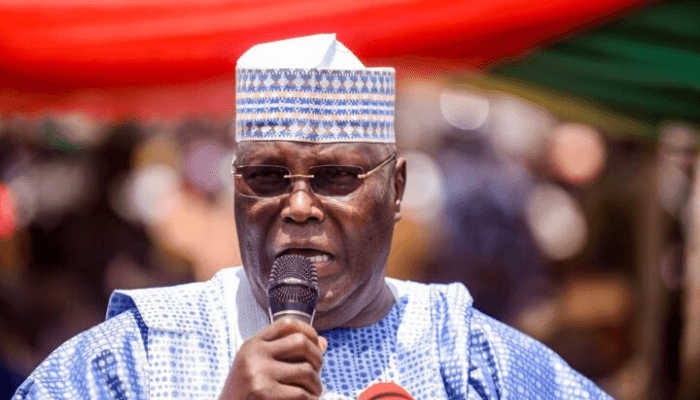
ECK Foundation President Dr. Emeka Kalu has thrown his weight behind Alhaji Atiku Abubakar’s 2027 presidential campaign, highlighting the former vice president’s qualities to lift the nation out of its current state of economic and security stupor.

According to a statement released by Kalu on Thursday, Atiku’s expertise and perseverance were crucial elements that made him a formidable contender to unseat President Bola Tinubu in the 2027 presidential contest.

Read Also: Stronger GDP Forecast for Nigeria Signals Job and Investment Growth

“Supporting Atiku could be a strategic move for the Igbo people, potentially opening the door for Mr. Peter Obi in the future and giving the Igbo community a say in the power dynamics in Nigeria,” he said.

During his time as vice president, Atiku demonstrated his capacity to promote economic liberalization, trade investments, and job creation. He emphasized that Atiku’s leadership experience and vision were crucial for reviving Nigeria’s economy.

Additionally, he emphasized that Atiku was the best candidate to bring Nigeria together because of his political capacity to nurture ties among its many areas.

In his view, Atiku’s national appeal has the potential to unite people across party and ethnic divisions.

An Atiku administration will result in major improvements in infrastructure, investment, and security, and it will eventually boost Nigeria’s flagging economy, he continued.

“Atiku is also a detribalized Nigerian who has the ability to unite people.” Regrettably, ethnic tensions have long afflicted Nigeria’s political environment.

A alliance without a common goal would be ineffectual, Kalu added, underscoring the significance of opposition groups being united.

The need for selfless, competent, and trustworthy leadership to restore Nigeria’s economic stability is one of the reasons he urged Nigerians to support Atiku’s nomination as the People’s Democratic Party’s (PDP) 2023 presidential candidate.

Stronger GDP Forecast for Nigeria Signals Job and Investment Growth

0

The International Monetary Fund’s (IMF) updated forecast for Nigeria’s GDP growth rate, which was raised to 3.4 percent, has been characterized as one that might encourage public investment, jobs, and incomes.

Despite continuing reforms and increasing macroeconomic indicators, the updated figure represents a favorable evaluation of Nigeria’s economic prospects, even though it still falls short of United Capital Research’s forecast of 4.1 percent.

A Confidence Boost

“The IMF’s upward revision is a vote of confidence in the economic reforms pursued by the administration of President Bola Tinubu and Central Bank Governor Olayemi Cardoso,” according to analysts at United Capital Research.

“These reforms have been difficult, but they are now starting to produce small macroeconomic benefits, ranging from the removal of fuel subsidies to the liberalization of foreign exchange.”

This improved prognosis, the analysts say, might spur deeper investor interest, especially from foreign portfolio investors (FPIs) and foreign direct investors (FDIs).

According to economists, Nigeria’s financial markets are already showing more propulsion, with foreign inflows bolstering higher values for government assets and stocks.

In light of lower risk premiums, rates on Nigerian Treasury Bills (NTBs) and bonds are anticipated to decrease as market sentiment improves.

Naira Strengthening

The foreign exchange market could be another advantage of the IMF modification. Naira volatility has been a problem for Nigeria in recent years, but greater capital inflows and confidence about economic growth could stabilize the naira.

The local currency may end 2025 between N1,490 and N1,520 to the US dollar, according to United Capital Research’s forecast. This is a greater estimate than previous estimates that put it over N1,600/$1.

All sectors of the economy would benefit from a more stable or rising naira. Import prices would drop, which would ease inflationary pressures on consumer products, factory inputs, and medications, to start.

Better profit margins for businesses in import-dependent industries and more stable prices for consumers may follow from this.

Rewards for Regular Nigerians

For ordinary Nigerians, the updated growth prediction has great potential, regardless of market performance and investor confidence.

A spike in activity is anticipated in industries like manufacturing, services, and agriculture as GDP growth picks up speed.

The researchers predicted that this would boost company growth and raise labor demand, which would result in more jobs and greater household incomes.

Moreover, banks might be more inclined to lend to consumers and small enterprises as they react to better macroeconomic circumstances and a more stable investment climate.

This has the potential to improve access to financing for consumer credit, housing, and entrepreneurship—areas that have historically experienced severe credit constraints in Nigeria.

In addition to increasing government tax collections, increased economic activity would eliminate the need to raise tax rates.

This creates opportunities for increased public spending on vital sectors like infrastructure, healthcare, and education—improvements that have a direct impact on productivity and quality of life.

Corporate Nigeria Could Benefit

Additionally, the improved outlook is expected to help the private sector. A direct benefit is the possibility of lower borrowing costs.

As opinions about Nigeria’s risk level decrease, local businesses might be able to get financing at more affordable rates.

This is especially crucial for sectors that require a lot of capital, like manufacturing, telecom, and construction.

More macroeconomic predictability may also give businesses the confidence to invest for the long run.

Agro-processing, finance, and renewable energy are already grabbing the interest of investors.

In a growth-friendly atmosphere, companies might be more inclined to explore underserved markets, launch new product lines, and increase production capacity.

Should the naira strengthen as anticipated, businesses that depend on imported raw materials, like those in manufacturing, retail, and pharmaceuticals, would see a drop in operating expenses. Better pricing tactics, more competition, and more profits might all be made possible by this cost efficiency.

The Warnings: Things That Need to Be Adjusted

Although the predictions are hopeful, experts caution that overcoming some of Nigeria’s most obstinate structural issues is necessary to fully realize this economic potential.

The main one is insecurity, particularly in areas that produce food. Northern Nigeria is plagued by ongoing banditry and violence, which hinders rural development, raises food costs, and disrupts agricultural output.

One further significant obstacle is the electricity sector.

Stephen Iloba asserts that “power shortages continue to be a major drag on economic performance.” In order to increase output and lower operating costs, United Capital Research states that it will be essential to settle the sector’s legacy debts, particularly those due to independent power producers and gas suppliers.

Read Also: Court Ruling Permitting Skirts for Female Corps Members Sparks Mixed Reactions Nationwide

Although changes are in place, they need to be expanded in the oil and gas industry. Despite being a significant milestone, the Petroleum Industry Act’s (PIA) implementation has been slow.

Nigeria’s enormous hydrocarbon potential will need to be fully realized by addressing regulatory ambiguity, encouraging openness, and drawing in new investment for upstream and midstream operations.

The Way Ahead

Analysts predict Nigeria might expand by more than 4.1 percent in 2025 and provide the groundwork for double-digit growth in the medium run if these structural impediments are successfully removed.

By doing this, the nation’s current economic stagnation would be historically reversed, and it would begin its journey toward long-term prosperity.

Continued momentum of existing improvements is also vital. Despite a slow decline, inflation is still high.

Exchange rate policies nevertheless need to be consistent and clear, despite their improvement. Additionally, the government must be cautious when it comes to debt buildup, making sure that fresh borrowings are directed toward initiatives that would boost growth rather than ongoing expenses.

A positive indication is Nigeria’s predicted increase in GDP growth. A stronger reform narrative, better global perceptions, and a slow resurgence of investor interest are all reflected in it.

The task is far from over, though. Transforming this prediction into real benefits for the populace will need political will, strict adherence to policy, and consistent reform implementation.

All eyes will be on Nigeria as it capitalizes on this chance as 2025 goes on. If properly handled, this might be the start of a new era, one in which Africa’s most populous country turns economic expansion into tangible, extensive development.

Court Ruling Permitting Skirts for Female Corps Members Sparks Mixed Reactions Nationwide

0

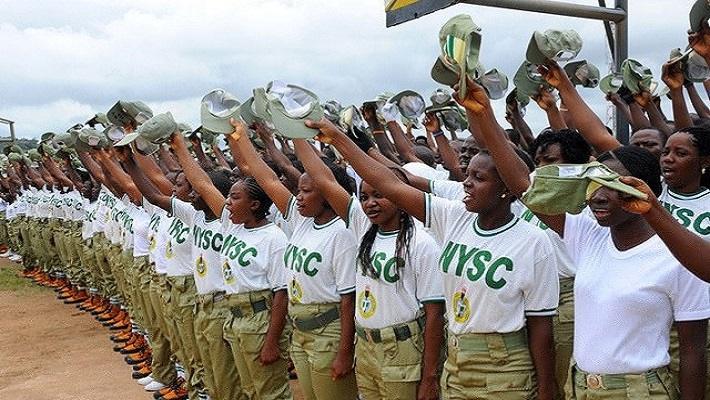
A court ruling allowing female National Youth Service Corps (NYSC) members to wear skirts for religious reasons has sparked conflicting responses; proponents have hailed it as a victory for women’s rights, while detractors have warned of policy erosion.

In a June 13 ruling, Justice Hauwa Yilwa ruled that the NYSC policy requiring pants only for female corps members was a violation of the constitutional rights to human dignity and freedom of religion, according to our correspondent.

She notably defended the right of female corps members to wear skirts if they do so for really religious reasons.

Speaking to NAN, Mrs. Juliet Ogunsaya, who served in Enugu state, said she thought the ruling was fascinating and praised the plaintiffs’ bravery.

I’m happy the plaintiffs prevailed because I think the case and ruling are fascinating and I respect their bravery in taking on the NYSC.

“Especially since it is alleged that they have been humiliated, embarrassed, and harassed.” The NYSC should no longer be required; instead, it should be optional for individuals who choose to participate, in my opinion, as it has outlived its initial purpose.

However, I believe that since it is a paramilitary plan, it is crucial to wear the proper uniform to prevent it from turning into a free-for-all.

On a more humorous note, she remarked, “I wonder how the ladies of my time would have handled the physical exercises, such as climbing a rope-line while wearing skirts.”

Additionally, given that the NYSC was founded by a legislation, StellaMaris Akubuike had concerns about the ruling.

“I am not happy with the ruling because the NYSC’s establishment and dress code are supported by legitimate laws.

As a paramilitary organization, the NYSC’s dress code is holy and should be followed rather than breaking the law.

“How can one expect to go mountaineering in the same way that we did during our time at Agwu camp, with the early morning workouts, rope climbing activities during Man ‘O’ War, or even the match pass-on skirt?

She stated, “It is practically impossible unless one has chosen not to participate in any of the activities on camp, which also goes against the goal of NYSC.”

There were always repercussions for breaking the law, she added, adding that the girls’ humiliation was unfortunate.

As much as I dislike the girls’ humiliation, they invited it by breaking the law in the first place.

“You should have been aware of what to expect and followed it when you arrived at camp.

“They say obedience is preferable to sacrifice, and even the religious faith they are defending does not tolerate disobedience,” she stated.

Mr. Monday Ijeh believes that asking a woman to wear a skirt in order to participate would be abusive because the skirt will not protect her body from the weather and the scheme is paramilitary in character.

Regarding the NYSC clothing code going forward, Mr. Dominic Bassey is worried that the ruling may cause a great deal of misunderstanding.

“The scheme’s cohesiveness could break down if several uniform variations are allowed.

“If religious beliefs permit skirts today, what if another group decides that their tradition forbids skirts but permits the tying of wrappers instead?” While I commend the plaintiffs for their bravery, I believe that the NYSC needs a complete revision of the entire plan, not just the uniform.

In addition to highlighting a developing balance between institutional uniform policy and the defense of individual religious and human rights, he said the ruling marked a turning moment in Nigerian law.

“It remains to be seen how the NYSC will carry out the ruling and whether comparable issues might emerge in other public institutions,” he stated.

Read Also: How Gombe State JAMB Enhances Workforce Effectiveness with Capacity Building Initiatives

According to our correspondent, the NYSC’s decision to forbid female corps members from wearing skirts in respect for their religious convictions was ruled unlawful and a violation of their fundamental right to freedom of religion by the Federal High Court in Abuja in a ruling rendered on June 13.

In her ruling, Justice Yilwa ruled that the NYSC had infringed upon the constitutionally protected rights of women to human dignity and freedom of religion by requiring trousers as the only permissible uniform for female participants.

Legal similarities led to the consolidation of the lawsuits, which were filed independently by Miss Blessing Ogunjobi and Miss Vivian Ayuba, both former corps members.

The applicants in the cases with the filing numbers FHC/ABJ/CS/989/2020 and FHC/ABJ/CS/988/2020, respectively, claimed that wearing pants was against their Christian beliefs, citing Deuteronomy 22:5.
They read the text as prohibiting women from dressing in men’s clothing.

According to the court, the petitioners’ right to express their faith was violated by the NYSC’s insistence on wearing trousers, as stated in Section 38(1) of the 1999 Constitution (as amended).

Additionally, it exposed them to excessive harassment and degrading treatment, the court ruled.

Justice Yilwa issued identical rulings in both cases and granted all of the applicants’ requests for relief, declaring that the ban on skirts worn for religious reasons is unconstitutional.

For female corps members who have legitimate religious concerns, the NYSC must acknowledge and allow the usage of skirts.

“A directive requiring the NYSC to recall the impacted former corps members and appropriate certificates to be issued to each of them.”

The applicants’ fundamental right to freedom of religion and freedom to express it in practice was clearly violated by the harassment, humiliation, and embarrassment they endured at the hands of the defendants’ agents, the court further declared.

The judge granted each applicant ₦500,000 in damages for the infringement of their fundamental rights.

The ₦500,000 award was deemed sufficient in the circumstances by the court, despite the fact that both applicants had sought ₦10 million in damages.

The ruling also stated that it was discriminatory against the applicants’ religion to deny them a chance to finish their duty because of their clothing.

The respondents’ actions caused the applicants to feel ashamed and degraded.

According to Justice Yilwa, “this is a flagrant violation of their fundamental rights.”
In their individual lawsuits, the petitioners sought redress for claimed violations of their fundamental rights to freedom of religion by the NYSC.

In the lawsuits FHC/ABJ/CS/989/2020 and FHC/ABJ/CS/988/2020, NYSC and its Director-General are named as respondents.
Sections 38 and 42 of the 1999 Constitution (as modified) and Order 11 Rules 1, 2, 3, 4, and 5 of the Fundamental Rights (Enforcement Procedure) Rules 2009 were the grounds for their application.

According to the African Charter on Human and Peoples’ Rights, Articles 2, 5, 6, 8, 10, 17, and 19, as well as the court’s inherent jurisdiction, the following reliefs were sought: “A declaration of the court that the respondent’s refusal to recognize and allow skirts as part of the NYSC uniform is a breach of the applicant’s right as contained in Section 38(1) of 1999 Constitution (as Amended), as well as Deuteronomy 22 vs. 5 of the Bible and a misreading of 2 Schedule Article 1 (I)(a) of the NYSC Bye Laws 1993.”

The court has declared that the applicant’s usage of skirts in the NYSC system is a part of her fundamental rights to freedom of religion and the freedom to express that freedom in practice and observance, as stated in Section 38(1) of the 1999 Constitution (as amended).

A statement that the applicant’s fundamental rights to freedom of religion and freedom to practice it, as well as the right to human dignity and degrading treatment, were all flagrantly violated by the harassment, humiliation, and embarrassment that the applicant endured at the hands of the respondents’ agents.

According to Deuteronomy 22:5 and Section 38(1) of the 1999 Constitution (as amended), the court must order the respondents, their servants, agents, privies, or anybody else called to recognize, permit, and provide skirt for the applicant or any female wishing to use it. The damages must total N10 million, and the court may issue any additional orders it sees fit given the circumstances.

How Gombe State JAMB Enhances Workforce Effectiveness with Capacity Building Initiatives

0

In the face of allegations that Naira Marley was responsible for the passing of singer Mohbad, Nollywood actress Angela Okorie has defended the musician.
In a Wednesday Instagram post, Okorie reportedly characterized Naira Marley as a calm, gentle individual who had previously demonstrated her charity and support.
She remembered how he had given her a big gift on one of her previous birthdays and supported her in a manner that no other person in the entertainment business had.

In a business that she characterized as being full of negativity and jealousy, Okorie clarified that the support she received from Naira Marley stood out.

Read Also: Winning the Battle Against Smugglers: Customs Trade Facilitation at Seme Border

She claims that she still views the artist as a calm and compassionate individual who has never displayed violent or confrontational tendencies.

About three or four years ago, on one of my birthdays, Naira Marley surprised me, she stated. He gave me a lot of cash. It startled me. No one in this evil industry has ever given me the encouragement he did, and I know that people are envious of you for nothing other than being yourself, being brave, communicating, and working so hard. Everyone will simply be envious of you.

“I was treated too nicely by Naira Marley. He doesn’t speak at all. He’s not a combatant. He doesn’t speak at all. The Naira Marley I know is a kind person.

Public criticism of Naira Marley for his suspected involvement in Mohbad’s premature death has persisted.

Winning the Battle Against Smugglers: Customs Trade Facilitation at Seme Border

0

Because of their porous nature, experts and analysts in the maritime and security sectors have examined trading activities in Nigeria’s border stations and concluded that, absent significant action, criminals and economic saboteurs will continue to exploit the porosity and other unapproved routes to wreak havoc on Nigerians and the country’s economy.

In fact, in their efforts to smuggle in and out illegal items, criminals attempt to damage the country’s economy. Others attempt to defraud the government by avoiding paying taxes and paying too little for commodities that are subject to duties.

Along the country’s open borders, evidence of people trafficking is not implausible, even in the face of criminal tendencies.

According to some observers, the country can’t do much about the porous borders and criminal activity occurring there right now, except from implementing contemporary technologies to secure the environment and borders.

According to experts, it is important to recognize that Nigeria shares borders with Cameroon and the Benin Republic. These are all nations that speak French. For example, Niger in the North.

It is noteworthy that the majority of these nations’ trade with Nigeria is not as seamless as it should be.

The reason for this is because smugglers leverage the fact that some products that are forbidden from entering Nigeria and its ports are permitted there to enter Nigeria.

Rice, for example, is prohibited from entering Nigeria through the country’s land boundaries.

But the Republic of Benin permits that. As a result of their close closeness, Benin receives rice, which they attempt to smuggle into Nigeria over the land boundaries.

Moreover, there are numerous border voids while examining the layout of Nigeria’s borders. This shows “that even when all the security agencies are placed along the border, to man the lands, and across a single line, they won’t be able to monitor all the border spaces at a go,” analysts added.

All these difficulties must have been on Comptroller Ben Oramalugo’s (Ph.D.) mind when he assumed the position of Customs Area Controller (CAC) at the Customs Service’s (NCS) Seme Border Command.

Oramalugo’s many successes in trade facilitation and anti-smuggling have sent a warning to economic saboteurs who continue to engage in illegal trade along the corridor using unapproved routes: either stop or face consequences because his agents are not giving up on catching the criminals and economic saboteurs.

Along with arresting them, the Customs head threatened to seize their illicit items and said they would continue to count their losses while also meeting with the appropriate courts.

According to the NCS, Seme border area command, the fight against economic saboteurs who try to smuggle illegal goods that aren’t allowed to enter the country through the land borders has actually been stepped up.

Read Also: David Mark to Coalition Members: “You’re In or Out, No Middle Ground”

The Command revealed that it had caught and confiscated 898 packages of Cannabis Sativa, commonly referred to as Indian hemp, from hard drug traffickers after this assault.

Between July 1 and July 19, 2025, the Command also said that it intercepted and sized five trucks that were transporting 2,800 bags of 50 kg foreign rice, totaling N919.5 million in duty-paid value.

Speaking at a press briefing in Lagos, Customs Area Controller (CAC) Oramalugo PhD said that the command also seized 1,319 more bags of rice, increasing the total seizures to 4,119 bags during the reviewed period.

The National Drug Law Enforcement Agency (NDLEA), Seme Area Command, received the confiscated Cannabis Sativa from Idris Ibrahim Mohamed, the NDLEA Commandant in-charge of the Agency’s Seme Border Command.

Dr. Oramalugo said the seizures were the result of reliable intelligence collected by his command’s agents along the Lagos-Abidjan route.

He said that 250 bales of used clothing and 2,800 sacks of rice were found inside the five vehicles that were stopped.

He added that 50 cartons of tomato ketchup, 40 bags of sugar, and 64 bags of flour were among the additional seizures conducted by the command between June 14 and June 30, 2025.

Additionally, one engine-powered watercraft, twenty bales of used clothing, and four bales of used shoes were intercepted and confiscated by the Command’s agents.

The Customs head stated that the total Duty Paid Value (DPV) for all seizures was N1,268,794,474.

The results were attributed by the CAC to the diligence and dedication of the Seme Command’s officers and soldiers, with assistance from the Nigerian military and other organizations.

He restated the Federal Government’s ban on rice imports across land borders, which is intended to help local producers and lessen Nigerians’ reliance on importing and consuming foreign rice.

“Nigeria is Africa’s largest producer of rice, surpassing Egypt and Tanzania with an annual output of over 8 million metric tonnes,” he stated.

“But the lack of patronage continues to be a problem for our rice mills, which prevents them from operating at their maximum capacity,” he stated.

According to the CAC, the command expedited trade and the transportation of 1,837 trucks, which accounted for more than 116,723.26MT of items manufactured in Nigeria during that time.

Only N22,368,388,976.10k was the Free On Board (FOB) value of these exports. The National Export Supervision Scheme (NESS) fees, however, were just N111,841,944.87K.

He revealed that the Command brought in a total of N1,593,676,123.26 between May and July 2025.

He bemoaned the fact that certain people were still smuggling, which was preventing Nigeria from making economic development.

He issued a warning: Seme Command will not allow any kind of illegal trading or smuggling within its borders.

The CAC responded to inquiries from reporters by saying: “I’m telling Nigerians that we are on top of our work.” We are informing Nigerians that their needs will be met and that the country’s rice mills will continue to expand. We wish to support Nigeria’s rice production and Nigerians’ use of it. We also want to let them know that smugglers and smuggling do not reside in Seme.

“We are ensuring that the Federal Government receives revenue through this channel and that Nigeria does not receive uncustomed goods.” At one point, they even said that rice was entering from the Seme border and that people were dying from it. It isn’t accurate. The purpose of this is to damage our reputation. They are jealous and saying those things. Here, we are carrying out our duties, and the CGC and his management team are supporting us in doing so. Because he is behind me, the CG told me to execute my duty without fear or favor.

In response to a question about whether the drivers of the trucks that were confiscated carrying illegally obtained rice were taken into custody, the CAC stated that they ran into the woods as the operatives surrounded them and that the trucks and their contents had been seized legally.

The CAC bemoaned the smugglers’ continued encroachment due to greed.

Nigeria is superior to other African nations, he said, adding that the nation has a landmass of roughly 955,000 square kilometers, which they should make the most of instead of using it for criminal purposes.

Are you aware that we import almost 3 billion tons of palm oil annually? Yes. In terms of global palm oil production, we rank fifth. We are prepared to pose a serious threat to the traffickers. That is what I have been doing. If you’re willing to take that chance, the rest should quit smuggling. They will tell you that here is where they were born and that their great-great fathers lived and worked. However, I can assure you that there are plenty other respectable business ventures they can pursue.

With 50 million metric tons of palm oil produced annually, Indonesia is the world’s largest producer. Malaysia came in second with 19 million metric tons. Nigeria comes in fifth. Those nations came here to pick up our palm seedlings in the 1960s. They’re exporting this to us right now. The average demand is roughly 3 million metric tons in Nigeria.

Our production does not reach 1.5 million metric tons. Thus, a gap still exists. Nigerians here can increase our output and export if they put in a lot of effort. Furthermore, palm oil is more expensive on the market than crude oil.

Crude oil currently costs roughly $67 per barrel. But a barrel of palm oil costs between $80 to $90.

That’s 2,800. Then, the 1,319 seizures that you are witnessing are occurring on this field. Therefore, the five trucks that we received during the activities totaled 2,800 rice. Kindly remember that.

David Mark to Coalition Members: “You’re In or Out, No Middle Ground”

0

David Mark, the African Democratic Congress’s (ADC) acting national chairman, has issued a warning to members that the party will not tolerate any anti-party behavior or lack of discipline.
The former Senate President reportedly made this revelation in Abuja while speaking to certain ADC members.
Only dedicated ADC members will be carried along in the grand scheme of things under his leadership, Mark emphasized, saying there is no middle ground in the coalition.

He declared, “Any kind of indiscipline or anti-party sentiment will not be tolerated; you are either in ADC or you are not.

“We will not take people who are not with us along if we are halfway through this transaction.

Those who do not fully commit will not be supported.

Our grassroots leadership structures will be inverted to reflect contemporary realities at all levels, from the polling station to the federal level. Each organ regained its energy.

“Our policies, nominations, and roles will exhibit our commitment to opening the gates for future generations.”

On Tuesday, ADC confirmed that it now has more than 100 elected representatives nationwide in addition to 28 senators.

Read Also: Tragic Outcome: APGA Women Leader’s Son Kidnapped and Murdered in Anambra

The party reportedly provided this update at its Abuja-based National Executive Committee (NEC) meeting.

According to Ralph Nwosu, the party’s founder and first National Chairman, the ADC has been getting stronger at the state and federal levels.

The party’s decision to turn down financial offers meant to change its course and diminish its influence as an opposition voice, he claimed, was the reason for this advancement.

According to Nwosu, the party has been able to cultivate trust among voters and draw in serious-minded candidates by refusing to be influenced by money.

The ADC now has over 50 lawmakers in various state assemblies and over 46 members in the House of Representatives, he said.

He said that there are now over 100 elected officials in the party and that the number is continually rising.