Home Blog Page 182

Omotola Odunsi, Beloved Yoruba Actress, Is Dead

0

Omotola Odunsi, a popular Yoruba film actress, has died.

Odunsi’s colleague, Akinola ‘Segbowe’ Akano, announced her death in a tribute on Instagram.

The actor uploaded images of Odunsi as well as screenshots of their most recent discussion, in which he inquired about her health and she responded that she had been ill but was improving.

Segbowe characterized her death as a “strange, rude shock,” meaning that she died right after he checked on her. He also extended his condolences to her family.

“Motola! Strangely, I tried to check on you in the early hours of the morning. “You said you were fine and back!,” he wrote on Thursday evening.

Read Also: Manufacturers to FG: Make Local Content Mandatory for Government Projects

“What a nasty shock, Omotola! Travel safely, sister. “May God be with your family.”

The reason of death is unknown.

Some of her colleagues in the Yoruba film business also used social media to pay their final respects.

Ashabi Simple, singer Portable’s baby mama, lamented Odunsi on Instagram, detailing their previous encounter on a movie set and unfulfilled hopes to collaborate on future projects.

“I am shocked. You are one of the best actors I am pulling for. I saw you earlier this year while shooting Deputy, and we agreed to feature each other in our future production, but now you’ve labored and haven’t waited to reap what life has sown,” she wrote.

Read Also: Manufacturers to FG: Make Local Content Mandatory for Government Projects

“I remember you chatting with me at night to give me hope and counsel, but the majority of your wishes we discussed never came true. GOD, we cannot question you; death is deep.”

Odunlade Adekola expressed regret about his trainee’s death, adding, “Jesus Christ. “RIP, Omotola.”

Odunsi began her acting career by participating in stage dramas during her 200-level year at Olabisi Onabanjo University before meeting actor Adekola at a training audition, where she was chosen and trained under his supervision. She graduated in 2023.

She has since appeared in various films, including ‘Lisabi: The Uprising’, ‘Officer Adaeze’, ‘Amonata’, ‘Ayanmo Ire’, and ‘Ifedayo’.

Manufacturers to FG: Make Local Content Mandatory for Government Projects

0

Governmental organizations should be required to use indigenous products, according to the Manufacturers Association of Nigeria (MAN).

Speaking Thursday at the 40th annual general meeting (AGM) of the association’s Ogun state section in Abeokuta, Francis Meshioye, president of MAN, suggested sanctions for government contractors that disregard local content.

By requiring the purchase of locally produced goods and services, Meshioye stated that the “Nigeria First” policy must be rigorously implemented at all levels and branches of government.

According to the MAN executive, Nigerian businesses should provide all uniformed agencies with their cars, uniforms, footwear, and other supplies.

“There must be penalties for non-compliance, and government contractors must be required to prioritize local content,” he stated.

“To implement these reforms, we are actively collaborating with the state minister of industry through the Industrial Revolution Working Group.

“The manufacturing sector needs to regain its confidence.

We also implore the administration of Ogun State to domesticate the policy and guarantee that, when it comes to contracting and procurement, all state ministries, departments, and agencies give preference to items created in Nigeria.

The $2.4 billion in foreign exchange (FX) forwards due to manufacturers must be cleared immediately, Meshioye added, complaining that businesses are “bleeding” from double interest payments.

“Tough loan repayment due to high interest rates”

The chairman of MAN in Ogun State, George Onafowokan, pleaded with the federal government to enact reforms that will encourage the expansion and advancement of regional businesses in the nation.

The manufacturing sector’s decreasing share of Nigeria’s GDP, which Onafowokan stated dropped from 16.04 percent in the fourth quarter of 2023 to 12.68 percent by mid-2024, is a cause for concern.

Inflation, foreign exchange scarcity, high lending rates, and onerous regulations were the reasons he cited for the drop.

According to the chairman, the industrial and service sectors in Nigeria were the primary drivers of the country’s 3.4 percent GDP growth in 2024.

Members continue to function and make significant contributions to the economy in spite of the challenging circumstances, according to Onafowokan.

Read Also: Pela Predicts 2027 Election Showdown Between People and Government

According to the chairman, “members have remained steadfast, keeping factories running, paying workers, and contributing to Ogun State’s revenue base and Nigeria’s GDP.”

“Ogun manufacturers are still in business and making investments in the economy in spite of these obstacles.”

The issues facing Ogun’s manufacturers, he said, include arbitrary fines from regulatory authorities, illegitimate taxes imposed by local governments, and intimidation by government agencies and security personnel.

In addition, the state MAN chairman bemoaned the high cost of borrowing, pointing to the May 2025 monetary policy rate (MPR) of 27.5 percent.

Such rates, he claimed, reduce corporate margins and make loan repayment onerous.

Onafowokan encouraged manufacturers to look into other funding options like Agusto & Co., LECON Finance Company, and the Bank of Industry (BoI) in order to obtain reasonably priced capital for operations and growth.

During his speech, Ogun Governor Dapo Abiodun praised manufacturers for their tenacity and contributions to economic expansion.

In the capacity of Commissioner for Industry, Trade, and Investment Adebola Sofela, the governor reiterated the state government’s resolve to improve the business environment through tax simplification and infrastructure spending.

Pela Predicts 2027 Election Showdown Between People and Government

0

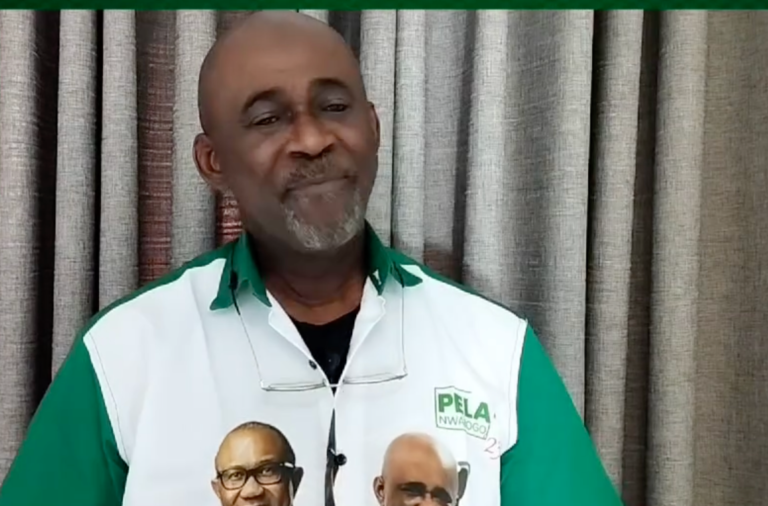
In this interview with CHIBUIKE CHUKWU, Deacon Ken Pela, the Labour Party’s candidate for governor of Delta State in the general election of 2023, discusses the 2027 general elections and how the battle between the people and the government would be a struggle. Pela also discusses his intention to run again in 2027, the reasons Delta has fallen short of being one of Nigeria’s highest-earning states, the ongoing criticism of Peter Obi, and his wish to make amends for the wrongs of Delta’s many years of government, among other matters. Extracts:

According to your analysis, Delta State should have been competing with companies like Dubai, but why do you think it isn’t doing as well as it should?

If you want to take this a step further, something would fill the void when there is nothing since nature detests emptiness. Consequently, you end up wasting the money when you find yourself in a scenario where you have money but are unsure of what to do with it. On the other hand, if you find yourself in a position where you have ideas and a vision, you will genuinely be searching for funding to execute these ideas. That is the issue. Assuming you look at my analysis, Delta was established in 1991. Military power prevailed there. It was therefore reasonable for Delta to drift between 1991 and 1999. With the exception of Felix Ibru’s brief tenure, the military and the majority of the administrations had no stake in the outcome. What if they were ahead of their time as a state? What if they’d formed a group or a committee instead? Indeed, there is a nation with deserts, oil, and other natural features. They’re doing what? After all, Dubai had already begun to show symptoms of vision by 1999. By 1999, they had started to transform that desert into a lovely location, and throughout the years, things only got better. They made investments across the economy, including in airports. The money was not squandered. We wouldn’t be in our current position if Delta had not thoroughly researched Dubai. Instead, they diverged their course and squandered money. In summary, that’s the main point. inadequate leadership with vision.

Do you not believe that some of these could have been explained by other factors? As an example, Delta cannot even fully regulate the oil in their backyard, as you mentioned.

There were alternative ways to invest the resources that Delta received in the form of income. That is what I am talking about. Now fast-forward twenty-five years. Take Abia State, for example. Several governors have served in Abia State. Under the former governors, Aba was a wasteland. Nothing was going to change for Umuahia. However, today’s visionary leadership is present in the same state. Examine the change after two years. The difference is that it’s not up to four years.

Since you ran for office in 2023 as a member of the Labour Party, many Nigerians still think that the 2023 election was heavily rigged. The recent election was not free and fair, according to a large number of Nigerians. You’re getting ready to try your hand at it again. What gives you the assurance that the procedure has changed to ensure a total break from the 2023 exercise?

I visited Benin last October to witness Olumide Apata’s election. I had been mobilizing myself. After spending more than three, four, or five months in and out of Edo State, I spent the weeks before that gubernatorial election there. As the head of the Labour Party’s governorship candidates forum, I actually motivated my colleagues for three weeks in a row. between 2023 and 2025. Additionally, I organized all of my coworkers both inside and outside of Edo State to help give the campaign a more national feel. People were already selling their votes for 5,000, 20,000, and 40,000 on election day, we discovered. I was a little demoralized. I became even more disheartened when, by 9 p.m., I arrived at the situation room and saw that Asue Ighodalo of the Peoples Democratic Party (PDP) was in the lead with roughly 92,000 votes, and that, at that point, 92% of the results had been released, leaving only 8%. To the surprise of many, the All Progressives Congress (APC) was said to have won by a large margin by the next morning. My wife was actually quite uninterested that evening before the results were announced the following morning. My wife had already said, “Honey, are you sure you want to do this thing?” while she was in the United States. Would you like to keep doing this? You’re squandering money. Naturally, they inherit all of my rushing around since I spend money and time on personal matters. I mean, I live with what the family should. This time, she didn’t ask me since I’m squandering their resources. She was requesting that I be at ease. She was concerned about my health, which is why she was asking. While doing this, she was concerned about my emotional and mental health because she knows I believe in it. I kept doing this, and she was bothered by the possibility that they would continue to do what they would. That is precisely what I was meant to accomplish. That’s why I was so desperate. Olumide and I attended the Thanksgiving service at the church the following morning. I was also at peace on that Thanksgiving. What was the calm? The reason for this was that I was reminded in a spirit of what I constantly say. Normally, I would say that evil cannot always win out over good. Man has this world because of God. The devil, however, left heaven at the same moment that God gave man this planet and continued to struggle for dominance of it. And Satan will continue to prevail if man does not do what he ought to do. So the devil will prevail if some of us don’t stand. If some of us oppose him, though, God will have an opportunity to preserve this earth. I generally state that I think my principal, Peter Obi, has intervened in Nigerian politics in a way that is not typical. It is divine, in my opinion. It is, in my opinion, the solution to prayer. As long-time residents of this nation, we are aware that it is abnormal for people to spend their own money in support of a politician. Is that true or not? It is customary for politicians to donate money to the populace. In 2023, citizens started spending money on behalf of politicians for the first time. You and I are aware that the four individuals tweeting in the room, who claimed they wouldn’t receive one million votes, defeated them all without any kind of structure, but they went ahead anyhow, and Nigeria has been worse ever since. Since then, there has been more hunger throughout the country. What makes me think that things will be different in 2027 is your query. All of this being said, by 2027, the people will be fighting the government. When it comes to the state of affairs in the country, 2023 will be a child’s paradise compared to 2027. So, to return to your question, why do I think? It must be rooted in my past experiences and lessons learned to stay resolute. In my opinion, the truth is that people will accept things as they are in 2027. As you can see, Delta should be a citizen-driven movement by the time you read through my envisioned vision. I can’t accomplish this alone; Deltans must be involved. It is my responsibility to demonstrate to Deltans their shortcomings and to encourage them with what is achievable. Together, we shall retake Delta.

The ruling party, especially the All Progressives Congress governors, has allegedly been attacking Peter Obi. The first person to advise him against entering Benue State without permission was Governor Hyacinth Alia. Most recently, it was Edo State Governor Monday Okpebholo. Do you believe that he is their target because of all of these?

The term that best describes it is frustration. I’ll respond to this query from two points of view. First of all, is this the first time you have witnessed politicking mid-term? No. It has never begun this way. It has never been this way before, I mean getting involved in election-related politics halfway through a government. This is because what transpired in 2013 startled them. The man was supposed to disappear, as all politicians do. What most politicians used to do, you know, was for a man to leave and start campaigning again in the run-up to the election. Even while Peter Obi may not be everywhere, he has been highly visible, involved, and active. He has continued to inspire and instill optimism. They have been losing popularity while that has been going on. Every day they lose. There is more hunger and the economy is becoming worse. They are so frustrated that they have no choice but to start politicking, which forces governors to defect to the APC and incites others. And Peter Obi is the man who stands out—and still does—in that process. Number one is that. 2. The chairman of the APC in Edo State. When he made the rash claim that he despises Peter Obi, they looked into his background and discovered that he was, in fact, a suspected fraudster. Naturally, if you look at the scenario, you will see that Nigeria is stratifying, with people with a specific type of character or a history of bad behavior all coming together around various coalitions, including the African Democratic Congress (ADC). I start to worry about the coalition at that point because, once more, we are meant to have another group in the opposition that is purportedly uniting around the ADC. But there’s one individual who sticks out in the second group that gathers around the ADC. He also frequently discusses dismantling the criminal justice system. He continues to say this. As a result, everyone with a criminal mindset understands that they will be in danger if that man joins government after he claims to sanitize the system. I was a candidate for local government chairman twenty-something years ago. When I won the primary, they wouldn’t give it to me. I then made an effort to interact with the system. I then became the National Institute of Sports’ acting chairman and a council member. We changed the name to Delta Trust Mortgage Finance, and I was the chairman of Delta Building Society at the time. I had then enrolled in Burutu’s Delta School of Marine Technology. This experience and journey led me to conclude that there are only 37 seats worth running for if your goal in politics is to make a difference. Either you are the president or you are the governor among them. Consequently, Peter Obi is aiming to surpass them. Thus, he will have the executive authority to make changes there. In actuality, if you can find a leader who possesses that kind of thinking and philosophy, you can significantly alter this nation, particularly if he has the support of the populace. You have the power to transform this nation so that anyone who follows him won’t dare to do anything else than improve the situation as it stands. He will therefore undoubtedly be hated by those who have a criminal mindset, criminal intentions, and criminal political aspirations.

Read Also: Police, Senate Unite to Tackle Rising Crude Oil Theft in Nigeria

Many proponents of Peter Obi’s ideas, including the Obidients, have stated that he ought to quit the alliance if the ADC did not provide him the presidential ticket. Do you not think it would portray him as inconsistent and desperate if it were to occur?

According to Peter Obi, he would never join a coalition just to gain power. He is going to join a coalition that will benefit the Nigerian people. To be honest, is there anyone else in this country right now that has the power to change things, especially among them? Who else in today’s politics, both inside and outside the coalition, has the best interests of the people and the will to improve Nigeria more than he does? Peter Obi has consistently delivered.

What is the Labour Party’s true situation? Have you stayed with the party, and has Peter Obi truly departed from the Labour Party?

The Labour Party still includes us. There is still a Peter Obi in the Labour Party. He and I attended the recent flag-off of the Labour Party’s campaign for the Anambra State governorship. So he’s still a member of the Labour Party. However, they are a coalition. In coalition talks for 2027, we are part of the Labour Party.

If Sheriff Oborevwori has been consistent with infrastructure, how would you rank his administration in your state after two years?

I’ve covered all I wanted to in my midterm report. The governor is a friend and brother of mine. But infrastructure is only one aspect of state development. Furthermore, why are expenditures made and what is the aim of infrastructure? There’s a lot of razzmatazz, and they’ll point to three new flyovers that have very high prices. In Warri, there are two, three, and five flyovers. I concede that flyovers facilitate convenient commuting. According to what I’ve heard, Ughelli and another person were recently honored. It is impossible for such flyovers to be over N200 billion inflated. They’ve already completed two years, and I believe that the three in Warri would cost more than N70 billion. Just one and a half months’ worth of N70 billion is allotted. We are entering the third year, and after two years, when the state has generated trillions of dollars in revenue, that is all they have to show. Without mentioning internally generated revenue (IGR), Delta State brought in nearly a billion naira in allocations in just two years. The five south-east states collectively made little over $1 billion, meaning that Delta State alone makes nearly as much as the five states combined. Take a look at leadership in action next. The budgets for Abia and Delta in 2025 are completely different. They are split up. Okay, so Sheriff is my brother, as I mentioned. I’ve covered all I wanted to in my midterm report already.

Police, Senate Unite to Tackle Rising Crude Oil Theft in Nigeria

0

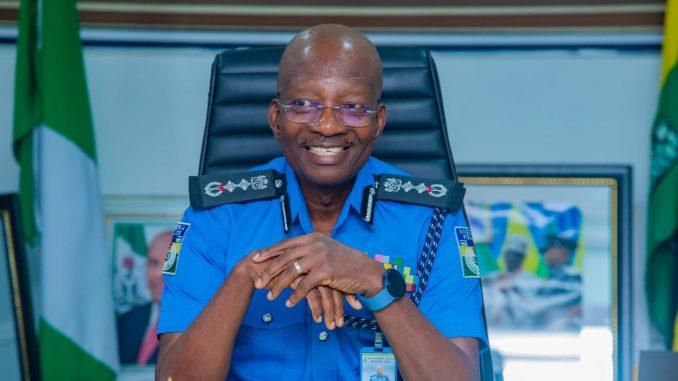
In an attempt to combat the looting of the country’s oil resources, Inspector-General of Police Kayode Egbetokun promised the Nigeria Police Force (NPF) will assist the Senate ad hoc committee on crude oil theft.

At the Force Headquarters in Abuja on Thursday, Egbetokun provided the assurance to committee members under the direction of Senator Ned Nwoko, who represents Delta North.

The tour was intended to promote inter-agency cooperation to combat crude oil theft throughout Nigeria’s onshore and offshore assets, according to force public relations officer Olumuyiwa Adejobi.

“A powerful delegation from the Senate committee on crude oil theft, headed by Senator Ned Nwoko, was received by Inspector-General of Police IGP Kayode Adeolu Egbetokun, PhD, NPM, at the IGP Smart Conference Hall, Force Headquarters, Abuja, today, July 31, 2025,” the statement says.

Read Also: Aliyu: Nigerians Managed Buhari for 8 Years, Can Endure Tinubu’s Tenure

“This is one of the calculated steps to talk about ways to stop Nigerian oil theft, both onshore and offshore.”

According to Nwoko, the committee’s goal is to prevent widespread crude oil theft in order to assist Nigeria in reaching its oil production goals.

Without the police’s full participation, he added, the work would not be completed.

In order to meet the nation’s oil production goals, the chairman said, “The committee’s mandate is to ensure crude oil theft comes to an end.”

“He emphasized that without strong cooperation with the Nigeria Police Force, which is essential to preventing the theft of the country’s crude oil, this mandate cannot be accomplished by the committee alone.”

Egbetokun responded by thanking the committee for its visit and reaffirming the Force’s dedication to safeguarding national resources and prosecuting oil thieves.

“The Nigeria Police Force’s commitment to fighting crude oil theft, safeguarding vital national infrastructure, and making sure those responsible for this economic sabotage are held accountable was reaffirmed by the IGP,” the statement continued.

The deputy inspectors-general in charge of operations and intelligence were instructed by the police chief to start collaborating closely with the committee.

The Nigerian Upstream Petroleum Regulatory Commission (NUPRC) reports that between 2002 and 2025, more than 353 million barrels of crude oil, worth more than $25.7 billion, were stolen.

In order to identify long-term answers to this financial burden on the country, the Senate committee stated that it would keep collaborating with security services.

Aliyu: Nigerians Managed Buhari for 8 Years, Can Endure Tinubu’s Tenure

0

President Bola Tinubu should be permitted to win a second term in office on the basis of the power rotation gentleman’s agreement, according to former Niger State Governor Babangida Aliyu.

Nigeria restored to civilian administration in 1999, and since then, the presidency has alternated between the north and the south every eight years.

But when Umaru Yar’Adua passed away in 2010, the pattern was briefly reversed. A Southerner named Goodluck Jonathan finished the former’s term before winning a new one a year later.

Northerner Muhammadu Buhari served as president for two terms, totaling eight years, from 2015 to 2023. Buhari’s successor in 2023 was Bola Tinubu, a native of the southwest.

The first term of Tinubu would end in 2027.

Atiku Abubakar, a Muslim from the north and former vice president, is rumored to be running for president of the African Democratic Congress (ADC) in 2027 in an attempt to replace Tinubu.

The opposition coalition has recently embraced the ADC platform.

“ADC shouldn’t cause issues for the north.”

Speaking on Thursday’s episode of “The Morning Show” on Arise Television, Aliyu claimed that northerners vying for power on the ADC platform in 2027 will cause issues for the north.

Read Also: ‘Have I Ever Lost the Ticket?’ – Atiku Suggests He Won’t Step Aside for Obi or Amaechi

He remarked, “I have heard a lot of the presidential candidates (in ADC) already stating they will serve one term.”

When a Northerner claims to be serving a single term, what issue is he causing for the North?

Let’s see if we can put up with the late Muhammadu Buhari for eight years. We could be able to abandon the agreement by 2031 if it suits us.

Legislators and governors are the only ones now defecting. There could be a presidential defection by 2031. Doesn’t that violate the constitution?

In my opinion, the outcome of the next year and a half will determine the election’s winner.

In other words, if the government can address some of the noticeable irregularities, I don’t see any issues.

Regarding the possibility that the ADC might defeat Tinubu and the ruling All Progressives Congress (APC), Aliyu urged opposition parties to put up strong arguments.

“What is the alternative? That has always been my point. If you wish to overthrow this government, that governor, or that president, what would it be? He inquired, “What alternative are you providing to the public?”

“COMMUNICATION GAP”

Aliyu added that the public and government do not communicate well with one another.

He went on to say that public officials have either been slow or ineffective in communicating accomplishments.

According to the chairman of the Sir Ahmadu Bello Memorial Foundation’s (SABMF) board of trustees, the public is still mostly ignorant of the good work done by numerous government organizations and agencies.

To communicate with the public, you don’t have to rely just on the ministry of information. He stated that all ministers and parastatal heads ought to be able to explain their actions to the public.

To put it another way, the government must act as an advocate more.

“So far, it appears that the government is doing well, but they are not, or they are not very good at communicating.”

‘Have I Ever Lost the Ticket?’ – Atiku Suggests He Won’t Step Aside for Obi or Amaechi

0

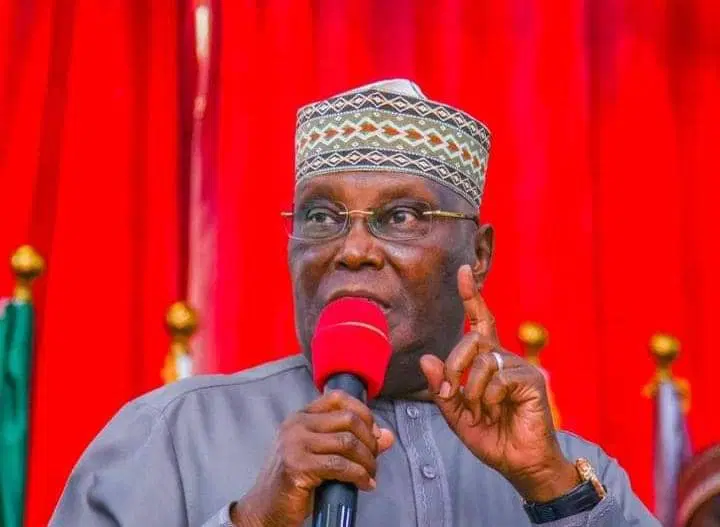
Atiku Abubakar, the former vice president, has sparked political discussions again after implying that he would run for president in 2027 and promising to make an official announcement “in due course.”
According to reports, Atiku made the remarks in a brief conversation with reporters, as documented in a widely shared viral post on his 𝕏 Twitter.
With a confident smile, the 77-year-old politician, who has been a presidential candidate since 1993, said, “We will let you know,” when asked about his plans for the 2027 election and when he would formally declare his candidacy. We will formally announce it to you.

Read Also: 2025 Tax Laws: Nigeria at the Crossroads of Reform and Reality

Atiku was asked further what would happen if he didn’t win the 2027 presidential election. He said, “Have I ever failed to get the ticket? I’m sure.

Atiku argued that democracy gives everyone an equal opportunity to run for office in response to requests for younger people to lead the nation.

“Now let the kids compete. “It is democracy,” he declared.

Atiku might run on the platform of the African Democratic Congress (ADC), according to Naija News. Rotimi Amaechi, the former governor of Rivers State and a member of the ADC, has also stated interest in running for president in 2027.

Another coalition member who has insisted on running in the upcoming election is Peter Obi, the Labour Party’s (LP) presidential candidate.

It is clear from Atiku’s most recent bid to obtain the party’s ticket that the former vice president is not prepared to resign in favor of any coalition candidate.

2025 Tax Laws: Nigeria at the Crossroads of Reform and Reality

0

Nigeria’s tax system, with its limited tax bases, overworked laborers, undertaxed elites, flourishing informal sector, and widespread corruption, has for decades represented every aspect of the nation’s overall fiscal culture.

Nigeria is still among the worst tax payers in Africa, with a tax-to-GDP ratio that has consistently ranged between 6% and 8%.

The nation has been pushed into the grips of debt, reliance on aid, and unstable oil markets as a result.

The signing of four important pieces of legislation in 2025—the Nigeria Tax Act, the Nigeria Tax Administration Act, the Nigeria Revenue Service (Establishment) Act, and the Joint Revenue Board (Establishment) Act—marks a turning point in this regard.

These laws are more than just administrative decrees; they seek to reinterpret Nigeria’s taxation concept. But where previous changes failed, can they succeed?

The new tax architecture’s purposeful leaning toward progressivity is one of its best qualities.

Low-income earners—those making ₦800,000 or less per year—are now legally excluded from personal income tax for the first time in Nigerian history, according to Section 58 of the Nigeria Tax Act, 2025.

Millions of people in this nation live on less than $1 a day, therefore this is a brave and kind act.

Simultaneously, SMEs with annual revenue under ₦100 million enjoy easier compliance, while those with annual revenue under N25 million are exempt from Company Income Tax (Section 56). If carefully put into practice, these policies could promote business formalization and lessen the financial burden on the impoverished.

Digitization has ceased to be an aim. It is now a law.

By integrating with national identity systems like NIN and BVN, the Tax Administration Act’s Sections 4–8—which mandate that people, businesses, and all government bodies utilize Tax Identification Numbers (TINs)—are strengthened.

Fiscalization systems will link taxpayer data, allow electronic return filing, and track VAT in real time (Section 23). The futuristic terms “artificial intelligence,” “e-invoicing,” and “API-based validation” are now legally required.

An era of traceability, efficiency, and fraud reduction may be ushered in by faithfully implementing these requirements.

Harmonization is an equally crucial step.

The authority to coordinate the operational frameworks of federal, state, and local tax organizations is granted to the Joint Revenue Board by Sections 3 and 5 of the JRBE Act. The various taxation issue that has long stifled businesses may now be resolved since states have the legal authority to designate the Nigeria Revenue Service to collect specific taxes on their behalf (NRS Act, Section 5). Finally, the creation of the Office of the Tax Ombud (Tax Admin Act, Section 141) gives taxpayers a forum for the protection of their rights and grievances, which is essential to restoring confidence.

Importantly, the legislation clarifies wealth taxation. For the Nigeria Tax Act, Sections 33–49, the long-ignored Capital Gains Tax (CGT) now applies to the sale of shares, land, digital assets, and intellectual property. Reinvestments, charitable contributions, and minor gains (less than ₦10 million) are all exempt. The Withholding Tax (WHT) has also been strengthened and explained.

Now, payments for digital services, royalties, rent, consulting, and dividends are subject to source taxation (Tax Admin Act, Section 51). Noncompliance carries severe penalties, such as a 10% penalty and joint liability clauses.

The changes also address long-standing worries about multinational firms evading taxes. Arm’s-length pricing for related-party transactions is required by Sections 190–195 of the Nigeria Tax Act, which also authorizes audits of offshore agreements. In order to stop profit shifting and base erosion, these tools are essential.

Even the most promising reforms, however, have flaws. There is no comprehensive rate schedule or streamlined taxpayer handbook, despite the fact that exemption thresholds are explicitly indicated. For informal traders and small enterprises, negotiating this new landscape may resemble negotiating a maze of laws. Even more concerning, the laws do not adequately address gender issues. The special difficulties experienced by women-led enterprises, especially in the unorganized sector, are still disregarded by Nigeria’s tax system. They are not supported by specific tax incentives, waivers, or allowances for capacity-building.

Exemptions by themselves are insufficient to make pro-poor taxation relevant. Nigeria’s social security framework, which includes conditional cash transfers, health insurance programs, and tax IDs linked to the National Social Register, must incorporate tax reforms. Social equity must coexist with tax justice.

In addition, the way tax refunds are handled is troubling. Although a return system is provided in Section 55 of the Tax Administration Act, no required deadlines or automated triggers are mentioned. This uncertainty may deter voluntary compliance and harm lawful enterprises, especially exporters and large purchasers with input tax credits, in a system known for its bureaucratic lethargy.

One such obvious shortcoming is the absence of a formal structure for reporting tax expenditures. Even though Section 27 of the law requires individual businesses to file tax incentive filings, Nigeria does not yet have a complete framework for government-wide tax expenditure reporting that would publish, aggregate, and assess the entire cost of tax incentives across all sectors on an annual basis. Unlike South Africa, Kenya, and Canada, Nigeria does not yet have a national annual tax expenditure statement. Additionally, neither a procedure for performing cost-benefit assessments of tax incentives nor a requirement for public disclosure of the total income lost due to waivers and exclusions exist. Because of this, residents and policymakers are unable to fully understand the trade-offs that are part of Nigeria’s fiscal system. Numerous nations now release yearly statistics that reveal the financial burden of exemptions and waivers. Considering that Nigeria forgoes a substantial amount of income through business incentives, this is essential for accountability and transparency.

The implementation issue is still the biggest concern. Many LGAs lack even the most basic infrastructure, such as digital systems, qualified staff, and connectivity, despite the legislative aspirations. Inequities may worsen if high-performing states like Lagos are separated from areas that lack access to digital technology.

Additionally, federal-state conflicts over revenue collection, particularly in politically heated settings, could jeopardize the Joint Revenue Board’s harmonisation objective.

Depriving revenue authorities of institutional independence also runs the risk of politicizing tax enforcement. Political meddling is not protected in the selection of NRS and State IRS leaders. For reform to last, it need strong institutions as well as strong laws.

The improvements, however, have the potential to be revolutionary.

The legislative foundation for taxation digital transactions, virtual assets, and non-resident service providers aligns Nigeria with international trends. A 5% fossil fuel surcharge and environmental taxes (Tax Act, Section 159) provide the groundwork for climate funding and green taxation. Section 27 of the Tax Administration Act requires businesses to file tax incentive filings, which may increase openness and reveal exploitation.

However, it is still unclear if incentives are beneficial. Although businesses are now required to submit tax incentive returns, the government is under no need to make the cost-benefit analysis of these waivers publicly available. In the absence of impact analysis, incentives might continue to be opaque rent-seeking instruments rather than growth-promoting agents.

Ghana, South Africa, Kenya, Rwanda, and other nations have achieved impressive progress in smart taxation. But in order to be effective, taxes must influence planning, budgeting, and delivery in addition to collecting. Reforms in public financial management must thus establish a direct connection between tax revenue and the national and subnational budget cycles. The way taxes pay for public assets like roads, hospitals, and schools should be transparent to the public.

Community scorecards, tax-tagged project monitoring, and budget transparency portals can all aid in restoring the public’s and governments’ lack of trust. Participatory budgeting systems should be established in Nigeria so that local people may see and influence the distribution of tax dollars.

Nigeria needs to not just catch up, but also take the lead. With the correct leadership, we can integrate blockchain, artificial intelligence, and geospatial analytics into compliance systems and lead the way in tax innovation.

Additionally, the reforms bring up significant issues with fiscal federalism. Nigeria’s unsettled fiscal arrangements are the core problem, which goes beyond structural harmonisation.

The conflict between state-level autonomy and centralized tax administration, particularly with regard to VAT and mineral revenue, calls for constitutional clarification rather than merely administrative alignment. It might be difficult for the Joint Revenue Board to gain support from all of Nigeria’s federating units if these fundamental conflicts are not resolved.

Furthermore, Nigeria is in a better position to comply with the Base Erosion and Profit Shifting (BEPS) action plans of the OECD thanks to the 2025 laws. To guarantee that African interests are represented in the creation of more equitable international tax laws, Nigeria must actively engage in multilateral fora as digital taxation and global minimum tax regulations develop.

Read Also: Tinubu Calls on Governors to Channel Resources to the Grassroots

In order to unlock Nigeria’s extensive informal and youth-led economy, changes must be combined with specific tools, such as incentives for digital bookkeeping, mobile-based registration, and streamlined presumptive tax systems. One potential game-changer is a teenage tax transition program that offers tax exemptions in return for digital onboarding.

Even if the Tax Appeal Tribunal and Ombudsman provide organized remedies, prompt settlement of tax issues is nonetheless hampered by a backlogged and underfunded judiciary. Thus, judicial capacity-building, particularly at the state level, must go hand in hand with tax changes in order to provide consistent, prompt, and equitable rulings.

On paper, the NRS’s consolidation of tax authorities is effective, but it runs the risk of recentralizing fiscal authority in a way that weakens state authority. Local innovation and national uniformity must be carefully balanced, particularly in states with distinct economic profiles or reform momentum.

As a compliance partner, Nigeria’s flourishing fintech ecosystem presents unrealized opportunity. Together with entrepreneurs, the government may develop low-code solutions and APIs to streamline tax reporting for gig workers, track VAT in retail, and onboard informal traders.

It is admirable that Nigeria has implemented a fossil fuel tariff. It is equally important to use tax reforms as an anti-corruption instrument. AI-enabled audit tools and the integration of taxpayer identity with financial data open up new avenues for identifying off-budget expenditures, illegal enrichment, and procurement fraud. Public officials ought to be subject to tax openness as well, with yearly asset reports that correspond with tax documentation. By associating taxation with the integrity of governance, Nigeria can target the core causes of corruption. True green taxation, however, will necessitate a more comprehensive set of policies, including carbon pricing, environmental taxes on extractive companies, and climate-smart agriculture subsidies. The low-carbon transition and climate resilience could be accelerated via a national green fund financed by eco-taxes.

In addition to legal reform, citizens want useful tools. Persons with disabilities (PWDs), elderly Nigerians, and other vulnerable groups are among the categories most impacted by taxes. However, these groups are not specifically eligible for any tax breaks, exemptions, or incentives under the current regulations.

Tax justice needs to be considerate of marginalization, age, and ability. To reconcile the tax system with social fairness, for example, PIT exemptions for seniors with low pensions or VAT exemptions for assistive devices and services related to disabilities can be offered. For PWDs and the elderly, the government should also take into account tax help initiatives like community tax consultants or mobile filing assistance. Community-based tax education, streamlined rate tables, and a national tax calculator app will demystify compliance. Without clarity, even well-intentioned policies run the danger of offending the very people they are meant to help.

In addition to new regulations, the tax reform laws of 2025 offer new opportunities. A chance to turn taxes into a tool for growth and justice. A chance to help Nigeria transition away from its reliance on oil. An opportunity for the taxpayer to regain their dignity. Depending on the bravery of leaders, the honesty of institutions, and the dedication of citizens, these laws may or may not fulfill their promises. Nigeria is the author of the laws. The legacy must now be written.

Development economist and fiscal governance specialist Prof. Chiwuike Uba* has written several policy papers on public finance and tax reform. The ACUF Initiative for Policy and Governance is led by him as its chairman.

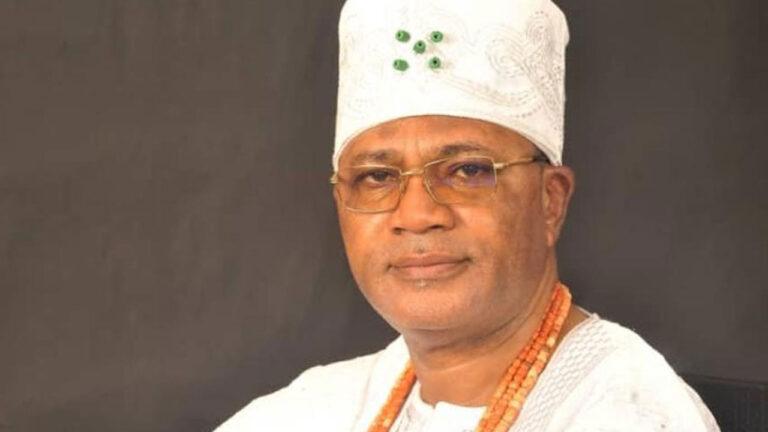
Tinubu Calls on Governors to Channel Resources to the Grassroots

0

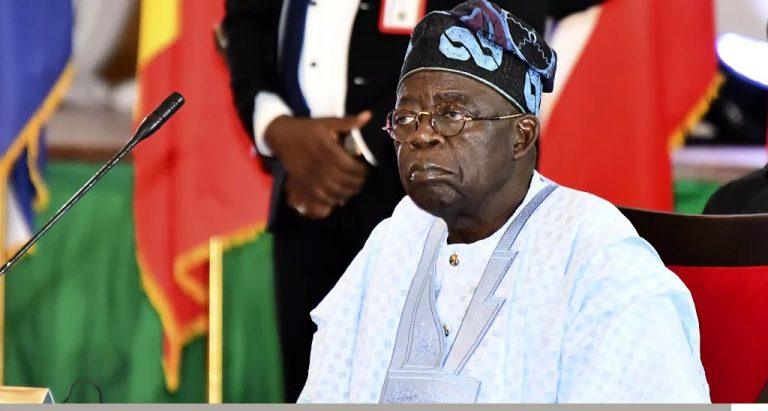
During his meeting with governors on Thursday, which was organized by the National Economic Council (NEC), President Bola Tinubu warned them about the increasing disparity in the distribution of resources and urged them to let the money trickle down to the local level.

He continued his talk by telling them that they must let the enormous resources they receive trickle down to state and local residents.

As vice president Kashim Shettima chairs the NEC, Tinubu also provided them with advice on many governance matters.

“We just concluded National Economic Council (NEC) meeting with Mr. President, Bola Tinubu in attendance, and the meeting presented an opportunity for him to brief the governors on the need for the national government and sub-national government to work together for the overall interest of our people and country, Nigeria,” said Hope Uzodimma, the governor of Imo State, who described the events of the meeting.

“We recognized his successes in generating revenue and the outcomes previously proven by his administration’s numerous reform initiatives.

Not only is the nation’s income increasing, but so are the subnational governments.

“The president devised a plan that will expedite the process of this additional funding making a greater impact on Nigerians by ensuring that it reaches the grassroots level.

Consequently, they introduced a scheme to boost economic activity at the ward level. You can acquire further information later from the Minister of Budget and Economic Planning, who serves as the program’s secretariat.

The president also acknowledged the difficulties in assessing the environmental impact of his legacy projects, including the Lagos-Calabar coastal road and the Sokoto-Badagry road. He supported the establishment of a committee to help the national government and subnational governments work together to expedite the project’s realization.

Therefore, a committee will be established to work within the Surveyor General of the Federation and sub-national governments to ensure that they are all on the same page for Nigeria’s benefit.

Mr. President’s briefing today actually served as a spur to boost our spirits and inspire our people to work hard and take necessary action.

In our opinion, the president has done a great job, and his administration’s reform initiatives are starting to pay off. He has placed a strong emphasis on having a direct impact on Nigerians, from the lowest levels of government to the average citizen.

This is the next phase of the program. We want to feel that Bola Tinubu’s Renewed Hope Agenda is functioning at our level. and we hope that it will also be felt at the local level. I believe that covers the two main topics of discussion in the National Economic Council meeting today.

Renewed Hope Ward Development Program Launched by Tinubu and Government

A specific intervention program called the “Renewed Hope Ward Development Programme” was introduced by President Bola Tinubu on Thursday. He asked state governors to get involved in order to advance the policy at the local level.

Speaking to reporters from the State House, Atiku Bagudu, the Minister of Budget and Economic Planning, stated this.

The governors present at the National Economic Council meeting were instructed by the president, he added, to find at least 1000 Nigerians who could be financially assisted in starting their own businesses.

“The President attended the NEC meeting today and praised the state governors for their cooperation with the Federal Government and with him,” Bagudu told reporters.

And in a very significant next step, the President saw today the presentation of the Renewed Hope Ward Development Program document, which is a plan to help the administration’s macroeconomic changes.

After stabilizing the macro economy, the next phase is to cut development to the bare minimum in order to boost economic activity in each of the nation’s 8,809 wards. We think this will increase employment, decrease poverty, improve food security, and even improve social protection.

According to our constitution, this is appropriate. According to Chapter Two of our Constitution, the federal, state, and local governments must use all available resources to advance national prosperity and an effective, vibrant, and self-sufficient economy. This is only possible through collaboration.

As a strong supporter of federalism, the President today introduced the Renewed Hope Ward-based Development Program, which is a partnership between the federal, state, and local governments. It is a federation project that will be financed by the increased funds coming into the Federation Account and other initiatives that the federal government and states are working on.

Read Also: 2027 Election: Obi-Tinubu Race Favors Obi With Strategic Northern Choice – El-Rufai

Equally, each ward should select at least 1000 economically active individuals who will receive support in order to increase economic activity throughout the federation. As our economy moves closer to $1 trillion, the goal is to take use of this special aspect of it to produce double-digit growth in the majority of the wards. As a joint effort between the federal, state, and local governments, it was decided that the NEC should adopt a resolution supporting the Renewed Hope Ward Development Program. The resolution also called for the Federal Ministry of Budget and Economic Planning to serve as the program’s secretariat and to identify the economically active individuals in each ward.

“It is noteworthy that the International Monetary Fund specifically encouraged us along this path in its most recent report about Nigeria in the 2025 article four consultation, stating that Mr. President’s bold reforms have improved stability and enhanced resilience, liberalizing and strengthening the poor, the function of the foreign exchange market, removing foreign exchange subsidies, strengthening revenue administration, and raising hydrocarbon production, all of which have contributed to improve macroeconomic stability.”

“Mr. President has consistently maintained that in order to alleviate poverty and food insecurity, we must work together with the federal government and state governments to support the innovative spirit of Nigerians and the geographical wards. This program is being presented today at the National Economic Council, which has graciously approved it.”

2027 Election: Obi-Tinubu Race Favors Obi With Strategic Northern Choice – El-Rufai

0

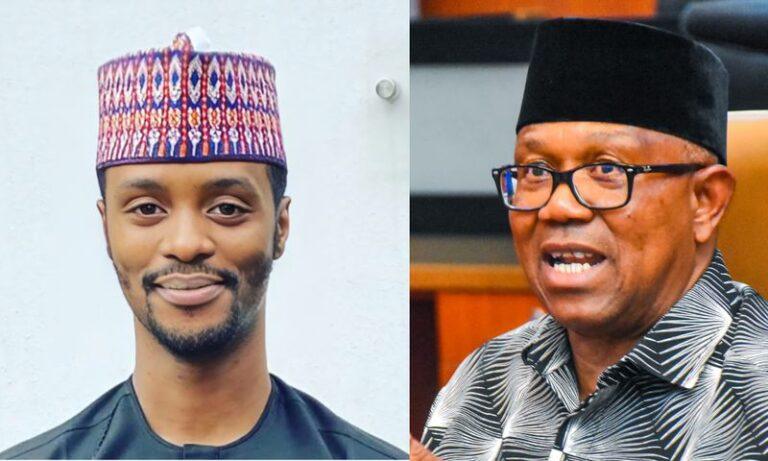
If Peter Obi chooses a popular Northerner as his running mate, he is likely to defeat President Bola Tinubu in 2027, according to Hon. Bashir El-Rufai, Chairman of the House Committee on Banking Regulations (also known as the House Committee on Banking and Currency).

The younger El-Rufai, who was elected on the platform of the ruling All Progressives Congress (APC), expressed the opinions in a post on his X handle on Thursday. However, he also acknowledged that Atiku Abubakar, the PDP’s 2023 presidential candidate, is a formidable opponent in the general elections of 2027.

Read Also: President Tinubu Extends Customs CG Adewale Adeniyi’s Tenure by One Year

Nasir El-Rufai, the son of the former governor of Kaduna State, stated that the former vice president has a significant challenge from Obi’s sheer numbers and cult-like following.

Atiku’s best chance to win the presidency, according to Bashir, would have been in the 2019 presidential election.

He declared: “Atiku is a formidable opponent.” He also thinks that everything is finally working out for him. Even though 2019 is regarded as his best year, this could be one of those “moments when the man meets you” situations. But Obi’s overwhelming numbers and cult-like fan base present a problem. His popularity among young people, especially this generation, is a significant component of his power.

“Obi would defeat Pablo on election day as a flag bearer with a strong Northern candidate before our beloved mother of the Nation, Aunty Remi, finishes his breakfast at around noon.”

This opinion aligns with that of the PDP’s first national secretary, Prof. Jerry Gana, who claimed that the party was strong in the north and that Obi would defeat any candidate from the north if he ran on the PDP platform in the northern states.

During her Wednesday guest appearance on Arise TV’s Prime Time, Gana stated, “I’m a researcher, and I research opinions.” Because our people are so fair-minded, Peter Obi, who is a member of the PDP, will defeat any candidate in the northern states.

President Tinubu Extends Customs CG Adewale Adeniyi’s Tenure by One Year

0

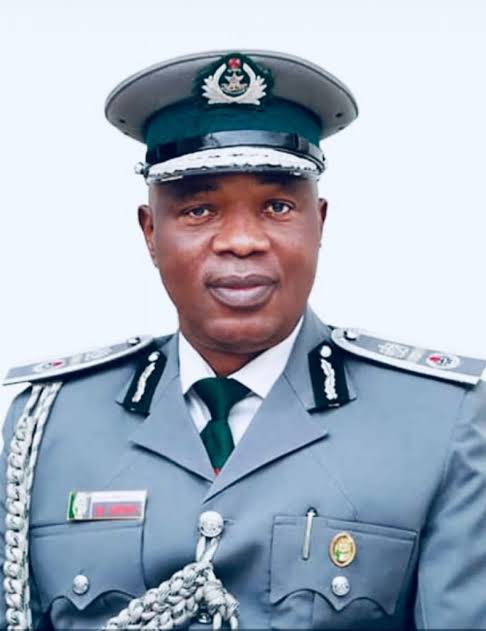
President Bola Tinubu has granted Mr. Bashir Adewale Adeniyi, the Comptroller-General of the Nigeria Customs Service, an additional year in office.

The deadline for Adewale’s retirement was August 31, 2025.

The decision to permit Adeniyi to finalize important efforts of this administration and solidify current reforms hinged on the latest development, which was confirmed by Presidential Spokesman Mr. Bayo Onanuga in a statement on Thursday.

Nigeria’s commitments under the African Continental Free Trade Area (AfCFTA) agreement, the implementation of the National Single Window Project, and the necessity to modernize the Nigeria Customs Service are some of the justifications offered by the presidency for the tenure extension.

The entire statement from Onanuga read, “The Presidency announces that the tenure of Mr. Bashir Adewale Adeniyi, MFR, Comptroller-General of the Nigeria Customs Service, which was scheduled to expire on August 31, 2025, has been extended by one year.

Read Also: Court of Appeal Upholds Aiyedatiwa’s Governorship Mandate

Mr. Adeniyi will be able to finish important projects of this administration, such as modernizing the Nigeria Customs Service, implementing the National Single Window Project, and fulfilling Nigeria’s responsibilities under the African Continental Free Trade Area (AfCFTA) protocol, thanks to the extension, which was approved by President Bola Ahmed Tinubu, GCFR.

Mr. Adeniyi’s unwavering leadership and dedication to service are acknowledged by President Tinubu.

“The President is certain that this extension will help the Nigeria Customs Service fulfill its strategic mission of border security, revenue generation, and trade facilitation.”