Home Blog Page 1763

Ghana and EFCC collaborate to reduce financial crimes in West Africa

0

Abdulkarim Chukkol, the acting chairman of the Economic and Financial Crimes Commission, called on law enforcement agencies in West Africa to work closely together and in partnership.

Chukkol made the announcement while opening a peer exchange programme for Ghana’s Economic and Organised Crime Office that the EFCC had organised at the Rockview Hotel in Abuja.

The fight against economic and financial crime in the area, he said, will benefit greatly from such an alliance.

“This study tour holds immense importance,” the speaker declared, “as it provides the rare opportunity to engage in peer learning through the exchange of knowledge, experiences, and best practises in the field of law enforcement and anti-corruption initiatives.

I think that if we work together, we can strengthen the fight against financial and economic crime and advance the rule of law in our individual nations, Chukkol said.

The head of the EFCC claimed that the study trip would produce insightful data that could be used to improve methods and boost the capacities of the various agencies.

“We aim to foster long-term collaborations and establish lasting connections that extend beyond the scope of this visit,” he declared. There is no doubt that this study will be advantageous to both our agencies and our countries as a whole. As West African neighbours, we can strengthen the foundation of our law enforcement systems and create a better future for our societies by learning from each other’s successes and challenges.

Chukkol added that the peer exchange programme represents a commitment to a world free of financial and economic crimes. Let’s all take advantage of this study tour to create new relationships, share knowledge, and set out on a path towards development and growth for everyone involved, he concluded.

The EOCO Executive Director, Maame Yaa Tiwaa Addo-Danquah, emphasised the value of collaboration and cooperation among countries and institutions in her speech as a means of overcoming the problems facing the West African sub-region.

From the standpoint of law enforcement, she pointed out that this type of cooperative arrangement offers a platform for learning and sharing pertinent experiences and expertise.

She also urged agencies to work together to combat the threat of cybercrime, which, in her opinion, has become a serious concern in Africa.

Regarding the exchange program’s theme, Addo-Danquah stated, “I wish to state that I will be particularly interested to know how our two institutions can collaborate to curb the emergence of cybercrime, which in recent years has become a looming threat in our sub-region.

How I was falsely accused by police, imprisoned for 14 years — Pastor

0

Chinedu Eze, a 43-year-old pastor with Mountain of Fire and Miracles (Worldwide), has described how he was imprisoned for 14 years as a result of his alleged refusal to cooperate with police on a matter he insisted he knew nothing about.

However, he claimed that thanks to the work of Christ Embassy Church, out of the 996 prisoners, he was able to enrol for the Senior School Certificate Exam while incarcerated and eventually earn a Bachelor’s degree in Peace and Conflict Resolution from the National Open University of Nigeria.

Eze claimed that while incarcerated, he wrote seven books and about 157 songs while in detention.

Eze, a native of Enugu State, claimed he was released on May 2, 2019.

He continued by saying that he was detained and taken to the Kuje Correctional Services by some police officers who had approached him sometime in 2005 about testifying as a prosecution witness in an unrelated case.

He addressed the media at the non-governmental organisation Silver Lining for The Needy Initiative’s 14th anniversary gala. The organisation works with vulnerable populations in Nigeria.

Hauwa Abass, the organization’s founder, promised to keep fighting for justice in Nigeria and helping the less fortunate.

Eze claimed that he was asked to testify against a police officer who was having problems with his superiors. He expressed gratitude to the SNLI for assisting him in obtaining his freedom, claiming that he had already given up before the group intervened.

He claimed, “I was put in prison as a result of a situation involving a police officer who had problems with his superiors and they wanted to punish him. I was approached by some police officers who wanted to use me as evidence against him in court. But I informed them that I was unable to testify against him because I lacked any background information on the case.

“Emmanuel Abazie, one of the policemen, warned me that if I didn’t cooperate, I would regret it. I initially thought it was just a threat. I never anticipated that it would send me to jail. They had hidden my file when I got to the prison. I stayed there for four years with no court cases or paperwork. I had to endure a 14-year torturous ordeal while I was awaiting trial.

While he was imprisoned, Eze claimed he continued his education despite his situation.

He claimed that after taking the SSCE administered by the West African Examinations Council, he graduated from NOUN with a Bachelor of Arts in Peace and Conflict Resolution.

“I received seven credits without English,” Eze claimed. I retook the exam the following year, and this time I received nine distinctions, including in English and Mathematics.

“Because there was no university when I took the WAEC, I had no intention of continuing my education there. However, I saw it as a divine arrangement when, two years after I took the WAEC, representatives from the National Open University and Christ Embassy visited the prison and announced that they were looking for people who met the requirements and had what it took to enrol in the university. There were 31 people total, including me. In the Kuje prison, there were roughly 996 of us.

I was one of the 31 people who qualified for a scholarship, so that’s how I got accepted to study peace and conflict resolution.

He emphasised the need for Nigerians to shed the idea that everyone serving time in prison committed a crime, but he also noted that many of those serving time had no business being there in the first place.

According to Eze, “My incident occurred between 2005 and 2019.” In 2017, the SLNI arrived, and by that point, I had given up. I spoke with the founder, Hauwa Abass, when they arrived. She then had a conversation with a member of her legal team, a Barrister Muhammad, who went to the court and found my file—that is how my file was found—and she also spoke with another member of the team. Later, Muhammad visited the prison and informed me that my case was at this point. From there, we continued. I was released on May 2, 2019, after roughly two years of my interaction with them.

There are approximately 70 inmates who have been found guilty when you visit the prison, but there are also 900 people who are still awaiting trial. When the Chief Judge paid a visit to the prison recently, a police officer who had been charged (while I was there) was freed. Due to his disagreements with his superiors, that police officer was merely set up, and he was held in custody for about 18 years while he was tried.

Eze claimed that he started writing and creating music while in detention and added that he had created about seven books.

“I believe I will meet people who will help me publish one of the books, which is titled “14 Years in Prison” and is about my experience. Additionally, my debut album was released in December of last year. I had about 157 songs that I had written while in jail, but now I have 160.


Subsidy: Obaseki urges spending on alternative energy sources

0

The governor of Edo State, Mr. Godwin Obaseki, has urged investors to put money into alternative energy sources, such as natural gas, as a result of the removal of subsidies, which has increased the cost of transportation.

The governor noted that the State has the largest on-shore petrol deposit in the nation when he made the call on Tuesday in Benin.

Data from NIPCO Gas, a joint venture between NIPCO and Nigeria Gas Company Limited (NGC), show that after the initiative was launched in 2007 and put into operation in 2009, more than 5,600 vehicles in Benin City run on compressed natural gas.

We are fortunate to have plenty of petrol in Edo, he said. Really, there is no justification for the use of petrol in our vehicles and tricycles. In comparison to other States, Edo has the most petrol stations. We ought to use more petrol.

“Price levels would inevitably rise. The economy needs to be opened up so that there is more work for everyone. In Edo State, we require more manufacturing businesses.

The gas initiative was started as a result of NIPCO Plc’s 2007 presentation to an inter-ministerial team of the Federal Government about rolling out a pilot programme.

“NIPCO Gas has set up 15 CNG filling stations in Benin as a substitute for gasoline-powered cars. 15 additional stations are currently being built in and around Benin City. For drivers in and around Benin City, more than 5,600 vehicles have been converted to run on compressed natural gas, according to the company’s website.


THE DSS OPERATES WITHIN ITS MANDATE

0

By Dr. Peter Afunanya, fsi

Public Relations Officer
Department of State Services

Recently, about five major newspapers called out the DSS for bashing of sorts. The papers, which used their platforms to express varied views about the modus operandi of the Service include Vanguard, Daily Trust, The Sun, Tribune and Punch. While Vanguard’s piece on 2nd June 2023 was Dousing the DSS/EFCC Feud, Daily Trust, on 6th June 2023, published an editorial titled The DSS Must Conduct Its Duties as a Secret Service. The Sun, on 7th June, published The Needless DSS/EFCC Fracas while Tribune on 8th June 2023 wrote on The EFCC/DSS Confrontation. Similarly, on 14th June 2023, Punch featured DSS, Others Need Radical Reforms. It did not seem that the editorials which sought the reforms of the DSS or to criticise it for its public statements or actions on various subject matters of national security concern were, by any means, an accident a coincidence. It looked every inch planted or organised. It is a hatchet job or so it seemed. The judgement that the Service is excessively public or ubiquitous missed the point. The papers manifested predictable bias and patterns.

Relatedly, some respected legal personalities namely, Olisa Agbakoba SAN, Mike Ozekhome SAN and Femi Falana SAN opined that the Service operates outside its mandate especially with regards to the investigation of Godwin Emefiele. The fact that this matter has become sub-judice constrains the Service from making further statements about it. The celebration of the news of a court order to allow his Lawyers and family access to him is quite unnecessary. He was never denied access. Ever since he was taken into custody, his family has continually accessed him. Same with medical officials. The impression that the Service is going to act on the prompting of the Court is not correct. This is by the way.

Back to the subject under discourse. While it may be fair to admit that the news media and aforementioned personalities are entitled to their opinions, measured ignorance predominantly played out in their arguments. First, they failed to recognise that security threats are evolving and so do the approaches to managing them. Instructively, the security landscape in Nigeria, like many other countries, has become increasingly complex and dynamic. The periodic issuance of press statements to educate or carry citizens and residents along has undoubtedly become part of strategies to manage national security challenges. Extensive research would have revealed to the critics that the Central Intelligence Agency (CIA), Federal Bureau of Investigation (FBI) and other world intelligence Services deploy similar tactics including occasional statements and advisories. The CIA includes demographic information on its website to provide the public with valuable insights and data about various populations so to enhance understanding of different regions and communities. Does it mean CIA is operating outside its mandate? Or will that be accepted because it’s CIA, a foreign body?

The need for the agencies to be responsive, transparent and apprise taxpayers has become the global norm in national security and intelligence management. It is called security/intelligence accountability. The tenets of security and intelligence governance expect that agencies remain transparent, accountable and compliant to democracy. World over, Intelligence Services operate in ways and means not too discernable to the uninitiate. But the institutionalisation of democracy as preferred political culture has nonetheless forced such agencies to communicate often with the Public. You can see why the public statements can never be out of place. Without public consciousness and support, countering threats may remain a herculean task for security agencies. Democratic subordination and legislative oversight are basic principles which make it an obligation for these agencies to operate openly even when some of their activities are secret. Ask the USA, UK, France, Canada and other advanced democracies. This level of openness does not vitiate the expected secrecy or in any way compromise their operations.

Regarding the matter concerning the DSS and EFCC, both agencies have refuted claims of a rivalry. It is important to note that comparing the 30th May, 2023 incident at 15 Awolowo Road, Lagos to the barricade of National Assembly in 2018 is inaccurate and unjust due to the substantial differences in the nature and context of the two events. While it is essential to emphasize inter-agency relations and cooperation, it would be unfair to generalise and imply that the Service is in rivalry and power struggle with the Commission. Each agency operates within its distinct mandate and context.

Meanwhile, the editorials accurately alluded to the constitutionality of the DSS as an intelligence organisation in detecting, preventing and neutralising threats against Nigeria. They commended the Service for its commitment to the security of the country as well as the many feats it had accomplished in the course of discharging its duties. Thank you indeed. It has to be understood that the Service is not only an intelligence organisation. It is also a law enforcement agency. It is a security and policy advisory organ. Its establishment law expects it to prevent. To prevent unarguably means to enforce. Should the Service seek media endorsement or permission before deploying operatives and equipment to conduct its job? Should it rather play to the gallery? Characteristic of intelligence operating systems, DSS’ activities may never be completely explained or understood particularly to those who do not need to know.

Even though some of its high officials and operations are known and their veils of secrecy uncovered, there are thousand undercover personnel and actions that have no business going public. It is expected to remain so. With its broad mandate and legal authority to investigate crimes of national security significance, the DSS is well within its rights to initiate an inquiry into any relevant matter. The DSS is primarily charged to detect and prevent crimes and threats against the internal security of Nigeria. More profoundly, it is to undertake such other responsibility as maybe assigned to it by the President and Commander-in-Chief. Appreciating this role of the DSS is instructive for some sections of the media, lawyers and other interested parties. The Service operates on the basis of rule of law. Its operations are rule governed. As required, it obtains arrest and detention warrants when and if needed. For the fact that such instruments are not advertised does not suggest otherwise. Critics should get conversant with the law and rules of engagement and desist from misinforming, misleading or inciting the public. Those seeking to weaken the Service through premeditated reforms may be on a wild goose chase. Consistent attack on it based on ignorance, unrealised interests and emotional assessments and judgements does the country no good. The DSS has stood so firmly for Nigeria. It will continue to.

Considering the warped mentality that has triggered these writeups, it will, no doubt, be unsurprising to witness an upsurge in malicious articles, criticisms and baseless attacks in the public space following the investigations of Messrs Godwin Emefiele and Abdulrasheed Bawa among other flimsy matters. Certain groups and people are bound to come up with frivolous allegations against the Service and its leadership. These entities may also exploit unpatriotic members of the Service to spread falsehoods, propaganda and hate in order to project the Organisation in a bad light. Given their reach and war chest to mobilise forces against Government and its key officials, the adversaries may intend to cause distractions to the on-going investigations as directed by the C-in-C. However, the Service will not depose its professionalism for cheap backlash nor discharge its duty with prejudice or fear.

For those who canvass the opinion that the DSS has no business in investigating the matters referred to it are obviously not taking seriously the omnibus powers of the President, as enshrined in the enabling Acts of the SSS and the NSA. As argued by a onetime Director of the DSS, Fubara Duke, “When a law confers on the President power to delegate ANY assignments he deems fit for a particular Agency to perform, I wonder how it falls outside the purview of (ANY) the stipulations of the President’s powers and by extension why the DSS is being faulted for carrying out the President’s directive”. Continuing, he added: “I have heard arguments of cases being thrown out by the courts over questionable prosecutorial powers of the DSS regarding some categories of cases including criminal cases. Without prejudice to the wisdom of the court on such judgements, they should not override the lawful investigative authority of the DSS. Should there be need for prosecution in due course, these determinations would be appropriately evaluated and where/if necessary, appropriate prosecutorial agencies which may include the Attorney General’s Office or other sister agencies may be deployed to prosecute. It is not the first time this has happened”.

Read Also: Can Social Media Marketing Help My Business?

Let it be clear, however, that the DSS will remain unshaken and professional in carrying out its duties. It recommits to diligently operate, as always, within the confines of the law and to uphold the fundamental rights of all Nigerians. The media must, as the fifth estate of the realm, remain balanced, accurate, impartial and accountable. To sustain a deliberate misguidance of the public with any form of misconceptions is detrimental to nationhood. Therefore, to deepen the expected contributions, seeking veracity is not only ethical but obligatory. That should not be asking for too much.

We’ll grant financial autonomy to Kaduna LGs — Gov Sani

0

The 23 Local Government Areas in Kaduna State will continue to receive financial autonomy from the state government for development purposes, according to Governor Uba Sani.

This was said by the governor on Monday during a courtesy visit with the 23 council chairmen at Kaduna’s Sir Kashim Ibrahim Government House.

In dealing with the populace, Sani urged the council chairmen to avoid using political, religious, or tribal prejudice.

In his appeal for assistance from local governments in establishing lasting peace, he noted that local government was still the most significant level of government because “it is the closest to the people.”

According to him, doing this would help the populace overcome the difficulties presented by the crises and the impending insecurity in the country.

This came right after the governor announced that his administration would collaborate with local governments on infrastructure development projects, but added that “we need to know what project will benefit our people most.”

“Our administration will maintain the financial autonomy that local governments in Kaduna State have enjoyed for the past eight years,” the governor declared.

“Local government chairmen ought to concentrate on development initiatives; the days of purchasing goods and distributing them to the populace are gone.

“Politics are no longer necessary; there should be no party, religious, or ethnic prejudice in the projects. Our administration’s main priorities are safety and security. In order to earn the public’s trust, we will collaborate closely with the local government administration.

The effective use of intelligence gathering. Our administration will give the development of rural areas priority by providing infrastructure to all local governments, particularly the rural local governments.

“In carrying out the rural development program, we shall adopt an inclusive approach wherein local government chairmen will be carried along as key stakeholders. There will be participation from traditional leaders, faith-based groups, and women’s organizations.

Earlier in his speech, the Kaduna State chairman of the Association of Local Governments of Nigeria, Hon. Abubakar Buba, stated that he and his colleagues were visiting in support of the governor.

In order to improve public relations with the government, Buba, who also serves as the chairman of the Lere Local Government, made a request on behalf of his colleagues.

He said, “We would appreciate it if we had a quality meeting so that we could be on the same page and for you to be aware of what is going on at the local government level.


I’m prepared to talk to Uzodinma about Imo’s insecurity. — Okorocha

0

Rochas Okorocha, a former governor of Imo State, stated on Monday that he would be happy to meet with Hope Uzodinma, the current governor, to talk about the state’s security issues.

Three days after his convoy was attacked in the state and a police officer was killed, Okorocha told journalists in a press conference at his Spilbat mansion in Owerri, the state capital, that security had gotten worse in Imo state.

For the first time, Okorocha declared that he would write the governor a letter asking him to call a meeting of all previous state governors in order to help address the issue of insecurity.

The former governor stated that it is the only matter on which he would consent to a meeting with the governor.

He added that he feels concerned for the state’s citizens’ safety and said that he has no business with the governor other than ensuring their safety and welfare.

Managing the state’s good, bad, and ugly natives and residents during his eight years as governor, Okorocha claimed that political power is useless if the populace does not reap the benefits of democracy.

Former governors, according to him, might have information to impart to Uzodinma that could help put an end to the killings and arson occurring in the state.

“I feel disturbed by the killing of the police officer who was sent by the government of Enugu state to take me to the burial ceremony of Ihedioha’s mother,” said Okorocha. To his family, the Enugu State government, and the Inspector General of Police, please accept my condolences.

Read Also: Ganduje spent over N20bn on PG foreign scholarships in eight years – Ex-Commissioner

I’ll go see his family first, and then we’ll continue from there. He left behind a wife and four young children, and I discovered he is from Ogun State. I’m going to address a letter to Governor Hope Uzodinma for the first time. I will ask him to call an assembly of all former Imo state governors. We might give him information that would put an end to the state’s insecurity.

I can only consent to our meeting on the basis of this. I’m worried about the safety and well-being of Imo state. Party politics are unrelated to this. As a former governor of this state, I have something to impart to him. Former governors Ikedi Ohakim and Achike Udenwa have information to share with him. We should proceed in this manner. Power is the authority that has been placed in your hands to ensure the security, welfare, and welfare of the populace. How content the populace is determines the success of every government.

Ganduje spent over N20bn on PG foreign scholarships in eight years – Ex-Commissioner

0

According to a former commissioner, from June 2015 to March 2023, Abdullahi Umar Ganduje, the immediate past governor of Kano State, spent over N20 billion on 111,687 needy students for overseas post-graduate scholarships in 14 countries, five private universities, the Nigerian Law School, and other internal universities.

When the New Nigeria Peoples Party falsely claimed that Ganduje did not fund foreign scholarships during his two terms as governor, the former commissioner for information and internal affairs in Ganduje’s administration, Muhammad Garba, revealed this in a statement made available to The PUNCH.

According to him, the money was designated for post-graduate scholarship recipients in India, Malaysia, Egypt, Cyprus, China, Turkey, Uganda, the United Kingdom, Togo, Ireland, Gambia, and Ukraine, as well as internal universities, and it was intended to cover expenses such as tuition, maintenance, housing, and air travel, among other things.

According to Garba, the records that are currently in hand show that, in addition to the aforementioned, the previous administration also sponsored 50 lecturers from Kano State’s two universities and other tertiary institutions to pursue their doctorates at esteemed French universities as part of a joint initiative between the French and Kano State governments.

The commissioner also noted that more than N600 million was spent on the joint tuition-free postgraduate scholarship between the state government and the French Embassy in Nigeria.

Therefore, he said that it was unfortunate that the state’s current administration was claiming credit for the achievements of both local and foreign scholarship.

In addition, he stated that the Ganduje administration had settled more than 80% of the $28 million and over N6 billion debt left by the Rabiu Kwankwaso administration.

In addition, Garba claimed that the post-graduate students were sent in three groups to prestigious universities in France and other European nations, primarily to pursue studies in the sciences.

The commissioner also noted that between 2011 and 2015, the Kwankwaso administration completely discontinued the payment of scholarship allowances to indigenous students enrolled in Nigerian universities and other tertiary institutions. This practice was reinstated by the Ganduje-led administration.

Stop media attacks on INEC chair, group tells opposition parties

0

The Chairman of the Independent National Electoral Commission, Mahmood Yakubu, has been the target of media attacks, according to the Nigerian Youth Network for Good Governance and Sustainable Democracy.

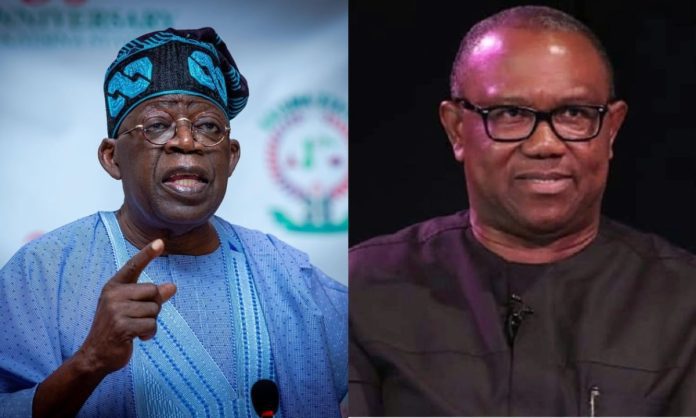
After INEC announced Bola Tinubu as the winner of the 2023 presidential election, Atiku Abubakar, the candidate for president of the Peoples Democratic Party, and Peter Obi, the candidate for the Labour Party, filed a petition with the Presidential Election Petition Tribunal.

The Chairman of the Board of Trustees, Constantine Ikechukwu, denounced the LP, PDP, and their supporters for continuing to disregard the law by making unreserved comments about the results of the 2023 presidential election while the PEPT is occupied with hearing their petitions in a statement made available to our correspondent on Monday.

The chairman remarked, “Unfortunately, the petitioners’ lawyers and supporters have persisted in publicly disparaging the election’s results.

“In actuality, their lawyers, who are eminent silks, have persisted in speaking foul to the media about the election result that they are contesting.

Ikechukwu, who acknowledged that there were some flaws in the 2023 presidential election, insisted that Mahmood Yakubu, the INEC chairman, had not rigged the vote in the APC’s favor.

“Following a careful examination of the 1999 Constitution and the Electoral Act 2022, we are confident that when Prof. Yakubu announced Bola Tinubu as the winner at the National Collation Centre, he was only carrying out his legal obligations and did not violate any known laws.

He would have broken the law and faced serious repercussions if he hadn’t made that declaration, on the other hand.

The Chairman advised opposition parties, saying, “All aggrieved parties must now draw their swords, end the ongoing social media verbal battle, and permit the Tribunal to complete its mandate in peace.

More importantly, Nigerian politicians should embrace the spirit of sportsmanship in the political arena rather than complaining every time their preferred candidate did not win.

CBN removes saving, withdrawal caps on domiciliary accounts

The restrictions on domestic accounts have been lifted by the Central Bank of Nigeria.

The CBN said in a statement on Sunday that the new rule gave account holders unlimited deposit options, unrestricted access to account funds, and daily withdrawal limits of up to $10,000.

“CBN issues further guidance on operational changes to the foreign exchange market,” read the statement.

“Ordinary domiciliary account holders shall have unrestricted access to the funds in their accounts,” it stated in part. Holders of domiciliary accounts may use cash deposits up to $10,000 per day or its equivalent via telegraphic transfer.

“DMBs shall provide returns to the CBN, together with the ‘purpose’ for such transactions.

“Subject to DMBs conducting proper KYC, due diligence, and adhering to the spirit and letter of existing AML/CFT laws and other relevant rules and regulations, cash deposits into domestic accounts will not be restricted.”

In May 2021, The PUNCH reported that banks had begun imposing new restrictions on the transfers that owners of domiciliary accounts could make from cash lodgements.

The PUNCH was able to obtain a bank’s 2021 circular, which stated that the $5,000 monthly cap had been raised for cash deposits of foreign currency.

“This means that if the source of funds is a cash deposit into a domiciliary account, only a maximum of $5,000 per month will be permitted for transfers.

The phrase “cash deposits of foreign currencies other than USD may be paid into domiciliary accounts (subject to an equivalent of $5,000 monthly limit) but will not be allowed for transfer purposes.”

The Bankers’ Committee meeting, which was held to discuss the implementation and implications of the policy changes for the banking industry, led to the CBN limiting this limit.

The CBN stated that the policy modifications aimed to encourage transparency, liquidity, and price discovery in the FX market in order to improve FX supply, deter speculative activity, boost customer confidence, and guarantee overall market stability.

The statement added that the Investors’ and Exporters’ window applied to all visible and invisible transactions, including remittances for travel, school fees, BTA/PTA, and medical expenses.

Banks were urged to make sure that all eligible invisible transactions for their customers were processed quickly and at the I & E window using the appropriate rate.

In order to further boost market confidence, it was also stated that the CBN would give orderly settlement of any committed FX forward transactions priority as they became due.

The CBN would engage stakeholders as it carried out the ongoing reforms, normalize its procedures for maintaining the Cash Reserve Ratio, and ensure equity in its application across the banking sector.

“The sharks are circling,” Gov. Fubara said in reference to Wike’s defection to APC

0

Siminalayi Fubara, the governor of Rivers State, has begged with his predecessor, Nyesom Wike, to remain close to him even if he switches sides politically.

At Wike’s private property on Ada-George Road on Sunday, Fubara gave this speech during a Thanksgiving reception.

Please stay close to me because I know that the tigers and sharks are truly out there waiting for something to hurt, even though we are seeing indicators that it seems like you want to cross over to the other side and everyone is hoping that for you.

Fubara explained, “So, for the sake of this state, being around would continue to direct and put my head right.

His appeal comes amid speculation that Wike would defect from the Peoples Democratic Party (PDP) and join the governing All Progressives Congress (APC).

In place of Atiku Abubakar, the preferred candidate of his party, Wike opted to back Bola Tinubu of the APC, who was ultimately declared the winner of the 2023 presidential election.