Home Blog Page 1705

Seven communities in Kwara complain about the 18-month blackout.

0

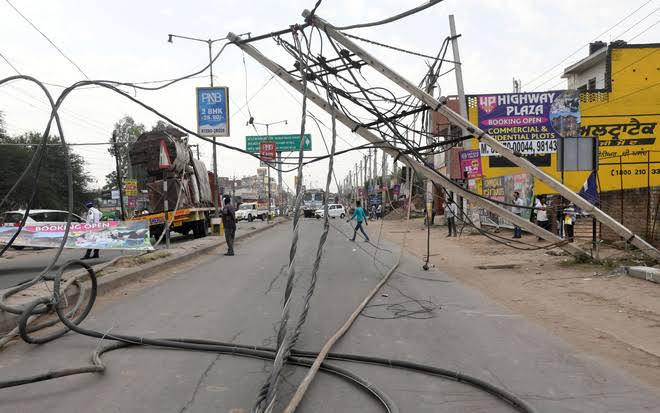
The constant power outages that have plagued the area for more than 18 months have angered residents in no fewer than seven communities in Kwara State’s Ilorin East Local Government Area.

Agbeyangi, Oke-Ose, Panada, Badi, Adelu, and Oloro in the council areas were among the affected communities. Oke-Oyi, the Ilorin East local council’s administrative center, was also among them.

The communities have been dealing with power outages for the past 1.5 years, according to Ahmed Seriki, chairman of the Oke-Oyi Community Development Association.

He nevertheless urged the Ibadan Electricity Distribution Company to bring electricity back to the region after 18 months of blackouts.

In an interview with our correspondent in Ilorin on Monday, Seriki lamented the circumstance and pleaded with IBEDC to take immediate action.

In light of the current economic downturn, he claimed that the situation had had a negative impact on local commercial activities.

The Chairman who claimed that the communities had repeatedly complained about the issue to the Babaoko and Challenge offices of the IBEDC in Ilorin without receiving a satisfactory response claimed that they had contributed funds to purchase electrical cables without receiving a satisfactory response.

We frequently went to the Babaoko, Sango, and Challenge offices of the IBEDC in Ilorin, where we were instructed to purchase cables and paid N500,000, but we received no satisfactory results. Nearly two years have passed since the blackout in our area began, he lamented.

Many businesspeople moved to other towns, he claimed, while those who were unable to do so are now living in utter destitution.

“We kindly request that the appropriate authorities, in particular the state governor and the IBEDC, restore the town’s power outage. Socioeconomic activities in this community have been halted by the power outage, according to Seriki.

Similarly, Jamiu Oladokun, the association’s secretary, described a time when the neighborhood purchased cables to aid in restoring electricity.

But Oladokun claimed that the effort had not produced the desired outcome.

The massive amounts of diesel and gasoline that Oke-Oyi’s hospitals purchase to run their generators and other necessary equipment are causing them to complain. We have met with IBEDC officials at Baboko and Sango in Ilorin on a number of occasions, and although we paid for the damaged materials to be purchased, our efforts have been in vain, he claimed.

The secretary said that the situation was intolerable for the locals.

As it is simple for criminals to operate in the dark, a resident named Jimoh Yewande pleaded with the authorities to save them.

Olori Busolami Tunwase, Corporate Affairs Manager of IBEDC, responded to a request for comment by The PUNCH by stating that the company would look into the specifics of the fault that had an impact on the local electricity supply.

If residents of the communities have reported problems to our office, we will look into the nature of the problems to determine what is truly wrong, then fix the problems and bring electricity back to the area, the woman said.
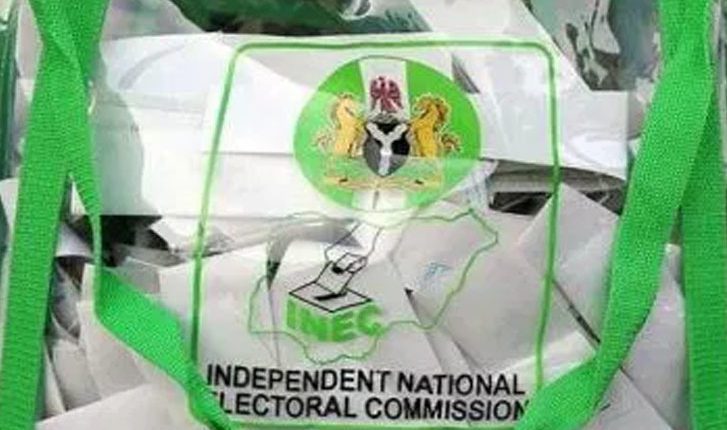
Don urges FG to implement recommendations in Uwais report on electoral reforms.

0

Adele Jinadu, a professor of political science at Babcock University, has urged the Federal Government to implement the recommendations made by the Justice Muhammad Uwais panel in order to improve electioneering throughout the nation.

At the Electoral Institute in Abuja on Monday, Jinadu delivered the Abubakar Momoh Memorial Lecture on the subject of “The 2023 general election: Lessons learned in preparation for Kogi, Bayelsa, and Imo states off-cycle governorship elections.”

On August 28, 2007, the late President Umaru Yar’ Adua established a 22-member Electoral Review Committee, led by Justice Uwais, to examine the electoral process critically and provide advice on any areas that needed reform.

Over 1,000 public memos were submitted to the committee during its more than one-year assignment, and experts from Botswana, Cameroon, Canada, Cote D’Ivoire, France, Ghana, India, Lesotho, Mexico, Niger Republic, and South Africa were also invited to contribute.

After it was finished, the committee gave the late President a copy of its report, but the Federal Government did not follow most of its recommendations.

The operational deployment of officials, materials, and logistics for the elections, according to Jinadu, who is also a member of TEI’s Governing Council, had remained persistently problematic features that reduced the credibility of the nation’s electoral governance.

The deployment of technology, according to the don, “understandably added to concerns among INEC, stakeholders in the electoral governance process, the electorate, and the general public about the transparency of the elections and INEC’s readiness for the country’s 2023 general election.”

In light of this, he counseled the FG to address “the anti-democratic diabolic politics and its facilitative toxic economic, political and socio-cultural environment that continue to undermine the viability of democracy and development in the country.

In order to pursue outstanding electoral reforms suggested by the Uwais Electoral Reform Committee, among other political reforms, the FG should adopt a strategic plan divided into short-to-medium term goals covering the 2023–2027 electoral cycle.

Additionally, the Independent National Electoral Commission’s (INEC) Director-General, Sa’ad Idris, stated that the off-cycle elections are another chance for INEC to streamline its procedures.

Therefore, the Kogi, Bayelsa, and Imo States Governorship Elections are yet another chance for the Commission to tweak its policies, processes, and procedure in order to achieve a more credible, transparent, and acceptable electoral outcome that aims to strengthen and deepen our democratic culture, according to Idris.

Falana urges Nigerians to transact business with Chinese in naira

0

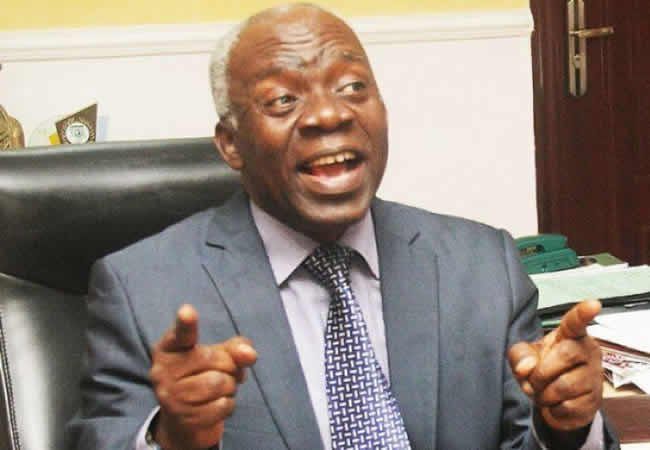
Femi Falana, a human rights activist, has urged Nigerian business owners to conduct transactions with China in naira as a result of the establishment of a currency exchange agreement between the Federal Governments of Nigeria and China in 2018.

He emphasized that the RMB 16 billion agreement aimed to increase local currency liquidity for both Nigerian and Chinese industrialists and businesses, thereby reducing the difficulties associated with obtaining US dollars.

This was disclosed by Falana in a statement on Monday.

“The Federal Government of Nigeria and China signed a currency exchange agreement around five years ago. The transaction, which had a value of RMB 16 billion (or N720 billion), aimed to give Nigerian and Chinese industrialists and other businesses enough local currency liquidity, thereby easing their search for US dollars. The speed, ease, and volume of transactions between the two countries were also to be improved by the swap, according to a portion of the statement.

Falana asserts that the World Bank and the International Monetary Fund, which oversee the Central Bank of Nigeria, have conspired with the latter to thwart the currency swap. He asserts that the aim of the economic sabotage is to support the US dollar’s hegemony in Nigeria. As a result, the government at the federal and state levels as well as the private sector are unable to conduct transactions in Naira and Yuan.

Falana also disclosed that he recently contacted the Central Bank of Nigeria to inquire about the status of the currency swap agreement between Nigeria and China using the Freedom of Information Act.

He pointed out that the CBN continues to forbid Nigerians from transacting in naira in China, despite confirmation that the agreement is still in effect.

“Recently, I was compelled to use my freedom of information act right by asking the Central Bank for information on the status of the currency swap agreement between Nigeria and China.

“The Central Bank confirmed that the currency swap agreement will not need to be renewed until 2024 in its response to my letter. Despite the confirmed currency swap, the Central Bank has prohibited Nigerians from conducting business in China using Naira as payment. However, as long as the currency swap is still in effect, I urge Nigeria’s business community to insist on paying for goods brought in from China in Naira.

Unemployment: Tinubu met economy in bad condition – Finance minister

0

The administration of President Bola Tinubu claimed on Monday that it inherited a poor economy with an unacceptablely high unemployment rate.

The administration promised to be open, truthful, and responsible to the people, but reassured Nigerians that it would not rely on borrowing to raise money to fix the country.

The Minister of Finance and Coordinating Minister of the Economy, Wale Edun, responded to questions from reporters after the inaugural Federal Executive Council meeting, which was presided over by Tinubu and held in the Council Chamber of the Presidential Villa in Abuja. Edun said that the Tinubu administration encountered a very poor economy with inflation at 24%.

When asked to describe the type of economy the government encountered in practice, he responded, “Per capita had steadily declined, inflation is at 24%, unemployment is high, and you know they are rebasing the way it’s calculated.

These are the key metrics that we have met: “In either case, it is high and youth unemployment is even unacceptable high.”

When pressed for details regarding the economy they encountered on the ground, the minister responded, “We met a bad economy but the promise of Mr. President is to make it better.

He added that the focus should be on how to create a macroeconomic environment where both domestic and foreign investors would invest and boost production. He also stated that the Federal Government was not currently in a position to borrow money.

The President must create 50 million new jobs, according to Dr. Doris Anite, Minister of Trade and Investment.

The cabinet has been given orders by President Tinubu to lead the economic recovery and improve the quality of life for the populace.

The “Roadmap for the Economy,” which was presented by the coordinating minister for the economy and minister of finance, was discussed at the council meeting where the marching order was given.

Edun claimed that the council concurred that the economy was not performing as it ought to.

According to him, the FEC looked at eight priority areas and determined goals for the following three years.

He confirmed that President Tinubu had given the ministers orders to implement plans and initiatives to revive the economy.

Nigerian Presidential Election Tribunal denies scheduling hearing on Peter Obi, Atiku’s petitions against Tinubu on September 16

0

The Presidential Election Tribunal in Abuja stated that it has not yet set a timetable for delivering its decisions on the several petitions contesting the election of President Bola Tinubu.


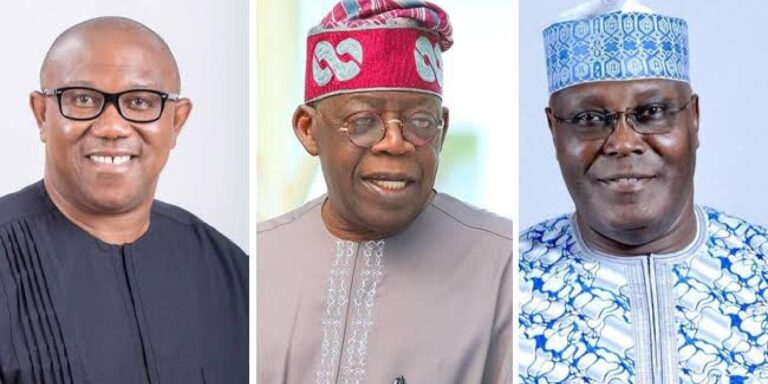
When responding to a widely circulated report that the Tribunal had set September 16, 2023, as the judgment date for Atiku Abubakar, the Peoples Democratic Party, Peter Obi, and the Labor Party’s case against Bola Tinubu, the Independent National Electoral Commission (INEC), Kashim Shettima, and the ruling All Progressives Congress (APC), Barrister Josephine J. Ekperobe, Secretary of the PEPC panel, confirmed this to THE WHISTLER.


Online users were very engaged with the report, especially on X (previously Twitter).


For instance, Charles Chukwuemeka Oputa, often known as Charly Boy, a well-known activist and singer, shared the assertion on his verified X profile.


“OBIDIENTS ARE U Ready?,” he wrote. Peter Obi and the Labour Party’s case against Bola Tinubu, INEC, Shettima, and the APC, as well as Atiku’s case against the APC, INEC, and Tinubu in the PDP, have been scheduled for decision on September 16, 2023, according to the Presidency Election Petition Tribunal (PEPT).


But in an interview with THE WHISTLER, Ekperobe refuted the claim that the Tribunal had set September 16, 2023, as the day of judgment.


The official answered THE WHISTLER’s question, “No date yet.”


The Presidential Election Petition Tribunal consolidated the petitions submitted by the different political parties in May while providing the trial schedule and the petition’s pre-hearing report.


The Allied Peoples Movement (APM) and Atiku Abubakar of the PDP filed a petition, and the court postponed decision on that as well in order to deliver its ruling on the same day as Peter Obi of the Labour Party.

Tinubu moves to dismiss underperforming ministers – Ajuri Ngelale

0

President Bola Tinubu would not tolerate any minister’s failure, according to Ajuri Ngelale, Special Adviser to the President on Media and Publicity, who also claimed Tinubu is not afraid to fire any minister who is ineffective.

Speaking on Channels Television’s Daily Rise, Ngelale claimed that since becoming president in February 2023, Tinubu had set standards for each sector in the nation.

“The President has established the standards. The issue at hand is enforcement, and the President has demonstrated that he is not someone who is reluctant to fire people, just as he did when he served as governor of Lagos State.

Because, in the end, if this administration fails, they won’t say a minister failed or a group of ministers failed, he is not someone who is reluctant to levy rapid punishments to guarantee that they get the results that he wants. He said: “They’ll say President Bola Tinubu failed, and I won’t accept failure.

Ngelale added that Tinubu proactively set up a number of reform committees embracing every sector between the time he emerged as the President-elect and his inauguration on May 29.

According to him, Tinubu “essentially looked at exactly what His Excellency, President Muhammadu Buhari had accomplished and said, “This is what we want to do to build on all these achievements.”

“We are going to successfully carry out a plan within a predetermined period of time based on time-based benchmarks that we will be able to assess a minister’s performance against after they are appointed.

“Every minister coming in fully knows what they have to accomplish within the time frame that has been set forth by the President, and that is something we have never seen before in the history of Nigerian governance.”

Gas scarcity affecting power plant operations, Elumelu tells FG

0

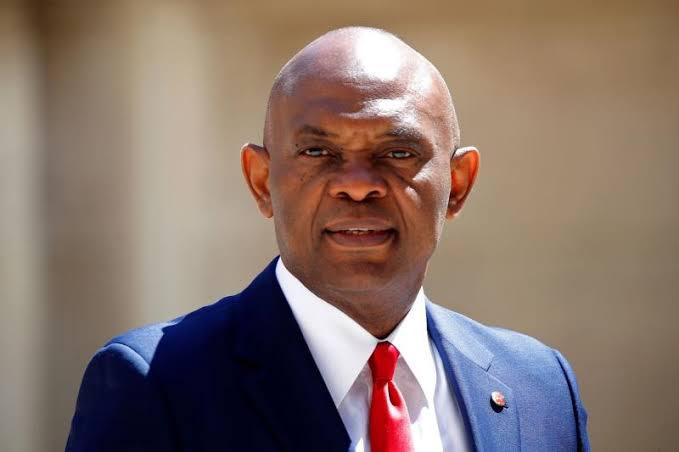
The Tony Elumelu Foundation’s founder, Tony Elumelu, said that the country’s power plants are having trouble operating due to a lack of sufficient gas supplies.

He hinted that this was having an impact on the nation’s electrical supply. At the Nigerian Bar Association’s annual general conference on Sunday, he made this statement.

In his remarks at the event, he stated that it was time for the nation to make investments in the power industry and establish regulatory frameworks to provide a sustainable supply of electricity to the populace, businesses, and institutions like hospitals, schools, and labs.

Elumelu remarked, “Is it not ironic that a nation with plentiful gas resources is unable to operate its power plants at their peak efficiency owing to gas shortages. The beginnings of what we can do are what I have seen. As an illustration, let me say: The 1000 megawatt installed capacity of the TransAfam Power Plant, which is a part of the Transcorp Group. General Electric sold 240 megawatts worth of fast power turbines to the Federal Government of Nigeria in exchange for a sizeable investment. For reference, 240 megawatts of electricity can run nearly a million houses in Nigeria. However, GE has threatened to abandon the project since our country, which has some of the world’s largest gas reserves, was unable to supply the 65mm scuffs of gas required for the thorough testing of the installed fast power plant.


Although there is a lot of private wealth that might be used to make the necessary investments for gas production, he claims that the country still has unutilized gas reserves.

He claimed that regulatory restrictions and self-serving policies were preventing these investments.

The foundation’s founder went on to say that Nigeria’s private sector has been showcasing its capacity, innovation, and institutionalization to the world. But according to him, there are far too few multinational companies with Nigerian roots.

Elumelu emphasized that the country was also being impacted by energy shortages, youth disenchantment manifesting in the loss of talent, among many other things.

“Insecurity creates unrest, feeds intolerance, and kills opportunity,” he remarked in reference to the nation’s security condition. Invest in security, please. Banditry, kidnapping, oil theft, pipeline vandalism, and transmission line cuts engender unease, anxiety, privation, poverty, and unspeakable suffering.

Additionally, he pointed out that the current government actions will benefit the nation over the long term. Elumelu asserts that Nigeria is a nation of businesspeople and that it needs to be thoughtful about its citizens.

He declared, “Investing in our youth – we need to reaffirm our commitment to our youth, give them the tools to achieve in Nigeria — not outside Nigeria. This entails not only investing in our educational system but also in our entrepreneurial culture.

Nigeria is a country of entrepreneurs; as an investor and a supporter of entrepreneurs, I am aware of the positive social and economic effects that entrepreneurship has. To support our young people and entrepreneurs at the greatest level, let’s form a collaborative government task force.

In addition, he cautioned business executives to view themselves as the source of investment, the driver of innovation, and the generator of new jobs. He said it is a civic obligation as much as an economic one to support entrepreneurship.

Elumelu added, “In light of the foregoing, let us tackle the mission of nation-building with unyielding commitment, guided by the values of unity, inclusivity, and progress.”

N5 billion palliative: CSO, community leaders set Akwa Ibom govt agenda

0

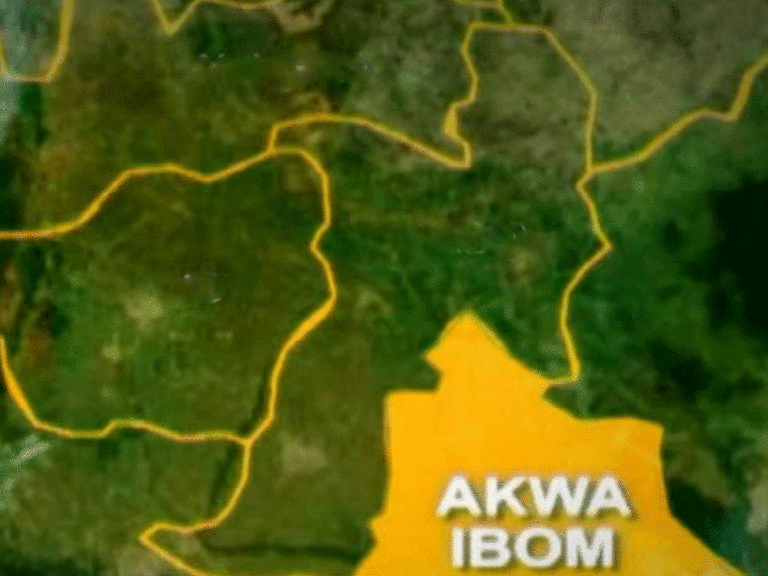
The Chairman of the Center for Human Rights and Accountability Network, CHRAN, Akwa Ibom State, Otuekong Franklyn Isong, has advised the Akwa Ibom State government to channel the N5 billion released by the Federal Government into the procurement of Compressed Natural Gas, CNG, vehicles.

It also advised the government to subsidize transportation costs for civil servants, schoolchildren, and other residents.

Isong, who is also a member of Akwa Ibom State’s Palliatives Committee, stated that it would be the desire of the State’s Civil Society Organizations if the Governor used the funds to establish a fuel depot or refinery to help reduce the cost of petroleum products.

He noted that the astronomical cost of goods and services in the country was directly as a result of the removal of fuel subsidies, and that the only way to mitigate the effect was to have a working refinery immediately.

“I’m aware that the FG has approved N5 billion to all states of the federation as palliatives to alleviate the hardship caused by the removal of fuel subsidies,” he said. We have yet to be briefed at the committee level on how it will be used.

“However, CHRAN and CSOs are making far-reaching recommendations that, if implemented, would improve the lives of everyone.” We are looking beyond the distribution of grains and a pittance.

“We are looking at having a long-term palliative that would help impact the lives of everyone; we are harping on the government to have a fuel depot or refinery that would reduce the cost of petroleum products.”

“We are considering the government bringing CNG vehicles to subsidize transportation costs, as well as more vehicles to transport civil servants from the plaza or any other strategic location to the secretariat and schoolchildren, as well as building refineries and a depot.”

“We want to positively impact rural dwellers by building good roads, improving agriculture, and constructing ranches, not just share rice and money.”

“We want the herders/farmers conflict to end; we already have an anti-grazing law; we want the government to implement it by first having ranches where the cows will be taken, so that the cows do not destroy people’s farmlands.”

Sir Sunday Orie, the President of Non-Indigenes in Akwa Ibom State, described the N5 billion palliative as robbery on the masses.

Orie questioned why the Federal Government would continue to raise the price of petroleum products, resulting in an unimaginable rise in commodity prices, and then give state governors a paltry N5 billion to cushion the effect without addressing the root cause of the problem.

The Igbo leader in Akwa Ibom urged President Bola Tinubu to create an enabling environment, implement people-friendly policies, and address the volatile exchange rate as soon as possible in order for businesses to thrive.

“What is N5 billion for a state?” It’s still robbery if you rob Peter to pay Paul. Give us an enabling environment, give us a chance to make money; many people have parked their vehicles because they can’t afford the fuel.

Read Also: Let’s move Nigeria forward, partner for nation-building — Tinubu, Elumelu

“Every day, you raise the price of gasoline and claim to be providing a palliative tomorrow.” There are people in the interior villages who cannot come to town to buy or sell their goods due to the high cost of transportation.

“If you give them N1500 as a palliative, will that cover their transportation, let alone their feeding?” So who is deceiving whom?

“The government should address the root cause of the hardship Nigerians are currently experiencing as soon as possible,” he advised.

Peace advocates praise military’s tenacity in battling bandits, insurgents

0

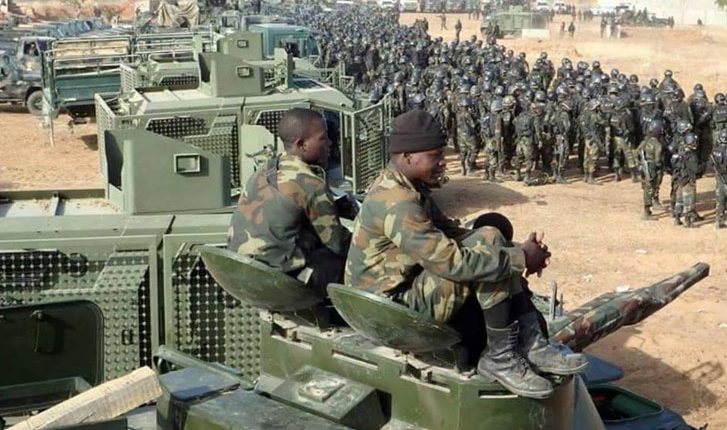
Bandits and rebels are showing symptoms of despair as a result of the unrelenting military assault, a behavior that the Nigeria Peace Advocates blamed on the growing power of the country’s armed forces.

Speaking to journalists on Sunday, NPA Secretary Bernard Udu urged Nigerians to continue to pray for and support the Armed Forces and praised General Christopher Gwabin Musa, the Chief of Defence Staff, and his brave soldiers for their efforts to protect the country.

Udu noted that terrorists and bandits are becoming more desperate as a result of the country’s ongoing military operations, which are heating up.

No matter how desperate they are, Nigerians support Gen. C. G. Musa and the Armed Forces of Nigeria wholeheartedly.

“We must support our military as they continue to give their lives to preserve the peace and stability of our nation. We must resist those whose acts are detrimental to peace and progress, the speaker emphasized.

He expressed deep sorrow for the recent loss of soldiers who were attacked while responding to a distress call in Chukuba community, Shiroro Local Council Area, Niger State, while affirming that the nation stands united and hopeful that a brighter future lies ahead, even in the midst of trying times.

According to reports, bandits ambushed the soldiers. Additionally, a Nigerian Air Force chopper went down.

The CDS, the AFN, and the families of the fallen servicemen have our sympathies. Nigerians are in your corner. We hold out hope that there will be a light at the end of the tunnel shortly, Udu continued.

Urgent tasks for new education minister

0

I would like to extend my congrats to Professor Tahir Mamman on his selection as the next Minister of Education for our magnificent country of Nigeria. As a concerned citizen and supporter of high-quality education, I want to draw your attention to a few important initiatives that, in my opinion, need to be given top priority in order to enhance our educational system.

First and foremost, any reforms to education must involve strengthening the Local Government Education Authorities. The LGEAs’ engagement in providing basic education needs to be increased. By collaborating closely with these authorities, we can make sure that funds are distributed wisely, infrastructure is upgraded, and all kids, regardless of their socioeconomic level, have access to an education. Between the federal and municipal levels, there must be robust collaboration. Due of their proximity to the ground level, LGEAs should be heavily involved in school oversight and quality assurance. In order to oversee schools, guarantee curriculum implementation, and ensure learning outcomes, they should be given the authority and resources they need.

Second, systematic efforts should be made to encourage literacy growth. It is essential to create a thorough literacy development plan in order to address the issues related to our nation’s low literacy rate. A precise set of goals for literacy success at each State Universal Basic Education Board will serve as a guide for future development. We can give our kids the fundamental abilities necessary for their personal and academic success by putting an emphasis on early reading interventions, literacy programs, and teacher preparation.

Thirdly, it is important to prioritize improving teacher welfare and training. We must invest in the professional development of teachers and enhance their welfare because they are the foundation of our educational system. The caliber of teachers we require should be reflected in the hiring procedure. In elementary education, we need the best personnel. To enable teachers to give pupils a high-quality education, we must create chances for ongoing training and professional development. They will be more motivated and committed to influencing the future of our country through education if we have a better welfare system that provides fair wages and support services like housing, transportation, and quality classrooms.


It is undeniable that creating a thorough book policy to ensure access to top-notch instructional resources is essential for our kids’ overall growth. Therefore, I kindly request that the new education minister give the development and implementation of a book policy for the nation’s basic education a high priority. This rule should make sure that all kids have access to carefully chosen, current, and varied educational resources. We can develop an engaging learning environment that stimulates students’ curiosity and enthusiasm for learning by working with publishers, educators, and stakeholders.

We can completely transform Nigeria’s educational system by tackling these issues and putting out workable plans, dear Minister of Education. We have the opportunity to give equitable educational opportunities to every child and to raise a generation of self-assured, competent, and empowered people thanks to your leadership and effort.

I have faith in your determination to have a beneficial influence on our educational system. May the quest of excellence in education and revolutionary reforms characterize your term. Let’s work together to use high-quality education to shape the future of our country.