Home Blog Page 1700

BUA Cement to drop cement price, offers shareholders N2.80kobo per share dividend

0

Abdul-Samad Rabiu, the chairman of the BUA Group, announced that the business would lower its cement pricing to stop the government from sanctioning the importation of cement into Nigeria.

Rabiu made this statement in response to criticism of the cost of locally produced cement in the nation, which compelled Dangote Cement to justify the pricing of its goods.
Since importing cement would be detrimental to the nation, BUA Cement’s founder said that the company will expand its manufacturing capacity in order to reduce the cost of its goods.

Before the year is up, BUA Cement intends to raise production capacity by at least 40% to 70 million tonnes, as stated by Rabiu during the company’s annual general meeting on Thursday.

By the end of the year, Rabius stated, “We plan to have two more production lines operational, increasing our production capacity by at least 40% to 70 million tonnes.

Read Also: Centre Commends Aviation Minister Keyamo Over Key Policy Decisions

In order to help the government’s efforts, “the idea of increasing production capacity is to see how we can be able to drop prices on our part. Importation will not be the best solution.”Cement costs N4,500 on average in Nigeria, which equals N90,000 ($100) a tonne. Therefore, if the government threatens to begin importing cement, it will cost them much more because the current high exchange rate makes it more expensive to transport via ports and requires paying taxes, trucking fees, and other charges.

In the meantime, BUA Cement has increased the dividend it would pay to shareholders for the year 2022 from N2.60 kobo to N2.80 kobo per share.

Federal, states, LGs share N4.37trn FAAC allocations Jan-June 2023 – NEITI

0

Between January and June 2023, the Federal, States, and Local Government Councils (LGs) divided N4.37 trillion in statutory revenue allocations from the Federation Account.

The most recent report from the Nigeria Extractive Industries Transparency Initiative (NEITI) on the allocations of revenue to the Federation Account for the first half of the year contains this information.

The report was released on Thursday in Abuja by Dr. Orji Ogbonnanya Orji, Executive Secretary of NEITI. He stated that the total distributable FAAC allocations to the three levels of government in the first and second quarters (Q2) of 2023 were N2.32 trillion and N2.04 trillion, respectively.

According to the NEITI quarterly assessment, inflows into the Federation Account fell by 23% in Q2 2023, which had an impact on the distributable revenue, which fell by 12% in comparison to the total revenue distributed in the first quarter.

Over the course of the six-month period, “each tier of government received more than N1 trillion,” he claimed.

According to the study, a breakdown of the revenue receipts revealed that the State governments collected N1.5 trillion, or 34.5%, while the federal government received approximately N1.78 trillion, or 40.7%.

The study states that N1.08 trillion, or 24.8% of the total distributable revenue for the time period, was given to local government councils.

It also stated that a comparison of the total allocations between the corresponding quarters in 2022 and 2023 revealed a 16.7% increase in distributable revenue, from around N4.05 trillion shared in 2022 to N4.366 trillion shared in 2023.

As a result, it was discovered that the federal government’s allocation for the time under review increased by 19.8% to N1.78 trillion in 2023 from N1.48 trillion during the same period in 2022.

Similarly, the research said that allocations to the LGs increased by 16.8% to N1.08 trillion in 2023 from N926 billion in 2022, while allocations to the State governments increased by around 11.2% to N1.42 trillion from N1.26 trillion in 2022.

The increase in half-yearly allocations in 2023 followed a positive rising trend from the preceding year, during which the distributable revenue for the first half of the year increased by 16.7%, from N3.47 trillion between January and June 2021 to N4.05 trillion in the same time the following year.

Additionally, allocations to the federal, states, and LGs all saw overall increases of 8.8%, 26.5%, and 14.2%, respectively.

However, it claimed that when compared to the same period in 2022, the study revealed a reduction in the absolute amount of FAAC distribution in Q2, with total distributable revenue of N2.02 trillion being 13% less than the approximately N2.16 trillion distributed in the second quarter of 2022.

Read Also: CSOs, anti-graft organisations ask Tinubu to establish a national council for public procurement.

Further examination of the payments made to the states, according to the report, revealed that Delta state received the largest allocation in the second quarter of 2023, totaling N102.79 billion. Akwa Ibom came in second with N70.01 billion, followed by Rivers with N69.73 billion, Lagos with N60.64 billion, and Bayelsa with N56.34 billion.

It stated that the entire allocations to the following 15 states (N349.3 billion) were surpassed by the total disbursements to these five states (N359.5 billion), or 35.9% of the overall FAAC allocations.

The worst 10 states earned 17.3% of the money split in the second quarter of 2023, it was stated, adding that the total allocation to the five states was also greater than the share of distribution to the remaining 19 states combined.

States with the lowest allocations, totaling N16.71 billion, N16.84 billion, N16.95 billion, N17.22 billion, and N17.45 billion, respectively, were Nasarawa, Ebonyi, Ekiti, Gombe, and Taraba.

It stated that, with the exception of Lagos, four of the top five states in terms of allocations each received a sizable portion of the 13% derivation money allotted to oil-producing states.

It stated that the cumulative allocation to the five states was higher than the share of allocation to 19 other states, and that the total disbursements to these five states (N359.5 billion), or 35.9% of the total FAAC allocations, were higher than the total allocations to the following 15 states (N349.3 billion).

Additionally, it stated that 17.3% of the revenue distribution for the second quarter of 2023 went to the worst 10 states.
It was said that the three primary revenue-generating organisations sent the majority of their remittances to the federation account.

They were identified as the Federal Inland Revenue Service (FIRS), the Nigeria Customs Service (NCS), and the Nigeria Upstream Petroleum Regulatory Commission.

It was revealed that these funds came from a variety of sources, including oil and gas royalties, petroleum profit tax, corporate income tax, value added tax, import charges, and excise taxes.

Additionally, N1.84 trillion in revenue remittances in the second quarter of 2023 came from both mineral and non-mineral sources, with N809 billion, or 44%, coming from mineral revenue (mostly from oil and gas), and N1.03 trillion, or 56%, coming from non-mineral sources.

The research also highlighted a significant discrepancy between revenue disbursements from the oil and gas and solid minerals sectors, highlighting how this was a result of the latter’s ongoing underperformance over time.

With a total deduction of N9.03 billion in the second quarter of 2023, Lagos came out on top among the 36 states, followed by Delta (N6.76 billion), Ogun (N6.10 billion), Kaduna (N5.63 billion), Osun (N5.60 billion), and Imo (N5.51 billion). This is due to debt service obligations and their effects on the net allocations of the states.

“The lowest deductions, totaling N1.16 billion, N1.29 billion, N1.45 billion, N1.51 billion, and N1.88 billion, were made by Jigawa, Anambra, Nassarawa, Kebbi, and Enugu States.

According to the report, “the nine oil-producing states, namely Abia, Akwa Ibom, Anambra, Bayelsa, Delta, Edo, Imo, Ondo and Rivers states received allocations relative to their share of the oil and gas as well as other minerals extracted from their domains,” it stated.

According to the forecast, Nigeria’s balance of payments would improve with effective management, smart use of savings from subsidy payments, and increased demand that was totally met by product imports in the first half of 2023.

It stated that the decline in demand would unintentionally result in a comparable decrease in the amount of money required to pay for premium motor spirit (PMS), which was the most valuable import overall, he claimed.

The recent unification and floating of the exchange rate policies undertaken to strengthen and stabilise the economy were warmly welcomed by the report with great expectations.

“With the average exchange rate of N713.69 to $1, which is nearly a 55% increase over the rate of N460.52 to $1 recorded during Q2, the value of export profits sent to the Federation Account will be greatly increased by more than 50%.

Read Also: Centre Commends Aviation Minister Keyamo Over Key Policy Decisions

It advised that the value of foreign capital inflows, such as investments, loans, and grants, would increase as a result of earnings from the new exchange rate through exports.

The study also encouraged the Central Bank of Nigeria to emphasise measures to control the currency rate in order to support the efficient execution of the deregulation strategy and stable inflows into the Federation Account that depend on foreign exchange.
FG can’t refund states for money spent on Federal Roads now – Works Minister

0

According to Works Minister David Umahi, the Federal government is not now able to reimburse State governments for money spent on Federal Roads.

During his Thursday visit to Oyo State Governor Seyi Makinde in Ibadan, Umahi made this clear.

According to the News Agency of Nigeria (NAN), the Minister is in Oyo State on a two-day working visit.

“The federal government will not be able to commit at this time due to the state of the economy.

“However, records of such road projects done by the states would be kept and could be revisited when the economy improves,” he said.

He praised Makinde for the administration’s involvement in road construction.

According to the minister, the intervention lessened people’s suffering.

“We are one government, whether it be for state or federal highways. The goal and duty of office is to put the interests of the people’s wellbeing ahead of all other considerations, he stated.

Umahi pressed Makinde to use concrete pavement technology in road building projects, claiming that it was more resilient and less expensive than asphalt roads.

He added that about 95% of the roads he developed as governor of Ebonyi were constructed with concrete pavement, saying that road projects using concrete pavement in Lagos State had been successful.

The Minister explained that he was inspecting South West federal government road projects when asked why he was in Oyo State.

In Abuja, according to Umahi, he met with every contractor in charge of the North West, North Central, and South West road projects.

“After the meeting, I decided to visit these projects to know the quality of the work done and other things on the ground,” he stated.

In order to successfully complete the federal government’s initiatives in the state, he further sought further collaboration from the Oyo state administration.

Makinde responded by thanking the minister for his visit.

He claimed that Umahi’s record as the leader of Ebonyi speaks for itself.

The governor claimed that his administration gave priority to road projects since they were crucial to the economy.

Whether they be state or federal roadways, we are dedicated to the rehabilitation and reconstruction of numerous road projects.

“For instance, it took us two years to obtain federal government approval for the 34 km Oyo-Iseyin road, which we immediately gave to a contractor after receiving it due of its significance to the state’s agribusiness.

The former president Olusegun Obasanjo will open the route on September 15. Although the documents are there and we will present them to the Minister, we are not asking for a reimbursement right away.

Makinde added that his administration would keep spending money on road projects to advance the state.

He informed the minister of his preparedness to work with the federal government to dualize the Ibadan-Abeokuta road’s Oyo state section.

The governor also let the minister know that he and his colleagues in the states of Lagos and Ogun had agreed to light the Lagos-Ibadan Road.

He said that because it was the busiest road in the nation, lighting the entire section of it would improve safety along the road.

Centre Commends Aviation Minister Keyamo Over Key Policy Decisions

0


…says transparency and safety are paramount in the sector_

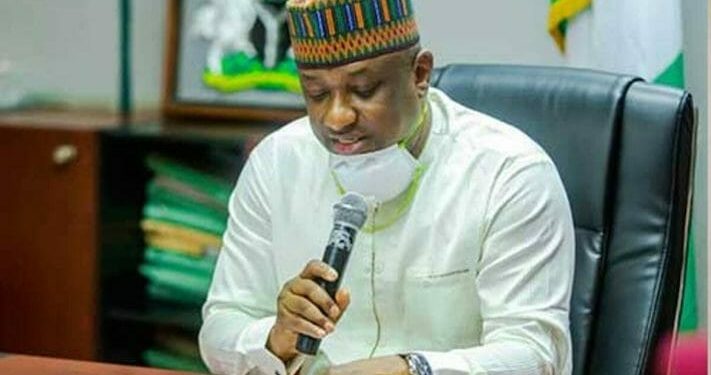
The Centre for Social Justice, Equity, and Transparency (CESJET) has hailed the Minister of Aviation and Aerospace Development, Festus Keyamo, SAN, for hitting the ground running.

The Centre, in a statement signed by Executive Director, Isaac Ikpa, said the Senior Advocate of Nigeria is already punching above his weight after being written off by critics.

After barely two weeks on the job, Ikpa said Keyamo has taken giant steps to revamp the aviation sector that was bedeviled by controversies and uncertainties.

He noted that the reforms and policies introduced so far are evident that the minister came prepared with a clear blueprint to make the country’s aviation sector one of the best in the world.

Highlighting some of the giant steps taken, Ikpa welcomed the suspension of the national carrier and airport concession.

He said it was apparent even to the blind that the entire process was clouded in controversy and fraud; done without following due process.

Ikpa added that it was best for it to be reviewed to potentially eliminate all the bottlenecks along the way.

By doing these and reviewing complaints, he further said that Keyamo has restored transparency, accountability, and integrity to the aviation business while winning the trust of stakeholders and international partners.

“We have followed the 45 new ministers closely and have been amazed by Mr Festus Keyamo. His case is particularly interesting because he was written off even before his first day at work,” Ikpa said.

“Being a firm critic who stands up for what he believes, Keyamo is often misunderstood. Although sometimes cocky and condescending, the minister is someone who never shies away from a debate. However, over the years, he has earned a reputation for his integrity, honesty, and passion for humanity.

“While the naysayers continued in their stock in trade, Keyamo quietly settled into the job and announced himself with some groundbreaking reforms, policies, and innovations. Among many others, he has suspended the fraudulent national carrier and airport concession.

“It clearly shows that the minister came fully prepared for the job despite his late appointment. Keyamo already had a blueprint to sanitize, revamp, and revive the aviation sector to meet international best practices.

“By doing these, he has also restored transparency, accountability, and integrity to the system. We were a laughing stock before the global community. Now, he’s gradually winning the trust and support of stakeholders and investors”.

Ikpa, therefore, charged Keyamo to sustain the momentum until the sector is rid of every corrupt element, deal, and official.

He urged the minister not to be distracted, adding in the coming days those against the progress of the nation will come out for him.

The Centre, however, urged critical stakeholders and foreign partners to accord the SAN all the needed support as he means business.

Nd’ Igbo: As Leadership Beckons on Benjamin Kalu

0


By Charles Ibekwe

Change is inevitable although we hardly see it coming. It is common knowledge that a signature is an acceptable mark of identification. Therefore, in the public and private sectors, a conscientious leader will strive to leave indelible and enduring marks. To do less could attract historical opprobrium.

Although much disapproving political outing has been witnessed in the Southeast region since the return to democracy in 1999, there is still room to right the wrongs and steer the region in the direction of economic and political prosperity. However, before this can be achieved, Nd’Igbo must re-evaluate their priorities, character, and what they stand for in the polity.

As the great Malcolm X once said, “A Man who stands for nothing will fall for anything”. So, will Nd’Igbo accept the current leadership distribution in the polity and embrace their own? Luckily, we may not have to look too far outside the current leadership formation to find a rallying point whose wealth of experience and track record of achievements in private and public sectors have potentially positioned him to help set a progressive tune for us in national politics.

Despite the unending dialectics across party divide in the region coupled with unresolved bickering among elders and frontline politicians, the emergence of Distinguished Hon Benjamin Okezie Kalu representing Bende Federal Constituency as the Deputy Speaker of the House of Representatives offers a glimmer of hope on two fronts. One is the fact that the zone was not marginalized in the distribution of national leadership positions. Secondly, it offers the region an opportunity to depart from that vicious circle of personalized politics of retrogression which had over time encouraged the recycling of leaders without any form of integration.

First elected in 2019, Rt Hon. Kalu was the chairman House Committee on Media and Public Affairs, a position he held to the admiration of many. He played a vital role in ensuring that the activities of the House were properly disseminated in the media so that Nigerians would appreciate the efforts of their representatives towards their law-making and oversight functions.

An astute lawyer, Benjamin Kalu has distinguished himself as a member who is well respected for his sterling qualities and exemplary knowledge of the legislative process. Young, intelligent, and dynamic, he is a man of integrity who has proved his mettle. As a true Patriot, he is committed to service to humanity in every sense of the word.

Among the 40 bills he sponsored in his first tenure was the highly inspiring and impactful bill that sought to alter the amended 1999 Constitution of the Federal Republic of Nigeria by replacing the item “prison service” in the exclusive legislative list with ” correctional services” in the concurrent legislative list. This very historic legislative effort was assented to by President Muhammadu Buhari.

Indeed, Hon Kalu has carved a niche for himself as a selfless leader who believes strongly that government exists for the greatest good of the people. Today, he is one of the leading lights in the National Assembly. He believes that this is a demonstration of the confidence his colleagues across party lines have in him and also a challenge for him to play a greater role in integrating Nd’Igbo into mainstream politics.

Succinctly put, the southeast region is better positioned politically with the emergence of Rt Hon. Kalu as the Deputy Speaker of the House of Representatives. His contacts and influence present a new dawn in leadership recruitment in the southeast region.

Nd’Igbo must not make mistakes about this rare opportunity. There is an urgent need to be alert and face the business of leadership and followership if progress can be made. We must be clear about our position in the Nigerian political space at this time. Rt Hon. Kalu has the advantage of education, exposure, an influential platform, and the courage to put Nd’Igbo and the southeast region on a sound political track.

Rt Hon. Kalu represents a new era for our people. He is like the Biblical Moses who will lead us to the Promised Land. The Deputy Speaker is well-armed with courage, integrity, capacity, and compassion to embark on this foray.

All we have to do as a people is get ready for the ride. Hatred, strife, disunity, and disregard for other tribes are major obstacles we must avoid. We also have to prepare our minds for major hurdles on the road and trust Rt Hon. Kalu to drive us to our destination, safely.

Ibekwe is a forensic psychologist writing from UNN.

CSOs, anti-graft organisations ask Tinubu to establish a national council for public procurement.

0

To combat procurement corruption, which accounts for more than 70% of total corruption in Nigeria, Civil Society Organisations (CSOs) have urged President Bola Ahmed Tinubu to form and inaugurate the National Council for Public Procurement as soon as possible.

The CSOs also asked for the establishment of the Chartered Institute of Purchasing and Supply Management of Nigeria, CIPSMN, to help combat procurement corruption in the country.

The demands were stated in a Communique produced as the result of a meeting attended by Prof Ismaila Mande of the National University of Nigeria, Wisdom Olisa of the NGO Network, and Victor Enejuire of the Centre for Social Justice.

On Thursday, August 24, 2023, in Abuja, a one-day Roundtable on “CSOs Strategic Alliance and Think-tank Against Public Procurement Corruption in Nigeria” would be place.

The Roundtable was held by the Procurement Observation and Advocacy Initiative (PRADIN), in conjunction with the Civil Society Legislative Advocacy Centre (CISLAC), the Human and Environmental Development Agenda (HEDA), and the Africa Network for Environment and Economic Justice (ANEEJ).

Read Also: Keyamo Cancels Nigeria Air Project and Airport Concessioning Deals

“Tackling High-Level Corruption in Public Procurement” was the event’s theme.

Participants were drawn from key stakeholders such as the Bureau of Public Service Reforms (BPSR), the Independent Corrupt Practises and Other Related Offences Commission (ICPC), the Economics and Financial Crimes Commission (EFCC), and the Strategy Implementation Office of Presidential Executive Order 5.

According to the Communique, inadequate monitoring and prevention of frauds in procurement of goods, works, and services account for more than 70% of total corruption in the public sector, as researched by NGO Network since 2010.

It was noticed that the failure of successive governments, from President Musa Yar’Adua to President Muhammed Buhari, to establish the National Council for Public Procurement, NCPP, is a huge defeat in the battle against corruption, as it renders most procurement activities illegal.

According to it, noncompliance with some aspects of the Public Procurement Act 2007 has resulted in a lack of professionalism in the administration and execution of effective procurement practises in Nigeria.

It also stated that a lack of effective and continuous synergy between the government, civil society organisations, and professional bodies is a major reason why corruption cases are on the rise despite massive investment by the government and the people.

It went on to say that the lack of a bi-annual PROCUREMENT AUDIT of Ministries, Departments, and Agencies, MDAs, from 2007 to present is a huge window for corruption and abuses to be recorded in the system.

It therefore recommended that the government of President Ahmed Bola Tinubu establish and inaugurate the National Council for Public Procurement, as well as the Chartered Institute of Purchasing and Supply Management of Nigeria, CIPSMN, among other strategic steps to address the country’s procurement corruption challenge.

“On the basis of the foregoing considerations, the participants consequently resolved as follows:

“That the Government of President Ahmed Bola Tinubu should, without further delay, constitute and inaugurate the National Council for Public Procurement and the Chartered Institute of Purchasing and Supply Management of Nigeria, CIPSMN as contained in Part 1 Section 1 of the two existing loss Laws to strengthen the fight against procurement corruption in the face of rising high-profile cases in the country.”

“That the establishment of the NCPP, as well as compliance with Sections 5-17 and 55 of the Public Procurement Act 2007, will ensure professionalism in management and the application of efficient procurement practises, thereby reducing corruption to its bare minimum.”

“That procurement corruption, which accounts for the majority of corruption as identified in previous research by CSOs and the Roundtable, is a serious concern to all participants, and thus resolved to engage new strategies by all stakeholders to combat the phenomenon.”

“That a strengthened partnership between the government, particularly anti-corruption agencies, civil society organisations, and professional bodies, will aid in the prevention and fight against procurement corruption in Nigeria.”

According to the Communique, participants at the Roundtable expressed their thanks and congratulated the event’s organiser, and they asked for more synergy, collaboration, and partnership in the fight against misprocurement to reduce the high degree of corruption in the public sector.

Read Also: Apply: INEC Starts Hiring Ad-Hoc Staff for Governorship Elections in Bayelsa, Imo, Kogi

Participants also urged the Legislators in the 10th Assembly to be vigilant and take note of the concerns surrounding procurement corruption in order to assist them in their oversight roles.

According to it, the organisers commended the ICPC, EFCC, BPSR, SITOPE, CIPSMN, Academia, as well as CSOs and the media in attendance for their commitment and called for continued collaboration in this cause.

Ondo-Born Philanthropist Ayinke Thanks Tinubu For Appointing Tunji-Ojo As Minister

0


Ondo-born business mogul and philanthropist, Engr Funmi Ayinke, has applauded President Bola Tinubu for appointing Hon. Olubunmi Tunji-Ojo as Minister of Interior.

In a letter to the President, Ayinke described Tunji-Ojo as one of the leading lights from Ondo, recognized for his exceptional qualities.

She further hailed the former federal lawmaker as one the best brains from the Sunshine State, well-armed to fulfill his mandate and fully domesticate the President’s Renewed Hope Agenda.

By selecting Tunji-Ojo, Ayinke said the President has demonstrated a “penchant for men and women of goodwill, those with high moral standards who are prepared for the tasks”.

She added: “The President is indeed a man who values and rewards hard work and recognizes excellence capacity, and intellect. Above all, he is ready to go against the status quo just to make Nigeria better. ”

Ayinke, therefore, assured President Tinubu that he wouldn’t regret the choice of Tunji-Ojo, reiterating her unwavering support at all times.

She noted that the interior minister has left a lasting impression on previous assignments and would do so at the national level.

According to her, “Tunji-Ojo would effectively handle domestic or internal affairs of the country, especially those that affect the welfare of the common man”.

Ayinke, however, urged the minister not to lose focus and to continue on the wonderful path that has brought him fame and fortune.

She warned that Tunji-Ojo must always stand for justice, equity, and fairness – the hallmark of his time in the National Assembly.

Gabon coup: Femi Fani-Kayode’s statement, a diversionary tactic – MacDaniel Mark

0

I find the statement by Femi Fani-Kayode about the coup detat in Gabon highly diversionary. He was deliberately and desperately trying to divert attention from his sins and those of his gang members at home. He spoke out of the fear of nemesis, but unfortunately for him, kama cannot be manipulated.

For the records, the coup in Gabon wasn’t against France as he would like to have it painted, but against corrupt and avaricious politicians that seek political power at all costs just to plunder their nations and impoverish the citizenry.

The coup was against political thieves and mandate robbers like him who have brazenly desecrated the sacred altar of democracy across Africa in the name of their self-seeking ambition. It was against political charlatans, election riggers and economic saboteurs who have for long constituted the greatest bane to political stability and economic development in the continent of Africa.

It was against a committee of political vultures like him who have for decades, been feeding fat on the bodies of the citizens they have slain through poverty, hunger and starvation. It was against a group of soulless and ruthless political knaves like him who rode their way to power on the wings of stolen mandate.

Who is Femi Fani-Kayode to talk about the unfolding events in Gabon while he and his henchmen back here in Nigeria represent the very repressive, corrupt, immoral and evil political gang that rigged their ways into power in the recently concluded presidential election? It was against his ilk that the coup detat in Gabon took place and not against France as he would like to have people believe. It was against shameless political thugs like him. One wonders what would have become of him by now if he were in Gabon.

The force of truth, once ignited by the right time and season is unstoppable, and it will continue to move with atomic impact until it totally reverses every seeming victory of falsehood. Fani-Kayode and his ilk should hide their faces in shame if they have any vestige of decency left in their egregiously battered reputation.

MacDaniel Mark is a public affairs analyst, writes from Ibadan

Keyamo Cancels Nigeria Air Project and Airport Concessioning Deals

0

Festus Keyamo, SAN, Minister of Aviation and Aerospace Development, has suspended the contentious Nigeria Air Project and airport concessions undertaken by President Muhammadu Buhari’s immediate predecessor.

According to reports, the Nigeria Air project and the concessioning of the Lagos, Abuja, Kano, and Port Harcourt airports have caused so much controversy that experts in the aviation business have asked for their suspension, claiming they are of no benefit to the sector.

However, on his first visit and tour of the Murtala Muhammed Airport in Lagos, the Aviation Minister stated that he has paused all planning and arrangements for the projected national carrier, Nigeria Air.

On the move of international airlines to the new Lagos terminal, Keyamo stated that the new Lagos terminal had been underutilized because it could not accommodate wide-bodied aircraft, and that the airlines would use the terminal while the government procured large buses to transport passengers.

Read Also: Lagos State working to tackle the issue of congestion in state’s public schools

He also indicated that the old international terminal at Murtala Muhammed International Airport in Lagos will be closed down by October 1, 2023 for renovations, and that all private hangars such as Dominion Hangar, EAN Hangar, and others would be relocated to make space for the growth of the new terminal.
“The old terminal was the source of the majority of complaints.” For Nigerians passing through, that location is an eyesore. The lifts aren’t working. The hallway is uninviting, and there is no air conditioner. We have a new terminal, however it cannot be used. “It was not designed with large planes in mind,” Keyamo explained.

Lagos Tribunal Dismisses LP’s Petition Against Senator Eshinlokun–Sanni

0

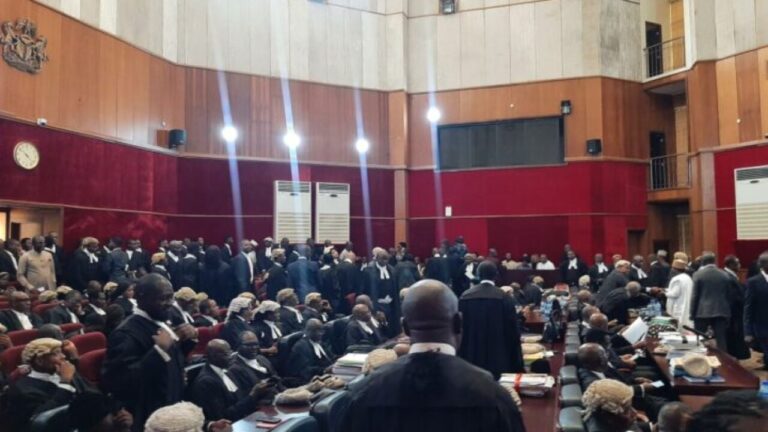
The case submitted by Abiodun Dabiri, a candidate for the Labour Party (LP) in the election for the Lagos state Central senatorial district, against the elected senator Wasiu Eshinlokun-Sanni was denied by the National and State House of Assembly Election Tribunal in Lagos.

The petition was rejected by the Tribunal in a unanimous decision handed down by Justice Ashua Ewah on the grounds that it was incompetent and that the matter at hand was pre-election-related.

Justices Abdulahi Ozegya and Mohammed Sambo are additional tribunal members.

The All Progressives Congress (APC), Eshinlokun-Sanni, and Independent National Election Commission (INEC) are the petition’s respondents.
The Labour Party (LP) and Dabiri are the petitioners.

In their case, the petitioners requested that the Tribunal invalidate the Lagos Central Senatorial District election that was place on Saturday, February 25, 2023 due to a violation of the Electoral Act. This request was made through their attorney, Ikechukwu Nwana.
They claimed that the election was invalidated because the first respondent (INEC) failed to include the symbol chosen by the second petitioner, LP, or any other information pertaining to the second petitioner on the ballots utilized to carry out the said election.

However, during the pre-trial hearing, Eshinlokun, the second respondent, filed two preliminary objections via his attorney Wahab Shittu (SAN), requesting an order tostriking out the petitioner’s reply dated May 12 and filed May 13, 2023.

Read Also: Ondo Acting Governor, Aiyedatiwa, orders Council Chairmen, Councilors to vacate their offices

Because the first petitioner was not a candidate in the Lagos Central Senatorial District election that was held on February 25, 2023, the respondent based his applications on the argument that the petitioner lacked locus standi to present it.

Due to a violation of Section 133(1)(a) of the Electoral Act of 2022, Shittu also argued that the initial petitioner was not authorized to present the petition.

“Sponsorship and nomination of candidates are a pre-election matter, making the ground upon which the petition is based illegitimate and unrelated to the Electoral Act 2022.

“The second application, dated May 18, 2023, is predicated on the idea that the petitioner’s reply was an effort to expand the petition. Against the provisions of Articles 14(2)(a) and 16(1)(a) of the First Schedule to the Electoral Act of 2022.

The learned silk said that the petitioners are forbidden from broadening or altering their petition through the use of their reply by Paragraph 16(1(a).