Home Blog Page 1689

Court orders election rerun in Banky W’s federal constituency

0

Thaddeus Atta of the Labour Party was legitimately elected to represent the Eti Osa Federal Constituency, but the National Assembly Elections Petition Tribunal in Tafawa Balewa Square, Lagos State, has annulled that election result.

In a late-night ruling handed down on Monday, the tribunal declared the polls to be inconclusive and ordered the Independent National Electoral Commission to hold a new election in all polling places where voting was not possible within 90 days.

Both Ibrahim Babajide Obanikoro, a candidate for the All Progressives Congress, and Bankole Wellington, a singer and actor from Nigeria known as “Banky W,” of the Peoples Democratic Party, who was declared the runner-up in the February 2023 election, had petitions filed challenging the election results.
With 24,075 votes, the electoral umpire proclaimed Atta the winner. Banky W and Obanikoro received 18,668 and 16,901 votes, respectively.

The All Progressives Congress candidate Ibrahim Obanikoro responded to this on his official Instagram account (@repibrahimobanikoro) on Tuesday morning. He acknowledged it and praised the judges “for this ruling which adheres to the components of the Constitution.”
“When it was established that there will be a second election in a number of voting locations under the Eti-Osa Federal constituency where the election did not take place, everyone in the tribunal court was smiling. I think that our legal system is headed in the right direction, and I applaud the judges for making a decision that complies with the Constitution’s provisions. Now work will begin.
According to his Instagram account, which was observed by our correspondent, “The Feb. 25 election has just been rightly declared inconclusive and supplementary elections have been ordered by the court.” Elections in places where they weren’t held on Election Day must now be held, and INEC has been directed to revoke the return certificate.

Read Also: Court remands jealous lover for killing girlfriend

Tuesday morning, Atta of the LP posted on his X account (@_JtAtta) that he had not been fired and that there was “No cause for alarm.”

I’m here to say that I wasn’t fired. In the 32 polling units where elections were cancelled, the Tribunal has only mandated a rerun (supplementary election). For Eti-osa, we will keep working. We are unfazed, therefore I ask my supporters to remain calm. Together, we’ll get through this, he continued.

On Monday night, Banky W tweeted “It is possible.” in a post resembling the response to the election. On his X verified handle, he wrote, “Still.

Breaking: UNIJOS students protest school fees hike

0

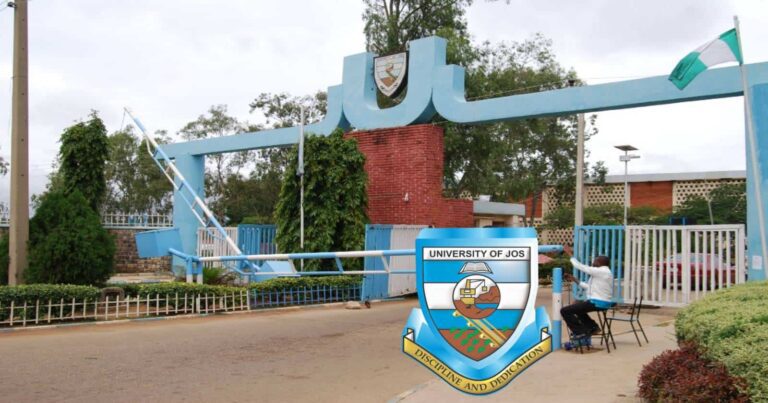
Due to an increase in tuition and other fees for the university’s services, students at the University of Jos in Plateau State blocked the highways leading to campus on Tuesday.

The student protesters demanded an immediate reversal of the increase in school fees and other services provided by the University, which were organised by leaders of the Students Union Government of the institution.

Armed with signs that read, among other things, “We don’t want to drop out of school,” “If your children can afford the money, we can’t,” and “If your children can afford the money, we can’t.”
The students claimed that the government should refrain from adding even more fee increases because Nigerians were already facing significant hardship.

Details to come…

East-West road: Ex-agitators vow to shut P’Harcourt Refinery, others

0

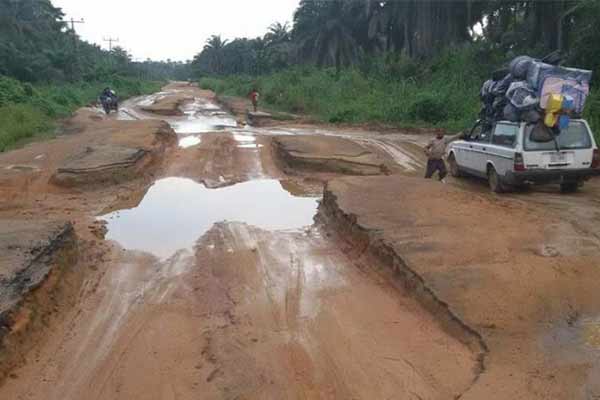
With the exception of a last-minute alteration, a gang of former agitators of Ogoni descent has pledged to shut down the Port Harcourt Refining Company and other international companies in Eleme, Rivers State due to the poor condition of the East-West Road.

The Notorea Fertiliser Company, among others, were among the numerous businesses in the area that the ex-agitators under the banner of Ogoni Living Martyrs listed as being shut down.

It was claimed that the case will compel the Federal Government to start work on a road that had been abandoned for years despite leading to important national landmarks like the Nigeria Ports Authority and the Oil and Gas Free Zone.

The former agitators claimed that numerous Ogoni people and other Nigerians had perished in traffic accidents.
Remember how numerous youth organisations had in the past organised demonstrations to alert the federal government to the need to repair the road?

Speaking to reporters in Port Harcourt on Sunday, the Ogoni Living Martyrs’ coordinator, Kpuebari Marcus, also stated that the group aimed to undermine the country’s economy in order to pressure the government to repair the road.

Many Ogoni people and other Nigerians have died while utilising the road, he said. Because we are losing our brothers and sisters, we want to close the businesses.The Ogoni people aren’t treated with respect by the government. Because they won’t be generating cash for the government, we are aware that closing these businesses will have an impact.

According to Barinuazor Emmanuel, President of the National Youth Council of the Ogoni People, the terrible condition of the Eleme stretch of the East-West Road is now intolerable.

“Since we are left with no choice except to halt all economic activity, we are not awaiting anyone’s arrival.

“We issued a 14-day ultimatum that has since expired, so at any point we will shut down Indorama, Notorea, NNPC, and all 200 other businesses in Eleme.

“Their only action was to extend an invitation to the National Assembly Committee on NDDC. They assured the public that they would arrive to repair the road before the month of August came to a close and that the NNPC would provide the necessary funding. September has passed and nothing has been done.

Elder Uncle Mukan, the spokesman for the Ogoni Living Martyrs, also said that while the government continued to give lip service to the issue, trucks were still colliding with the Eleme part of the East-West road on a regular basis, creating traffic jams and fatalities.

He declared, “We won’t block the road any longer because doing so will also put our people through hardship.”

APC USA cautions protesters not to interfere with Tinubu’s visit to UN Assembly 

0

Before President Bola Tinubu’s visit to the UN General Assembly on September 20, the US chapter of the All Progressives Congress has warned some Nigerians against holding a rally.

At the UN’s New York headquarters, Tinubu is scheduled to speak during the 78th session of the important UNGA General Debate.

According to the list of speakers provided by the Office of the General Assembly President, he will speak on the first day of the gathering as the fifth African head of state.

The President’s anticipated visit has, however, sparked conflicting reactions, with some Nigerians in the Diaspora declaring they will oppose it.

In a statement released on Tuesday, the Chairman of the APC’s US chapter, Prof. Tai Balofin, responded by alleging that the rally’s organizer, suspended party member Adesegun Labinjo, is behind it.

Balofin urged restraint and cautioned against harming the nation’s reputation abroad while saying that the issue had been reported to the appropriate authorities.

“It has recently come to our attention that certain individuals are planning to stage a rally during President Tinubu’s visit to the United Nations,” the statement said in part. This planned demonstration is in direct response to a gathering scheduled by Mr. Labinjo, a person who has been placed in suspension and who purports to be the National Chairman of the All Progressives Congress, for September 20, 2023.

“Mr. Labinjo’s rally’s effects have sparked worries about future disruption and mayhem from the Obidients, who intend to damage the president’s name. We want to let the public and everyone else who is concerned know that we have taken prompt measures to alert the relevant authorities on this unneeded and potentially disruptive scheme.

“Prof. Tai Balofin, the chairman of the APC in the United States, has warned those who could consider interfering with President Tinubu’s visit or any side events to think twice. He makes clear that anyone breaking the law will be detained and prosecuted to the maximum extent of the law.

“We completely acknowledge and support the freedom of expression and association ideals, which are essential to a democratic society. However, we implore all citizens to utilize these rights sensibly and in a way that does not damage our President’s reputation.

“It is crucial to keep in mind that the conclusion of the election and the legal proceedings has been resolved, and it is now time to accept the decision graciously. People are urged to join in politics through legal channels because the future elections in 2027 will present another opportunity.

Court remands jealous lover for killing girlfriend

0

Samuel Adeniyi, a security guard, was remanded at the Kirikiri Correctional Facility on Monday after he was accused of using a sledgehammer to reportedly smash Morolake Sunday’s head in the Lekki Phase 1 neighbourhood of Lagos State.

After Adeniyi, 33, was brought to court on one count of murder, Magistrate Patrick Nwaka of the Yaba Magistrate’s Court ordered that he be remanded.

According to Thomas Nurudeen, the police prosecutor, the event took place on August 10, 2023, at 33 Audu Ekpa Street in Lekki Phase 1 of Lagos State.

The defendant allegedly stated that his partner was cheating on him and that he was never sexually fulfilled.
The deceased, a nanny, left the child she was watching on the day of the incident and went to meet with another man, claiming she was going to buy recharge cards, it was revealed in court.

Adeniyi allegedly waited for hours before returning, it was further revealed.
They got into a heated argument that turned into a brawl as he attempted to grill her about why it took her so long to return home, and he accidently smacked her in the head with a sledgehammer.
Nurudeen said in court that the deceased was taken to the Mainland General Hospital by her employers, where a doctor on duty verified her death, while the defendant fled the scene.

Read Also: Maritime crimes: Nigeria, Benin, Togo, Niger initiate ‘Op Safe Domain II’

The charge stated: “That you, Samuel Adeniyi, did unlawfully kill one Sarah Morolake, aged 25 years, by hitting a sledgehammer on her head, and thereby committed an offence contrary to Section 222 and punishable under Section 233 of the Criminal Law of Lagos State, Nigeria, 2015, at No. 33 Audu Ekpa Street, Lekki Phase 1, Lagos State, in the Lagos Magisterial District.”

No plea from the defendant was accepted.

As long as the Directorate of Public Prosecution’s office provides legal counsel, the Magistrate ruled that he be held in prison custody.

The case was postponed until October 10, 2023, by Nwaka.

Breaking: Gridlock as heavily loaded truck falls on Lagos bridge

0

On the Otedola Bridge, Ojodu Berger, Lagos State, an accident involving a loaded vehicle that has flipped over has taken up a lane.

Due to the Tuesday accident, the bridge at Ojodu Berger is flooded, which has caused traffic to back up on the Lagos/Ibadan Expressway.

But according to the Lagos State Traffic Management Authority, efforts are being made to get the vehicle off the road.

“A deadly accident involving a heavy, upside-down truck carrying wheat that had taken over a lane of the Otedola bridge inw Ojodu Berger.
In addition to the bridge’s flooded section, traffic is somewhat slow.

Through its X handle, LASTMA stated that efforts were being made to collect the cargo and the truck off the road.

Later on, more information…

Maritime crimes: Nigeria, Benin, Togo, Niger initiate ‘Op Safe Domain II’

0

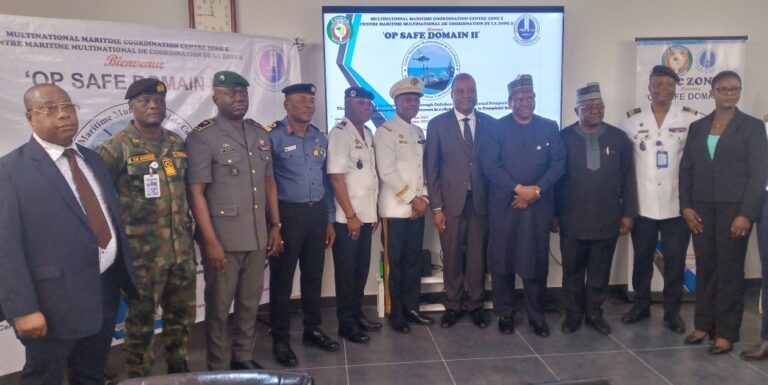
“Operation Safe Domain II” has been initiated by Nigeria, Benin Republic, Togo, and Niger Republic to combat piracy and marine crimes in the Gulf of Guinea.

Commodore Aniedi Ibok, Director of the Multinational Maritime Coordination Centre Zone E, spoke at the program’s opening and outlined how the program aims to improve maritime security through regional cooperation for development. According to News Agency of Nigeria, the event would take place at Cotonou Port Naval Base from September 11 to September 15.

The Gulf of Guinea was split into two regions in 2013 by the Yaoundé Code of Conduct, with one in the west overseen by the Regional Centre for Maritime Security in West Africa and the other in the east by the Regional Centre for Maritime Security in Central Africa.

In 2014, the maritime zones E, F, and G were formed by the ECOWAS Integrated Maritime Strategy. Zone E, established earlier as a pilot experiment, led to the construction of subsequent zones.

According to Ibok, the goal of the Joint Maritime Operations and Patrols is to maintain continuous, coordinated, and joint control over Zone E for maritime safety and security. He went on to say that the operation is supported by ECOWAS and Member States of Zone E because of the prevalence of illegal maritime activity in the Gulf of Guinea and West African waterways.

“These security issues jeopardize the zone’s economic growth while putting local coastal communities’ and sailors’ overall way of life under peril.

Therefore, he continued, “the operation will aid in defeating the adversary in whatever form they may appear.”

Ibok claims that the goals of the patrols and joint operations are to review the SOPs, make the maritime resources interoperable, and pool the resources of the state’s parties.

In order to safeguard the marine area of “Maritime Zone E,” he stated, “the objectives will also operationalise the right of hot pursuit as defined by the rules of engagement, multilateral and bilateral memoranda.”

The proposed plan, according to the director, will include information gathering and sharing, marine and aerial monitoring, as well as possible operational unit action.

Through operational patrols and a constant force presence at sea, this approach will improve safety and security in Zone E’s maritime domain.

Through the development of capacity in maritime law enforcement operations, intelligence sharing, and technical support, among other things, it will also increase cooperation between the navies of Zone E countries and other maritime players.

He declared, “This will undoubtedly lay the groundwork for additional joint and combined operations.”

Ibok recalled that during the implementation of “Op SAFE DOMAIN I” in November 2021, the Zone E navies provided comparable resources.

The improvement in obtaining and exchanging daily and weekly intelligence reports among member nations, marine stakeholders, and partners in the zone is among the benefits noted from the operation.

“The effective capture and prosecution of pirates on the Chinese fishing trawler FV HAILUFENG 11 and other vessels of significance, including STI SOHO.

He added, “The operation also resulted in thwarting the attacks and releasing TOMMI RITSCHER and MAXIMUS with their crew.”

Ibok noted Operation SAFE DOMAIN II’s goal of limiting the activities of pirates and marine criminals through normal maritime law enforcement operations. Three ships and a helicopter will be used in the operation, which will cover a 105,746 square nautical mile region of water.

“I am confident that member states, zones, and regional organizations will continue to support all initiatives to combat maritime crime while maintaining collaborative operations for the sub-region’s improvement.

For the benefit of everyone’s prosperity, he said, “maintaining the joint operation and patrols will enhance security of lives and property in the Gulf of Guinea, particularly in Zone E’s waters.”

Brig.-Gen. Fructueux Gbaguidi, the chief of the armed forces of Benin, appealed to the neighboring nations for assistance after claiming that the nation had been plagued by piracy.

“For this reason, the four nations have united to create a powerful force against piracy and marine crimes.

“Op Safe Domain I” was established in 2021 thanks to the cooperation of these nations, and “Op Safe Domain II” was launched in 2023 as a result of the operation’s success, according to Gbaguidi.

He expressed his gratitude to the governments of the four nations for cooperating to make the operation a success.

The Brigadier General stated, “This has allowed us to realize the goals of securing our waterways and checkmating the operations of pirates and sea crime in our maritime domain.

Captain Jean Le’on Olatoundji, the Chief of Naval Staff of the Benin Republic, emphasized the significance of international cooperation in the battle against piracy. According to him, “Op Safe Domain II” demonstrates the member nations’ combined resolve to fight the problem of piracy in the maritime domain.

The CNS declared, “I am very confident in the crews’ abilities to successfully complete this noble mission.”

“The issue of sea blindness is gradually being eradicated from our minds,” Commodore Richard Shammah, Director of the Regional Maritime Security Coordination Centre for West Africa, said.

“Countries are increasingly more conscious of the sea’s significant economic contribution to their varied economies.

So, in order for us to enjoy economic development at sea, the maritime domain must be safe and secure.

“This operation is essential for maintaining a sea line of communication and trade, and since no one nation can carry it out independently, cooperation is required.

The success of the collaboration’s goals and objectives is something I pray for since it will help our navies’ potential to grow, he said.

Ondo residents want Akeredolu to complete road project

0

Ondo State’s Akure South Local Government Area’s Oda Community residents have urged the state government to move quickly with the construction of the community road.

The people bemoaned the road’s delayed progress, which they claimed had begun more than two years earlier, during the first term of the current governor, Rotimi Akeredolu.

It was learned that some settlements, including Pelebe, Ilekun, Weliweli, Ijigba, and Aye communities among others, are also impacted by the road’s bad condition.

Additionally, it was learned that despite the state government’s efforts to dualize a portion of the road, a longer stretch of more than five kilometers is still in disrepair.

Elijah Adesanya, a local resident, pleaded with the state government to fix the road as soon as possible since it was clogged with potholes and frequently became the scene of car accidents.

“It’s unfortunate that we’ve found ourselves in this situation,” he remarked. Every day, the road harms our cars. You need to take your car to the shop twice a week to get it fixed. We are unsure of the offenses in Oda that caused the government to desert us. I have no idea how we will manage until the schools start again.

“We are pleading with the governor to take notice of our cries and hasten the completion of the road. It is difficult for drivers here.

Another resident, Mr. Ayo Ajayi, claimed that the current dualization of the road was in dire need of urgent government action due to the poor condition of the road.

“We are pleading with the governor to give Oda Road his full attention and heal our misery. We belong to the state, and Oda deserves consideration. For the time being, if they know they can’t finish the road, they should patch the holes and make it passable.

However, the state’s commissioner for information and orientation, Mrs. Bamidele Ademola-Olateju, asserted that the Akeredolu-led administration will continue to work on all existing projects.

Tinubu’s special investigator faults CBN audited reports

0

Findings suggest that the Central Bank of Nigeria would be asked to retract its audited annual financial reports, which were published last month.

This followed the discovery of anomalies and abnormalities in the financial statements by a committee looking into the apex bank.

The CBN disclosed its financial statements for the years 2016 to 2022 in August, and a Special Investigator that President Bola Tinubu appointed is currently looking into the financial services industry regulator.

On July 28, Tinubu appointed Jim Obazee, a former CEO of the Financial Reporting Council of Nigeria, as a Special Investigator to look into the actions taken by the top bank while its governor, Godwin Emefiele, was on suspension.

The Special Investigator is also looking into FRC, the Nigerian National Petroleum Corporation Limited, and other government-owned businesses in addition to the CBN.

The President said that the action was a continuation of the government’s anti-corruption campaign.

The letter, dated July 28, 2023, stated that the administration was continuing the fight against corruption by appointing you as a Special Investigator to look into the CBN and Related Entities in accordance with the fundamental goals outlined in Section 15(5) of the Federal Republic of Nigeria 1999 (as amended). You must report right away to my office for this appointment, which will have immediate effect.

“The full terms of your engagement as Special Investigator shall be communicated to you in due course but require that you take immediate action to ensure the strengthening and probity of key GBEs, further stop leaks in the CBN and related GBEs, and provide a thorough report on public wealth currently held by corrupt individuals and establishments (whether private or public).

In order to complete this project, “you are to examine the CBN and connected entities utilizing a team that is appropriately experienced, professional, and capable, and to collaborate with pertinent security and anti-corruption agencies. A weekly update on the status of the project is what I can anticipate.

A copy of the President’s order suspending Godwin Emefiele as CBN Governor on June 9, 2023, was also annexed.

To conduct the inquiry, the CBN Special Investigator is collaborating with a group of forensic accountants, auditors, and accountants.

On Monday, it was learned that the CBN may be asked to retract its seven-year audited financial account reports (covering 2016 to 2022) due to claims that the data in the reports was incorrect and misleading.

According to numerous people familiar with the inquiry, the relevant agency (FRC) would soon be able to force the CBN to close the contentious financial accounts after receiving clearance from the president.

The CBN financial accounts were allegedly prepared using guidelines allegedly obtained from the FRC in a contentious manner, according to top sources close to the Special Investigator and his team. IFRS 9, which requires full disclosure of all financial transactions, was not used in the preparation of the CBN financial accounts.

It was also discovered that the CBN allegedly paid N401.75 million to the IFRS Academy for the rules that were applied to the accounts’ preparation.

“As a government institution, you are required to deposit all income you receive into a Treasury Single Account, from which the government will remove a certain proportion. Documents show that the N401 million that the CBN spent for the accounting standards between 2016 and 2022 went into the IFRS Academy account. According to a senior person familiar with the investigation who spoke on the condition of anonymity, the academy is a limited guarantee company established by the FRC to train people in IFRS accounting.

“The problem is that there was no intended funding for the rules used to prepare the CBN accounts between 2016 and 2022. Additionally, the FRC’s board is supposed to approve and post any accounting guidelines it issues on its website. These actions weren’t taken. The source continued, “IFRS 9 was being avoided in order to understate data.

Giving the FRC accounting guidelines to outside organizations was allegedly improper, according to several individuals involved in the probe who spoke to STATE.

It was discovered as a result that the Special Investigator team had made suggestions that the presidential approval be given to the FRC in order to direct the CBN to withhold the released yearly financial reports between 2016 and 2022.

“The team has also requested an opportunity to speak with the accountants’ auditors. According to the team conducting the inquiry, some of the information found in the CBN financial accounts cannot be trusted. The CBN would be asked to remove the accounts when the President gives his approval so that new ones can be prepared using the correct accounting standards and technique, according to a second official close to the team.

Investigations have shown that the Department of State Services may request an interview with Shuaibu Ahmed, the FRC’s executive secretary and chief executive officer, as well as several other senior employees.

Additionally, the Special Investigator and his group are anticipated to examine FRC officials regarding charges concerning the contentious accounting standards employed by the CBN, among other things.

As part of their ongoing investigation, the DSS has already questioned a few of the CBN’s deputy governors.

Additionally, it was learned that future court proceedings may uncover additional cases involving Emefiele.

On July 28, Tinubu gave the CBN Special Investigator instructions to collaborate with security and anti-corruption agencies to provide a thorough report on public assets currently held by corrupt people and organizations, both public and private.

The president’s investigation into the CBN, NNPCL, and other government business entities has divided economists and civil society organizations.

While some people backed the action, others had reservations, saying it might send the wrong message to the community of international and foreign investors.

The suspended CBN Governor, Godwin Emefiele, and other top government officials may have broken any laws or been accused of abusing their positions, according to several experts and organizations.

Muda Yusuf, the chief executive officer of the Centre for the Promotion of Private Enterprise, claimed that the investigation was required to determine whether any violations or abuses of authority had occurred.

“It is a new administration, and if there is any suspicion that the case has not been handled properly, the only way to learn the truth is through the regular audit and possibly a forensic audit,” he said. It fits in quite fine.

“The usual procedure is to conduct a forensic assessment to see whether there was any infringement or abuse of office if there is any indication of such. Before you can take any action against anybody, you must first gather the facts. What it is is that.

Professor Sheriffdeen Tella, an economist at Olabisi Onabanjo University in Ago-Iwoye, Ogun State, also backed the inquiry.

Any study is worthwhile, he declared. Investigation is required to ascertain the openness and accountability of their position and to confirm that they have been operating within the bounds of business etiquette. Therefore, there is absolutely nothing wrong with the investigation.

Prof. Bright Eregha, an economist from the Pan-Atlantic University School of Management and Social Sciences, suggested that the Federal Government may have requested the investigation because it believed the apex bank was not operating effectively or adhering to its mandate.

He stressed that the investigation would be expanded to include other government organizations, including the Nigerian National Petroleum Company Limited and other businesses, and that it would help restore trust in the system.

“The CBN ought to be an independent body, but as we can see from the previous administration, that independence was not really present insofar as the CBN governor was not involved in political matters,” Eregha added.

“We witnessed what took place in regards to his affiliation and actions. The redesign of the Naira is another concern. I believe that this government just believed that the CBN was not upholding the independence and purity of the central bank. They therefore felt the necessity to conduct further inquiries.

”Don’t forget that the CBN has provided significant financial support to numerous sectors in the past. I believe the present administration believed that an investigation was necessary before we could proceed.

“That probe looks at other financial institutions in addition to the CBN. Additionally, I believe that it will extend beyond financial institutions to organizations like the NNPC and other locations that we need to look into in order to reestablish some level of confidence in Nigeria.

Professor Akpan Ekpo, the chairman of the Foundation for Economic Research and Training, voiced concern that the top bank audit would give the wrong impression to potential investors.

But he insisted that the President might have had a rationale for launching the investigation.

He said, “My concern is that by making the central bank audit so public, we would send the incorrect signals to potential investors, particularly foreign investors, who will start to wonder whether our apex bank has significant issues. I see it that way.

“But as president, perhaps he is aware of information we are not. You send the wrong message about the economy’s direction and what will happen moving forward when you start questioning your apex bank. We already face difficulties in both recruiting investors and managing our foreign exchange reserve. It is getting smaller every day.

Ekpo expressed dissatisfaction with the special investigator’s selection, saying, “I don’t know him but I wish he had sent someone completely neutral.”

Debo Adeniran, the head of the Center for Anti-Corruption and Open Leadership, demanded that Obazee look into the illegality of the redesign of the naira note as well as the central bank’s suspended governor’s monetary policy. He added that if it is discovered that the policy’s implementation had political overtones, the former CBN boss should be charged with crimes against humanity.

“They should look into how the former governor of the CBN changed the monetary policy of Nigeria and the illegality that was committed when he didn’t do his homework before he changed the naira’s color,” said Adeniran. The naira doesn’t really have a problem, therefore we need to determine if he had legitimate reasons for altering the color of the currency or not. The issue might have been with the monetary policy he implemented.

“They should examine the monetary policy he implemented, and if there is any political undertone for its implementation or the changing of the naira’s color without following due process, then he should be seen to have committed a crime against humanity.

Auwal Rafsanjani, executive chairman of the Civil Society Legislative Advocacy Center, said the appointment demonstrated the laxity of government agencies like the National Assembly, which should ideally checkmate government activities. He added that anyone found to have stolen public funds should face legal action and be barred from holding public office.

“We applauded the attempt to recoup every penny stolen from every thief. Therefore, we are urging Bola Tinubu’s administration to make sure that everyone who has committed an offense is not only investigated but also barred from holding public office if there is any proof of looting or theft of public funds. We hope that no political bias or cover-up will be present during the investigation,” he said.

Nigeria needs N3b to prevent 3m children from becoming malnourished

0

Due to poor access to adequate nourishment and healthcare, children in Nigeria frequently experience abuse and exploitation as children. Kabiru was an optimistic child who grew up in a world of uncertainty and deprivation. Kabiru was supposed to be robust and strong, but his developing body and brain required all the nutrients, underlining the need for better nutrition and access to healthcare for kids like Kabiru.

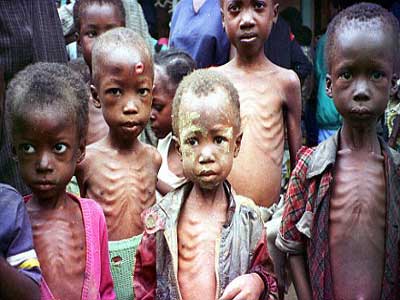
Pregnant women give their unborn children top priority by supplying them with necessary minerals like calcium and iron. However, when they consume little to no food, they have fewer nutrients to pass on to their offspring. Three million malnourished children are among the top three causes of childhood undernutrition in Nigeria, where 7.8 million pregnant women have anemia. Malnutrition is a serious issue that no nation can afford to ignore, according to UNICEF.

Malnutrition, according to the World Health Organization (WHO), slows economic growth, lowers productivity, and raises health care expenses, which can feed a vicious cycle of poverty and illness. Malnutrition is a significant problem in Nigeria, where it affects 35 million children under the age of five, leaving 12 million of them stunted, 3 million wasted, and 23.5 million anemic. 17.7 million people reported being hungry, with 1 million experiencing severe food insecurity, according to the 2023 Cadre Report. Only 1.4% less stunting occurs annually on average. However, with just N11 000 ($14 00), high-impact preventive actions might safeguard Nigeria’s future.

The socioeconomic benefits of nutrition investment are substantial and long-lasting, according to John A. Kufour, a former president of Ghana. Shouldn’t we make every effort to ensure that our children have a healthier future?

Nkeiru Enwelum, UNICEF’s nutrition officer, stressed the urgent need for investments and funds in nutrition in order to decrease malnutrition and enhance diet quality. According to Enwelum, failing to avoid childhood malnutrition, including stunting, wasting, and underweight, has long-lasting, irreversible effects on cognitive and physical development. Nigeria’s GDP in 2023 is expected to be N506.6 billion; failure to stop malnutrition leads in a loss of N76 billion, or 15% of the GDP.

A child’s dietary requirements are presently expected to cost N11,000, or roughly $5 per child year, according to Enwelum. With vitamin A supplementation costing $0.44, treatment costs are almost 10 times higher than they are now. She said that for N11,000.00, Nigerian children will have access to ORS for diarrhea, zinc, vitamin A, and other supplements. The new ORS supplement would also provide electrolytes.

Children must take vitamins like multi-micronutrient powder, have dewormed, take folic acid supplements, have their iron fortified, and have their salt iodized in order to avoid malnutrition.

“It costs N11,000 per child per year to deliver all these preventive treatments. When we conducted the analysis at this time last year, 14 dollars were worth N6,000 at the CBN rate. Currently, that same 14 dollars is equivalent to around N11, 000, but the price in dollars remains the same.

She noted that because treating acute malnutrition and severe acute malnutrition costs 131 dollars (N100,000), which were converted from global estimates, it is preferable to prevent than to treat.

“It is better to prevent problems than to fix them when creating an investment case. The agricultural sector carries out two interventions—iron fortification and salt iodization—through the health system.

“Consider that if you spend N100,000 and fail to stop the malnutrition of one child, you could save the lives of ten other children. In a way, the expense of treatment actually deprives 10 additional kids of the preventive care they might have received in the first place. Malnutrition must be avoided. It is basically necessary to treat malnutrition when it arises in order to save the child’s life.

“Cognitive and growth impacts may result if there is no treatment or prevention,” It may cause households to lose income. The mother is not working if the infant is ill. If you work from 9 to 5, you will take days off, and you won’t be able to focus if you are thinking about your child. Stress can occasionally cause you to become ill as well, which will decrease your income.

“Treating malnutrition through integrated management of acute malnutrition costs N100,000 ($130), which is 10 times the price of prevention. That indicates that therapy is exceedingly expensive and that not all of the three million hungry youngsters are receiving it. If that isn’t done, some of them will perish, and those that survive become stunted. We are aware of a connection between stunting, mental development, and cognitive effect, which will have an impact on the household’s loss of income, poor academic performance, and increased morbidity.

Governments were asked to increase financing for nutrition interventions and ensure prompt release of cash by UNICEF’s nutrition officer. “Government expenditure on nutrition is inadequate,” she remarked in Port Harcourt, Rivers state, during a two-day media forum on child malnutrition. The budgetary release does not adequately reflect the budgetary allocation at the national and subnational levels. We must ensure that there is both more money for nutrition and more nutrition for the money.

“Despite our reaffirmed commitment, we have not yet succeeded in prioritizing financial nutrition-specific and nutrition-sensitive activities. The integration of other economic sectors, including agriculture, the environment, and water resources, among others, into nutrition interventions must be ensured. By doing this, it will be ensured that every industry is contributing.

Additionally, there is a critical need to increase nutrition interventions across the nation, particularly at the subnational levels of the states and their local government areas (LGAs).

She spoke about many preventative measures, including community nutrition programs, vitamin A and zinc supplements, micronutrient powders, deworming, iron-folic acid supplementation, iron fortification of common foods, and salt iodization. She regretted that the government did not allocate enough money for nourishment.

“It’s like when your supervisor promises to pay you N150, 000 per month, but at the end of the month only gives you N20,000—less than 30% of what you had originally agreed upon. For nutrition, that is consistently true.

“We consistently receive less funding than the government budgeted because many programs are constrained, we are unable to successfully implement prevention interventions, and we are observing an increase in the rate of malnutrition, so we have to spend more on treatment,” said the researcher.

Despite the fact that departments have been set up to make funding distribution simple, she said that the budget line’s monies are not entirely allotted.

According to experts, however, malnutrition at all levels is anticipated to get worse with the current food insecurity across the country as a result of Nigeria’s rising multidimensional poverty level. It is urgent for the Nigerian government to consider significant investments in nutrition as it develops its next budget in the coming months to give the children a chance to breathe. Malnutrition in all its forms imposes high costs on the nation, both directly and indirectly, and it strains the already weak economy while having economic repercussions at the individual, household, and community levels.