Home Blog Page 165

ADC Explains Coalition’s Goal: To Stop Nigeria from Turning into a One-Party Nation

0

According to the African Democratic Congress (ADC), its members banded together to prevent President Bola Tinubu from establishing a one-party state in Nigeria.

Speaking to Bolaji Abdullahi, the ADC spokesperson emphasized that the party wishes to save Nigeria from contemporary civilian tyranny and pointed out that without the alliance, Nigeria’s democracy would have been in danger.

“We’ve been worrying about this since day one,” he stated. that the goal of the Tinubu administration is to make Nigeria a one-party state. This is the reason we first got together. It’s the government’s propensity to turn Nigeria into a one-party state. What do you believe would have happened to Nigeria’s democracy today if it weren’t for the coalition?

“The PDP, or People’s Democratic Party, is essentially extinct. The Labour Party is no longer stable. The ADC is currently the only opposition party that can be referred to as such in Nigeria. However, this supports our claims that the coalition is here to save Nigeria from this contemporary civilian dictatorship and its propensity to become a one-party state. Thus, I would have been justified. The decamping of the governors to the ruling party is a component of that greater goal. Nigeria now has an option, though.

“Nigeria will have to make the decision of whether or not to retain this government. And we are able to offer that substitute. And ADC exists for this reason. Therefore, it makes little difference if the ruling party or the governors are members of the same gang. Thus, we’re not at all concerned. Naturally, as you correctly pointed out, we are worried.

“We are worried that, for the first time, we are witnessing something that we never thought could occur in this nation. But remember, did the PDP act differently or in a different manner when it was at its strongest? Did we not witness a scenario in which nearly all members of the political elite were joining the PDP? Have we forgotten that approximately 20 years ago, the PDP’s national chairman declared that the party would rule for 60 years because they controlled nearly every state? Now, where is PDP? You’ll witness what happens to APC if they haven’t learned from their past.

SERAP Queries NNPCL Over Missing N22.3bn, $49.7m, £14.3m, and €5.2m Oil Money

0

The Nigerian National Petroleum Company Limited (NNPCL) Group Chief Executive Officer, Mr. Bayo Bashir Ojulari, has been asked by the Socio-Economic Rights and Accountability Project (SERAP) to give a thorough explanation of the purportedly unaccounted-for oil revenues of ₦22.3 billion, $49.7 million, £14.3 million, and €5.2 million.

The organization’s request comes after the Federation’s 2022 annual report, which purportedly revealed inconsistencies and unaccounted-for money in the company’s financial records.

According to SERAP, the yearly report was released on September 9, 2025.

The Independent Corrupt Practices and Other Related Offenses Commission (ICPC) and the Economic and Financial Crimes Commission (EFCC) should prosecute people responsible for the diverted or misused oil money, according to SERAP’s request that Ojulari identify them.

Additionally, SERAP encouraged him to ensure that the N22.3 billion, USD $49.7 million, £14.3 million, and €5.2 million in oil funds that were misappropriated or diverted are fully recovered and returned to the treasury as soon as possible.

“These grim allegations by the Auditor-General suggest a grave violation of the public trust, the Nigerian constitution 1999 [as amended], anticorruption laws, and the country’s international obligations,” the organization stated in a letter dated October 25, 2025, and signed by SERAP deputy director Kolawole Oluwadare.

The accusations have also undermined the nation’s economic progress, kept most Nigerians in poverty, and denied them opportunity.

The disappearance of oil money from the NNPCL has been reported for many years by the Auditor-General. The majority of these missing oil funds, which were supposed to fund vital public services for Nigerians, continue to fall on Nigerians.

Fighting the oil industry’s corruption epidemic will reduce poverty, increase Nigerians’ access to essential public goods and services, and strengthen the government’s capacity to uphold its anti-corruption and human rights commitments.

Because to the pervasive massive corruption, especially in the NNPCL, and the deeply ingrained culture of impunity for offenders, ordinary Nigerians have benefited very little from oil money despite the nation’s enormous oil resources.

“The misappropriated or diverted oil revenues are directly related to the institution’s ongoing failure to uphold the principles of transparency and accountability and represent a failure of NNPCL accountability more generally.”

The already unstable economy has been further harmed by the misappropriated or diverted oil earnings, which have also led to extremely high levels of government borrowing and deficit expenditure.

“It is likely that more money would have been allocated to the realization of Nigerians’ economic and social rights, such as increased spending on healthcare and education, if the NNPCL had accounted for and remitted the diverted or misappropriated oil money and returned it to the treasury.”

Additionally, the government would have borrowed less money.

We would appreciate it if the suggested actions were implemented within seven days of this letter’s receipt and/or publication. SERAP will take appropriate legal measures to force the NNPCL to comply with our requests in the public interest if we don’t hear back from you before then.

The Nigerian National Petroleum Corporation Limited (NNPCL) failed to account for roughly N22.3 billion, USD$49.7 million, £14.3 million, and €5.2 million in oil money, according to the Auditor General of the Federation’s 2022 audited report, which was released on September 9, 2025.

The Auditor General is concerned that the funds might have been “diverted.”

According to reports, the NNPCL spent more than N292 million [N292,609,972.29] in 2020 for a contract to build an accident and emergency facility along Airport Road, Abuja. However, after receiving payment, “the contractor has abandoned the contract and failed to execute the job.”

The auditor general is concerned that the contract funds might have been “diverted.” “Recovered from the contractor and remitted to the Treasury” is what he wants.

Additionally, the NNPCL allegedly spent more than GBP £14 million [£14,322,426.59] in 2021 “to repair its London office.” However, “there were no documents of any spending, and no evidence to show that the money was actually spent.”

The Auditor-General is concerned that “the money may have been misappropriated or diverted.” He wants the funds to be retrieved and sent to the Treasury.

Additionally, the NNPCL “irregularly paid” a contractor almost USD $22 million [$22,842,938.28] for transporting nine loads of crude oil. The NNPCL “failed to explain why the contractor received over $22 million for crude during the same period and why the amount owed to it from January to October 2019 was only $4,858,997.22.”

Lagos APC Blasts Peter Obi for Calling Yahoo Boys ‘Geniuses’

0

The Labour Party’s (LP) presidential candidate in the 2023 general election, Peter Obi, has come under heavy fire from the Lagos State branch of the All Progressives Congress (APC) for his recent remarks characterizing Internet scammers, also referred to as “Yahoo boys,” as “geniuses” who just need to be redirected.

The Lagos APC called Obi’s statement “morally reprehensible” and “unbecoming of someone who once sought to lead Nigeria” in a statement released on Sunday by party spokesperson, Seye Oladejo.

According to Oladejo, it is concerning and distressing that a former state governor and presidential contender could make remarks that seem to minimize criminal activity in a country that is already struggling with moral decline.

“Crime is not a brilliant thing. Yahoo-Yahoo is not a talent, but a social tragedy.
Obi’s moral character truly worries us; how can someone who consistently denounces corruption yet exalt cybercrime? Such inconsistencies show a perilous moral ambiguity that is inappropriate for a leader.

Additionally, the APC spokesperson called Obi’s stance a “reckless attempt at attention-seeking,” accusing him of using inflammatory remarks to gain political attention.

Reasoned leadership has been replaced with irresponsible statements due to his desperate need for attention. “Unchecked desperation ought to have a limit,” he continued.

Oladejo further claimed that Obi used “propaganda, misinformation, and emotional manipulation” to deceive a large number of young Nigerians during the 2023 elections. He warned that such speech could promote moral indiscipline and encouraged the LP candidate to apologize to the young people for his recent remarks.

The Lagos chapter insisted that leadership must be based on “values, integrity, and moral responsibility,” rejecting any attempt to romanticize or explain cybercrime while reaffirming the APC’s dedication to youth development and innovation.

Recall that on Saturday, Obi told attendees at a youth summit in Onitsha that many Internet scammers have intelligence and creativity that, with the right guidance, might be directed toward profitable endeavors.

He emphasized that “money is only a small fraction of true wealth” and advised young people to prioritize hard effort, character, and community development rather than the heedless pursuit of fortune.

Hardship Intensifies as Credit Crunch and Monetary Tightening Bite Harder

0

Due to the Central Bank of Nigeria’s (CBN) hawkish monetary policy and growing funding costs, Nigeria’s banking sector has continued to operate cautiously as deposit money banks (DMBs) reduced lending expansion.

According to experts, this has resulted in a delayed economic recovery because there is less credit available, borrowing is more expensive, and investment and consumption have significantly decreased.

They noted that consumers have less purchasing power and that firms are having difficulty operating, which has slowed economic activity and resulted in job cutbacks and increased unemployment.

They claim that although Nigeria’s economy is growing positively, with projections for 2025–2026 ranging from 3.9% to 4.4% due to services, the average citizen still views it as having slow activity because of high inflation and the fact that growth isn’t reaching the majority of the population.

In the first quarter of 2025, overall credit to the economy fell slightly by 0.2 percent quarter-over-quarter (q/q) to N59.1 trillion, the first quarterly contraction in recent times, according to the apex bank’s most recent Quarterly Statistical Bulletin.

The CBN’s persistent tightening strategy, which has driven interest rates to multiyear highs in an effort to control inflation and stabilize the naira, is reflected in the figures. Banks have taken a cautious stance, putting asset quality ahead of ambitious loan expansion, as lending margins shrink and risk costs increase.

An investment banker in Lagos stated, “This slowdown in credit growth is a natural reaction to tighter liquidity and higher yields on risk-free instruments.” “Banks are earning more from placing funds with the apex bank than from taking lending risks in a weak economy, as the CBN is mopping up liquidity through its open market operations and standing deposit facilities.”

The oil and gas industry continued to be the primary recipient of bank loans in spite of the overall contraction. The industry contributed N18.6 trillion, or 31.4 percent of all lending, a rise of 8.2 percent on a quarterly basis.

This sustained expansion is attributed by analysts to the capital-intensive character of the energy sector and the continuous restructuring of legacy risks due to the comparatively steady global oil prices.

According to a credit analyst headquartered in Lagos, “the energy sector continues to attract financing because of its perceived strategic importance and relatively secured cash flows.”

“In line with Nigeria’s energy transition objectives, banks are also assisting downstream participants and new entrants in gas processing and distribution.”

As disbursements increased by 8% every quarter, the banking and insurance sector became the second-largest recipient, taking in 14.2% of the total credit. The expansion is a reflection of banks’ increasing interest in non-real sector exposures, especially investments in capital market-related securities and financial institutions.

Analysts claim that this pattern highlights banks’ preference for shorter-term, safer, and higher-yielding assets, particularly in a setting where loan defaults in the real sector are increasing.

In essence, banks are relocating risk. Another expert stated that lending to organizations involved in finance and insurance provides higher profits without the hassles of handling credit risks associated with manufacturing or trade.

With a 13.1% share of overall lending, the manufacturing sector—which has historically been a major driver of credit growth—ranked third, but credit to the industry decreased by 9% on a quarterly basis. The decrease reflects the challenging business climate that manufacturers face, which includes fluctuating foreign exchange rates, expensive energy, and declining consumer demand.

Banks are reevaluating their exposures since manufacturers are finding it difficult to fulfill their payback obligations due to increased transportation costs and inflation from imports.

Many have reduced their emphasis on heavy industries and import-dependent areas in favor of more resilient subsectors like food processing and packaging.

According to a senior risk manager of a Tier-1 bank, “manufacturing is no longer a haven for lenders.” “We are now more picky, favoring customers with steady cash flows or export potential.”

Additionally, the CBN Bulletin reported significant drops in trade/general commerce (-18.8%) and credit to general services (-18%). Analysts attribute the declines to increasing borrowing costs, tighter lending standards, and lower working capital demand, all of which have reduced the profitability of small and medium-sized businesses (SMEs).

These two industries, which together account for a sizeable share of Nigeria’s workforce, are among the most severely impacted by high interest rates. Alternative financing options like supplier credit and fintech lending platforms have been popular among SMEs, despite the fact that they frequently have higher effective costs.

Economist Stephen Iloba stated in his presentation that “the commercial sector is feeling the pinch of liquidity constraints.” Trade credit growth is being negatively impacted by decreased inventory finance and sluggish consumer expenditure.

On the other hand, targeted lending under government-backed programs and revived interest in agro-processing projects drove an 11 percent quarterly increase in credit to the agriculture sector to N3.2 trillion. Despite providing 26.2% of GDP in Q2 2025, the sector’s share of total credit stayed low at 5.4%.

According to analysts, the discrepancy between agriculture’s economic significance and its ability to obtain foreign finance is a result of institutional flaws, such as insufficient collateral frameworks and pricing and weather risks that discourage banks.

“Agriculture is still underbanked,” a development finance specialist stated. “Banks will continue to allocate a disproportionately low share of credit to the sector without risk-sharing mechanisms and improved insurance coverage.”

Additionally, the report revealed that credit to the government increased by 5.7 percent on a quarterly basis to N3.1 trillion (a 5.2% share), underscoring the public sector’s persistent need for short-term liquidity to close fiscal imbalances. In a similar vein, loans to the ICT industry increased by 9% to N2.1 trillion, which is indicative of growing investments in fintech, broadband development, and digital infrastructure.

According to a digital economics specialist, “the ICT space remains a bright spot.” “Banks are funding fintech innovations, network upgrades, and data center projects that facilitate payment digitization—all of which have long-term growth potential.”

At N2.4 trillion (+0.1% q/q), credit to the construction sector remained essentially flat, which is consistent with the sluggish pace of capital projects and private real estate developments under high material costs and muted consumer demand. The picture of widespread caution in lending activity was completed when the “Others” category of loans dropped 2.2% to N5.4 trillion.

Overall, the data confirms that loan expansion is being hampered by Nigeria’s high interest rate environment and limited liquidity. The benchmark Monetary Policy Rate (MPR) set by the CBN, which was kept high for the majority of 2025, has greatly increased borrowing costs, deterring banks and borrowers alike.

A treasury dealer at one of the top five lenders stated, “The risk-adjusted return on government securities now rivals what banks can earn from loans.”

“In this situation, investing in CBN instruments or keeping cash becomes more appealing than lending to riskier clients,” the dealer continued.

Sowore’s Rearrest Was Premeditated, Says Lawyer Who Alleges Police Assault

0

Temitope Temokun, a human rights attorney, described how activist and publisher Omoyele Sowore was allegedly taken from the Kuje Magistrate Court grounds by almost 10 police personnel on Friday.

Temokun called the event “unnecessary and premeditated” in an interview with Channels Television’s Inside Sources on Sunday, claiming that people who attempted to record the arrest were assaulted.

Temokun, who described the incident, stated, “The officers brutalized those who attempted to capture the scene.” In addition, I was attacked and hurt.

The attorney clarified that within 30 minutes of the magistrate’s decision, the former African Action Congress (AAC) presidential candidate and other defendants detained during the #FreeNnamdiKanuNow rally had fulfilled their bail requirements.

“Yet officers stormed the court premises and bundled him into a vehicle,” Temokun claimed.

According to reports, the court had previously given Sowore ₦500,000 in bond with two sureties.

Temokun further accused the police of trying to transfer Sowore to Kuje Prison without the required authorization.

“They tried to mask the situation and patch it up, but the Kuje authorities initially rejected him,” the human rights attorney continued.

Sowore is scheduled to be arraigned on Monday, October 27, 2025, after being arrested again despite fulfilling the requirements of his release.

Disaster Averted as Fuel Tanker, Lexus SUV Crash in Lagos

0

A high-speed Lexus SUV and a fully filled gasoline truck collided in the vicinity of Berger Suya, near Mile 2, on Sunday, averting a huge disaster in Lagos. The collision caused a series of collisions that damaged other vehicles that were for sale.

The Lagos State Traffic Management Authority, or LASTMA, claims that a potentially disastrous explosion was avoided because to the prompt action of emergency personnel.

According to a statement released by Mr. Olalekan Bakare-Oki, General Manager of LASTMA, preliminary findings indicated that the Lexus SUV with registration number LSR 606 XH was traveling at a fast speed when it collided with the tanker carrying Premium Motor Spirit, PMS.

Bakare-Oki said, “The impact caused the tanker driver to lose control, forcing the vehicle to veer off the road and crash into multiple unregistered cars displayed for sale along the highway setback.”

He clarified that in order to protect people and property, LASTMA authorities stationed nearby quickly arrived at the incident, closed off the whole corridor, and limited vehicle traffic. The highly volatile fuel was safely transferred into another tanker thanks to the agency’s assistance.

The spilled fuel was flushed and neutralized by the Lagos State Fire and Rescue Service, who also reacted quickly, thus preventing an explosion. During the transloading and evacuation drills, security backup was provided by Trinity Police Division officers.

Bakare-Oki further stated that the tanker driver left the site right away following the collision, while the driver of the Lexus SUV was hurt and turned over to the police for more investigation.

He described the coordinated reaction as a “remarkable demonstration of professionalism, efficiency, and preparedness within Lagos State’s emergency management system,” praising the smooth cooperation between LASTMA, the fire department, and the police.

“Given the volatile nature of the product involved, the rapid containment of the incident prevented what could have been a major disaster,” he said.

Bakare-Oki warned that excessive speeding continues to be one of the main causes of preventable traffic accidents and asked drivers to abstain from reckless driving and strictly adhere to speed restrictions.

He reiterated LASTMA’s dedication to safeguarding people and property by proactive traffic control, ongoing public awareness campaigns, and swift emergency response.

“To ensure that road incidents throughout Lagos are promptly and safely managed, the agency will continue to strengthen its 24-hour operational framework and enhance collaboration with other emergency and security agencies,” the statement continued.

ADC Warns Governors’ Move to APC Could Lead to One-Party State

0

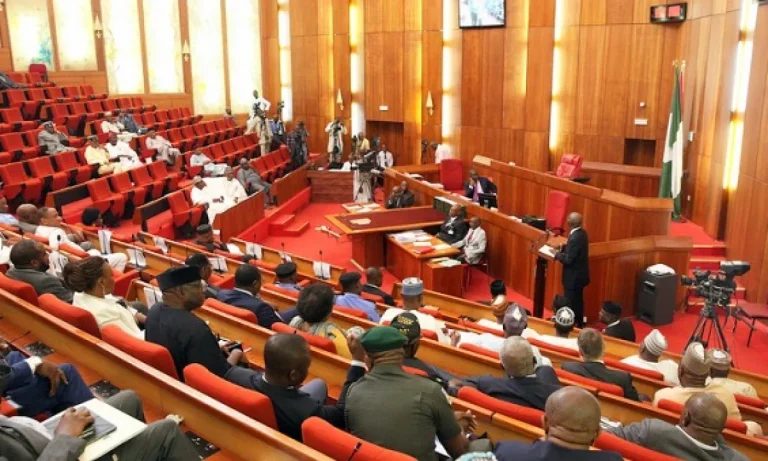
The African Democratic Congress (ADC) claims that recent governor defections to the ruling All Progressives Congress (APC) validate its warning of President Bola Ahmed Tinubu’s intention to turn the country into a one-party state.

However, the party stated that the 2027 election will be a direct conflict between the Nigerian people and President Tinubu and his group of APC governors. It also stated that the APC has defended its position about its plan to make Nigeria a one-party state.

The governors of Enugu and Bayelsa have betrayed their long-suffering people and joined the gang against Nigerians with their recent defections, according to a statement released by the ADC in Abuja on Wednesday by its National Publicity Secretary, Mallam Bolaji Abdullahi.

The party maintained that the opposition is unconcerned with the governors’ “political apostasy” since the 2027 elections will pit Nigerians against the ruling party, which has left the majority in extreme poverty and made life intolerable for the majority.

ADC stated: “The African Democratic Congress (ADC) has long warned that President Bola Tinubu is determined to turn Nigeria into a one-party state, no matter the cost to democracy or national stability. The recent defections of the governors of Enugu and Bayelsa states to the ruling All Progressives Congress (APC) validate this warning.”

Although it may appear that the APC has expanded its list of governors, in actuality, these governors have deserted their constituents in favor of the ruling party, which has made life difficult for the majority.

Nigerians are aware of the country’s current situation. They experience the APC’s shortcomings on a daily basis. Even people who formerly participated in APC campaigns or had the party’s insignia on their social media accounts now steer clear of affiliation with the party. Why? because Nigeria’s reputation in the world community has not improved under the Tinubu administration, which has also failed in the areas of insecurity, economic management, healthcare, social welfare, and corruption.

“Food prices continue to rise, jobs are nonexistent, and insecurity continues to choke every part of the country,” the party added, revealing that Nigerians are paying the price for these failures on a daily basis.

In a democracy, the only way for the people to escape their suffering after the ruling party has misled them is for the opposition to take up arms, put up alternative ideas, and lead the populace out of their plight.

Nigerians expected these opposition governors to do this. They abdicated instead. They also decided to join the massive plot against the Nigerian people, which is a historic political apostasy. They exiled their people for cowardice and other self-serving reasons rather than because they believed in it.

ADC stated that although the ruling party is still celebrating the governors’ defection, both the opposition coalition and it are happy that the distinction between those who are dedicated to preserving the nation and those who only wish to board the gravy train has been made even more obvious.

“The people can see, and they are waiting,” it continued. President Tinubu and his group of APC governors will face off against the Nigerian people in 2027.

Those Who Alleged I Backed APC Are Now Joining — Wike

0

Nyesom Wike, the Minister of the Federal Capital Territory (FCT), has blasted his detractors inside the Peoples Democratic Party (PDP), claiming that some who had previously accused him of being an employee of the All Progressives Congress (APC) had since joined the ruling party.

Wike acknowledged his pleasure with recent political alignments while speaking on Wednesday at the flag-off of a road project in Abuja. He also hinted that he will soon give Nigerians a detailed update on current happenings.

“I’m thrilled, but I’ll be speaking to Nigerians soon,” Wike stated. “I have been observing social media and television every day. Those who said that I was working for the APC and that I wanted to subvert their party (the PDP) are now all members of the APC. That means they should give me credit for working toward their goal if it is true. Therefore, I deserve praise for my excellent work on their behalf.

The FCT minister, a former PDP governor of Rivers State for two terms, stated that politics calls for maturity and prudence while emphasizing that he is still committed to his responsibilities in the FCT.

“I have stated that politics is for the developed. Politics requires extreme caution,” he continued.

Wike’s comments were made in the midst of several high-profile PDP to APC resignations.

Bayelsa State Governor Douye Diri announced his departure from the PDP on Wednesday, while Enugu State Governor Peter Mbah formally joined the APC on Tuesday.

Dele Momodu Warns: 2027 Presidential Race Turning Into an Ethnic Battle

0

The 2027 presidential election, according to Dele Momodu, a member of the opposition coalition, is an ethnic race.

He claimed that the only people who could cast opposition ballots were Mohammed Sanusi, Kano Emir, Nasir El-Rufai, Rabiu Kwankwaso, Aminu Tambuwal, and former Vice President Atiku Abubakar.

Adding that he is a Democrat and does not fear robust electoral competition, he stated that elections are a game of numbers.

All efforts to make Nigeria a one-party state should be opposed, Momodu stated in a statement via 𝕏.

El-Rufai, Tambuwal, Kwankwaso, Atiku, and possibly Emir Sanusi (should he choose to leave his status as a monarch to enter politics) are the only candidates who can garner votes for the opposition in the 2027 presidential election, he said.

Since the main opposition groupings can only confirm popularity by contest or consensus, the Southern candidates should not be disqualified as long as they are prepared for a primary.

“Everything should be done to prevent a monarchical or one-party state.”

In order to confront President Bola Tinubu in the 2027 presidential election, Momodu also called on opposition parties to band together and use what he called the “ethnic and religious cards.”

He said that the current wave of PDP governors leaving the party, including as Peter Mbah of Enugu and Douye Diri of Bayelsa, had further cemented the ruling All Progressives Congress’s (APC) hold.

He asserts that Nigeria is perilously near to becoming a one-party state as the APC already controls both the legislative and executive branches.

Super Eagles Set to Face Possible Cancellation of Venezuela and Colombia Matches

0

After the Super Eagles of Nigeria qualified for the 2026 FIFA World Cup playoffs, their scheduled international friendlies against Venezuela and Colombia might not go on.

After defeating the Benin Republic’s Cheetahs 4-0 on Tuesday, the club reportedly secured their spot in the playoffs.

The Super Eagles were supposed to play Venezuela on November 14 and then play Colombia in a friendly four days later. But now that Nigeria is getting ready to take on more difficult opposition in the playoffs, both games might potentially be canceled.

According to the most recent schedule, Éric Chelle’s team will play Gabon on Thursday, November 13 in the playoff semi-final. The victor of Cameroon and DR Congo will face the Super Eagles in the championship game if they overcome the Panthers.

Nigeria Football Federation officials are anticipated to make an official announcement shortly to clarify whether the friendly will proceed or be canceled so that the team may concentrate entirely on the playoff campaign.

It has been claimed that Watford has withdrawn from negotiations to re-sign Emmanuel Dennis, a forward from Nigeria.

After mutually agreeing to leave Nottingham Forest in August, the 27-year-old has been without a club. In recent weeks, he has been training with Watford in the hopes of signing a deal with the Championship team.

Watford reportedly had a change of heart after reportedly being prepared to offer Dennis an 18-month contract.

The Hornets may reevaluate the move when the transfer window reopens in January, according to The Watford Observer.

Watford supporters are familiar with Dennis because he played with the team in 2021–2022, then returned on loan in January 2024.