Home Blog Page 1643

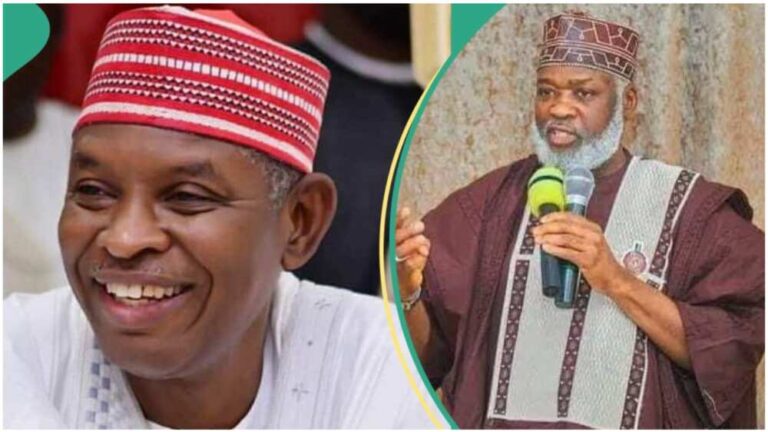
Appeal Court seeking correction to Kano Governorship Election Judgment Copy

0

The Certified True Copy of the Court of Appeal’s verdict has allegedly been returned for revision by attorneys engaged in the Kano State gubernatorial election case.

This most recent event follows the issuance by the court of a certified true copy of the ruling that seemed to support the appellant, Governor Kabir Yusuf of the New Nigerian People’s Party (NNPP).

Delivered on November 17, the first judgment upheld the Kano Governorship Election Tribunal’s decision to dismiss Governor Yusuf. However, subsequent events indicate that the court ruled in favor of the NNPC candidate, directing the All Progressives Congress (APC) to pay N1 million to Governor Yusuf.

Law scholar and former National Human Rights Commission (NHRC) Chairman Prof. Chidi Odinkalu voiced concern over the court’s inconsistent ruling, casting doubt on the fairness of the legal system in Nigeria.

People sometimes ask how the crookedness of the Nigerian judiciary can be explained. As you can see, the Court of Appeal decided every question “in favour of the appellant & against the 1st Respondent” in the Kano gubernatorial case. Nevertheless, it determined that the appeal lacked substance and could be rejected. Describe!” as expressed by Odinkalu on X (previously Twitter).

Read Also: Gbajabiamila presents solution to curbing terrorism in West Africa

According to sources, the court has just asked the attorneys representing the parties to return the ruling for “correction,” which is a further turn of events. It appears that the court is trying to revise the ruling after the fact, as Odinkalu insists that this action is not covered by the Slip Rule.

According to the record, Odinkalu said, “This is judicial corruption.”

When Governor Yusuf’s candidacy was found to be in violation of the electoral law, the Kano Governorship Election Petition Tribunal first dismissed him in September.

APC criticizes PDP, Atiku for their attacks on judiciary

0

Following a string of unfavorable court rulings following the general elections, the Peoples Democratic Party (PDP) and its presidential candidate in 2023, Alhaji Atiku Abubakar, have come under fire from the ruling All Progressives Congress (APC) for what it called unjustified attacks on the Nigerian judiciary.

The APC claimed that Atiku and the PDP were “being haunted by the ghost of their inglorious past” in response to remarks attributed to them over recent rulings that overturned some of the electoral triumphs reported by opposition parties.

The APC mocked the opposition for what it claimed were unfounded claims that the judiciary was under pressure from a make-believe committee established to ensure judicial outcomes in favor of the ruling party, in a statement released on Tuesday in Abuja by Felix Morka, the party’s national publicity secretary.

Read Also: Independent observers applaud President Tinubu, CDS for peaceful off-season elections in Kogi, Imo, Bayelsa

Morka declared, “The PDP have escalated their disrespectful and reckless assault on our legal system to a completely new and unacceptable level.”
The progressive party we represent is fully committed to upholding the long-standing, essential constitutional principles of the separation of powers and the independence of the judiciary.The PDP is devoid of these principles, and regrettably, they are unable to see a ruling party that operates in a manner that is dissimilar to its corrupt, vicious, and lawless past self.

“The PDP’s enduring dishonour and betrayal of the rule of law and constitutional democracy should not be associated with the APC, as the PDP is not it.”

Breaking: Former CBN Governor Emefiele granted N300m bail

0

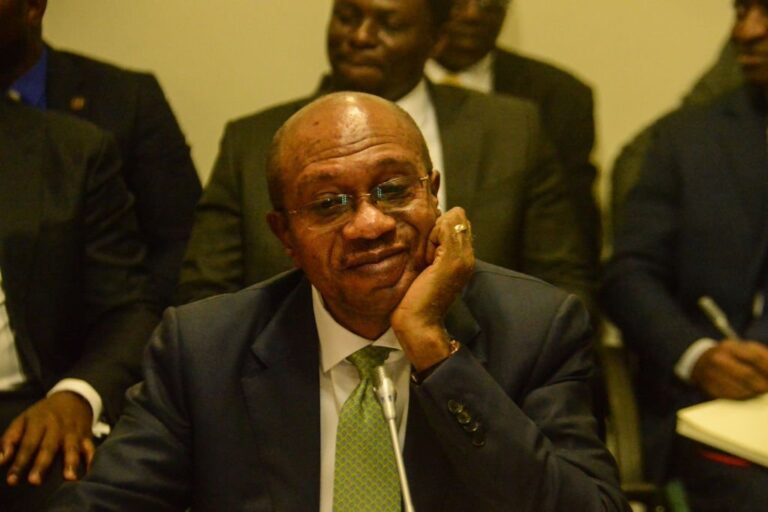
Bail in the amount of N300 million has been granted to Mr. Godwin Emefiele, the former governor of the Central Bank, along with two sureties in an equivalent amount.

On Wednesday, the Federal Capital Territory High Court in Abuja’s Justice Hamza Muazu allowed this.

The homes in the Maitama District, an upscale neighborhood in Abuja, must be owned by the sureties with certificates of occupancy.
Emefiele’s bail requirements include his having to stay inside the Abuja Municipal Council and giving up all of his travel documents to the court registrar.

Read Also: 100 Pro- Democracy Groups in Nigeria Fault Appeal Court Judgement Sacking Kano Gov

This most recent bail award came four months after he was granted N20 million in bail by the Federal High Court in Lagos.

Emefiele is being accused of corruption and financial misconduct. The allegations are related to his tenure as the Governor of the Central Bank of Nigeria (CBN).

More will come.

Reps approve N26trn budget with oil benchmark of $73.96 for fiscal year 2024

0

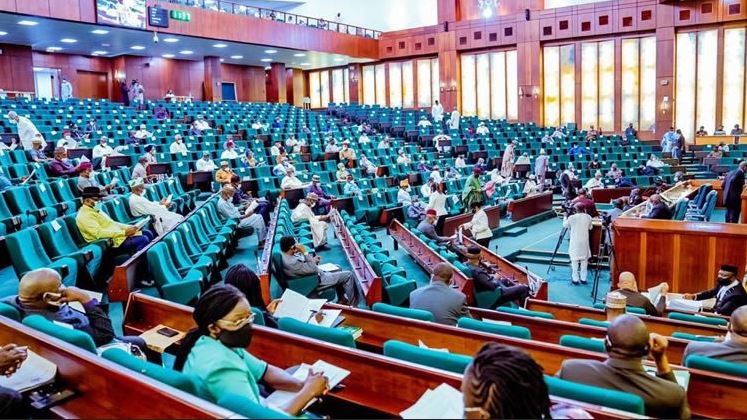
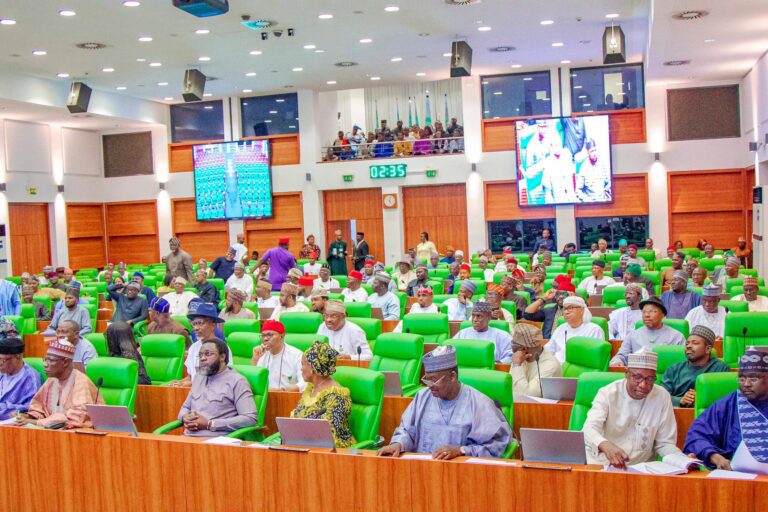
The planned N26 trillion in spending and the $73.76 oil benchmark for the 2024 fiscal year, as contained in the 2024–2026 Medium Term Expenditure Framework (MTEF) and Fiscal Strategy Paper (FSP), were approved by the House of Representatives on Tuesday.
After the recommendations of the joint Committees on Finance, National Planning and Economic Development and Aid, Loans and Debt Management were adopted, the resolution was passed, as stated by Hon. James Abiodun Faleke.
The House approved the suggested oil benchmark prices of $73.96, $73.76, and $69.90 per barrel for 2024, 2025, and 2026, respectively, after giving careful consideration to the proposals made by the Ministries, Departments, and Agencies (MDAs).
The Nigerian National Petroleum Corporation Limited (NNPCL) must certify actual and verifiable deliveries before the House can approve daily crude oil output of 1.78 Mbps, 1.80 Mbps, and 1.81 Mbps for the years 2024, 2025, and 2026, respectively.
Along with approving the Executive’s recommended Exchange Rates of N700, N665.61, and N669.79 to US$1 for the years 2024–2026, the parliamentarians cautioned that the Federal Government should continue its strong efforts to improve domestic production (oil and non-oil) in order to support the growth of the foreign reserve.
The MPs also asked the federal government to make sure that “all locally produced goods should be categorically prohibited from being imported and customs tariffs adjusted accordingly.”
They also gave the Central Bank of Nigeria (CBN) the responsibility of guaranteeing that banks have access to foreign exchange so they can pay importers and other customers and avoid using the parallel market.
With the Federal Government responding with budgetary measures to boost the economy through large investments in SMEs, infrastructure, and the agricultural sector, parliamentarians authorized GDP growth rates of 3.76%, 4.22%, and 4.78% for 2024, 2025, and 2026.
Inflation rates of 21.40% in 2024, 20.30% in 2025, and 18.60% in 2026 were likewise authorized by the House.
During his remarks on the report’s summary, Hon. Faleke noted that the proposed spending of N26 trillion, of which N16.9 trillion was retained, would result in new borrowings of N7.8 trillion (including borrowing from abroad and domestic sources), a 49% debt service to revenue ratio, N1.2 trillion in pension, gratuities, and retiree benefits, and a N9 trillion fiscal deficit (including GOEs) if the framework for revenues and expenses is followed.
If the relevant National Assembly Committees monitor revenue effectively and exercise oversight, the predicted N16.96 trillion in revenues to the Federal Government for the 2024 fiscal year can be achieved.
He claims that the proposed fiscal deficits of N9.048 trillion, N10.02, and N11.48 for the fiscal years 2024, 2025, and 2026 are, respectively, 22%, 13.6%, and 1% less than the N11.6 trillion fiscal deficit for 2023.
In order to reduce deficit financing in 2024, the government is proposing to decrease funding from domestic borrowing and multilateral and bilateral project-tied loans and boost funding from privatization revenues and foreign borrowing.
The speaker additionally observed that the Federal Government’s dedication to gradually restructuring its debt portfolio in order to attain a balanced ratio of domestic to external debt is apparent in the 2024-2026 MTEF and FSP.
He regretted that a sizable portion of the revenue-generating agencies under the federal government were spending money carelessly, frivolously, and above budget.
The absence of punitive sanctions in the Fiscal Responsibility Act of 2007 has led to the majority of Revenue Agencies violating the Act, as noted by Hon. Faleke.
While acknowledging that the majority of agencies do not adhere to financial reporting standards, Hon. Faleke claimed that certain RGAs were involved in joint ventures, particularly in the oil and gas industry where Forward Sales Agreements are signed in exchange for upfront payments for future product delivery without the National Assembly’s intervention. The Federal Government was bound by a staggering $40 million Take Or Pay agreement each month by power purchase agreements signed by NBET and NDPHC in the power sector, despite the agencies’ full knowledge of the nation’s limitations in fulfilling its obligations under the agreements. This trend was also noted in other industries.

Read Also: Service Chiefs, IGP appear before Reps for sectoral debate on closed-door security

He contends that these kinds of agreements expose the nation to enormous contingent liabilities; the government’s contingent liabilities are projected to be N6.9 trillion in 2024 alone, and N7 trillion in 2025 and 2026, respectively. The country is also vulnerable to international arbitrations.
The lawmakers made the following observation while discussing the contingent liabilities table: most of these agreements were never brought before the National Assembly for consideration, so they were governed by international laws or legal systems. The above contingent liabilities, they noted, are the result of various agreements signed on behalf of the Federal Government of Nigeria by various GOEs/MDAs and some states but guaranteed by the Federal Government of Nigeria.
Information and communication technology (ICT) is not being used properly by several organizations, especially those in charge of collecting stamp duties, according to observations made by the parliamentarians.
The Committee also bemoaned the fact that NIPOST was the parent company of NIPOST Properties Limited and NIPOST Transport and Logistics Limited, but that NIPOST as an organization did not get any shares from the creation of these subsidiaries, which were owned by private people.
He noted that, in 2022, the Ministry of Finance released N10 billion for restructuring and recapitalization, but no matching outcome was seen.
The House further stated that the projected tax waivers to be given in 2024 are N 2.7 trillion, N 3.2 trillion, and N 3.8 trillion, despite the deficit budget. These make for 31%, 32%, and 30% of the overall budget deficit in 2024, 2025, and 2026, respectively.
Gbajabiamila presents solution to curbing terrorism in West Africa

0

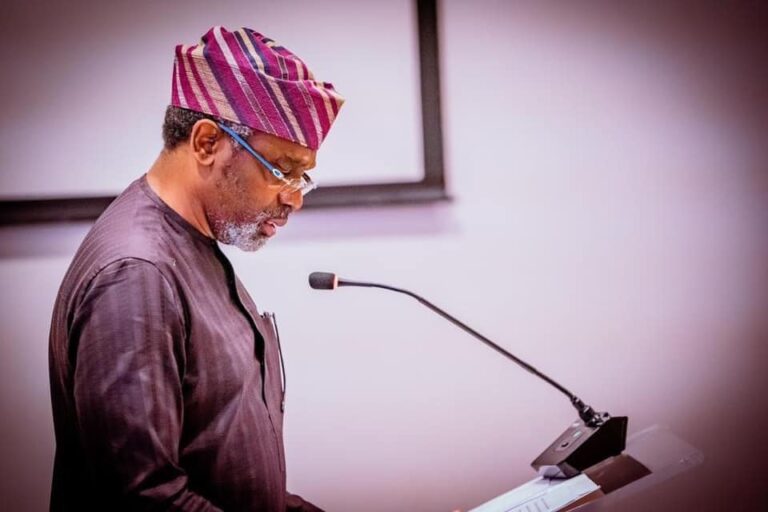
The Chief of Staff to President Bola Tinubu, Femi Gbajabiamila, said on Tuesday that terrorism could be defeated through effective international cooperation.

He implied that there is a global component to the security crisis when he said that the subregion of West Africa is crucial to winning the war.

During a speech titled “Empowering Nigerian Youths in the present-day economy” at the Yaba College of Technology’s convocation address in Lagos, the head of staff made this claim.

“There is an often overlooked international element to the myriad national security challenges in our country,” stated Gbajabiamila.

In order to address this, we must work more closely with our regional, global, and West African neighbors to track financial flows, exchange intelligence, and make sure that those who commit crimes and incite violence, wherever they may be located, are held accountable for their actions eventually.In order to guarantee a safer and more prosperous environment for everybody, this administration’s national security agenda depends on this collaboration.

Read Also: Service Chiefs, IGP appear before Reps for sectoral debate on closed-door security

Gbajabiamila said that resolving the existing issues pertaining to national security is a primary concern in an attempt to make Nigeria an attractive location for the investments necessary to support national development and empower the youth.

The insurgency had made the entire country unsuitable for viable commercial ventures, he lamented, and instability had manifested itself in an alarmingly high rate of banditry.

We are aware that capital is cowardly and will not travel to an unpleasant place, according to Gbajabiamila. We also know that we will not be able to sustainably build the national economy as long as innovation and investment are concentrated in a small number of states or regions.

Nov 30: S’Court hears FG’s motion to extend life of old notes

0

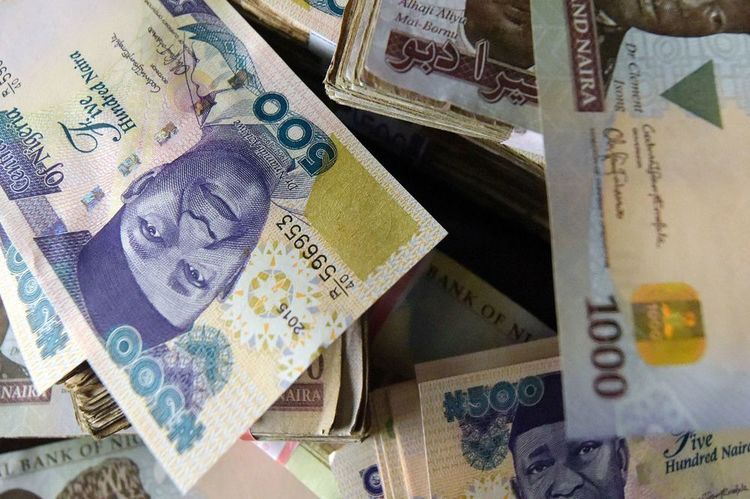
The Nation reports that the Federal Government has requested a review of the Supreme Court’s ruling that the old N200, N500, and N1000 should remain legal money until December 31, 2023.

The government is requesting that the Supreme Court revoke its ruling from March 3 on the legal tender status of both new and old Naira notes until December 31.

The Nigerian Central Bank was ordered by the highest court to stop implementing the deadline for using old notes on March 3.

Read Also: Senate moves to require INEC to upload full election results online

The seven-member panel of the supreme court criticized the CBN’s policy, citing issues with its timing and execution.
This is a response to a lawsuit filed by the state governments of Zamfara, Kogi, and Kaduna, contesting the policy’s execution.

Later, as co-plaintiffs, thirteen more states entered the lawsuit.

Nevertheless, the newspaper claims that the FG is requesting in a new lawsuit that the supreme court for the revised notes and the original notes to coexist until the necessary institutions are established.

The article states that the petition would be heard by the apex court on November 30.

In the recent application made by Lateef Fagbemi (SAN), the Attorney-General of the Federation, the Federal Government is requesting the following relief: “On March 3, 2023, this Honorable Court delivered an order to the effect that the old 200, 500, and 1,000 naira notes should be legal tender until December 31, 2023, reviewing or varying its consequential order contained in the judgment in Suit No. SC/CV/162/2023.”

“This Honorable Court’s order modifying its subsequent order included the March 3 ruling that the previous 200, 500, and 1,000 Naira notes should be legal money until December 31, 2023.

This Honourable Court hereby reviews and/or modifies the aforementioned consequential order to read as follows: An order that the old 200, 500, and 1,000 note/currency versions will remain legal tender alongside the new or redesigned versions until the government decides to stop the circulation of the old versions… after consulting with important stakeholders and establishing the necessary infrastructure.

“And for any further orders this Honorable Court may think appropriate under the circumstances.”

The CBN Governor, Dr. Olayemi Cardoso, has stated that some Nigerians have begun hoarding the impacted old and new notes in anticipation of the December 31 deadline, according to an affidavit submitted by Assistant Chief State Counsel Terhemba Agbe in support of the Motion on Notice.

100 Pro- Democracy Groups in Nigeria Fault Appeal Court Judgement Sacking Kano Gov

0


…. call on Supreme Court to restore popular mandate of the masses


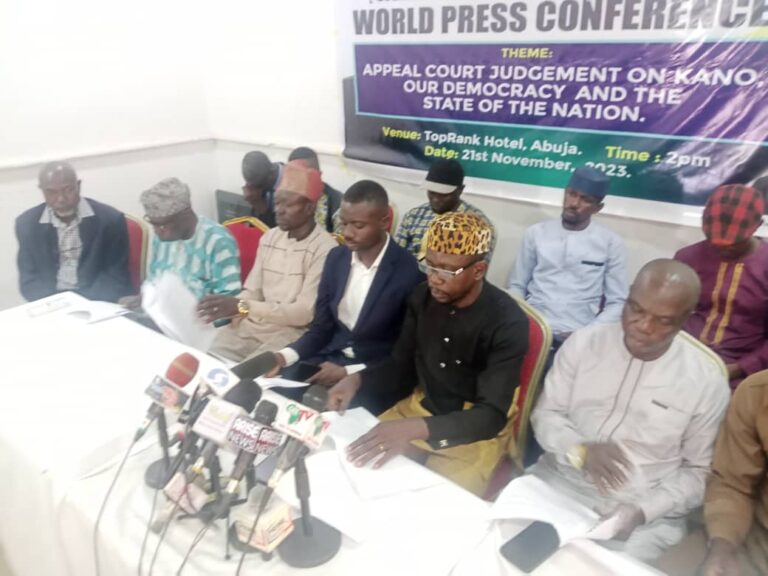
A Coalition Of 100 Civil Society Organizations and Pro-democracy Organizations In Nigeria, has faulted the judgement of the Court of Appeal that sacked the governor of Kano state, Alhaji Abba Yusuf.


Last week, the Court, in its judgement in Abuja, ordered the governor to vacate office amd declared the candidate of the All Progressivea Congress, APC, Nasir Yusuf Gawuna as the winner of the election.


The coalition,  in Abuja, said the judgement is against principle, of democracy upon which our nation was founded.


Francis  Obinna, Convener of the coalition  called on the Supreme Court to set aside the judgement of the appeal court and restore the mandate of the people of Kano state freely given to Governor Yusuf.


The group said, “With a sober heart, we confidently say it that, “with this ruling, the Court of Appeal’s decision has opened the door to political interference in our elections, and has undermined the confidence of the Nigerian people in our judicial system. We cannot allow this to happen.


“The Supreme Court, as the highest court in the land, has the responsibility to uphold justice and ensure that the rule of law prevails. In the case of the Vice President, Kashim Shettima, the Supreme Court ruled on a similar pre-election matter, providing a clear and decisive judgment. It is puzzling and deeply concerning that the Court of Appeal has deviated from this precedent in the case of Governor Abba Yusuf.


“The people of Nigeria have placed their trust in the judiciary to safeguard their rights and ensure justice is served. When this trust is undermined, it erodes the very foundation of our democracy. We cannot allow such inconsistencies and contradictions to persist within our legal system.


“It Is imperative for us to raise our voices and demand accountability. We therefore call for a thorough and transparent review of the Court of Appeal’s judgment in the Kano Governorship case. We urge the Supreme Court to intervene once again and provide clarity on this matter, ensuring that justice prevails.


“The Implications of this judgment extend far beyond the boundaries of Kano State. It sets a dangerous precedent that could potentially undermine the integrity of future elections and erode public trust in our democratic processes. We cannot allow this to happen.


“We wish to categorically state it to everyone that the Court of Appeal’s judgment is not only legally flawed but also morally reprehensible. It demonstrates a disregard for the rule of law and a willingness to subvert the will of the people.

“The people of Kano State have suffered enough. They have endured years of hardship and deprivation. They deserve a stable and competent government that will focus on addressing their needs. “

Service Chiefs, IGP appear before Reps for sectoral debate on closed-door security

0

The service chiefs, including the Inspector General of Police (IGP), Kayode Egbetokun, have testified before the House of Representatives.

They entered the chamber about 11:26 a.m. for the security sectoral debate, which would be place behind closed doors.

General Christopher Musa is the Chief of Defence Staff (CDS), Lt-General Taoreed Lagbaja is the Chief of Army Staff (COAS), Air Marshal Hassan Abubakar is the Chief of Air Staff (CAS), and Vice Admiral Emmanuel Ogalla is the Chief of Naval Staff (CNS).

Last Thursday, the House chastised the security heads for sending representatives who were rejected.

Senate moves to require INEC to upload full election results online

0

The Senate Committee on election Matters has unveiled revolutionary recommendations to reform Nigeria’s voting procedures in order to improve openness and efficiency in the country’s election process.

The committee, led by Senator Sharafadeen Alli, revealed plans to make the Independent National Electoral Commission (INEC) release election results online a requirement.

Senator Alli stated this on Tuesday, November 21, 2023, in an interview with Channels Television.

Currently, the law does not require this activity, but the committee is working hard to change the law to make this crucial step mandatory.

Senator Alli reiterated, “Under current law, INEC is not required to upload results; the court has said so.” But it will become essential in the future.”

The committee has proposed a full package of electoral reforms, in addition to the mandate for online result posting.

One significant plan seeks to settle all pre-election squabbles before election day. They also call for the completion of election petitions prior to the holding of swearing-in ceremonies, potentially reducing the necessity for off-cycle elections due to unresolved disagreements.

Furthermore, the committee is proposing for a strict timeline for filing and resolving election petitions in order to avoid unneeded political turbulence.

Read Also: FG requests additional funds to combat tropical diseases

Senator Alli emphasized the significance of improving election technology, even acknowledging previous technological setbacks.

He cited previous frustrations with the IReV system and promised that INEC will make significant changes in this area.

He stated that the emphasis is on developing dependable, efficient, and trustworthy technical methods in order to restore public trust in the electoral process in Nigeria.

These proposed reforms, he believes, have the potential to alter Nigeria’s electoral environment by encouraging better accountability, transparency, and public trust in the voting system.

Independent observers applaud President Tinubu, CDS for peaceful off-season elections in Kogi, Imo, Bayelsa

0

Independent observers laud President Tinubu, CDS for peceful conduct of off-season elections in Kogi, Imo and Bayelsa states

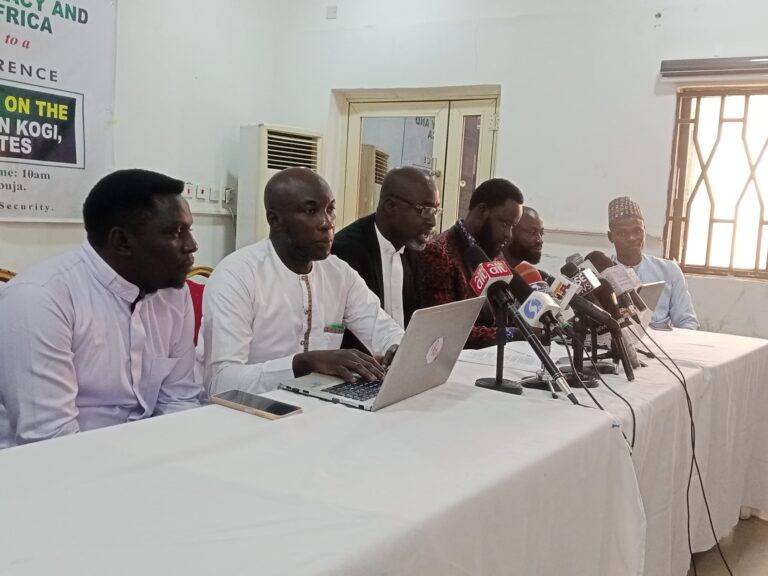
An International observer group, the Coalition for Democracy and Development in Africa has commended the role of the Military in the conduct of the recently conducted governorship elections in Kogi, Bayelsa and Imo states.

The group also commended President Bola Tinubu for creating an enabling environment for democracy to thrive in the country.

At a press conference in Abuja, Tuesday,Dr. Thomas Uzah, Executive Director of the coalition in its preliminary report on the elections said election observers interacted closely with state stakeholders on their expectations at the polls after they were divided into cells to cover a reasonable number of wards and local government areas.

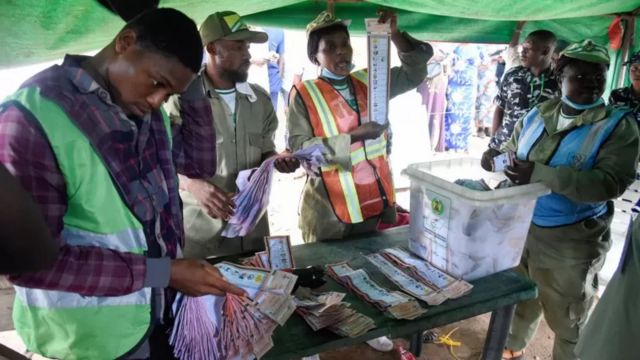
He said, “It was observed that there was a strong military presence in most of the wards and polling stations visited. They provided adequate cover to the electorates and INEC officials during and after the elections. Security operatives also provided sufficient security for the election materials and the states’ coalition centers before the elections’ commencement.

“There were pockets of issues in the states that saw the snatching of ballot boxes, disruption of the elections, and attempts to harass and intimidate perceived opponents by politicians and their associates.

“In most instances, the security operatives led by the military impressively neutralize these threats. It was observed that the police led security operations, and the military provided adequate cover.

“Military personnel deployed for election monitoring and safety were observed to be decorous and professional. There were a few instances where the military deployed force that resulted in injuries and loss of lives.

“However, this does not take away the fact that the deployment of force was in an attempt to protect the sanctity of the exercise. Kogi state topped the list, where political thugs attempted to snatch ballot boxes and disrupt the voting process.

“It was observed that the military provided adequate security at major entry and exit points of these states. The military conducted random stop-and-search exercises, and to a large extent, they prevented the influx of small arms and light weapons in the states during the conduct of the elections. Arrests were also effected, and the culprits were handed over to the police for prosecution.”

In its conlusion in the report, the CDDA said the Nigerian Military and other security agencies provided adequate security before, during, and after the elections.

According to the organisation, the military was professional in their conduct, which was commendable. “The conduct of the security agencies indicated a commitment to preserving democracy in Nigeria.

“The Defence Headquarters was also commendable in its supervision of the election operations. There were clear-cut communication channels that improved response time to security threats in the states”, he said.

The coalition commended the Chief of Defence Staff and other heads of security agencies for defending democracy through their actions and in-actions that led to the peaceful elections in Kogi, Imo, and Bayelsa states.