Home Blog Page 1600

JUSUN orders Osun judiciary staff to droop strike

0

The national leadership of the Judiciary Staff Union of Nigeria has suspended the over three months industrial action embarked upon by the Osun State chapter of the union.

The letter conveying the directive of the union to the state chapter dated March 4, 2024 and obtained in Osogbo on Tuesday, was addressed to the caretaker Committee Secretary of Osun JUSUN, Salam Saheed, and signed by M. Akwashiki, the acting General Secretary of the organisation.

JUSUN members in the state embarked on indefinite industrial action on November 22, 2023, after they were dispersed with teargas by the police in the premises of the State High Court in Osogbo.

The staff members protesting non payment of their wardrobe allowance and alleged high handedness of the state Chief Judge, Justice Adepele Ojo, had paralysed activities in the High Court as they shut entrance to the premises.

In the letter suspending the industrial action, the JUSUN acting national secretary said the decision was based on the Memorandum of Agreement signed by an official of the state government, the management of the High Court and representatives of the union.

It read partly, “I am directed to convey the decision of the National Working Committee

(NWC) of our great union led by the President, Marwan Adamu for the Osun State branch to suspend the ongoing industrial action.

“The decision was hinged on the Memorandum of Agreement signed between the JUSUN President, Honorable Attorney General and Commissioner of Justice, Osun State, and Honorable Chief Registrar, High Court of Justice, Osun State on the issues in contention.

“Therefore, suspending the action would allow for the Chief Judge of Osun State and Chairman, Judicial Service Commission (JSC) to summon JSC meeting to finalise other issues that has to do with staff regularisation.”

No giant deal accepting grains from Ukraine -FG

0

The Minister of Information and National Orientation, Mohammed Idris, said accepting grains from Ukraine does not make Nigeria a failed country.

Idris stated this at the Leadership Annual Conference and Award 2023 on Tuesday in Abuja.

Last week, Ukraine donated 25,000 tonnes of wheat as emergency food assistance to 1.3 million vulnerable, crisis-affected people in northeast Nigeria amidst rising inflation and food price spikes.

Many including, the Labour Party presidential candidate in the last year’s general elections, Peter Obi, described the gesture from a war-ravaged country as a “national disgrace” for Nigeria.

Reacting, the minister said it was a normal thing for countries to depend on one another for support.

He said, “Egypt gets about 60 per cent of its grains from Ukraine. The fact that Egypt gets about 60 per cent of its grains from Ukraine does not make it a failed state.

“The fact that we are having challenges at the moment does not make Nigeria a failed state.

“Therefore, accepting grains from Ukraine does not make Nigeria or Egypt failed countries. It is a normal thing, because countries exist to depend on one another.”

According to the minister, President Bola Tinubu was aware of the challenges bedeviling the country.

He said, “Nigerians voted for Tinubu with the deeper understanding and conviction that he has the capacity to turn things around for the better; and that is what he is doing.

“Some of the decisions he has taken were to ensure that Nigeria finds its place in the comity of nations.

“The decisions include removal of fuel subsidy and addressing the issue of foreign exchange and many others.

“In spite of the current challenges, the economic growth of Nigeria is on track and has continued to improve.”

He explained that fuel subsidy removal was a bold step in the right direction and urged Nigerians to support the president as the country would soon begin to reap the benefits.

Idris also noted that President Tinubu had demonstrated capacity and since his assumption of office, had “attracted more than 30 billion dollars in foreign investments into the country.

“He has not stopped at that. Just last week, President Tinubu went to Qatar to attract more businesses and investments into Nigeria.

“We are optimistic that soon, what we are passing through will be a thing of the past and Nigeria will be better.”

Airtel buys again 991,861 stocks from Citigroup

0

Airtel Africa has purchased 991.861 units of its shares of  $0.50 each on the London Stock Exchange from Citigroup Global Markets.

In corporate notices filed with the Nigerian Exchange Limited, the transactions took place on Friday and Monday.

Airtel Africa revealed plans for a $100m share buyback programme starting March 2024 as it announced its nine-month results ended 31 December 2023.

The share buy-back programme is expected to be phased over two tranches, with the first tranche commencing March 1 and anticipated to end on or before August 2024.  The first tranche will amount to a maximum of $50m.

The company said that the sole purpose of the buy-back programme is to reduce the capital of the Company. As such, all shares purchased under the buy-back programme will be cancelled.

Since the commencement of the share buy-back programme, the company has purchased 991,861 ordinary shares in aggregate, at a volume-weighted average price of £97.07 per ordinary unit.

Meanwhile, Airtel Africa reported a 99.6 per cent decline in its post-tax profit to $2m at the end of the nine months ended December 2023 from $523m at the end of the same period in 2022.

Providing insights into the loss, the firm said, “Profit after tax was $2m in the period, primarily impacted by significant foreign exchange headwinds, particularly the $330m exceptional loss after tax following the devaluation of the Nigerian naira in June 2023 and the Malawian kwacha in November 2023 after the structural changes in their respective FX markets.

“The Nigerian naira devalued further in Q3’24, resulting in a $140m derivative and foreign exchange losses net of tax, which is not treated as an exceptional item.”

In its nine-month results for the period ended December 31, 2023, filed with the Nigerian Exchange Limited on Thursday, the firm declared a 1.4 per cent moderation in its revenue to $3.86bn from $3.91bn in December 2022.

FG, AFDB open dialogue on coastal freeway investment

0


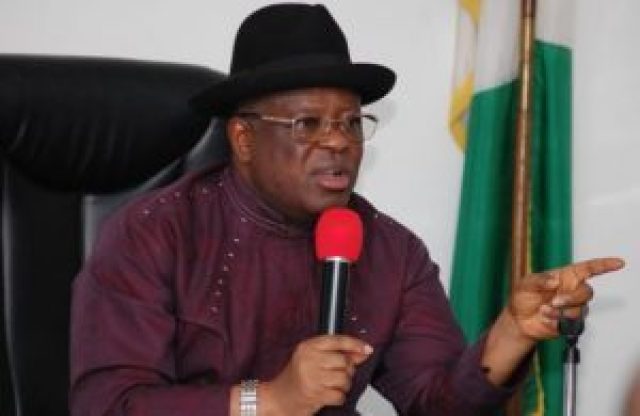
The Minister of Works, Dave Umahi, has opened a discussion with the African Development Bank on possible funding for the construction of some sections of the Coastal and Trans-Sahara Highways in parts of Nigeria.

The additional funding was the crux of dialogue between the minister and a delegation from the Africa Development Bank led by the Director, of Infrastructure and Urban Development, Mike Salawou held at the ministry headquarters on Tuesday in Abuja.

A statement by the Special Adviser on Media, Uchenna Orji, said the government was opening up opportunities for investments in infrastructure development along the coastal and trans-Sahara routes.

According to him, these options include the hospitality industry, tourism, agricultural production, estate, park, and industrial business


Umahi added that funding would be required to tackle the sections of the Coastal and Trans-Sahara Highways not yet constructed, awarded, or taken over by concessionaires under the Highway Development and Management Initiative.

This project, which the Honourable Minister said would be a measure to provide enduring infrastructure and industrialization along the corridors, is expected to carry a large network of paved highways that will create a good transport environment and trade routes for moving goods and services along the North-South corridors.

The statement read, “The Work Ministry has opened a discussion with the African Development Bank on possible funding for the construction of some sections of the Coastal and Trans- Sahara Highways in parts of Nigeria. The coastal road is 700 km. That is phase one and it is running from Lagos through Ogun State to Ondo State, passing through the coastal States of Delta, Bayelsa, Port Harcourt, Akwa Ibom, and ending in Cross River in 700 kilometres. We have spores to the Ogoja road, the one you did, the African Trans-Sahara road that is going to Cameroon.”

He further stated, “We are sectioning the roads. Just last week, we awarded section one, phase one, and phase one is 47.47 kilometres. It’s already been awarded to Hi-tech Construction Limited. We have phase two, which is about 57 kilometres, taking us from the end of phase one. Phase one ends at Lekki Peninsula. It takes us from Ahmadu Bello Way to Lekki deep sea port. Phase two takes us to the boundary between Ogun State and Ondo State. That’s about 57km”.

“It’s going to be available for a number of funders under the lead investor, That’s Hi-tech Construction Nigeria Limited. So that is available, and when the discussion comes up, then there will be a need for us to meet with Hi-tech and the Honourable Minister of  Finance Coordinating Minister of the Economy”.

Earlier in his remark, the Director of Infrastructure and Urban Development said the bank has a mandate to contribute to the sustainable economic development and social progress of its regional members individually and jointly and is therefore prepared as a multilateral institution to offer a robust partnership to the Federal Government of Nigeria, especially by providing technical and financial support for the development of road infrastructure in Nigeria.

He said, “So as the African Development Bank, we are ready to assist you. To make it easy for us, we need to have any studies available to make sure how we can support you on this project. So we are ready, we can see where we can find the resources to support you in structuring the different projects”

“And the third one, the dualisation of the road between Nigeria and Cameroon will foster regional integration between the two countries because I believe Nigeria is Cameroon’s number one trade partner. So, we need to reinforce the modernised infrastructure there.”

The development is part of efforts by the works ministry to secure additional funding to rejig the nation’s economy.

In the 2024 budget, the government said it would spend N837bn on constructing and rehabilitating 2,254 roads and bridges in the 2023 and 2024 fiscal years across the country to improve the nation’s deteriorating road infrastructure. Despite this funding, the state of highways remains poor and in need of extra sources of funding.

Last month, The Federal Government secured a €25m grant from the Netherlands for the construction of 28 priority bridges in Nigeria.

The Ministry of Works has also stated that it is engaging concessionaires and other private sector organisations to secure investments in the construction of 35,000km of federal road networks.
LUTH plays first minimum chest surgical treatment 13-day-old child

0

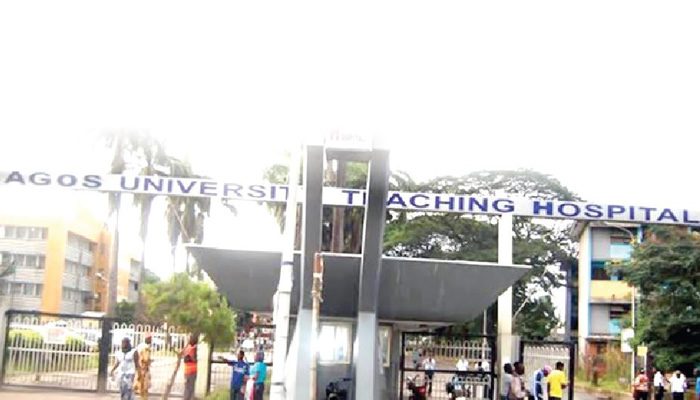
The Lagos University Teaching Hospital, Idi-Araba, has successfully carried out the first thoracoscopy surgery on a 13-day-old baby.

The minimal access surgery was performed to unblock food particles that hindered the free flow of food in the tubes of 13-day-old, Dorcas Shola.

It was the first to be carried out in LUTH.

A thoracoscopy is a medical or surgical procedure providers use to diagnose or treat an issue in lungs, oesophagus, or thymus gland.

It is a minimally invasive surgical technique used to diagnose and treat problems in the chest.

The Chief Medical Director, LUTH, Prof. Wasiu Adeyemo, on Tuesday, during a press conference described the medical term as thoracoscopic primary repair of oesophageal atresia and tracheoesophageal fistula.

He said the patient was referred to the hospital having been diagnosed with a life-threatening health condition just 13 days after birth, adding that minimal surgery was carried out in the chest part of the baby to remove the disease.

Adeyemo said, “What we mean by Minimal Access is that you have a disease you want to remove but you must open it up through a small hole to have access to it, so you don’t have to open the patient up in a big way. The opening will be very small or minimal and lesser pain too.”

He attributed the success of the surgery to the availability of equipment provided by the Federal Government and human resources who were able to carry out the surgery.

“With the availability of state-of-the-art equipment, some of these towers we bought in the range of N60m to N80m and we have many of them in the hospital, all provided by the funding given to us by the Federal Government,” he added.

The surgeon who performed the surgery on Shola, Dr Felix Alakaloko, explained that children affected with the disease at birth always had difficulty digesting their feed due to the blockage in the oesophagus, saying lack of proper care could lead to death.

He noted that spilling breast milk from the baby’s nostrils or mouth was a symptom. Alakaloko revealed that the surgery was a herculean task.

“Operating babies is very difficult because the tube that carries food is in the chest, so that means we are going to work on the chest of a newborn child to reconnect the tube and the space is very small, so when you have to cut them open you endanger the patient as well as trying to help the patient because the patient will go through a lot of trauma,” he said.

The mother of the baby, Adeyinka Shola, said, “They try for us because this is the first of such surgery in the hospital and I am thankful to God for the success.”

Niger draws over $1bn Agric trade investments, says Gov Bago

0

Niger State Governor Mohammed Bago has disclosed that the state attracted over a billion dollars in Agric business investments since the inception of his administration in 2023.

He stressed the need for Nigeria to be productive saying that the country is blessed with abundant resources to feed itself and export.

The governor made this known in his speech on Tuesday after bagging the Leadership Newspaper Governor of the Year award.

Other Nigerian dignitaries who were conferred with awards of different categories at the annual conference and awards in Abuja include President Bola Tinubu, Governors of Benue, Katsina, and Oyo States as well as Labour Party Presidential candidate in the 2023 General Election, Peter Obi.

Bogo, who received the award based on his outstanding innovative leadership style and the developmental strides of his administration in less than one year, spoke on behalf of the other recipients.

“Nigeria is blessed with abundant resources to feed itself and export. Niger State is taking a lead in terms of Agriculture as it has attracted over a billion dollar Agric business investments. With the Agricultural Policies in Niger State, in particular, and Nigeria, in general, we will have enough food to feed and export,” Bago said.

The Governor announced a donation of N250m academic scholarship to Auwalu Salisu, a Keke Napep driver from Kano who found and returned N15 million to a citizen of Chad Republic.

“On behalf of President Ahmed Bola Tunubu, Niger state Government, APC Governors and Ministers as well as my family I announce a donation of N250 million academic scholarship to Auwalu Salisu, a Keke Napep driver from Kano who found and returned N15 million to a citizen of Chad Republic,” he said.

While applauding the honesty and exemplary decision of Auwalu Salisu, the governor noted that more of such people in the society needed to be identified and celebrated.

He promised to name one street in Minna after Auwalu Salisu.

The Minister of Information and National Orientation, Mohammed Malagi represented the president and acknowledged that Nigeria is in a difficult moment.

He, however, assured that the country would come out of it strongly as his administration would continue to make decisions that would be of great benefit to all.

In a keynote, the former Deputy Governor of the Central Bank of Nigeria Kingsley Moghalu, spoke on the theme, “Nigeria’s Distress Economy; Which Way Forward”, stressing that bad governance, population crisis, inadequate and unstable electricity, and lack of strategy, among others, have been the bane of Nigeria’s economy crisis.

He recommended that the Federal Government’s N20bn bond should fund a strategic project comprising railway, housing and agriculture; cut the cost of governance; respect institutions’ independence; and think structurally among others.

888 applicants failed ultimate bar exam -DG

0

A total of 888 candidates failed the final bar examination conducted in November 2023.

This is just as 4,412 candidates were successful out of a total of 5,300 who sat for the examination.

Among the successful candidates, 251 had first class.

The Director-General of the Nigerian Law School, Prof. Isa Hayatu Chiroma, disclosed this at the call to bar ceremony held in Abuja on Tuesday.

He said, “I will be presenting at this Call to the Bar ceremony a total of 4,412 candidates who were successful at the November 2023 Bar Final examinations as well as 14 candidates from previous Bar Final Examinations

“I am happy to report on the good performance recorded by the candidates as seen in the Executive Summary below: Outstanding/General Performance

“(a) Total number of students who participated in the Examinations: 5,300.

“(b) Total number of successful candidates: 4,412

“(c) The Nigerian Law School is proudly happy to report that a total number of 251 candidates bagged First Class grade in the last Bar Final examination. This is indeed an outstanding excellent performance and of course unprecedented.

“(d) These figures translate to 83.3% success at the Bar Final Examinations.”

The chairman of the Body of Benchers who is a retired Justice of the Supreme Court, Mary Peter-Odili, described the current period as bad for the judiciary.

She noted that the confidence in the judiciary was dwindling as a result of the spate of conflicting judgments and indiscipline among lawyers.

Peter-Odili said, “It is a bad period in the sense that the judiciary is being bashed and public confidence in the legal system is dwindling, occasioned by incessant conflicting judgments in our courts and flagrant indiscipline amongst lawyers. ”

She said the Body of Benchers had set up a committee to see to the issue of conflicting judgments.

“In a bid to address this vexed issue of conflicting judgments, the body of benchers constituted a committee made up of ranking members of the profession.

“The committee will come up with the best possible ways of addressing the concerns.

“When the Committee completes its assignment and presents its report to the Body of Benchers; it will, upon consideration and approval, be forwarded to the relevant bodies for implementation,” she stated

She urged the new lawyers to avoid all forms of corruption as well as conduct that could tarnish the image of the judiciary.

Peter-Odili said, “You have been called to the Bar in a very important historic period in the legal profession in Nigeria; a period when the good, the bad and the ugly are all operating at the same time.

“The good to the extent that the Supreme Court now has the full compliment of Justices required to man the court.

“The good to the extent that the welfare of Judicial Officers is being taken seriously and the Body of Benchers alongside other relevant bodies is championing the process

“I have read in the papers about the increased funding of the Judiciary which is a positive development. I hope it will be backed by adequate release of funds as and when due.”

Among the new wigs included a former Governor of Rivers State and immediate past Minister of Transportation, Chief Rotimi Amaechi.

Failure of cassava bread scheme robs Nigeria of $200m — NCGA

0

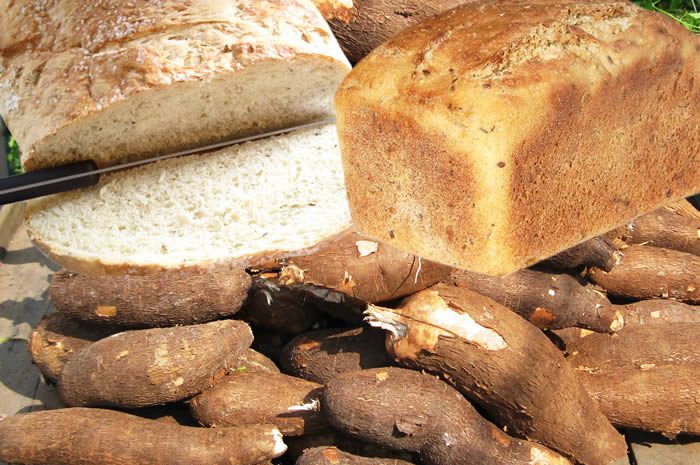
The Nigerian Cassava Growers Association has stated that Nigeria loses more than $200m annually for not implementing the cassava bread scheme that could have incorporated cassava products in the production of bread.

This was disclosed by the new NCGA National President, Mustapha Bakano while speaking with journalists after the inauguration of executive members on Tuesday in Abuja.

He said the continued reliance on flour for bread is costing the country millions of dollars in importation bills.

In October 2012, the former Minister of Agriculture and Rural Development, Akinwunmi Adesina, inaugurated the Cassava Bread scheme and announced the establishment of the Cassava Bread Development Fund to ease the gradual substitution of wheat flour with cassava flour. The government also inaugurated the first commercial 10 per cent composite cassava flour products in its bid to actualise the cassava inclusion policy in bread flour.

One of the aims of the proposed introduction of between 10 and 20 per cent of cassava flour in wheat for bread production, as contained in the cassava bread initiative, was to save a considerable amount of foreign exchange for the country.

Adesina who is currently the President of the African Development Bank, had explained that the target was to make Nigeria the largest cassava processor. Nigeria is the largest producer of cassava globally.

But the initiative by Adesina crashed after the minister left. This, experts say, is one major reason Nigeria spends heavily on wheat imports annually.

Speaking in an interview, Bakano blamed the change in policy direction for the jettisoning of the cassava bread initiative.

He pointed out that although Nigeria is the leading producer of cassava, the revenue generated from it is less than $170m, while China, despite producing less, is generating over $2m annually from the sector.

He said, “I won’t say we got it wrong but something happened along the line, government policy direction changed. During the time of former Minister of Agriculture and Rural Development, Akinwunmi Adesina, there was the cassava bread initiative, had it continued, by now, we would have been using 40 per cent of cassava in flour in the bakery. By now we would not be saying we are suffering from depletion in our foreign reserve.”

“Now, we are working tirelessly to see how we can ensure that first, 10 per cent of cassava comes into wheat to reduce the import bill for the country. If we can input 10 per cent in the first year, we will look at how we can reduce the import bill by almost $200m, by the time we go to 20 per cent, it is now 400m so we are looking at a framework where we can go to 3 to 4 years and we will give it to the government to see how they can be able to implement it.”

According to him, the loss is just in one sector as the product can be used in the pharmaceutical sector and ethanol where biofuel can be produced from the tuberous edible plant.

Bakano, however, said the association is working on a resource development plan “to see how we can bring in the framework that will address all those mitigations and see what the government can help us do.

“We want the government to give a policy direction so that when the policy becomes law, it becomes national and everybody will abide by it so that we can be consuming what we produce instead of putting too much import bill on our country. 40 percent of cassava can go into bread and we will feel comfortable eating it and it is more nutritious.”

Transcorp Energy buyers achieve N378bn in two days

0

The market capitalisation of newly-listed Transcorp Power has risen by about N378bn to N2.18tn in two days as its shares gained about N50 per unit within days of listing.

On Monday, Transcorp Power listed by introduction 7.5 billion ordinary shares of 50 kobo each at N240 per share with a market cap worth N1.8tn.

It gained 10 percent on its first trading day to close at N264 per unit.

At the end of Tuesday, its second day of trading, the value of Transcorp Power shares had risen to N290.40 per unit with a market cap of N2.18tn.

This indicated that early investors in the stocks of the company had gained N378bn in two days

The listing of Transcorp Power Plc, which is a power subsidiary of Transnational Corporation Plc was commemorated with a Closing Gong ceremony and a ‘Facts Behind the Listing’ presentation at the Nigerian Exchange building in Lagos.

“The listing which comes on the 10th anniversary of Transcorp Power’s demonstrates the Company’s strong corporate governance, operational excellence, and value creation for stakeholders.

This track record was earlier recognised in May 2023, when the Company became the first successor Power Generating Company in Nigeria to receive its post-privatization discharge from the National Council on Privatisation, having met and surpassed the key performance indicators set out by the Bureau of Public Enterprises,” a statement from the firm on Tuesday said.

Speaking at the exchange, Transcorp Power’s Managing Director/Chief Executive Officer, Peter Ikenga, said, “This is a testament to our unwavering dedication to powering Nigeria’s growth. We embark on this new chapter with a sense of purpose, innovation, and a commitment to continue to deliver sustainable energy solutions in Nigeria and beyond.”

Transcorp Power operates the Ughelli Power Plant in Delta State, with an installed capacity of 972 MW.

At the time of acquisition, the plant had an available capacity of 160MW. Transcorp Power invested and increased the available capacity to 680.83MW (a 227 percent increase) within four years of acquisition, surpassing the five-year target of 670MW set by the Bureau of Public Enterprises.

Transcorp Power Plc is a member of the West African Power Pool and a participant in the ECOWAS Regional Electricity Market. Today, Transcorp Power supplies electricity to the ECOWAS Regional Market.

According to Ikenga, the power company earned 18 percent of its revenue from the sale of power to countries in the ECOWAS bloc up from 3.3 percent when it commenced the export of power in 2020.

Reps to probe cryptocurrency, virtual transactions, others 

0


The House of Representatives is set to investigate the status of cryptocurrency, and digital asset transactions in Nigeria to ascertain their possible threats to national security.

The resolution of the House followed the adoption of a motion on a matter of urgent public importance moved by a member representing Ifo/Ewekoro Federal Constituency, Ogun State, Mr Isiaka Ibrahim on Tuesday.

Others who would also have their activities investigated include international money transfer operators, payment gateways and platforms and cloud computing systems.

They are also to investigate the current status of the e-Naira on the global cryptocurrency platform, the cost incurred, processes undertaken, and statutory compliance in creating the digital currency.


The House also resolved to engage all relevant stakeholders “To initiate necessary processes for establishing required legislation and regulations, while establishing the profile of operators in the sector such as legal status, parent company, and assess their compliance with our existing statutes or complicity in infractions against Nigeria including money laundering, illicit transactions, currency speculation and bad practices.”

The House also resolved to coordinate the engagement of the Office of the National Security Adviser, other relevant agencies, cryptocurrency exchanges, and stakeholders “In tracking, identifying, and recovering illicit and laundered funds or assets.”

The basic motivation behind the move is to ensure that equity transparency and adherence to international best practices are adhered to by the government in investigating cryptocurrency exchanges and others.

Recall that the House had in the past few months, beamed its searchlights on cryptocurrency operators following petitions brought against them by civil society organisations.

Moving the motion, he highlighted “The growing global concerns about the national security implications of cryptocurrency transactions through cryptocurrency exchanges including consumer and investor security as these exchanges are said to enable money laundering by criminals and terrorists for their illicit activities.”

He added that as part of its sweeping market-friendly reforms designed to attract substantial foreign direct investment into the countries’ struggling economy, “This administration reversed the ban on cryptocurrency transactions in Nigeria imposed by the previous administration.

He assured the international community that the current moves by the Federal Government to sanitise the system “Should not be perceived by the global community and international investors as a policy somersault so early in the life of the administration and the existence of a hostile business environment.”

Isiaka also highlighted the concerns expressed by the Central Bank of Nigeria over the possibility of illicit transactions and money laundering on the cryptocurrency exchanges and their seeming use as an alternative platform for determining local foreign exchange rates.

He further added that the United States of America Treasury 2022 National Money Laundering Risk Assessment indicated that “Fiat and traditional financial activities contributed substantially higher (over 200 per cent) than digital assets transactions to global money laundering activities.

He said the conflict with the government about whether or not the crypto exchanges are determining the local foreign exchange rate and usurping the functions of the national bank “Does not appear to arise in otherdeveloped climes where appropriate statutes and regulations have been enacted and enforced to superintend crypto and other digital asset transactions.”

Following the resolution, the House referred the motion to the Committee on National Security and Intelligence with a charge to “Engage all relevant stakeholders to initiate necessary processes for establishing required legislation and regulations,” among others.

The committee is to report back to the House within eight weeks.