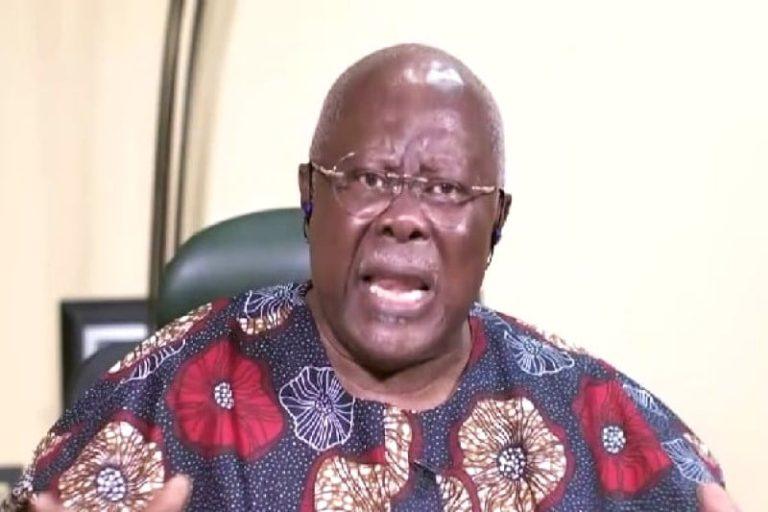
The Source’s Atona Oodua is Chief Olabode Ibiyinka George. In this interview with BOLA BADMUS and AKINROLABU AKINDURO, he discusses his 80-year existence, his youth, his academic experiences, and the reasons he enlisted in the Nigerian military. He says that celebrating his 80th birthday demands a period of gratitude. Quotations:
Today is your 80th birthday, sir. What can you say about your life’s adventure thus far?
I was raised in our family home. I recall attending St. John Aroloya, a deeply Christian school, for the first time. After purchasing uniforms, my father placed me in the center of his Raleigh bicycle. I was raised in the neighborhood between Campus Square and Isale Gangan.
As a chorister, I recall having to attend choir rehearsal every Tuesday and Thursday. On Sundays, I could only attend church. We would wait for Catholicism to teach us the fundamentals and attend an early morning service.
I made a lot of pals in every kind of friendship. That part of Lagos was both impressive and unsettling. Boys who have begun engaging in what is known as “youthful rascality” are often exceedingly obstinate. Some choose not to attend any school at all.
I had a great time growing up, but I was also quite playful. I knew the repercussions of misbehaving, so I acted like a decent Lagosian from a Christian home. However, I continued to play football at Onala despite this. I quickly gained a lot of recognition in our community. However, I didn’t settle for academic success in elementary school.
My father once told me, “Look, I think the best thing for you is to go and learn a trade,” as I was always promoted on trial at the end of each year. Promotion on trial, according to my father, meant that I would have to sit with half of my ass in the next class. However, for some reason, I continued from Primary 1 to Primary 2 since, in Lagos at the time, primary education lasted eight years instead of the six that Chief Obafemi Awolowo began. After completing eight years of Primary 1, Primary 2, Standard 1, Standard 2, Standard 3, Standard 4, Standard 5, and Standard 6, students would take entrance exams to secondary school.
In the meantime, one of our tenants persuaded my father that I ought to attend a boarding school. Mr. Ogunsanya is his name, and I will never be able to forget him because he completely changed my life when I started secondary school.
You know, we were subject to regulations in secondary schools back then. There was time for everything, including getting up, eating, and attending your lectures. I believe that the fact that we were regulated had a really positive effect on me. I will always remember Mr. Ogunsanya and his spouse, who suggested to my father that I take the Ijebu-Ode Grammar School admission exam. I had never left Lagos before.
I traveled to Ijebu-Ode, the first secondary school in Ijebuland, to take the test. I began, and ironically, I placed 10th out of 30 on the first term exam. This grade made me very delighted, and my father was also thrilled to see the progress, since I normally did well in football. We had a front walk and a back path because of the way our family home was constructed. Even though I was my team’s captain, I had to go to the rear to play football since my father was constantly at the window after work and you couldn’t screw around when he was at home. After that, our community’s elders organized a tournament between several clubs that they independently designed and oversaw. I was the captain of our own team, which was called “7 Brights For 7 Brothers.” One of my team members was Tunde Disu, who resided in Yaba, Ebute Metta. I continued to try to take my team’s jerseys and boots home to wash them despite my father’s strictness until a year later, when the final was scheduled for Sunday.
Since the final was on a Sunday, I told my team management to disregard me. I informed him that I had to attend church and would not be able to make it. The team manager stated that since I was the team captain, it was not feasible. In order to inform my father about the football competition, the team manager went behind me. My father contacted me when I returned from the session to let me know that someone was here, and he gave me his name. When he announced the name of our team manager, I was taken aback. I was warned not to be surprised by my father. He claimed to have already come to my room and seen boots and shirts. Thus, lying was not necessary. After that, I told my father that I really was the captain of my team, “7 Brights for 7 Brothers.” I was shocked that he didn’t beat me up for my admission. Instead, he allowed me to play in the last game. He was even appointed chairman of the day. Sadly, we were defeated in the game. My father became aware of my intense love for football at that point. I came to Ijebu-Ode Grammar School after our tenant, Mr. Ogunsanya, recommended it to me one evening while we were chatting. You know, no one can alter what God has in store for you.
I was therefore at the top of the class by the conclusion of the first term in Form 1. This was a significant advancement. My father was taken aback by my rapid progress when he saw me when I proudly returned home. It was the work of God. We were regimented in secondary school, which was one of the factors that inspired me to enlist in the military. We were expected to abide by those rules, and if we did not, the house masters or the seniors would penalize us right away. There were times for everything we did in school back then, so perhaps that helped me settle in. Studying, playing, morning devotions, and other activities were all possible. The system was governed. Upon returning home from Form 1, my father was overjoyed with my academic achievement.
I continued to attend Form 2 for the most part. I joined the football first 11 when I reached Form 2. Even though I didn’t appear like much at the time, I was added to the school team. We had excellent professors, some of whom were British, and I had many friends and classmates. Mr. V. W. Ferris, our math teacher, is someone I will never forget. He simplified mathematics to the level of ABC. I was doing incredibly well in every other topic. I was in the top spot from the first year until I reached Form 5, but I continued to play football a lot. I participated actively in the school’s debate and quiz societies.
Competitions was place between our school and other schools, including the Government College in Ibadan. Education in the Western Region was unmatched at the time. This country will never forget Baba Awolowo, who achieved a great deal for the people. You can see how long ago he went away, but because he was a gift from God, people continue to discuss him. Everyone benefited from his policies. I’ve read a lot about him even though I’ve never met him in person.
What does reaching 80 years old mean to you, then?
In retrospect, I can say that I have visited both the highest and lowest mountains in this nation. That is to say, I had sat in the president’s room at the Villa. What could be a better room than that? But at the same time, I was in the worst bedroom I had ever been in—a prison room. I have thus witnessed it all. As a result, the significance of my 80th birthday is to give thanks to the Almighty God for His grace, which allowed me to overcome my adversity and emerge victorious. I never imagined that I would become governor or a well-known politician. However, it was made possible by God. Throughout my life, I had encountered a great number of people. I had encountered the good, the bad, and the ugly. You see, you have to be afraid of God if you want to work in politics. Based on their ranks, it is simple to anticipate who will be in the military and what obstacles they may face. It’s another matter entirely if they now complete the assignment successfully or not. They will be immediately punished if they don’t complete the assignment. Therefore, we are trained to manage resources based on capacity in the military. In civil life, however, you are to manage individuals from zero behaviour to the maximum. So, at any moment in time, you need to be watchful. Even if nobody is flawless, you must be able to recognize wrongdoing and take action. You must not fall in to extravagant or profane lifestyles because nobody, no matter his or her high standing, would be buried with wealth if he or she dies. As human beings, we came to the earth naked, and we shall go naked. There would be a limit to how we all rush to obtain earthly goods if we could keep this idea in the back of our minds.
Despite our prosperity, life is vanity. All earthly elements are pure trash. There are two groups of persons in politics. We have decent politicians who think that people’s resources should be used wisely for their benefit. On the other hand, there are also some who pretend to be politicians and take advantage of the public’s resources for their own gain. As a military officer and politician, I believe that I have done my best for the nation and humanity at large since these are the folks I refer to as “Politrickcians.” Now, I’m at the departure lounge of my life. God may summon me or anyone at any time. Because of this, we must make sure that whatever we do serves both God and the people. As I mentioned earlier, I visited the Presidential Villa in Aso Rock, which is the best and highest point in Nigeria. However, there came a time when several individuals deliberately banded together to put me in the worst possible situation. Prison is that. I have suffered a lot of difficulties and sufferings, but through all the vicissitudes of life, God was with me and gave me victory.
I therefore have every reason to give thanks to God at the age of 80. You see, if God wants to utilize you, He can transport you to a spiritual desert where you will experience many hardships in order to prepare you for the task He has for you. You will succeed if you can maintain a strong faith, and God has done just that for me. I therefore have every reason to give thanks to God. I give thanks to God for my health. I don’t use a wheelchair. My hands, legs, brain, and eyes are all working properly. My children are all doing well. He also gave me a wonderful wife who supported me through all of my hardships. Actually, she is in charge of organizing every birthday celebration. For this, I give thanks to God.
How did your time at university go? What childhood antics did you pull that you will always remember?
The days at the university were so lovely, and our youthful zeal led us to pull many practical jokes. I received my engineering degree from the University of Lagos. All eight of the students in my graduation class found jobs prior to taking our final exams. That was the beauty of this country back then. We were recruited by the Niger Dam Authority (NDA) Kanji. Three of us from the same class were invited to Kanji. As you are aware, the World Bank provided funding for the construction of Kanji Dam. The Electricity Corporation of Nigeria, or ECN, was their sole client, and their investment returns were insufficient. In the accounting book, they were consistently in the red.
Kanji, on the other hand, just had ECN as a client. The NDA was generating revenue for the nation. With 20 engineers and numerous skilled technicians, we continued to operate the facility effectively. I completed my two years of technical training there. In those days, you had to complete two years of student training to combine your theoretical knowledge with practical experience in order to become a competent engineer. I grew close to my friend, Engineer. Foluseke Somolu, whose father served as the Western Region’s Chief Judge at the time. At the university, we were in the same class. We so traveled to Kanji together, where we lived for two years. Prior to that, however, the top grammar school students were always sent to Brentwood’s school in England as part of an exchange program.
I therefore attempted to apply for admission to a university after graduating from Ijebu-Ode Grammar School. Ibadan’s International School was only planning to open a higher education institution. I made the decision to enroll in the institution. I simply went to the interview without telling anyone. My performance impressed the American who conducted the interview. When he brought up the subject of the school fees after the interview, I informed him that my father would not be able to pay for them. He requested that I hold off for a moment. After leaving, he went to the headmaster to ask him to accept me on a half scholarship. He added that the headmaster had agreed to award me half of a scholarship when we returned to the room where he had interviewed me. He questioned me about if the half scholarship arrangement would enable my parents to pay the costs. Yes, it makes sense, I replied. I thought I would begin working with them in January, so I left the school. However, the school sent a letter of congratulations to my previous school, Ijebu-Ode Grammar School, stating that they had produced a very good student with a bright future ahead of him and that they had offered me a half scholarship to continue my education there.
The next day, after receiving the letter, my principal at Ijebu-Ode Grammar School released the letters stating that my companion Sola and I were to begin our A-Level in Brentwood. When I went home, I handed my father an offer letter from International School (IS) and a note from the principal stating that we would be leaving for England to begin our A-Level by January 15.
My father asked me to choose between the two options after looking at them. I informed him that I had never considered traveling to England. We ultimately arrived in Brentwood to begin my A-Level. I joined the football squad as soon as I arrived in Brentwood. Since I was the only Black student at the school, all the white people in the area came to watch our games. As a result, I became well-known in Brentwood because I was the only Black football player, which made them think of the legendary Pelé.
I thus got the chance to visit the UK for the first time. I recall that my dad got me a brand-new outfit. My schoolmate Sola and I took a flight on Lufthansa Airlines. After landing in Frankfurt, we continued. The suit that Sola and I were wearing was made in Nigeria. We were quite cold at the airport. It was something I had never encountered in my life. Because the jacket was unable to absorb the cold, Sola and I were like frozen fish. However, we finally arrived in London. At the airport, we were told to report to a location. However, since we were unfamiliar with London, we had no idea where to report. In order to get clarification, we had to approach a desk. The school in Brentwood was ready for us. You know, that was a different experience.
The size and infrastructure of the London airport differed from that of our own airport in Nigeria. They didn’t even need to make an announcement before your folks could see you because our airport was so little. That’s how the A-Levels went, and we received excellent grades. We were awarded a scholarship to continue our education at ABU. I had assumed that the scholarship would alleviate my father’s financial strain.
But since she was afraid of being killed during the civil war, my mother told me not to go to ABU. Thus, we finally arrived to UNILAG. UNILAG accepted us. One intriguing thing from UNILAG comes to mind. Because she was descended from the Aganga Williams family, the wife of the late Brigadier Mobolaji Johnson, the governor of Lagos at the time, was my cousin.
One day, we learned that their children had received scholarships from the government of the Western region. We enrolled in the university in 1967, and Lagos was established in July, May, or June of that same year. We thus replied, “No, they should also start giving out scholarships in Lagos,” when we learned about the Western region government’s scholarship program. I then advised my friends that we should visit the governor’s office to discuss the matter. I offered to take the lead. They gave me a startled look and stated I wanted to get them into jail for being so forward. But I reassured them that even if they caught us and my mother found out, the governor’s wife, who is my cousin,
would allow us to escape. After lunch, the four of us left the university and went across Onikan Stadium to the Governor’s Office, which at the time was Tafawa Balewa’s office. The Governor’s Office was the final structure before the motorway. Thus, four of us departed after lunch. There were four of us: Anibaba, Jabezi, Alex Oni, Kweisi, and me.
We arrived. We explained that we were University of Lagos students and that we wanted to see the governor when the protocol at the gates questioned what our mission was. One of them pulled out their paper to see if our names were on the list of appointments, and when he discovered that they weren’t, he chased us out. However, a Yoruba man who was their supervisor came out to listen to us. We showed him our ID cards and explained why we needed to see the governor. Then the man advised us to hold off. He entered. Baba Yemi Bero was inside when he entered. Attorney General and Commissioner for Justice Baba Bankole Oki was present. There was Baba Domingo. He served as the Governor’s Chief of Protocols, while Justice Williams was the Solicitor General. Years later, I got to know them.
They begged the man to let us in when he revealed our names and they realized we were native to the state. The governor had not arrived by then. Downstairs, they were waiting for him. Thus, we entered and bowed down to the elderly folks. I then got up to speak on behalf of the four of us as the spokesperson. I explained to the elderly men that we were University of Lagos students and that we had recently learned that their children would be receiving scholarships from the Western Region. We wanted the Lagos administration to treat their own children in the same way, I said.
These elderly folks paid close attention to what I was saying. Following my address, they advised us to be patient with them as we arrived near the end of the year, when their government was only six months old. They promised to consider our proposal and take appropriate action. We profited from Lagos State’s establishment of a Scholarship Board around a month later, as promised. Thus, that was yet another instance of government. We were not driven away by them. They must have made choices at their larger meetings after listening to us.
Why did you decide to enlist in the military?
the military’s problem. An advertisement appeared in the newspaper just as we were finishing up our two-year pupilage program in Kainji. The war had just finished, you know. Everyone was attempting to rearrange themselves, among other things. Additionally, it was lovely where we used to work at Kanji. We were aware of who we were. We got along well with our superiors because we know them. There were barely twenty engineers working in Kainji at the time. The Nigerian Dam Authority (NDA) and the Electricity Corporation of Nigeria (ECN) were examined by the World Bank; the NDA was consistently in the red and the ECN was
Always in the dark. Therefore, the World Bank suggested that the government combine NDA and ECN. That eventually evolved into NEPA. When this occurred, I believed that NDA, where I worked, would be consumed by the Electricity Corporation, a large corporation. I came to that conclusion. Fortunately, the Navy then made an effort to revamp its advertising. Their goal was to hire experts. I recall telling my father that I wanted to enlist in the military. I shouldn’t enlist in the military, according to my father, who protested. However, I applied to the Navy, and following an interview, I was accepted. The Navy was glad to have young, talented engineers since they needed to replace their outdated manual systems with a new, fully computerized system. They therefore required engineers capable of operating and maintaining the new, cutting-edge armament system.
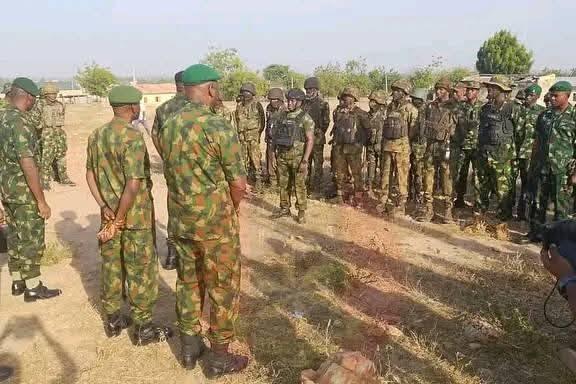
In order to enter the Navy, I fled the merging of ECN and NDA. After completing the foundational course, we received our diploma. Because naval engineering differed from outside engineering, we performed well and were transferred to the Royal Naval Engineering College. You had to learn how to use your weapons, communication devices, early warning radar, and the real fighting radar, among many other things. I therefore went to the Royal Naval Engineering College to get my maintenance skills refined. I was therefore permitted to learn. I will serve in the Navy if I ever return since it gave me the opportunity to see the world. The Royal Naval Engineering College is where I received my training. I attended the School of Artillery as well. I spent more than a year in what they called HMS Excellence. We are essentially limited to military life and equipment.
What was your experience there, and how did you learn that you had been appointed as a military administrator?
I had recently returned from the Naval War College. I was assigned to the Naval Headquarters as a Director of Weapons Systems Engineering. By rank, I was a commodore. As a result, we participated in year-end drills with the Chief of Naval Staff. It was in December or such. After the ceremony, all we had planned to do was take a flight from Port-Harcourt back to Lagos the next day. My driver arrived when I was already in bed and informed me that I was one of the recently appointed policemen after he heard my name on the radio news.
as heads of state. I couldn’t have imagined that, therefore I didn’t understand what he was saying. I turned on the radio in my room for the next hour of news after asking him to go. I was shocked to learn the news. I was sent to the former Ondo State out of the three of us that were appointed. Other than traveling through Ore on my way to the East, I had never been to Ondo State. Like everyone else, I was taken aback, but that is the nature of the military. You are not required to be consulted before they make a decision. You were required to complete a non-regimental task. As a result, my home was packed with friends and well-wishers by the time I arrived in Lagos. A car had already been sent by the Ondo State administration to come get me. However, we had to travel to Abuja for a conference after first attending the swearing-in at the Dodan Barracks.
It was a high-level security conference. I observed the other governors at the gathering. Everything went really well when we interacted. We took a plane back to Lagos after the meeting. People were waiting for me when I arrived in Lagos, so I asked the naval helicopter to drop me off at Akure so I could return to my duties. The departing governor was standing by. However, the Navy said that all of their helicopters were having issues. I was now unsure about how to travel to Akure. However, I was saved by the Lagos protocol, whom I knew from UNILAG. We arrived at Akure for the first time thanks to the flight he chartered, which was something I had never imagined.
When I arrived in Akure, several traditional leaders were there to greet me. At the time, Ondo State was a hybrid of Ondo and Ekiti. You can only think how many kings would have arrived to greet me. They were all in line. My predecessor, Colonel Opaleye, introduced me to them, and I welcomed them with deference appropriate to their position. I also met with the Secretary to the Government, who handed me the handover notes. They then took me to the Government House by car. Following this, I paid him a polite call at the Palace of Deji of Akure, as custom required. His town has historically been Akure. Therefore, you would have to respect traditional rulers if you were a well-bred Yoruba man. I went to see the monarch and informed him that I was his son assigned to lead the state. I offered him a hand of fellowship and encouraged him to call me at any time if he had any suggestions for what I should do. I said I will get in contact with him.
We returned to the office after that. When I saw the Governor’s Office, I was really taken aback. I’m not tall, so I had to stoop to enter the office because it was so little. That is not comparable to Ibadan or Lagos, where I was traveling. Thus, the rural form was still well defined, just as it was during my stay in Ondo. I made a comment at work, and by the next day, it was widely reported. It had made headlines in the media. My CPS was Henry Teniola. I was quoted verbatim by the media. This reached General Babangida, the Head of State, who contacted me and challenged me to make sure I established a suitable Governor’s Office based on what I had said. He mentioned that he would be visiting Ondo State to check if I could handle the challenge. To God’s credit, we didn’t let you down.