Home Blog Page 1569

FG inaugurates Oronsaye report implementation committee

0

The Federal Government, on Thursday, inaugurated a committee for the implementation of the Oronsaye Report, which majorly recommends the merger of the government’s ministries, departments, and agencies to cut the cost of governance.

The inauguration of the implementation committee followed the announcement by the President Bola Tinubu-led Federal Government on February 28, 2024, that parts of the recommendations in the 12-year-old Oronsaye report would be implemented.

The 800-page report recommended that 263 of the statutory agencies be slashed to 161; 38 agencies be scrapped; 52 be merged and 14 be reverted to departments in various ministries, among others.

A statement on Thursday by the Director of Information, Office of the Secretary General of the Federation, Segun Imohiosen,  said the SGF George Akume,  inaugurated “the Committee on the Implementation of the Recommendations on the Review of Reports and White Papers on Restructuring and Rationalisation of Federal Government Parastatals, Agencies, and Commissions.”

“The Secretary to the Government of the Federation, while inaugurating the Committee on behalf of President Bola Tinubu stressed that the implementation of the White Papers on the report, which would involve the merger, relocation, subsuming or scrapping of some parastatals, agencies, and commissions is aimed at reducing the cost of governance and streamlining efficiency across the governance value chain,” he said.

Outlining the mandate of the committee, Akume said the committee would “identify redundancies and overlaps or conflicting objectives among the mandates of different organisational units.”

It will also “define strategic objectives to ensure the revised mandates align with the strategic objectives and priorities of the government.”

The committee is to “engage key stakeholders and gather input and feedback on the proposed revisions to the mandates.

“Draft clear, concise, and actionable revised mandates for the organisations involved in the restructuring.

“Ensure the revised mandates comply with all applicable laws, regulations, and policies governing government operations.”

On the committee are the SGF; the Attorney General of the Federation/ Minister of Justice,  Lateef Fagbemi (SAN); Minister of Budget and Economic Planning, Abubakar Bagudu; Head of the Civil Service of the Federation, Folasade Yemi-Esan, and the Special Adviser to the President, Policy and Coordination, Usman Bala.

Others are Director-General, Bureau of Public Service Reform, Dasuki Arabi; Senior Special Assistant to the President on National Assembly Matters (Senate), Abdullahi Gumel; Senior Special Assistant to the President on National Assembly (House of Representatives) Ibrahim Olarwewaju;  Principal Secretary to the President, Hakeem Okunola and Permanent Secretary, Cabinet Affairs Office,  Richard Pheelangwah.

SEC to reduce N190bn unclaimed dividends

0

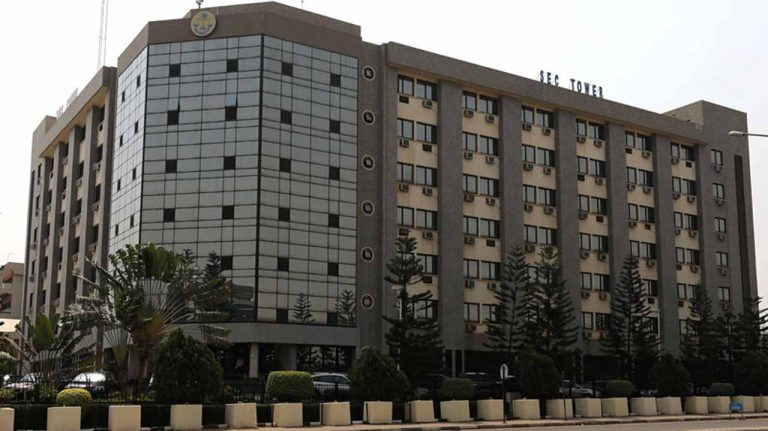
As part of efforts to reduce the level of unclaimed dividends by investors in the capital market, the Securities and Exchange Commission said it is intensifying strategies to shrink unclaimed dividends.

The apex regulator saddled with the dual responsibilities of regulating and developing the Nigerian capital market, disclosed this to journalists on Thursday after a three-day investors clinic it held in Yobe State to address complaints from investors in the region.

Head of the SEC Zonal Office, Kano, Mr. Danladi Mohammed, stated that the investor clinic was jointly organised by the Securities and Exchange Commission and the Gombe State Investment and Property Development Company to assist investors with unclaimed dividends and related matters.

Mohammed said the three-day exercise was aimed at creating awareness and enlightenment on e-dividend, dematerialisation of shares certificates, and direct cash settlement payment system, among other initiatives.

It was also to handle inquiries and complaints from shareholders in Yobe State and its environs.

“The initiative is one in a series of programmes, and strategies toward reducing the level of unclaimed dividends which stood at N190bn in August 2023, by creating awareness, particularly in the regions; to make the investing public come forward to take what rightfully belongs to them – This is one of the key objectives of the Capital Market Development Master Plan 2015 to 2025,” he said.

It will be recalled that the Director-General of the Securities and Exchange Commission, Lamido Yuguda, while briefing the members of the House Committee on Capital Market and Institutions on the overview of the capital market and its importance to the Nigerian economy, intimated that the commission had made several efforts in the past and has a lot of strategies and measures in place to tackle the rise in unclaimed dividends.

The Director-General said, “The core mandate of the commission is to regulate and develop the capital market of Nigeria to be on a par with its counterparts in other jurisdictions in all ramifications; and the commission is not resting on its oars to achieving and sustaining that mission. The Commission will embark on a series of investor clinics in 2024 in all the regions of the federation to provide the platforms for investors to reap the benefits of investing in the capital market.”

The commission noted that, at the end of the three-day event, it was able to address the many complaints by investors who attended the clinic which included the request for guidance on E-dividend adoption, change/reconciliation of names, schemes consideration pay-off, verification share certificate, transmission of shares & payment of outstanding dividends and many other issues.

Capital market experts have attributed the rise in unclaimed dividends to either a change in residential address by investors and failure to update records with the registrars or investment companies or not keeping track of personal investments or investments owned by deceased relatives.

Nigeria independent-minded, says Tuggar in Russia

0

Nigeria will prioritise its national interests and will not succumb to external pressure from the West regarding cooperation with Russia, Nigeria’s Foreign Minister Yusuf Tuggar, said.

Tuggar said this in an interview with Sputnik in the course of his three-day working visit to Russia from March 5 to 7.

“You have to understand one thing. Nigeria is not the sort of country that succumbs to pressure.

“We have been single-minded since inception.

“We joined the non-aligned movement since we became independent in 1960.

“We do what we feel is right for us as a country; we are not dictated to by anyone,” Tuggar said.

The minister said Nigeria welcomed alternatives to the SWIFT payment system, including a Russian analogue — the Financial Messaging System of the Bank of Russia.

He gave an assurance that Nigeria could consider using them if they satisfy its national interests.

“This is a very interesting system. It is welcome. You know, the more the merrier, as they say.

“It doesn’t mean that SWIFT is not a good system, but if there are other alternatives, Nigeria would consider (them) … It’s something that we will look at.

 “And if it’s in our interest to engage in it, we will, for sure,” the minister said when asked to comment on the creation of SPFS and the possibility of Nigeria joining it.

SWIFT is the world’s main international payment system, exchanging millions of messages a day.

In 2014, after the first wave of Russian sanctions, several countries launched work on developing their payment systems.

The Bank of Russia has created the SPFS system, which ensures uninterrupted transmission of financial messages within and outside the country, while China has launched the Cross-Border Interbank Payment System.

NSCDC trains 532, warns against accidental discharge

0

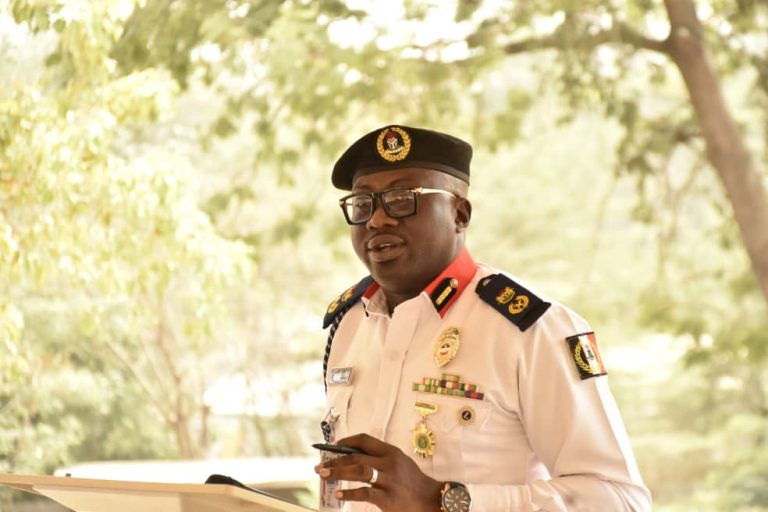
The Commandant of the Nigeria Security and Civil Defence Corps, Federal Capital Territory Command, Olusola Odumosu, on Thursday, warned 532 personnel of the corps against accidental discharge and lobbying for posting.

Odumosu gave the warning at the passing-out parade of the 532 officers recruited in 2023  and taken through a six-month in Abuja.

“Today is another epoch-making occasion in the history of the NSCDC FCT Command, the passing-out parade of 532 officers, 2023 recruits after six months of rigorous training.

“You have been trained in weapons handling. This is one aspect of your job that you have to tread with utmost caution.

“In the NSCDC, there is nothing like accidental discharge. Once you find yourself holding a weapon, rules of engagement must continually sound in your head. Your rifle is as safe as you want it to be.

“Note also that, you are also expected to maintain a high level of discipline, professionalism, and competence in the discharge of your duties. Your uniform and weapon must not be used to intimidate or harass any citizens,” the commandant warned.

The commandant said they would be deployed to departments, units, area commands, divisions, and outposts.


He also warned, “It is an offence to lobby for deployment.  Wherever you find yourself, give it your best.

“Be warned that this is a regimented organisation with zero tolerance for any acts of indiscipline. Here there is no unionism, no activism, and no aluta continua. Respect for and regard for seniority is mandatory irrespective of age and size.

“Let me quickly let you know that your being confirmed as staff of NSCDC does not imply that you have arrived. You must shun bribery and other forms of corrupt practices.”

Kaduna gov, JNI, CAN lament rising poverty, insecurity

0

Governor Uba Sani of Kaduna State, the Secretary General of Jama’atu Nasir Islam, Prof. Khalid Abubakar-Aliyu, as well as the President, the Christian Association of Nigeria, Archbishop Daniel  Okoh, on Thursday lamented increasing hunger and insecurity in the country.

They spoke at the 6th Annual Inter-Faith Peace Conference in partnership with the Kaduna State government in Kaduna.

The confab had as its theme: ‘Tackling Poverty and Insecurity in Nigeria: Our Collective Responsibility.’

The Kaduna governor, while declaring the event open, noted that poverty and insecurity were the biggest challenges facing the country, adding that the challenges remained the major sources of worry for political leaders in the country.

Sani, who chaired the occasion, said, “Addressing the issue of poverty is critical to restoring the people’s faith in our democracy.

“We are still struggling to address developmental challenges, especially in the areas of infrastructure, education, health, agriculture, and security.”

He said it was time for all stakeholders to join hands to tackle insecurity and developmental challenges across the country.

“Research has a key role to play in our search for workable solutions to the seemingly intractable challenges of insecurity. If you know the causes of the problem, you will be able to fashion effective immediate, short-term, and long-term strategies towards addressing it. Our actions have been ad hoc and reactive,” he added.

On his part, the JNI’s scribe noted that Nigeria was passing through a trying period of “hunger and starvation,  abject poverty, insecurity, breakdown of law and order, dwindling morality, diminishing family values, dilapidation of infrastructures, bad governance and monumental corruption.”

According to him, all these are indices of looming problems that result in societal decay and chaos.

Thus, he said something urgent must be done by those in whose hands God had entrusted the leadership of the country.

“By adhering to these principles and working together in a spirit of cooperation, we can overcome these challenges and build a more prosperous and secure Nigeria for all its citizens,” he said.

The CAN President, who was represented by Bishop Sunday Onuoha, said there was too much hunger in the land and that nobody was safe.

He expressed concern over the looting of warehouses across the country, calling on Nigerian leaders to offload all the warehouses because Nigerians were hungry.

“Not too long ago, a fully-loaded warehouse was taken over by hungry Nigerians in Abuja, and the Federal Government issued a statement and said they were criminals.

“Well, whether they are criminals or whatever you call them, the truth is that they are Nigerians fighting for survival.

“Nigerian leaders should offload all the warehouses wherever they are because Nigerians are hungry and they need food. If we can solve the problem of hunger, we have solved the problem of insecurity.”

Meanwhile, a chieftain of the All Progressives Congress in Kaduna, Garus Gololo, on Wednesday, knocked President Bola Tinubu for  running the country like a “family government.”

Gololo also faulted the Renewed Hope mantra of the party, declaring that there was no hope for the ordinary Nigerians as they were dying of hunger on a daily basis because of the current economic hardship in the land.

The APC chieftain, while speaking in an interview with select journalists in Kaduna, carpeted the President for taking his two sons, Yinka and Seyi to Qatar for an official visit, wondering if the President’s sons were officials of the government.

“Imagine what’s happening; the Federal Government is preaching about cutting costs but the President’s children are part of the official entourage to Qatar when they are not cabinet members. What took them to Qatar?

“This government of President Tinubu is just a family government.”

Gololo also warned the President against turning the APC-led government into a “family government”  questioning budgetary allocation to the office of the First Lady.

UN decries gender-based violence, discrimination

0

The United Nations has said that billions of women and girls face injustice, discrimination and marginalisation.

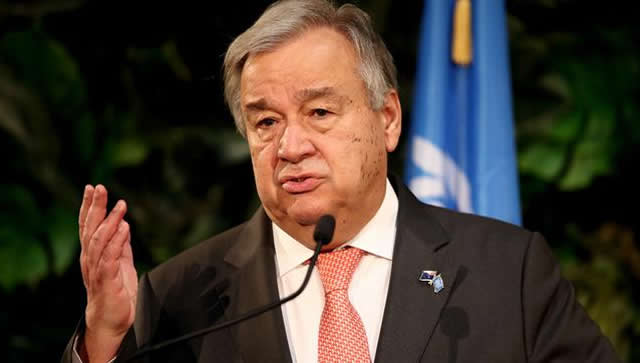
The UN Secretary-General,  Antonio Guterres, said this in an OP-ED  on Thursday.

International Women’s Day is usually marked every March 8 and this year’s theme is ‘Invest in women: Accelerate progress.’

Guterres noted that discrimination against women and girls remained perfectly legal in much of the world.

“Billions of women and girls face marginalisation, injustice, and discrimination, as millennia of male domination continue to shape societies. The persistent epidemic of gender-based violence disgraces humanity.

“Over four million girls are estimated to be at risk of female genital mutilation each year. Discrimination against women and girls remains perfectly legal in much of the world. In some places, that makes it difficult for women to own property, in others, it allows men to rape their wives with impunity,” he stated.

He also said that wherever there was conflict, climate disaster, poverty, or hunger, women and girls suffered the most.

Guterres noted, “Global crises are hitting women and girls hardest.  In every region of the world, more women than men go hungry. In both developed and developing countries, a backlash against women’s rights, including their sexual and reproductive rights, is stalling and even reversing progress.

“At our current speed, full legal equality for women is some 300 years away; so is the end of child marriage.  This rate of change is frankly insulting. Half of humanity can’t wait centuries for their rights. We need equality now. That means accelerating the pace of progress.”

 UN Secretary-General said there was a need for “public and private investment in programmes to end violence against women, ensure decent work, and drive women’s inclusion and leadership in digital technologies, peacebuilding, climate action, and across all sectors of the economy.”

Also, the Nigerian Senate Leader, Opeyemi Bamidele, raised concern over weak investment in the capacity of women in Nigeria, which, according to him, had hindered the possibility of achieving the fifth agenda of the Sustainable Development Goals.

The fifth agenda of SDG is to “end all forms of discrimination against all females everywhere.”

Bamidele, in a statement issued by his Directorate of Media and Public Affairs in commemoration of the 2024 International Women’s Day, said despite six years away from bridging the gap between men and women, Nigeria was still confronted with under-representation both in the corporate and public sectors.

He said it was lamentable that women were victims of armed attacks in different parts of the country.

Bamidele said the National Assembly recognised that women’s inclusion in governance was pivotal to achieving sustainable development in Nigeria, adding that gender inclusiveness was at the core of the Revised Legislative Agenda of the 10th Senate.

He said, “Currently, as shown in the UNICEF statistics, Nigeria has no fewer than 18.5 million out-of-school children. More than 60 per cent of them – approximately 10 million – are regrettably female. Also, at least 30.3 per cent of girls in Nigeria are married before the age of 18 while 12.3 per cent are before the age of 15. Most of them are victims of armed attacks in different parts of the federation.

“As shown in recent data, women are under-represented in Nigeria’s political space. Women hold only 3.4 per cent of federal legislative seats – four are 109 senators and 14 out of 360 members of the House of Representatives. Across all sectors, women’s inclusion is largely low in Nigeria whether in the corporate world or public sector.

“All these figures attest to weak investment in women and eclipse the possibility of achieving the fifth agenda of the Sustainable Development Goals, which mandates that world leaders invest in initiatives and programmes that bring about gender equality by 2030. 2030 is just six years away, and we are still confronted with ugly indices that remind us of the widening gap between men and women.”

Senator Bamidele added, “At the National Assembly, we are conscious of the criticality of gender equality to our collective prosperity as a federation of 227 million. We also recognise that women’s inclusion in governance and decision-making is crucial to achieving sustainable development in Nigeria.

“This is at the core of the Revised Legislative Agenda of the 10th Senate, which in the main emphasises the exigency of accelerating Nigeria’s socio-economic growth through women inclusion.

“This was also a critical factor in the design and enactment of the 2024 Appropriation Act. And the legislation was structured to address critical issues undermining strategic inclusion of women in the process of decision-making, especially in business or government.”

Outrage as bandits kidnap 280 pupils from Kaduna schools

0

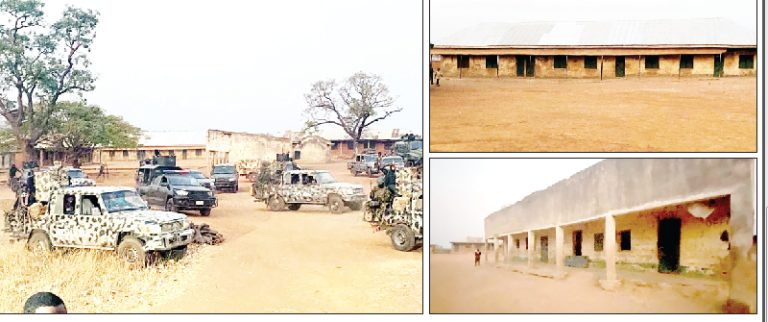
Over 280 pupils and teachers of Government Secondary School and LEA primary school at Kuriga, Kaduna State were abducted by bandits on Thursday, triggering national outrage.

The Jama’atu Nasril Islam, Amnesty International, the Parent Teacher Association of Nigeria, the Nigeria Union of Teachers, and the House of Representatives condemned the attack and asked the government to rescue the victims immediately

The bandits reportedly invaded the Kuriga area of the Chikun Local Government Area of Kaduna State on Thursday, shooting at their victims before taking away at least 280 of the pupils and teachers from both schools.

The According reports that the secondary school was relocated to the primary school on account of the insecurity in the council.

The incident occurred barely 24 hours after insurgents abducted 200 internally displaced women in Borno State.

The women were kidnapped in Ngala, the headquarters of Gambarou Ngala in Borno State while fetching firewood in the bush.

Penultimate Thursday, bandits invaded the Gonin-Gora in the same Chikun LGA, prompting residents to barricade the Kaduna-Abuja Expressway in protest against the abduction of an unspecified number of people in the area.

The kidnappers on Wednesday night through the early hours of Thursday had attacked the Kuriga community, kidnapping unspecified numbers of the residents.

A teacher in Government Secondary School Kuriga, Sani Abdullahi, narrated how the attack took place, adding that about 280 pupils and teachers were whisked away by the hoodlums.

This was just as the state Governor, Senator Uba Sani led senior government officials and heads of security agencies in the state to the scene of the attack on Thursday evening.

The governor assured the community that those abducted by the bloodthirsty bandits would return unhurt.

He said he had spoken to the National Security Adviser, Nuhu Ribadu on the matter and that security operatives had swung into action in search of the abducted pupils.

Narrating his ordeal during the governor’s visit, Abdullahi said, “I resumed school today (Thursday) at exactly 7:47am. I entered the acting principal’s office and signed. All of a sudden, the acting principal asked me to look at my back and when I turned, we discovered that bandits had surrounded the school premises.

“We became confused. We didn’t know where to go. Then, the bandits asked us to enter the bush, so we obeyed them because there were many and the pupils who were about 700 were following us. So, when we entered the bush, I was lucky to escape alongside many other people.

“So, I returned to the village and reported what happened to the community. So, immediately our vigilante and personnel of KADVS (Kaduna State Vigilante Service) followed the bandits, but the vigilante did not succeed the bandits killed one of the vigilantes; we just buried him a short while ago.’’

The teacher explained that the vigilantes were making efforts to identify those kidnapped by the bandits.

“It was when we came back from that pursuit that we briefed the village head and we started making efforts to know the number of pupils and teachers taken away by the bandits.

“At GSS Kuriga, 187 students are presently missing. In the primary school, 125 pupils were initially missing, but, 25 of them escaped and retired home,” he recounted.

According to him, “over 280 pupils and teachers were taken away.’’

It was also gathered that the head teacher of the school as well as some other staff members were among those abducted by the hoodlums.

It was learnt that the incident happened around 8am shortly after morning assembly.

“Shortly after the assembly, the pupils in their hundreds ran out of their classes after sighting the hoodlums in large numbers on the school premises. They ran in different directions,” a resident, Adamu Shehu, told one of our correspondents on the telephone.

Also, speaking, another resident who spoke on the condition of anonymity, explained that the bandits, who wielded dangerous weapons, took their victims into the forest.

A pupil simply identified as Ahmed who sustained gunshot wounds and was rushed to the Birnin-Gwari General Hospital was reported dead.

He was said to have died while receiving treatment at the hospital.

It was gathered that a military formation is close to where the incident occurred at Kuriga 1 near the troubled Birnin-Gwari but in Chikun LGA.

Gov assures residents

Addressing the community members during his visit to the scene of the attack, the governor said his government would ensure that the abducted pupils returned unhurt.

He said, “In my capacity as your elected governor, I am assuring you that by the grace of God, all the children will return unhurt.

“Before coming here, I spoke with the National Security Adviser, Mallam Nuhu Ribadu, and we are making efforts, the security forces have swung into action, and by God’s grace, we will rescue the children.’’

But the JNI led by the Sultan of Sokoto, Alhaji Muhammadu Sa’ad Abukakar lll, described the abduction as unfortunate.

The JNI Secretary-General, Prof Khalid Abukakar-Aliyu, said the abduction appeared to be an attempt by non-state actors to undermine the efforts of the government to tackle insecurity in the country.

He urged the security agencies to rise to the occasion by using technology in the fight against insurgents and kidnappers.

Reacting to the tragedy, Amnesty International Nigeria expressed their grief in an X post, stating that no child should have to choose between their education and their life while urging the government to arrest the perpetrators.

“Amnesty International condemns the appalling abduction of 200 primary and secondary school students and their teachers in #Kuriga Kaduna state. We are calling on the Nigerian authorities to safely rescue the students and hold the suspected perpetrators.’’

The National President of the Parent Teacher Association of Nigeria, Alhaji Haruna Danjuma, said, “I show my concern as a father and I extend my sympathy to the parents of the children.

“As a parent, I want the government of Kaduna, the Federal Government, and the local government area to come together to make sure these innocent children are safe, rescued, and returned to their parents.

“The Governor of Kaduna should be held responsible and make sure these children are rescued. I want to also call on all the security personnel to make sure these children are rescued.”


NUT laments

Also speaking, the Secretary-General of the Nigeria Union of Teachers, Dr Mike Ike-Ene, described the incident as terrible.

He added, “This is terrible. How did the hoodlums kidnap 200 children? It is huge. I sympathise with the parents and guardians because a thing like this can cause heart attack, high blood pressure, and others.

“We have often asked the government to declare a state of emergency in our schools as far as security is concerned. I will advise that we invest in community policing as it is done in developed nations.

“This is because if we have community policing, they will be aware of such a thing as this and raise alarm. How did they come in to take 200 children? Who is playing the ostrich?”

He added that if such kidnapping continued in schools, NUT would have to get involved and look at the situation.

He wondered how teachers who earned meagre salaries would raise the ransom for their abducted wards.

“We are not happy. The government should raise and use all means available to stop these individuals. People should always say something too, when they notice strange things in the community,” he admonished.

Senator Shehu Sani, who represented Kaduna Central in the 8th National Assembly, expressed concern over the latest incident.

He said no fewer than 232 were abducted by the hoodlums.

According to him, Kuriga was the same village where a school principal, Idris Sufyan, was killed and his wife kidnapped over a month ago.

Sani who tweeted on his X account said, “It’s tragic to hear that 232 students have just been kidnapped in Kuriga village, Chikun Local Government in Kaduna state.

“It’s the same village where a school principal, Idris Sufyan was killed and his wife kidnapped over a month ago. However, I’m optimistic their freedom will be secured.”

A lawyer, Bulama Bukarti, condemned the federal and state governments for not responding to the tragedy.

He said, “Several credible sources report that almost 200 primary and secondary school students have been abducted by bandit terrorists from their school in Kuriga village of Kaduna State.

“This comes less than a week after the kidnapping of over 200 IDPs by Boko Haram in an IDP camp in Borno State. Days after the Borno incident, both the federal and Borno state governments have remained silent.

The Deputy Spokesman of the House of Representatives, Philip Agbase, said “All hands are on deck to make every part of the country safe for Nigerians to live and do business.’’

He noted, “This attack is quite unfortunate, although the House has not been officially informed, if that is what happened, the leadership of the parliament is going to take it up to ensure that these children that are kidnapped can go back to their families as quickly as possible.”

The lawmaker representing Benue State noted that the House has been working in close collaboration with security agencies, saying, “The approach we have taken as a parliament is to collaborate, partner and work silently with the securities agencies to ensure that they deliver maximally.’’

“We have interacted with the service chiefs, particularly the Chief of Defense Staff, General Christopher Musa, and they told us what they are doing. But we know very well that security is not something that you just get involved in and get the fastest result in the shortest period.”

That said, Agbese expressed the readiness of the parliament to continuously work on measures to empower security agencies to make Nigeria safe for all.

Experts lament

A security expert, Akin Adeyi, said the recurrence of the incident was due to the failure of the government to take decisive action on past kidnap incidents related to the abduction of school children.

While describing the development as unfortunate, Adeyi said the essence of punishing offenders was to serve as deterrence to others.

He said, “The purpose of investigation and justice is to prevent recurrence of that particular incident. If certain school students were kidnapped many years ago and nothing is done, it will continue to reoccur.

“When you punish a particular suspect in a case of murder, it is not because of the suspect but because you are making a deterrence to those who want to commit the same offence.

“But when there is no serious action, others will do the same thing. Failure to take action will continue to serve as a measurement of your seriousness as a people, as a country and as an organization.’’

He listed several cases of unresolved school abductions, accusing the authorities of being careless.

The security analyst stated, “This is where we are now. We have had the Chibok girls, the Dapchi and so many cases unresolved. It is quite unfortunate that we have found ourselves in this similar situation again, now especially that the country is the way it is where the economy is not favourable and people take to crime to survive.

“ We are so careless that we leave our rears unguided. We did not resolve the earlier cases, that is why we are having this one.’’

A security expert, Jackson Ojo, blamed the government for the kidnap of school children, particularly in the North-West, and urged the government to promptly rescue the children without payment of any ransom by the parents of the children.

“This thing is not new to the system. It has been a menace, it is an abnormality that has been introduced to the system. The issue of kidnapping children in the North, particularly the North-West, I think it has been on the ground over the years.

“So, I blame it on the government and all the security forces put together. I think the next move now is to make sure that they rescue those children without paying any ransom,” he stated.

A former Inspector-General of Police, Ali Amodu, said there was no straightforward solution to the spate of kidnap of school children, noting, however, that the efforts of the government and law enforcement agencies must be consistent.

“You know the primary objective of what the kidnappers do is they want money. They want the parents to come and pay. It didn’t start during the life of this administration. It’s not going to be an easy task, but whatever efforts the government or law enforcement is making, it has to be consistent; we must not give up. But nobody can say this is the solution.”

  • Additional reports: Grace Edema, Dirisu Yakubu Nathaniel Shaibu and Tope Aina

Nigeria receives new meningitis vaccine as Yobe, others battle

0

Nigeria has become the first country to receive the new MenFive meningitis vaccine from the Vaccine Alliance-funded global stockpile, with a shipment delivered by the United Nations Children’s Fund.

This was disclosed in a press statement made available to our correspondent by Gavi on Thursday.

“The ICG approved the deployment of 1,043,377 doses of MenFive in response to Nigeria’s request,” the statement noted.

The vaccine arrived amid the outbreak of meningitis in a number of states, including Yobe and Gombe.

Last week, Yobe quarantined 206 persons after recording 20 deaths from meningitis, while Gombe reported six deaths.

Data obtained from the Nigeria Centre for Disease Control and Prevention noted that as of March 3, 2024, 82 local government areas in 22 states have reported 1,402 suspected cases, 101 confirmed cases, and 123 deaths with a case fatality rate of 9.4 per cent since October 2023.

The data showed that the age group mostly affected are from five to 14, followed by age 15 -29 years.

It said Yobe, Bauchi, Jigawa, Gombe and Katsina accounts for 94 per cent of cases in Nigeria.

Meningitis, according to the World Health Organisation, is transmitted from person to person through droplets of respiratory and throat secretions.

It is an infection of the meninges, the thin lining that surrounds the brain and spinal cord.

  • Continued on www.punchng.com

The disease is known to cause hearing loss, brain damage, seizures, limb loss, or other disabilities and death, and can also be triggered by viruses, fungi, or parasites.

Gavi, in a statement on Thursday, said the vaccine doses will be used to respond to an ongoing meningococcus C outbreak, targeting to vaccinate around a million children in six local government areas in Jigawa State – Babura, Birniwa, Gagarawa, Gumel, Maigatari, and Sule Tankarkar.

The MenFive vaccine was developed through a 13-year collaboration between PATH and Serum Institute of India, with support from the UK government’s Foreign, Commonwealth and Development Office.

The vaccine received WHO prequalification in July 2023 to protect against the five main serogroups of meningococcal meningitis impacting Africa – meningococcal serogroups A, C, W, Y, and X.

It is the only vaccine that protects against serogroup X.

Commenting on the milestones, the Director of High Impact Countries at Gavi, the Vaccine Alliance, Dr Tokunbo Oshin, said, “With outbreaks of infectious diseases on the rise worldwide, new innovations such as MenFive are critical in helping us fight back.

“Thanks to vaccines, we have eliminated large and disruptive outbreaks of meningitis A in Africa: now we have a tool to respond to other meningococcal meningitis serogroups that still cause large outbreaks resulting in long-term disability and deaths.

“Gavi will be working closely with the Nigerian government as well as our partners such as UNICEF and WHO to support the response to this outbreak.”

Recover unremitted N5tn MDA taxes, Reps tell FIRS

0

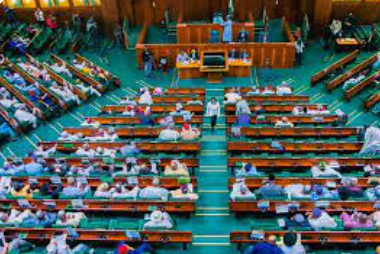
The House of Representatives, on Thursday, directed the Federal Inland Revenue Service, FIRS, to recover all taxes totalling over N5.19tn owed the Federal Government by ministries, departments and agencies, oil companies as well as individuals.

The resolution followed the adoption of a motion by the member representing Oredo Federal Constituency of Edo State, Esosa Iyawe.

Iyawe’s motion was titled, “Alleged non-remittance and under-remittance of tax by ministries, departments, and agencies of government, oil companies, and other organisations.”

Moving the motion the Labour Party lawmaker recalled that in 2021, “the FIRS revealed that the sum of N17. 69bn was owed in taxes by some companies, whose addresses were untraced to date, but no action was taken to locate or recover the funds.”

“Audit reports from 2015 to 2019 revealed government agencies owing hundreds of billions in FIRS taxes, comprising underpayments and under-recoveries and over 5,000 companies and MDAs of the Federal Government owing N5.2tn  in withholding taxes,” he said.

Iyawe further argued that under-remittance and non-remittance of tax deprived the Federal Government of the much-needed funds to drive its policies for national development, stressing that if the situation was not urgently addressed, the effect could be crippling on the country’s already dwindling economy.”

 He maintained that small-scale businesses in Nigeria were frustrated by multiple taxations by the FIRS while “states and local government authorities, multinational companies and other corporate organisations are getting the kid-glove treatment.”

Following the adoption of the motion, the House urged the FIRS to embark on a tax recovery drive while also mandating the Committees on Public Accounts and Finance to investigate the non-compliance on tax remittance by MDAs of government, oil companies, and other organisations, “with a view to ensuring that all debts in taxes owed the Federal Government are duly recovered, and report back within four weeks for further legislative action.”