Home Blog Page 1553

Nature is therapeutic (1)

0

Writing and talking about nature is one of the best decisions I have made in life. It is more than just pouring my thoughts about plants out. It gives me so much fulfillment. It is relaxing and calming. It makes me feel better when I am sad.

Times are hard and everyone is sad. I think we should be tilting towards mood- enhancing discussions often because of our mental health. I will like to talk about how being in nature can impact our health positively but before then, permit me to share a story my father once told me with you.

He told me that when Ogbeni Rauf Aregbesola was the governor of Osun state, he had a program tagged Walk-to-Live. It was meant to promote healthy living, as well as create a high sense of unity and productivity among the people of Osun state.

One of these walks was done in ile ife and some mentally challenged persons joined the governor’s entourage in walking from the town to Obafemi Awolowo University.

Immediately the people walking got to the university, the mentally challenged persons who joined them stood still, looked around and their movement changed.They became so calm!

He told me that after the walk, one of the comissioners gave a speech and she actually made reference to the mentally challenged persons and how the environment can have a calming effect on people.

If you have ever visited Obafemi Awolowo University, my alma mater, you will know it is a beautiful environment. What happened to the mentally challenged persons was that the greenery had a calming effect on them.

Hippocrates said “Nature itself is the best physician”. Join me as we go on the journey to unravel the impact that being in nature can have on our health.

The benefit of nature in keeping us emotionally, psychologically and physically healthy is enormous. Even without any greenery around, spending time in sunlight and fresh air may help you feel better in mind and body. The natural world positively affects the brain and nervous system, allowing for increased relaxation, decreased anxiety and improved self-esteem.

It can mean green spaces like parks, forests and spaces like rivers, wetlands and beaches. It also includes trees on an urban street and private gardens. Surprisingly, even watching nature documentaries is good for our mental health.

“There is mounting evidence, from dozens and dozens of researchers, that nature has benefits for both physical and psychological human well¬being.You can boost your mood just by walking in nature, even in urban nature. And the sense of connection you have with the natural world seems to contribute to happiness even when you are not physically immersed in nature.”says Lisa Nisbet, PhD, a psychologist at Trent University in Ontario, Canada, who studies connectedness to nature

In all honesty, Mother Nature may find the indoor world pretty tough to compete with sometimes. After all, she cannot offer flat-screen TVs, air conditioners or WiFi but she might potentially offer something even more important: Let us look at some of them:

  1. Better breathing

Air pollution can trigger allergies, asthma and other respiratory diseases. It might surprise you to learn, though, that indoor concentrations of air pollutants are often two to five times higher than outdoor concentrations. But spending more time in natural green spaces could help lower your risk of respiratory concerns.

One 2016 study examining the relationship between local greenery and mortality risk followed 108,630 women for 8 years. Compared to people with the least greenery in their neighbourhoods, people with the most greenery were 34 percent less likely to die from respiratory diseases.

  1. Improved sleep

Typically, your body’s internal clock follows the sun, making you feel awake during the daytime and sleepy at night. Although, artificial illumination can mimic natural light, direct sunlight has 200 times the intensity of office lights in a closed room. As a result, sunlight affects your circadian rhythm more than electric light.

Exposing yourself to sunlight can improve your sleep by: helping you feel more tired at night, thereby shortening the time it takes to fall asleep, improving the quality of your rest.

  1. More motivation to exercise

Working out in green spaces could help boost your motivation to exercise because outdoor exercise can:

a.offer a nice change of pace from gyms and make physical activity more interesting and enjoyable

b.make it easier to socialize, as many gyms have unspoken rules about not chatting to the person on the treadmill next to yours.

c.feel easier and less strenuous, according to 2013 research suggesting people who walk outside tend to exercise at a greater intensity and report less exertion

 Any activity that gets your body moving in a way that is doable for you, like gardening,  washing your car, can offer some health benefits.

4.Boosted immune function

Expert guidance suggests you are less likely to contract the virus that causes COVID-19 (SARS-CoV-2), not to mention other viruses, when outside.That is because air circulation can dilute the presence of viruses in the air. In fact, according to 2021 research, the chances of transmission are 18.7 times higher indoors than outdoors.

 Microorganisms found in nature that are not dangerous can run practice drills with your immune system, in a manner of speaking, to help prepare it for more serious infections.

If you live your life in a completely sterile environment, your immune system can lose its ability to recognize what is and is not dangerous. It may then set off a red alert for any microorganism it comes across, which can lead to chronic inflammation.

So, while soap is a wonderful invention, getting muddy once in a while can be good for you too.

5.Decreased anxiety and stress

Being in nature affects our brain and entire physiology.The sights, sounds and smells deactivate the sympathetic nervous system responsible for the fight-or-flight stress response. Breathing slows, stress hormones decrease and blood pressure lowers, allowing us to shift thoughts away from worries and anxieties.

Where we spend our time matters.–too much time indoors or living in crowded, noisy, polluted cities can increase stress and exacerbate mental health disorders. Stepping outdoors and experiencing nature counters these effects, helping improve symptoms of anxiety. In fact, research shows that more than 67% of people experience relief from stress when they engage with nature.

  1. Enhanced social connections

Nature walks can enhance social connections and foster meaningful relationships. Engaging in outdoor activities with others provides a shared experience and a common interest, which can lead to stronger bonds.

Time outdoors with a friend, family, or group offers a space for uninterrupted and meaningful conversations.The absence of distractions like technology or time pressures means individuals can fully engage with one another, thus increasing emotional intimacy and understanding.

A study titled What is the impact of nature on human health? A scoping review of the literature by Nejade et al, documented the increasing body of evidence in support of NBIs (Nature-based interventions) as effective tools to improve mental, physical and cognitive health outcomes and highlighted key factors that improve engagement with the natural world.

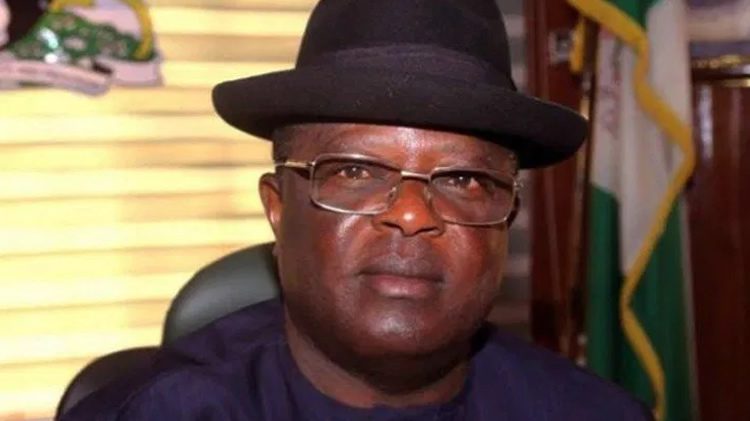
Umahi warns contractors towards shoddy street repairs

0

Minister of Works, Dave Umahi, on Friday, threatened to terminate the multi-billion naira Benin/Sapele and Ologbo road reconstruction if the contractors, Levant Construction Company, failed to comply with the scope and specification of the work.

The minister expressed dissatisfaction with the work and subsequently ordered the ministry’s supervising engineers to issue a warning letter to the contractors on Monday.

Umahi cautioned that he would terminate the contract if the contractor failed to do the right thing.

The minister, who had been on an inspection tour of work done on federal roads in Edo State, said that contractors in the country were playing politics with Nigerians and warned that he would not tolerate such under his watch.

He said, “By Monday, give them a warning letter to start permanent work, and if, by Monday, they didn’t start, give 14 days’ notice of termination. We paid multi-billion naira for this job and we have seen that a lot of contractors in this country are just playing politics with us.

“We will pay mobilisation fee to a contractor, we will never pay variation on price for that amount we have paid and that is the problem with Levant, and after 14 days of notice of termination, if they don’t adhere to the term of the contract, I will come and terminate the job myself.

“You cannot do this kind of job in your country; it can only happen in Africa. You can’t collect our money and be misbehaving like this. It is a big shame; look at how people are suffering everywhere and we should be happy clapping for you. I have had more than 10 meetings with them on this job,” he said.

Meanwhile, the Ondo State Government has begun the constitution of roads in the rural areas in the three senatorial districts of the state, under the Rural Access and Agricultural Marketing Project.

It was gathered that the project which was launched on Friday by the state Governor, Lucky Aiyedatiwa, was to ease the transportation of farm produce to the urban centres.

At the launching of the N1.2bn project in Oda community in the Akure South Local Government Area of the state, Aiyedatiwa said the project was part of the government’s commitment to the development of rural communities in the state.

According to him, the road project will kick off with the construction of 15.5km long and will cut across Oda Cocoa Board – Camp 2 – Lagbido road in the local government.

He said, “From the inception of our administration, we made deliberate efforts to put in place several life-changing programmes and projects geared towards improving the livelihood and living standard of our teeming farming population.

“It was our resolve that the government needed to do more in the rural areas of Ondo State and I am glad that the road project being flagged is not only fulfilling this position but marking the commencement of the construction of several rural roads by RAAMP.

“Let me reiterate our commitment to the development of the grassroots and by extension the people of Ondo State, I am using this medium to assure you that we shall continue to embark on more developmental projects for the benefit of our people”.

In his remarks, the state Project Coordinator of RAAMP, Femi Adetanmi, revealed that the project was estimated to cost a sum of N1.2bn and was expected to be completed within the space of 18 months.

He explained that the roads would be useful to the people of Ondo State as it would give the farmers easy access to transport their farm produce and goods and thereby reduce food scarcity.

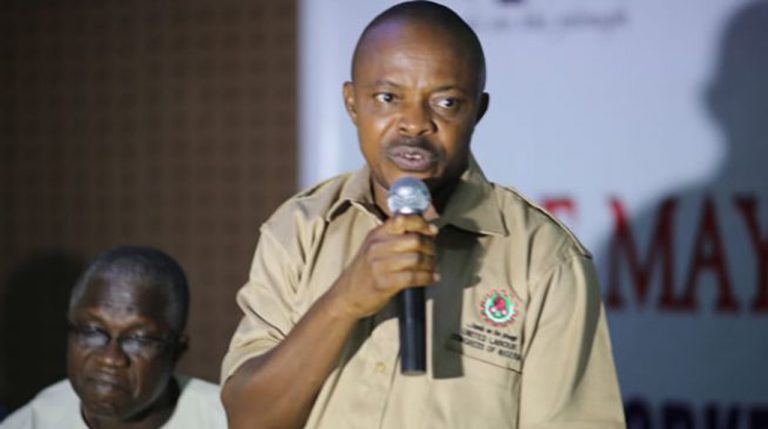
NLC but to find out new minimal wage, says Ajaero

0

The Nigerian Labour Congress has distanced itself from the N500,000 being canvassed as the new minimum wage, saying it has yet to adopt a position on an amount to be presented to the tripartite committee on the new minimum wage for workers.

The President of the NLC, Joe Ajaero, disclosed this to Sunday According in an interview with our correspondent in Yola, Adamawa State.

Speaking at the sidelines of the North-East zonal public hearing by the tripartite committee on national wage, Ajaero noted that the N500,000 and N700,000 being proposed as new minimum wage is unknown to the NLC.

According to him, all the figures flying around should be disregarded because the NLC as a body had yet to adopt a common presentation on the new minimum wage.

He said, “The N500,000, N700,000 you are hearing are being collated at the level of the states. In Lagos and other places, I think they are about N700,000 while in other places they are talking about N500,000 which are inputs collated from geopolitical zones.

“But the NLC secretariat has not made any presentation, these minimum figures are what is coming from the states. When we collate them then we’ll do a central presentation based on the raw materials we are getting from states.

“It (minimum wage) has to be relative to the cost of living in those states. You will agree with me that rent here is not as that in Abuja, and not the same thing as in Lagos. So relatively speaking you won’t have a straitjacket-like presentation by Labour in all the states.”

On his part, the Chairman of the Nigerian Medical Association, Adamawa State, Dr Solomon Bulus, said the Nigerian Medical and Dental Council backed the implementation of the N500,000 new minimum wage because it would drive down the hardship being experienced nationally.

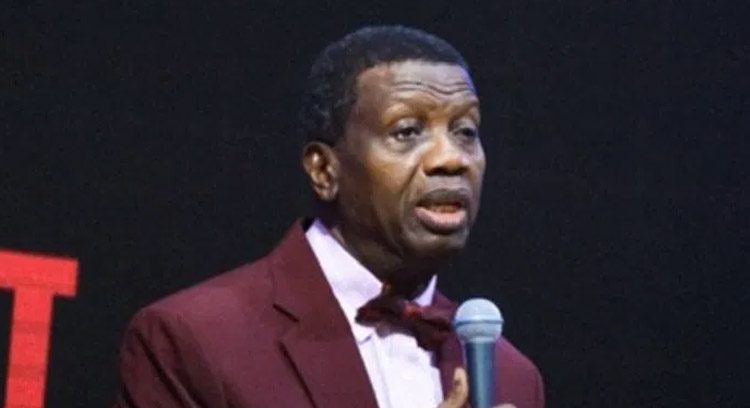
RCCG youths go to orphanages to mark Adeboye’s birthday

0

The youth arm of the Redeemed Christian Church of God recently embarked on a Christian Social Responsibility initiative aimed at positively impacting the lives of individuals within our community.

This initiative was dedicated to honouring the 82nd birthday of the General Overseer of RCCG, Pastor Adeboye, celebrated on March 2, 2024.

In a statement, the group highlighted that the CSR project was meticulously planned and executed by the province, with a keen focus on addressing critical needs within our community.

Activities undertaken by the youth included providing health care support such as newborn care packages and covering hospital bills for babies born on March 2nd, 2024, as well as welfare support and visiting orphanages.

The locations visited during this initiative included Heritage Homes Orphanage, Little Saints Orphanage Headquarters Administration and Donation Centre, Institute of Maternal and Child Health, and RCCG health centre in the Redemption City campground.

Part of the statement read, “In line with the principles and values espoused by Pastor E. A. Adeboye, the RCCG LSC the Bridge, and Youth Province 1 embarked on a CSR initiative aimed at positively impacting the lives of individuals within our community.”

“The CSR UNIT, understanding the importance of serving humanity and uplifting the less privileged, dedicated their time, resources, and efforts to make a tangible difference at the four locations.

“Through collaborative efforts and unwavering commitment, the CSR UNIT successfully brought smiles to the faces of many, embodying Pastor E. A. Adeboye’s message of love, compassion, and generosity.

“The impact of this CSR project executed by RCCG LSC The Bridge and Youth Province 1 extends far beyond the immediate beneficiaries, serving as a beacon of hope and inspiration for others to follow suit.

“As Pastor E. A. Adeboye continues to inspire millions worldwide with his unwavering faith and dedication to humanity, we are proud to honour his legacy through meaningful action and service.”

Households lament as costs of egg, pepper, others soar

0

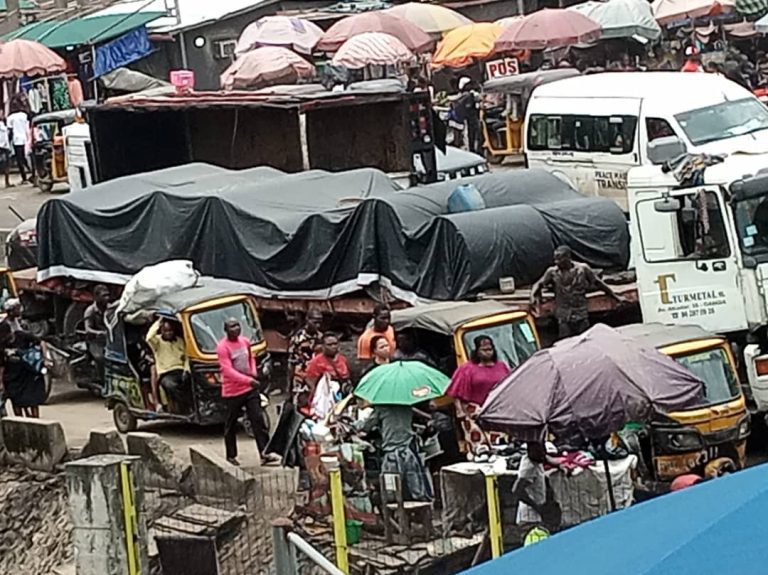
Many families are feeling the effect of the hike in the prices of staples like rice, beans, eggs, tomatoes, and peppers, Sunday According has learnt.

Several mothers, who spoke to our correspondents, lamented that the prices of foodstuffs had continued to rise despite several interventions by the Federal Government.

Egg, for instance, which used to sell for around N2,700 for a crate in December 2023, has increased to almost N5,000. This has made one egg, which used to be N100, to sell for N200 now.

Long grain rice, which used to sell for around N47,000 for a bag in December, now goes for almost N80,000. This has made a paint bucket of long grain rice now sell for N7,000 as opposed to N4,500 in December.

Pepper and tomatoes have also become expensive, and some sellers only sell between six and seven balls of scotch bonnet pepper for N200. The same quantity of tomatoes, according to multiple market sources, now sells for above N200.

The prices of other staples have continually been on the increase for weeks, putting pressure on the pockets of families.

Many mothers lamented that the money given to them by their husbands for feeding was no longer enough to cater to the needs of the family.

A mother of four, Mrs Tomiwa Ogo, said with the increase in the cost of chicken and beef, her family moved to eggs as a cheaper option.

She said, “I don’t know what the government wants us to do. My family’s monthly feeding allowance for more than two years was N40,000. In January, my husband increased it to N60,000; I am shocked that it is still not enough. I carry everything I buy with that money in just two sack bags. I cannot even afford to buy rice and beans the way I used to.

“We stopped eating meat in my house in January. We opted for eggs. Now, I don’t know if buying meat is better than getting eggs. Egg now sells for almost N5,000 a crate. I bought it for N4,700 last week. How do we survive?”

Another mother, Mrs Tomike Adefarati, said a paint bucket of tomatoes, which she bought for around N2,000 in December, now sells for N4,500. The price of pepper, according to her, has also doubled.

“Now, they no longer sell pepper and tomatoes for N200 like they used to do. If they sell pepper and tomatoes for N500, you will be shocked about the outcome. It is very small. I counted just seven or eight balls of scotch bonnet (atarodo) peppers for N200. The situation is just too much for me,” Adefarati stated.

Another woman, who gave her name simply as Chiwendu, said she had to take her family members to the market so that they would understand the need to tighten their belts.

She explained, “When they saw that eggs were selling for N4,700 a crate, I didn’t need to tell them why they could only have one egg per day and could sometimes have their meals without any form of protein.

“As a mother, this is a very difficult time. I am not pleased at all with the way this economy has put pressure on my pocket. I always have to increase my budget when I get to the market because the prices I buy before always change. I wonder how people with larger families are coping.”

A pastor’s wife and mother of five, Evangelist Sola Omotola, said she had extra mouths to feed because of her role as a pastor’s wife.

Omotola stated, “Every Sunday, the number of people who troop to my house to ‘greet’ me is more than 20. And for every one of them, I have to offer something. I have five teenagers. One is 19 and has just been admitted to study Geography at the University of Lagos. The rest are hungry teenagers who need a lot of food to grow.

“The money my husband makes has remained the same for more than five years. I don’t work. I am a dressmaker, and I only get money when people order dresses. Is it not people who have eaten that will make new clothes? The strain on our finances is a lot, and we beg the government to intervene before it becomes too late.”

Food prices soar

Findings by our correspondents at the Ibafo Market, Ogun State, revealed that a bag of rice sold for N36,000 last year, but now sells for N79,000, while a paint bucket of rice now sold for N6,000 (foreign) and N5,000 (local) from the initial prices of N3,000 and N2,500 respectively last year.

A bag of drum beans has jumped from N40,000, which it sold for last year, to N145,000.

A carton of spaghetti, which sold for N9,000 in December, now sells for N16,000; a pack that was sold for N450 is now N950. Similarly, 10kg of semovita, which sold for N7,000, now sells for N14,500, while the price of a carton of small noodle packs sells for N6,500 from N3,200.

A kilo of kote fish (horse mackerel), which sold for N1,500 last year, currently goes for N3,200; sawa (herring fish) increased from N800 to N2,500. A kilo of Titus fish (mackerel) increased from N2,200 to N4,600; turkey which sold for between N2,500 and N3,000 a kilo in December, now sells for N6,200.

At the Mushin Market in Lagos State, the cost of foodstuffs has also soared.

According to sellers, a crate of eggs now sells for over N4,000, while a paint bucket of white garri goes for N2,800 and the yellow garri sells for N2,600.

For beans, a paint bucket of honey beans sells for N6,000 instead of N3,000 it sold last year.

A pack of spaghetti retails for N900, and a pack of super pack noodles now sells for N500.

Traders lament

Some traders, who spoke to one of our correspondents at the market, lamented the struggle they face daily to sell their produce to buyers as a result of the increased cost of foodstuffs.

According to them, the high cost of foodstuffs has made it difficult to sell to customers and also make profits.

A foodstuffs seller, who gave his name simply as Divine, said he was afraid of how much foodstuffs would cost when he next went to stock his shop, noting that the cost of buying in bulk was scary.

A foodstuffs wholesaler, Emma Azubike, said, “The cost is not only affecting the customers, but is also affecting us the sellers because you have to speak so much to convince some customers that the prices have increased.

When you tell them the prices and you don’t explain more to them, they will leave and not everyone will come back when they eventually find out in other places that what you told them is true. So, it is affecting the sales.”

A trader in Lagos, Madam Ireti, said, “We only know the price of the foodstuffs today, you don’t know what will be tomorrow and that is the major problem. As you are aware, we also buy from people; they can come today and by tomorrow the cost of an item will have increased; you will not have a choice but to buy it and also increase the cost.

“It is like a chain that when anything happens at the top or the middle, it will affect the bottom. We only hope that the government does something as soon as possible to resolve these issues before things get out of hand.”

On his part, a foodstuffs retailer, Mrs Katherine Ajao, said, “It has been difficult. The patronage has reduced from what I used to have before because of the increase in prices. The problem is that I can go to the market to buy some food items today, but by tomorrow I will hear that the items have increased, so instead of making a profit with what I have in stock, I will be looking to borrow to add to the items on the ground. This is making doing business so difficult.”

A foodstuffs vendor at Oja Tuntun, Ilorin, Kwara State, Suliat Olanrewaju, expressed deep concern over the current high costs of goods amid the weak state of the economy. Comparing prices from last year to now, she noted a significant increase in the price of noodles which rose from N4,000 to N10,000 for a table and from N12,000 to N20,000 for a small pack.

She said, “This surge in food prices has made it difficult for many people to afford necessities, with some now struggling to purchase even a fraction of what they could afford previously.”

Despite selling noodles, Suliat stated that she had been unable to afford them herself this year due to the increased cost.

“Rice and garri, staple foods once considered affordable for the poor, are now priced at N2,500 for eight cups of rice compared to N800 last year. I urge the President to address the current economic challenges promptly,” she added.

Economists weigh in

Meanwhile, an economist and former director of the Central Bank of Nigeria, Prof Akpan Ekpo, has suggested measures the Federal Government can take to mitigate the daily rise in food prices and other essentials.

According to him, the government must set short and medium-term goals to make living easy for the citizens.

Ekpo noted that whenever the prices of goods go up, they hardly come down.

He said, “In the short term, we have no choice but to import food for people to eat because prices are going up every second. Also, I don’t know how they will do this; they have to return to manage float because what we are seeing is exchange rate pass-through.

“The naira has a free fall and because of that, it is passing through to prices. If we can return to a managed float and we do that managed part very well, we may have some relief.”

Reacting, a professor of Economics at the Olabisi Onabanjo University, Sheriffdeen Tella, said the cost of foodstuffs had continued to increase due to lack of sufficient food production.

He stated that the government should adopt a medium-term plan to curb the continued skyrocketing of prices.

“The prices can’t come down immediately because there is not enough food production, and that is why there is scarcity. There is still insecurity in food production. When the dollar-naira rates begin to stabilise, there will be some shortfalls in food production. The government should have a medium-term strategy like releasing food from warehouses. If it can go round, it will bring down the prices of commodities,” he said.

Export Prohibition Act

Meanwhile, President Bola Tinubu has ordered total compliance with the Export Prohibition Act to check the smuggling of food items out of the country.

The Comptroller-General of the Nigeria Customs Service, Mr Wale Adeniyi, disclosed this during a meeting with the leaders and members of the Dawanau International Grains Market, Kano, on Friday.

He stated that the Act had not been implemented in the past because Nigeria had food sufficiency.

Adeniyi said now that the country was passing through a food crisis, the President had directed that the Act must be fully implemented to ensure that food items were not exported when people were in dire need of them.

The comptroller-general urged the grain dealers to assist the government by complying with the directive banning the exportation of food items to provide enough food for the people.

Adeniyi stated, “It is unwise for a reasonable and sincere country to embark on the exportation of food items when her citizens need them.

“You are big stakeholders in this direction and these are the reasons why I am here to interact with you and solicit your support.”

El-Rufai by no means wished ministerial job, says son

0

Member representing Kaduna North Federal Constituency in the House of Representatives, Bello El-Rufai, has said Nigeria lost an effective administrator in his father, former Kaduna Governor, Nasir El-Rufai, after the Senate rejected his appointment as minister.

Bello said it took his pleas and those of other family members for his father to accept the ministerial nomination from President Bola Tinubu.

He made this known in an interview with a media personality, Seun Okinbaloye, on a podcast, Mic on Podcast, sighted by our correspondent.

The Senate had in August, during the confirmation of the ministerial list sent by Tinubu, refused to confirm El-Rufai’s nomination as well as those of two other nominees for appointment as ministers.

The Senate confirmed 45, out of the 48 ministerial nominees sent by the President.

The President of the Senate, Godswill Akpabio, said the three nominees not confirmed would be subjected to further security checks and urged those not confirmed to take their matter to the President.

Those rejected were El-Rufai, Stella Okotete (Delta), and Sani Danladi (Taraba).

Reacting to this, Bello, who doubles as the Chairman, House Committee on Banking Regulations, said he was disappointed when he learnt that his father’s nomination was rejected.

He said, “I was in the National Assembly when my father’s nomination was rejected. It was very disappointing and still is. Myself, the Governor of Kaduna State, Uba Sani,  and one of my father’s commissioners, Mr Hafiz Bayero, played a key role in convincing my father to work with this current government.

“He (Nasir) didn’t want it. It’s hard for Nigerians to believe it because they feel it is everyone in Nigeria who wants to be a minister.

“To be fair to him, he didn’t want the job. We convinced him that, with the antecedents of Asiwaju, he would create an excellent team as he did in Lagos.

“The President wanted to work with him. It was clear when he came to Kaduna. We also had an idea of what his portfolio would be. It was meant to be power and gas. He insisted to the President in private that Nigeria would not sort its electricity issue if gas was not put under the other components of power.

“The irony is that nothing has been rougher than the lack of power in the last two weeks. I’m disappointed because Nigeria lost an effective administrator in my father, one who is willing to make difficult decisions to solve a problem.”

Bello, further speaking, said many Nigerians do not really know his father.

He said, “My father is a very simple person who’s been stereotyped a lot. I got a video of him where people say this or that about him without even knowing him.

“My father does not go out of his way to change what people think about him. He doesn’t really care.

“There’s a perception that he’s anti-Christian. But, the closest person to him since we (children) were four years old was a man from Cross River State, Peter Jones.

“Religion is personal to us. As minister of the Federal Capital Territory, he demolished mosques. The imam said he hated Islam. He demolished churches and the Christians said he hated Christians. Maybe, it is the wrong imams and pastors who have issues, not him.”

He added that his father was highly flawed in many ways, noting that he was, however, in the league of ‘astute administrators’ like Dora Akunyili, Ngozi Okonjo Iweala, Nuhu Ribadu, Charles Soludo and Akinwunmi Adesina.

No rift with Kwara income company, say Igbo merchants

0

The parent body of Igbo traders in Kwara State, Igbo Community General Assembly, has said it has no disagreement with the Kwara State Internal Revenue Service.

It also commended the Chief of Staff to the governor, Alhaji Mahe AbdulKadir, and the Senior Adviser to the governor, Alhaji Saadu Salahu, for intervening in the impasse between the Igbo traders and the revenue agency.

The union made known in a statement signed by the Special Assistant on Community Relations (Igbo) to the governor, Igwebuike Angus.

The statement read in part, “Assuredly, the dexterity and unassuming charisma you both displayed while interfacing with the parties did assert the right narrative. We’re eternally grateful and will continue to contribute our quota towards the development of our dear state.

“Our resolution to both partner, support and identify with developmental strides of the Executive Governor of Kwara State, Mallam AbdulRahaman AbdulRazaq, is unwavering. The concerted efforts of the government to move Kwara State from a civil service state to a nerve of commerce and industries is our delight as chief drivers.”

Igbo traders, under the aegis of the Igbo Traders Association, shut their shops in various areas of Ilorin recently over what they described as intimidation and over-taxation by the Kwara State Internal Revenue Service.

However, Angus, in the statement, described the Igbo in Kwara state as law-abiding residents who would not want to be dragged into any unnecessary feud with any government agency.

“For us, payment of tax is a mandatory obligation that must be discharged. The record speaks for itself that the Kwara State Government once gave this community an award as ‘Most Responsive Association’ in Kwara concerning tax remittances. On this, we can only say, we’ve done it before and we’ll do it again.

“We want the general public to note that what happened on March 1, 2024, which some self-serving actor(s) wants to blow out of proportion is just one of those negotiations that’s typical in any business environment. At no point in time did the Igbo withdraw or withhold their services cum businesses in town.”

Tears, encomiums at Herbert Wigwe’s weeklong burial

0

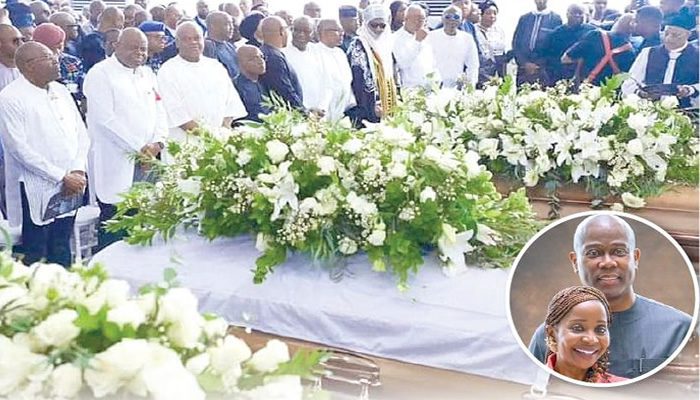
The demise of Herbert Wigwe, a revered figure in African banking and philanthropy, left a lasting impact that prompted an overwhelming wave of sorrow and remembrance. During the week, prominent figures from various sectors and countries came together to pay tribute to the late banking magnate, his wife, Doreen; and son, Chizzy.

Amongst the notable personalities that honoured him with their last words were, former US President, Bill Clinton; France president, Emmanuel Macron; Lagos State Governor, Babajide Sanwo-Olu; business mogul, Aliko Dangote; Wigwe’s colleague, Aig-Imoukhuede; and the 14th Emir of Kano, Mohammed Sanusi.

The tributes were divided into different segments that focused on different aspects of Wigwe’s life and legacy. Speakers dwelt on different aspects of his life: the young Herbert; Herbert the banker; Herbert the entrepreneur; Herbert the CEO, Herbert the builder, and Herbert the ambassador.

Sharing her words of tribute, Wigwe’s daughter, Tochi, highlighted the personal side of her father that many were not privy to. She spoke about his unwavering love and support for his family, his dedication to being a present and caring father, and the special moments they shared together. She said, “In this moment, for the first time, your words resonate deeply within me. No longer do I want to tilt my head and squint my eyes in confusion. You were simply extraordinary. I could never fathom how you managed to do it all; it seemed inconceivable. Turning everything you touched to gold while remaining an unwavering anchor for your family and friends. You’ve left me with enormous shoes to fill but you’ve also gifted me with an unwavering support system.”

On his part, Lagos State Governor, Babajide Sanwo-Olu delivered a moving tribute, highlighting the deceased’s contributions to the community and his exemplary leadership in the business world.

Related News
  • Eulogies as Akpabio, govs, others bid Wigwe, wife, son farewell
  • Wigwe, wife, son buried in Rivers
  • Wigwe, wife, son’s corpses arrive as Dangote, Fubara, others present

Wigwe’s dear friend and colleague, Aigboje Aig-Imoukhuede, concealed the tears in his eyes as he gave his heartfelt tribute. He recounted memorable times and described Wigwe as a man of mission who wanted to do so much. He said, “Herbert was committed to building an African continent where men and women can aspire and live to their full potential. He isn’t the only person committed to this objective, but there are very few people in the world whose life and legacy illuminate this commitment the way Herbert Wigwe has. Some have told me that in the last few months, Herbert was very concerned about the state of our nation and continent. This is indeed true and Herbert knew that time was not on our side. Herbert’s purposeful legacy lies in what he was preparing to embark on, a collaborative commitment to building an African continent we will all be proud of. In memory of Herbert, let the work begin.”

Wigwe’s PA, Sola Faleye, was the last person to see his boss alive. While paying a tribute, he narrated his last encounter with Wigwe shortly before the chopper crashed. He narrated how luggage issues saved him from joining the chopper. He also spoke about how much of a visionary leader Wigwe was adding that his dreams are scattered everywhere germinating and growing.

In his tribute, Bill Clinton said, “Words cannot ease the pain of such a tragic loss.”

At the burial on Saturday, March 9, Dignitaries gathered at the Redeemed Christian Church of God in Isiokpo for the funeral service of the late Wigwe, his wife and son. Notable figures such as Governor of Rivers State; Siminalayi Fubara, Senator of Bayelsa State, Douye Diri and a former Nigerian Ambassador to Scandinavian Countries, Dr. Godknows Igali, were in attendance at the funeral.

Clergy members, traditional rulers from Omoeke (Wigwe’s hometown), and monarchs from Isiokpo were also in attendance.

Sowore reunites with household 5 years after journey ban

0

Pro-democracy activist and presidential candidate of the African Action Congress in the 2023 general elections, Omoyele Sowore, has reunited with his family in the United States of America after the Federal Government of Nigeria discontinued the treasonable felony case preferred against him.

Details of the reunion were revealed on Saturday via pictures obtained by Sunday According showing Mr Sowore, his wife, daughter, and son, which were posted on his official social media pages.

Sowore who left Nigeria through the Murtala Muhammed International Airport at exactly 11pm Friday night, described his initial inability to be with his family members in the US for five years as “unlawful, unjust, and inhuman detention by the corrupt Nigerian political system since August 2019.”

He vowed to sue the Federal Government of Nigeria and the Department of State Services to the tune of N100bn, for cost of time and resources, mental and financial trauma caused his person, businesses, his wife and children, and his extended family, and the alleged assassination of his younger brother, Olajide Sowore in 2021.

The activist made the development known in an exclusive telephone interview with our correspondent while noting that the FG must also pay the sum of N3 million awarded to him as compensation during the course of the trial.

He also asked that the Department of State Services return his passport and his mobile phones which were seized after he was arrested and detained in August 2019.

Meanwhile, Sunday According reports that the Attorney General of the Federation and Minister of Justice, Lateef Fagbemi, in a document dated February 15, 2024, addressed to the Federal High Court of Nigeria, Abuja Division, disclosed his intention to discontinue the case against Sowore’s co-defendant, Olawale Bakare, aka Mandate.

Earlier on Friday, Sowore, on his Facebook account, criticised the All Progressives Congress government led by former President Muhammadu Buhari for his detention.

In the lengthy post titled, ‘The Struggle Continues: Sowore Departs for the USA after Five Years’, he wrote, “Later today, I will be returning to the US after almost five years of my unlawful, unjust and inhuman detention by the corrupt Nigerian political system since August 2019.

“I was arrested, assaulted, tortured, and detained for demanding that Nigerians deserve a nation that they can truly call their own. I was charged with treason – and after five years, the APC government was forced to withdraw its trumped-up charges against me.

“If the government thought that keeping me detained and later restricting my movement would break my spirit and cause me to renounce my commitment to fighting for the downtrodden Nigerian people, they are mistaken,” the statement read among others.

Sowore further said that the years of his detention made him miss out on precious moments with his wife and children while his mother’s health deteriorated due to the “unrelenting assault” on him, adding, “My associates have faced arrest, and some imprisonment.”

Continuing, the activist said, “In the last five years, I have been denied the ability to visit my family, I lost my brother to gunmen on Nigeria’s roads. I stand today to declare that I am unbowed. My commitment to Nigeria is unshakable. My resolve to continue to fight for the betterment of the Nigerian nation and to demand accountability from her leaders will never be compromised.”

While lamenting that corruption remains high and Nigerians are worse off today than they were five years ago, Sowore stressed that inflation is making it difficult for Nigerians to put food on their tables even as Nigeria’s currency has been devalued by almost 100 percent.

He commended and appreciated his lawyers, colleagues, and fellow revolutionaries at home and abroad who stood by him, including Femi Falana, SAN, adding that “Nigeria will be free of corruption someday.”

Sowore stressed further, “I’m not supposed to be congratulated because the federal government had decided to discontinue the symbolic treasonable felony case against me. I didn’t commit any crime. They only decided to waste my time and the resources of the country.”

Earlier, the trial judge, Justice Emeka Nwite of the Federal High Court sitting in Abuja, had on Wednesday, February 14, threatened to strike out the over four-year-long alleged treasonable felony case by the Federal Government against Sowore.

Sowore was arrested in Lagos State by heavily armed DSS operatives at midnight of August 3, 2019, two days before a planned #RevolutionNow protest tagged “Days of Rage,” convened by the pro-democracy activist and slated for August 5, 2019.

Following his abduction, he was flown to Abuja and detained in solitary confinement for over four months at the headquarters of the DSS popularly known as ‘Yellow House.’

He was subsequently arraigned in court for trial by the DSS, who flouted court orders mandating the Secret Service to release him on several occasions.

However, the activist was later released following a lot of pressure from civil society groups, the media (including The According), and the international community, including a United States lawmaker, Bob Menendez, amongst others.

Following his release from detention in December 2019, he was confined within Abuja for over two years by the court and was later mandated not to leave the shores of Nigeria, after he was allowed to travel outside Abuja.

During these periods, his younger brother, Olajide Sowore, was assassinated on the highway, and his assailants have yet to be found. Also, his wife, Opeyemi Sowore, daughter, Mamike Sowore, and son, Komi Sowore, who live in the US, have at different times narrated the negative effects of the prolonged confinement of Sowore to the family.

Folks shedding religion in Nigeria’s economic system — Akinwumi Adesina

0

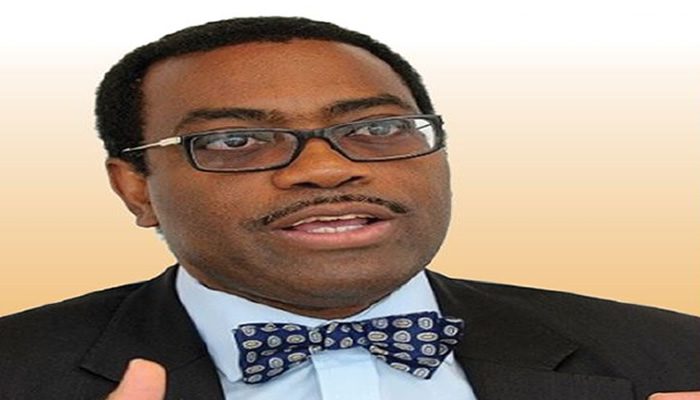
President of the African Development, Akinwumi Adesina, tells OYETUNJI ABIOYE about his career, economy, family and other issues

Do you think the Nigerian economy can cope or survive with the current exchange rate of over N1,500/dollar?

No, it cannot. The slide of the naira is because people are losing confidence in the economy. That is why I was saying that the way to deal with that is to see if we can expand the inflows of foreign exchange into the country. And hopefully, I just saw what the Governor of the Central Bank is doing in terms of the Monetary Policy Committee, as regards raising interest rate. I guess that will work, probably for the portfolio investors, but again, there are other consequences it could have in terms of investment in the critical sectors that you need to grow to be able to produce more and have the kind of export oriented-industrial manufacturing stance.

It is a balance between short-term solutions and long-term structural things that need to be done. I believe we need to deal with the short-term but keep the eye on the long-term structural things that must be done, and I will continue to maintain that. If you have an import-dependent economy, and you have a lot of forex like we used to have in abundance, and we were using that foreign exchange to shore up the naira, we are killing ourselves.

First, that way, you are making import much cheaper because of the overvalued exchange rate.

Second, you also have a situation that is killing the domestic economy, because the productions of other industries are negatively affected by that.

Third, the non-oil economy that you need to be much more performing requires revalued exchange rate, because they are not traded in dollars, but in domestic currency equivalent. That means if your currency was much more devalued but not collapsing, you would have had a lot more opportunity to be competitive in the export of other items. It is like a flood is coming and you are trying to use your hand to stop it. Eventually, the flood will carry you and your hand away. I think we need to take a very serious look at that.

Take the case of places like Netherlands for example. About a year or two ago, they were earning over $90bn a year from agricultural exports alone. Yet, how much land do they have? South Korea was earning about $230bn from exporting machinery and other electronics. We have top brains in this country. So, being competitive in the digital industry is important. Of course, we are doing well in the creative industry and others. We need to build those platforms that allow us to have that export-oriented manufacturing stance. I remember when I came to Nigeria a year or two ago, I gave a lecture to the Nigeria Manufacturers Association, and I remember they said that they liked the solutions I gave them and will like to turn it into a national policy.

If minimum wage is increased like it is being agitated, don’t you think that will lead to a crisis, because the private sector will not be able to match up?

As the President of the AfDB, I try not to get involved in domestic government policies, because those are domestic things government has to worry about.

But, I can only say in the general sense that simply increasing nominal wages in a high inflation environment is self-defeating, because at the end of the day, what matters is the effective purchasing power. So, keeping inflation down is the main thing. There are monetary policy issues that have to be taken. There are also a lot of other fiscal areas in term of expanding access to forex and changing the mix of national instruments available to government in terms of expensive commercial loans, which will also add to the problem. At the end of the day, nominal wage increase in a high inflation environment is going to run away from you. Keep your eye on just making sure that inflation goes down; and for that inflation to go down, a big part of what consumers are spending on should be produced locally.

How can the issue of unstable power supply be dealt with to help manufacturers?

There is no reason Nigeria should have epileptic power supply, simply because that is the cost of doing business. If you are not able to produce enough power domestically, and you are not able to be competitive in the local or regional markets, that is a problem. I think that Nigeria has a lot of potential for hydro and solar power across the country. In some areas, such as the Mambilla Plateau, there is even potential for wind power. As a country, we ought to be talking about having about 60,000 or 70,000 megawatts capacity, not 4,800MW that we currently generate. If Nigeria is to develop fast and grow in double digits, it must solve its power problem. But, more than solve it, it must accelerate it in a quantum way to allow Nigerians have low-cost power. I cannot emphasise it enough that if we don’t have electricity, the economy cannot grow. Running on diesel is not the way to run an economy. A lot more priority needs to be put on power; and it’s not rocket science.

At the African Development Bank, we are supporting 11 countries in the Sahel zone of Africa, and that includes the northern part of Nigeria, to develop 10,000 megawatts of solar power. It is called ‘desert to power’, and it is a $20bn investment that would provide electricity for about 250 million people. Basically, what I am saying is that there has to be a combination of thermal power, hydro power, solar power and every other resource we have, because the nation cannot develop in darkness.

The International Monetary Fund has said that Nigeria has brought back fuel subsidy through the back door, and the World Bank has equally mentioned the same thing. Considering the pain this policy has caused Nigerians, don’t you think it should be stopped and a different policy direction taken?

I am not going to comment on the efficacy or otherwise of any domestic policy of any country, but the only thing I can say is that you cannot have surgery without anesthesia, or the distraction of anesthesia. At the end of the day, the impact of policies is on the livelihood or the living standards of the people, and I am sure that every government would want to look at the desired and undesired impacts of any policy, and try to have an adaptive way to adjust based on the realities that you actually face. At the end of the day, regardless of the country, if you are a pilot and you are going right through a headwind, you can either continue to do that or you go in a different direction. Public policies are always very important in the face of realities that we face, and I am sure the government must be thinking about that.

You have won several awards over the years. How would you rate the Obafemi Awolowo Prize for Leadership Award you just received, and what does it mean to you?

I have got quite a lot of global awards, but this is the first award I am getting that makes me emotional. It makes me emotional, because it is about somebody I revered because of his ‘welfarist’ policies. Without those policies, I might not have gone to school. For me, it is very special thing, and that places it not in my head, but in my heart.

Also, I don’t believe that awards are things you hang on as trophies. Rather, awards are supposed to make you have a sense of great accountability to do more. For me, the Obafemi Awolowo Prize further reinforces what I already believe in. I am 100 per cent into welfarist and people-centric policies, because I think development should be about people, and that leaders should lead with their hearts, not with their heads. You need your head to think, but you must lead with your heart. That is the work I believe Awolowo did, and is the philosophy I believe in too. I have patterned myself after those welfarist policies and in terms of what I really do.

When people look at our economy, it is often said that there is no depth in what we do. Do you think we need a critical mass to achieve the kind of change we want to see?

I think developing a critical mass depends on what you want to change; so first and foremost, we need to have some things that should not be acceptable. We should not be accepting that Nigeria is a poor country or has no electricity. We should not accept that Nigeria cannot feed itself and that is why, for me, it is not just the way you want things to be organised but what you organised for. It is what you want to change. Leaders may have intrinsic capabilities to lead, but the people don’t eat your intrinsic capabilities. They want to see changes in their lives.

We should focus on what is acceptable or not, and what has become normalised. The abnormal has been normalised in many cases, and we have come to accept certain things. We should be a global player in the world, in terms of manufacturing, agriculture, education, trade and competitiveness. If you talk about leadership, it is leadership for what and to make Nigerians what? There is a difference in managing people in poverty, not where we are but where we should be. That is what we develop leadership for. I don’t need to know the difficult situation before giving a solution. I just need to write what I hate and develop a solution; that’s all.

What does inspiring inclusion mean to the AFDB?

I am a very gender-sensitive person, and I consider myself a defender of women’s rights, which I have been doing since very early in my career. I believe that no bird can fly with one wing. Every bird flies with two wings. You cannot develop any economy, unless you give the same rights to the women as you give to the men. Your gender should not have anything to do with how smart or capable you are.

Categorisation is not something I take lightly. I believe in girl child education because we have a problem in terms of high birth rate and fertility rate, and that happens a lot because the girls are not in school. I also think that women are the best in bringing up kids. They set values, but they must also have economic freedom, and enough resources to achieve that.

I also believe that financial investments in women are the best investments you can make, because if you invest in a woman who goes to school, has a business, and money, they will invest in their kids and solve malnutrition and stunted growth issues. They would make sure they have a decent household.

So when I took a look at it at the African Development Bank, I launched the Alphabetic Finance Action for Women in Africa. The goal is to mobilise $5bn for women’s businesses alone in Africa, because women can run businesses, but they don’t have access to land, collateral, and finance, simply because financial institutions mostly give those to men. So, I decided that we would change that and last year, we approved $1.5bn just for banks and financial institutions to help businesses owned by women.

When you talk about inclusiveness, I can include you and put you at the bottom; but I think that women deserve inclusiveness at the top, not only in finance, but also in the boardrooms.

What is AFDB’s policy when it comes to the inclusion of women?

It is making a difference every single day in the lives of young people in our urban and rural communities. Making a difference in the economy and making sure that Africa can develop with pride. That is what we do every single day. At the AFDB, I made a decision that we would not just be known for the banking part but also for our development strides.  You have to accelerate that development and we are a very noble financial institution. Just last year, we were rated the best multi-lateral financial institution in the world. We were also ranked as the most transparent financial institution in the world.  Today, we are a global financial institution working in Africa, and I say that because I am someone who believes that I have great staff, fantastic shareholders, and world members. Every single day, our motto is working constantly selflessly and in patience to accelerate Africa’s wealth.

We are currently facing a foreign exchange crisis as a country. How do we navigate it?

It is not easy to talk about some of the challenges that Nigeria is facing. And they are not unique to Nigeria, especially in terms of rising global interest rates, and the fact that you also have a situation of rising debt levels and rising debt service levels that have been going up because of the rising interest rates, as well as the depreciation of many currencies, including the naira. That means that the net debt exposure that you have serviced and the cost of actually doing that has gone up significantly at a time in which concessional financing globally has been going down. Therefore, the only way in which countries like Nigeria and others can get more access to capital is to go to the euro bond market and global capital markets, which again becomes more expensive because the yield curves are very different.  Right now, the pricing becomes more expensive. I will say there are about four things that you should pay attention to.

One, of course, is to expand the access or the availability of forex. When currencies weaken, what you have is that you don’t have enough forex to actually back your currency; therefore your currency depreciates.

When you take a look at it, the approach that Nigeria has always been following for decades is that of allocating forex. So, it is an allocative position in times of a very restricted supply of foreign exchange. And that’s because we run an import substitution strategy that we have constantly been doing for a very long time. Nobody wins by playing defense. And the way to score is for Nigeria to have in my view, an export-oriented industrial manufacturing stance. That export oriented industrial manufacturing stance is like a funnel, in which you bring in more forex, because you’re actually developing your value chains that are export oriented and earning a lot of forex, as opposed to a redistributive model of a small amount of forex. That’s a fundamental structural change that any economy must have. And, that means the country has to build industrial value chains in which it has huge competitive advantage. It can be in agriculture, oil, gas or even creative industries. Basically any kind of industry that allows you to have the platforms to be a manufacturing powerhouse. That is a long-term solution to the problem that you have today.

Second, there needs to be a lot of support around Nigeria, given the tight fiscal space, and the lack of forex, to make available a lot more concessional financing to the Nigerian economy. And that’s what we’re doing at AFDB. This year, we expect to approve with our board, because we always go to our board of directors for approval, but our plan is to be able to do $1.76bn of financing to Nigeria in different sectors, including considering a potential policy base operation of budget support to Nigeria. We are discussing with the Minister of Finance; that is part of a $1bn budget support operation that will go into two tranches. Again, I will say it has to be approved by the board, but these are all the things that we are hoping to be able to do.

The other challenge is the high inflation. Inflation is almost 30 per cent and as a result of that, you will find that the purchasing power has been eroded significantly in Nigeria. But tackling that inflation also requires looking at some of the structural drivers. A big part of that inflation is food price inflation. If you look at the Consumer Price Index, probably 65 per cent of it, If not even 75 per cent, is actually the price of food. And so, you don’t necessarily deal with food price inflation through your standard macroeconomic policy of tightening monetary supply. You deal with it by producing food, because that’s what needs to be done. I think it’s very important to be able to deal with that.

For the third part of it, a lot of it is actually cost push factors that are driving many of these things. If you look at structural challenges in terms of poor infrastructure, lack of electricity, and of course insecurity in many of the places that makes it difficult for people to produce food, aggregate food and transport food. I don’t think there is a unitary solution to the problem. I think it needs to be a structural solution.

Nigeria is currently facing a food crisis. As a former minister of agriculture, what can be done to address this crisis?

I am not used to complaining ; I am used to finding solutions. I told the President that we will strongly support the Nigerian government in finding a solution to that challenge. As I speak to you, we have approved $134m for Nigeria to implement an emergency food production plan. Already, we have supported the cultivation of 118,000 hectares of wheat in Nigeria this season. This month (March), we will have 150, 000 hectares of maize production.

By the rainy season in May and June, we will support Nigeria to do 300,000 hectares of rice. We will also do 300,000 hectares of maize, 150,000 hectares of cassava and 50,000 hectares of soybean. By the end of March, Nigeria would get out an additional one million metric tons of wheat and by November, we’ll have an additional four million metric tons of rice, cassava, maize and soybeans.

I am saying that because we have to continue to push for more food supply. But one thing that I would say is that the government needs to go back to the policy of electronic wallet system. When I was minister, we designed a programme to get seeds and fertilisers to farmers directly via their mobile phones by electronic vouchers. We were able to reach 15 million farmers in four years, and the whole place was brimming with food. It is like a patient who is sick, that you recommend something from the pharmacy, but if the pharmacy does not have the medicine, the person will always probably die. At the end of the day, it is not about the prescription, but the access to what they need. That is what I advise needs to be done very quickly. Access to high performing yields, high performing seeds, fertilisers and farm inputs is very critical; otherwise you will not be able to do it.

Those are the things we are doing in Nigeria. In addition to that, we have a programme that we have already implemented, called ‘special agro industrial processing zones’. Those are new economic zones we are supporting Nigeria to develop that are dedicated completely to food and agriculture, so that they have infrastructure food processing facilities. We provided $520m for that, in conjunction with the Islamic Development Bank, and the International Fund for Agricultural Development. We expect that those things will start hitting the ground, and we will start construction by June. They will change the entire rural economy from the economic misery of right now to new zones of economic prosperity, because you turn agriculture into real business with value chains that can add value by creating massive amount of jobs.

In addition to that, we are already planning to launch in 28 states a programme for $1bn. Together with our partners, we will build 28 more special agro industrial processes. The point I want to make is that structural interventions will make agriculture more productive, efficient and competitive. It will also earn a lot of forex.

How did you meet your wife?

That is the most interesting thing. I met my wife in the university. I would not be who I am and where I am today without my wife. She is even smarter than me. When we met at the University of Ife (now Obafemi Awolowo University), she was studying for a Master’s degree while and I was doing my work at the graduate school. One day, I went to a restaurant with a friend, and as we were eating, I just saw this lady walk in. That was in 1981. She was wearing a blue dress with white paint on it, and she also had a blue head-tie on. She was holding a book and walked up to our table, and I got distracted from my conversation and started focusing more on her. When we finished eating, I asked my friend who she was and I got her name and room number. I am very relentless with what I like to have, so I went after her.

I needed to make an impression for her to notice me, so I bought a very nice chicken from a supermarket and fried it well with spices, as my mum had taught me how to cook. I packaged it well and went to her room, and put it there with a card , introducing myself.

That was how she had to follow me, because she could not forget that gesture. She had to find out who the guy was, and that was was how we met. However, she likes to remind me that I have not been cooking since that time.

You are widely travelled but stay true to the African culture in your dress sense. How have you managed to achieve this?

I was not born a Nigerian by mistake, and I don’t think the fact that Nigeria has challenges is the way my country should be looked at. I see challenges and opportunities to do things differently, or an inspiration to rethink about issues. If I had wanted, I would have got the nationality of the United States of America, because I lived and worked there. But, I remember saying to one of my colleagues that I would not exchange the Nigerian passport for anything. My kids are American, because they were born there, and I always say that it is a reminder of what needs to change about where I am from. Therefore, in anything I do, there is a sense of duty and responsibility of nationalism of where I come from. I did not become a Nigerian by mistake; so serving Nigeria and supporting the country in any capacity I find myself in is not a job but a mission.  I cannot think of any greater responsibility to be given than a position with the platform and resources to change the destiny of the continent of my birth. That is the greatest responsibility, and that’s how I view it. And, I would do the same for Nigeria.

What is your favourite local dish?

My favourite local dish is eba and gbegiri. My wife really helps with that and I am proudly Nigerian. I will live as a Nigerian, die as one and on the resurrection day, if God allows it, I will resurrect with a Nigerian flag.

What informs your unique haircut?

Most times, I don’t realise some of these things but I think that at the end of the day, the way you present yourself is very important; and I think identity is very important. People look at you based on how you relate with them, more than what you look like. So, I am more interested in my relationship with people than what people think I look like or dress like. Fundamentally, when I was growing up, my mother taught me saying, people are your clothing; never forget that. So how you talk to people, treat, support, and work for them is more important than what you look like.