Home Blog Page 1550

No extra depart of absence for migrating well being employees – FG

0

The Minister of State for Health, Dr Tunji Alausa, on Saturday that the Federal Government had directed that health workers who plan to relocate abroad for greener pastures must henceforth resign their appointment beforehand.

Alausa added that the era of health workers exiting to other countries of the world in search of better offers after applying for their leave of absence is no longer acceptable.

The Minister stated this on Saturday during his visit to The Neuro-Psychiatric Hospital in Aro, Abeokuta.

Alausa said, “The government is not unmindful of the Japa effect on our manpower in the health sector and the President has ordered for massive production of manpower such that when people go, there will always be replacement.

“However, you cannot eat your cake and have it. If you are going, just resign your appointments with the Federal Government, rather than applying for leave of absence, that is the presidential executive order which has been communicated to all the Chief Medical Directors of Federal Government-owned health facilities to implement.

“The problem with the leave of absence is that such a fellow is out there in the UK or Australia working, making money but his name still appears on the payment roll of the government and so to replace him is difficult because he is still being considered as a staff whereas he has left the country.

“So, to solve this problem, the President has directed that any health workers going abroad to work should just resign their appointment and not apply for leave of absence. This way, you won’t be blocking others who want to work and of course piling burdens for your colleagues that you left behind.”

All rights reserved. This material, and other digital content on this website, may not be reproduced, published, broadcast, rewritten or redistributed in whole or in part without prior express written permission from According.

Contact: [email protected]

Presidency says NASS added N1.27tn to 2024 funds

0

The Senate has stated that there was no padding in the N28.77 trillion passed by both the joint chambers of the National Assembly.

The Senate made this known through its spokesperson, Senator Yemi Adaramodu, on Saturday evening while reacting to the issue of budget padding raised by the Senator representing Bauchi Central Senatorial District (from the Peoples Democratic Party), Abdul Ningi.

However, the Presidency, in a statement issued on Saturday, clarified that the National Assembly added N1.27tn to the 2024 budget, but it does “not see where the N3tn is coming from.”

Adaramodu, in a chat with our correspondent, noted that the budget was a public document and was in the public space for Nigerians to peruse.

The BBC Hausa service on Saturday had, in a report, quoted Senator Ningi, the Chairman of the Northern Senators Forum, as alleging that the Federal Government was operating an N28tn budget, contrary to the N25tn passed by the National Assembly.

Senator Ningi had said in the report, “Apart from what the National Assembly did on the floor, there was another budget that was done underground which we didn’t know.

“The new things we have discovered in the budget were not known to us. We haven’t seen them in the budget that was debated and considered on the floor of the National Assembly.

“For example, it was said that there was a budget of N28tn but what was passed was N25 trillion. So there is N3tn on top. Where are they, where is it going? So, we need to know this. There are a lot of things.

“For the first time in Nigerian history, today we are operating two different budgets. One budget was approved by the National Assembly and signed by President Bola Tinubu and the other was implemented by the Presidency.

“The one approved by us is N25tn while the one operated by the Federal Government is N28tn. Apparently, we discovered N3tn was inserted into the budgets without locations. This is the highest budget padding that happened in Nigerian history under Sen. Akpabio’s watch.

“We resolved as people’s representative to see President Tinubu on this issue, with facts and figures, to ask him if he is aware of this embarrassment or not, then from there we will take action. Let Nigerians be patient with us.”

Responding to this, the Senate Spokesperson said, “There is no budget padding as far as the Senate and the National Assembly are concerned.

“The national budget is a public document, which expressly states the expected revenue and the expenditure of the Federal Republic of Nigeria.

“The Senate under the leadership of Senator Godswill Akpabio is not aware of any varied execution of the 2024 appropriation mandate, as approved.”

Senator Adaramodu added, “The budget presentation and approval processes were made in the public glare, while the Presidential assent was also in a public ceremony.

“Any infractions would have been brought before the Senate, if any.  The general public should be at rest that there is no budget padding anywhere and we are confident that the 2024 appropriation law shall be strictly executed, under strict legislative oversight.”

Meanwhile, the Presidency has weighed in on allegations of budget padding levelled against it by Ningi.

Speaking to our correspondent on Saturday, the Special Adviser to the President on Information and Strategy, Bayo Onanuga, said, “The National Assembly added N1.27tn to the 2024 budget. So, we do not see where the N3tn is coming from.

“What we know is that the NASS approved a budget of N28tn which the President signed. What the President signed was the budget approved by the National Assembly, by the two houses.

“The 2023 supplementary budget was passed separately to run concurrently with this year’s budget until March.”

Ningi had also said the Forum would confront Akpabio with its findings on the budget.

“We want to show him what we have seen in the budget that is not acceptable, we will not accept them, and we don’t want the country to continue spending money on those things,” he added.

Meanwhile, the Head Press and Public Relations Unit of the Ministry of Finance, Chukwu Helen, said she was not in a position to confirm whether the budget was padded with the said amount.

She promised to revert upon confirmation from the budget officer of the ministry. However, she has yet to revert as of the time of filing this report.

The According had reported that President Bola Tinubu on Wednesday, November 29, 2023, presented a total of N27.5tn budget which he tagged “Renewed Hope budget” to a joint section of the National Assembly.

Osun, APC disagree over alternative of monarchs

0

The main opposition political party in Osun State, the All Progressives Congress, and the state government are on a collision course over the emergence of new monarchs for Iree and Igbajo communities.

The APC in a statement by its chairman, Tajudeen Lawal, on Saturday, accused the State Governor, Ademola Adeleke of promoting crisis in Igbajo and Iree by tinkering with the choice of the legally installed monarchs of the two towns.

Earlier, a white paper released after a probe by the Ademola Adeleke administration, on the circumstances surrounding the installation of monarchs appointed by the immediate past governor of the state, Adegboyega Oyetola, had declared vacant the stool of both the Aree of Iree and Owa of Igbajo and called for commencement of fresh selection process.

The party noted that when the Adeleke  administration met a stumbling block in rallying the support of the kingmakers of Igbajo to do the re-selection of another Owa of Igbajo, it resorted to the recruitment of five non-indigenes of the town on Friday who were instantly appointed warrant chiefs.

It further alleged that those appointed posed as kingmakers at the Multi-purpose Conference Hall of the Local Government Service Commission, State Secretariat, Abere, Osun State, to elect a new Owa of Igbajo.

The party noted that at the end of the re-selection exercise, Prince (Dr) Ademola Makinde, who is alleged to be a crony of the Adelekes, was  selected as the new Owa of Igbajo.

“One fact remains that Oba Phillips Adegboyega Famodun remains the Owa of Igbajoland as he was duly selected by the people through their kingmakers and ratified by the state government, legally installed and given a staff of office after he had completed the necessary traditional rites while the traditional stakeholders in the ancient town had stated that it is a taboo for them to perform another series of traditional rites for another person when the substantive monarch is very much alive.

“We are appealing to the peace-loving people of Igbajo not to take the laws into their hands but to continue to put their hope and expectations in the hands of God and the supremacy of the rule of law which has been the pillar of strength of every reasonable and responsible community,” the APC chairman statement read.

On the controversies surrounding the Aree of Iree stool, the APC said, “The whole world must caution him not to precipitate crises in Igbajo and Iree.”

However, reacting to the allegations against the Governor, the Osun State Commissioner for Information and Public Enlightenment, Kolapo Alimi, declared that the appointments made by the Adeleke administration were in line with tradition and chieftaincy laws.

On the stool of Aree of Iree, Alimi said, the government discovered that the immediate past administration deliberately bypassed the town’s kingmakers and made use of warrant chiefs to select and approve the Aree.

The state government’s statement read in parts: “The White Paper stated that a fresh selection process would take place in Igbajo to enable all eligible princes from the Owa Oke Odo Ruling House participate in a free and fair selection in the interest of fair play, equity and in line with the custom and tradition of Igbajo.

“Consequently, a fresh selection process began, and all interested princes from the eligible ruling house participated in the selection process. When it became expedient for the Igbajo Kingmakers to hold their selection meeting to appoint an Owa-elect, five surviving Kingmakers out of the six recognised by the Owa of Igbajo Chieftaincy Declaration deliberately refused to do so.

“After refusing to attend several meetings to which they were invited by the Local Council, Government had no other option than to invoke the provisions of Section 17 of the Chiefs Law of Osun State which permitted the revocation of the performance of any delegated function by any one and the appointment of other persons to perform such a delegated function.

“Thus, warrant kingmakers appointed according to law performed their duty and selected an Owa of Igbajo elect whose appointment is to be ratified by the State Executive Council. We therefore affirmed that as a government, we acted within the law and tradition as well as in the best interest of the people of the affected towns,” the statement concluded.

When the youngsters are ravenous

0

Some people say it is too early to criticise the presidency of Bola Tinubu as he has been in power for less than one year.

Apparently seeking to boost the image of the man last week, spokesman Ajuri Ngelale advertised the president’s habits, describing him as a workaholic who stays up working until 2 or 3 nightly.

“He wakes up at 7am-8am every morning, including Sundays. Opening his files, working into the late nights when no one is there to say anything good or bad about him.”

“He is doing the work,” Ngelale gushed.  “He is a workaholic, and he is doing it all to build a country that is reflective of a progressive and advanced country and prosperous society that he has envisioned, the same way he did in Lagos.”

The first thing to clarify is what “workaholic” means.  A workaholic is not one who accomplishes a lot of work.  It is not even one who is productive.  It simply means someone who works compulsively or obsessively.  In other words, such a person may be undertaking a lot of unproductive — or counter-productive — work.

The Nigeria ruler has been in charge for 10 months, during which time Nigeria has suffered remarkable reverses and descended into danger as one. Last week, as Ngelale made his declaration, the country had hit a new low: I spoke to no friend or relative anywhere in Nigeria who was happy. Nobody had public power supply.

Nobody who owns a car or a power generator had fuel to run it for more than an hour or two.

Nobody who has children had enough food for the week, or in some cases, even for that day.

Nobody who had somewhere to go was confident about his ability to undertake or complete that trip, either because of insecurity nationwide or airfares that have tripled in the past year.

Nobody thought they would be able to get some sleep that night, on account of the brutal heat, and — night after night — they could not.

In other words, Mr Ngelale was wrong about the right thing.  At Tinubu’s age, according to some authorities, he needs 7-9 hours of sleep per night. If he chooses to be awake, he does not have to be working to be effective.  He could be reading a book or listening to music.

Of greater importance, it is not a question of when he sleeps but of what he does when he is awake.  Every office worker knows that someone “opening his files” or staring at his computer is no indication of work or productivity, let alone patriotism and leadership.

What does it profit the people of Nigeria if their ruler is “pressing” his phone into three o’clock in the morning to be advertised as “hardworking” only to prove to be prioritising such excesses as a presidential yacht and SUVs, or to have appointed his son-in-law, or the son of his party chairman, into high office?  What does it profit them if his government is found to have paid the private hotel bills of his daughter, or to be placing his children at the head of an official federal delegation?

Because everyone knows that it profits them not at all.  It was not intended to.  Anybody in authority who claims to be awake halfway through the night may be thinking only of himself, his family, or his cronies.

If he is kept awake by genuine concern for his people, then he is probably reading reports and files and books, of which there are plenty, towards tackling the problems that plague them.

Given the current horrors in Nigeria, he might have been reading the March 2020 article by Zachary Donnefield of the Institute for Security Studies, “What is the future of poverty in Africa?

“The global burden of poverty is highly concentrated in Africa, with more than 150 million people living in extreme poverty in just two countries – Nigeria and the Democratic Republic of the Congo – according to World Data Lab,” he writes.

“Projections from its system estimate that nearly 80% of the countries unable to eliminate poverty by 2030 will be in Africa. When weighted for absolute number of people living in poverty, that figure increases to more than 90%.”

Ninety per cent on the negative side of anything would normally be enough to keep a leader awake.  Sadly, that is not so in Nigeria, and succeeding administrations in the country, since 1999, have found ways to compound the poverty question in the country. The Tinubu administration holds the distinction for working the quickest to the edge of the slope.

As Nigerians were writhing in pain last week, The Economist, in “Nigeria’s currency crisis is decades in the making,” a story on the naira swiftly becoming “the second-worst-performing currency in the world, after the Lebanese pound,” expressed shock at how quickly things were deteriorating.

“On the wealthy peninsula of Victoria Island in Lagos, Nigeria’s commercial capital, no one knows how much their grocery shopping costs,” it said.  “Prices are changing so quickly that shopkeepers have given up on tags altogether. At the till, one might be shocked to discover that a tomato is now 120 naira (8 cents). Last year that could get you four, enough to balance out the hot spice in a pot of jollof rice. That staple dish is made dearer still by the soaring prices of onions and rice, forcing the poorest Nigerians to skip meals. Because Nigeria is dependent on imports, its weaker currency is pushing the annual inflation rate towards a three-decade high at almost 30%.”

Think about all that for a second. Rising poverty. Three-decade high inflation. Nigerians living in the dark.  Citizens skipping meals.

All of this despite the party in power being the party that was in power eight years before, and the leader of that government declaring his party would liberate 100 million people from poverty.

The irony is that, halfway through the SDGs, we are exactly where we were in 2007, halfway through the MDGs, but only worse because, among others, Nigeria is now accepting alms from Ukraine, a country in the middle of a major war.  How did we get here?

Better yet, as phrased by a BBC reporter in 2007, “Why Can’t Africans Fight Poverty?

And that answer has not changed: Countries such as Nigeria enthrone leaders who come to consume, not to produce and certainly not to lead.  Often, they are people who, having consumed, lack the basic capacity to acknowledge a purpose higher than themselves or a willingness to serve.

The truth is that if Nigeria is to “Make Poverty History”, as was envisaged 20 years ago, it must begin from within, with people who understand what commitment is.

A “progressive and advanced country and prosperous” society does not happen by chance.  It is often attributable to a strong and committed leader with a gift of character.

On that rests sacrifice, which, once he commits, becomes vision and the standard offering of those around him.  You cannot travel in a convoy of 20 or 50 cars, when five are superfluous and children are starving, and preach hope.

Nature is therapeutic (1)

0

Writing and talking about nature is one of the best decisions I have made in life. It is more than just pouring my thoughts about plants out. It gives me so much fulfillment. It is relaxing and calming. It makes me feel better when I am sad.

Times are hard and everyone is sad. I think we should be tilting towards mood- enhancing discussions often because of our mental health. I will like to talk about how being in nature can impact our health positively but before then, permit me to share a story my father once told me with you.

He told me that when Ogbeni Rauf Aregbesola was the governor of Osun state, he had a program tagged Walk-to-Live. It was meant to promote healthy living, as well as create a high sense of unity and productivity among the people of Osun state.

One of these walks was done in ile ife and some mentally challenged persons joined the governor’s entourage in walking from the town to Obafemi Awolowo University.

Immediately the people walking got to the university, the mentally challenged persons who joined them stood still, looked around and their movement changed.They became so calm!

He told me that after the walk, one of the comissioners gave a speech and she actually made reference to the mentally challenged persons and how the environment can have a calming effect on people.

If you have ever visited Obafemi Awolowo University, my alma mater, you will know it is a beautiful environment. What happened to the mentally challenged persons was that the greenery had a calming effect on them.

Hippocrates said “Nature itself is the best physician”. Join me as we go on the journey to unravel the impact that being in nature can have on our health.

The benefit of nature in keeping us emotionally, psychologically and physically healthy is enormous. Even without any greenery around, spending time in sunlight and fresh air may help you feel better in mind and body. The natural world positively affects the brain and nervous system, allowing for increased relaxation, decreased anxiety and improved self-esteem.

It can mean green spaces like parks, forests and spaces like rivers, wetlands and beaches. It also includes trees on an urban street and private gardens. Surprisingly, even watching nature documentaries is good for our mental health.

“There is mounting evidence, from dozens and dozens of researchers, that nature has benefits for both physical and psychological human well¬being.You can boost your mood just by walking in nature, even in urban nature. And the sense of connection you have with the natural world seems to contribute to happiness even when you are not physically immersed in nature.”says Lisa Nisbet, PhD, a psychologist at Trent University in Ontario, Canada, who studies connectedness to nature

In all honesty, Mother Nature may find the indoor world pretty tough to compete with sometimes. After all, she cannot offer flat-screen TVs, air conditioners or WiFi but she might potentially offer something even more important: Let us look at some of them:

  1. Better breathing

Air pollution can trigger allergies, asthma and other respiratory diseases. It might surprise you to learn, though, that indoor concentrations of air pollutants are often two to five times higher than outdoor concentrations. But spending more time in natural green spaces could help lower your risk of respiratory concerns.

One 2016 study examining the relationship between local greenery and mortality risk followed 108,630 women for 8 years. Compared to people with the least greenery in their neighbourhoods, people with the most greenery were 34 percent less likely to die from respiratory diseases.

  1. Improved sleep

Typically, your body’s internal clock follows the sun, making you feel awake during the daytime and sleepy at night. Although, artificial illumination can mimic natural light, direct sunlight has 200 times the intensity of office lights in a closed room. As a result, sunlight affects your circadian rhythm more than electric light.

Exposing yourself to sunlight can improve your sleep by: helping you feel more tired at night, thereby shortening the time it takes to fall asleep, improving the quality of your rest.

  1. More motivation to exercise

Working out in green spaces could help boost your motivation to exercise because outdoor exercise can:

a.offer a nice change of pace from gyms and make physical activity more interesting and enjoyable

b.make it easier to socialize, as many gyms have unspoken rules about not chatting to the person on the treadmill next to yours.

c.feel easier and less strenuous, according to 2013 research suggesting people who walk outside tend to exercise at a greater intensity and report less exertion

 Any activity that gets your body moving in a way that is doable for you, like gardening,  washing your car, can offer some health benefits.

4.Boosted immune function

Expert guidance suggests you are less likely to contract the virus that causes COVID-19 (SARS-CoV-2), not to mention other viruses, when outside.That is because air circulation can dilute the presence of viruses in the air. In fact, according to 2021 research, the chances of transmission are 18.7 times higher indoors than outdoors.

 Microorganisms found in nature that are not dangerous can run practice drills with your immune system, in a manner of speaking, to help prepare it for more serious infections.

If you live your life in a completely sterile environment, your immune system can lose its ability to recognize what is and is not dangerous. It may then set off a red alert for any microorganism it comes across, which can lead to chronic inflammation.

So, while soap is a wonderful invention, getting muddy once in a while can be good for you too.

5.Decreased anxiety and stress

Being in nature affects our brain and entire physiology.The sights, sounds and smells deactivate the sympathetic nervous system responsible for the fight-or-flight stress response. Breathing slows, stress hormones decrease and blood pressure lowers, allowing us to shift thoughts away from worries and anxieties.

Where we spend our time matters.–too much time indoors or living in crowded, noisy, polluted cities can increase stress and exacerbate mental health disorders. Stepping outdoors and experiencing nature counters these effects, helping improve symptoms of anxiety. In fact, research shows that more than 67% of people experience relief from stress when they engage with nature.

  1. Enhanced social connections

Nature walks can enhance social connections and foster meaningful relationships. Engaging in outdoor activities with others provides a shared experience and a common interest, which can lead to stronger bonds.

Time outdoors with a friend, family, or group offers a space for uninterrupted and meaningful conversations.The absence of distractions like technology or time pressures means individuals can fully engage with one another, thus increasing emotional intimacy and understanding.

A study titled What is the impact of nature on human health? A scoping review of the literature by Nejade et al, documented the increasing body of evidence in support of NBIs (Nature-based interventions) as effective tools to improve mental, physical and cognitive health outcomes and highlighted key factors that improve engagement with the natural world.

Umahi warns contractors towards shoddy street repairs

0

Minister of Works, Dave Umahi, on Friday, threatened to terminate the multi-billion naira Benin/Sapele and Ologbo road reconstruction if the contractors, Levant Construction Company, failed to comply with the scope and specification of the work.

The minister expressed dissatisfaction with the work and subsequently ordered the ministry’s supervising engineers to issue a warning letter to the contractors on Monday.

Umahi cautioned that he would terminate the contract if the contractor failed to do the right thing.

The minister, who had been on an inspection tour of work done on federal roads in Edo State, said that contractors in the country were playing politics with Nigerians and warned that he would not tolerate such under his watch.

He said, “By Monday, give them a warning letter to start permanent work, and if, by Monday, they didn’t start, give 14 days’ notice of termination. We paid multi-billion naira for this job and we have seen that a lot of contractors in this country are just playing politics with us.

“We will pay mobilisation fee to a contractor, we will never pay variation on price for that amount we have paid and that is the problem with Levant, and after 14 days of notice of termination, if they don’t adhere to the term of the contract, I will come and terminate the job myself.

“You cannot do this kind of job in your country; it can only happen in Africa. You can’t collect our money and be misbehaving like this. It is a big shame; look at how people are suffering everywhere and we should be happy clapping for you. I have had more than 10 meetings with them on this job,” he said.

Meanwhile, the Ondo State Government has begun the constitution of roads in the rural areas in the three senatorial districts of the state, under the Rural Access and Agricultural Marketing Project.

It was gathered that the project which was launched on Friday by the state Governor, Lucky Aiyedatiwa, was to ease the transportation of farm produce to the urban centres.

At the launching of the N1.2bn project in Oda community in the Akure South Local Government Area of the state, Aiyedatiwa said the project was part of the government’s commitment to the development of rural communities in the state.

According to him, the road project will kick off with the construction of 15.5km long and will cut across Oda Cocoa Board – Camp 2 – Lagbido road in the local government.

He said, “From the inception of our administration, we made deliberate efforts to put in place several life-changing programmes and projects geared towards improving the livelihood and living standard of our teeming farming population.

“It was our resolve that the government needed to do more in the rural areas of Ondo State and I am glad that the road project being flagged is not only fulfilling this position but marking the commencement of the construction of several rural roads by RAAMP.

“Let me reiterate our commitment to the development of the grassroots and by extension the people of Ondo State, I am using this medium to assure you that we shall continue to embark on more developmental projects for the benefit of our people”.

In his remarks, the state Project Coordinator of RAAMP, Femi Adetanmi, revealed that the project was estimated to cost a sum of N1.2bn and was expected to be completed within the space of 18 months.

He explained that the roads would be useful to the people of Ondo State as it would give the farmers easy access to transport their farm produce and goods and thereby reduce food scarcity.

NLC but to find out new minimal wage, says Ajaero

0

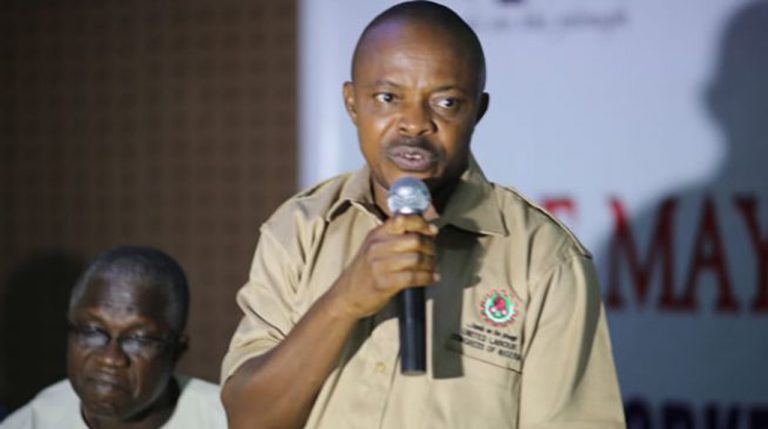
The Nigerian Labour Congress has distanced itself from the N500,000 being canvassed as the new minimum wage, saying it has yet to adopt a position on an amount to be presented to the tripartite committee on the new minimum wage for workers.

The President of the NLC, Joe Ajaero, disclosed this to Sunday According in an interview with our correspondent in Yola, Adamawa State.

Speaking at the sidelines of the North-East zonal public hearing by the tripartite committee on national wage, Ajaero noted that the N500,000 and N700,000 being proposed as new minimum wage is unknown to the NLC.

According to him, all the figures flying around should be disregarded because the NLC as a body had yet to adopt a common presentation on the new minimum wage.

He said, “The N500,000, N700,000 you are hearing are being collated at the level of the states. In Lagos and other places, I think they are about N700,000 while in other places they are talking about N500,000 which are inputs collated from geopolitical zones.

“But the NLC secretariat has not made any presentation, these minimum figures are what is coming from the states. When we collate them then we’ll do a central presentation based on the raw materials we are getting from states.

“It (minimum wage) has to be relative to the cost of living in those states. You will agree with me that rent here is not as that in Abuja, and not the same thing as in Lagos. So relatively speaking you won’t have a straitjacket-like presentation by Labour in all the states.”

On his part, the Chairman of the Nigerian Medical Association, Adamawa State, Dr Solomon Bulus, said the Nigerian Medical and Dental Council backed the implementation of the N500,000 new minimum wage because it would drive down the hardship being experienced nationally.

RCCG youths go to orphanages to mark Adeboye’s birthday

0

The youth arm of the Redeemed Christian Church of God recently embarked on a Christian Social Responsibility initiative aimed at positively impacting the lives of individuals within our community.

This initiative was dedicated to honouring the 82nd birthday of the General Overseer of RCCG, Pastor Adeboye, celebrated on March 2, 2024.

In a statement, the group highlighted that the CSR project was meticulously planned and executed by the province, with a keen focus on addressing critical needs within our community.

Activities undertaken by the youth included providing health care support such as newborn care packages and covering hospital bills for babies born on March 2nd, 2024, as well as welfare support and visiting orphanages.

The locations visited during this initiative included Heritage Homes Orphanage, Little Saints Orphanage Headquarters Administration and Donation Centre, Institute of Maternal and Child Health, and RCCG health centre in the Redemption City campground.

Part of the statement read, “In line with the principles and values espoused by Pastor E. A. Adeboye, the RCCG LSC the Bridge, and Youth Province 1 embarked on a CSR initiative aimed at positively impacting the lives of individuals within our community.”

“The CSR UNIT, understanding the importance of serving humanity and uplifting the less privileged, dedicated their time, resources, and efforts to make a tangible difference at the four locations.

“Through collaborative efforts and unwavering commitment, the CSR UNIT successfully brought smiles to the faces of many, embodying Pastor E. A. Adeboye’s message of love, compassion, and generosity.

“The impact of this CSR project executed by RCCG LSC The Bridge and Youth Province 1 extends far beyond the immediate beneficiaries, serving as a beacon of hope and inspiration for others to follow suit.

“As Pastor E. A. Adeboye continues to inspire millions worldwide with his unwavering faith and dedication to humanity, we are proud to honour his legacy through meaningful action and service.”

Households lament as costs of egg, pepper, others soar

0

Many families are feeling the effect of the hike in the prices of staples like rice, beans, eggs, tomatoes, and peppers, Sunday According has learnt.

Several mothers, who spoke to our correspondents, lamented that the prices of foodstuffs had continued to rise despite several interventions by the Federal Government.

Egg, for instance, which used to sell for around N2,700 for a crate in December 2023, has increased to almost N5,000. This has made one egg, which used to be N100, to sell for N200 now.

Long grain rice, which used to sell for around N47,000 for a bag in December, now goes for almost N80,000. This has made a paint bucket of long grain rice now sell for N7,000 as opposed to N4,500 in December.

Pepper and tomatoes have also become expensive, and some sellers only sell between six and seven balls of scotch bonnet pepper for N200. The same quantity of tomatoes, according to multiple market sources, now sells for above N200.

The prices of other staples have continually been on the increase for weeks, putting pressure on the pockets of families.

Many mothers lamented that the money given to them by their husbands for feeding was no longer enough to cater to the needs of the family.

A mother of four, Mrs Tomiwa Ogo, said with the increase in the cost of chicken and beef, her family moved to eggs as a cheaper option.

She said, “I don’t know what the government wants us to do. My family’s monthly feeding allowance for more than two years was N40,000. In January, my husband increased it to N60,000; I am shocked that it is still not enough. I carry everything I buy with that money in just two sack bags. I cannot even afford to buy rice and beans the way I used to.

“We stopped eating meat in my house in January. We opted for eggs. Now, I don’t know if buying meat is better than getting eggs. Egg now sells for almost N5,000 a crate. I bought it for N4,700 last week. How do we survive?”

Another mother, Mrs Tomike Adefarati, said a paint bucket of tomatoes, which she bought for around N2,000 in December, now sells for N4,500. The price of pepper, according to her, has also doubled.

“Now, they no longer sell pepper and tomatoes for N200 like they used to do. If they sell pepper and tomatoes for N500, you will be shocked about the outcome. It is very small. I counted just seven or eight balls of scotch bonnet (atarodo) peppers for N200. The situation is just too much for me,” Adefarati stated.

Another woman, who gave her name simply as Chiwendu, said she had to take her family members to the market so that they would understand the need to tighten their belts.

She explained, “When they saw that eggs were selling for N4,700 a crate, I didn’t need to tell them why they could only have one egg per day and could sometimes have their meals without any form of protein.

“As a mother, this is a very difficult time. I am not pleased at all with the way this economy has put pressure on my pocket. I always have to increase my budget when I get to the market because the prices I buy before always change. I wonder how people with larger families are coping.”

A pastor’s wife and mother of five, Evangelist Sola Omotola, said she had extra mouths to feed because of her role as a pastor’s wife.

Omotola stated, “Every Sunday, the number of people who troop to my house to ‘greet’ me is more than 20. And for every one of them, I have to offer something. I have five teenagers. One is 19 and has just been admitted to study Geography at the University of Lagos. The rest are hungry teenagers who need a lot of food to grow.

“The money my husband makes has remained the same for more than five years. I don’t work. I am a dressmaker, and I only get money when people order dresses. Is it not people who have eaten that will make new clothes? The strain on our finances is a lot, and we beg the government to intervene before it becomes too late.”

Food prices soar

Findings by our correspondents at the Ibafo Market, Ogun State, revealed that a bag of rice sold for N36,000 last year, but now sells for N79,000, while a paint bucket of rice now sold for N6,000 (foreign) and N5,000 (local) from the initial prices of N3,000 and N2,500 respectively last year.

A bag of drum beans has jumped from N40,000, which it sold for last year, to N145,000.

A carton of spaghetti, which sold for N9,000 in December, now sells for N16,000; a pack that was sold for N450 is now N950. Similarly, 10kg of semovita, which sold for N7,000, now sells for N14,500, while the price of a carton of small noodle packs sells for N6,500 from N3,200.

A kilo of kote fish (horse mackerel), which sold for N1,500 last year, currently goes for N3,200; sawa (herring fish) increased from N800 to N2,500. A kilo of Titus fish (mackerel) increased from N2,200 to N4,600; turkey which sold for between N2,500 and N3,000 a kilo in December, now sells for N6,200.

At the Mushin Market in Lagos State, the cost of foodstuffs has also soared.

According to sellers, a crate of eggs now sells for over N4,000, while a paint bucket of white garri goes for N2,800 and the yellow garri sells for N2,600.

For beans, a paint bucket of honey beans sells for N6,000 instead of N3,000 it sold last year.

A pack of spaghetti retails for N900, and a pack of super pack noodles now sells for N500.

Traders lament

Some traders, who spoke to one of our correspondents at the market, lamented the struggle they face daily to sell their produce to buyers as a result of the increased cost of foodstuffs.

According to them, the high cost of foodstuffs has made it difficult to sell to customers and also make profits.

A foodstuffs seller, who gave his name simply as Divine, said he was afraid of how much foodstuffs would cost when he next went to stock his shop, noting that the cost of buying in bulk was scary.

A foodstuffs wholesaler, Emma Azubike, said, “The cost is not only affecting the customers, but is also affecting us the sellers because you have to speak so much to convince some customers that the prices have increased.

When you tell them the prices and you don’t explain more to them, they will leave and not everyone will come back when they eventually find out in other places that what you told them is true. So, it is affecting the sales.”

A trader in Lagos, Madam Ireti, said, “We only know the price of the foodstuffs today, you don’t know what will be tomorrow and that is the major problem. As you are aware, we also buy from people; they can come today and by tomorrow the cost of an item will have increased; you will not have a choice but to buy it and also increase the cost.

“It is like a chain that when anything happens at the top or the middle, it will affect the bottom. We only hope that the government does something as soon as possible to resolve these issues before things get out of hand.”

On his part, a foodstuffs retailer, Mrs Katherine Ajao, said, “It has been difficult. The patronage has reduced from what I used to have before because of the increase in prices. The problem is that I can go to the market to buy some food items today, but by tomorrow I will hear that the items have increased, so instead of making a profit with what I have in stock, I will be looking to borrow to add to the items on the ground. This is making doing business so difficult.”

A foodstuffs vendor at Oja Tuntun, Ilorin, Kwara State, Suliat Olanrewaju, expressed deep concern over the current high costs of goods amid the weak state of the economy. Comparing prices from last year to now, she noted a significant increase in the price of noodles which rose from N4,000 to N10,000 for a table and from N12,000 to N20,000 for a small pack.

She said, “This surge in food prices has made it difficult for many people to afford necessities, with some now struggling to purchase even a fraction of what they could afford previously.”

Despite selling noodles, Suliat stated that she had been unable to afford them herself this year due to the increased cost.

“Rice and garri, staple foods once considered affordable for the poor, are now priced at N2,500 for eight cups of rice compared to N800 last year. I urge the President to address the current economic challenges promptly,” she added.

Economists weigh in

Meanwhile, an economist and former director of the Central Bank of Nigeria, Prof Akpan Ekpo, has suggested measures the Federal Government can take to mitigate the daily rise in food prices and other essentials.

According to him, the government must set short and medium-term goals to make living easy for the citizens.

Ekpo noted that whenever the prices of goods go up, they hardly come down.

He said, “In the short term, we have no choice but to import food for people to eat because prices are going up every second. Also, I don’t know how they will do this; they have to return to manage float because what we are seeing is exchange rate pass-through.

“The naira has a free fall and because of that, it is passing through to prices. If we can return to a managed float and we do that managed part very well, we may have some relief.”

Reacting, a professor of Economics at the Olabisi Onabanjo University, Sheriffdeen Tella, said the cost of foodstuffs had continued to increase due to lack of sufficient food production.

He stated that the government should adopt a medium-term plan to curb the continued skyrocketing of prices.

“The prices can’t come down immediately because there is not enough food production, and that is why there is scarcity. There is still insecurity in food production. When the dollar-naira rates begin to stabilise, there will be some shortfalls in food production. The government should have a medium-term strategy like releasing food from warehouses. If it can go round, it will bring down the prices of commodities,” he said.

Export Prohibition Act

Meanwhile, President Bola Tinubu has ordered total compliance with the Export Prohibition Act to check the smuggling of food items out of the country.

The Comptroller-General of the Nigeria Customs Service, Mr Wale Adeniyi, disclosed this during a meeting with the leaders and members of the Dawanau International Grains Market, Kano, on Friday.

He stated that the Act had not been implemented in the past because Nigeria had food sufficiency.

Adeniyi said now that the country was passing through a food crisis, the President had directed that the Act must be fully implemented to ensure that food items were not exported when people were in dire need of them.

The comptroller-general urged the grain dealers to assist the government by complying with the directive banning the exportation of food items to provide enough food for the people.

Adeniyi stated, “It is unwise for a reasonable and sincere country to embark on the exportation of food items when her citizens need them.

“You are big stakeholders in this direction and these are the reasons why I am here to interact with you and solicit your support.”
El-Rufai by no means wished ministerial job, says son

0

Member representing Kaduna North Federal Constituency in the House of Representatives, Bello El-Rufai, has said Nigeria lost an effective administrator in his father, former Kaduna Governor, Nasir El-Rufai, after the Senate rejected his appointment as minister.

Bello said it took his pleas and those of other family members for his father to accept the ministerial nomination from President Bola Tinubu.

He made this known in an interview with a media personality, Seun Okinbaloye, on a podcast, Mic on Podcast, sighted by our correspondent.

The Senate had in August, during the confirmation of the ministerial list sent by Tinubu, refused to confirm El-Rufai’s nomination as well as those of two other nominees for appointment as ministers.

The Senate confirmed 45, out of the 48 ministerial nominees sent by the President.

The President of the Senate, Godswill Akpabio, said the three nominees not confirmed would be subjected to further security checks and urged those not confirmed to take their matter to the President.

Those rejected were El-Rufai, Stella Okotete (Delta), and Sani Danladi (Taraba).

Reacting to this, Bello, who doubles as the Chairman, House Committee on Banking Regulations, said he was disappointed when he learnt that his father’s nomination was rejected.

He said, “I was in the National Assembly when my father’s nomination was rejected. It was very disappointing and still is. Myself, the Governor of Kaduna State, Uba Sani,  and one of my father’s commissioners, Mr Hafiz Bayero, played a key role in convincing my father to work with this current government.

“He (Nasir) didn’t want it. It’s hard for Nigerians to believe it because they feel it is everyone in Nigeria who wants to be a minister.

“To be fair to him, he didn’t want the job. We convinced him that, with the antecedents of Asiwaju, he would create an excellent team as he did in Lagos.

“The President wanted to work with him. It was clear when he came to Kaduna. We also had an idea of what his portfolio would be. It was meant to be power and gas. He insisted to the President in private that Nigeria would not sort its electricity issue if gas was not put under the other components of power.

“The irony is that nothing has been rougher than the lack of power in the last two weeks. I’m disappointed because Nigeria lost an effective administrator in my father, one who is willing to make difficult decisions to solve a problem.”

Bello, further speaking, said many Nigerians do not really know his father.

He said, “My father is a very simple person who’s been stereotyped a lot. I got a video of him where people say this or that about him without even knowing him.

“My father does not go out of his way to change what people think about him. He doesn’t really care.

“There’s a perception that he’s anti-Christian. But, the closest person to him since we (children) were four years old was a man from Cross River State, Peter Jones.

“Religion is personal to us. As minister of the Federal Capital Territory, he demolished mosques. The imam said he hated Islam. He demolished churches and the Christians said he hated Christians. Maybe, it is the wrong imams and pastors who have issues, not him.”

He added that his father was highly flawed in many ways, noting that he was, however, in the league of ‘astute administrators’ like Dora Akunyili, Ngozi Okonjo Iweala, Nuhu Ribadu, Charles Soludo and Akinwunmi Adesina.