Home Blog Page 1458

FG confident in military strategy to free Kaduna students – Minister

0

The Minister of Defence, Alhaji Muhammed  Abubakar, on Thursday,  assured that the abducted pupils of Kuriga secondary and primary schools in Chikun Local Government Area of Kaduna State would soon be rescued.

The minister also said the killing of officers and soldiers of the Nigerian Army in Okuama community of Delta State won’t be swept under the carpet, declaring that the perpetrators would be fished out and dealt with decisively.

The minister spoke in Kaduna on Thursday evening while addressing troops of 1 Division Nigerian Army, who are on the frontline against bandits troubling the northwestern states.

Abubakar said he was in Kaduna State to encourage the military battling terrorism across the North-West zones being their areas of responsibility.

The minister said  President Bola Tinubu was aware of the sacrifices of the Nigerian Armed Forces.

He said, “We have the power, will and strength as well as determination and our morale is high to end insecurity.  I know what you have been doing to rescue the schoolchildren unhurt.  Keep the morale high. The President is behind you one hundred per cent.

“I have been briefed about your efforts to rescue the kidnapped schoolchildren. The strategies that I have been briefed about are going on very well and I am sure you will get them.

“We will free those children and bring them back to their parents. We thank you for your sleepless nights to keep us safe.”

The minister described as sad the killing of officers and soldiers of the Nigerian Army in Delta State.

“We will find the killers of our soldiers and deal with them. You don’t kill our men and go scot-free, we will deal with them squarely,” he said.

All rights reserved. This material, and other digital content on this website, may not be reproduced, published, broadcast, rewritten or redistributed in whole or in part without prior express written permission from According.

Contact: [email protected]

Enforce laws with human face, coalition urges govt

0

A global coalition for democracy has faulted some of the policies being executed by the Lagos State Government, such as serving eviction notices and the recent ban on Styrofoam, without considering their adverse effects on the residents of the state.

The group, during the commemoration of Partners for Democracy Day organised by BudgiT on Tuesday, charged Nigerians not to be discouraged from questioning their political leaders for better governance.

On January 21, 2024, the state government, through the Commissioner for Environment and Water Resources, Tokunbo Wahab, had explained that a ban was placed on single-use plastics, especially non-biodegradable styrofoam, because of their adverse environmental impacts.

The government had also recently intensified the demolition of shanties in parts of the state, including Obalende Under-Bridge, to rid the environment of danger.

However, speaking  during the BudgiT event, the  co-founder of Rethinking Cities, an advocacy network that communicates innovation to solve urban challenges, Mr. Deji Akinpelu, urged the government to give law enforcement a human face.

Akinpelu said, “If the government finds a group of people living somewhere and they are not supposed to be there, what have they done in pre-eviction? Did you collect their data? Did you try to survey where they are from? I have seen eviction notices in Oworonshoki, saying they don’t have a good toilet, so they had to leave.

“The commissioner just woke up and said styrofoam plastic was banned. Interestingly, I was with some environmentalists who described the decision as good. And I asked them what was good about the decision. There is also an SDG goal of fighting poverty. Of course, the commissioner gave a three-week notice, which I think was not even sufficient. We are trying to get citizens more critical of the government. The fact that you think it doesn’t concern you will not make you critical of the government.”

Also speaking, a former 2015 presidential flag bearer of the KOWA party, Prof. Yemi Sonaiya, decried the state of the country despite the resourcefulness of its people while advising that Nigerians should elect the right people for elective posts.

She said, “We have a lot of human and natural endowment. I am wowed by Nigerians personally and the world recognises that Nigerians are talented people. We are unusually gifted and talented.

“We owe the world an explanation, if not an apology, for being in the state that we are in because it is so incongruous and unbelievable that you have people so recognised as gifted by the world, and then, on the other hand, you will see this in their country. Let us call it this. How can Nigerians be doing so well intentionally that our country will remain like this? It matters that we get the right people to public office, not people who will be debating trivial things.”

Four die, 28 hospitalised in Kano

0

Twenty-eight people have been hospitalised while four others have died following a fresh outbreak of diphtheria in Kano State.

The outbreak according to a statement on Thursday happened in villages in the Mingibir Local Government Area of the state.

The Information Officer of the local government, Tasiu Dadin-Duniya, in a statement on Thursday, said, “Four children have died of diphtheria and 28 children have contracted the disease in Kwarkiya, Kuru, Kunya and Minjibir villages in the Minjibir Local Government Area of the state.

“The Interim Management Officer of the local government, Muhammad Yakubu Kunya, has called on the authorities and stakeholders to immediately reach out to Minjibir Local Government to protect the health of the communities.”

The statement said the District Head of the local government had also urged traditional rulers and Islamic scholars in the communities to stand up to enlighten the community and to pray for relief.

When contacted, the Public Relations Officer of the State Ministry of Health, Ibrahim Abdullahi, said the report had been forwarded to the state Director of  Public Health and had yet to confirm or deny the outbreak.

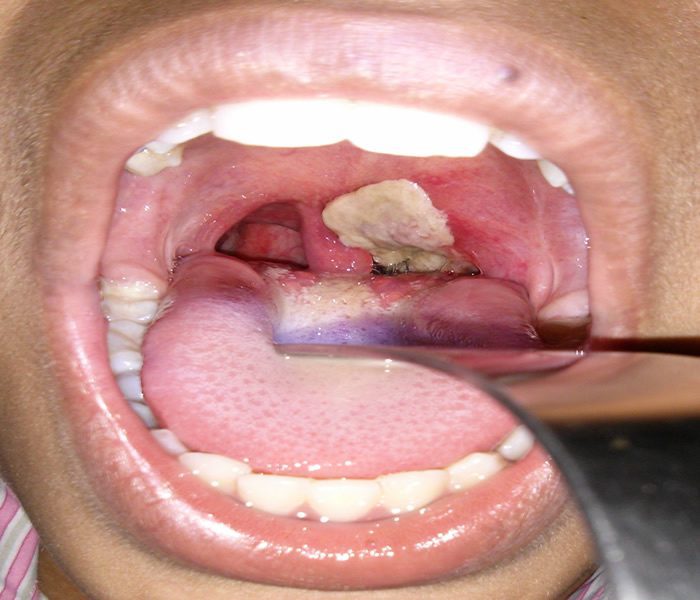
Diphtheria is a serious bacterial infection that affects the nose, throat, and sometimes, the skin of an individual. It is caused by the bacterium Corynebacterium species, mainly by toxin-producing Corynebacterium diphtheriae and rarely by toxin-producing strains of C. ulcerans and C. pseudotuberculosis. It manifests as laryngitis, pharyngitis or tonsillitis and is associated with the presence of an adherent membrane covering the tonsils, pharynx, and/or nose. Beyond the respiratory symptoms, approximately a quarter of cases may develop heart problems (myocarditis).

Data obtained from the Nigeria Centre for Disease Control and Prevention showed that from week nine of 2022 (May 2022) to week 11 of 2022 (mid-March 2024), 16,518 confirmed cases of diphtheria have been reported out of 28,975 suspected cases from 35 states across 317 Local Government Areas.

The data also showed that Kano, Yobe, Katsina, Bauchi, Borno, Kaduna, and Jigawa states bear 96.4 per cent burden of the disease.

It added that the disease has killed 839 persons with a case fatality rate of 5.0 per cent.

Mandela Washington fellows seek better deal for women

0

The Mandela Washington Fellowship Association of Nigeria has stressed the need for women to have leadership roles in the rural areas of the country to promote sustainable development and advance social justice.

The Special Adviser to the Lagos State Governor on Health, Oluwatoni Adeyemi, said this on Thursday during the foundation panel discussion on women’s empowerment.

The event held in the Ikeja Local Government Area had the theme ‘Count her in: inspiring inclusion and empowerment’.

Oluwatoni added that policymakers and stakeholders should not marginalise women’s health issues.

She said, “We have to use our gender lens to look at everything. Women, particularly those from marginalised groups such as rural women, women with disabilities, and ethnic minorities, may be underrepresented in decision-making bodies and policy forums, leading to policies that do not adequately address their needs.

“Gender bias and stereotypes among policymakers and stakeholders can lead to the marginalisation of women’s health issues or the reinforcement of stereotypes that may limit women’s access to healthcare services or influence policy decisions.

“Socioeconomic factors such as poverty, lack of education, and limited access to resources can hinder women’s participation in policymaking processes and advocacy efforts, further marginalising vulnerable groups.”

She noted that overcoming gender bias would require leadership and collaboration throughout government agencies and civil society.

“Addressing these obstacles requires sustained commitment, leadership, and collaboration across government agencies, civil society organisations, and other stakeholders.

“Policymakers must actively work to raise awareness, build capacity, overcome resistance, and foster an enabling environment for creating inclusive policies that promote equity, diversity, and social justice.

“Through collaborative efforts, education, advocacy, and policy change, we can address systemic barriers, challenge discriminatory practices, and advance the well-being of all women.”

Also speaking at the event, the Chief of Staff, Hervest for Women, Ayobami Awode, noted that to close the gender gap, women in rural and urban areas need to receive equal attention.

“We cannot close the gender gap if we only focus on women in urban areas. We also have to focus on women in rural areas as well. We are willing to partner with like-minded organisations. Women need that support as much as we can.

The lead, SME, strategy and development, Providus Bank, Dami Feyide, stated that funding and market access would enable women in small and medium-sized businesses to prosper.

“MSMEs are vital to the economy. My three pillars in leading the SMEs in Providus Bank are access to the market, funding, and capacity. We have implementation partners.

“We sponsor 60 to 100 small and medium businesses every year. Our bank also funds small businesses. I will advise every business owner to have tenacity and always be ready.”

Also, some individuals awarded during the event were; Executive Director, Technology for Social Change and Development Initiative, Oladiwura Oladepo; Senior Special Assistant on Health to the Governor of Lagos State,  Dr. Oluwatoni C. Adeyemi; Founder of Nana Chillings Treats, Mustaphat Aishat; Founder of Field of Skills and Dreams VTE Academy, Omowale Ogunrinde ; Founder Olamma Cares Foundation, Chioma Fakorede amongst others.

2023 peace accord stopped widespread electoral violence –

0

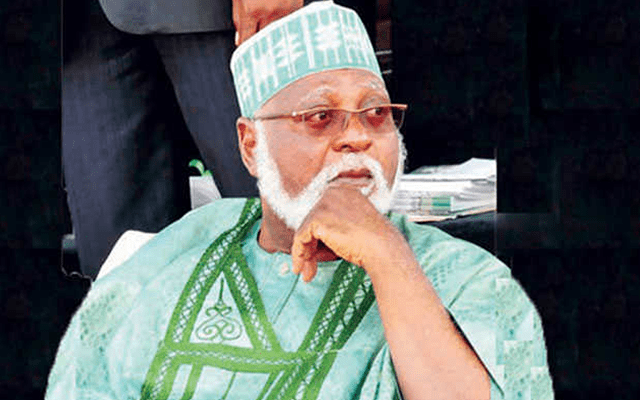
The National Peace Committee, led by former Head of State, Gen. Abdulsalami Abubakar, on Thursday, said the peace accord signed by political parties and candidates ahead of the 2023 general elections prevented an outbreak of violence.

The committee said it believed that the aim of the peace accord was realised because parties aggrieved with the outcome of the elections did not resort to violence but went to court to ventilate their grievances.

The Head of the NPC Secretariat and Executive Director of the Kukah Centre, Revd Fr Atta Barkindo, said this on Thursday in Abuja at the public presentation of the NPC Preliminary Evaluation Report.

Barkindo, while addressing journalists, said, “To be honest, people are abiding by the terms of the accord because at the end of the day when the results were announced, there was no widespread violence. People went to court, and that was what the accord says. If you’re aggrieved, go to court.

“Some people were aggrieved and they actually went to court. So. as far as we are concerned, the terms of the accord have been really complied with. The rest of the issues of violence, there are agencies constituted by law to address that. I think they should just get up and do their job.”

Barkindo said contrary to expectations from some quarters, the NPC had no constitutional powers to sanction those who violated the peace accord.

He said the job of arresting and prosecuting electoral offenders belonged to the security agents.

 He said, “What people don’t understand is that the NPC, as a peace committee, doesn’t have the constitutional power to arrest or prosecute anybody. All the agencies constituted by law are available to do all that. What we are adding is a moral intervention, where these institutions have failed. So what we do is once we sign an accord and it is violated, there are institutions we hand them (erring politicians) over to. Even without the NPC handing them over, people can clearly see what is happening. Let the police and those who are constituted by law, get up and do their job.

“We are simply adding value and I don’t want people to place too much expectation on the National Peace Committee to go beyond its mandate. But beyond the signing of the peace accord, when you assemble presidential candidates two days before an election and they are all over the media, they can actually publicly recommit themselves to the process. For me, that is adding value to the entire electoral costs and that is what we bring to the table because it helps to douse the tension, reduce the level of bitterness and helps citizens to hold these people to account especially when they publicly declare that they will accept the outcome of the vote as long as it is free, fair and credible.”

In the same vein, a member of the National Peace Committee in charge of the Independent State-Based Peace Architecture in Kwara State, Rev Cornelius Fawenu, said the Abubakar-led committee deserved commendation for striving to ensure peace across the divides.

Fawenu said, “To enjoy a shared prosperity, we must put in our best to share the responsibility of building the nation. I believe strongly that it is that same spirit that has awoken and informed the encouragement of the existence of subnational units of the National Peace Committee, known as the Independent State-based Peace architecture across the states of the federation.

“And so, we must commend the wisdom of the founding fathers of NPC under the chairmanship of General Abdulsalam Abubakar and our erudite convener, Bishop Matthew Hassan Kukah. So the effort is highly commendable and highly appreciated across the states of Nigeria.”

Scores killed as bandits sack nine Benue communities

0

Bandits have descended on about nine communities in the Apa Local Government Area of Benue State, killing and setting houses on fire.

It was gathered that the communities have become deserted as residents, who survived the attack, which began a few days ago, have fled for dear life.

While some locals gave the casualty figure as 25 the lawmaker representing the area in the state Assembly, Abu Umoru, said he had lost count of the casualties.

According to the lawmaker, about 95 per cent of communities in the local government have become desolate following the constant attacks.

The lawmaker said, “About 95 per cent of a section of my community is displaced and I can mention them.

“The entire Edikpo community has been displaced, the entire Opaha, where I come from, nobody in is that community; Odugbo, nobody is there; Akpete, Ikobi, Akpata, Idiaha, Ochumekwu, Adiga nobody is in those communities.

”Every day they will be burning houses in Akpete. As I speak to you, for three consecutive days, they have been going to Akpete and burning houses after chasing them out of their ancestral homes.

“They have been laying ambush, killing people, one, two three to five persons on a daily basis.

“Right now I don’t know the number of casualties. It’s so many.”

Umoru, who lamented that the situation had gone beyond the communities, said he had come down with an illness over the crisis.

He said, “I have gone to my communities to sympathise with my people and because of the killings I have developed a problem that I have to go to the hospital for a checkup.

 “The killings are terrible. Even yesterday (Wednesday), on the highway around Nasarawa Toto leading to Oweto up to  Otukpo, between a village called Ojantele and Orozo, Fulani put their cows on the road for three hours, no movement that the Hausa people who travel on these big trucks came down and were talking to them because they barricaded the road.

“These killings have gone beyond us. Our representatives at the National Assembly have moved motions times without numbers but what has happened? Who do we cry to? We need to cry to God.

“It’s a pathetic situation. I don’t know what to do; I’m speechless. Sometimes I ask myself: ‘Why should I contest (for election)?’ I can’t go with my personal resources to go and do anything anywhere.

“If people are not happy or settled how do you impact their lives?  How many people can you feed?  If they are in their villages, it’s very easy for you to reach them, but if they are not there, how can you take a solar system there?

“The other time, some people who were working in the higher institution, they ambushed them on the road, opened fire and killed two of them.”

When contacted, the spokesperson for the Benue State Police Command, Catherine Anene, said, “No please, I don’t have reports on these attacks.”

Attempts to get the reaction of the state government failed as Governor Hyacinth Alia’s Special Adviser on Security, Joseph Har, did not pick up his calls.

Ex-Adawawa gov, Nyako’s nine-year-old trial

0

The Economic and Financial Crimes Commission,  on  Thursday, re-arraigned a former governor of Adamawa State, Murtala Nyako, and his son,  Abdulaziz, for alleged N29bn fraud.

They were re-arraigned alongside Zulkifik Abba, Abubakar Aliyu, Blue Opal Limited, Sebore Farms and Extension Limited, Pagoda Fortunes Limited, Tower Assets Management Limited, and Crust Energy Limited.

The defendants were accused of money laundering to the tune of N29bn.

When the defendants’ pleas were taken, they pleaded not guilty.

The EFCC had first arraigned them on August 7, 2015 before the late Justice Evoh Chukwu.

The defendants were subsequently re-arraigned on October 17, 2016, before Justice Okon Abang who is now a judge at the Court of Appeal.

When the matter was called on Thursday, counsel for the EFCC, Oluwaleke Atolagbe, informed the court that the case was commencing afresh due to the unavailability of the initial two judges who had presided over it.

He said, “My Lord, Justice Evoh Chukwu first handled the matter where we called eight witnesses before he died.

“It was then transferred to Justice Okon Abang where we called 21 witnesses and closed our case.

“The defendants, however, all appealed the case, saying they had no case to answer but the Court of Appeal dismissed their appeals and asked them to return to the Federal High Court and open their defence.

“Unfortunately, Justice Abang was elevated to the Court of Appeal and that is why we are before you today My Lord.”

Counsel for the former governor, his son, and their companies, Michael Aondoakaa (SAN), prayed the court to admit his clients to bail on the earlier conditions stated by the court.

The trial judge, Justice Peter Lifu, granted his prayer.

After this, the EFCC lawyer reminded the court that the defendants had opted for a plea bargain when Justice Abang was presiding over the matter, adding that he would like to know if they had not changed their minds.

Aondoakaa, however, said what they requested was to amicably settle the matter as a result of the age of the former governor.

He said, “Plea bargain creates the impression of guilt. The admiral is 81 years old; he is the age mate of the likes of retired Gen. Badamosi Babangida and he cannot continue to be made to face this again.”

He said the court would be duly informed if progress was made with the attempt at amicable settlement.

Justice Lifu subsequently fixed May 10 and 13 for the commencement of trial.

US Consulate, NGO rally women to contest 2027 elections

0

A non-governmental organisation, HerLeap Network, has said that women need to be empowered to increase their participation in the next election cycle in Nigeria.

This was stated at the SheRise conference held on Thursday at the US Consulate in Lagos, tagged ‘Women in Politics: the Risk and the Leap.’

According to the Carnegie Endowment For International Peace, at the end of the 2023 general elections, the number of women in the National Assembly fell by 19 per cent compared to the last Assembly, with women now occupying three per cent of seats in the Senate and four per cent in the House of Representatives.

Across all national and subnational categories, women represented just over 10 per cent of more than 15,000 candidates who ran in the 2023 elections for president, the National Assembly, governorships, and state assemblies. Ninety per cent of the women ran on lesser known platforms.

Speaking at the conference, the Global Coordinator of the Herleap Network, Adetoun Tola, said the conference was not one for talks alone but talks matched with actions, as it organisation to prepare women for the next election cycle.

She said, “We need more competent women in the next election cycle and they may just be the ones that the opposition won’t see coming. Our gathering here to speed up our mettle as woman in the area of politics. We have seen women do phenomenal things in the political space and we have seen women pay lip service to women empowerment. This is about maximising our blessings and bringing practical and impactful solutions to the table. We need to this for our children and generations.”

 “We are not fighting the men,” Tola maintained, “we need to be whole and do the work.”

Speaking with The According, the US Consul General, Will Stevens, said, “It is such an honour to host today at the consulate, this conference on the role that women can play in Nigerian politics and how we can see and increase the participation of women in politics. We have some incredible mentors here today. That mentorship that women can do to support each other is so critical.

“As the trailblazers move forward, they should be pulling behind them more and more leaders so that we increase political participation. That is the basis of so many programmes that the US mission here supports.”

During his welcome address, the CG described Nigerian women as an incredible set of people, more of who are needed in the politics of the nation. He, however, charged women to court the attention of the people.

He said, “Speak up and support each other. We live in a society where attention span is short and it is really hard to break through to get attention. As a woman leader, you need to have attention. Go for it, demand it and make sure that you have a seat at the table. For me, that means there is a need for women to be where it happens. When you are in the room where it happens, better decisions are made.”

Also speaking at the conference, the former Nigerian ambassador to Jamaica, Maureen Tamuno, charged women to stop settling for woman leader position but to also seek other offices at the ward level upwards.

Providing tips to increase female participation in politics, Tamuno, who was the first female Local Government chairman in Rivers State, said, “Most women don’t want to be politics because they don’t want to be called names, be strong enough and face it. As a women in politics, you need to listen to what your people want. It is capacity that speaks in politics, your impact need to be felt and also tone down your appearance.”

Another speaker at the conference, a US Fulbright Scholar, Katrina Kamara, in her presentation highlighted that women’s role in entrenching democracy, saying, “Democracy backslide had gained grounds regionally. When women are actively involved in the democracy process, their power is visible.”

Providing a legal perspective was professor of commercial law at the University of Lagos, Professor Abiola Sanni, SAN, said that women need to envision the kind of reform that want to see in the Nigerian political space, else they will be limited by the current structure even if they get into office.

He said, “Women need to envision the reforms needed. If you get into office right now, the system may get worse or marginally better. Women must approach thingsdifferently. Can you make the kind of impact that Awolowo did, that Jakande did?”

Professor Sanni went on to call for the provision of a legal framework for the already existing gender policies in Nigeria.

Wabba tackles Abure, says NLC owns Labour Party

0

A former President of the Nigerian Labour Congress, Ayuba Wabba, on Thursday, said the Labour Party was formed by the NLC, as a platform for members of the union to exercise and defend their rights.

Wabba spoke amid the supremacy tussle between the NLC  and the Labour Party.

On Wednesday, NLC members, acting on the directive of its leadership, led by NLC President, Joe Ajaero, picketed LP  secretariats across the country.

The move was to press home their demand for the immediate resignation of Abure over his alleged ‘financial rascality’ and contempt of the NLC President,  Ajaero.

The demonstrators were spotted laying siege to the LP national headquarters in Abuja on Wednesday chanting solidarity songs and calling for the head of the party leadership.

They were however prevented from gaining access to the party secretariat by security operatives posted to the area to maintain order.

Also on Thursday, protesting NLC members descended on the LP secretariat in Benin, Edo State.

The Edo State NLC Vice Chairman, Suleiman Abubakar, accused Abure of running the Labour Party like his personal business.

The Edo State NLC Vice Chairman, Suleiman Abubakar, accused Abure of running the Labour Party like his personal business.

Abubakar said that the Labour Party belonged to the NLC and the labour union should,  therefore, be carried along in every decision being made by the party leadership.

He said, “We were directed across the 36 states of the federation to picket the Labour Party offices. We ought to have done the picketing on Wednesday as directed by the political commission of NLC, but we were unable to mobilise our members.

“The reason for the picketing is that the National Chairman, Julius Abure, is running the party like his personal property and engaging in financial rascality. Everybody should be carried along. He has announced the national convention and wants to handpick and impose a candidate on us. This is not the time to handpick and impose on anybody.

“The way forward is for him to go to the national body and resolve his difference with other officials. He must learn to play by the rules of the game. We are not being sponsored, nobody is sponsoring us,” he said.

Wading in on Thursday, Wabba, who spoke on Channels TV, said the LP was owned by the NLC.

Wabba said, “First and foremost, the Labour Party was formed by the NLC, in realisation of a clear objective in the Constitution of the NLC. Under Article 3 and item 1, the major objective of the NLC is to promote, defend and advance the economic, political, and social rights and well-being of Nigerian workers and pensioners.

“We own the Labour Party; it was formed under the leadership of Pascal Bafiau, as Party for Social Democracy. Under Adams, organs decided to change the name to the Labour Party, and the first Chairman is S.O.Z. Ejiofor, who later handed over to Dan Anyanwu.

“So, the essence of forming the party is to make sure that workers, pensioners, farmers, can be able to have a platform to exercise their rights, which is enshrined in Section 40 of the Constitution. The party was formed by NLC, registered by NLC. It’s like you built a house, you got a C-of-O, then you rented the apartment, so you must have an interest in how the property is managed.”

But the embattled National Chairman of the  Labour Party, Julius Abure, on Thursday, disagreed, insisting that Labour Party did not belong to the NLC.

Abure said, “Over the past few years, the NLC has been claiming ownership of Labour Party. l must state clearly that NLC is not the owner of the Labour Party. The party is not owned by the NLC. The law is very clear that you cannot picket an organisation where you do not have your workers. We are not the employers of the NLC and they don’t have the legitimate reason to picket our office. We have no trade union dispute with the NLC. This is clearly an abuse of office and abuse of the laws of the land.

“Let me also state here that the propaganda they have been carrying around that we are planning a secret convention is totally false. The NEC met April 2023 in Asaba and granted the permission that the convention must hold in one year. We started planning  the convention since then. We communicated to INEC as requested by the law. We have also informed all the stakeholders, including the NLC. I have discussed the issue with Ajaero on several occasions. The NLC on their own has written to INEC on several occasions on the need to hold the convention. So, we are surprised that the same NLC is the one that is asking that convention should not hold again. He (Ajaero) has ulterior motives and we will not allow him to hijack the party.”

Abure, while condemning Wednesday’s attack on the party’s secretariats across the country, alleged that the protesters vandalised the Abuja office and destroyed property worth millions.

Abure said, “What we saw was a show of shame, a show of rascality, an abuse of office and an abuse of the law of the land.

“The NLC under Joe Ajaero is not above the law and the law precludes Ajaero and the leadership of NLC from taking the law into their own hands. They besieged the office, broke the fence, destroyed the gates, unlawfully took possession of the secretariat and destroyed properties worth millions of naira. Properties were stolen including monies made for the payment of salaries and other official purposes. This is unfortunate. It is becoming unbecoming.

“I must state today that the leadership of NLC under Joe Ajaero is on the part of destroying the successes we have recorded in the 2023 general elections. I had expected that as a responsible trade union centre, a responsible labour leader, he should have teamed up with Labour Party to see how we could team up together to make the country better. Unfortunately and ironically too, the NLC is the one that is on the part of the war against Labour Party.”
Private sector key to infrastructure development – Report

0

Coronation Group has said that the private sector is critical in the development of infrastructure in the country and globally.

This was stated in the maiden infrastructure report released by the firm recently.

The report said that with the dwindling public resources, private sector investment would be a solution for bridging funding gaps and unlocking infrastructure projects, leading to innovation, job creation, and stimulating economic activity.

The Managing Director of Coronation Asset Management, Aigbovbioise Aig-Imoukhuede, captured the significance of the maiden Coronation Infrastructure Report, saying it would foster dialogue on infrastructure financing across Africa.

“With infrastructure playing a critical role in driving economic growth and societal development, the report catalyses informed discussions. By shedding light on the challenges and opportunities in infrastructure financing, it lays the groundwork for efforts to address Africa’s infrastructure needs and unlock its full potential,” he said.

The Head of Research at Coronation, Guy Czartoryski, pointed out the profound commitment embedded within the infrastructure report to deliver comprehensive insights into the infrastructure investment landscape.

“By meticulously analysing the intricate dynamics of infrastructure investments, the report serves as a beacon of knowledge, guiding stakeholders through the complexities of infrastructure financing across the continent,” he stated.

The report explained how private sector investments were reshaping the landscape of infrastructure development.

It stressed the importance of private sector participation in funding infrastructure projects and the pivotal role that infrastructure investments play in driving economic growth and societal advancement.

The report also identified the key challenges and opportunities within infrastructure development, providing invaluable insights to stakeholders.

From ageing infrastructure to emerging technologies, the report navigated through a spectrum of sectors, offering practical solutions and best practices to propel progress forward.

Experts said Nigeria needed between $100bn and $150bn annually over the next 30 years to close its infrastructure deficit.

Dataphyte estimated it at $2.3tn, and Agusto & Co, and the World Bank put it at $3tn.

Nigeria ranked 24th in 2020 out of 54 African countries in the Africa Infrastructure Development Index with 23.26 points; Egypt was second with 88.3 points, and war-torn Libya was third with 82.9 points.