Home Blog Page 1417

LP dares NLC, insists on Wednesday convention

0

The leadership of the Labour Party said it won’t rescind the decision to hold its contentious national convention on Wednesday as planned.

The development comes two days after the party formally petitioned relevant government institutions requesting an urgent intervention to protect the party against further aggression from the Nigeria Labour Congress.

In the four separate letters written to the  Secretary to the Government of the Federation, Senator George Akume; Attorney General of the Federation, Lateef Fagbemi; Ministry of Labour and Employment and Registrar of Trade Unions, Falonipe Amos, the party also called for disciplinary action to be taken against the NLC President, Joe Ajaero, and other union leaders who spearheaded the alleged vandalisation of its properties.

The ongoing conflict over the control of the party escalated last Wednesday when members of the union acting on the directive of NLC leadership picketed LP secretariats across the country.

The move was to press home their demand for Abure’s resignation.

The protesting workers had laid siege to LP national headquarters in Abuja chanting solidarity songs and demanding Abure’s resignation.

They were however prevented from gaining access to the party secretariat by security operatives posted to the area to maintain order.

But 24 hours after the invasion, the embattled chairman released a press statement claiming the union members broke into their offices, vandalised properties worth millions of naira and made away with some staff salaries.

On Saturday, news filtered in that the Presidential Candidate of LP, Peter Obi, had been frantically making efforts to broker peace between both camps

Obi was also said to have advised the party to shift the national convention to a later date until a lasting solution is sought.

But the party backtracked on Sunday and insisted there was no going back on its planned convention.

In an exclusive phone chat, the National Publicity Secretary of the LP, Obiora Ifoh, told our correspondent that Abure, the National Working Committee of the party and delegates would gather in Umuahia, Abia State capital.

He said, “Who told you we have cancelled the convention? That is not true. Anything that didn’t come from me or the chairman is not from the party. There is no going back.

“If not that,  tomorrow is the usual ‘sit-at-home’ exercise (in the East), delegates will start arriving from tomorrow. But from Tuesday, all of us will assemble in Umuahia for the convention.”

Reacting, the NLC spokesman, Benson Upah, fumed, saying Abure would not dare the congress by going ahead with the planned convention.

Upah also warned that any conference or convention held under the leadership of the embattled chairman would amount to a jamboree in futility.

He said, “What does not exist cannot be said to have held. It is an exercise in futility, no matter where, when or how it is done. As long as it is superintended by Abure, it is nullity.

“I can assure you that we have no deal. And I want to tell you whatever they do will amount to nothing more than a useless and hopeless jamboree. Please quote me. It is a nullity and has no recognition even before it is done.”


Man in custody for producing fake drinks in Akwa Ibom

0

A man, simply identified as Akanimo Akpan, is currently in police custody for producing fake drinks at Nung Udoe in the Ibesikpo Asutan Local Government Area of Akwa Ibom.

According Metro gathered that the incident occurred on March 8 at about 9 pm.

It was also learnt that Akpan produced fake drinks in the state, including kombucha wines, Mac Meg Noni Organic, and Apple Cider Vinegar.

When contacted, the state Police Public Relations Officer, Odiko Macdon, confirmed the incident to our correspondent.

He added that the officers of the Anti-Robbery Squad arrested him based on credible information received from the public, noting that many gallons of various chemicals and contaminated merchandise were recovered from the suspect’s home.

“Relying on a credible intelligence report, on 08/03/2024, at about 2100 hours, operatives of the Anti-Robbery Squad arrested one Akanimo Monday Akpan of Efa Ayam Village, Etinan L.G.A., but residing at Factory Road, Nung Udoe, Ibesikpo Asutan L.G.A., who is involved in a case of adulteration of MAC MEG Apple Cider Vinegar, MAC MEG Noni Organic, Kombucha wines, and other products.

“The cooking machine, some gallons of different chemicals, and the adulterated products were recovered from the house and premises of the suspect,” he said.

Macdon stated that the suspect acknowledged committing the crime and admitted that hwas not registered with the National Agency for Food and Drugs Administration and Control.

“The suspect confessed to the crime and that he does not have a NAFDAC registration number. The products are said to be dangerous for human consumption,” the police spokesperson said.

Last year, According Metro reported that men from the National Agency for Food and Drugs Administration and Control arrested 10 suspects over adulterated beverages as the agency shut down the cemetery market in Aba, Abia State.

The Director, South-East Zone of NAFDAC, Martins Iluyomade, said the suspects in the Cemetery Market occupy over 240 shops meant for traders, which they turned into production centres for large-scale adulteration of beverages and drugs.

Firm launches platform to promote local products

0

The Made-By-Nigerians Project has announced the launch of its global marketplace, inviting partners to support local innovation in-country and collaborate in showcasing the finest Nigerian-made goods on a global platform.

The Chief Project Officer for MBN, Chidimma Okoli, in a release, stated that the platform was launched to showcase local brands to the global market.

 “Our goal is to build a robust global community around Nigerian brands, promote customer loyalty, and a sense of pride for Nigerians in our locally made products.

“We have made significant strides with partnerships such as the MBN Fair in collaboration with Sterling Bank, quarterly webinars, and an upcoming exhibition at the Kaduna Food Festival, to be held in April,” she enunciated.

According to Okoli, Made-By-Nigerians was developed to connect Nigerian businesses with local and international markets, highlighting the diversity and quality of products made in the country.

“Since its launch, the MBN platform has grown to a marketplace of over 7,000 merchants offering global standard products and services to customers from across the globe.  The MBN platform also serves as a resource hub for accessing information on grants and low-cost funding opportunities, supporting businesses in their growth journey,” he declared.

The country is import-dependent, importing goods worth N6.36tn in 2022, according to the National Bureau of Statistics.

All rights reserved. This material, and other digital content on this website, may not be reproduced, published, broadcast, rewritten or redistributed in whole or in part without prior express written permission from According.

Contact: [email protected]

Abuja farmers, others lost N12bn to ginger disease – FG

0

The Federal Government, on Monday, confirmed the outbreak of ginger blight epidemic in four states in Nigeria, adding that ginger farmers have lost over N12bn due to the disease.

It disclosed this at the inauguration of the National Ginger Blight Epidemic Control Taskforce in Abuja and revealed that the fungal disease had inflicted significant damage on ginger farms in Kaduna, Nassarawa Plateau and the Federal Capital Territory.

The Minister of State for Agriculture and Food Security, Aliyu Abdullahi, said the blight had caused billions of naira in losses, impacting not only the livelihoods of farmers, but also Nigeria’s position as the world’s second-largest ginger producer.

“Our preliminary estimates suggested that affected farmers in southern Kaduna lost over N12bn.

“Furthermore, considering that over 85 per cent of Nigeria’s ginger cultivation occurs in this region, we can safely assume a substantial loss of cultivated land, potentially exceeding 70 per cent of total land,” he stated.

Abdullahi, however, stated that the Federal Government through the National Agricultural Development Fund would launch a N1.6bn recovery package for affected farmers in ginger-producing areas.

He said the ginger blight epidemic served as a stark reminder of the importance of preparedness in safeguarding agricultural resources, adding that by investing in research, extension services and farmer support systems, “we can build a more sustainable future for our agricultural sector.”

On his part, the Chairman of the task force committee, Abubakar Abdullahi, said there was no doubt that the blight on ginger had negatively affected the Gross Domestic Product earnings from this subsector.

“It is of necessity and great urgency that various subcommittees are put in place to forestall these negative effects,” he stated.

Abdullahi assured the minister of the commitment of the team to salvage the situation, as he pleaded with the minister to give the committee the power to co-opt members that would add value to the task force to discharge their duties efficiently and effectively.

Okechukwu Nnodim

Okechukwu, a journalist with Punch Newspapers, has 15 years experience covering Energy (Power and Petroleum), Finance, Agriculture, Environment, Humanitarian Services, Works and Housing, Trade and Investment, Capital Markets, Aviation and Transport, ICT, among others

When two commas are mandatory

0

Of the following three sentences, only one is correctly punctuated. Can you identify it?

    They will, next week hold the family meeting.

    They will, next week, hold the family meeting.

    They will next week, hold the family meeting.

The second sentence is the one correctly punctuated. The first and third have a grammatical issue because a comma is missing in each of them. In a clause/sentence with an independent clause inserted in it, two commas are required. The inserted piece provides additional information (shedding light on the message in the main clause) but can be removed without injuring the main clause. Now, the commas not only show that the added element is not an integral part of the clause, but they also tell the reader the need for voice variation at that point when reading the clause.

Consider the following sentences too:

He, last year, bought two cars.

They, as a matter of fact, visited the woman in the hospital.

I will, other things being equal, send my contribution this evening.

In each of the clauses, the two commas are mandatory. To avoid either or both, you often have to change the structure:

    He bought two cars last year.

  As a matter of fact, they visited the woman in the hospital.

    Other things being equal, I will send my contribution in the evening.

    I will send my contribution in the evening – other things being equal.

The last example suggests another dimension to the options available. In many cases you have to use the two commas, dashes or brackets can work:

He – last year – bought two cars.

I will – other things being equal – send my contribution in the evening.

He (last year) bought two cars.

I will (other things being equal) send my contribution in the evening.

Uses of the twin commas

To show time:

He, on Sunday, travelled to London.

    President Bola Tinubu, last week, chaired FEC meeting.

To mark out connectors:

    They, therefore, promised to clean the market.

    The three women, however, arrived very early.


To modify a noun as in establishing someone’s title or designation:

This is what applies to nouns in apposition – the appositives. An appositive is a noun that renames a nearby counterpart:

    The FCT Minister, Nyesom Wike, is a controversial politician.

    Atiku Abubakar, a former Vice President, still wants to be President.

In the sentences, ‘Nyesom Wike’ and ‘a former Vice President’ are appositives.

To set apart clauses not essential to the main structure.

Such a nonessential clause is called nonrestrictive:

    The visitor, who arrived after the programme had ended, has apologised to the host.

In the sentence, ‘who arrived after the programme had ended, is nonrestrictive and should be marked with the two commas. When the expression is, however, essential or restrictive, no comma is required:

    The gateman who killed the bird has been sacked.

FG’s grains arrive eight states, distribution continues

0

Some portions of the  42,000 metric tonnes of assorted grains provided by the Federal Government to help cushion the food crisis in Nigeria have arrived in at least eight states across the country, while the movement of the commodities to other states is ongoing.

Officials of the Federal Ministry of Agriculture and Food Security confirmed on Monday that the grains had arrived in Kano, Kwara, Kogi, Ebonyi, Adamawa, Kebbi, Sokoto, Taraba, among others.

The Director, Food and Strategic Reserve, Federal Ministry of Agriculture and Food Security, Sule Haruna, told our correspondent that the FMAFS in conjunction with partner agencies of government was complying with the directive of President Bola Tinubu with respect to distributing the food items to states.

President Tinubu had in February ordered the release of 42 metric tonnes of grains from the national grains reserves to cushion the food crisis in the country.

The government said in addition it reached an agreement with the Rice Millers Association of Nigeria to release 60 metric tonnes, making a total of 106 metric tonnes of grains.

Announcing the initiative, the  Minister of Information and National Orientation, Mohammed Idris,  said, “The first one is that the Ministry of Agriculture and Food Security has been directed to release about 42,000 metric tons of maize, millet, garri, and other commodities in their strategic reserve so that these items will be made available to Nigerians; 42,000 metric tons immediately.

“The second one is that we have held meetings with the Rice Millers Association of Nigeria. Those who are responsible for producing this rice and we have asked them to open up their stores.”

Giving an update on the initiative on Monday, the Director, Food and Strategic Reserve, Haruna, said, “The grains are being moved to all the states. It is not a question of one state or the other, rather it is to every state of the federation, including the FCT. They are all included in the mandate and the distribution is currently ongoing for all the assorted food items.

“Additional details would have been released, but everyone is just being careful because of the way they are jumping onto the trucks. This is why we have been quiet about it,” he stated.

When told that some of the grains were distributed in Kano State on Monday, Haruna replied, “Not only in Kano. If you go to Yola, it is there; go to Kogi, it is there; Kebbi, Sokoto, Taraba, everywhere. It is just that we don’t have to make noise about it.

“Very soon the minister is going to call you (journalists) and there will be a kind of symbolic ceremony. But right now we have to be very careful because the way people started hijacking the commodities and climbing the trucks made everyone afraid.

“However, I want to assure you that the movement of the grains to all the states is ongoing. If you call Ebonyi now, they will tell you yes. We are just being careful, but I want to let you know that it is going on. If you call Kwara now, they will tell you the same thing.”

Asked to specifically confirm if the grains had reached all the states of the federation, the agriculture ministry director said, “As I am talking to you now, the grains including rice, maize, sorghum, garri, etc, their lifting is ongoing. They are being moved to states.

“You are the one who confirmed to me now that in Kano they have started distributing to the residents. So, I am telling you that the lifting of these grains to all states of the federation is ongoing and Mr President’s directive is being complied with.”

On Monday, the Kano State  Government took delivery of 162 trucks of grains of the Federal Government.

The consignment comprised 100 trucks of rice, 44 trucks of sorghum, 14 trucks of millet and four trucks of maize.

The Director General, Media and Publicity, Sanusi Tofa, who briefed newsmen in Kano, said the state also received a total of 120,000 10kg bags from the Dangote Foundation.

“Apart from all these donations, the state government is giving out 145 trucks of assorted grains for distribution to the 44 Local Government Areas and 484 wards,” he said.

Import of barbaric murder of 17 soldiers

0

Reports of mass killings in Nigeria ceased to be news long ago, but last week’s killing of 17 soldiers in Okuama community in Ughelli South Local Government Area of Delta State could not escape the headlines. Among those killed were one lieutenant colonel, two majors, one captain, and 13 non-commissioned officers. Reports said that the troops, who were from the 181 Amphibious Battalion, were on a peace-making mission to maintain peace between Okuama and Okoloba communities when they were ambushed and killed.

It was not just that they were killed, the gory and bestial way they were killed was shocking. The details are too graphic to be repeated here. These are fellow human beings. That they are soldiers is secondary. They were not born soldiers. They were fathers to some people, husbands to some people, sons to some people, brothers to some people, and uncles to some people. They had life dreams like other people. They faced life challenges like other human beings. Yet they were brutally killed and their bodies desecrated in a horrific manner.

But one clear message is that something incomprehensible has happened to the humanity of many Nigerians. Human life has been so cheapened that it means nothing to many anymore. There is always a justification from all quarters, with each group pointing the finger at the other as the aggressor or initiator of the callousness.

The military and police (and all other security agencies) are usually accused of being excessively callous to civilians and different groups pushing one ideology or the other. There have been reports by Amnesty International of security operatives shooting unarmed civilians from the back – a sign that the civilians were fleeing instead of confronting – pouring raw acid on them, torturing them in unimaginable ways, etc. The security operatives, in turn, would accuse civilians and different groups of initiating the callousness by repeatedly killing and dehumanising the bodies of security operatives, as was seen in this Okuama case and many other cases. Given these scenarios, whenever one side has the opportunity, it visits bestiality to the other side with the belief that it is embarking on revenge or retaliation. And like it is said, an eye for an eye makes the whole world blind.

Immediately after the gruesome murder of soldiers was reported, residents of Okuama abandoned their homes and fled to other communities. Why did they flee? Based on the antecedents of the military, they feared that soldiers would attack the community in a mindless manner, kill everybody in location and destroy every house in view. And true to their fear, the next day their community was attacked. Houses were set ablaze one after the other. TV stations showed a row of houses burning. While people, fingered the military in the attack, the military denied it. However, not many people believed that denial because of how the military had reacted to similar attacks in the past.

In the past, when soldiers were killed in Odi and Zaki Biam, for example, the military descended on the communities and razed them to the ground. Even though it was not done under a military regime, the military did not even deny that it did it. Rather it was justified as the consequence of killing soldiers. One does not know if the president, who is the commander-in-chief of the armed forces, is usually aware of such actions. But the bottom line is that it has become “acceptable” as the norm for soldiers to burn down any community where their officers were killed. Afterwards, no soldier is charged for such wanton killing and destruction. People are still warned not to dare the military.

What this has fostered is a vicious cycle of mindless violence, barbarism and lawlessness. Given the many instances of the gruesome killing of security operatives across the country, it has proved that razing down communities has not served any positive purpose. What it has done is to increase the bestiality in those who engage in atrocious killings.

No matter how it is explained and justified, razing down a community in retaliation for the killing of soldiers paints a shameful picture of Nigeria. It says to the outside world that Nigeria is a lawless country. When non-state actors carry out such mindless killings and arson, it does not project the country well. But when it is executed by state actors, especially the military that is charged with defending the country against external aggression, it is interpreted as the military taking up arms against the country it is meant to defend. Developed countries find it shocking and difficult to explain.

Twenty-five years after the end of military rule, the military still finds it hard to treat things in line with democratic principles. The military still believes that it is above the law, that it is above other citizens, that every problem should be resolved with violence. When civilians have any issue with soldiers, the soldiers beat them up, torture them, dehumanise them. It is taken as the norm and even joked about by comedians and civilians. But the military authorities have to be commended for sometimes punishing soldiers who are caught on video torturing civilians.

But it should go beyond punishing soldiers who are captured on camera dehumanising civilians. The better way is to have a military that has the culture of respecting civilians and treating them with dignity. Developed countries have achieved this. Soldiers in such countries don’t see themselves as above the civilians. Even when a civilian shouts at them or assaults them physically, they don’t retaliate. They report such to the police to handle.

In such countries, when a civilian wears military fatigue like trousers, shirts or caps, the military sees such as an advert for it, the same way a company will see anybody wearing its clothing bearing its logo. However, in Nigeria, any time the military sees a non-soldier wearing anything considered to have military colours, it is an opportunity to assault the person.

Given the long unbroken 25 years of democratic rule in Nigeria, one would assume that the relationship between the military and the civilian populace would have changed for the better. The civilians still fear the military and see it as an aggressor, while the military sees the civilians as enemies who are ever ready to wipe out the military. It is hard to believe that the soldiers and civilians are from the same country.

There needs to be a strong orientation between the soldiers and the civilians on how to relate with one another. First, the mindset of soldiers needs to be completely overhauled to see themselves as protectors and friends of the civilians, while the civilians should be made to understand that soldiers are doing the extraordinary duty of protecting them and therefore need all the love and appreciation. No soldier should be targeted for killing by any group. It should not be acceptable in whatever form.

Niger man held for alleged killing of brother over property

0

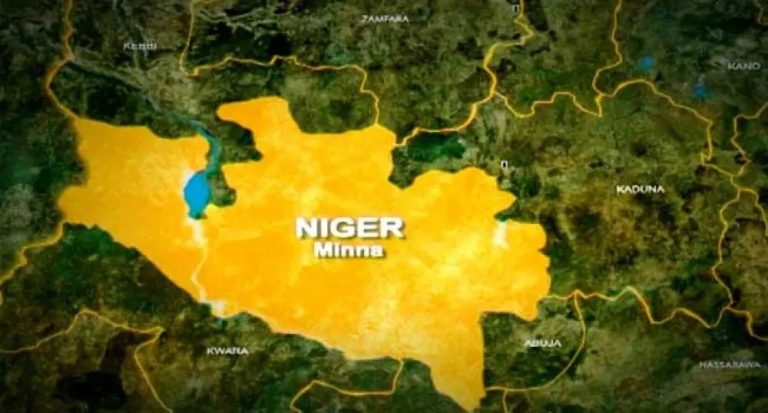
A man in Niger State, Abubakar Sani, has allegedly killed his elder brother Kabiru Sani over a property-related argument.

Both siblings, who hail from Tafa LGA of Niger State, were residents of Gawu Babangida area of Gurara Local Government Area.

The incident occurred on Sunday when Sani allegedly struck his elder brother with a large stick during a misunderstanding over the ownership of a property.

According to sources, the suspect had been threatening members of his family before the argument with his elder brother ensued.

When According Metro contacted the state’s police spokesman, Wasiu Abiodun, he said the suspect was arrested while the case was still under investigation.

“On 24/3/2024 at about 11:45hrs, police operatives attached to Gawu-Babangida Division arrested one Abubakar Sani, 30 years, of Gawu-Babangida area, Gurara LGA.

“The suspect was arrested for having engaged in a fight with his brother, Kabir Sani, 34 years, over issues of property, and during the fight, he allegedly hit his brother with a stick on the head.

“The victim became unconscious and was rushed to FMC, Gawu, where he was confirmed dead. “Preliminary investigation is ongoing, and the suspect will be transferred to the SCID for further investigation and diligent prosecution,” Abiodun stated.

All rights reserved. This material, and other digital content on this website, may not be reproduced, published, broadcast, rewritten or redistributed in whole or in part without prior express written permission from According.

Contact: [email protected]

FG plans to rebase digital economy

0

The Federal Government has announced plans to rebase the country’s digital economy to stimulate growth and innovation.

The Minister of Communications, Innovation and Digital Economy, Bosun Tijani, disclosed this in a statement on Linkedin recently.

Rebasing the digital economy refers to the process of updating the metrics and methodologies used to measure the contribution of digital activities to the overall economy.

The minister stated, “I had an extremely progressive discussion with the National Bureau of Statistics today, led by the Statistician General, Prince Adeyemi Adeniran, on their ongoing efforts to rebase the digital economy, which will help us better understand and support growth in the sector.

“I am excited about the work they are doing, as it will help us calculate total factor productivity better and enable us to showcase the contribution of the digital economy to the broader Nigerian economy.

“To support the NBS’s efforts, the Federal Ministry of Communications, Innovation & Digital Economy will be setting up a ministry-wide committee to accelerate their efforts to properly calculate and rebase the sector,” he said.

The Nigerian economy became Africa’s largest economy in 2014 (surpassing South Africa) by rebasing GDP, going from $270bn to $510bn.

Meanwhile, Tijani has been appointed co-chair of the International Telecommunication Union  Digital Innovation Board.

The announcement was made during the inaugural meeting of the board held in Geneva, recently.

As co-chair, Tijani would collaborate with the chair and Director of ITU-BDT, Cosmas Luckyson Zavazava, and the co-chair and Secretary of the Department of Telecommunications in India, Neeraj Mittal.

The minister said in a statement that they would provide strategic guidance, expertise, and advocacy for ITU’s Innovation and Entrepreneurship Alliance for Digital Development, to foster a more inclusive and equitable digital future for all.

According to Tijani, the Digital Innovation Board will focus on accelerating the delivery of key priorities, including trend research readiness, open technology innovation, entrepreneurship and SME growth, policy experimentation, and ecosystem initiative acceleration.

The minister noted, “The Digital Innovation Board, which I am honoured to serve as co-chair alongside the chair, Cosmass Zavazava, Director, ITU-BDT, and my fellow co-chair, Neeraj Mittal, India’s Secretary of the Department of Telecommunications, will provide strategic guidance, expertise, and advocacy for ITU’s Innovation and Entrepreneurship Alliance for Digital Development, to achieve its objectives.

“The board will also support the acceleration of the delivery of the following priorities: trend research readiness, open technology innovation, entrepreneurship and SME growth, policy experimentation, and ecosystem initiative acceleration.”

Guardrails against divisive election litigation

0

POLITICAL behaviour in Nigeria is still so primitive. The Chairman of the Independent National Electoral Commission, Mahmoud Yakubu, recently reinforced this when he expressed concern and frustration over the burden of expenses INEC bears due to rancorous primaries conducted by various political parties. He lamented that infighting within political parties often produces controversial candidates. In turn, aggrieved contenders disrupt INEC’s activities through expensive litigation.

Specifically, Yakubu raised the alarm ahead of the off-cycle governorship election in Edo, scheduled for September 21. Fearing the obvious, he stated that the primaries in the All Progressives Congress, Peoples Democratic Party and Labour Party were acrimonious.

Yakubu said that APC upturned its initial primaries when three persons emerged as “winners.” One of the contenders threatened to go to court. It afterwards conducted another. As for the PDP, and LP, they conducted parallel primaries leading to the contentious emergence of two candidates each.

Consequently, INEC continues to battle costly litigation, resources that could be used for other beneficial activities. The umpire said it budgeted N3 billion to defend the results of the 2023 elections.

According to a global NGO, Kimpact Development Initiative, 1,209 petitions were filed by candidates and political parties during the 2023 general elections. Of the 1,209 petitions, only 103 were upheld by the Elections Petitions Tribunal. Unfortunately, litigation disenfranchise the electorate, and dent the legitimacy of those who emerge victorious through the courts.

Although INEC recognises the recurring problems inherent in faulty party primaries, the law has failed significantly to explore the sound conduct of primaries from other democracies.

By law, INEC only monitors the primaries while the party presents its candidate to the umpire. While primaries remain strictly a party affair, there is an urgent need to revamp the electoral laws to limit the excesses of political parties and instil decorum in the conduct of primaries in the country.

In April, the governorship primaries will hold in Ondo State. Since March, the aspirants in the political parties have started beating the drums of war. It promises to be divisive.

In part, rancorous party primaries are due to the obscene perks of office. The President, governor and lawmaker enjoy untrammelled benefits in office. In awareness of this, aspirants go to any length to conquer political power. For instance, a ranking senator in the 10th NASS has received N500 million for constituency projects for the year. Others received between N75 million and N200 million.

The President enjoys a fleet of aircraft for his travels. Bola Tinubu, during his first visit to Lagos as president, rode in a convoy of 200-plus vehicles. Governors spare nothing to enhance their convoys and pleasure.

In politics, primaries are a linchpin for good governance because the process is expected to build consensus among party members, who should present the candidates that best embody their ideological values to the electorate. In Nigeria, this is not so, as the electorate is limited by the options presented by the political parties.

Here, the political parties lack the ideological backbone that drives their politics. They are mere special purpose vehicles to capture power and wealth by the political class.

The Democratic Party in the United States is known for its liberalism, including same-sex marriage. It supports social justice, economic equality, environmental protection, healthcare access and progressive social policies. On the other hand, the key principles of the Republican Party are limited government, free market capitalism, strong national defence, traditional values and individual liberties such as gun rights and free speech. There, both politician and electorate pit their tent with the values of the parties during and after elections.

Crucially, the off-cycle elections in Edo and Ondo in September and November respectively are test cases for INEC’s preparedness for the 2027 general elections.