Home Blog Page 141

House of Reps Sets New Agenda on Constitution Amendment, Electoral Reform

0

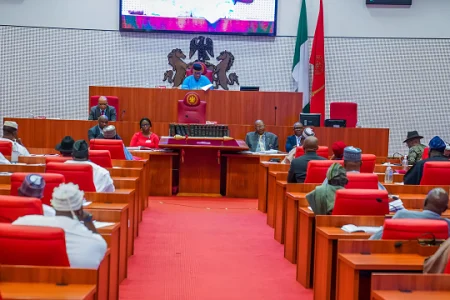
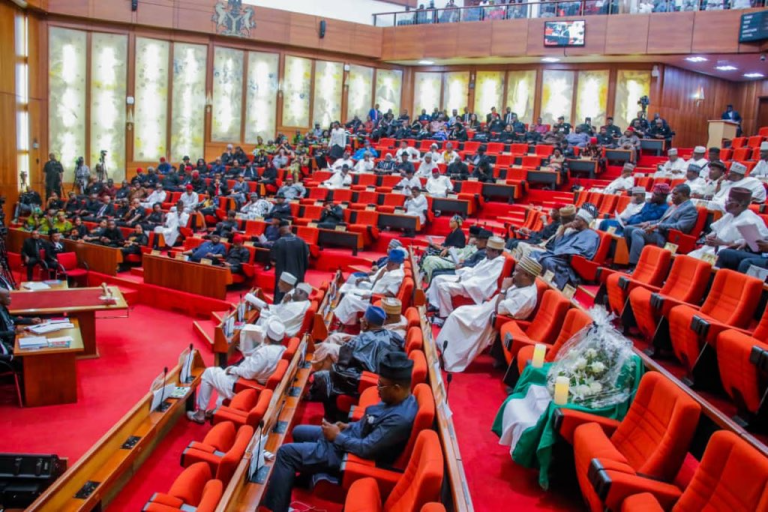
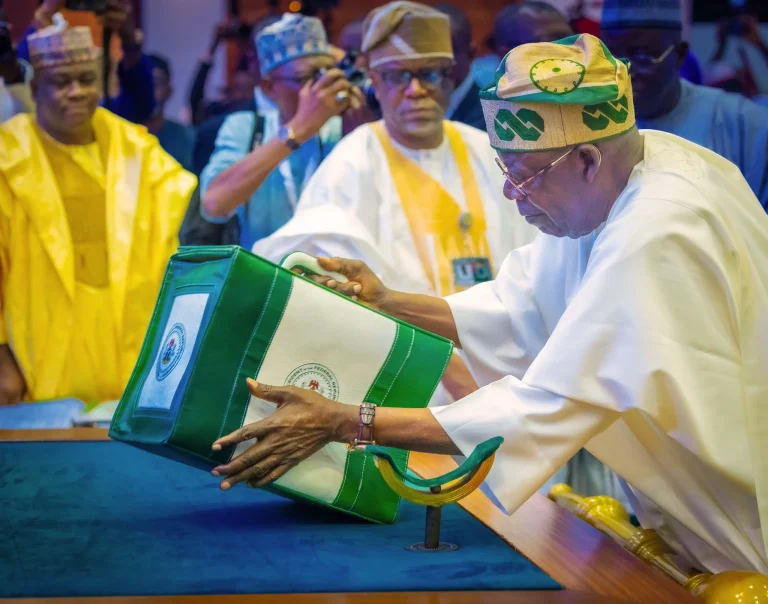
On Tuesday, as lawmakers reassembled from their 2025 annual recess, Speaker of the House of Representatives Rt. Hon. Abbas Tajudeen unveiled a new agenda on constitutional review, electoral reforms, gender equity, and security, outlining a comprehensive legislative roadmap for the remaining 10th National Assembly.

Abbas spoke to members during the first plenary session following the vacation, calling the upcoming legislative phase a “crucial and promising” time for the House.

He asked parliamentarians to step up their efforts to pass laws that have an impact, carry out strict monitoring, and guarantee that their work in parliament results in significant improvements to Nigerians’ lives.

Despite major political and economic obstacles, the speaker reviewed the accomplishments of the 10th House since its June 2023 inauguration and pointed out that the body had made historic strides in institutional changes and lawmaking.

According to him, the House has so far examined 2,263 proposals, passed 237 of them, and obtained the president’s approval for 50 of them. These bills include important topics including cybersecurity, student finance, electric sector reform, taxation, and regional development.

“The 10th House of Representatives is the most productive since 1999, both in terms of legislative output and policy impact, according to our midterm review,” Abbas stated. Through town halls, media briefings, digital platforms, and the House Open Week, we have improved citizen interaction, modernized our regulations, and bolstered internal capacity.

He praised how the legislative and executive branches have a constructive partnership that has allowed for prompt budget passage, policy coherence, and efficient governance without sacrificing the House’s sovereignty.

Abbas stated that finishing the current constitutional amendment process is one of the most pressing legislative priorities.

According to him, there are currently 87 suggestions being considered, including ones on socioeconomic rights, local government autonomy, judicial changes, and the devolution of powers.

He pointed out that a public hearing that was widely attended on September 22 showed that the public was overwhelmingly in favor of constitutional reforms.

The speaker asked lawmakers to expedite discussions, wrap up voting, and send agreed modifications to state assemblies by the end of December in order to give them enough time to agree before the 2027 elections.

Abbas stated that electoral reform is still a crucial subject of attention. He clarified that the proposed revisions to the Election Act are intended to decrease post-election litigation, streamline electoral procedures, improve election security, and increase accessibility for those with disabilities.

By implementing single-day voting and making sure that party primaries are more inclusive and democratic, we hope to reduce the cost and division of elections,” he said. “An Electoral Offenses Commission will also be established by the amendments to improve public trust and accountability.”

Abbas also emphasized the Reserved Seats Bill for Women as a crucial piece of legislation meant to increase the number of women in government. The law aims to create additional seats that can only be contested by women, without changing the present 109 Senate and 360 House seats, since women now hold less than 5% of parliamentary seats.

Nigeria’s Debt Payments Tighten Fiscal Space Amid Rising Foreign Exchange Inflows

0

Even with better foreign exchange availability and a recovery in reserves, Nigeria’s external debt servicing obligations increased dramatically in August 2025, highlighting the mounting strain on the country’s finances.

The Central Bank of Nigeria (CBN) recently released data showing that foreign debt service payments increased from $179.9 million in July to $302.3 million, a 68 percent month-over-month (m/m) increase.

In comparison to the 25 percent m/m growth recorded in the previous month, this represents one of the sharpest monthly increases in recent years, indicating increasing budgetary strain as the Federal Government continues to reconcile expanding debt commitments with minimal revenue expansion.

However, the rise was quite modest, up 8% year over year (y/y), indicating some relative stability when contrasted to 2024. However, when fresh payments from bilateral and multilateral partners age and interest payments on previously contracted loans increase, economists caution that the pattern may get worse in the months ahead.

FX Outflows Are Predominately Debt Servicing

The largest component of international payments for the month of August was external debt service payments, which made up almost 63 percent of Nigeria’s total foreign exchange outflows. This demonstrates the extent to which servicing the country’s external debt is starting to take precedence over other important foreign payments, such as import bills and external commitments of government agencies.

Nigeria paid around $2.9 billion on external debt servicing overall between January and August 2025, compared to $3.1 billion during the same time period in 2024. Although the modest year-to-date decrease suggests some relief, analysts claim that it is more a reflection of the timing of payments and reorganized commitments than of any significant decrease in debt levels.

Following new borrowings to finance infrastructure projects and close budget deficits, Nigeria’s entire public debt stock, which includes both domestic and foreign commitments, was estimated to be at N121 trillion (around $90 billion) as of mid-2025, according to CBN data. About 38% of this is external debt, and servicing commitments in foreign currencies, primarily the US dollar, consistently put pressure on fiscal stability.

Domestic Debt Remains the Mainstay

The Federal Government has continued to finance its budget deficit mostly through the domestic debt market, even in the face of a dramatic increase in payments on its external debt. Domestic instruments including FGN bonds, Sukuk, and government bills continue to be the favored funding option due to high global interest rates and cautious investor enthusiasm for emerging-market Eurobonds.

But there are hazards associated with domestic borrowing as well, such as higher returns that drive up local interest rates and restrict access to credit for the private sector. The “relative stability of the exchange rate compared with 2024 has helped ease the dollar-denominated burden,” according to analysts at United Capital Research, even if external debt services increased in August.

The severe devaluation of the naira in 2024 increased the expense of servicing dollar debts, requiring the government to allocate a greater portion of its revenue to foreign exchange liabilities. Even if nominal payments have increased this year, there has been some breathing room due to the local currency’s improved performance and the slow resumption of foreign exchange inflows.

Reserves Increase in the Face of Outflows

Contrary to expectations, Nigeria’s external reserves have increased despite the country’s mounting external debt. According to the CBN, the reserves position grew from $41.3 billion in August to $42.4 billion at the end of September 2025, a $1.1 billion monthly rise.

Reserves have increased by about $1.5 billion so far this year, indicating a consistent improvement in the nation’s external liquidity profile.

This resilience is ascribed by economists to increased foreign exchange earnings from crude oil exports, robust remittances from the diaspora, and fresh inflows of foreign money, particularly portfolio investments in the debt and equities markets after policy changes that regained investor trust.

Thanks to improved pipeline security and decreased theft, Nigeria’s average daily crude oil production has stayed over 1.6 million barrels, the highest level in two years. As the world economy improves, remittance inflows, which have historically been a major non-oil source of foreign exchange, have recovered significantly, increasing inflows by an estimated $22 billion yearly.

As a result, reserves have been gradually restored, strengthening the CBN’s ability to stabilize the naira and fulfill maturing external commitments without using up the buffer.

Softer Debt Pressure, Stronger Naira

The burden from external debt has also decreased as a result of the naira’s recent strengthening. A narrowing of the parallel-market premium has resulted from improved FX liquidity in the official window, which is the consequence of greater supply from the CBN and autonomous sources.

By the end of September, the nai­ra was trading at about N1,150/$ on the official market, up more than 20 percent from about N1,450/$ in the middle of the year. Analysts claim that this appreciation lessens the fiscal impact and lowers the local currency value of external debt service payments.

“The ongoing appreciation of the naira, coupled with steady reserve accumulation, could limit Nigeria’s external debt exposure in the near term and improve confidence in the government’s fiscal management,” according to a report by CardinalStone Research.

The company did, however, warn that stability in oil production, a reduction in speculative demand, and the maintenance of FX supplies would be necessary for long-term progress.

Growing Debt in the Future

Financial analysts anticipate that as payments from recently approved multilateral loans start to solidify, external debt servicing will increase even more in the fourth quarter of 2025. The World Bank, African Development Bank, and Islamic Development Bank have granted Nigeria a number of concessional facilities for infrastructure, budgetary support, and energy transformation.

Even though these loans usually have lower interest rates, the total amount of debt service obligations may increase as a result of their cumulative effect. Fiscal experts contend that the rising debt-service ratio could reduce fiscal flexibility in the absence of notable revenue growth, particularly non-oil revenue.

The Debt Management Office (DMO) claims that debt service already accounts for more than 70% of Nigeria’s overall revenue, a percentage that is generally regarded as unsustainable.

To lessen dependency on borrowing, the World Bank and IMF have both recommended that Nigeria broaden its revenue base and expedite budgetary reforms.

Experts Advocate for Fiscal Restraint

Dr. Johnson Chukwu, an economist based in Lagos, commented on the figures, stating that the increase in debt service payments “reflects the structural weakness in Nigeria’s fiscal system.”

“The fundamental issue is that we’re still borrowing more than we’re making, even while external reserves are increasing. Although they provide some respite, the enhanced reserves do not resolve the debt issue, he stated.

The government must prioritize debt sustainability, he continued, by increasing tax collection, streamlining subsidies, and making sure borrowed money is used for initiatives that yield quantifiable returns.

The CEO of the Centre for the Promotion of Private Enterprise (CPPE), Muda Yusuf, also called on the government to improve its medium-term debt policy.

He suggested, “We should decrease commercial borrowing, concentrate on domestic sources, and increase domestic revenue through reforms in mining, VAT, and customs.”

Tinubu Requests $2.3Bn External Loan to Address Budget Shortfall and Other Issues

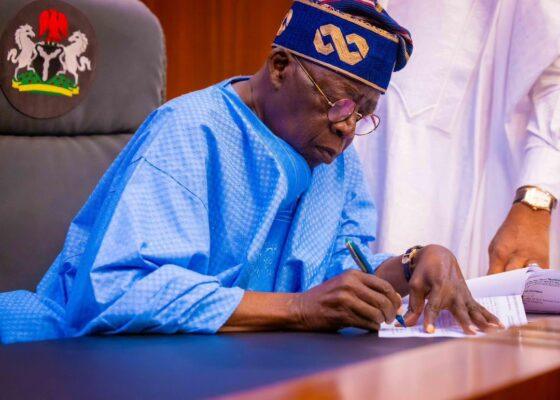
In the meantime, President Bola Tinubu has formally written to the House of Representatives, requesting legislative authority to issue a $500 million stand-alone Sovereign Sukuk on the international market and to raise a total of $2.347 billion in external loans.

In a letter delivered by Speaker Tajudeen Abbas at Tuesday’s plenary, the president requests permission for the Federal Government to obtain new foreign borrowing of N1.843 trillion, or around $1.229 billion at the $1/N1,500 2025 budget exchange rate.

According to Tinubu, the money would be used to refinance a $1.118 billion Eurobond that is due later this year and partially pay the 2025 budget shortfall.

The president stated that one or a combination of instruments in the International Capital Market (ICM), such as the issuance of Eurobonds, loan syndications, bridge financing from bookrunners, or direct loans from international financial institutions, will be used to raise the requested borrowing.

Tinubu went on to say that N1.843 trillion, or roughly $1.229 billion, of the N9.27 trillion in new borrowing authorized by the 2025 Appropriations Act will come from outside sources.

Nigeria’s $1.118 billion Eurobond, which was issued in November 2018 at a 7.625% interest rate and has a seven-year maturity, will mature on November 21, 2025, he mentioned. He stated that the government intends to refinance the bond utilizing one or more of the funding options indicated in order to prevent a possible default.

The letter said, “This is a standard practice in global debt markets.” Therefore, in order to authorize the Federal Government to refinance the maturing Eurobond appropriately, the House must pass a resolution.

Together with the additional borrowing requirement, Nigeria plans to raise a total of $2.347 billion. Subject to market conditions, Tinubu expressed optimism that Nigeria, a frequent issuer of Eurobonds, can effectively draw the necessary cash.

The terms and circumstances of the borrowing, he continued, would be decided upon at the time of issuance and would be dictated by the dynamics of the market at the moment.

He stated that in order to obtain the best conditions for the nation, the Federal Ministry of Finance and the Debt Management Office (DMO) would collaborate closely with transaction advisers.

President Tinubu further requested that the House allow the issuance of a standalone debut Sovereign Sukuk of up to $500 million in the international market, with or without a credit guarantee, in addition to the external borrowing strategy.

The president emphasized Nigeria’s prior achievements in the domestic capital market with Sukuk bonds. The DMO issued approximately N1.392 trillion in Sukuk between September 2017 and May 2025 to fund important road infrastructure projects throughout the nation. He maintained that entering the international Islamic finance market will broaden the Federal Government’s securities market, diversify the nation’s investor base, and assist in filling the financial deficit for infrastructure in Nigeria.

Tinubu clarified that the Islamic Corporation for the Insurance of Investment and Export Credit (ICIEC), a part of the Islamic Development Bank (IsDB) Group, may guarantee the proposed Sukuk issuance.

In order to support Nigeria’s economic objectives, refinance existing debt commitments, and open up new funding sources to speed up infrastructure development, the president emphasized that the request must be approved.

To advance the Green Growth Agenda, FG unveils a $100 million carbon project.

The $100 million Orteva Carbon Project, a significant endeavor aimed at unlocking climate finance, creating carbon credits, and quickening the nation’s shift to a sustainable economy, is the first step in the Federal Government’s green growth agenda, according to the Federal Ministry of Finance.

During strategic talks with a group from Orteva, in collaboration with the Delta State government and Eighth Versa, in Abuja, the Minister of Finance and Coordinating Minister of the Economy, Mr. Wale Edun, emphasized the historic initiative.

Edun emphasized the project’s congruence with President Bola Ahmed Tinubu’s goal of green growth and sustainable economic transformation in a statement signed by Mohammed Manga, Director of Information and Public Relations, characterizing it as a timely intervention.

A key component of Nigeria’s Energy Transition Plan, the program seeks to generate foreign exchange, diversify government revenue sources beyond oil, and create jobs for Nigerians.

The Orteva Carbon Project is expected to provide between $350 million and $2.8 billion in carbon credit revenue through initiatives including biochar manufacturing and mangrove conservation, positioning Nigeria as a major hub for legitimate carbon trading in Africa.

The administration is dedicated to creating a transparent carbon market framework with strong governance and price mechanisms, Minister Edun reassured.

He pointed out that the initiative provides chances for the private sector to invest in environmentally friendly projects that yield long-term financial gains.

World Teachers’ Day: NLC Urges Government to Raise Teachers’ Pay and Boost Education Budget

0

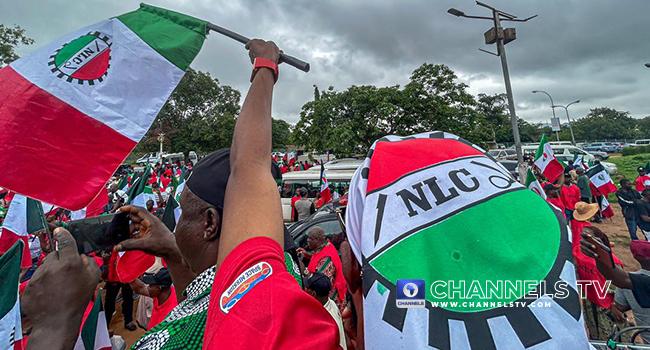
Nigeria’s future is seriously threatened by the continued disregard for the teaching profession, according to the Nigeria Labour Congress (NLC), which has urged the Federal Government to greatly boost education spending and enhance the welfare of educators nationwide.

NLC President Joe Ajaero made the plea at the World Teachers’ Day celebration in Abuja, calling teachers the “queens of all professions” who, in spite of their crucial role in the development of the country, nonetheless endure low pay, unfavorable working conditions, and a lack of respect.

“Despite society’s admiration for teachers, they continue to be the most underappreciated and undernourished profession,” Ajaero stated.

In heaven, teachers are revered, while on earth, they are hungry.

The UNESCO standard, which advises nations to devote at least 6% of their GDP and 20% of public spending to education, should be met, Ajaero urged the Federal Government.

He pointed out that Nigeria now invests significantly less than this level, which results in a teacher shortage, packed classrooms, and deteriorating educational standards.

“The lack of teaching aids, the poor working conditions for teachers, and the deteriorating morale among educators are all consequences of our underfunded educational system,” he stated.

The NLC President reportedly emphasized that increasing education spending involves developing human capital, which starts with highly qualified and driven instructors, rather than just facilities.

Additionally, Ajaero denounced the mistreatment of educators in private schools, claiming that many of them are underpaid, overworked, and denied basic labor rights including social protection, pensions, and union representation.

He urged the Minister of Education and the Minister of Labor and Employment to implement legislation that, in accordance with the Nigerian Constitution and Conventions 87 and 98 of the International Labour Organization (ILO), guarantees private school teachers the ability to organize and join unions.

“Private school teachers are among the most underpaid employees in this nation,” Ajaero stated.

“The laws that safeguard all other Nigerian workers must also apply to them.”

A significant exodus of teachers is being fueled by inadequate compensation and professional support, the labor leader warned, as many depart the field in search of higher-paying positions overseas or in other sectors.

“What you lack, you cannot give. One cannot expect teachers to provide high-quality instruction if they are not sufficiently supported, encouraged, and trained, according to Ajaero.

“The future of our children and the nation as a whole is at risk if we keep going in this direction.”

He demanded a national framework to retrain underqualified educators, encourage ongoing professional growth, and lower the nation’s high student-teacher ratio, which he claimed is significantly higher than international norms in many public schools.

The global topic for this year’s World Teachers’ Day was “The Teachers We Need for the Education We Want: The Global Imperative to Reverse Teacher Shortages.”

The topic is especially pertinent to Nigeria, according to Ajaero, where there is a severe teacher shortage in many schools, particularly in neglected and rural areas.

He called on all tiers of government to show political will by giving teachers’ well-being, frequent training, and salary payments a priority as part of larger reforms to bring Nigeria’s educational system back to life.

By funding educators, we are investing in the future. He came to the conclusion that no nation could surpass the caliber of its educators.

Wike Commences Rehabilitation Of 73 Schools, Begins 15km Old Keffi Road Development

0

In order to improve access to high-quality education and revitalize public infrastructure, President Bola Ahmed Tinubu’s Renewed Hope Agenda calls for the rehabilitation of 73 Government Secondary Schools throughout Abuja, according to Federal Capital Territory (FCT) Minister Barr. Nyesom Wike.

During the flag-off of the rehabilitation of the 15-kilometer Old Keffi Road from Kado Village to Dei-Dei on Tuesday, Wike made the announcement. He claimed that the significant investment in road infrastructure and school renovations shows President Tinubu’s commitment to keeping his promises to Nigerians.

According to the Minister, “73 of the 103 Government Secondary Schools in the FCT are undergoing rehabilitation at the moment, and 33 more projects will soon be flagged off.” Seventy-three of the 105 ongoing projects are in the city and AMAC. Both Nigerians and Abuja residents are benefiting from the efforts of this administration.

In order to reduce traffic, improve connectivity, and encourage economic activity throughout FCT areas, President Tinubu approved a number of significant interventions, including the Old Keffi Road project, according to Wike.

Rehabilitating Saburi 1 and Saburi 2 roads was one of the emergency projects the President approved when he took office in 2023, he said, adding that the Old Keffi Road reconstruction brings the project’s earlier commissioning promise to residents and traders to fruition.

When we put the Saburi Road into service, I stated that it wouldn’t be finished until the Old Keffi Road, which connects Kado Village and Dei-Dei, was also restored. We are here today, to the glory of God, to carry out President Bola Ahmed Tinubu’s vow,” Wike stated.

The Minister said that because of their shown technical ability and the caliber of their previous work, Lubrik Construction Company, which managed the Saburi project, has been given the 15km Old Keffi Road restoration once more.

Hon. Christopher Zakka Maikalangu, the chairman of the Abuja Municipal Area Council (AMAC), was also praised by Wike for being a “true representative of his people” for always supporting important projects that address the needs of locals.

“True representation entails selecting leaders who are dedicated to addressing your needs and who comprehend them,” he stated. “For the sake of continuity, you should continue to support Chairman Maikalangu.”

In order to avoid being influenced by politicians who “failed to deliver when they had the chance,” the Minister advised citizens to continue supporting the Tinubu administration.

“Don’t let folks who arrive with false stories fool you. We gave them a chance, but they didn’t succeed. They failed again when we gave them another chance. They will ruin everything if we make the error of giving them another chance,” he warned.

As a concrete demonstration of the President’s dedication to development, Wike disclosed that the FCT Administration has scheduled 27 project flag-offs throughout Abuja, a feat he claimed “has never happened before.”

He gave the building business instructions to hire men, women, and youths from the host communities in order to prioritize local content and allow them to profit financially while the project is being carried out.

In her vote of gratitude, Dr. Mariya Mahmoud, the Minister of State for the Federal Capital Territory, praised President Tinubu for his unwavering support of infrastructure renewal and for giving priority to initiatives that have a direct impact on citizens’ lives.

“This road connects communities, cuts down on travel time, enhances road safety, and stimulates socio-economic activities along this axis, serving thousands of commuters every day,” Mahmoud said.

The project, she said, is another example of the administration’s dedication to inclusive development and connection in the FCT, and she praised Wike for his driven leadership.

Okpebholo Slams Obaseki For Commissioning Projects Still Under Construction

0

The immediate past government of Godwin Obaseki has come under fire from Edo State Governor Monday Okpebholo for commissioning unfinished projects, calling the action a “disservice to Edo people and an attempt to mask inefficiency.”

Speaking at a site visit to the Stella Obasanjo Hospital and the Iyaro Education Hub Complex, Okpebholo expressed surprise at the amount of work left undone in buildings that had been officially proclaimed finished.

I don’t understand why the previous administration put this hospital into service while construction was still going on,” Okpebholo said in a statement issued through his chief press secretary, Fred Itua.

“Misleading the public with such gestures is wrong. Our responsibility is to see that everything that was started is completed and that Edo people receive the most out of every naira spent.

The governor’s tour was led by Cyril Oshiomhole, the Commissioner for Health, who revealed that the Stella Obasanjo Hospital was only 60% finished and that many of the hospital beds were recycled and outdated.

“With His Excellency, we toured the facility, and it is evident that the hospital is far from being finished,” Dr. Oshiomhole stated.

But in order to have everything finished as soon as possible, the governor has ordered that all necessary work be expedited.

Before Christmas, Okpebholo promised the locals that the hospital would be finished and operational. While a lot of work has been completed, much more has to be done.

Both the theater and the administrative block remain unfinished. But from now till Christmas, we’ll make sure this facility is operational and providing care for the Edo people,” he stated.

The governor also voiced disappointment with the Iyaro Education Hub, stating that the building was put into service without any equipment, power, or operating capability.

“This building was hurriedly commissioned without power, equipment, or any operational capacity,” said Okpebholo.

The fact that there was essentially nothing to commission makes it sad. Making this place fully operational, reestablishing its purpose, and revitalizing the Ministry of Education are our current priorities.

George Bou Maroon, the project’s contractor, clarified that the building, which houses the Ministry of Education, SUBEB, Library Board, Auditorium, staff eateries, and other administrative divisions, was intended to centralize all educational operations in the state.

In an effort to demonstrate his administration’s commitment to accountability, openness, and measurable outcomes, Governor Okpebholo promised to mobilize contractors in a matter of weeks to finish the Iyaro complex.

“We are not here to play politics with the lives of Edo people,” he continued.

Our goal is to rebuild, restore, and make sure that every project benefits the public. The Edo people are entitled to transparency and observable advancement, and this administration will provide both.

UNN Faces Claims Of Manipulating Nnaji’s Academic Files Over Certificate Forgery

0

The University of Nigeria, Nsukka (UNN) has been charged by Robert Ngwu, the spokesperson for Uche Nnaji, Minister of Innovation, Science, and Technology, of altering and plagiarizing his principal’s academic records.

The accusation reportedly comes as Nnaji is being charged with forging certificates after being appointed as President Bola Tinubu’s minister.

On Monday, Nnaji, who is now involved in a legal battle over the issue, informed Federal High Court Justice Hauwa Yilwa that the school was retaining his grades.

When Nnaji received a second-class honors (lower division) BSc degree in Microbiology/Biochemistry in 1985, he maintained that the university had no right to keep his academic achievements a secret.

Nnaji’s assistant claimed that the UNN was manipulating his principal’s academic records in response to queries during an interview on Channels Television’s “The Morning Brief” on Tuesday.

A trustworthy source, according to Ngwu, has exposed persistent manipulation within the organization.

The aide went on to say that Nnaji had repeatedly asked the court for protection at Monday’s most recent court session.

He stated, “He didn’t request that the school not look at his academic records. According to him, they shouldn’t alter or tamper because we saw information on what was posted online, including items from a private student’s file. That implies someone is doing that on purpose.

Consequently, we learned that there were certain manipulations occurring from a reliable source. The transcript of the minister’s request for court protection ought to be made public.

“One of your acting vice chancellors is a PDP cardholder. Under normal conditions, he shouldn’t be a venture capitalist. This is in contrast to a venture capitalist who has been a politician for decades. As you are aware, legal politics are tense, which is why the minister was nervous.

Since they don’t like competition during elections, the PDP in Enugu has managed to hold onto power for the past 26 years. They target anyone who challenges them, discredits them, and finds a means to prevent them from having a party to run under.

Therefore, it was necessary for the school to cease altering and tampering with his academic records. Essentially, it’s to make his transcript available. He paid for his transcript in May after applying for it, but it was never made public.

Breaking: Prof. Yakubu Steps Down, INEC Receives Acting Chairman

0

May Agbamuche has been appointed the Independent National Electoral Commission’s (INEC) Acting National Chairman.

At a meeting with resident electoral commissioners at INEC headquarters on Tuesday in Abuja, Professor Mahmood Yakubu reportedly turned the reins over to Agbamuche.

In the electoral body, Agbamuche is acknowledged as the National Commissioner with the longest tenure.

Professor Mahmood called on the commission’s directors and commissioners to give Agbamuche their full support until a permanent chairman was chosen.

On October 21, 2015, Mahmood was chosen by then-President Muhammadu Buhari to replace Amina Zakari, who had been acting as chairperson.

Professor Yakubu will step down as INEC chairman in November 2025 after serving two 10-year terms.

More information later.

Federal Government Boosts Local Refiners, Launches New Regional Fuel Market

0

The Federal Government is dedicated to making sure that every barrel of crude oil produced in Nigeria adds genuine value to the country’s economy both domestically and internationally, according to Heineken Lokpobiri, Minister of State for Petroleum Resources (Oil).

Speaking at the 2025 CORAN Summit in Lagos on Tuesday, the minister stated that the government’s goal of energy self-sufficiency and sustainable economic growth included giving priority to domestic refining capacity.

Lokpobiri emphasized that enhancing local refining and guaranteeing energy security were essential to Nigeria’s long-term development objectives, as he was represented by his Technical Advisor, Ndah Adaba.

With the topic “Refinery Key to Energy Security in Africa,” the summit convened energy professionals, engineers, investors, and policymakers from all around the continent to talk about the continent’s progress toward refining independence.

According to Lokpobiri, the Domestic Crude Oil Supply Obligation (DSCO) of the Federal Government guarantees that all licensed domestic refineries have steady supply to feedstock for their operations.

In addition to licensing, he stated that the government is facilitating the delivery of crude oil to domestic refiners by implementing the Domestic Crude Oil delivery Obligation.

“Naira for Crude,” which was launched to stabilize the market, will continue to be essential in lowering the cost of producing fuel, minimizing exposure to fluctuations in currency rates, and assisting domestic refinery operations,” he said.

“If a country cannot refine its own crude, it cannot claim energy independence,” the minister said.

Lokpobiri emphasized recent changes, stating that the Nigerian Midstream and Downstream Petroleum Regulatory Authority (NMDPRA) had made the refinery licensing procedure simpler.

In order to remove bureaucratic obstacles and attract reliable investors, he claims that the procedure, which includes the Licence to Establish, Licence to Construct, and Licence to Operate, has been simplified.

Lokpobiri stated, “This administration supports real investors who can produce results, not those who thrive on red tape.”

“The Success of Indigenous Refineries”
Lokpobiri cited regional success stories propelling Nigeria’s refining revival, including the Waltersmith Petroman Refinery, the Dangote Refinery & Petrochemical Complex, and Aradel Holdings.

Indigenous success stories like Aradel Holdings, Waltersmith Petroman Refinery, and Dangote Refinery are among those we have seen today. He stated, “These show that Nigerians have the ability and the desire to refine our crude locally.”

Such initiatives, he claims, “symbolize confidence in government policy direction” and are consistent with President Bola Tinubu’s Renewed Hope Agenda, which highlights domestic refining as a major factor in the creation of jobs, energy independence, and industrial revival.

Nigeria Introduces the Fuel Market in West Africa
In an effort to improve regional collaboration, the minister announced that the Federal Government has established the West African Fuel Reference Market, a project that aims to establish Nigeria as West Africa’s center for petroleum distribution and refining.

“With more domestic refining capacity, Nigeria will be able to meet its own needs and establish itself as a trustworthy supplier to its neighbors,” Lokpobiri said.

He added the project is in line with the African Continental Free commerce Area (AfCFTA) framework, which aims to increase intra-African commerce and lessen reliance on foreign refineries, as well as the African Union’s energy integration initiatives.

In order to draw in both domestic and foreign investment, Lokpobiri stated that the Federal Government would prioritize feedstock security for all licensed refiners and increase fiscal incentives.

For the purpose of fighting crude oil theft, stopping pipeline vandalism, and promoting goodwill with host communities, he continued, cooperation between the Ministry of Petroleum Resources, NMDPRA, NUPRC, and security agencies was being improved.

“Our refineries and the institutions that support them are the keys to Africa’s energy security,” Lokpobiri stated.

As the continent strives for independence, he called on African countries to strengthen their collaboration in shared energy infrastructure, logistics, and product interchange.

As a result of government reforms and increased local refining capacity, Nigeria’s imports of Premium Motor Spirit (petrol) have decreased to their lowest level in eight years.

Nigeria got 116,000 barrels of gasoline per day (18.44 million liters) in September, compared to 154,000 barrels per day (24.49 million liters) in August, the lowest amount since 2017, according to a recent report by Argus Media.

Improved local output, policy changes, and ongoing maintenance at the 650,000 barrels per day Dangote Refinery, which has temporarily reduced operations, were cited in the study as the reasons for the reduction.

The Petroleum and Natural Gas Senior Staff Association of Nigeria (PENGASSAN) and the refinery’s management recently got into an industrial conflict, but observers believe the ongoing decline in imports shows that domestic refining is becoming more and more popular and that there is a slow but steady move toward energy independence.

‘Nigeria Should Be A Country Of Particular Concern’ — US Lawmaker Appeals To Trump

0

In the US House of Representatives, Representative Riley M. Moore, who represents West Virginia’s Second District, has pushed President Donald Trump to declare Nigeria a Country of Particular Concerns (CPC).

In the letter, which was sent to US Department of State Secretary of State Marco Rubio in Washington, DC, on October 6, 2025, the lawmaker begged the US government to immediately stop arms sales and all related technical assistance to Nigeria until the “Nigerian government demonstrates that it is sufficiently committed to ending the reign of persecution and slaughter.”

Moore asserted that at least 7,000 Christians had been brutally killed by “Muslim extremist groups” between January and September of 2025.

He said that since 2015, at least 250 Catholic priests had been attacked or killed nationwide, emphasizing that “between the Boko Haram uprising in 2009 and 2025, 19,100 churches in Nigeria have been attacked or destroyed.”

Nigeria was reportedly named a CPC by Trump during his first term, but former President Joe Biden undid that designation.

Nigeria is undergoing a “Christian genocide,” according to political journalist Van Jones, television host Bill Maher, and US Senator Ted Cruz.

Senator Cruz said in a recent podcast interview with American talk show host Bill Maher that Christians in Nigeria were being systematically persecuted and killed, calling the scenario “genocide.”

However, the story has subsequently been rejected by the Federal Government, which claims that no specific religion is targeted by the nation’s worsening security situation.

Oshiomhole Faces Backlash From NUPENG For Supposed Anti-Labour Comments

0

The recent remarks made by Senator Adams Oshiomhole on national television have angered the Nigeria Union of Petroleum and Natural Gas Workers (NUPENG), which has called them a heinous violation of established labor rules and a heinous attack on the fundamental rights of Nigerian workers.

The Nigerian oil and gas workers’ union, NUPENG, said that it has proclaimed Senator Adams Oshiomhole Persona Non Grata for his unwavering condemnation of the PENGASSAN strike against the unwarranted dismissal of 800 engineers for exercising their fundamental right to unionization.

The union stated that, in order to put this decision into practice, it will no longer support or endorse any event that involves Senator Oshiomhole.

The general secretary, Comrade Afolabi Olawale, and president of NUPENG, Comrade Williams Akporeha, jointly signed a statement accusing Oshiomhole of trying to justify the persecution of employees for exercising their basic rights to peaceful action and association.

“We see with great dismay how a former labor leader has changed into a strong supporter of corporate tyranny and is actively fighting for the very liberties he once defended.

Not only are his attempts to justify the retaliation against workers for exercising their fundamental rights to peaceful action and association disgusting, but they also blatantly violate Nigerian labor law and the conventions of the International Labor Organization (ILO).

The first irony is that we are forced to consider whether it is accurate to say that former President Olusegun Obasanjo described Senator Oshiomhole as “a Comrade in the morning and a politician by night” at a dinner hosted by the Nigeria Labor Congress during one of its Delegates Conferences.

NUPENG stated, “If the description of Senator Oshiomhole by former President Obasanjo is accurate, we must inquire as to whether such a person is qualified to give a lecture on strategy and/or morality.”

The union went on to say: “How can someone who once counseled accused corrupt politicians to join the APC in order to have their sins pardoned have the audacity to preach about morality?

It also says a lot about Senator Oshiomhole’s character because he falsely claimed to have resigned from his position as General Secretary of the National Union of Textile, Garment and Tailoring Workers of Nigeria (NUTGTWN) after being elected President of the NLC.

According to the statement, “it is undeniable that Mr. Adams Oshiomhole served as NUTGWN’s NLC President and General Secretary from 1999 to 2007 and that he did not resign the General Secretary role until 2008, a full year after he left the NLC Presidency.”

According to NUPENG, the senator has a “pathological tendency to rewrite history to suit his current reactionary advocacy for the unconscionable capitalists who are not prepared to accommodate trade unions, opting instead for slave labor.”

We reiterate the unambiguous legal provisions for clarity’s sake:

In reference to the unionization problem, NUPENG stated that Section 40 of the Federal Republic of Nigeria 1999 Constitution (as amended) provides the right to freedom of organization and assembly to all individuals in Nigeria, including foreigners.

Additionally, Section 9(6) of the Labour Act, Cap L1, LFN 2004 stated that contracts that attempt to bar employees from joining a trade union are expressly prohibited.

Furthermore, according to NUPENG, Nigeria has ratified both ILO Convention 87 (Freedom of Association) and Convention 98 (Right to Collective Bargaining), which both uphold employees’ freedom to organize and join any union they choose without hindrance for the purpose of engage in negotiations.

“By virtue of Section 254C (1) & (2) of the 1999 Constitution, these fundamental international standards have been made constitutional provisions, and the mass termination of workers for unionizing is a flagrant violation of them,” the statement stated.