Home Blog Page 1379

NEWSLEADER Editor-In-Chief loses Mother-In-Law

0

Publisher/Editor-in-Chief of NIGERIAN NEWSLEADER Newspaper, Mr Celestine Okafor, has lost his mother-in-law, Mrs Evelyn Happiness Okwosha-Nwabiani.

Mrs Nwabiani passed on at the age of 85 years in her home town Oguta, Oguta Local Government Area, Imo West Senatorial district, Imo state, South East, Nigeria.

Until her death recently, Mrs Evelyn Happiness Okwosha-Nwabiani was a junior school teacher, gifted seamstress and a devout Christian; a respected community matriarch who was renown for her frank talk on issues affecting individuals and her community.

She was also known for promoting peace, unity and love among individuals, groups, families and community people in Oguta town. Mama Evelyn Happiness, as she was popularly known and referred to in Oguta, was a strong adherent of the Grail Message Movement and a cross bearer of Grail.

National growth LS

Mrs Nwabiani was married for over 50 years to her beloved and highly respected husband of blessed memory, a retired corporate Accountant and also an Oguta titled community leader, Chief Francis Bonny Nwabiani, FBN (the Damanze Ezekpe of Umukwonkomoshi village, Umuenechi clan, Oguta). At the time of her passing a couple of days ago, she was the oldest member of her paternal family, the Nwosu Okwosha family of Umudei clan in Oguta town.

Born in 1939, Mrs Evelyn Nwabiani, the first daughter of Chief (Mrs) Ine Nwabishi, one of the wives of a famous and wealthy Oguta patriarch, Chief Nwosu Okwosha in Umudei village, married at 18 years into the Nwabiani family, one of the most popular and influencial families in Oguta town. She has five surviving children out of eight, including, Mrs Juliet Nwabiani Okafor, an Economist and the Managing Director/Chief Executive Officer of SeaRoute Communications Limited.

Already, her burial plans, according to a funeral statement by her first son and head of the family, Mr Frank Obiora Nwabiani, an Abuja based businessman, has begun in earnest and details of which would be made known soon.

She leaves behind five surviving children: Frank Obiora Nwabiani; Marilyn Nwabiani-Ani; Juliet Nwabiani Okafor; Rita Nwabiani-Uzor and Sharon Ngozi Nwabiani, among many grand and great grand children. NNL.

Customs generates N1.3bn revenue in first quarter 2024

0

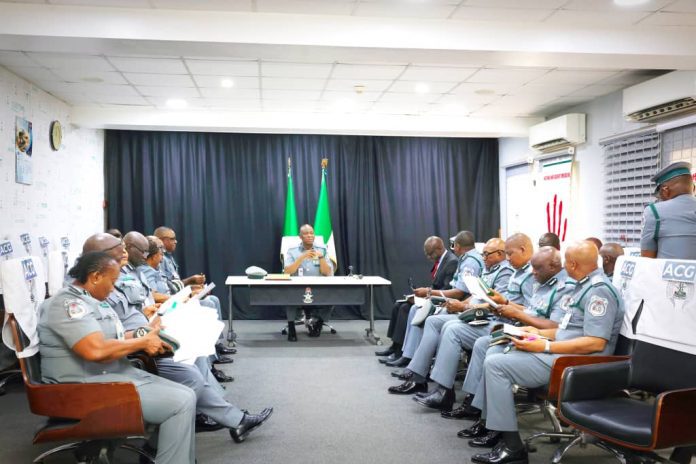
The Nigeria Customs Service (NCS) has generated over N1.3bn revenue in the first quarter of 2024.

The Comptroller General of Customs, Bashir Adeniyi revealed this during the NCS quarterly press briefing held in Abuja on Wednesday.

Adeniyi said,”In the first quarter of 2024, the NCS demonstrated remarkable performance in revenue collection. Total revenue collected during this period amounted to NGN 1,347,675,608,972.75. 

“The collection for the first quarter represents a substantial increase of 122.35% compared to the same period last year, where NGN 606,119,935,146.67. Month-by-month analysis further illustrates the Service’s impressive growth trajectory. 

National growth LS

“In January 2024, revenue collection surged by 95.60%, reaching NGN 390,824,148,326.55 from NGN 199,809,974,327.52 recorded in January 2023. This upward trend continued in February 2024, with a staggering 138.68% growth, elevating revenue collection to NGN 450,209,267,557.15 from NGN 188,625,011,386.87 in February 2023. 

“By March 2024, the revenue collected by NCS revenue grew by 132.76% from NGN 217,669,949,432.28 to NGN 506,642,193,019.05.”

The Comptroller General noted that when compared to the Federal government’s annual revenue target of NGN 5.07 trillion for the NCS to collect in 2024, the target translates to a monthly revenue target of NGN 423 billion. 

“We are pleased to report an average monthly revenue growth of 6.2% over the set monthly target and a cumulative revenue collection of 18.6%, equivalent to NGN 78,675,608,972.75 over the set quarterly target of NGN 1.269 trillion.”

On suppression of smuggling, he said,”In the first quarter of 2024, the NCS recorded a total of 572 seizures, encompassing various items valued at NGN 10,593,099,654.50 in Duty Paid Value (DPV). 

“Notably, January saw 111 seizures amounting to NGN 842,992,751.50 in DPV, while February marked the highest seizure numbers of 432, totalling NGN 3,704,703,350.34. 

“Rice constituted 39% of the seizures, followed by petroleum products at 26%, with motor vehicles and textiles accounting for 9% and 6% of the seizures, respectively. During this period, the NCS detained 22 suspects, and appropriate legal measures will be taken in accordance with the Nigeria Customs Service Act 2023.”

  1. Speaking on trade facilitation, he revealed,”Trade facilitation remains a central focus of the NCS operations. Despite inherent challenges, we have diligently worked towards streamlining processes, minimizing bottlenecks, and optimizing efficiency across our ports to ensure seamless trade transactions. 

“In First Quarter 2024, the NCS processed a total of 311,492 Single Goods Declarations (SGDs) for imports, reflecting the volume of import transactions handled. This figure indicates a decrease compared to the total volume of 327,491 processed in 2023 and 403,233 SGDs in 2022.”

He added,”Regarding export transactions, a total of 10,786 SGDs were processed in 2024 compared to 9,752 transactions in 2023, representing a 10.60% growth in export activities. Notably, a significant portion of this growth occurred in January, with 4,067 transactions processed in 2024 compared to 3,352 SGDs in 2023, marking a 29.69% increase. 

“The Service is particularly interested in the growth of the non-oil export sector, aligning with the priorities of the President Bola Ahmed Tinubu led administration and the initiatives pursued by NCS in recent times.”

The CGS noted that a myriad of deliberate factors have contributed to the successes around NCS key performance indicators. 

“It is important to acknowledge the dedication and efforts of the officers and men of NCS who have worked tirelessly and around the clock to ensure consistent and upward momentum. 

“NCS officers have played a key role in driving the implementation of initiatives, as evidenced by our performance across the three core statutory responsibilities set by the government. Among these initiatives is the introduction of the E-auction generating a total revenue of NGN 1.6 billion in February and March.

“Furthermore, stakeholders from both the private and public sectors have played an instrumental role in our recorded successes. Their commitment and enthusiasm towards our objectives have been commendable, especially in adhering to the terms of various Memoranda of Understanding (MOUs) during bilateral engagements and larger forums like the National Trade Facilitation Committee. 

“Additionally, significant commitments were documented at the last Comptroller-General of Customs (CGC’s) Conference, notably enshrined in the Lagos Continental Declaration, highlighting the collective effort and collaboration towards our shared goals.

Adeniyi stressed that it is imperative to highlight the ongoing support of the government, particularly in approving initiatives aimed at fulfilling the mandate of the Nigeria Customs Service (NCS). 

“Among these initiatives, notable is the granting of a 90- day window to owners of uncustomed vehicles, facilitating the payment of appropriate duties on previously imported vehicles into the country. 

“Members of the public are strongly advised to avail themselves of this opportunity to regularize their papers, as failure to do so will result in applicable penalties.

“Additionally, the government’s decision to reopen the Northern Borders with Niger Republic holds significant importance. This action is expected to boost trading activities in those areas. With potential smugglers now reconsidering the legitimacy of trading through approved routes, this decision stands as a pivotal move,” he said.

He assured that the NCS is unequivocally committed to supporting the actualization of the 8- point agenda of the President Tinubu-led administration. 

According to him, this commitment is demonstrated through both direct and indirect contributions to key areas such as economic growth, improved security, upholding the rule of law, and fighting corruption. 

“Noteworthy achievements include strengthening economic growth through optimal revenue collection to support government allocations to vital sectors, alongside the implementation of efficient trade facilitation measures. 

“Our relentless enforcement efforts, particularly in intercepting prohibited items, are important in enhancing security. Moreover, we are steadfastly integrating technology across our operations to ensure transparency and accountability, addressing critical aspects of the 8-point agenda,” he said.

He disclosed that recently, the NCS has prioritized food security in response to a presidential directive. 

According to him, this initiative is evidenced by the distribution of food items to vulnerable members of society, commencing in Lagos, Kano and extending to other parts of the country to address urgent societal needs. 

He reassured the public that transparency and accountability will remain paramount under his leadership, fostering trust and confidence in the Service.

  1. On challenges encountered during the quarter, he said,”During the quarter, the NCS encountered several systemic challenges that impeded our ability to fulfil our statutory responsibilities effectively. These challenges encompassed issues related to non-compliance with regulations, infrastructure limitations, and a notable decline in cargo throughput, evidenced by a 4.89% decrease in the volume of transactions handled. 

“Additionally, significant fluctuations in exchange rates applied in the customs clearance of consignments posed considerable difficulties. As per protocol, the exchange rate utilized by Customs in the clearance of goods via the Nigeria Integrated Customs Information System (NICIS) is based on the rate determined by the Central Bank of Nigeria (CBN). 

“In the last quarter, a total of 28 rates were directed by the CBN, ranging from NGN 951.94 per USD 1 in January 2024 to a peak of NGN 1,662.35 per USD 1 in February 2024. While a singular exchange rate of NGN951.94 per USD 1 was maintained in January, February witnessed 15 different spot rates ranging from NGN 951.94 per USD 1 to NGN 1,662.35 per USD 1. March saw a total of 13 different spot rates applied, ranging from NGN 1,303.84 to NGN 1,630.16. These fluctuations resulted in an average applied exchange rate of NGN 1,314.03 per USD 1 in the clearance of Customs goods during the quarter.”

He added,”The repercussions of these fluctuating rates have sent concerning signals to our stakeholders, affecting and disrupting activities. Beyond the speculation regarding potential gains it may have on NCS revenue, the implications on transaction volumes are significant and outweigh any possible benefits. These concerns are already manifesting in current activities, with the potential for lagged effects in the coming months. 

“Mindful of these implications on the trading public and the overall economy, the NCS, with the support of the Honourable Minister of Finance, has initiated periodic consultations with the Central Bank of Nigeria (CBN) to mitigate the potential impact of exchange rate fluctuations on import activities. 

“The relative stability in the past days can be attributed to the interventions of the Honourable Minister of Finance and the Governor of the CBN.”

Adeniyi mentioned that the NCS encountered non-operational challenges stemming from deliberate attempts by malicious actors to undermine the reputation of the Service. 

“It is crucial to underscore that the NCS remains resolute in addressing genuine, evidence-based observations, as we have consistently done in the past. Constructive, fact-based criticisms channelled through appropriate means arealways welcomed by the Service, as they keep us vigilant in fulfilling our commitment to the crucial responsibilities entrusted to us. Despite these challenges, we are steadfast in prioritizing transparency and accountability in all our operations, reaffirming our dedication to serving with integrity and excellence.

“Additionally, I want to draw the public’s attention to recent attacks on some of our officers and relevant provisions of the Nigeria Customs Service Act. Section 239 imposes penalties for armed or bodily assault of an officer, including threats or any form of aggression. Conviction for this offense can result in imprisonment for up to 10 years. 

“I urge members of the public to conduct their business with officers in a cordial and mutually respectful manner. Officers have also been cautioned to uphold professionalism and restraint in their interactions,” he said.

The CGC assured that the NCS is actively implementing various measures to address those challenges. 

According to him, one notable initiative is the integration of geospatial technology alongside the utilization of satellite imagery and artificial intelligence tools and techniques. 

“These efforts were initiated upon assuming office to combat the longstanding issue of smuggling and enhance the NCS’s enforcement capabilities for effective monitoring of our extensive 4,000 km borders. Additionally, this initiative will establish a command and control center to monitor activities along our borders comprehensively. 

“Earlier this year, the NCS launched an extensive Time Release Study (TRS) with significant participation from the Federal Ministry of Finance and the Ministry of Marine and Blue Economy, further grace by the presence of the Honourable Minister of Industry Trade and Investment. 

“The TRS aims to identify bottlenecks in the clearance process, to enable the implementation of measures to promote transparency and commitment among key stakeholders and enhance trade facilitation. NCS reaffirms its dedication to publishing the TRS report to foster transparency and address the current challenges hindering trade facilitation.

“The NCS recently concluded a stakeholder engagement, marking a critical step towards achieving the Authorized Economic Operators (AEO) program, set to be launched by mid-April. This initiative, endorsed by the World Customs Organization (WCO), recognizes businesses involved in international trade that

demonstrate strong compliance with customs regulations and security standards. Participants in the AEO program stand to benefit from expedited customs clearance processes, reduced inspections, priority treatment, and enhanced predictability in customs procedures, ultimately enhancing their credibility and competitiveness in the global market. 

“The presence of 7 beneficiaries, including importers, exporters, logistics companies, customs brokers, and Small and Medium Scale Enterprises (SMEs), at the pilot launch underscores the program’s significance and stakeholders’ commitment to advancing trade facilitation efforts in Nigeria,” he said.

He revealed that the NCS is currently finalizing measures to implement Advanced Rulings, set to take effect in the coming months. 

“This mechanism empowers traders to seek clarity and certainty regarding the classification, origin, and valuation of goods before importing them into the country. 

“Essentially, an Advanced Ruling provides a binding decision from customs authorities on specific aspects of a proposed import transaction, offering traders predictability and consistency in customs procedures. 

“Obtaining advanced clarity on customs matters enables businesses to plan their import activities more effectively, minimize the risk of non-compliance, and ensure smoother customs clearance processes. 

“Additionally, the Service is perfecting arrangements with the Central Bank of Nigeria (CBN) to stabilize the exchange rate for import declarations, further enhancing predictability and facilitating trade operations,” he said.

Adeniyu hundred that the NCS is also gearing up to launch the NCS Customs Analytical Laboratory, a critical measure set to take effect in Q2 and Q3. 

“The Customs Analytical Laboratory is a specialized facility equipped with advanced analytical instruments and techniques for the scientific analysis of goods and materials. 

“Its primary objective is to ensure compliance with customs regulations by providing accurate and reliable testing and analysis of imported and exported goods. The laboratory will conduct various tests to determine the authenticity, composition, quality, and safety of goods, including testing for chemical composition, product integrity, and adherence to regulatory standards. 

“Leveraging state-of-the-art technology and expertise, aided by the Customs Analytical Laboratory is expected to enhance NCS’s capacity to detect and prevent smuggling, counterfeit goods, and other illicit activities, thereby safeguarding public health, safety, and economic interests. Additionally, it facilitates trade by expediting the clearance process for compliant traders and promoting confidence in the integrity of the customs system,” he explained.

On the export front, he said the NCS initiated discussions with the leadership of the Nigeria Export Promotion Council (NEPC) in the First Quarter to explore avenues for sustaining the positive growth in export transactions. 

According to him, a dedicated technical committee has been established to address specific areas of concern and enhance export facilitation. 

He said,”This proactive measure aligns with the President’s agenda to promote export trade, diversify the economy, and generate foreign exchange from non-oil exports. Furthermore, it aims to prepare Nigeria for the commencement of the African Continental Free Trade Area (AfCFTA) on 30 April, 2024, through guided trade initiatives. The NCS remains committed to fulfilling its obligations to ensure the success of these initiatives and contribute to the nation’s economic development and integration into the global market.

“The NCS is cognizant of the challenges faced by members of the public, particularly regarding the verification of customs documents. In response, we have initiated measures to provide accessible application gateways for the public to verify relevant customs documents, such as duty payments on vehicles, at their convenience. 

“This initiative aims to eradicate fraudulent activities and prevent exploitation by intermediaries or rent seekers in this area. Through the provision of convenient and reliable verification channels, our goal is to enhance transparency, empower stakeholders, and foster trust in our processes. 

“Our commitment is to consistently improve our services and meet the needs of the public, ensuring a seamless and efficient customs experience for all.”

CGC stressed that the reforms discussed are part of the President’s ongoing efforts to enhance port operations. 

“A recent development is the introduction of a Single Window system, spearheaded by the Minister of Finance. President Bola Tinubu will soon inaugurate a Steering Committee, with full implementation expected to commence by the second quarter of 2024.

“In closing, I extend heartfelt gratitude to our dedicated officers for their commitment and tireless efforts in advancing the mission of the NCS. Your dedication is instrumental in driving the success of our initiatives and ensuring the security and prosperity of our nation. As we move forward, I call upon all

Nigerians to continue offering their support and cooperation as we strive to fulfil our mandate of facilitating trade, ensuring security, and upholding the rule of law. We have the capacity to surmount obstacles and realize our shared objectives for a brighter future. 

“In essence, today’s briefing underscored our persistent efforts to Strengthen border enforcement, streamline trade, and foster economic advancement. Looking ahead with optimism, I remain assured that the NCS will maintain its exemplary performance, playing a pivotal role in our nation’s progress. Gratitude for your attention and support,” he said.

By Chimezie Godfrey

NCS to establish analytical laboratory for testing imported, exported goods -C-G

0

Its Comptroller General (C-G), Adewale Adeniyi, stated this during a press briefing on the service’s activities in the first quarter of 2024, on Wednesday in Abuja.

Adeniyi said the service was determined to ensure that only standard goods were allowed into the country.

“In view of that, the NCS Analytical Laboratory would take effect in the second and third quarters of the year,” he said.

He said the move was aimed at ensuring compliance with customs regulations by providing accurate and reliable testing and analysis of the goods.

National growth LS

“The laboratory will conduct various tests to determine the authenticity, composition, quality, and safety of goods, including testing for chemical composition, product integrity, and adherence to regulatory standards.

“Leveraging state of the art technology and expertise, aided by the Customs Analytical Laboratory is expected to enhance NCS’s capacity to detect and prevent smuggling and counterfeit goods and other illicit activities.

“This will safeguard public health, safety, and economic interests. Additionally, it facilitates trade by expediting the clearance,” he said.

Adeniyi said that NCS was open to collaboration.

He said where they did not have specified laboratories for their investigations, they would collaborate with government agencies such as National Agency for Food and Drug Administration and Control, as well as academic laboratories in institutions.

The NCS boss said that the laboratories would be established in various regions, particularly in port regions such as Lagos, Port-Harcout and, possibly in Kano, with a central analytical laboratory in Abuja.

He said that the NCS launched some programmes in the quarter such as the Time Release Study (TRS) aimed at identifying bottlenecks in the clearance process.

He said that the TRS would enable the implementation of measures to promote transparency and commitment among key stakeholders and enhance trade facilitation.

He said that the Authorised Economic Operators (AEO) programme, an initiative endorsed by the World Customs Organisation, would be launched by the service in April.

According to the C-G, participants of the programme stand to benefit from expedited customs clearance processes, reduced inspections, priority treatment, and enhanced predictability in customs

He said that the NCS was determined to address smuggling activities through strengthening its anti smuggling operations using innovations such as the Geographic Information System

According to him, the reopening of the northern border with Niger Republic is expected to address smuggling activities and boost trading activities in the region.(NAN)

By Martha Agas

For Innocent Chukwuma; for Nigeria, By Chido Onumah

0

On Tuesday, February 6, 2024, family, friends, and associates gathered at a Virtual Stakeholders’ Meeting to mark the one year of operation of the Innocent Chukwuemeka Chukwuma Empowerment Foundation (ICCEF). Founded in April 2022 in honour of Innocent Chukwuemeka Chukwuma, “to continue his impactful work and build on his numerous legacies,” ICCEF commenced work in January 2023 with five programme areas: Youth Innovation and Technological Start-ups; Mentoring & Intergenerational Dialogues (Big Brothers & Sisters Project); Community Youth Empowerment & Education; Our Daughters Project; and Legacy Projects.  

It was a fitting occasion to remember the man in whose honour ICCEF was named. If Innocent Chukwuemeka Chukwuma were alive, he would have been 58 on Tuesday, February 6, 2024. It has been three years since I got the deeply disturbing call from Prof Chidi Odinkalu, thousands of kilometres away. Three years later, I still remember those terse words, “We may have lost Innocent.”

Innocent, the immediate past West African Regional Director of Ford Foundation, was also the Founder of CLEEN Foundation; Network on Police Reforms in Nigeria (NOPRIN) and co-founder of several other organizations and networks. He was a renowned social justice crusader, human rights activist, and one of the leading lights within civil society in Africa, who has been described as “Africa’s leading expert on police and law enforcement reform.”

Innocent Chukwuemeka Chukwuma was a brother and friend. We were friends for more than three decades until his passing. We share the same birth year and he never stopped talking about how much older he was (with two months between us) and why he would pick kola nut before me in the council of elders. We were both active in the students’ movement. We were camp mates at Kashim Ibrahim College of Education during our one-year National Youth Service Corps (NYSC) programme in Maiduguri, Borno State, where his campaign against poor feeding in the camp led to “punitive” posting to our “Place of Primary Assignment” (PPA). We would reunite in Lagos after our NYSC where he took up a job with Nigeria’s foremost civil society organisation, the Civil Liberties Organisation (CLO) and would go on to found CLEEN Foundation.

National growth LS

I remember and miss Innoma, as I called him. I remember him from our days of student activism; he at the University of Nigeria (UNN) and I at the University of Calabar, where he would seek refuge each time he was in trouble at UNN. I remember the camaraderie, courage and leadership he showed, to his detriment, at the NYSC orientation when those of us who were active in the students’ movement became targets of the establishment. We had been admonished to leave our activism at the entrance of the orientation camp.

I remember him from our post-NYSC days in Lagos as young men supporting each other as we tried to make our marks in our careers. I remember him as the person who saved my doctoral research. Eight years ago, after the publication of the book, We Are All Biafrans, and three years into a doctoral programme at Universität Autònoma de Barcelona, Barcelona, Spain, I almost gave up because of mental fatigue and lack of funding for a research that spanned two continents (Africa and Europe) and three countries (Nigeria, South Africa, and Spain). Innocent came to my rescue. He not only talked me out of quitting, he facilitated the funding support that enabled me complete my programme three years later.

I miss Innocent with whom I often talked endlessly about the challenges of Nigeria and what to do, shared a good laugh and dinner on many occasions in Abuja or our favourite gizzdodo any time I was in Lagos and he was available. Each time I remember Innocent, I think of the great Comrades we have lost—Chima Ubani, Emma Ezeazu, Olaitan Oyerinde, Biodun “Revo” Ogunade, Bamidele Aturu, etc.— and the shrinking generation of Nigerian students and youth who were alive to their historic duty of confronting the brutal dictatorships of Generals Buhari, Babangida and Abacha. It was Frantz Omar Fanon, the Martinique revolutionary and psychiatrist who noted that, “Each generation must, out of relative obscurity, discover its mission, fulfill it, or betray it.”

Innocent was an ideas man who wasn’t fazed by any problems, political or otherwise. I wonder what he would make of the current state of Nigeria, a nation at war with itself as seen with the tragic killing of soldiers in the Delta State and the alleged reprisal attacks on civilians by the military,the unmitigated violence by state and non-state actors that has enveloped the country, and the abduction of children whose only crime is the quest for education in a country where our rogue elite have captured the state.

As the nation grieved and concerned Nigerians tried to make sense of the killing of soldiers from the 181 Amphibious Battalion based in Bomadi Local Government Area of Delta State by unknown assailants in Okuama community of Ughelli South Local Government Area, which had been at loggerheads with the Okoloba community of Bomadi Local Government Area in Delta State, on Thursday, March 14, 2024, a Nigerian friend who lives in China reached out, wondering why citizens would “attack their country’s Army, and lay ambush for them.” It is a question that has bothered me since I received the message.

My friend’s solution was to “change the name of our Armed Forces to the Nigerian Defence Forces (NDF) or to the People’s Defence Forces (PDF) Army, the People’s Defence Forces Navy and the People’s Defence Forces Air Force. Something that can give our people the sense or ‘indigeneship’ of our Armed Forces like they have in Botswana that calls their armed forces, Botswana Defence Force (BDF).”  What is in a name, we may ask? My friend argued that “lack of patriotism” is the reason citizens would “attack their own country’s Armed Forces that came to broker peace in their warring communities. The trust building should I think start from change of name…in Europe and in China the people love their Army.”

My friend’s intervention reminds me of the intervention of a former Chief of Army Staff and Minister of Defence. Exactly six years ago, on March 24, 2018, at the maiden convocation ceremony of Taraba State University in the capital city of Jalingo, Gen. Theophilus Aboki Danjuma (retd) called out the Nigerian military in a way that destroyed any shred of integrity or pretense to being a national institution.

Danjuma “accused the Nigerian military of prejudice, urging people to defend themselves, rather than rely entirely on the institution for protection,” in reference to the spate of ethnic killings that had convulsed the northcentral zone of the country. He “charged Nigerians to depend less on the Armed Forces, which according to him ‘are now biased in their operations.’” He “expressed regret that the institution, which used to be a shield for citizens, irrespective of religion, tribe or political party affiliation, has descended into partisanship.”

Last year, Oby Ezekwesili, a former minister of education, and founder of Fix Politics Initiative, spoke during the second memorial lecture on the death of Innocent Chukwuemeka Chukwuma, which also coincided with the first annual Innocent Chukwuemeka Chukwuma Impact and Legacy Lecture Series. The event served as a powerful tribute to the legacy and ideas of Innocent who left behind indelible marks in various fields.

On April 12, 2024, CLEEN Foundation and ICCEF will jointly host the 3rd posthumous memorial and the 2nd Impact and Legacy Lecture Series in honour of Innocent. One of Nigeria’s preeminent public intellectuals and Catholic Bishop of Sokoto, Mathew Hassan Kukah, “who has successfully combined pastoral, civic and intellectual roles to his monumental work in human rights, peace building and public service,” is the guest speaker.

As I remember Innoma, I look forward to Bishop Kukah’s intervention on the topic, “The Power of One. Dreams and Nightmares: Thoughts on Innocent Chukwuma.” It should be stimulating at a time of unmitigated national morass in a country, to quote Prof Okey Ndibe, “conceived in hope but nurtured by its leaders into hopelessness.”

To Josephine, Chidinma, Amarachi, and Nkechi, thanks for keeping the dream alive!

Onumah can be reached via @conumah

Defence ministry inaugurates committee to review Veterans Federation bill

0

The Permanent Secretary, Ministry of Defence, Dr Ibrahim Kana, on Wednesday, inaugurated a 10-member committee to review the proposed Veterans Federation of Nigeria Bill.

The News Agency of Nigeria (NAN) reports that the committee’s primary objective is to propose necessary amendments to the bill that is expected replace the Nigerian Legion Act, Cap N119 Laws of the Federation, 2004.

The committee is also expected to deliberate and consult widely to ensure that the proposed Veterans Federation of Nigeria Bill adequately addressed the pressing issues facing Nigerian veterans.

Addressing the committee shortly after the inauguration at the Defence headquarters, Kana charged members to diligently review the proposed bill.

National growth LS

He also charged them to proffer immediate solutions to enhance the welfare and livelihoods of Nigerian veterans.

He emphasised the need to ensure that the proposed legislation aligns with the evolving needs and aspirations of nation’s esteemed veterans.

“Our veterans have selflessly served our nation with honour and distinction. It is imperative that we prioritise their well-being and address their concerns through effective legislation.

“I urge the committee members to work tirelessly towards developing a comprehensive bill that will significantly improve the lives of our veterans,” Kana said.

NAN reports that the permanent secretary of the ministry will serve as the chairman of the committee, while Dr Jude Alozie, Director, Veteran Affairs Department, will serve the secretary.

Retired Maj.- Gen. A.M. Jibril, National Chairman, Nigerian Legion and Mrs Olu Mustapha, Director Joint Services Department, Ministry of Defence, are among those that were present at the inauguration. (NAN)

By Deborah Coker

NLNG inaugurates twin theatre at Jos University Teaching Hospital

0

The Nigeria Liquefied Natural Gas Limited (NLNG ), through its Hospital Support Programme (HSP), has inaugurated a twin theatre suite, at the Accident and Emergency Unit of  the Jos University Teaching Hospital (JUTH), to enhance healthcare delivery.

Mr Andy Odeh, the General Manager, External Relations and Sustainable Development, NLNG, during the inauguration of the project, on Wednesday in Jos, said the act was the organisation’s contribution to the development of the nation’s healthcare infrastructure.

Odeh, said the objective of the organisation’s Corporate Social Responsibility (CSR) was to boost the health care delivery system across the six geo – political zones in the country.

He revealed that the project in JUTH was conceived following a thorough needs assessment that showed the long wait list for surgical procedures due to the limited number of theatres, despite the availability of medical professionals to conduct the procedures.

National growth LS

Odeh, said the completed state -of the -art twin theatre would henceforth  shorten the waiting period.

According to him, the completed project consisted  two operating theatre suites, two scrub rooms and two preparation rooms with storage.

He further said it had a recovery room, conveniences, a linen room, nurses station, medical equipment, oxygen supply, fire fighting and prevention systems with automated doors for safety and access control.

Odeh, said the twin theater was connected to the Accident and Emergency building to ensure access to and from other existing facilities in the hospital.

He appealed to the management of JUTH to protect and make the best use of the facility for efficient service delivery.

Dr Pokop Bupwatda, the Chief Medical Director (CMD) of JUTH, commended the NLNG for the project ,which commenced in 2023 with the signing of an Memorandum Of Understanding (MOU).

Bupwatda, said the completed twin theatre, would enhance proactive qualitative health care service delivery in the hospital as the patients waiting time for surgeries would drastically be reduced.

He appealed for further interventions for the provision of CT scans and MRI facilities.

In his remarks, Gov. Caleb Mutfwang of Plateau  commended NLNG for choosing JUTH as one of the hospitals in its HSP project.

Mutfwang, said the twin theatre would improve the quality of health care service delivery and in turn would reduce the patients waiting period in which many lives would be saved.

He commended the management and staff of JUTH, for offering qualitative services despite its challenges .

The News Agency of Nigeria (NAN) reports that JUTH’s project is one of six projects in the second phase of the programme which commenced in January 2023.(NAN)

Tinubu signs Students Loan Bill into law

0

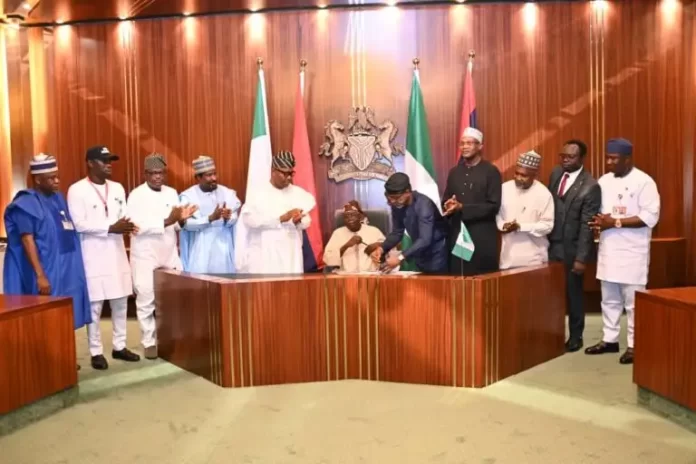
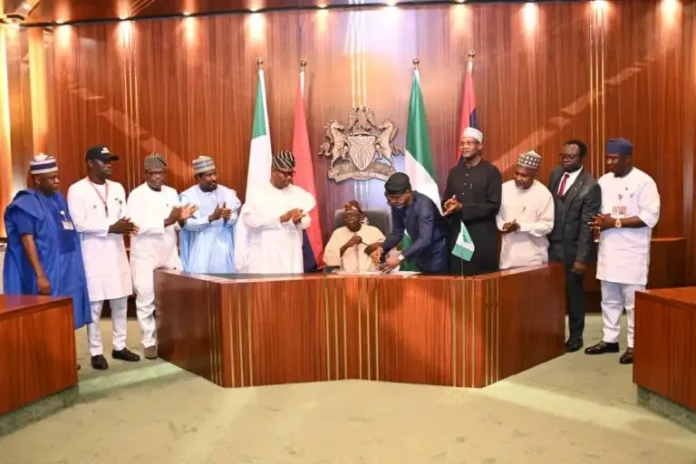
President Bola Tinubu has signed the Students Loan Bill into law on Wednesday in Abuja

By Ismail Abdulaziz
President Bola Tinubu has signed the Students Loan Bill into law on Wednesday in Abuja.

The News Agency of Nigeria (NAN) reports that the students loan is part of the implementation of the Access to Higher Education Act, 2023.

The act, popularly known as the Students Loan Bill seeks to provide loans for indigent Nigerian students to pay fees in Nigerian tertiary institutions.

At the signing, Tinubu commended the efforts of the members of the National Assembly for the expeditious handling of the bill.

National growth LS

He said that this action showed the administration’s priority towards encouraging education among Nigerian youths as a tool to fighting poverty.

“We are determined to ensure that education is given the proper attention necessary for the country including skills development programmes.

“This is to ensure that no one, no matter how poor their background, is excluded from quality education and opportunity to build their future.

“We are here because we are all educated and we are helped. In the past, we have seen a lot of our children dropped out of colleges and given up the opportunity,” he said.

Tinubu said that the loan would ensure that the standard and control of the scheme are applied without discrimination against a Nigerian citizen.

The act establishes the Nigerian Education Loan Fund (NELFUND) which is expected to handle all loan requests, grants, disbursement and recovery of the loans provided.

NELFUND, according to the Act, is to be funded from multiple streams and will engage in other productive activities.

Its sources of funding as dictated by the Act include; one per cent of all profits accruing to the federal government from oil and other minerals.

It also includes one per cent of taxes, levies and duties accruing to the federal government from the Federal Inland Revenue Service (FIRS), Nigeria Immigration Service (NIS) and Nigerian Customs Service (NCS); education bonds and education endowment fund schemes.

The Loan will also be funded through donations, gifts, grants, endowment and revenue accruing to the fund from any other source, according to the Act.(NAN)

NEMA partners UN to mitigate disaster impact

0

The National Emergency Management Agency (NEMA) says its partnership with the  United Nations Office for the Coordination of Humanitarian Affair (UN-OCHA)

By Philomina Attah

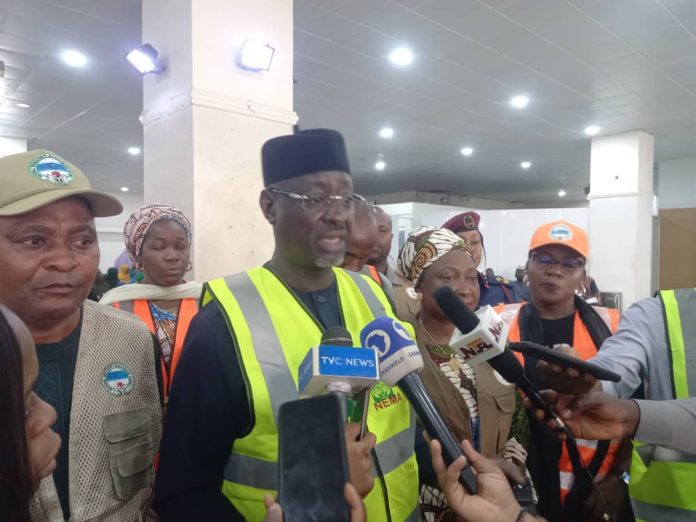
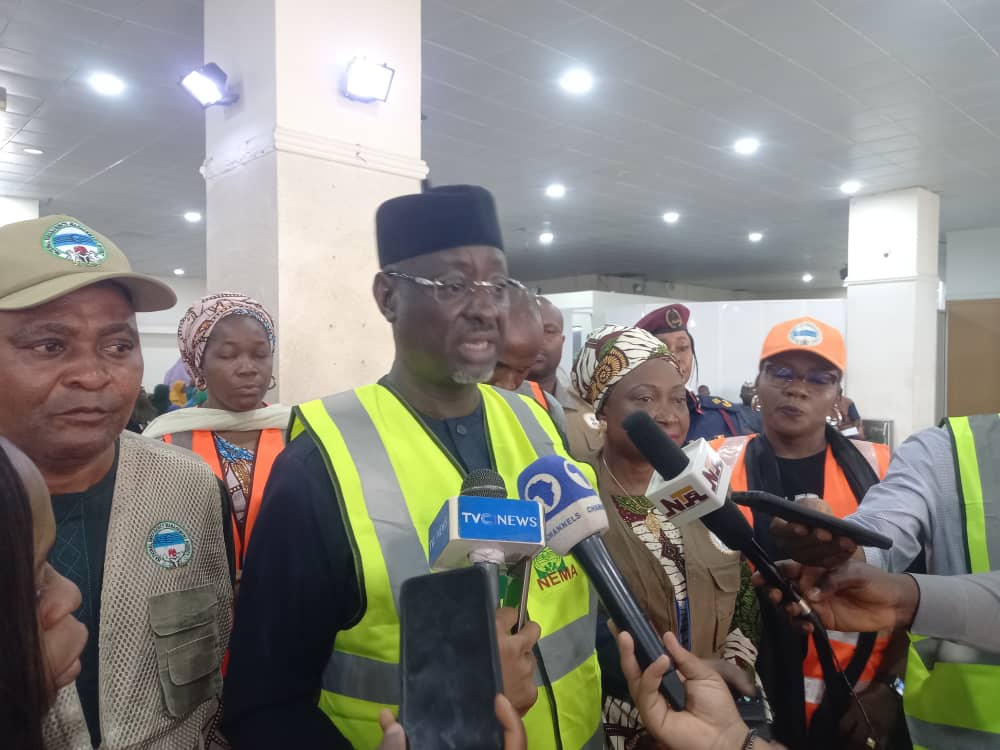
The National Emergency Management Agency (NEMA) says its partnership with the  United Nations Office for the Coordination of Humanitarian Affair (UN-OCHA) will reduce the sufferings of Nigerians affected by disasters.

The Director-General (DG) of NEMA, Mrs Zubaida Umar disclosed on Tuesday in Abuja when the Head of UN-OCHA in Nigeria, Mr Trond Jensen paid her a visit.

National growth LS

Umar commended the collaboration between NEMA and (UN-OCHA) in enhancing disaster response capabilities.

She used the opportunity of the visit to reel out mechanisms toward mitigating the impact of flooding on humans and environment as the rainy season sets in.

According to her, the mechanism included  developing early warning alerts based on the Seasonal Climate Prediction (SCP), released by the Nigerian Meteorological Agency (NiMet), and public sensitisation to precautionary measures to avert flood impacts.

The NEMA DG also announced an expert meeting to analyse the SCP and develop strategies for saving lives and safeguarding livelihoods.

“Other flood disaster mitigating activities will be rolled out during NEMA’s upcoming Emergency Coordination Forum (ECF) meeting,” she said.

On his part, Jensen praised the D-G’s experience in the on-shore sector, noting that it would be useful in finding solutions and improving efficiency and effectiveness.

He expressed excitement about the growing relationship between UN-OCHA and NEMA, saying “such foresees great things in the future”

Jensen emphasised the importance of collaboration and innovation in addressing climate change and humanitarian challenges.

He then stressed the need for joint efforts to tackle increasing temperatures and irregular weather patterns, such as floods. (NAN)

16 Significant Achievements of Mustapha Habib Ahmed at NEMA

0

Mustapha Habib Ahmed’s nearly three-year stint at the National Emergency Management Agency (NEMA) was characterized by significant and transformative improvements in disaster management and emergency response, leading to the elevation of NEMA  to the forefront of disaster management across the entire West African sub-region.

Working in sync with what he has described as “NEMA’s paradigm shift towards disaster risk reduction and to take disaster risk management to the grassroots,” he has left a lasting impact on the agency and the country’s preparedness for emergencies.

Below is a look at his tenure with a focus on some of his significant achievements.

1.         Leadership and Vision: Mustapha Habib Ahmed’s tenure as the Director-General of NEMA was marked by his visionary leadership, which was instrumental in transforming the agency’s approach to disaster management. His leadership prioritised staff welfare, recognizing that disaster management personnel must be both physically fit and mentally prepared to effectively aid those in need of assistance. This strategic focus has led to the restoration of industrial harmony within NEMA, with staff members demonstrating a renewed commitment to their roles and responsibilities.

National growth LS

2.        Completion of NEMA Headquarters: He oversaw the completion of the new NEMA headquarters, which had been abandoned for six years, bringing all departments under one roof and enhancing operational efficiency.

3.        World-Class Facilities: Under his guidance, NEMA’s headquarters became more than just an office complex as it was equipped with state-of-the-art facilities, including an Emergency Situation Room, GIS Laboratory, Nigeria Mission Control Centre and clinic.

4.        Modern Communication Systems: He introduced the Hytera modern communication system, enabling real-time communication and live streaming from incident sites, which has significantly improved disaster response coordination.

5.        Enhanced Search and Rescue Capabilities: His tenure saw the procurement of MICU Ambulances, Search and Rescue Boats, and other critical equipment, bolstering the capacity of NEMA’s Search and Rescue teams.

6.        Revival of NEMA Air Wing: Mustapha Habib Ahmed was responsible for reviving the NEMA Air Wing, including the Fixed Wing Cessna Citation Air Ambulance and Bell 429 Helicopter, enhancing the agency’s search, rescue, and medical evacuation capabilities.

7.        Reconvened the National ECF: On Thursday August 10, 2023 NEMA reconvened the National Emergency Coordination Forum (ECF), a meeting of multi-sectoral stakeholders comprising agencies of Government, international organisations and the United Nations systems. The reconvening was predicated upon the recognition of coordination and collaboration as vital components of disaster management

8.        Institutionalizing Processes: The launch of the NEMA Service Charter under his leadership helped formalize and operationalize processes, setting clear benchmarks for service delivery while his collaborations with the United States Agency for International Development (USAID), the US Federal Emergency Management Agency (FEMA), and the US Forestry Service facilitated the training on Incident Command System (ICS) and Emergency Operation Centre (EOC).

9.        Disaster Risk Reduction Strategy: Ahmed spearheaded the development of a comprehensive national Disaster Risk Reduction Strategy (2024-2030) and Action Plan (2024 – 2027) to contextualize, address and anticipate the evolving landscape of risks and challenges facing Nigeria. Under his stewardship, the agency also launched the National Contingency Plan for Nigeria (2023-2025) a pivotal document for emergency preparedness and Disaster Risk Reduction.

10. Mitigated flooding: By prioritizing annual predictions and forecasts especially the Seasonal Climate Prediction (SCP) and Annual Flood Outlook (AFO) from Nigerian Meteorological Agency (NIMET) and the Nigerian Hydrological Services Agency (NIHSA) NEMA was able to minimize the impact of flooding in 2023 thanks to downscaling of disaster early warning measures to grassroots for effective live-saving early actions.

11. Economic Livelihood Emergency Intervention: The Special National Economic Livelihood Emergency Intervention (SNELEI) was initiated and championed during his tenure to provide targeted support during emergencies, reflecting his commitment to not just immediate relief but also long-term economic recovery. SNELEI positively impacted 660,884 households, encompassing 3,965,304 individuals who were previously verified and earmarked to benefit from the special intervention across all 36 states and the FCT.

12. Recognition and Trust: He oversaw the successful evacuation of stranded Nigerians from countries as far flung as Sudan, Libya, Ukraine, India, Dubai and Turkey in collaboration with agencies such as the International Organization for Migration (IOM), National Commission for Refugees Migrants and Internally Displaced Persons (NCFRMI), Nigerian in Diaspora Commission (NiDCOM) and Nigerian Immigration Service (NIS) with support from the Dangote Foundation.

13. Collaborations and Partnerships: He forged unique collaborations and partnerships while at NEMA with national, state, and sub-national level actors with NEMA forging strong ties with State Emergency Management Agencies (SEMAs). He initiated deliberate engagement and advocacy with Sub-national government including presenting a brief on NEMA and the 2023 Flood Preparedness, Mitigation, and Response Plan to State Governors at the Nigeria Governors Forum (NGF) and the National Executive Council.

On the international scene, NEMA collaborated and forged partnerships with global relief agencies; it received relief support from the King Salman Humanitarian Aid Agency (KSRelief) to support IDPs in Borno and Yobe states  as well as victims of banditry in Zamfara and Bornu states. KSRelief also funded the renovation and retrofitting of the NEMA Emergency Coordination Centre (EOC)  at NEMA’s HQ.

14. Capacity building and knowledge sharing: The focus on capacity building and dissemination of knowledge and insights saw the training of military personnel, media practitioners, members of voluntary and community organizations, students, and others and a ground-breaking collaboration with the Disaster Management Centre of Bournemouth University saw NEMA hosting an Executive Disaster Management Course which focused on finding ways to enhance the capacity of disaster responders. He also facilitated a training program on the Incident Command System (ICS) and Emergency Operation Centre (EOC) conducted by the United States Agency for International Development (USAID), the US Federal Emergency Management Agency (FEMA), and the US Forestry Service.

15.  Emergency Agricultural Intervention across all states and the F.C.T: Mustapha Habib Ahmed successfully executed the Emergency Agricultural Intervention across all states of the federation and the FCT. This initiative aimed to restore farmers who had lost their croplands to the soil and engage artisans in additional value chain activities. Such efforts were crucial in fortifying Nigeria’s national food security and resilience.

16. Digital dashboard: Supervised 80% completion of the digital dashboard to enhance operational effiiency set to be commissioned in May which would have marked his 3rd anniversary in the saddle.

NERC approves electricity tariff increase for customers on band A

0

The Nigerian Electricity Regulatory Commission (NERC)  has approved  increase in electricity tariff paid by Band A customers from N68/KWh to N225KWh

By Constance Athekame

The Nigerian Electricity Regulatory Commission (NERC)  has approved  increase in electricity tariff paid by Band A customers from N68/KWh to N225KWh.

The News Agency of Nigeria (NAN) reports that Band A are those customers who enjoy electricity supply for 20 hours per day.

National growth LS

Mr Musliu Oseni, Vice Chairman,  Nigerian Electricity Regulatory Commission (NERC) said this at a news conference on Wednesday in Abuja.

Oseni said these customers represent 15 percent of the 12 million electricity customers across the country.

He said the commission had also downgraded some customers on Band A to Band C,  due to non-fulfillment of the required hours of electricity provided by the Electricity Distribution Companies (DisCos).(NAN)