Home Blog Page 1377

Adeleke lists new retirement age conditions for Osun teachers

0

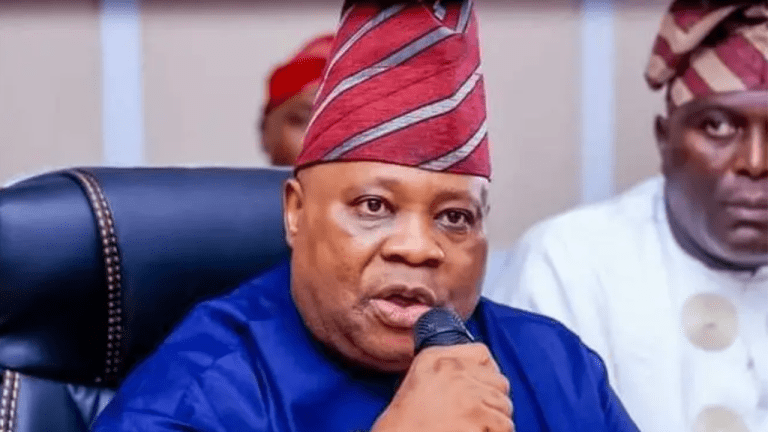
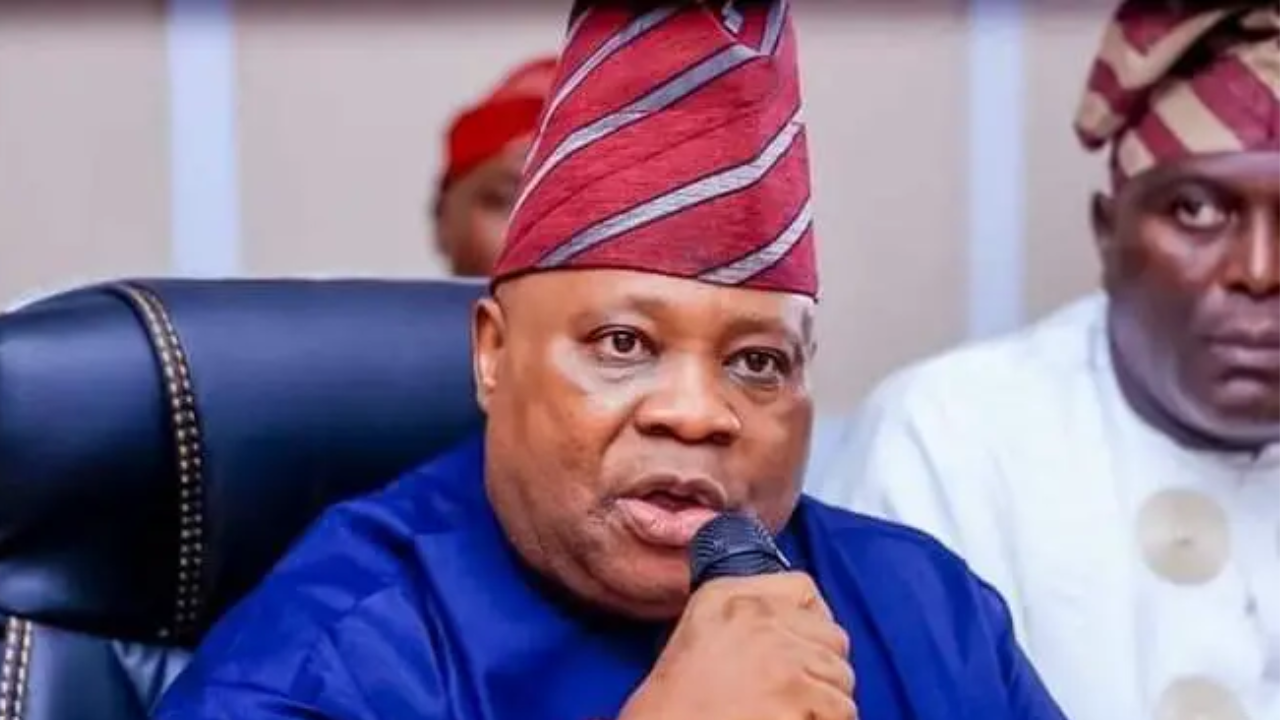
Gov. Ademola Adeleke of Osun has reiterated enforcement of approved guidelines as a condition to enjoy the new retirement age, 65 years old and length of service, 40 years for teachers in Osun public schools.

This is contained in a circular issued by Mr Ayanleye Aina, the Head of Service, on Tuesday in Osogbo.

According to the circular, all those interested in enjoying the new increased retirement age must comply with the guidelines as stipulated.

According to the guidelines, for teacher to benefit from the scheme, he or she must be within the education cadre recognised in the scheme of Service.

National growth LS

It also stipulates that the officer must be registered with the Teachers Registration Council of Nigeria (TRCN), be medically fit as ascertained by a qualified medical doctor and  must not be under any disciplinary action.

It also said that the eligible officer would  be required to apply six months before he or she attains the age of 60 years or 35 years of Service, whichever was earlier.

The guidelines also said that the  application must be endorsed by the Head Teacher/ Principal of the eligible Officer and addressed to the Permanent Secretary, Ministry of Education, among others.

It however said that the period of extension was not pensionable.

It directed the Ministry of Finance and the State Universal Basic Education Board (SUBEB) to stop forthwith, payment of salaries to those already enjoying the new retirement age without fulfilling the conditions.

The circular reads: “I wish to refer to our Circulars Ref. Nos. SMD.61/VOL.III/36 dated 31st May, 2022 and SMD.61/Vol.IV/52 dated 20th October, 2023 on the above subject.

“I reiterate that the conditions stated in the aforementioned Circulars still subsist.

“Consequently, all those already enjoying the new retirement age and length of Service without fulfilling the necessary prerequisites have, by this circular, cease to enjoy such benefits until compliance with the Circulars.

“For the purpose of emphasis, for any officer to enjoy the new retirement age and length of Service, the concerned Officer is requested to ensure that the guidelines were strictly adhered to.

“For avoidance of doubt, a copy of the guidelines under reference is hereby attached. Relevant Ministries, Departments and Agencies (MDAs) of government are requested to ensure wide circulation of this Circular and strict compliance”. (NAN)

By Victor Adeoti

CAN demands public apology from FIRS over Easter message

0

The Christian Association of Nigeria (CAN), on Tuesday in Abuja called on the Federal Inland Revenue Service (FIRS) to retract its Easter message and offer a public apology.

The National Director, National Issues and Social Welfare (CAN), Cdre Abimbola Ayuba (rtd), in a statement, said that FIRS’ Easter message had threatened Nigeria’s unity and undermined respect among diverse religious groups.

The News Agency of Nigeria (NAN) reports that the FIRS message was “Jesus paid your debt, not your taxes”.

CAN, while reacting to it, described the message as “offensive and derogatory” to the Christian faith.

National growth LS

“The Easter message by FIRS does not only threaten Nigeria’s delicate unity but also undermines the efforts of many Nigerians working towards fostering mutual respect among diverse religious groups.

“As a nation that prides itself on religious harmony and peaceful coexistence, we are deeply concerned by the recurrence of provocative messages around religious holidays.

“This year, a public institution, which should be the bastion of exemplary conduct, has been implicated in disseminating content that is widely regarded as offensive and derogatory to the Christian faith.

“Such messages not only threaten the delicate fabric of our national unity but also undermine the efforts of countless Nigerians working towards fostering mutual respect among diverse religious groups,” the statement state.

NAN also reports that the FIRS’ Easter message has sparked serious controversy.

In its Easter message signed by its Chairman, Muhammad Nami, FIRS emphasised the need for Christians to pay their taxes as a form of religious obligation.

This has drawn criticism with some people feeling that the revenue agency was insensitive and had religious biases.

It has also attracted debates over the role of government agencies in promoting religious harmony and respect for diverse beliefs in Nigeria.

Critics have argued that while tax compliance is important, public messages should be inclusive and respectful of all religious groups to avoid fueling tensions in the country.

CAN, while expressing its reservation, has also called on public and private organisations to exercise caution and always consider the diverse religious backgrounds of Nigerian society in their communications. (NAN) 

By Philomina Attah

Sen. Natasha distributes 7, 200 bags of rice, beans, others

0

Sen. Natasha Akpoti-Uduoghan, (PDP/Kogi), has distributed six truck loads of 7, 200 bags of grains to her Kogi Central constituents.

The News Agency of Nigeria (NAN) reports that the gesture was aimed at cushioning the effects of the economic hardship ravaging the country.

The grains, including rice, beans, and millet, were distributed to the 57 wards of the five local government areas of the senatorial district.

The five benefiting Local Government Areas are Okene, Adavi, Okehi, Ajaokuta and Ogorimagongo.

National growth LS

The beneficiaries include Muslim and Christian communities, drivers’ union, Okada union, mechanics, pensioners, among others.

Addressing the crowd at the distribution centre, Akpoti-Uduoghan said the gesture was for all her constituents, irrespective of party affiliations, to alleviate the prevailing economic hardship in the country.

“This is just my way of giving back to the people who voted me into office.

“It’s my resolve to continue to do my best to bring dividends of democracy to you, my constituents,” she said. (NAN)

By Thompson Yamput

NEMA partners UN to mitigate disaster impacts

0

 The National Emergency Management Agency (NEMA) says its partnership with the  United Nations Office for the Coordination of Humanitarian Affair (UN-OCHA) will reduce the sufferings of Nigerians affected by disasters.

The Director-General (DG) of NEMA, Mrs Zubaida Umar disclosed on Tuesday in Abuja when the Head of UN-OCHA in Nigeria, Mr Trond Jensen paid her a visit.

Umar commended the collaboration between NEMA and (UN-OCHA) in enhancing disaster response capabilities.

She used the opportunity of the visit to reel out mechanisms toward mitigating the impact of flooding on humans and environment as the rainy season sets in.

National growth LS

According to her, the mechanism included  developing early warning alerts based on the Seasonal Climate Prediction (SCP), released by the Nigerian Meteorological Agency (NiMet), and public sensitisation to precautionary measures to avert flood impacts.

The NEMA DG also announced an expert meeting to analyse the SCP and develop strategies for saving lives and safeguarding livelihoods.

“Other flood disaster mitigating activities will be rolled out during NEMA’s upcoming Emergency Coordination Forum (ECF) meeting,” she said.

On his part, Jensen praised the D-G’s experience in the on-shore sector, noting that it would be useful in finding solutions and improving efficiency and effectiveness.

He expressed excitement about the growing relationship between UN-OCHA and NEMA, saying “such foresees great things in the future”

Jensen emphasised the importance of collaboration and innovation in addressing climate change and humanitarian challenges.

He then stressed the need for joint efforts to tackle increasing temperatures and irregular weather patterns, such as floods. (NAN)

By Philomina Attah

8 suspects in police net over alleged murder of UNIMAID

0

The police in Borno confirmed the arrest of eight suspects  in connection to the alledged murder of Dr Kamar Abdulkadir, a Lecturer of the Department of Physical Health Education, at the University of Maiduguri.

Abdulkadir was  murdered in his office on campus on Sunday by unknown attackers who sneaked into his office.

The victim was found on Monday with several injuries inflicted on his body by his killer. 

The Police Public Relations Officer (PPRO), Nahun Daso, told newsmen that the attackers also carted away tthe lecturer’s vehicle, phone and laptop.

National growth LS

“We reviewed the CCTV Camera and saw them going out of the University with the deceased’s vehicle. However, the quality of the video was very poor so we could not see the number of people that were inside the car,”he said.

He explained that investigation was still ongoing into the matter.

Reacting, Prof Danjuma Gambo, the Director of Radio and Public Relations who spoke on behalf of the vice Chancellor of the University, Prof. Abdullahi Shugaba, said the police and other security agencies have already launched an investigation with a view to unraveling the circumstances surrounding his death.

“In view of the gravity of the matter, management advises all staff and students to remain calm and go about their normal, legitimate businesses because the University is working closely with relevant security agencies to get to the root of the matter. 

“Management also wishes to assure parents, guardians and other stakeholders that the University campus remains safe and secure for teaching, learning and community service.

“Management appreciates the numerous messages of sympathy and support from all its stakeholders in this moment of grief,”Gambo said.(NAN)

By: Hamza Suleiman 

Ododo breaks fast with Muslim leaders, promises unprecedented investment in agriculture Newsdiaryonline

0

Kogi State Governor, Ahmed Usman Ododo has hosted leaders of the Muslim community in Kogi State to the breaking of Ramadan fast at the Government House in Lokoja.

Governor Ododo who called for compassion among the people of the state noted that lessons of Ramadan which emphasize patience, empathy and forgiveness should not be lost on the people even with the winding down of this year’s Ramadan fast.

The Governor called on the people of the state to unite behind the government of the day, stressing that forgiveness and patience remain key lessons of Ramadan.

The Governor noted that more can be achieved with unity and compassion for one another irrespective of differences in religious inclinations.

National growth LS

Governor Ododo who commended Muslim leaders for sustaining religious tolerance in the state, urged them to continue to pray for the success of those in power, adding that the present administration requires their support and prayers to succeed.

According to Governor Ododo:
“Ramadan goes beyond abstinence from food and drinks even as it enhances spiritual rejuvenation; we must continue to preach compassion, patience, empathy and unity among our people because these are lessons of Ramadan.

The state government is aware of the economic situation and we are therefore investing massively in agriculture to feed our people and improve the lot of the people of the state in line with the Renewed Hope Agenda of President Bola Ahmed Tinubu.”

In their separate remarks, leaders of the Jamatu Nasril Islam in Kogi State, the State Council of Ulama, League of Imams and the Federation of Muslim Women Associations in Nigeria commended Governor Ododo for hosting Muslim leaders in the state to the breaking of Ramadan fast.

They noted that the people of the state are proud of the impressive start of Governor Ododo in office and urged the Governor to continue to build on the prevailing level of security, peace and stability in the state.

Prayers were offered for Governor Ododo and other political leaders in the state for the success of the administration and the peace and prosperity of the state.

Moniepoint unveils new feature to combat fraud

0

Moniepoint, a microfinance bank (MFB), has unveiled a new Unstructured Supplementary Service Data (USSD) service to combat fraud and enhance financial inclusion.

This is contained in a statement signed by Mr Babatunde Olofin, the Managing Director, Moniepoint MFB, on Tuesday in Lagos.
Olofin said the USSD service would be accessible via the account control code *5573#.

He said the new feature would offer a fast, secure and user-friendly platform for consumers to conduct their banking activities with ease, from any mobile device without the need for an internet connection.

According to him, the move is expected to increase convenience and accessibility while showcasing the bank’s commitment to financial inclusion, enhancing safety and security across the digital payment ecosystem.

National growth LS

He added that the USSD banking suite included a variety of services such as funds transfer, airtime and data purchase, account balance and details inquiry, among others.

“The introduction of *5573# is a security measure against unauthorised access, safeguarding customer funds in case of loss or theft of mobile phones, ATM cards, and in situations where account details may be compromised.

“This code empowers customers to secure their accounts promptly from any mobile device, without needing to contact the bank, especially in cases of suspected fraud.

“At Moniepoint MFB, our top priority is delivering exceptional customer service through digital innovation and ensuring the highest security standards,” Olofin said.

He added that the new USSD service would provide the convenience of mobile banking with an added layer of security “that gives customers control over protecting their accounts.”

Olofin noted that Moniepoint had always been guided by its mission to create a society where everyone experienced financial happiness.

“To support the central bank’s financial inclusion agenda, we added this feature, so that the least digital-savvy customers, irrespective of their location, are now positioned to carry out a wide range of transactions effortlessly.

“Also, existing customers, encompassing business and personal accounts, can initiate transactions and manage their accounts, by navigating to USSD banking settings on their mobile banking app,” he said.(NAN)

EFCC to arraign 2 top officials of Binance Ltd on Thursday

0

The Economic and Financial Crimes Commission (EFCC) will, on Thursday, arraign Tigran Gambaryan and Nadeem Anjarwalla, two top officials of Binance Holdings Ltd on five counts of money laundering charge.

The News Agency of Nigeria (NAN) reliably gathered on Tuesday that Binance, Gambaryan and Anjarwalla, who escaped from lawful custody on March 22 and fled Nigeria, will be arraigned before Justice Emeka Nwite of a Federal High Court (FHC), Abuja.

Although the crypto exchange firm, Gambaryan and Anjarwalla are listed as 1st to 3rd defendants respectively, Anjarwalla, who is described to be “at large” by the EFCC in the counts, is expected to be arraigned in absentia.

In the charge dated and filed on March 28 by the anti-graft agency, the trio is being accused of money laundering to the tune of $35,400,000.

National growth LS

Count one accused the defendants between January 2023 and January 2024 in Abuja of carrying on specialised business of other financial institution without valid licence.

The offence is said to be contrary to Section 57(1) and (2) of the Banks and Other Financial, Institutions Act, 2020 and punishable under Section 57(5) of the same Act.

NAN had, on March 28, also reported that the Federal Inland Revenue Service (FIRS) will, on April 4, arraigned Binance Holdings Limited, Gambaryan and fleeing Anjarwalla, on allegations bordering on tax evasion.

In the charge marked FHC/ABJ/CR/115/2024, the three defendants will equally be arraigned before Justice Nwite on four counts.

NAN reports that though the FHC’s Easter vacation, which began on March 22, will come to an end on April 8, the Chief Judge of FHC, Justice John Tsoho, directed the transfer of Binance case file to Justice Nwite, even though he is not a vacation judge.

The chief judge granted the fiat for the judge to handle the case during vacation being a matter that concerns dire national interest.

In the charge dated and filed March 22 by the FIRS, the defendants were alleged to have committed the offence on or about Feb. 1.

Count one alleged that while involved in carrying and offering services to subscribers on their platform, known as Binance, failed to register with the FIRS, for the purpose of paying all relevant taxes administered by the service.

The offences are said to be punishable under Sections 8 and 29 of the VAT Act of 1993 (as Amended), Section 40 of the FIRS Establishment Act, 2007 (as amended) and under provisions of Section 94 of the Companies Income Tax Act (as amended) respectively.

The two cases were fixed for Thursday to allow for accelerated hearing.

NAN had, on March 18, reported that Justice Nwite ordered Binance Holdings Limited to provide the EFCC with the comprehensive data or information of all persons from Nigeria trading on its platform.

The judge granted the interim order after ruling on the ex-parte motion moved by the EFCC’s lawyer, Ekele Iheanacho.

The interim order was granted to enable the anti-graft agency unravel the alleged money laundering and terrorism financing on Binance platform.

The commission said it uncovered users who had been using the platform for price discovery, confirmation and market manipulation which had caused tremendous distortions in the market, resulting in the Naira losing its values against other currencies.

The EFCC said that from the information afforded to its team of Investigators by Binance showed that the total trading volume from Nigeria in 2023 alone stood at 21.6 billion dollars .(NAN)

By Taiye Agbaje

Adeleke enforces new retirement age for teaching profession

0

Governor Ademola Adeleke of Osun State has approved the immediate enforcement and implementation of new retirement age and length of Service for the teaching profession, directing action to restore normalcy across schools in Osun State.

According to a Circular issued today from the Office of the Head of Service, Mr Ayanleye Aina, all those interested in enjoying the new retirement age must comply with the guidelines as stipulated.

Consequently, the Ministry of Finance and the State Universal Basic Education Board(SUBEB) have been directed to stop forthwith, the payment of salaries to those who have been enjoying the new retirement age without fulfilling the conditions attached.

The circular reads as follows: “I wish to refer to our Circulars Ref. Nos. SMD.61/VOL.III/36 dated 31st May, 2022 and SMD.61/Vol.IV/52 dated 20th October, 2023 on the above subject, and reiterate that the conditions stated in the aforementioned Circulars still subsist. Consequently, all those who have been enjoying the new retirement age and length of Service without fulfilling the necessary prerequisites have, by this Circular, ceased to enjoy such benefits until their compliance with the extant Circulars.

National growth LS

“For the purpose of emphasis, for any Officer to enjoy the new retirement age and length of Service, the concerned Officer is requested to ensure that the guidelines are strictly adhered to.

“For avoidance of doubt, a copy of the guidelines under reference is hereby attached.

“Relevant Ministries, Departments and Agencies (MDAs) of government are requested to ensure wide circulation of this Circular and strict compliance”,the circular concluded. 

Meanwhile, the full guidelines to be fulfilled by those interested reads as follows:

“Eligibility: The Officer must be within the education cadre recognised in the Scheme of Service.

“The Officer must be registered with the Teachers Registration Council of Nigeria (TRCN).

“The Officer must be medically fit as ascertained by a qualified Medical Doctor.

“The Officer must not be under any disciplinary action.

“Procedure: Eligible Officer will be required to apply six months before he/she attains the age of 60 years or 35 years of Service, whichever is earlier;

“The application must be endorsed by the Head Teacher/ Principal of the eligible Officer and addressed to the Permanent Secretary, Ministry of Education;

“The application must be accompanied by Teachers Registration Council of Nigeria’s (TRCN) Certificate and License; and certificate of medical fitness obtained from a Government Hospital;

“Eligible applicants will be screened by a Committee to be set up by the Office of the Head of Service;

“All successful applicants will be deployed to serve as teachers in schools;

“All unsuccessful applicants will be advised to retire immediately under the 60/35 years Scheme;

“Documents Required for Application:

Medical certificate of fitness by a Government Hospital.

Registration Certificate issued by the Teachers Registration Council of Nigeria of Nigeria (TRCN)

License issued by TRCN.

“Right of Appeal:Any applicant whose application is not successful may appeal to the Office of the Head of Service stating grounds of appeal and any supporting document

“Miscellaneous:Successful Officers are at liberty to resign their services before the attainment of 65 years or 40 years in service;

“Extant Service rules and regulations, except those dealing with age and length of Service, are applicable to the successful Officers throughout the period of extension.

“The period of extension is not pensionable”, the guidelines concluded.

Seven lessons of Okuama calamity, By Michael Owhoko, Ph.D

0

Has Nigeria learnt any lessons from the Okuama massacre?  Will the incident repeat itself or offer profound lessons against future experience?  In the journey of life, no individual or nation or country is immune from occurrences thrown up by circumstance, which, may be pleasant or painful.  Lessons learnt from such experiences are deployed to prevent possible future reoccurrence, failing which, same catastrophe repeats itself. 

In context, the gruesome murder of army officers at Okuama in Ughelli South Local Government Area, Delta State, which transcends ethnic emotions and accompanied by wide condemnations, is a confirmation that Nigeria has not, and does not learn from lessons, otherwise, the calamity would have been avoided. 

The incident was not the first. It happened previously at Odi, Bayelsa State, Zaki Biam, Benue State, and Gbaramatu, Delta State, yet, it appeared neither the federal government nor the Nigerian Army learnt any lessons therefrom.  This is evident from the Okuama saga, a proof of the country’s insensitivity to bloodshed and exposition of poverty in the policy making process.  

This notwithstanding, the Okuama calamity has again thrown up another opportunity for lessons to be learned.  If Nigeria failed again this time around to learn from these happenings, then the country risks further carnage, which may possibly take a more complex form with unmanageable and unpredictable consequences.  It may be too costly for the country’s fledgling socio-economic balance and stability. 

National growth LS

Therefore, the lessons are crucial, and should be identified by government and harness as feedback for proactive purposes to forestall future recurrence.  It is a tragedy for any country with a relapsing experience not to have a codified strategy encapsulated in a template to resolve related matters.  In specific terms, what then are the lessons and takeaways from the Okuama disaster?  

Lesson One: To have allowed a land dispute over fishing rights between Okuama and neighbouring Okoloba community in Bomadi Local Government Area, Delta State, to escalate means there were no proactive measures and concerted prompt intervention by the Nigeria Police Force and Delta State Government in response to petitions written by Okuama community. 

The community, through its lawyers, I. Ejedegba and Co., had written a petition to the Commissioner of Police in Asaba, Delta State which was acknowledged on January 31, 2O24, while the petition written by Okuama community leaders and addressed to the Delta State Governor was received on February 2, 2O24.  This was over one month before the gruesome murder of the military officers on March 14, 2O24. 

Since the Police is the first line of defence and statutorily responsible for civil matters, they should have wadded in upon receipt of the petitions to nip the crisis in the bud, aside previous joint meetings among the communities, the Police and the Delta State Government that yielded no solution.  Under this development, the Delta State Governor should have been advised to wield the big stick by acquiring the land in contention for public interest to end the crisis.  

Lesson Two: Inviting the Army for a mediatory and peace mission to Okuama for resolution of land dispute between two communities that were not at war, was an error in judgement. The dispute was civil in nature, and it was only when efforts by the Police and the Delta State Governor had failed, and there was evidence of likely escalation into a dangerous dimension beyond the capacity of the Police, that would have warranted intervention by the Nigerian Army.  It is not the responsibility of the Army to broker peace in a civil matter.

Lesson Three: Central to the killing of the military personnel in Okuama, is presumably oil.  Oil appeared to be the underpinning motive behind the horrendous and senseless killings.  Mere land dispute between two communities could not have led to such a mindless massacre. Soldiers are deployed to the Niger Delta region to protect oil facilities, and in the course of this duty, they might have been marked as “enemy” by those profiteering from illegal oil deals. 

Those involved in crude oil theft and other illegal activities, including processing of locally refined products might see the Army as obstacle to their business interests.  The military high command should have known this, and prepare the soldiers for possible eventuality and collision with entrenched oil thieves.  The circumstances of their death showed that the military men were taken unawares.  It was likely that crude oil thieves and other vested interests might have planned and taken advantage of the soldiers’ peaceful disposition to unleash mayhem in such a horrific and despicable manner.  

Lesson Four: The mass destruction of Okuama by the Army in response to the death of the soldiers without singling out the culprits, was unhelpful, as innocent children, mothers, elderly, the sick and even pregnant women, were either killed, rendered homeless or died while trying to escape.  To bring pains on an entire community over the action of a few criminals, is indefensible.  Reprisal attack and collective punishment are incompatible with international laws.  

Recalled that after destruction of Odi by the Army, the community resorted to litigation and got a favourable judgement, leading to payment of N15 billion out of court settlement, as compensation.  Justice Lambi Akanbi of the Federal High Court had condemned the government for a “brazen violation of the fundamental human rights of the victims to movement, life and to own property and live peacefully in their ancestral home.”  Since the Okuama experience is reminiscent of the destruction at Odi, it is likely Okuama may seek redress in the law court for compensation over reprisal destruction of lives and properties.  

Lesson Five: As the President and Commander-in-Chief of the Armed Forces of Nigeria, Bola Tinubu’s order to the Army was too hasty and reactionary without taking into consideration, innocent lives in Okuama that were caught up in the web.  Granting “full authority” to the military to bring anybody found to have been responsible for the attack to justice, was an obvious blanket licence for the military to invade Okuama. 

Instead, the President should have ordered the security agencies and the Police to specifically intervene, identify and arrest the criminal elements in the community, while instituting an independent high-powered panel of enquiry to unravel the causes of the mayhem.  A future restraint on the part of the President is imperative to douse tension and minimize further collateral damage.

Lesson Six: The Army’s decision to lock down and lay siege to Okuama without granting access to the Delta State Governor, the Police, humanitarian agencies, and even the press to assess the situation on ground, has given rise to speculations about the plight of the members of the community, particularly the innocent, helpless and indigent persons.  This is unhelpful to the image of the Army. 

By not allowing access, the Army has unwittingly, open its operations to speculations. For example, it was alleged that the Army killed over 5O persons in Okuama, with other survivors hiding in the bush, including old women, children, the elderly ones and even the sick, with no food to eat and water to drink.  This is a gross violation of their fundamental human rights.

To avoid being put on the spotlight, it is imperative for the military to grant access into the community to enable humanitarian agencies and volunteer groups to extend help and assistance to the innocent ones to prevent further fatalities.  This will also serve the interest of the Army’s reputation.

Lesson Seven: After the destruction of Odi, initial public sympathy for the military waned.  Same is replicating itself at Okuama over the conduct of the Army.  The Army, like other federal government agencies, is not a supreme institution that is above the Constitution and the Nigerian State, neither is civilian population subject to military laws.  Indeed, the Army is subject to civil authority under Democracy. Therefore, it must change its current tactics at Okuama where it has refused access to the community, assumed sole information provider on goings-on, and subjected civilians to investigation, arrest and detention.  

It is hoped that these lessons will serve as reference and guide for the state governments, the Police, the Army and the federal government in handling of related crises to avert future disaster.  

Dr. Mike Owhoko, Lagos-based public policy analyst, author, and journalist, can be reached at www.mikeowhoko.com, and followed on X {formerly Twitter} @michaelowhoko.