Home Blog Page 1328

Tinubu calls for collaboration, inclusiveness to address global challenges

0

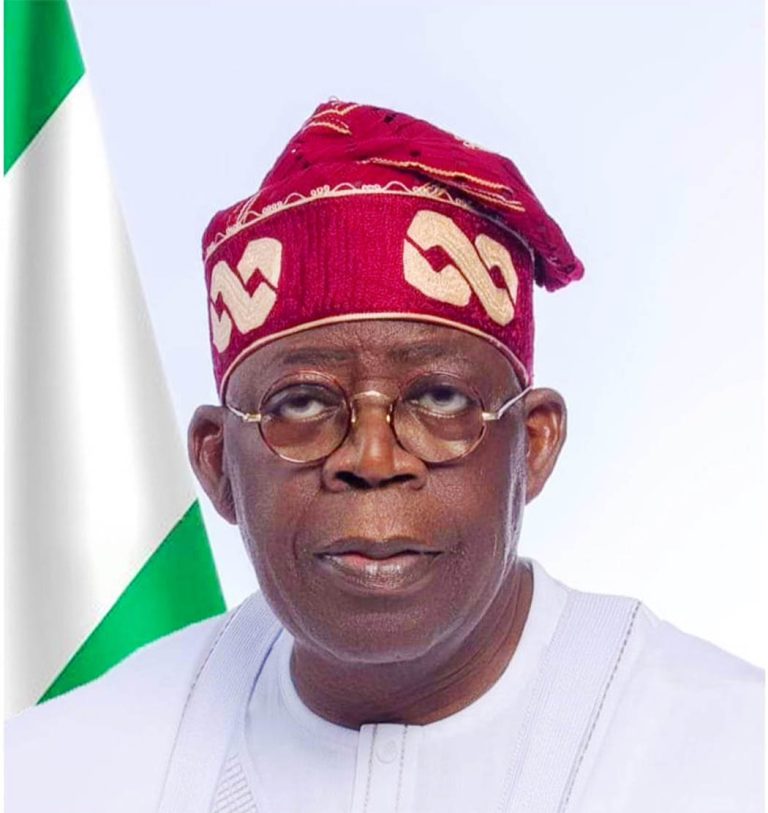
President Bola Tinubu says collaboration and inclusiveness are invaluable to achieving global food security, addressing collective challenges, and driving innovation across a chain of interests for a more stable and prosperous world. 

Speaking during a high-level panel session at the World Economic Forum Special Meeting on Global Collaboration, Growth and Energy for Development in Riyadh, Saudi Arabia, on Sunday, President Tinubu said “collaboration and inclusiveness”, especially with regard to Africa, are elemental to building a future of hope, peace, and progress for all. 

He said capital mobilization, which is needed to spur economic growth and associated advancements in Africa, cannot be overlooked any longer.

The President posited that the continent is richly endowed but that the diversity of its resources must reflect in its wherewithal and economic realities.

National growth LS

“The capital formation that is necessary to drive the economy, agriculture, ensure food security, innovation, and technological advancement must be an inclusive programme of the entire world. No one should be left behind. 

“I am glad the world is recognizing the need for cooperation, and that with the type of population growth that Africa is experiencing; the diversity of its resources must be married with economic opportunity. We must collaborate to achieve that,” President Tinubu said.

The President called on global leaders to pay attention to the developments in the Sahel, emphasizing the need for a studied understanding of the vectors of the current situation, while suggesting collaboration in the pursuit of enduring solutions.

“We are encouraging the entire world to pay attention to the Sahel and the other countries around us. As the Chairman of ECOWAS Authority of Heads of State and Government, I have wielded the big influence of Nigeria to discourage all unconstitutional change of government. Equally, we have eased the sanctions. We need to trade with one another; not fight each other. It is very necessary and compulsory for us to engender growth, stability, and economic prosperity for our people in West Africa. 

“The rest of the world needs to look at the fundamentals of the problem; not just geopolitically, but at the root. Has the world paid attention to the poverty level in the Sahel and the rest of ECOWAS? Have they facilitated the infusion of capital and paid adequate attention to ensuring the exploitation of resources and the creation of opportunities presented by the mineral resources available? 

“Are we going to play a big-brother role in a talkshop without taking necessary action? We just have to be involved in the promotion and prosperity of that region in order to see peace, stability, and economic growth,” President Tinubu said.

Detailing the steps taken to set Nigeria’s economy on the path of expeditious recovery, the President said he had to take tough but essential decisions like removing fuel subsidy – with its attendant perils – and managing the nation’s currency, effectively removing corruption-laden arbitrage.

“Concerning the question of subsidy removal, there is no doubt that it was a necessary action for my country not to go bankrupt and to reset the economy and the pathway to growth. It was going to be difficult, but the hallmark of leadership is making difficult decisions when they need to be made.

“That was necessary for the country. Yes, there have been drawbacks. Yes, there was the expectation that the difficulty would be felt by a greater number of people. But, of course, it was the interest of our people that was the primary focus of the government. Along the line, there was an arrangement to cushion the effect of the subsidy removal on the vulnerable population of the country. We shared the pain across the board. We cannot, but include those who are very vulnerable. 

“Luckily, we have a very vibrant youth population interested in innovation and highly ready to leverage technology, good education, and who remain committed to growth. We were able to manage that and partition the economic drawback and the fallout of the subsidy removal equally; engendering transparency, accountability, and fiscal discipline for the country. And that, to me, is most important, which is focusing on what direction we should head in. I will pursue that rigorously. 

“The currency management was necessary, equally to remove the artificial element of value in our currency. Hence, our local currency finds its level and competes with the rest of the world’s currencies as we remove corrupt arbitrage and opaqueness. That, we did. At the same time, that is a two-engine problem in a very turbulent situation for the government. But we are able to manage that turbulence because we prepared for this with inclusivity in governance and rapid communication with the public,” the President concluded.

In her remarks, Managing Director of the International Monetary Fund (IMF), Kristalina Georgieva commended President Tinubu for offering insights on how to execute strategic economic reforms.

“President Tinubu has emphasized the right things about what world leaders must consider primary in the execution of strategic economic reform. He said there is a need to ensure that reforms are accompanied by a human touch. The needs of people must be identified and catered to as governments implement tough but necessary reforms,” the IMF Managing Director said.

During the session, the President of Rwanda, Paul Kagame, who was also on the high-level panel, said: “I am happy that the Nigerian President spoke on the need for inclusive economic growth. Africa is the stage for an expanding middle class. As the growth of the middle class in developed economies stagnate, Africa’s middle class is growing. It is our human resources and not natural resources that make our continent strategic and central to the global community moving forward.”

By Chimezie Godfrey
The Dying Public School, By Dakuku Peterside 

0

There has been no remarkable uproar on the public-school collapse in Nigeria, affecting primary, secondary, and university education. Our leaders do not view it as a crisis. The reason is evident: there is a widespread trend among the garrulous upper class and middle class to send their wards and children to pricey private schools in Nigeria, with most of them sending their kids abroad. This dislocation between the elite class and public schools means that they are not only unmoved by its decay, but sometimes they are not even aware of the extent of the problem.

Increasingly, public school is becoming the domain of low-income people who need more resources to send their children to good private schools. Good education is no longer affordable and is a class issue in Nigeria today. The paradox is that today’s elite and middle class are products of a robust public school system that existed between the 1930s and 1990s in Nigeria. During these golden years of public school in Nigeria, it provided an environment that allowed individuals of different socioeconomic backgrounds to interact with one another while removing barriers based on race, class, and religion. These schools also provided young Nigerians with the life skills they need to be self-sufficient and productive, and many of the products of this public school system became global giants and are still making waves worldwide and nationally in various fields of human endeavour. Quality public education has been steadily declining, particularly since the 1980s, which has led to the nearly total collapse of the system we have in place today. There has been a discernible drop in our public school system’s overall level of instruction since the 2000s, which has alarmed the populace.

Nigeria has faced numerous challenges in providing quality public education for all its citizens. Economic downturns, political instability, corruption, and conflicts harm the education sector. Over the years, various education policies and reforms have been implemented to address the sector’s challenges. These include the Universal Basic Education (UBE) programme, which provides free and compulsory education for all children up to junior secondary school level, and efforts to promote technical and vocational education to address skills gaps. Despite these efforts, significant disparities in access to quality education persist. The failure of public education in Nigeria has been a longstanding issue, marked by various challenges and setbacks that have hindered the system’s ability to provide quality education.

These challenges include chronic underfunding of the public education sector, a significant issue in Nigeria. We know that government spending on education has varied over the years, but it has often fallen short of recommended benchmarks such as the UNESCO-recommended 15-20% of the national budget. This lack of funding has resulted in inadequate infrastructure and a shortage of qualified teachers and essential educational resources.  Second, there is a lack or insufficiency of essential infrastructure, including classrooms, libraries, labs, and restrooms in public schools. Dilapidated buildings, overcrowded classrooms, and unconducive learning environment make it difficult for students to learn effectively and for teachers to deliver quality instruction. Third, the quality of teaching in public schools is often compromised due to factors such as inadequate teacher training, low motivation, miserable wage , and poor working conditions.  Fourth, the curriculum used in public schools is only sometimes relevant to the needs of students or the demands of the modern world. It may lack emphasis on critical thinking, problem-solving, and practical skills essential for success today. Fifth, the disparities in access to education persist in Nigeria, with rural and marginalised communities often having limited access to quality schools and educational resources. Sixth, corruption and mismanagement within the education sector are our albatross. Funds earmarked for education may be misappropriated or embezzled, leading to a lack of accountability and transparency in the use of resources. It is little wonder that many state governments claim to make public education the centrepiece of their administration’s targets, yet little or no improvement is seen.

National growth LS

Addressing these issues requires concerted efforts from the government, civil society, the private sector, and international partners. But it also requires the active participation and support of each one of us. Priority should be given to increasing investment in education, improving teacher training and welfare, upgrading infrastructure, revising the curriculum to be more relevant and inclusive, and promoting access to education for all, especially marginalised groups.

Additionally, efforts to tackle corruption and promote good governance are essential for building a more effective and sustainable public education system in Nigeria. Ironically, governments at both federal and state levels have paid lip service to public education over the years, leading to the rise of the private education sector to fill the gap. Although millions of children with no other option still receive their education in public schools, they are no longer the place teachers and students fervently desire to be. The clamour for private schools has led to the exponential rise in Nigeria’s private primary, secondary and tertiary schools. We, as citizens, as parents, as educators, as policymakers, have a role to play in reversing this trend and revitalizing our public education system.

A cursory look at statistics will show any keen observer that we are in a dangerous place with our future generation, most of whom will not get any meaningful education. We are cheaply mortgaging the future by continuing to underinvest in public schools. All we are doing is laying the groundwork for society to fail. It is not appropriate to do so. For instance, from 2018 to 2020, enrolment in primary school declined by 62,000 or 0.3% (from 22,384,755 to 22,322,234) in public schools but increased by about 82,000 or 1.51% (5,504,632 to 5,587,528) in private schools. Likewise, enrolment in public secondary schools increased by about 18% between 2016 and 2019, while in private secondary schools the increase is about 56%. Besides, the student-to-teacher ratio in public primary schools is about 1:49 (against the 1:35 recommended, while it is significantly lower, at about 1:30, in private primary schools. Relatively, more private schools are popping up in big cities than public schools, and the numbers are almost getting even in some cities. This trend is expected to continue this way unless there is a significant intervention to stop the decline in public school enrolment, especially in urban areas with substantial upper- and middle-class families. The urgency of the situation cannot be overstated. We must act now to save our public education system.

The problem with private education often is the cost. Quality education costs are so high that only a few Nigerians can afford it. Recently, some Nigerians were abhorred by the news of the cost of fees of British Charterhouse School (N43 million per annum) for its students. Most did not know that the school had a waiting list of over 1000 when it initially wanted only about 200 pupils. Other decent private schools cost millions of Naira yearly, and parents struggle to cover these costs. Ironically, private schools are not only about quality of education but also about class distinction. It is assumed that the more expensive the school is, the better the quality. Unfortunately, the current situation is a shift of emphasis to expensive private primary, secondary and tertiary education at the expense of public institutions. The solution lies in a conscious public sector policy revision that encourages a renewal of the public education sector through curriculum renewal, teacher retraining, infrastructure renewal and renovation. For instance, when former Governor Rotimi Amaechi of  Rivers State revamped and modernised public schools with up-to-date modern facilities, parents began to return their wards to public schools that had become competitive with even the best private schools. Most recently I got involved in helping two state governments asses the state of education and I just wept but I could feel  the seriousness and determination  of the affected governors to fix the broken system. 

I applaud the president’s plan to census the Nigerian school system to create the primary data for education planning and development. I sincerely hope that the federal and state governments give serious attention to our public education sector. No template exists in the world where a country develops its human resources through private education. All the developed countries we know of developed and sustained a robust quality public education system that is inclusive, equitable, and of high standards. Public schools in these countries are where the children of the rich, the poor, and even the migrants interact and learn in a melting pot of family, cultural, and racial diversity. Quality primary education is a fundamental right of every Nigerian child, and the government at all levels must be held accountable for failure to provide that. Today’s children live in a highly technological and scientific globalised world, and they compete locally and globally for survival and contribute to humanity. It is a disservice to them if they lack the basic literacy, numeracy, and creative skills they need to thrive and develop in Nigeria.

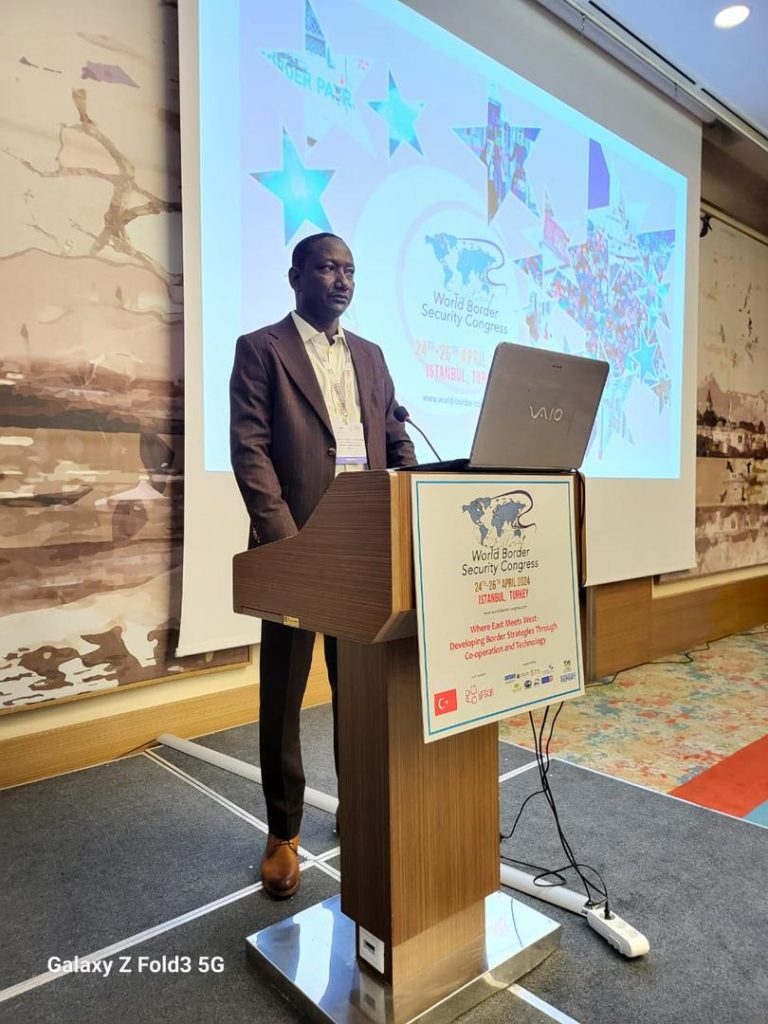
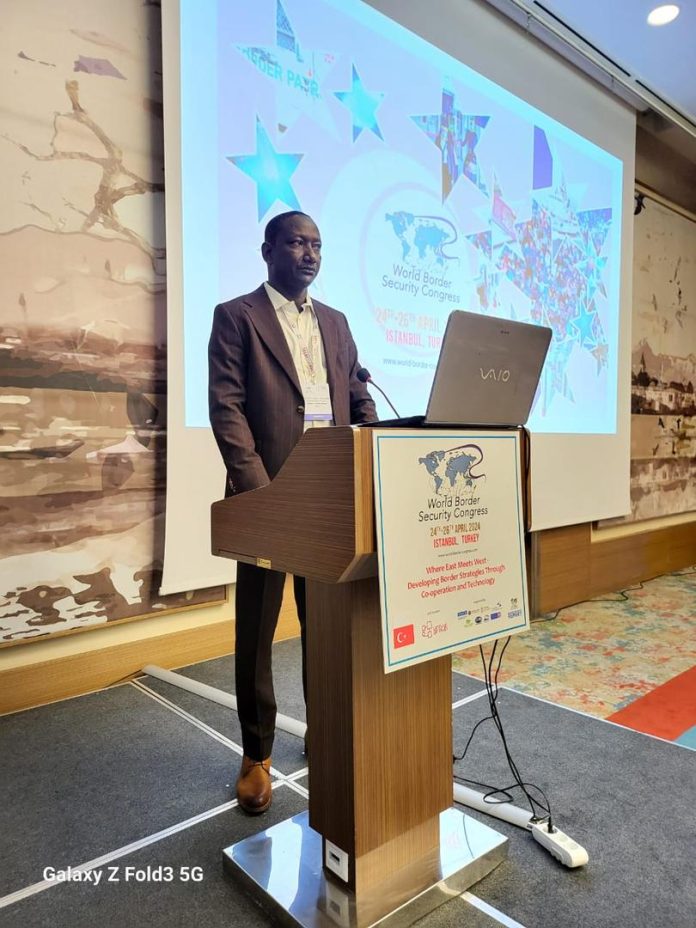
Customs official Salisu Saulawa, presents paper at Border Security

0

.

Nigeria’s Assistant Comptroller of Customs, Dr. Sanusi Salisu Saulawa, recently made significant contributions to international peace and security at the 2024 World Border Security Congress (WBSC) in Istanbul, Turkey, where he presented a very interesting paper.

His presentation, titled “Enabling Trade Facilitation Under Fragile Borders: Nigeria’s Experience,” offered valuable insights into the complexities of managing borders under challenging conditions, emphasising the crucial role of the Nigeria Customs Service in not only ensuring national security, but also in boosting the country’s revenue generation through effective security and trade facilitation.

The annual WBSC, held this year in the historic city of Istanbul, Turkey, like previous instances, brought together a diverse group of experts, stakeholders, such as law enforcement agents, industry experts, security analysts, IT vendors, and scholars, along with representatives from major international organisations such as InterPol, WCO, AU, USCBP, UNODC, and OSCE. The annual congregation is pivotal in fostering international cooperation and devising strategic solutions to some of the most pressing border security challenges faced globally.

National growth LS

Dr. Saulawa’s presentation which thunderous applause, illuminated the specific challenges and opportunities at African borders, with a focus on Nigeria. He also enumerated the various initiatives undertaken by the Nigeria Customs Service to enhance trade across borders, including the implementation of the Authorised Economic Operator (AEO) programme, Rules of Origin, and Advance Ruling systems. These efforts are not only crucial in promoting economic stability and growth, but also in enhancing the security and integrity of national borders.

The participation of Dr. Saulawa at such a prestigious international event underscores the immense contributions of the Nigeria Customs Service under the able leadership of the new Comptroller General of Customs, Bashir Adewale Adeniyi MFR, to both regional stability and global security. Dr Saulawa’s work is indeed very commendable and serves as a testament to Nigeria’s commitment to playing a significant role on the world stage in these critical areas.

By sharing best practices and engaging in meaningful dialogue at the WBSC, Assistant Comptroller of. Customs Saulawa and his colleagues are not only making Nigeria proud but are also contributing significantly to the development of more secure and efficient border policies worldwide. This commitment to excellence and international collaboration is essential for addressing the dynamic challenges of border security in the 21st century.

Sen Utazi urges Gov Mbah others to join APC for interest of South East

0

The Immediate past Senator that represented Enugu North Senatorial District in National Assembly, Sen Chukwuka Utazi, has urged all South East governors to join All Progressive Congress (APC) for the interest geo-political zone.

Utazi appealed to
governors of Anambra, Enugu and Abia states to follow the good example of former Governor of Ebonyi State, David Umahi to join APC in order to align with the government at the centre for the interest and economic growth of the South East region.

Utazi disclosed this on Sunday while speaking with newsmen shortly after his family Thanksgiving Service at St. Theresa’s Catholic Church Ogba, Mkpologwu, in Uzo-Uwani Local Government Area of Enugu State.

The Senator said he was in the Church for Thanksgiving to say thank you to God who made it possible for him to be in Senate for eight years to give the district effective representation.

National growth LS

He said that, it has become necessary for the South East region to fully join the party at the centre for rapid economic development of the region since it is clear that the people of the zone have no future in People Democratic Party (PDP)

“I played national politics for eight years, mixed up with people from different regions of the country, I can tell you that the South East region needs to join the party at the centre for rapid economic development of the area.

“I am calling on Gov. Peter Mbah of PDP Enugu State, Gov Alex Otti of Labour Party Abia State, and Governor Charles Soludo of All Grand Progressive Alliance Anambra State to follow the example of former Gov. Umahi of Ebonyi State and join the ruling party to attract more federal government developmental projects in the region.

“We can’t continue to play exclusive and opposition politics which has never led us anywhere, a popular saying says “it’s better to be a servant in heaven than to be a king in hell”. he said.

Utazi said that the family thanksgiving was to thank God for guiding and protecting him all through the 8 years he spent at the Senate.

The Senator who described himself as God’s miracle noted that all through his journey in life God has been merciful and always with him.

“After a successful eight years serving in the 8th and 9th Senate representing the good people of Enugu North Senatorial District, I and my family decided to come and say thank you to God who made it possible for me to be in the Senate.

“I was in my little place in Uzo-Uwani farming and like the Biblical David, when God elevated me to be in Senate from 2015 to 2023

“How I won my first and second elections and even my election tribunal cases remain a miracle to me and everybody in the district.

“That is why I always tell people that I am a living miracle of God because since I joined politics in 1990 and ran for election in 1991 and became Deputy Speaker of the Enugu State House of Assembly in 1992 till date the mercy and favours of God have been upon me.

” Because of God’s mercy and favours upon my life, I have maintained good human relations with people not minding their class by remaining the humble Chukwuka Utazi I have been known for,” he said.

Earlier at the church service at St. Theresa’s Catholic Church, Rev Fr Camillus Ugwuibe, the Parish Priest of Sacred Heart Parish Nkpologu, Uzo-uwani, the Dean of Adani Catholic Deanery commended Utazi for serving out his two terms at the Senate to the glory of God and come back to church to appreciation and gratitude to Almighty God.

“What you did today is spectacular, it is very rare to see elected leaders and politicians after serving their tenures come back to God to say thank you, as some of them selfishly believed that that tenure was by their power and not by the mercy of God.

“Today, you have demonstrated once again that you are God-fearing, humble and you believe that all you have is through the mercy of God,” he said.

Among dignitaries present during the thanksgiving and reception include, Sen. Okey Ezea, presently representing Enugu North Senatorial District in Senate.

Chief Uche Nnaji, Minister of Innovation, Science and Technology, Chief Ugo Agallah, Chairnan, Enugu State APC, Chief Chijioke Edeoga, Labour Party Governorship candidate in the 2024 general election, among others

It would be recalled that, Sen. Chukwuka Utazi recently decamped from PDP to join APC.

By Chimezie Godfrey

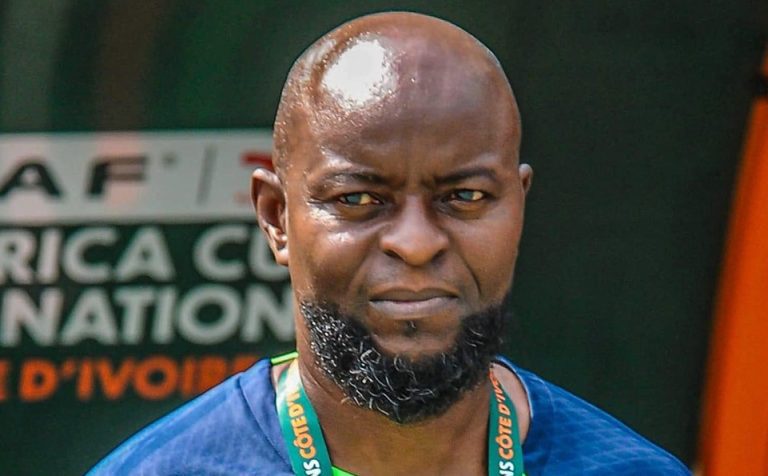
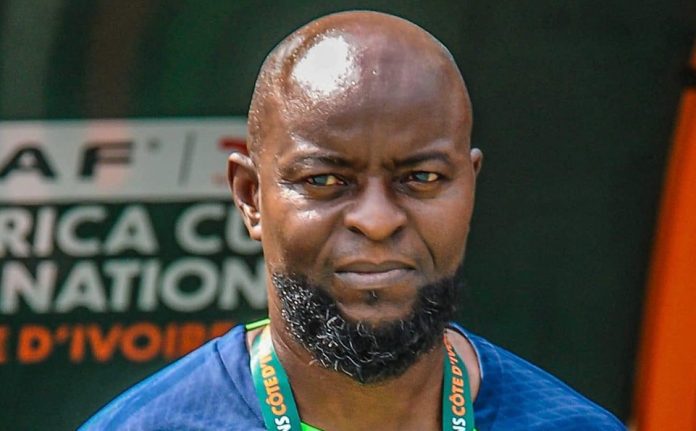
NFF appoints Finidi George as Super Eagles’ head coach

0

The Board of Nigeria Football Federation (NFF) has appointed Finidi George as Head Coach of the Senior Men National Football Team, the Super Eagles.

By Victor Okoye

The Board of Nigeria Football Federation (NFF) has appointed Finidi George as Head Coach of the Senior Men National Football Team, the Super Eagles.

A statement by Ademola Olajire, NFF’s Director of Communications, on Monday said the NFF approved the recommendation of its Technical and Development Committee to appoint George.

National growth LS

The News Agency of Nigeria (NAN) reports that the ace winger spent 20 months as assistant to José Peseiro before the Portuguese voluntarily left the post after guiding the team to silver medal at AFCON in Cote d’Ivoire.

George took charge of the squad in acting capacity during two friendly matches in Morocco last month.

His squad edged Ghana 2-1 in the first match, ending an 18-year winless streak against the Black Stars, but then lost 0-2 to Mali in the second game.

He was a member of the ‘Golden Generation’ that won the 1994 Africa Cup of Nations tournament in Tunisia.

The team also emerged the second most entertaining team in Nigeria’s debut at the FIFA World Cup finals in USA the same year.

George won 62 caps for Nigeria, including featuring at the 1994 and 1998 FIFA World Cup finals. He also won gold, silver and bronze medals from the 1992, 1994, 2000 and 2002 AFCON tournaments.

The 52-year-old former Ajax Amsterdam (The Netherlands) and Real Betis (Spain) forward made a scoring debut for fatherland in an AFCON qualifying match against Burkina Faso at the National Stadium, Lagos, on July 27, 1991.

He also featured for Calabar Rovers and Sharks FC in the domestic scene before heading to Europe.

He assisted Rashidi Yekini (of blessed memory) to score Nigeria’s first-ever FIFA World Cup goal against Bulgaria in Dallas, USA, on 19th June 1994.

George had actually scored the goal that took Nigeria to that FIFA World Cup debut, when he put Nigeria ahead against hosts Algeria in a crucial qualifier in Algiers on 8th October, 1993.

The match eventually ended 1-1 and earned Nigeria a ticket to the finals in America.

George’s immediate task will be to guide the Super Eagles to victory in two 2026 FIFA World Cup qualifying matches against South Africa and Benin Republic in Uyo and Abidjan respectively, in a little over five weeks.

The matches are must-win encounters, with the Super Eagles lagging behind in third place in Group C of the African campaign behind Rwanda and South Africa.(NAN) 

Alleged abuse of office: Emefiele challenges court’s jurisdiction

0

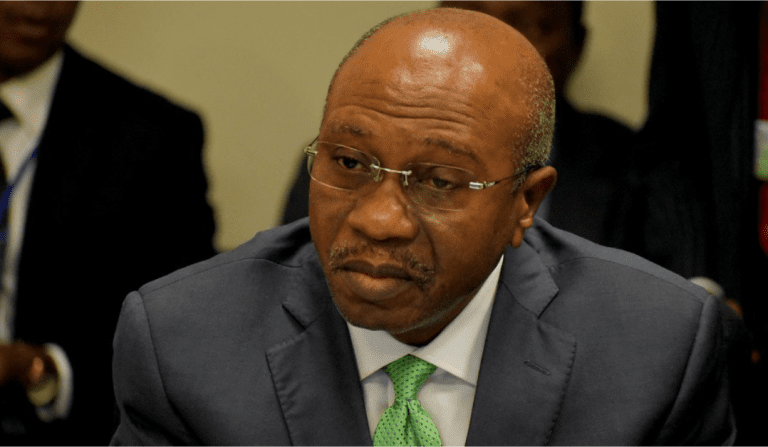
The suspended Central Bank of Nigeria (CBN) Governor, Godwin Emefiele on Monday challenged  the jurisdiction of an Ikeja Special Offences Court to hear the alleged abuse of office and multi billion dollars fraud leveled  against  him.

The News Agency of Nigeria (NAN) reports that Mr Olalekan Ojo, SAN, who led other  counsel, appeared for Emefiele while Mr Kazeem Gbadamosi, SAN, appeared for the former CBN governor co-defendant, Henry  Isioma-Omoil.

Ojo in his motion on notice dated April  24 argued that the court lacked  the constitutional jurisprudence to hear the charge  against Emefiele.

He said: ”there is need to consider  jurisdictional  objection  before allowing this case.

National growth LS

“This defendant ought not to be arraigned before this court on constitutional grounds.

“We are saying  that charges against the first  defendant is unconstitutional.

“I urge your lordship  to toe the part of legality and constitutionality to determine this application.”

The Economic and Financial Crimes Commission (EFCC) counsel led by Mr Rotimi Oyedepo ,SAN, however, urged the court to dismiss the application of  the first defendant counsel, as it was a course to delay justice.

Oyedepo said that the  approach was intended to take up from where the prosecution was coming from.

According to him, a collective resolution as a nation is to prevent undue delay in criminal matters.

 “Your lordship, trial has commenced and witnesses have been assembled in court today to give evidence.

“The application of the first  defendant is unconstitutional as this is a means to draw us backward.

“I humbly  urge  the court  to discountenance the submission of defence on jurisdiction and allow  the trial to continue,” Oyedepo said.

Justice Rahman Oshodi, rejected Emefiele’s request to discontinue hearing.

Oshodi deferred ruling on the  preliminary objection to final judgment stage.

According to the judge, when the embattled former CBN governor was a arraigned on April 8, the prosecution informed the court of an accelerated hearing in which the defense did not object.

NAN reports that as at the time of filing this report, the court has ordered the prosecution to call its next witness.

Details  shortly. (NAN)

By Adenike Ayodele

Police confirm 2 dead as bridge collapses in Ebonyi

0
Police arrest man for allegedly printing, distributing fake Police ID Cards

The Police Command in Ebonyi has confirmed two persons dead after a bridge under construction at Mgbabeluzor village in Izzi Local Government Area of Ebonyi collapsed on Monday.

The Police Public Relations Officer (PPRO) in the state, DSP Joshua Ukandu confirmed the incident to the News Agency of Nigeria (NAN) in Abakaliki.

He said that the incident occurred about 10 a.m. while the construction workers were at the site.

Ukandu said that the victims, Oshim Simon and Francis Inyang, were labourers working with the construction company handling the project and they died as a result of the injuries sustained when the accident happened.

National growth LS

He said their corpses had been evacuated and taken to Iboko General Hospital Mortuary in the area. (NAN) 

By Christian Ogbonna

Previous articleAlleged copyright infringement: Non appearance of MTN MD, 2 others stalls arraignment

Alleged copyright infringement: Non appearance of MTN MD, 2 others stalls arraignment

0

The arraignment of the MTN Nigeria Communications Ltd; its Managing Director and Chief Executive Officer (MD/CEO), Karl Toriola; over alleged copyright infringement, was, on Monday stalled in a Federal High Court, Abuja.

The others are MTN Senior Executive Officer, Nkeakam Abhulimen, Fun Mobile Ltd, a telecommunications service provider; and Yahaya Maibe, its CEO.

The matter, which was fixed for the suspects to take their plea could not go on shortly after the case was called due to the absence of Toriola and Abhulimen in court.

The News Agency of Nigeria (NAN) equally observed that Toriola and Abhulimen were not represented in court by counsel.

However, while MTN Nigeria Communications Ltd was represented by Obafemi Ajaba, Fun Mobile and Maibe were represented by Abdullateef Afolabi.

Abdul Kohol, a lawyer and former acting Director-General of NCC, together with Zino Ugboma, said they were in court to watch brief for the nominal complainant, Maleke Moye, who was also in court.

NAN reports that the Nigerian Copyright Commission (NCC) had, in a charge marked: FHC/ABJ/CR/111/2024, sued MTN Nigeria Communications Ltd, Toriola, Abhulimen, Fun Mobile Ltd and Maibe as 1st to 5th defendants respectively.

In the three count-count charge dated March 19 and filed March 20 by Emeka Ogbonna on NCC’s behalf, the prosecution alleged that the defendants, between 2010 and 2017, “offered for sale, sold and traded for business, infringed musical works of Maleke Moye, an artiste, without his consent and authorisation.”

The commission alleged that the defendants used Maleke’s musical works and sound recordings with subsisting copyright, known as “caller ring back tunes” without the authorisation of the artiste.

The musical works and sound recordings of the musician allegedly infringed upon include “911, Minimini-Wana Wana, Stop Racism, Ewole, 911 instrumental, Radio, Low Waist, and No Bother.”

The defendants were also alleged to have illegally distributed the musical works to their subscribers, without authorisation, thereby infringing on the rights of the artiste.

In the third count, the defendants were alleged of having in their possession, the musical works and sound recordings of the artiste, other than for their personal or domestic use.

The copyright commission said the alleged offence is  punishable under Section 20 (2) (a) (b) and (c) of the Copyright Act, Cap. C28, Laws of the Federation of Nigeria, 2004.

When the matter was called on Monday, Toriola and Abhulimen were neither in court nor represented by a lawyer.

Ogbonna, who appeared for the prosecution, told the court that the matter was supposed to be for the arraignment of the defendants.

The lawyer, who informed the court that the commission had investigated them, said most of them were already on administrative bail.

He said though the expectation was that all of them would be in court today, Ogbonna however sought an adjournment to enable them do the needful

“If they don’t come willingly, we know what to do to bring them before the court,” he said.

Ajaba, who appeared for the 1st defendant (MTN), however, told the court that only the company was served the court documents as far as they knew.

The lawyer said that they had filed a motion on notice on April 26, challenging the jurisdiction of the court to proceed on the matter as presently constituted.

Ajaba said the firm sought an order striking out the charge for beng incurably defective and incapable of activating the jurisdiction of the court.

Giving two grounds, he said the 1st defendant was not a juristic person, and therefore robbed the court the requisite jurisdiction to entertain any proceeding with respect to the applicant.

Besides, the lawyer argued that the signature on the charge herein being the originating process in the criminal action cannot be traced or ascribed to any legal practitioner authorised to practice law in Nigeria contrary to the clear statement of the law as enunciated by the Supreme Court.

But Justice Ekwo rhetorically asked Ajaba if he had studied the provision of the Administration of Criminal Justice Act (ACJA) in respect of raising objection.

The judge, who said that the prosecution had already applied for a date for plea, adjourned the matter until May 14 for arraignment.(NAN)

By Taiye Agbaje

The post Alleged copyright infringement: Non appearance of MTN MD, 2 others stalls arraignment appeared first on Newsdiaryonline.

Imo hoteliers hail Uzodimma’s ban on revenue consultants Newsdiaryonline

0

The Imo Hoteliers Association has hailed Gov. Hope Uzodimma’s ban on the use of revenue consultants for tax collection in the state.

The Association’s Chairman, Mr Chima Chukwunyere, said this when he addressed newsmen in Owerri on Monday.
Chukwunyere said the ban would help curb multiple taxation, which he described as an illegality.

He called on Uzodimma to enforce the ban by taking holistic measures.
He said the ban was long overdue to save hotel owners from embarrassment from revenue touts parading themselves as government’s revenue consultants.

He thanked the governor for ordering the arrest and prosecution of one of the touts, Mr Charles Okpala, who had hitherto used his position as a senior management officer of the state’s Internal Revenue Service to extort hoteliers in the guise of revenue collection.
He urged the governor to enforce the ban to prevent touts from further bringing disrepute to the state government.

National growth LS

He also urged the governor to put the necessary mechanism in place to protect the hotels in Imo, as the hotels were the second largest employers of labour in the state, after government.(NAN) 

By Victor Nwachukwu

Police nab 4 over alleged cultism, kidnapping in A’Ibom

0
Police arrest man for allegedly printing, distributing fake Police ID Cards

The police command in Akwa Ibom says it has arrested four persons over alleged cultism, kidnapping and terrorism in the Eket area of the state.

The Police Public Relations Officer (PPRO), ASP Timfon John, disclosed this in a statement in Uyo on Monday.

John said that the suspects were arrested based on complaints of inter-gang clashes by rival cult groups in Eket.

She said that the  Commissioner of Police in the state, CP Waheed Ayilara, gave a matching order for the arrest of those involved in the clashes.

National growth LS

”In compliance with the CP’s directive, the suspects were apprehended at about 4:45p.m on April 9,” she said.

The PPRO listed the items recovered from the suspects to include, one pump action rifle, a short machine gun and one locally made revolver pistol.

John said that the police also recovered 11 rounds of 9mm ammunition and four rounds of live cartridges from the suspects.

She said that during interrogation, the suspects confessed to being members of Black Axe Confraternity, a group suspected to be involved in the murder of a 32-year old man, Kufre Usoro.

In a related development, the PPRO said that the police on April 25, also arrested another suspected cultist who had been on the command’s wanted list.

John said that the suspect confessed to being the leader of a Black Axe Cult group terrorising Eket, Etinan and Ekparakwa axis of the state.

The police spokesperson said that all the suspects would be charged to court at completion of investigation(NAN)

By Isaiah Eka