Home Blog Page 132

National Convention: PDP Reschedules Screening of Chairmanship and Other Aspirants

0

The 2025 Elective National Convention candidate screening has been delayed by the Peoples Democratic Party (PDP).

The PDP National Convention Organising Committee (NCOC) Chairman and Adamawa State Governor, Ahmadu Fintiri, signed a statement on Monday stating that the screening, which was originally set for Tuesday, October 28, 2025, was postponed due to unanticipated circumstances.

He apologized for any inconveniences and stated that a new date for the exercise would be announced.

However, Fintiri promised that the party was prepared and dedicated to holding a legitimate convention in Ibadan on November 15 and 16.

Due to unanticipated circumstances, the National Convention Organizing Committee (NCOC) of our wonderful party, the Peoples Democratic Party (PDP), has postponed the screening of candidates for the 2025 Elective National Convention, which was originally planned for Tuesday, October 28, 2025.

“Once the date is set, it will be announced. The NCOC apologizes for any trouble the postponement may have caused.

“The aforementioned should be noted by all candidates and members of our party, and they should be directed appropriately.

“On Saturday, November 15, to Sunday, November 16, 2025, in Ibadan, the capital of Oyo State, the NCOC remains committed to delivering a credible, hitch-free 2025 Elective National Convention,” he said.

Recall that before to the party’s election convention, the PDP appointed former Ondo State gubernatorial candidate Eyitayo Jegede (SAN) as Chairman of its Screening Committee.

Asue Ighodalo is the secretary, Jacob Otorkpa is the deputy secretary, and Governor Douye Diri of Bayelsa is the deputy chairman.

Emmanuel Enoidem, Prince Olagunsoye Oyinlola, Chief Aduke Maina, Iyom Josephine Anenih, Achike Udenwa, Maryam Ciroma, Felix Hyat, Zainab Maina, and Chinedu Nwachukwu, who will act as member and administrative secretary, are also on the panel.

Wale Edun Becomes Nigerian Boxing Federation President, Pledges Comprehensive Overhaul

0

Wale Edun, Nigeria’s Minister of Finance and Coordinating Minister of the Economy, has been elected as the new president of the Nigerian Boxing Federation (NBF), assuming control of the organization and pledging to bring boxing back to the nation.

At the federation’s election, which took place on Saturday inside the Package B Indoor Sports Hall of the MKO Abiola National Stadium in Abuja, Edun, who is well-known for his passion for grassroots sports development, ran unopposed and won all twelve votes.

Following his triumph, the minister thanked the delegates and promised to relaunch the sport with extensive changes. He stated that his administration would prioritize developing fresh talent, strengthening Nigerian boxing’s framework, and giving athletes more chances to compete abroad.

Edun stated, “The objective is to rebuild Nigerian boxing from the grassroots to the global stage.” “We are dedicated to making sure that every young boxer in the nation has the chance to realize their greatest potential.”

On the other hand, there was much greater competition for the vice presidency. In what many called a fiercely contested fight, Hon. Omonlei Imadu, representing the Southwest, defeated Mighty Mike, his North Central counterpart, by eight votes to four.

Edun’s rise was a game-changer for the sport, according to Imadu, who has received recognition for his steady grassroots initiatives.

“I boldly declare that boxing in the nation is entering a new era. Over the years, the Honourable Minister has demonstrated his strong commitment for the sport through numerous grassroots projects throughout the country, according to Imadu. “To realize his vision for Nigerian boxing, I and the other board members will collaborate closely with Hon. Minister Wale Edun.”

Additionally, he praised the National Sports Commission, headed by Director General Hon. Bukola Olopade and Chairman Shehu Dikko, for holding what he described as an honest and transparent election. He claimed that the commission’s impartiality and openness strengthened trust in the procedure.

Lamido: My Commitment to Return PDP to Its Glorious Days Is Unshakable

0

Sule Lamido, a former governor of Jigawa State, has formally declared his intention to run for the Peoples Democratic Party’s (PDP) National Chairmanship.

According to reports, Lamido announced this on Monday through a post on his verified Facebook page.

Former Foreign Affairs Minister Lamido declared he will go to Wadata Plaza, the PDP’s national office in Abuja, to pick up his candidacy form.

The former governor, who is also a founding member of the PDP, declared that his dedication to democracy and determination to return the nation’s main opposition to its previous standing are unbreakable.

He went on to say that the need to get the party ready for next elections was what motivated him to run.

“By the grace of God, I will be at Wadata Plaza, the National Headquarters of our very party, PEOPLES DEMOCRATIC PARTY, by 11am today, Monday, October 27, 2025, to purchase the nomination form to run for the office of National Chairman of the Party,” he declared. My dedication to democracy and will to bring our beloved Party back to its former splendor are unbreakable!

At its next national convention, the PDP—which ruled Nigeria from 1999 to 2015—is anticipated to choose a new National Chairman.

Getso: Replacing Service Chiefs Not the Solution to Nigeria’s Insecurity

0

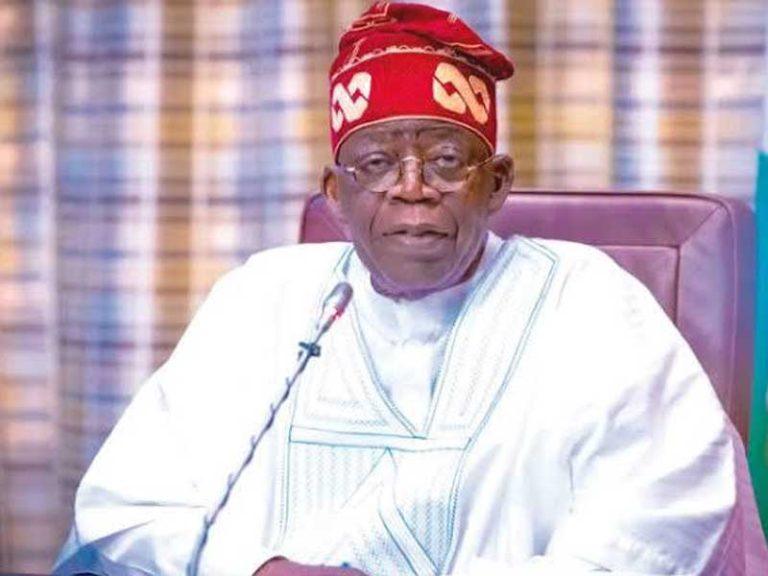
Dr. Yahuza Getso, a security intelligence and investigative specialist, has stated that unless underlying structural issues are resolved, President Bola Ahmed Tinubu’s recent move to relieve the former military chiefs of their responsibilities will not end Nigerian insecurity.

Dr. Getso said that such replacements take occur in accordance with the regulations governing military appointments in an exclusive interview on Sunday, characterizing the dismissal as typical and expected.

He emphasized, though, that the action by itself won’t address the nation’s security issues.

“Well, firing or relieving service chiefs is nothing new. They can either be released or renewed after serving for a minimum of two years, he stated.

“This change merely gives the older officers time to relax and allows the younger ones to grow.” It has no unique or tribal connotations. The President is free to act whenever it is most convenient for him. The president’s motivation is truly unknown, but only time will tell.

However, Dr. Getso cautioned that security cannot be automatically improved by just switching service chiefs.

“It can’t affect anything. The best course of action is not to replace the service chiefs. We are aware of the true issue, which has nothing to do with who holds the post.

He praised the departing Chief of Defence Staff General Christopher Musa, Chief of Army Staff Lieutenant General Taoreed Lagbaja, Chief of Naval Staff Vice Admiral Emmanuel Ogalla, and Chief of Air Staff Air Marshal Hassan Abubakar, calling them some of Nigeria’s most approachable and transparent leaders in recent years.

“In my opinion, they have done an amazing and fantastic job,” Dr. Getso remarked.

“Every Nigerian should applaud them. They never changed their phone numbers from the beginning of their business, and they were willing to listen to anyone, including journalists. They continued to be reachable and accommodating.

He pointed out that the Nigerian military advanced under their direction in a number of operational domains, including combating IPOB in the South East, Boko Haram in the Northeast, banditry in the North West, and criminal activity in the South-South and South West.

With increased technical innovation, they revolutionized military operations. Even though they might not have been completely successful, they did their best in the circumstances.

Dr. Getso acknowledged their efforts but maintained that unless corruption is seriously addressed and government institutions, especially the judiciary, legislature, and executive branch, are transformed to promote accountability, insecurity in Nigeria will continue.

According to Dr. Getso, “changing service chiefs won’t get us anywhere because what matters is not just the capacity or weapons.”

Do we possess the necessary political will? Do the service chiefs work in a supportive environment? Do we actually combat corruption? Many of our political office holders lack integrity and honesty, and our court is corrupt. Were they only anointed or were they actually elected? We won’t stop lying to ourselves and feeling insecure until we address these issues and hold leaders responsible.

He cautioned, “Count the new service chiefs as failures if corruption is not fought practically.”

“The new chiefs cannot succeed if there is no supportive atmosphere, if people are not held accountable, and if corruption persists within the government institutions and security agency hierarchy. They’re not magicians.

He added that some leaders in Nigeria are purposefully maintaining the country’s insecurity for their own benefit.

“In Nigeria, we are lying to ourselves,” he declared.

“Some people are using insecurity to further their political objectives. Insecurity will keep growing until we are honest and prepared to combat corruption and repair our crooked courts.

Getso addressed his ideas for the future, stressing the importance of accountability, authenticity, and a community-driven strategy.

He clarified, “The way forward is to hold people accountable, reach out to the criminals where they are, and fix our judicial system.”

“We need to enhance the welfare of security personnel, improve technological operations, and involve young people in community-based monitoring and intelligence sharing.”

He continued by saying that while eradicating internal corruption, the government must also concentrate on performance-based evaluations and monitoring throughout security institutions.

“Appointing new service chiefs is not the only path ahead. We need to combat corruption in real life, not only on paper. Since our judiciary is already corrupt, it needs to be repaired. The government should enhance the welfare of military and paramilitary members and use technology to update operational techniques. Additionally, we require a community-driven strategy that increases citizen-security agency communication and involves youth in information collecting. Above all, to establish an atmosphere in which security agencies can genuinely thrive, there must be responsibility, appropriate oversight, and genuine cooperation between the administrative, legislative, and judicial branches.

“We can’t move forward without sincerity from the leaders and citizens, and without a practical fight against corruption,” he said in closing.

Lawmaker Distances Self from Community Projects, Says It’s Not Parliament’s Role

0

Obika Chinedu, a member of the House of Representatives who represents the Bwari/AMAC Federal Constituency, has urged for the elimination of constituency projects, characterizing them as a significant diversion from the legislators’ constitutional duties.

The politician from the Labour Party bemoaned the fact that lawmakers have been compelled to assume executive positions at the price of monitoring and legislation.

This specific endeavor known as the constituency project has caused the most damage to the legislative branch of government. In a recent interview with Daily Post, Chinedu stated, “I detest it.”

Legislators were elected to enact laws, not to carry out projects, according to Chinedu.

“We are not involved in community projects.” Only those whose job it is should be supervised by us. He continued, “Lawmakers have become executives.”

The congressman bemoaned the public’s misunderstanding of the job of legislators, claiming that many Nigerians now hold National Assembly members accountable for duties that fall outside the purview of the executive branch of government.

“Those who visit our homes will tell us what they should be telling the executive instead of bringing what we should be working on,” Chinedu stated.

“They shift their anger to legislators, whose primary responsibility is to enact laws, rather than being angry at those in the executive branch for failing to do what should have been done.”

He said that because of this misconception, lawmakers are under excessive pressure and that some of them “run away from their people” in order to escape constant requests that they are unable to fulfill.

This explains why some lawmakers flee from their constituents due to a number of unfulfilled requests. The communities don’t grasp it most of the time,” he said.

According to Chinedu, lawmakers now pursue boreholes and roads rather than laws.
Chinedu lamented how legislators’ attention has changed from legislation to tangible initiatives as a result of constituency projects.

Everywhere we go, people continue to make demands on various projects. Lawmaking and constitutional changes that would improve people’s lives are no longer of interest to them, he claimed.

He also denounced the politicization of local initiatives, pointing out that lawmakers who lack access to powerful committees or ties to the ruling party are frequently wrongly viewed as failures by their voters.

He stated, “Some of our colleagues who ended up in leadership positions have more reach to do things.”

“You will see a committed legislator, but he won’t be able to draw projects to his constituency because he doesn’t have that reach, probably because he is from the opposition.”

The Federal Capital Territory (FCT) received unprecedented budgetary support this year, with almost ₦1.8 trillion allotted for infrastructure, the Labour Party legislator also said.

He declared, “FCT has never had budget provisions like this, above ₦1.8 trillion.” “In order to stimulate development, we supported it and enacted the legislation. This is not how we are supposed to get from place to place. This has undermined laws.

I’m Still With the Labour Party

In response to the recent surge of opposition lawmakers defecting to the All Progressives Congress (APC), Chinedu insisted that he is still a devoted Labour Party member.

He declared, “Until our leader says otherwise, I am a Labour Party man and I remain in the party.”

“Those who are defecting have the freedom to do so. You have the option to depart if you believe that your current location is not ideal for you. Nigeria has a multiparty system because of this.

The congressman admitted that security personnel are “trying their best” in response to the mounting security concerns in the capital territory, but said that the creation of an FCT Independent Police Force would significantly increase local safety.

“People complain about insecurity in the capital city because they don’t see what was prevented; they only see what happens at a specific time,” he stated.

“So that we can use a portion of our revenue to invest in security and secure Abuja, I am advocating for the creation of the FCT Independent Police Force.”

He emphasized that, in spite of what the public believes, security officials’ efforts are silently preventing many security dangers.

“The majority of what I know about the government circle is unknown to you, and I won’t share it with you. According to what has been made available, the security personnel are making every effort,” he continued.

ADC Explains Coalition’s Goal: To Stop Nigeria from Turning into a One-Party Nation

0

According to the African Democratic Congress (ADC), its members banded together to prevent President Bola Tinubu from establishing a one-party state in Nigeria.

Speaking to Bolaji Abdullahi, the ADC spokesperson emphasized that the party wishes to save Nigeria from contemporary civilian tyranny and pointed out that without the alliance, Nigeria’s democracy would have been in danger.

“We’ve been worrying about this since day one,” he stated. that the goal of the Tinubu administration is to make Nigeria a one-party state. This is the reason we first got together. It’s the government’s propensity to turn Nigeria into a one-party state. What do you believe would have happened to Nigeria’s democracy today if it weren’t for the coalition?

“The PDP, or People’s Democratic Party, is essentially extinct. The Labour Party is no longer stable. The ADC is currently the only opposition party that can be referred to as such in Nigeria. However, this supports our claims that the coalition is here to save Nigeria from this contemporary civilian dictatorship and its propensity to become a one-party state. Thus, I would have been justified. The decamping of the governors to the ruling party is a component of that greater goal. Nigeria now has an option, though.

“Nigeria will have to make the decision of whether or not to retain this government. And we are able to offer that substitute. And ADC exists for this reason. Therefore, it makes little difference if the ruling party or the governors are members of the same gang. Thus, we’re not at all concerned. Naturally, as you correctly pointed out, we are worried.

“We are worried that, for the first time, we are witnessing something that we never thought could occur in this nation. But remember, did the PDP act differently or in a different manner when it was at its strongest? Did we not witness a scenario in which nearly all members of the political elite were joining the PDP? Have we forgotten that approximately 20 years ago, the PDP’s national chairman declared that the party would rule for 60 years because they controlled nearly every state? Now, where is PDP? You’ll witness what happens to APC if they haven’t learned from their past.

SERAP Queries NNPCL Over Missing N22.3bn, $49.7m, £14.3m, and €5.2m Oil Money

0

The Nigerian National Petroleum Company Limited (NNPCL) Group Chief Executive Officer, Mr. Bayo Bashir Ojulari, has been asked by the Socio-Economic Rights and Accountability Project (SERAP) to give a thorough explanation of the purportedly unaccounted-for oil revenues of ₦22.3 billion, $49.7 million, £14.3 million, and €5.2 million.

The organization’s request comes after the Federation’s 2022 annual report, which purportedly revealed inconsistencies and unaccounted-for money in the company’s financial records.

According to SERAP, the yearly report was released on September 9, 2025.

The Independent Corrupt Practices and Other Related Offenses Commission (ICPC) and the Economic and Financial Crimes Commission (EFCC) should prosecute people responsible for the diverted or misused oil money, according to SERAP’s request that Ojulari identify them.

Additionally, SERAP encouraged him to ensure that the N22.3 billion, USD $49.7 million, £14.3 million, and €5.2 million in oil funds that were misappropriated or diverted are fully recovered and returned to the treasury as soon as possible.

“These grim allegations by the Auditor-General suggest a grave violation of the public trust, the Nigerian constitution 1999 [as amended], anticorruption laws, and the country’s international obligations,” the organization stated in a letter dated October 25, 2025, and signed by SERAP deputy director Kolawole Oluwadare.

The accusations have also undermined the nation’s economic progress, kept most Nigerians in poverty, and denied them opportunity.

The disappearance of oil money from the NNPCL has been reported for many years by the Auditor-General. The majority of these missing oil funds, which were supposed to fund vital public services for Nigerians, continue to fall on Nigerians.

Fighting the oil industry’s corruption epidemic will reduce poverty, increase Nigerians’ access to essential public goods and services, and strengthen the government’s capacity to uphold its anti-corruption and human rights commitments.

Because to the pervasive massive corruption, especially in the NNPCL, and the deeply ingrained culture of impunity for offenders, ordinary Nigerians have benefited very little from oil money despite the nation’s enormous oil resources.

“The misappropriated or diverted oil revenues are directly related to the institution’s ongoing failure to uphold the principles of transparency and accountability and represent a failure of NNPCL accountability more generally.”

The already unstable economy has been further harmed by the misappropriated or diverted oil earnings, which have also led to extremely high levels of government borrowing and deficit expenditure.

“It is likely that more money would have been allocated to the realization of Nigerians’ economic and social rights, such as increased spending on healthcare and education, if the NNPCL had accounted for and remitted the diverted or misappropriated oil money and returned it to the treasury.”

Additionally, the government would have borrowed less money.

We would appreciate it if the suggested actions were implemented within seven days of this letter’s receipt and/or publication. SERAP will take appropriate legal measures to force the NNPCL to comply with our requests in the public interest if we don’t hear back from you before then.

The Nigerian National Petroleum Corporation Limited (NNPCL) failed to account for roughly N22.3 billion, USD$49.7 million, £14.3 million, and €5.2 million in oil money, according to the Auditor General of the Federation’s 2022 audited report, which was released on September 9, 2025.

The Auditor General is concerned that the funds might have been “diverted.”

According to reports, the NNPCL spent more than N292 million [N292,609,972.29] in 2020 for a contract to build an accident and emergency facility along Airport Road, Abuja. However, after receiving payment, “the contractor has abandoned the contract and failed to execute the job.”

The auditor general is concerned that the contract funds might have been “diverted.” “Recovered from the contractor and remitted to the Treasury” is what he wants.

Additionally, the NNPCL allegedly spent more than GBP £14 million [£14,322,426.59] in 2021 “to repair its London office.” However, “there were no documents of any spending, and no evidence to show that the money was actually spent.”

The Auditor-General is concerned that “the money may have been misappropriated or diverted.” He wants the funds to be retrieved and sent to the Treasury.

Additionally, the NNPCL “irregularly paid” a contractor almost USD $22 million [$22,842,938.28] for transporting nine loads of crude oil. The NNPCL “failed to explain why the contractor received over $22 million for crude during the same period and why the amount owed to it from January to October 2019 was only $4,858,997.22.”

Lagos APC Blasts Peter Obi for Calling Yahoo Boys ‘Geniuses’

0

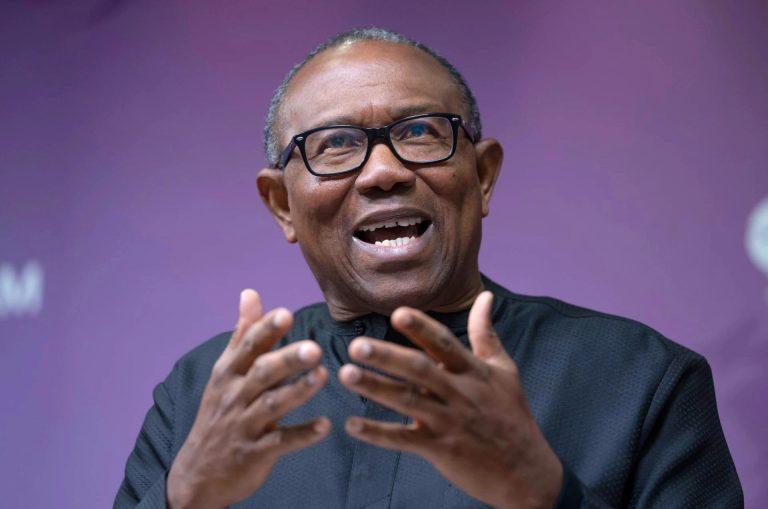
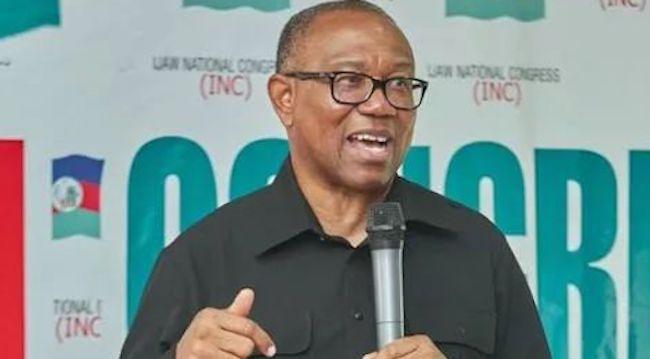
The Labour Party’s (LP) presidential candidate in the 2023 general election, Peter Obi, has come under heavy fire from the Lagos State branch of the All Progressives Congress (APC) for his recent remarks characterizing Internet scammers, also referred to as “Yahoo boys,” as “geniuses” who just need to be redirected.

The Lagos APC called Obi’s statement “morally reprehensible” and “unbecoming of someone who once sought to lead Nigeria” in a statement released on Sunday by party spokesperson, Seye Oladejo.

According to Oladejo, it is concerning and distressing that a former state governor and presidential contender could make remarks that seem to minimize criminal activity in a country that is already struggling with moral decline.

“Crime is not a brilliant thing. Yahoo-Yahoo is not a talent, but a social tragedy.
Obi’s moral character truly worries us; how can someone who consistently denounces corruption yet exalt cybercrime? Such inconsistencies show a perilous moral ambiguity that is inappropriate for a leader.

Additionally, the APC spokesperson called Obi’s stance a “reckless attempt at attention-seeking,” accusing him of using inflammatory remarks to gain political attention.

Reasoned leadership has been replaced with irresponsible statements due to his desperate need for attention. “Unchecked desperation ought to have a limit,” he continued.

Oladejo further claimed that Obi used “propaganda, misinformation, and emotional manipulation” to deceive a large number of young Nigerians during the 2023 elections. He warned that such speech could promote moral indiscipline and encouraged the LP candidate to apologize to the young people for his recent remarks.

The Lagos chapter insisted that leadership must be based on “values, integrity, and moral responsibility,” rejecting any attempt to romanticize or explain cybercrime while reaffirming the APC’s dedication to youth development and innovation.

Recall that on Saturday, Obi told attendees at a youth summit in Onitsha that many Internet scammers have intelligence and creativity that, with the right guidance, might be directed toward profitable endeavors.

He emphasized that “money is only a small fraction of true wealth” and advised young people to prioritize hard effort, character, and community development rather than the heedless pursuit of fortune.

Hardship Intensifies as Credit Crunch and Monetary Tightening Bite Harder

0

Due to the Central Bank of Nigeria’s (CBN) hawkish monetary policy and growing funding costs, Nigeria’s banking sector has continued to operate cautiously as deposit money banks (DMBs) reduced lending expansion.

According to experts, this has resulted in a delayed economic recovery because there is less credit available, borrowing is more expensive, and investment and consumption have significantly decreased.

They noted that consumers have less purchasing power and that firms are having difficulty operating, which has slowed economic activity and resulted in job cutbacks and increased unemployment.

They claim that although Nigeria’s economy is growing positively, with projections for 2025–2026 ranging from 3.9% to 4.4% due to services, the average citizen still views it as having slow activity because of high inflation and the fact that growth isn’t reaching the majority of the population.

In the first quarter of 2025, overall credit to the economy fell slightly by 0.2 percent quarter-over-quarter (q/q) to N59.1 trillion, the first quarterly contraction in recent times, according to the apex bank’s most recent Quarterly Statistical Bulletin.

The CBN’s persistent tightening strategy, which has driven interest rates to multiyear highs in an effort to control inflation and stabilize the naira, is reflected in the figures. Banks have taken a cautious stance, putting asset quality ahead of ambitious loan expansion, as lending margins shrink and risk costs increase.

An investment banker in Lagos stated, “This slowdown in credit growth is a natural reaction to tighter liquidity and higher yields on risk-free instruments.” “Banks are earning more from placing funds with the apex bank than from taking lending risks in a weak economy, as the CBN is mopping up liquidity through its open market operations and standing deposit facilities.”

The oil and gas industry continued to be the primary recipient of bank loans in spite of the overall contraction. The industry contributed N18.6 trillion, or 31.4 percent of all lending, a rise of 8.2 percent on a quarterly basis.

This sustained expansion is attributed by analysts to the capital-intensive character of the energy sector and the continuous restructuring of legacy risks due to the comparatively steady global oil prices.

According to a credit analyst headquartered in Lagos, “the energy sector continues to attract financing because of its perceived strategic importance and relatively secured cash flows.”

“In line with Nigeria’s energy transition objectives, banks are also assisting downstream participants and new entrants in gas processing and distribution.”

As disbursements increased by 8% every quarter, the banking and insurance sector became the second-largest recipient, taking in 14.2% of the total credit. The expansion is a reflection of banks’ increasing interest in non-real sector exposures, especially investments in capital market-related securities and financial institutions.

Analysts claim that this pattern highlights banks’ preference for shorter-term, safer, and higher-yielding assets, particularly in a setting where loan defaults in the real sector are increasing.

In essence, banks are relocating risk. Another expert stated that lending to organizations involved in finance and insurance provides higher profits without the hassles of handling credit risks associated with manufacturing or trade.

With a 13.1% share of overall lending, the manufacturing sector—which has historically been a major driver of credit growth—ranked third, but credit to the industry decreased by 9% on a quarterly basis. The decrease reflects the challenging business climate that manufacturers face, which includes fluctuating foreign exchange rates, expensive energy, and declining consumer demand.

Banks are reevaluating their exposures since manufacturers are finding it difficult to fulfill their payback obligations due to increased transportation costs and inflation from imports.

Many have reduced their emphasis on heavy industries and import-dependent areas in favor of more resilient subsectors like food processing and packaging.

According to a senior risk manager of a Tier-1 bank, “manufacturing is no longer a haven for lenders.” “We are now more picky, favoring customers with steady cash flows or export potential.”

Additionally, the CBN Bulletin reported significant drops in trade/general commerce (-18.8%) and credit to general services (-18%). Analysts attribute the declines to increasing borrowing costs, tighter lending standards, and lower working capital demand, all of which have reduced the profitability of small and medium-sized businesses (SMEs).

These two industries, which together account for a sizeable share of Nigeria’s workforce, are among the most severely impacted by high interest rates. Alternative financing options like supplier credit and fintech lending platforms have been popular among SMEs, despite the fact that they frequently have higher effective costs.

Economist Stephen Iloba stated in his presentation that “the commercial sector is feeling the pinch of liquidity constraints.” Trade credit growth is being negatively impacted by decreased inventory finance and sluggish consumer expenditure.

On the other hand, targeted lending under government-backed programs and revived interest in agro-processing projects drove an 11 percent quarterly increase in credit to the agriculture sector to N3.2 trillion. Despite providing 26.2% of GDP in Q2 2025, the sector’s share of total credit stayed low at 5.4%.

According to analysts, the discrepancy between agriculture’s economic significance and its ability to obtain foreign finance is a result of institutional flaws, such as insufficient collateral frameworks and pricing and weather risks that discourage banks.

“Agriculture is still underbanked,” a development finance specialist stated. “Banks will continue to allocate a disproportionately low share of credit to the sector without risk-sharing mechanisms and improved insurance coverage.”

Additionally, the report revealed that credit to the government increased by 5.7 percent on a quarterly basis to N3.1 trillion (a 5.2% share), underscoring the public sector’s persistent need for short-term liquidity to close fiscal imbalances. In a similar vein, loans to the ICT industry increased by 9% to N2.1 trillion, which is indicative of growing investments in fintech, broadband development, and digital infrastructure.

According to a digital economics specialist, “the ICT space remains a bright spot.” “Banks are funding fintech innovations, network upgrades, and data center projects that facilitate payment digitization—all of which have long-term growth potential.”

At N2.4 trillion (+0.1% q/q), credit to the construction sector remained essentially flat, which is consistent with the sluggish pace of capital projects and private real estate developments under high material costs and muted consumer demand. The picture of widespread caution in lending activity was completed when the “Others” category of loans dropped 2.2% to N5.4 trillion.

Overall, the data confirms that loan expansion is being hampered by Nigeria’s high interest rate environment and limited liquidity. The benchmark Monetary Policy Rate (MPR) set by the CBN, which was kept high for the majority of 2025, has greatly increased borrowing costs, deterring banks and borrowers alike.

A treasury dealer at one of the top five lenders stated, “The risk-adjusted return on government securities now rivals what banks can earn from loans.”

“In this situation, investing in CBN instruments or keeping cash becomes more appealing than lending to riskier clients,” the dealer continued.

Sowore’s Rearrest Was Premeditated, Says Lawyer Who Alleges Police Assault

0

Temitope Temokun, a human rights attorney, described how activist and publisher Omoyele Sowore was allegedly taken from the Kuje Magistrate Court grounds by almost 10 police personnel on Friday.

Temokun called the event “unnecessary and premeditated” in an interview with Channels Television’s Inside Sources on Sunday, claiming that people who attempted to record the arrest were assaulted.

Temokun, who described the incident, stated, “The officers brutalized those who attempted to capture the scene.” In addition, I was attacked and hurt.

The attorney clarified that within 30 minutes of the magistrate’s decision, the former African Action Congress (AAC) presidential candidate and other defendants detained during the #FreeNnamdiKanuNow rally had fulfilled their bail requirements.

“Yet officers stormed the court premises and bundled him into a vehicle,” Temokun claimed.

According to reports, the court had previously given Sowore ₦500,000 in bond with two sureties.

Temokun further accused the police of trying to transfer Sowore to Kuje Prison without the required authorization.

“They tried to mask the situation and patch it up, but the Kuje authorities initially rejected him,” the human rights attorney continued.

Sowore is scheduled to be arraigned on Monday, October 27, 2025, after being arrested again despite fulfilling the requirements of his release.