Home Blog Page 131

‘Stop Hypocritical Politics’ – Alawuje Cautions Atiku, Obi, Defends Tinubu’s Support in the North

0

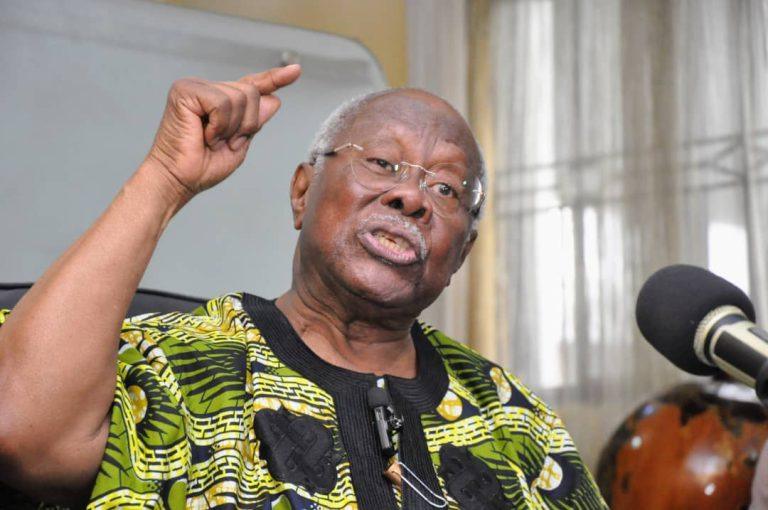
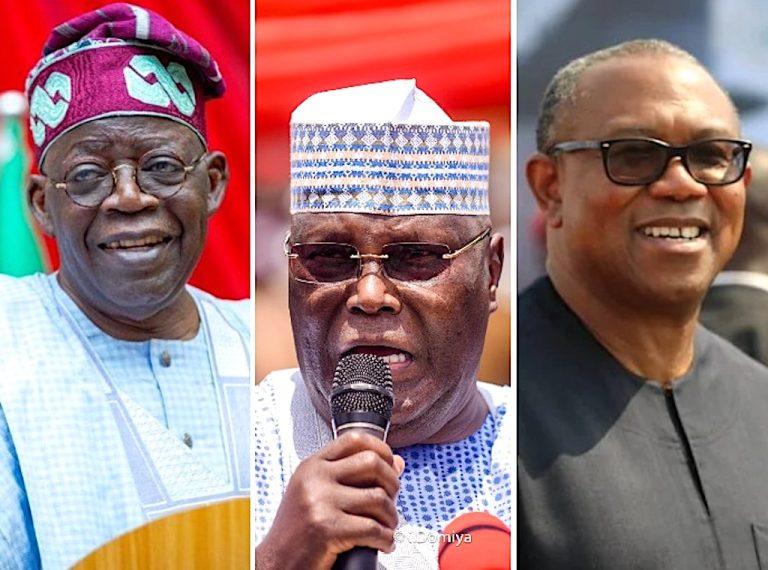
According to Abdulhakeem Adegoke Alawuje, a prominent member of President Bola Tinubu’s support group, previous presidential candidates Peter Obi and Atiku Abubakar lack the power to sway the North against his principal.

Alawuje claimed in a statement that every action taken by individuals opposed to Tinubu is being thoroughly watched.

“Be advised,” he cautioned. You cannot carry out any political or ethnic plot without our agents’ knowledge. The North won’t be duped once more.

Alawuje recalled Tinubu’s crucial role in the 2015 elections, saying that history will remember how the APC National Leader at the time “stood firmly with the North when it mattered most.”

“Tinubu traveled the area at that pivotal time, persuading millions of people who had previously opposed Buhari to back him. The North still remembers that generous deed.

He emphasized that the North would “reward Tinubu with its votes again in 2027” and called it “a region of loyalty and honor.”

The Tinubu supporter claimed that Peter Obi was “hiding behind religious sentiments” and that Atiku was “masking a Northern agenda.”

Both are engaging in the greatest level of hypocritical politics. He said, “No propaganda can turn the North against its reliable ally from the Southwest.”

Alawuje praised President Tinubu’s “bold and transformative reforms,” citing recent comments from His Royal Highness Muhammad Sanusi II, the Emir of Kano, who stated that “Nigeria has pulled back from the brink of economic collapse.”

“Tinubu is doing incredibly well, changing the economic and developmental landscape of Nigeria.” All Nigerians need is patience, he continued.

Alawuje praised the President’s fortitude in the face of criticism, claiming that Tinubu’s leadership has subdued critics.

“Tinubu has disproved the fear-mongering social media “economists.” He is a real champion of human development, an economic reformer, and a brave and imaginative leader, he declared.

Kwarra Officially Hands Over to Dattijo as New NPC Chairman

0

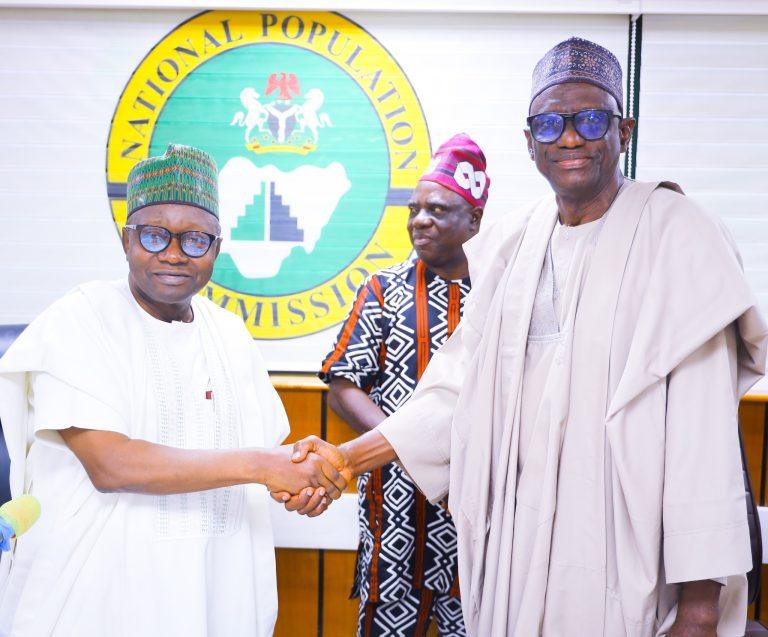
On Tuesday, Nasir Kwarra, the National Population Commission’s (NPC) chairman, formally ended his five-year term by transferring the commission’s leadership to Muhammad Dattijo, the Federal Commissioner for Niger State.

According to reports, Dattijo will act as chairman while President Bola Tinubu swears in Aminu Yusuf.

Federal Commissioners, the Director-General, Directors, and commission personnel attended the short but symbolic ceremony at the NPC Headquarters in Abuja.

Kwarra thanked his coworkers and subordinates for their support while he was in office in a statement released by the commission on Wednesday.

“I am grateful to the Federal Commissioners, Management, and Staff of the NPC for their steadfast support and commitment during my five-year tenure,” he stated.

Strengthening data collection systems, digitizing the Civil Registration and Vital Statistics system, and accelerating preparations for the upcoming national population and housing census were among the major achievements under Kwarra’s leadership.

He emphasized that professionalism and group dedication made the progress feasible.

During the handover ceremony, official letters were signed, Kwarra received a parting gift, and a group photo was taken to commemorate the occasion.

It is anticipated that Dattijo, in his interim capacity, will continue ongoing initiatives until the new chairman formally takes office.

Former President Muhammadu Buhari appointed Kwarra in 2020, and he oversaw the commission as Nigeria prepared for its first housing and population census in almost 20 years.

The upcoming census is an urgent national concern because the last one was carried out in 2006.

Under his direction, the NPC implemented digital mapping and enumeration area demarcation, a technological advancement intended to enhance accuracy and modernize census operations.

The government change caused the census, which was originally planned for 2023, to be delayed.

It is now anticipated that Aminu Yusuf, the new substantive chairman, will lead the commission to finish the long-overdue task, which is thought to be essential for equitable national development and evidence-based planning.

Drama as Shaibu, Omobayo Fight Over Who Represents Edo at Former Deputy Governors’ Forum

0

Philip Shaibu and Omobayo Godwins got into a heated argument about who should represent Edo State at the Fourth Annual National Conference of the Former Deputy Governors’ Forum.

The conflict reportedly started when Shaibu loudly objected to Omobayo’s introduction as the former deputy governor at the event in Abuja on Tuesday.

Channels Television claims that while Shaibu and Omobayo quarreled over who was legitimate, the occasion momentarily deteriorated into anarchy.

Following the event, Shaibu said that the introduction was inappropriate and emphasized that Omobayo was brought in by the back door rather than being elected.

Shaibu claimed that the position was never vacant and that his dismissal was unlawful due to a court ruling.

“He brought him in through the back door,” he remarked.

In response, Omobayo emphasized that he had made an effort to maintain composure and called the altercation “nearly a national disgrace.”

Omobayo stated that Shaibu, whom he still considered an older brother, should come to terms with the court case as a depressing fact of life.

“I never made myself deputy governor,” he continued. It’s practically a national embarrassment.

Remember that in April 2024, Omobayo Godwins took over as Edo Deputy Governor after Philip Shaibu was impeached while serving under Godwin Obaseki.

Shaibu was eventually reinstated after a judge declared that his impeachment was illegal.

House of Reps Moves to Establish Additional LGAs in Benue State

0

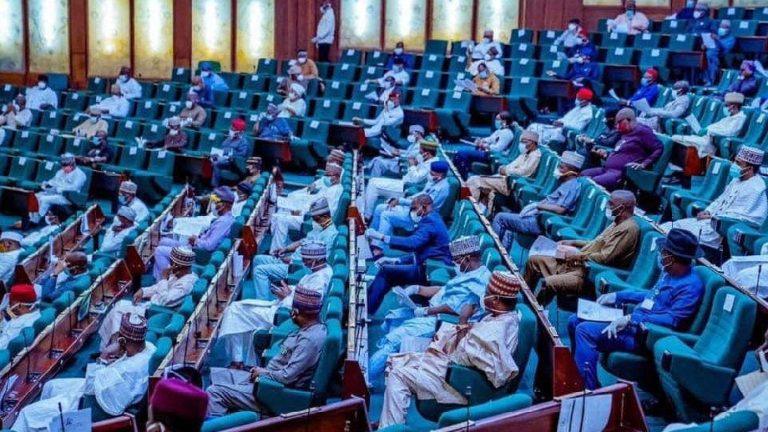
A bill to alter the Federal Republic of Nigeria’s Constitution to permit the establishment of more Local Government Areas, or LGAs, in Benue State has been submitted by the House of Representatives.

The House of Representatives has approved the bill’s second reading.

Representative David Ogewu of the Oju/Obi Federal Constituency (APC) is the bill’s sponsor. It is registered as HB2527.

On Tuesday, October 28, it was put up for second reading, and after much discussion over its general principles, it was approved.

Rep. Ogewu made the motion for the bill’s second reading, arguing that by bringing the government closer to the people, the proposed modification will improve grassroots governance.

He pointed out that Benue needs more local councils for fair development and effective governance because of its large landmass and expanding population.

Rt. Hon. Chinedu Ogar, who represents the Ezza South/Ikwo Federal Constituency, seconded the resolution, viewing it as a step toward strengthening democracy and enhancing rural areas’ access to services.

Rep. Ogewu expressed hope that the bill will open the door for the establishment of more LGAs in Benue, especially in his area, if it were to become law.

Additionally, he recalled that near the end of his second term in 2007, Senator George Akume, who was the governor of Benue State at the time, had attempted, if unsuccessfully, to increase the number of local government areas in order to improve administrative efficiency.

For additional legislative action, the bill has now been forwarded to the House Committee on Constitutional Review.

Bode George: Lamido Is Free To Contest PDP Chairmanship But Can Be Punished For Going To Court

0

Despite the campaign for a consensus candidate, Bode George, a former deputy national chairman of the Peoples Democratic Party (PDP), has stated that the party has not prohibited anyone from running for its national chairmanship position in its election convention in November 2025.

In response to former Jigawa State Governor Sule Lamido’s interest in the post, George stated that Lamido has every right to run for the PDP national leadership.

He maintained that each candidate is free to choose the form and run for any position of interest, even though the party is pushing for a consensus candidate.

Delegates would vote during the convention, according to George, and the consensus decision is not binding on any candidate.

“In the PDP, this has been standard procedure. It doesn’t imply others can’t compete just because some leaders get together to endorse a single candidate.

“You want the process to be smooth and non-aggressive. The party has never informed anyone that they are ineligible to run. The right to compete belongs to Governor Sule Lamido.

On the day of the convention, he can pick up the form, fill it out, and show up. We’re going to cast our votes. In Tuesday’s episode of Politics Today on Channels Television, George said, “That is the practice in our party.”

It was recalled that Lamido had shown interest in the role of PDP National Chairman but bemoaned the fact that, when he went to the secretariat on Monday to buy the nomination and expression of interest forms, he was turned away.

If the PDP does not allow him to run in the upcoming party convention in Ibadan, Oyo State, he has vowed to file a lawsuit.

In response to his warning, George, a member of the PDP Board of Trustees (BOT), stated that although Lamido had every right to run for office, going to court before using all internal party channels to settle internal conflicts could result in penalties.

“No person is the owner of this party. You must exhaust the party’s internal dynamics before bringing them to court. You may be punished if you don’t do it,” he stated.

George reiterated that Lamido is free to run, but cautioned against filing a lawsuit. He also promised that the convention would be held in a free and impartial environment.

He is so utilizing his legal rights. However, he may face consequences if he goes to court for this. Let him go; he can compete and no one will stop him in any way. The delegates present at the convention will make the ultimate choice, and it will be done in an open manner, George said.

APC Defends $1 Billion Ports Project, Declares It’s for All Nigerians

0

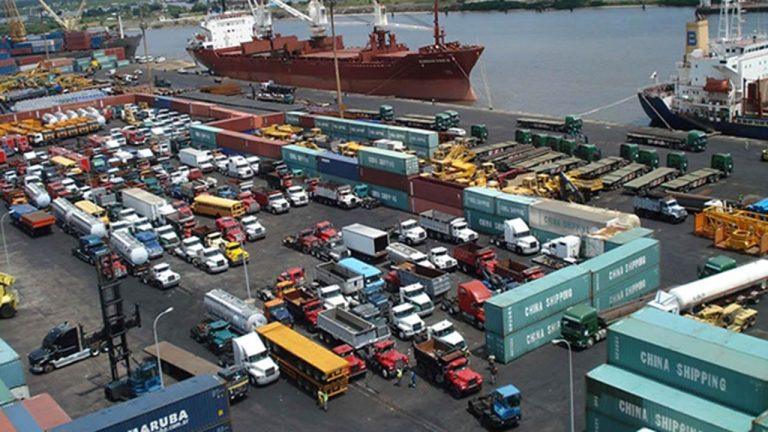
The federal government’s $1 billion investment in Lagos ports has been justified by the All Progressives Congress (APC) chapter in Lagos State, which characterizes it as a component of a national modernization plan.

In response to criticism from opposition parties, APC spokesperson Seye Oladejo reportedly said this in a statement on Tuesday. He clarified that the investment was intended to make Nigeria the leading marine hub in West Africa.

The opposition claimed that President Bola Tinubu was concentrating on Lagos ports while ignoring Warri, Calabar, Onne, and Port Harcourt ports, but Oladejo denied this.

He called such assertions absurd and naive.

“The opposition’s persistent lack of fundamental economics and governance is further shown by this careless assertion. Rarely are their outspoken beliefs supported by data, statistics, or even a rudimentary grasp of the trajectory of national policy. Under President Bola Ahmed Tinubu’s Renewed Hope Agenda, the Federal Government is not ignoring any ports. China Harbour Engineering Company and Singapore’s Tolaram Group, who both saw in President Tinubu’s vision a business climate worth their billions, have invested in the Nigerian project, which is not a Lagos initiative, according to Oladejo.

He claims that modernization projects are being carried out concurrently by President Tinubu’s administration in other important ports throughout the nation.

He noted that while the Calabar Port is still undergoing dredging to make room for larger vessels, the Onne Port is undergoing digitalization and equipment upgrades.

In addition to the extension of the Warri Port corridor, which includes new rail link integration to facilitate cargo transportation inland, Oladejo stated that the Port Harcourt Port complex is being renovated under a new concessionary framework.

“The opposition, of course, wouldn’t know this—they’re too busy tweeting ignorance and recycling talking points from the political dustbin,” he stated.

Economic Foresight in Lagos Port Investment
Oladejo emphasized that rather from being interpreted as sabotage, the $1 billion investment in Lagos Port should be viewed as economic vision.

He clarified that the initiative’s goals were to increase exports, create jobs, and get rid of inefficiencies that had made Nigerian ports among of the priciest in Africa.

He cited the Lekki Deep Sea Port as an illustration of the advancements made under Tinubu’s leadership, pointing out that it is Nigeria’s first completely automated port that has already redefined port management, accelerated turnaround times, and increased government revenue.

Tinubu’s Renewed Hope Agenda, according to the APC spokesperson, is still a national initiative rather than a regional favor. He cautioned that the opposition’s attempts to incite feeling in the region were merely sabotage against the advancement of the country.

“The opposition’s attempt to use regional sentiments as a weapon against national advancement is the only sabotage occurring here. This administration has made a comprehensive, inclusive, and national commitment. Strategy is what drives governance, not emotion. Oladejo continued, “President Tinubu and the APC are still committed to creating a functional Nigeria, one port, one project, and one policy at a time.”

Drug Traffickers Using Courier Services to Smuggle Narcotics in Nigeria

0

Dispatch riders are now an essential component of urban life in Lagos’s busy city. These riders maneuver through clogged highways with amazing agility, delivering documents, packages, and food orders to homes and offices as the city’s infamous traffic jams hinder progress and annoy everyday commuters. In a fast-paced economy where time is of the essence, their services have become the lifeblood of convenience.

The contribution of dispatch riders to Nigeria’s economy is indisputable, ranging from e-commerce deliveries to in-office dispatch services. The National Bureau of Statistics (NBS) reports that between 2020 and 2023, Nigeria’s logistics and courier subsector expanded by more than 35% due to the growth of the gig economy and the increase in online purchasing. Dispatch riding serves as both a source of income and a way out of unemployment for a large number of young Nigerians.

But there is a dangerous undercurrent that could contaminate this essential function. A troubling tendency has been discovered by the National Drug Law Enforcement Agency (NDLEA): dispatch riders are being utilized as unwary or willing couriers in drug trafficking operations.

Riders as Drug Couriers: A Growing Concern

On July 30, 2025, NDLEA agents conducted intelligence-driven stop-and-search operations in the Federal Capital Territory (FCT) of Gwarimpa, Jahi, and Galadimawa. Three dispatch riders, Sabo Sule (24), Samuel Nnamdi (28), and Idris Jibrin (28), were arrested by the agency for distributing 149.8 grams of the strong cannabis strain known as “Canadian Loud.” Two days later, two further suspects carrying 91.1 kg of “skunk” cannabis were apprehended along the Abaji–Gwagwalada Expressway.

A dispatch rider named Joseph Michael was caught in Mushin with 3.3 kg of the synthetic cannabis strain “Colorado,” according to the NDLEA in Lagos. Another suspect, Ibrahim Sulaiman, was nabbed in Iwaya-Yaba with 16.5 liters of “skuchies,” a cannabis-based beverage.

According to the FBI, some of these riders either deliberately engage in drug trafficking or are tricked by criminal clients who hide illegal goods inside delivery-related packages.

The situation is “an emerging trend that calls for strict regulation and collaboration between transport authorities, courier companies, and law enforcement,” according to NDLEA Chairman Brig. Gen. Buba Marwa (rtd).

Why the Danger?

Dispatch riders are especially susceptible to being infiltrated by drug traffickers and other criminal networks due to a number of characteristics.

First, the characteristics that make them an effective service Additionally, providers make them appealing tools for traffickers. They can park near destinations, deliver products quickly without attracting too much notice, and maneuver through crowded metropolitan roadways thanks to their mobility, agility, and low profile. Such mobility provides cover that traffickers can readily use to hide illegal activity in urban areas like Lagos, where speed is valued.

Second, the nation’s regulatory inadequacies have made it easy for misuse to occur. Dispatch riders operate with little regulation in many countries, which makes it simple for illegal actors to pass for authorized couriers. For example, due to ongoing non-compliance with regulations, the Directorate of Road Traffic Services (DRTS) in the Federal Capital Territory (FCT) was forced to halt the registration of new dispatch riders in February 2024. Many of the 2,500 riders who the directorate had already cleared were discovered to be rowdy or untraceable. This highlights the industry’s more general regulatory flaws.

The informality of the business concept is another major weakness. Small-scale businesses and independent contractors operating on cash-based contracts with minimal documentation dominate Nigeria’s delivery industry. Law enforcement agencies find it challenging to detect suspicious deliveries or follow financial trails associated with drug movements in the absence of established contracts, traceable payment mechanisms, and verified customer identities. Because the activity is cash-driven and informal, traffickers can easily blend in with the official courier network.

Inadequate monitoring during activities at night also increases the risk. Due to the lack of control, many riders work late into the night or at dawn. Only recently, in September 2025, did the State Ministry of Transportation in Lagos require all riders to wear visibility tapes and reflective jackets during nighttime operations. This action unintentionally brought attention to the magnitude of previous regulatory neglect. These nocturnal deliveries frequently offer traffickers a convenient opening to move illegal substances under the pretense of legitimate business if they are not properly supervised.

Oversight and Regulatory Web Deficits

The Lagos State Ministry of Transport is in charge of traffic control and motorcycle operational safety, but it has no authority to examine or confirm the goods that courier riders are transporting.

The restrictions were acknowledged when speaking with the Ministry’s Director of Transport Operations, Engineer Olasunkanmi Ojowuro.

He said, “The movement of goods and services, including motorcycles used for courier logistics, is managed by the Lagos Ministry of Transport.” But our job is to make sure the motorcycle is in good condition, that it is safe to ride, and that the user follows all safety regulations. We are not structurally equipped to check what they are transporting.

Ojowuro admitted that NDLEA reports on dispatch riders engaged in drug trafficking are known to the ministry.

He stated, “We are collaborating with other organizations, such as the Ministry of Health and the police.” “The police are entitled to inspect a courier’s or logistics rider’s package. Our ability to check that is limited.

His remarks draw attention to a crucial regulatory void. While organizations like NIPOST’s Courier and Logistics Regulatory Department (CLRD) are in charge of regulating courier businesses, the ministry concentrates on operational compliance and vehicle safety. However, the emergence of unofficial, unregistered operators—many of whom operate independently without corporate affiliation—has created a vulnerability that criminal networks take advantage of.

Ojowuro said, “There are so many entities operating now that are illegal and not recognized by the state.” “You are operating unlicensed, and the law will catch up with you if we are unable to identify you on our proposed regulatory app.”

The Pursuit of Order and Technology

The Lagos State Ministry of Transportation is creating a computerized application to monitor and control courier activities in order to bring sanity to the industry. The goal of the program, which is now in the consultative stage, is to combine operators, customers, and the government into a unified monitoring system.

According to Ojowuro, “that app will have an interface with the operator, the customer, and the government.” “The app is three-way. This enables us to track the activities of illicit operators and identify them. The project will follow a public-private partnership (PPP) model, and we are presently in the stakeholder engagement phase.

Safety regulations are also enforced by the ministry. For safety and visibility, particularly at night, all dispatch riders were required to wear luminous jackets in September. He stated, “Some have complied, some have not yet complied.” However, compliance will increase after enforcement begins. It is for the sake of safety.

Criminal Aspects in a Crucial Sector

Ojowuro quickly clarified that not every dispatch rider is involved in illegal activity. He pointed out that “criminal elements exist everywhere in the world and in all sectors.” It can be the user rather than the operator. Someone may wish to transport drugs and fail to disclose the contents of the package to the operator. A large number of riders have no idea what they are delivering.

He proposed that lobbying could lessen the possibility that riders would inadvertently carry illegal goods. They occasionally ask to see what’s inside the package before wrapping it. However, he clarified that this isn’t a typical practice, particularly among informal businesses without offices. Because there are so many actors in that industry, we must organize it as a whole. It puts food on people’s tables and creates jobs.

In fact, according to data from the Courier and Logistics Management Institute (CLMI), there are over 85,000 registered courier riders operating throughout Nigeria, with over 40% of them based in Lagos alone. However, there are more than twice as many informal riders, who operate outside of the legal system and present security and safety hazards.

“Drug traffickers are increasingly exploiting the informal dispatch system due to its anonymity and speed,” stated an NDLEA official who spoke on condition of anonymity. While some riders are totally ignorant of their involvement in illegal conduct, others are paid enormous sums to turn a blind eye.

Security experts caution that dispatch logistics could become a new front for organized crime in the absence of stricter regulations and cooperation between pertinent agencies.

Consequences for Safety and Urban Transportation

The ramifications of dispatch riders infiltrating drug-trafficking networks extend well beyond the realm of criminal justice. It directly affects public trust in one of Nigeria’s fastest-growing microeconomies and urban logistics.

When motorcyclists are linked to drug delivery, there is an instantaneous knock-on effect: people start to suspect every courier on a motorcycle. The delivery economy, which has grown to be essential to city life, especially in cities like Lagos, Abuja, and Port Harcourt, is threatened by this erosion of trust.

More concerning, there are serious security and safety issues associated with the clan-destine use of motorcycles for the transportation of illegal drugs. In addition to encouraging crime, the flow of drugs via congested streets raises the risk of violence, theft, and hazardous road chases when law enforcement pursues criminals. Many dispatch riders are at increased risk of accidents, which frequently result in fatalities, because they already have to navigate congested traffic.
Niger Delta Citizens Alliance Commends NUPRC’s Four Years of Progress, Praises Komolafe’s Leadership

0

The Nigerian Upstream Petroleum Regulatory Commission (NUPRC) has received praise from the Niger Delta Citizens Alliance (NDCA) for what it described as four years of ground-breaking accomplishments that have transformed Nigeria’s oil and gas sector and provided real advantages to host communities throughout the Niger Delta.

The Commission, led by Engineer Gbenga Komolafe, has restored credibility, transparency, and accountability to the upstream petroleum sector through disciplined regulatory reforms and data-driven governance, the group said in a statement released on Saturday in Port Harcourt by its President, Kingsley Charles, and Secretary General, Ogbobetta Nelli.

In addition to stabilizing the upstream sector since its establishment in 2021, NUPRC has made sure that host communities are at last included in the country’s oil prosperity. The statement states, “We have seen an unprecedented level of inclusion and fairness in resource management thanks to the visionary leadership of Engineer Komolafe.

The NDCA noted that the Commission has overseen the execution of more than 500 projects in oil-bearing states and the distribution of more than ₦373 billion in host community funds, and that the operationalization of the Host Community Development Trusts (HCDTs) continues to be one of NUPRC’s most transformative interventions.

The local communities’ quality of life has directly increased as a result of these improvements, which include water infrastructure, schools, health facilities, and roadways. More significantly, the public’s trust in the way funds are handled has increased thanks to the Commission’s visible HostComply digital dashboard. According to the Niger Delta group, host communities are witnessing tangible effects from the oil money drained from their land for the first time in decades.

The group also commended the Commission’s efforts to combat theft of crude oil and increase national production.

It stated that daily crude losses had decreased by more than 90% as a result of cooperative efforts and more stringent monitoring, and that the implementation of the “Drill or Drop” policy had revitalized dormant oilfields and drawn in fresh capital.

The industry has been revitalized by the Commission’s stress on productivity and responsibility. The statement went on, “NUPRC has repositioned Nigeria as a strong, competitive player in global energy markets by approving 79 Field Development Plans worth nearly $40 billion in potential investments and driving a surge in exploration activity.”

The Petroleum Industry Act (PIA), transparency in licensing rounds, and NUPRC’s focus on digital regulation have all strengthened the country’s revenue base and decreased bureaucratic inefficiencies that had previously impeded industry growth, according to the NDCA.

“The successes of the past four years demonstrate that efficient regulation may improve the lives of common people as well as the economy. Today, NUPRC is a shining example of reform, combining professionalism, openness, and national service in equal measure, according to the organization.

Declaration of 93-Year-Old Paul Biya as President an Affront to Democracy – Timi Frank

0

Comrade Timi Frank, a former deputy national publicity secretary for the All Progressives Congress (APC), has denounced Paul Biya’s announcement as the winner of the most recent Cameroonian presidential election.

In a statement released in Abuja on Tuesday, Frank called the 93-year-old Biya’s announcement an insult to democracy and a blatant hoax that everyone who values freedom and justice must reject.

“The regime’s so-called results are a fabrication and a clear subversion of the people’s will,” he declared.

“The world cannot watch helplessly as Cameroonian democracy is choked in broad daylight.”

He bemoaned the fact that nonviolent demonstrators who took to the streets to protest the daylight robbery of their ballots were faced with huge arrests, violence, and shooting.

“Cameroonian security forces are killing innocent people just because they want their ballots to be counted.

“This slaughter needs to stop right now. International law requires that those who planned and executed these murders be held personally responsible.

“The United Nations (UN) and the International Criminal Court (ICC) must look into this and make sure that justice is served.”

He maintained that Issa Tchiroma Bakary, whose mandate represents the authentic will of the people, is still the real victor of the Cameroonian election.

He declared, “The international community must acknowledge this fact and exert pressure on Paul Biya to resign.”

Dele Momodu: Silencing Nnamdi Kanu Can’t Solve Nigeria’s Problem

0

Dele Momodu, a media entrepreneur, has joined the growing calls for the release of Nnamdi Kanu, the imprisoned leader of the Indigenous People of Biafra, or IPOB.

Momodu discussed Kanu’s protracted incarceration and the underlying causes of separatist sentiment in the South-East in a post posted on his X account on Tuesday, which contained one of the IPOB leader’s previous broadcasts.

He argued that the Igbo people’s years of marginalization and misery are the root cause of the Biafra movement.

Momodu writes, “Mazi Nnamdi Kanu made this thought-provoking broadcast in which he philosophized about the reasons he and his supporters became radicalized shortly before his abduction from Kenya by the Nigerian government.”

He criticized people who denounced Kanu and his supporters without taking into account the political and historical context of the rekindled unrest.

“I’ve listened to his detractors and found that most of them only made snap judgments without properly analyzing why Biafra agitation became attractive, fanciful, and rekindled after the pogrom that destroyed unimaginable properties and claimed millions of lives in the 1960s and 1970s,” he said.

He claimed that the Biafra sentiment was revived by the “continuing marginalization of the Igbo, and deprivation accorded some of the most energetic and vibrant brains in Africa, and globally.”

Momodu warned that trying to quiet or get rid of Kanu wouldn’t end the current situation.

“Kanu’s adversaries, including his own relatives, will never be able to eradicate him,” he declared.

He emphasized that rather than using repression, the Igbo struggle called for “serious political reconfiguration.”

“I will never condone violence. He continued, “But any sensible government will keep the South East’s geniuses very busy with productive engagements, rather than this rabid hatred.”