Home Blog Page 129

Reps Grant Approval for Tinubu’s Loan to Finance National Budget Deficit

0

President Bola Ahmed Tinubu’s request to adopt a new external borrowing plan costing ₦1.84 trillion (about $1.23 billion) as recorded in the 2025 Appropriations Act to assist finance the nation’s growing budget deficit has been approved by the House of Representatives.

The House Committee on Aids, Loans and Debt Management, led by Abubakar Hassan Nalaraba, considered and approved a report during a plenary session on Wednesday.

The committee claims that the ₦9.27 trillion deficit in the 2025 fiscal framework will be partially addressed by the additional borrowing.

The House also approved the refinancing of a $1.12 billion Eurobond (7.625% USD1.118 billion due November 2025) in an effort to lessen repayment pressure and stabilize Nigeria’s financial position.

According to the resolution, Nigeria would be able to avoid a debt servicing constraint and lower the risk of volatility in its external commitments by refinancing the maturing Eurobond.

Legislators also approved the federal government’s plan to obtain an extra $2.35 billion through various international financial instruments in addition to the loan and Eurobond refinancing.

These include the issue of Eurobonds, loan syndications, bridge financing arrangements, and other external borrowings from international financial organizations.

The resolution states that this financing window will disperse borrowing risks and offer flexibility for government finance needs.

The House also approved the issuance of a $500 million debut stand-alone Sovereign Sukuk on the global capital market in an effort to diversify Nigeria’s debt instruments and draw in Islamic-compliant investors.

The lawmakers clarified that in order to boost competition and guarantee investor confidence, the Sukuk may be issued with or without credit enhancement.

In addition to its domestic Sukuk program, which has been utilized to finance infrastructure and road projects, this is Nigeria’s first independent sovereign Sukuk on the global market.

The House resolution states that the new borrowing plan is consistent with President Tinubu’s fiscal strategy, which aims to:

bolstering Nigeria’s foreign reserves, keeping the currency stable, financing vital infrastructure projects, and controlling the nation’s mounting debt commitments.
The strategy, according to lawmakers, was intended to ease financial strain on the government, draw in a variety of investment sources, and guarantee a long-term equilibrium between debt repayment and national advancement.

According to reports, Nigeria’s overall public debt has been rising, and experts have cautioned about the nation’s growing reliance on foreign borrowing to cover budget deficits.

The plan’s proponents, however, maintain that borrowing is still required to finance capital projects, promote growth, and reassure investors of Nigeria’s fiscal stability.

The House resolution emphasized the importance of prudent debt management and openness in the use of borrowed money.

‘I Cannot Offer My Support’ – APC Candidate Alleges Imposition of Oyebanji

0

Abimbola Olawunmi, an All Progressives Congress (APC) candidate for the upcoming Ekiti State governorship, has asserted that the party is forcing Biodun Oyebanji, the current governor, on the state.

During an appearance on Arise Television on Wednesday, Olawunmi made the allegation.

He made it clear that he would not back the current governor’s campaign.

“I would have supported Gov. Oyebanji if the selection process for the APC’s 2027 nominee had been equitable. However, I am unable to provide my support because the process is inherently faulty.

“Ekiti State residents have made it apparent that they will not support him in the next election for governor.

“How does he expect to win the general election if he lacked the confidence to contest fairly in the primaries?” he questioned.

Oyebanji was reportedly confirmed by the APC on Monday as the party’s unanimous choice for the state’s 2026 governorship.

Senate Leader Opeyemi Bamidele made the affirmation resolution in Ado-Ekiti, and Speaker Stephen Aribasoye of the Ekiti State House of Assembly seconded it.

The Affirmation Congress Committee Chairman, Ahmed Ododo, stated during the procedure that the governor’s “giant strides in various sectors which have benefitted the people of Ekiti” were reflected in the decision.

He continued by saying that Oyebanji’s leadership style has helped the APC maintain its discipline and gain the people’s trust.

Taofeek Musa Writes: Wale Edun Should Stay the Course as Nigeria Enters Post-Recovery Era

0

Nigeria’s economy is changing as a result of a number of challenging but essential changes, and Wale Edun, the Minister of Finance and Coordinating Minister of the Economy, deserves a large portion of the credit for this development. Under his leadership, the country has started to transition from years of budgetary hardship and policy ambiguity to a more stable, open, and growth-oriented framework that is winning back trust both domestically and internationally.

Nigeria’s economic recovery is no coincidence. As Minister of Finance and Coordinating Minister of the Economy, Wale Edun has painstakingly and carefully guided an ambitious, well-organized agenda of reforms and institution creation. The cumulative impact of complementing policy actions that collectively have decreased distortions, enhanced openness, and reopened corridors of international confidence is what is remarkable rather than a single noteworthy accomplishment.

Edun’s strategy has blended political acumen with technological precision. In addition to safeguarding priority spending, bolstering revenue management, and reestablishing the integrity of financial institutions, he has emphasized on regaining fiscal credibility. When combined, these actions have started to alter how partners and markets view Nigeria and are already producing quantifiable, albeit gradual, results. Although they are helpful indicators of that development, recent international evaluations and market responses are not the whole picture.

International organizations and investors are already observing the effects of this change. Nigeria’s GDP growth prediction for 2025 was recently upgraded by the International Monetary Fund from 3.4% to 3.9%. The IMF claims that increased oil output, increased investor confidence, and a more robust fiscal policy environment are all reflected in this revision. Such advancements are not coincidental. They are the result of the government’s unambiguous resolve, under Edun’s direction, to tighten coordination between fiscal and monetary authorities, improve debt sustainability, and restore macroeconomic discipline. The upgrading is an endorsement of Nigeria’s economic reforms as well as the legitimacy of its leadership group.

Nigeria’s official removal from the Financial Action Task Force’s (FATF) “grey list” in October 2025 marked another noteworthy milestone. The FATF is a global blacklist for nations that are being closely watched for inadequacies in their efforts to prevent money laundering and terrorism funding. Nigeria’s improved interagency collaboration and reform advancements were recognized by the FATF as being crucial to its ruling. The Nigerian Financial Intelligence Unit, the Central Bank of Nigeria, and other authorities collaborated closely with the Ministry of Finance under Edun’s direction to improve financial transaction transparency, modernize financial crime monitoring technologies, and fortify compliance frameworks.

The ramifications of this accomplishment are extensive. It is anticipated that Nigeria’s removal from the grey list will facilitate cross-border financial transactions, enhance correspondent-banking ties, and lower the cost of foreign capital. Investors see it as an indication of a safer, more regulated corporate climate. It translates into increased opportunities for economic inclusion, job creation, and investment inflows for residents. In summary, for a government looking to restore confidence in Nigeria’s economic governance, it is both a technical and symbolic achievement.

Edun’s ability to create and implement a cogent reform plan that balances economic restraint with transparency and creativity has been the key to his success. In order to provide better value for money, his ministry has prioritized expanding Nigeria’s income base through non-oil sectors, enhancing tax administration, and rationalizing governmental spending. The main objective is to make the economy more responsive to the demands of its citizens and less susceptible to shocks from the outside world.

Edun and his team described how a renewed sense of purpose centered on modernizing public financial management systems, bolstering institutional capacity, and encouraging accountability at every level is driving reforms in a recent reflection titled “Nigeria Turning Towards Prosperity” published by the Federal Ministry of Finance. This focus on systemic transformation is progressively fostering trust among investors and development partners as well as among regular Nigerians who are starting to notice signs of responsible government.
Even Nevertheless, Edun has frequently admitted that there are obstacles in the way of success. Infrastructure deficiencies continue to impede productivity, inflation is still a major issue, and the government needs to do more to guarantee that growth results in higher living standards. However, the government has set the groundwork for inclusive and long-lasting advancement by tackling these structural problems through uniform policy execution and cross-institutional cooperation.

What is happening is that Nigeria’s economic story is quietly but significantly changing. The nation is regaining its position as one of Africa’s top economies because to a mix of responsible financial management, improved institutions, and trustworthy interactions with foreign partners.

Wale Edun has shown both technical proficiency and political bravery in a time when economic policymaking need both. He has assisted in guiding Nigeria along a path of recovery and restored international trust by placing a high priority on fiscal credibility, transparency, and institutional change. Nigeria’s economy is stabilizing, investor morale is improving, and the promise of shared prosperity is once again within grasp, despite ongoing hurdles.

The goal of these reforms is to revive faith in Nigeria’s story—one of resiliency, reform, and renewal—rather than just focusing on statistics and forecasts. His leadership has demonstrated that the Nigerian economy can, in fact, turn the corner towards sustainable growth and long-term prosperity with the correct leadership, sensible policies, and transparent accountability.
After a period of persistent imbalances and diminished investor confidence, clear policy decisions, institution-building, and meticulous reform sequencing are being implemented. Improved international ratings, a more transparent macroeconomic framework, and a gradually expanding foundation for sustainable growth are the outcomes.

Dale In this process, Edun has served as a link between the political and the technical. Only when legislators handle communication and sequencing with the same attention as they do the substantive policy decisions will reform be successful. Edun has worked to modernize tax systems, fortify organizations in charge of maintaining financial integrity, and allow private investment in the economy while maintaining fiscal credibility. The end product is a reform architecture that gives institutional longevity and technical fixes equal weight. This combination has been essential to obtaining the IMF improvements, the FATF delisting, and revived investor interest, according to observers who monitor policy implementation.
The priorities are obvious when looking ahead. To maintain the FATF delisting, combine improvements in financial supervision and anti-money laundering. Expand the income base via modernizing taxes and customs. Reforms that encourage private investment in infrastructure should be accelerated because governmental resources are insufficient. Additionally, make sure social protection is properly targeted to promote inclusive growth. These responsibilities call for ongoing policy discipline, improved federal and state delivery capabilities, and constant engagement to the public and private sectors.

Nigeria’s current situation is the result of difficult decisions and thoughtful planning. Wale Edun has played a key role in both that design and the patient diplomacy required to convert technical innovations into legitimate national policy. While the FATF ruling and the IMF modification are significant indicators, they also point to a more significant result: Nigeria is reconstructing the framework of contemporary economic governance. Long-term economic benefits will result from the preservation and development of that architecture.

The following noteworthy areas sum up the reform’s achievements:

strengthening GDP growth and composition

Growth has returned to positive territory under Edun’s leadership thanks to strong reforms. For example, real GDP increased by 2.98 percent in the first quarter of 2024 compared to 2.31 percent in the first quarter of 2023. Nigeria then saw 3.13% growth in Q1 2025, indicating an upward trend. The underlying pattern is one of recovery from stagnation and renewed dynamism, even though annual growth in 2023 was 2.74%, up from 3.10% in 2022.

Beyond the headline rate, measures bolstering the industry and services sectors—like the progressive liberalization of downstream oil, tax reform, and institutional enhancements—are starting to change the output composition in favor of more contemporary sectors.

Reducing the pressure to inflate

Data show a distinct disinflationary trend, suggesting that policy frameworks are regaining traction even though inflation is still a problem. The National Bureau of Statistics reports that headline inflation decreased from 22.22 percent in June 2025 to 21.88 percent in July. More generally, according to trading-economics data, inflation was 18.02% in September 2025, a decrease from more than 20% the month before. In summary, there is policy room for interest-rate moderation and household relief as the inflation tidal seems to be slowly retreating.

bolstering reserves and external buffers

The recovery of Nigeria’s foreign exchange reserves and external buffer is an important, frequently overlooked reform under Edun’s purview. At the end of 2024, the Nigerian Central Bank recorded net foreign exchange reserves of US$23.11 billion, the largest amount in three years. In December 2024, gross external reserves increased from US$33.22 billion to around US$40.19 billion. More recently, reserves reached their highest point since December 2021 in August 2025, surpassing US$41 billion. These reserve gains boost investor confidence, strengthen Nigeria’s ability to withstand external shocks, and strengthen its currency defense capability.
Reform architecture, institutional fortification, and policy coherence

A cogent reform framework lies at the core of these advancements. Four interrelated pillars have been pursued by Edun and his team: (i) fiscal consolidation and the rationalization of subsidies; (ii) revenue mobilization and tax modernization (including mandatory e-invoicing for large taxpayers, digital tax systems); (iii) public financial management reform, debt-portfolio rationalization, and transparency improvements; and (iv) institutional and regulatory strengthening, particularly in financial-crime supervision, anti-money-laundering mechanisms, and liberalization of foreign exchange markets. For instance, these institutional changes served as the foundation for Nigeria’s delisting from the FATF gray list in October 2025.

These are not surface-level reforms. By design, they improve ratings, lower risk premia for investors, increase the legitimacy of the political environment, and provide room for private-sector investment that boosts GDP.

It’s not a lap of victory. This is a preliminary evaluation. However, as of right now, the signal is clear. Nigeria has started to translate policy bravery into institutional advancement and quantifiable economic results under Wale Edun’s leadership.

The next challenge is to increase the scope and durability of those benefits so that reform becomes a long-term route to shared prosperity rather than a one-time event.

It is impossible to overestimate the cumulative impact of these changes. Nigeria is repositioning itself for the next stage of economic transition with better growth, reduced inflation pressure, greater external buffers, and strengthened institutional frameworks. Nevertheless, there are still significant obstacles to overcome, such as closing infrastructure gaps, guaranteeing that the common citizen benefits from reform, and maintaining the momentum of income and investment mobilization.

Edun has compared his work to that of a conductor coordinating several reforms while maintaining harmony and rhythm across institutional, monetary, and fiscal tools. Building the framework for long-lasting transformation is just as important to his success as headline numbers. The FATF delisting and the IMF growth updates are significant turning points, but the real effort lies in restoring trust, implementing systems, and layering changes.
Let’s say Nigeria may now use this platform to achieve inclusive growth, draw in long-term investments, and strengthen structural reforms. In that scenario, the accomplishments thus far will signal the start of what may turn out to be a long-term period of revitalization. Nigeria has established the groundwork under Wale Edun’s leadership; the next challenge is to build upon it and establish reform-led growth as the new standard.

Governor AbdulRazaq Receives 23 Freed Kidnap Victims in Kwara

0

AbdulRahman AbdulRazaq, the governor of Kwara State, greeted 23 kidnappees who had been freed by the Nigerian Army on Tuesday.

Following a well-planned military operation, the victims were let free and given to the governor at the 22 Armoured Brigade Headquarters in the state capital of Ilorin.

Governor AbdulRazaq commended the troops for their valor and dedication, stating that the victory demonstrated the security agencies’ renewed cooperation in the battle against kidnapping and banditry.

The governor remarked, “We thank God that you were all freed following the pressure from the security forces.” “We also thank the Nigerian Army and other security agencies for their collaboration in achieving this success, as well as President Bola Ahmed Tinubu for his support.”

The governor gave the rescued victims assurances about the government’s commitment to their complete recovery. “The release and presentation of 23 victims today makes us glad. The government will support them as they heal. The difficulties we encounter are fleeting. These criminals either leave Kwara or perish here, as stated by the GoC. This is a harmonious condition,” he continued.

In order to maintain calm and enable farmers to safely return to their farms, AbdulRazaq also announced intentions to deploy forest guards once the military completes its cleanup operations.

Newly Appointed Service Chiefs Appear Before Senate for Screening [Photos]

0

On Wednesday, October 29, 2025, the newly appointed Service Chiefs showed up at the National Assembly complex so the Senate could screen them.

Senior military officers were reportedly with the new service chiefs as they arrived at the National Assembly grounds at around ten in the morning.

On Tuesday, the Senate changed its original plan to hold the exercise next week and rescheduled the screening for Wednesday, October 29.

The screening came after Senate President Godswill Akpabio delivered a letter from President Bola Tinubu in plenary.

In order to maintain continuity in the country’s security coordination, Tinubu encouraged lawmakers to give the confirmation process prompt consideration in the letter.

According to Akpabio, the date change was required to enable the new military chiefs to take up their responsibilities right away.


The newly appointed Service Chiefs appeared at the National Assembly complex on Wednesday, October 29, 2025, in order to be screened by the Senate.

The new service chiefs reportedly arrived at the National Assembly grounds at around 10 in the morning accompanied by senior military officers.

The Senate postponed the screening for Wednesday, October 29, on Tuesday, abandoning its initial plan to undertake the exercise next week.

Following the delivery of a letter from President Bola Tinubu by Senate President Godswill Akpabio in plenary, the screening took place.

In the letter, Tinubu urged lawmakers to take the confirmation process seriously in order to preserve continuity in the nation’s security coordination.

According to Akpabio, the date adjustment was necessary so that the new military chiefs could begin their duties immediately.


After General Taoreed Abiodun Lagbaja passed away last year, General Oluyede, the new Chief of Defense Staff, was appointed Chief of Army Staff.

General Musa, who has served as CDS since June 2023 alongside Vice Admiral Emmanuel Ogalla and Air Marshal Bala Abubakar, is replaced by Oluyede.

The departing service chiefs were in charge of significant operations in the North-East and North-West against armed bandits, ISWAP, and Boko Haram.

Despite some noteworthy achievements during their tenure, calls for new leadership and a shift in tactics grew as gunman attacks persisted across the nation.

State Assemblies Rally Behind Bill for Creation of National Assembly Security Directorate

0

The proposed law aiming to create a Legislative Security Directorate for the National Assembly has received strong support from State Houses of Assembly and a number of important parties. Some security organizations, such as the Nigeria Police Force, have expressed disapproval of certain provisions of the proposed legislation.

During a public hearing held on Tuesday by the House of Representatives Committee on Internal Security regarding the Bill titled:

A Bill for an Act to Establish and Operate the Legislative Security Directorate in the National Assembly; to Specify the Qualifications and Terms of Service for the Sergeant-at-Arms and Other Directorate Personnel; and for Related Matters, 2024 (HB 1632).

The Committee’s Chairman, Hon. Garba Ibrahim Muhammad, emphasized in his opening remarks the urgent need for a more robust security system in all branches of government, especially the Legislature, which sees a lot of human traffic every day from lawmakers, aides, staff, civil society organizations, members of the executive and judicial branches, and visitors.

He noted that the National Assembly has recently struggled with a number of security issues, such as theft of cars and motorcycles, damage, unauthorized access, the use of fictitious identification cards, and unlawful trading within the complex.

According to Hon. Garba, the proposed legislation seeks to “establish a structured framework that ensures the safety and smooth running of legislative affairs and align with international best practices in parliamentary security management.”

AIG Emmanuel Aina, speaking on behalf of the Inspector General of Police, issued a warning that establishing a distinct Directorate would result in “parallel administrative functions” and jurisdictional overlaps.

“While the goal to enhance security within the National Assembly is commendable, creating a separate Directorate might disrupt the existing coordination between the security agencies already operating effectively in that environment,” he said.

While endorsing the Bill in principle, the Nigeria Security and Civil Defense Corps (NSCDC) demanded that certain of its provisions be reviewed. The Corps noted that parliamentary security systems are frequently managed by the police or a recognized organization in nations like the United States and Canada, with the Sergeant-at-Arms playing a crucial role in security coordination.

However, the initiative received unwavering support from a number of State Assemblies.

Paul Samuel, the deputy clerk of the Nasarawa State House of Assembly, called the effort “timely and essential,” stressing that it would improve security within the legislative branch and foster a clear career structure for its employees.

In a similar vein, the Bill received complete support from the Plateau State House of Assembly, represented by Deputy Sergeant-at-Arms Sokowar John, and the Kano State House of Assembly, represented by Hon. Tukur Muhammed (Fagge Constituency).

The creation of the Directorate was also fully supported by the Parliamentary Staff Association of Nigeria (PASAN), as represented by Comrade Mohammed, National President.

The Sergeant-at-Arms of the National Assembly underlined that only qualified and legally certified personnel will be allowed to carry firearms, addressing concerns expressed by some attendees over this matter.

“The handling of firearms is subject to proper authorization and strict training,” he clarified. To keep the National Assembly complex safe, our staff members have undergone professional security training and are still closely collaborating with various law enforcement organizations.

Agbese Hails Tunji-Ojo as Epitome of Innovation and Efficiency

0

Hon. Philip Agbese, the House of Representatives’ deputy spokesperson, praised Dr. Olubunmi Tunji-Ojo, the interior minister, calling him “more than just a performing minister, but a priceless asset to the National Assembly.” He also dismissed the recent controversy surrounding his National Youth Service Corps (NYSC) certificate as “baseless political propaganda from forces opposed to progress.”

Agbese said that the accusations were a part of “a deliberate plot to distract a visionary reformer whose groundbreaking initiatives have transformed the operations of Nigeria’s public institutions” in an interview with journalists on Tuesday in Abuja.

The member declared, “Dr. Tunji-Ojo has transformed the Ministry of Interior into a symbol of innovation and efficiency in less than a year.”

“He created new passport offices overseas to serve Nigerians living abroad, introduced a fully automated system that removed middlemen and corruption, and cleared a backlog of over 200,000 passports in just three weeks.” Thanks to his visionary leadership, Nigerians may now process and obtain their passports in a matter of days as opposed to months.

Agbese pointed out that Tunji-Ojo’s influence has extended beyond the Immigration Service to the ministry’s other agencies and the prison industry.

“He has brought discipline and order back to the prison system. In order to reduce traffic, more than 4,500 prisoners have been released, escapees are now tracked using biometric data systems, and jailbreak occurrences have all but vanished, he claimed.

The congressman claims that the minister’s focus on employee welfare and human capacity development has boosted morale among the paramilitary organizations.

“He has improved officers’ welfare packages, implemented digital performance tracking systems, and prioritized prompt promotions. These days, the ministry is renowned for its honesty and efficiency. It has brought in more than ₦6 billion this year alone, demonstrating that efficiency and accountability can coexist,” Agbese continued.

Agbese argued that Tunji-Ojo’s exceptional record threatened those responsible for the NYSC certificate scandal, calling it “a desperate smear campaign.”

“Those who are unable to compete with perfection are behind the certificate charge, which is pure fabrication. It’s a recurring strategy: whenever a young, goal-oriented leader starts to challenge the established quo, critics surface with made-up narratives. However, Nigerians are now wiser, he claimed.

Agbese urged the public to prioritize observable outcomes over baseless assertions.

“Performance, not rumors, should be used to evaluate governance.” Faster services, increased accountability, better transparency, and improvements in the Interior Ministry are all things that every Nigerian can attest to, he stated.

Additionally, he warned against the increasing abuse of social media to disparage public employees, stating that valid issues should be sent to the appropriate authorities.

“There are reputable institutions to address any legitimate issues. Agbese cautioned that using online mob trials merely erodes due process and destroys our democracy.

The deputy spokesperson commended Tunji-Ojo as a brilliant example of President Bola Tinubu’s Renewed Hope Agenda, pointing out that his blend of youth, skill, and patriotism had restored public trust in government agencies.

“Dr. Tunji-Ojo exemplifies a new breed of leaders who are creative, disciplined, and results-oriented. He is creating mechanisms that will endure political noise rather than chasing attention. Agbese said, “Those who propagate falsehoods will eventually disappear, but his record of excellence and reform will endure.”

‘Stop Hypocritical Politics’ – Alawuje Cautions Atiku, Obi, Defends Tinubu’s Support in the North

0

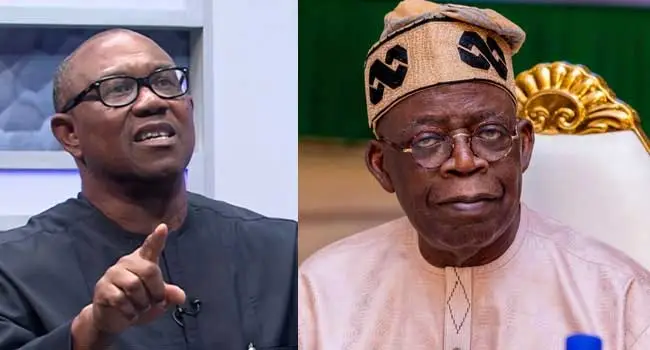
According to Abdulhakeem Adegoke Alawuje, a prominent member of President Bola Tinubu’s support group, previous presidential candidates Peter Obi and Atiku Abubakar lack the power to sway the North against his principal.

Alawuje claimed in a statement that every action taken by individuals opposed to Tinubu is being thoroughly watched.

“Be advised,” he cautioned. You cannot carry out any political or ethnic plot without our agents’ knowledge. The North won’t be duped once more.

Alawuje recalled Tinubu’s crucial role in the 2015 elections, saying that history will remember how the APC National Leader at the time “stood firmly with the North when it mattered most.”

“Tinubu traveled the area at that pivotal time, persuading millions of people who had previously opposed Buhari to back him. The North still remembers that generous deed.

He emphasized that the North would “reward Tinubu with its votes again in 2027” and called it “a region of loyalty and honor.”

The Tinubu supporter claimed that Peter Obi was “hiding behind religious sentiments” and that Atiku was “masking a Northern agenda.”

Both are engaging in the greatest level of hypocritical politics. He said, “No propaganda can turn the North against its reliable ally from the Southwest.”

Alawuje praised President Tinubu’s “bold and transformative reforms,” citing recent comments from His Royal Highness Muhammad Sanusi II, the Emir of Kano, who stated that “Nigeria has pulled back from the brink of economic collapse.”

“Tinubu is doing incredibly well, changing the economic and developmental landscape of Nigeria.” All Nigerians need is patience, he continued.

Alawuje praised the President’s fortitude in the face of criticism, claiming that Tinubu’s leadership has subdued critics.

“Tinubu has disproved the fear-mongering social media “economists.” He is a real champion of human development, an economic reformer, and a brave and imaginative leader, he declared.

Kwarra Officially Hands Over to Dattijo as New NPC Chairman

0

On Tuesday, Nasir Kwarra, the National Population Commission’s (NPC) chairman, formally ended his five-year term by transferring the commission’s leadership to Muhammad Dattijo, the Federal Commissioner for Niger State.

According to reports, Dattijo will act as chairman while President Bola Tinubu swears in Aminu Yusuf.

Federal Commissioners, the Director-General, Directors, and commission personnel attended the short but symbolic ceremony at the NPC Headquarters in Abuja.

Kwarra thanked his coworkers and subordinates for their support while he was in office in a statement released by the commission on Wednesday.

“I am grateful to the Federal Commissioners, Management, and Staff of the NPC for their steadfast support and commitment during my five-year tenure,” he stated.

Strengthening data collection systems, digitizing the Civil Registration and Vital Statistics system, and accelerating preparations for the upcoming national population and housing census were among the major achievements under Kwarra’s leadership.

He emphasized that professionalism and group dedication made the progress feasible.

During the handover ceremony, official letters were signed, Kwarra received a parting gift, and a group photo was taken to commemorate the occasion.

It is anticipated that Dattijo, in his interim capacity, will continue ongoing initiatives until the new chairman formally takes office.

Former President Muhammadu Buhari appointed Kwarra in 2020, and he oversaw the commission as Nigeria prepared for its first housing and population census in almost 20 years.

The upcoming census is an urgent national concern because the last one was carried out in 2006.

Under his direction, the NPC implemented digital mapping and enumeration area demarcation, a technological advancement intended to enhance accuracy and modernize census operations.

The government change caused the census, which was originally planned for 2023, to be delayed.

It is now anticipated that Aminu Yusuf, the new substantive chairman, will lead the commission to finish the long-overdue task, which is thought to be essential for equitable national development and evidence-based planning.

Drama as Shaibu, Omobayo Fight Over Who Represents Edo at Former Deputy Governors’ Forum

0

Philip Shaibu and Omobayo Godwins got into a heated argument about who should represent Edo State at the Fourth Annual National Conference of the Former Deputy Governors’ Forum.

The conflict reportedly started when Shaibu loudly objected to Omobayo’s introduction as the former deputy governor at the event in Abuja on Tuesday.

Channels Television claims that while Shaibu and Omobayo quarreled over who was legitimate, the occasion momentarily deteriorated into anarchy.

Following the event, Shaibu said that the introduction was inappropriate and emphasized that Omobayo was brought in by the back door rather than being elected.

Shaibu claimed that the position was never vacant and that his dismissal was unlawful due to a court ruling.

“He brought him in through the back door,” he remarked.

In response, Omobayo emphasized that he had made an effort to maintain composure and called the altercation “nearly a national disgrace.”

Omobayo stated that Shaibu, whom he still considered an older brother, should come to terms with the court case as a depressing fact of life.

“I never made myself deputy governor,” he continued. It’s practically a national embarrassment.

Remember that in April 2024, Omobayo Godwins took over as Edo Deputy Governor after Philip Shaibu was impeached while serving under Godwin Obaseki.

Shaibu was eventually reinstated after a judge declared that his impeachment was illegal.