Home Blog Page 1289

UniAbuja says academic, administrative activities ongoing Newsdiaryonline

0

By Uche Bibilari

The Management of the university of Abuja (UniAbuja) says academic and administrative activities on campus will go on in spite of  reported strike by the Academic Staff Union of Universities (ASUU).

The Vice-Chancellor (VC) UniAbuja, Prof. Abdul-Rasheed Na’Allah, said this at a meeting with Provost, Deans, Directors and Heads of academic departments.

A statement from the meeting, signed by Dr Habib Yakoob, the Acting Director, Information and University Relations, was made available to newsmen on Friday in Abuja.

National growth LS

The vice chancellor described the strike as divisive and unnecessary, vowing that the management would never allow the university to be crippled again.

“As far as the management of the university is concerned, this institution is not on strike.

“Some people said they have declared a strike but all of us with the management have decided that our normal activities in the university must go on.

“Our exam is going on, senate meeting will continue, everything we do as a university will continue, our calendar will not be disrupted any longer by the grace of God.

“It is wrong to cripple the university over issues that are merely sentimental and some of which we have dialogued over and resolved, we are prepared not to allow this disruption again,” he said.

He debunked all the reported allegations of the union which they claimed informed its declaration of indefinite strike.

“Take for instance, the advert for the position of the vice-chancellor, we are not the only university that has advertised, we had the support and approval of the government.

“The advert was done by the Minister of Education, all I did as vice- chancellor was to request, to ask for what is next and they decided this is what we must do.

“And if you look at the advertisement from the beginning, this fact is very clear. It is only that they had to send it to us for execution that is all,” he explained.

He also described the union’s allegations of illegal recruitment, promotion, delay in the election of deanship, and microfinance bank establishment as unfounded, adding that the university had followed due process in handling all these matters.

He said the university ensured that relevant institutions concerned with oversights were contacted.

On the issue of the election of deans and establishment of microfinance bank, he disclosed that the elections time table had long been publicised.

He explained that the elections of four deans had been conducted so far.

Na’Allah also said that the university management had invested over N200 million in the proposed Microfinance Bank over the ASUU’s N4 million.

He said the investment had been made before the union wrote directly to the Central Bank of Nigeria (CBN) to stop granting the license for our operation.

The vice-chancellor said his administration had been working hard to develop the university and would not fold its arms and allow a group of people to destabilise its calendar.

“For over four years, our goal has been to lift this university much higher than it was, and this we have succeeded in doing by taking our academic and infrastructural developments to a world class level. (NAN) 

NGE Says Press freedom crucial to Democracy, good governance Newsdiaryonline

0

Nigerian Guild of Editors (NGE) has reaffirmed that media freedom, freedom of expression and access to public information are crucial to democracy and must be at the heart of Nigerian government’s values and actions.

The professional body of editors and media executives in Nigeria also said that it recognizes the crucial role played by journalists, media workers and free/ independent media in protecting the country democracy and advised them not to give up, in spite of the prevailing economic challenges.

In a press statement issued on Thursday to mark this year World Press Freedom Day and signed by its President, Mr. Eze Anaba and the General Secretary, Dr Iyobosa Uwugiaren, the Guild also requested the National Assembly to initiate and adopt a law to protect journalists, who speak out on matters of public interest, especially against abusive and strategic lawsuits, which are regularly initiated to silence them.

This year, the World Press Freedom Day, is dedicated to emphasizing the importance of good journalism amidst the current global environmental crisis.

National growth LS

World Press Freedom Day is observed annually on May 3rd. Established by the United Nations General Assembly in 1993, this day helps to celebrate the fundamental principles of press freedom, assess the state of press freedom throughout the world, defend the media from attacks on their independence, and pay tribute to journalists who have lost their lives in the line of duty.

The day also acts as a reminder to governments of the need to respect and uphold the right to freedom of expression as enshrined in Article 19 of the Universal Declaration of Human Rights. It highlights the importance of a free, independent, and pluralistic media in fostering transparency, accountability and democracy.

‘’In line with the theme of this year celebration, we believe that journalism and freedom of expression are crucial in the context of the current global environmental crisis.

‘’Journalism and freedom of expression help in raising public awareness about environmental issues; holding power accountable; amplifying marginalized voices; promoting transparency and accountability; fostering public debate/engagement, and providing a platform for solutions’’, the editors added.

More importantly, the NGE added that this year’s World Press Freedom Day provides an opportunity for every stakeholder in the media community to continue to drum it to the hearing of both state and non-state actors – about the importance of press freedom and the challenges being faced by journalists, including censorship, harassment, imprisonment and violence. And the urgent need by the government to take deliberate and sustained action to promote press freedom and good journalism in the country.

According to the editors, ‘’The federal government will fundamentally be promoting the enabling environment for media to operate responsibly if it adopts a law to protect persons who speak out on matters of public interest against abusive lawsuits meant to silence them.

‘’The federal government should take a clue from the European Union and other democracies around the world, who have adopted similar laws to protect journalists and media houses against Strategic Lawsuit Against Public Participation (SLAPP suit).

‘’More so, there are still many obnoxious and anti-media laws in our statutory books that are targeted at journalists and media houses. The National Assembly (NASS) must take immediate step to repeal them.’’

The NGE also urged government at all levels, international organizations and civil society organization to protect and promote press freedom; ensure safety and security for journalists/media houses; and ensure that all restrictive laws and policies targeted at the media are repealed.

The NGE added, ‘’We celebrate the courageousness and commitment of journalists across the country, who continue to risk everything to bring us the truth and reliable/credible information. We also acknowledge the growing threats to press freedom – from violence and censorship to disinformation and economic pressures.

‘’We pay tribute to the journalists who have lost their lives or faced persecution, and we stand in solidarity with those under threat or attack and those who continue to work under very harsh economic conditions.’’

The editors said that they will continue to advocate for press freedom, freedom of expression and access to information, adding that they are crucial to good governance, democratic societies and fundamental human rights

Encomiums as two Kaduna-based schools celebrate high scorers 

0

Encomiums have continued to pour in as more secondary schools across the country celebrate their students who are high scorers in the 2024 Unified Tertiary Matriculation Examination.

Though the Joint Admissions and Matriculation Board is yet to unveil the list of 2024 top scorers, schools have continued to celebrate candidates who scored 300 and above.

According to the Board, over 8,000 students scored 300 and above in the 2024 UTME.

Dialogue Academy, Kaduna high UTME scorers.

Meanwhile two Kaduna-based secondary schools namely Kadwell International Schools, Kaduna and Dialogue Academy, Kaduna have celebrated students who scored 300 and above.

According to Kadwell, 10 students scored 300 and above, with the highest being 363 scored by Keke Jedidiah.

He was followed by Idris Sadiq, 350; Yahaya Muhammed, 337; Agu Emmanuel, 321; Otorkpa Divine, 319;  Abubakar Abdullahi, 318; Omaliko Abigail, 318; Icha Enessi, 315; Ekefre Eyitemi, 303 and Peters Marvel, 302.

For Dialogue Academy, the highest scorer is Oladigbolu Zainab with 362 followed by Abdulqadir Belgore, 341;  Hauwa Usman, 339; Fatima Isyaka, 314; Khadija Idris, 312; Asiya Salisu, 305; Sarah Mahmud, 303 and Nawaar Diko, 301.

The According reported that 30 students of a Kwara-based Catholic school scored 300 and above.

The UTME, which is organised by JAMB, is the only acceptable examination taken by individuals seeking admission into tertiary institutions in Nigeria.

Though some tertiary institutions may still schedule post-UTME for candidates seeking admission into their institutions, no candidate can be admitted without a result verified by JAMB.

Kadwel International school high UTME scorers.

The UTME is usually based on four subject combinations, with each subject marked over 100.

Though students are at liberty to choose their subject combination in line with their choice course of study, the Use of English is compulsory for all students who wish to be admitted into the country’s tertiary education system.

Nigerian police commissioner to head INTERPOL African Cybercrime units

0

The International Police Organisation has designated Nigerian Police Commissioner Ifeanyi Uche, as the Chairman of the African Heads of Cybercrime Units, encompassing leaders from 54 nations.

Uche, serving as the Commissioner of Police overseeing the NPF National Cyber Crime Centre, assumes the role from Ratjindua Tjivikua of Namibia, who completed his tenure as head of Cybercrime.

Uche, who spoke at the closing of the Africa Working Group Meeting on Cybercrime on Friday, emphasised the urgency of bolstering cybersecurity efforts in Africa due to the escalating threat of cybercrime.

He called for enhanced cooperation among law enforcement agencies and investment in technology and capacity building.

“The high penetration rate of new technologies in Africa increasingly exposes the sub-regional cyberspace as potential targets for cybercriminals, as most African countries still have low levels of commitment to cybersecurity.”

“It is important that we join the operational subgroups created by INTERPOL to bolster our collective efficiency in the fight against cybercrime in the subregion,” the CP said.

He stressed the importance of legislative support to enact robust cybersecurity laws and regulations.

Uche vowed to lead collaborative efforts to combat cybercrime effectively in Africa, advocating for indigenous technological solutions tailored to the continent’s needs.

“Cybercrime poses a significant threat to our societies, economies, and security.

“It is imperative that we work together to address this growing challenge. As Chairman, I am committed to leading from the front, fostering the much-desired collaboration among our member units to enhance our collective ability to prevent and investigate cybercrimes effectively in Africa.

“I consider this as a call to champion the enthronement of a new charter of technological renaissance and home-grown cybersecurity ethics in Africa and a paradigm shift from absolute dependence on external solutions to African nurtured technological initiatives, adaptive to our Socio-Political ecosystem,” he said.

The Nigerian Minister of State for Police Affairs, Hajia Imaan Ibrahim, reaffirmed Nigeria’s commitment to strengthening cybersecurity and international cooperation to safeguard national and regional interests.

Ibrahim said, “The Government of Nigeria is fully committed to reforming our police force, recognizing that cybersecurity is an integral component of our national security agenda.

“We understand that a secure cyberspace is essential for our immediate and long-term development objectives. Therefore, we are dedicated to enhancing our cybersecurity capabilities, investing in the necessary resources, and fostering collaboration both domestically and internationally.

“We are working to enhance the provision of the requisite tools, equipment, and facilities to strengthen the cybersecurity architecture of the NPF, and we remain committed to regional and international cooperation mechanisms.”

Obaseki to spend N1bn monthly to feed vulnerable Christians

0

Edo State governor, Mr Godwin Obaseki, on Friday, said he earmarked nothing less than N1bn naira monthly to feed vulnerable Christians in the state in the next three months.

This is as he said a similar programme that has been mapped out for people in the Muslim faith in the state.

Obaseki disclosed this during the official flag-off of phase one of the Edo State Food Support Programme.

The Governor, who said he was worried by the rising number of people who cannot afford a meal in a day in the state, said he had to call Christian leaders in the state on how best to address the alarming situation.

Obaseki said in order not to make it look political, he decided not to involve political officeholders, but Christian leaders in reaching out to vulnerable Christians in the state.

The governor who added that the state government already had data of the vulnerable in the state, said the means of reaching out to them maximally was the issue, hence using churches to drive the programme.

He said, “I was worried by the rising number of people who cannot afford a square meal in a day. So, I thought to myself how do we solve this problem? This is not politics I told myself.

“I then called the chairman of the Christian Association of Nigeria (CAN) and others to a meeting and explained to them what I intended to do. So, that’s how we put our heads together to come up with this programme.

“I told them this is the amount of money I will be giving you every month is N1 billion. At least, Let us try this for the first three months and see how it goes.

The governor said the programme was not just to feed the vulnerable, but also to get more data about people in the state to create employment for them and how the government can render help where necessary.

Earlier, in his remarks, the Chairman of the Organisation Committee who also doubles as the Chairman of CAN, Apostle Irekpono Omoike, while thanking the governor for the initiative, said 10kg of 60,000 bags of rice has been purchased for onward distribution to the three senatorial districts in the state.

According to him, 27,000 bags of the 10kg would be distributed to the seven local government areas in Edo South, 15, 000 bags to Edo Central and 18, 000 bags to Edo North.

Omoike said 3, 000 bags would be distributed to each local government across the 18 local government areas, amounting to 54,000 bags, while the remaining 6,000 bags would be distributed to churches not captured under CAN.

Tinubu seeks high quality local vehicle production

0

President Bola Tinubu pledged on Friday to expedite the passage of legislative bills aimed at bolstering Nigeria’s automobile industry.

He urged local manufacturers to prioritise the production of top-quality, affordable vehicles for Nigerians, particularly as his administration recently launched a consumer credit scheme.

Tinubu made these remarks during a courtesy visit from the African Association of Automotive Manufacturers and the Nigerian Automotive Manufacturers Association in Abuja, represented by his Chief of Staff, Mr. Femi Gbajabiamila.

The Special Adviser to the President on Media and Publicity, Ajuri Ngelale, confirmed in a statement titled ‘Automotive Manufacturers Pay Courtesy Visit to President Tinubu.’

The delegation, led by the Minister of Industry, Trade and Investment, Ms. Doris Uzoka-Anite, included the Director-General of the National Automotive Design and Development Council, Mr. Joseph Osanipin, along with representatives from the Nigerian Airspace Management Agency and Executive Directors of Stallion Group, Toyota/CEAO, and NISSAN.

“He (Tinubu) promised to assist in facilitating the speedy passage of the legislative bill,” the statement read, adding that locally manufactured vehicles should meet the highest quality standards to complement government efforts in revitalizing the industry.

According to one association spokesperson, the visit aimed to update President Tinubu on efforts to commence vehicle and spare parts manufacturing in Nigeria.

They informed the President’s Chief of Staff that a legislative bill to drive the automotive industry was being drafted and reviewed by the Federal Ministry of Justice.

They also emphasised the industry’s potential to generate massive employment for Nigerian youths and alleviate foreign exchange pressures.

Gbajabiamila thanked the delegation, assuring them of the President’s commitment to Nigeria’s industrialization through various policies.

He also urged the associations to focus on producing vehicles affordable to all Nigerians, especially amid Tinubu’s initiative to provide consumer credit for millions to access cars and essential goods and services.

Dangers of relocating American, French Military bases to Nigeria

0

Your Excellencies, It is a common knowledge that the American and French governments have been desperately lobbying the governments of Nigeria, Benin, Togo, and Ghana to

    3rd May 2024

    AN OPEN LETTER TO MR. PRESIDENT AND THE LEADERSHIP OF THE NATIONAL ASSEMBLY (NASS) ON THE DANGERS OF THE RELOCATION OF AMERICAN AND FRENCH MILITARY BASES FROM THE SAHEL TO NIGERIA

    Your Excellencies,

    National growth LS

    It is a common knowledge that the American and French governments have been desperately lobbying the governments of Nigeria, Benin, Togo, and Ghana to agree to sign new defense pacts that would enable them to redeploy their soldiers expelled from Mali, Burkina Faso, and Niger. Some of the troops have been redeployed to Chad but France and United States prefer countries of the Gulf of Guinea that are more strategically located to serve their interests in the central zone of the Sahel. Of the countries in the Gulf of Guinea, Nigeria turns out to be the most strategically located. There are indications that the Nigerian Government may be favorably disposed to the proposed defense pact.  However, there is a widespread apprehension that signing of the pact by Nigeria would have wide ranging implications for defense and internal security of the country.

    On 22nd December 2023, the last of France’s 1,500 troops deployed in Niamey and two other bases in the tri-frontier of Niger were marched out of the country. On March 16th, 2024, Niger Republic suspended the military agreement with the United States signed in 2012, which allowed the US to station about 1100 US troops and civilian personnel permanently in Niger, to operate from two American bases in the country. American Airbase 101 is located in Niamey while Airbase 201 is located near the small northern city of Agadez, about 920 kilometers southwest of Niamey. These French and American bases were used by the French and the Americans to carry out manned and unmanned surveillance flights and other operations in the Sahel. The bases had become the focal points for Western intelligence and surveillance operations in West Africa. The American and French troops were expelled because their presence did not serve any useful purpose. Instead, they were using the defense pact to carry out surveillance operations in the region to serve their geopolitical strategic interests. As a result of this expulsion, the Gulf of Guinea countries especially Nigeria, are being pressured to compromise their sovereignty by harboring these foreign troops who would come to serve the interests of NATO to the detriment of the national interests and security of the countries of the Gulf of Guinea. Nigeria’s civil war experiences when France overtly supported the Biafran secessionists, and the ambivalence of the US should provide our leaders with food for thought.

    It is important to remember that Nigerians have consistently opposed defense agreement with foreign countries since the 1960s when the Balewa administration was forced to abrogate the Anglo-Nigerian Defense Agreement, because the agreement contained a clause which allowed the Royal Air force to overfly and test its aircrafts in Nigeria. The Agreement also allowed the Royal Air Force to station maintenance staff in Nigeria. The Balewa administration was pressured to abrogate the Agreement because public opinion perceived it as an impairment of Nigeria’s freedom of action which might draw the country into hostilities against it wishes. This remains true. 

    In 2001, in his bid to ostensibly re-professionalize the Nigerian army, President

    Obasanjo almost unilaterally signed the “Military Cooperation Agreement Between the US and Nigeria.” To its credit, the Ministry of Defense responded appropriately by opposing the agreement arguing that, the ministry was not involved in the negotiations between Nigeria and the US, neither were the service chiefs, who could have provided input relating to the syllabus and doctrinal content of the programme. In fact, the agreement was highly criticized by Lt General Victor Malu, the Chief of Army Staff at the time, when the US military officers demanded for Nigeria’s strategic doctrine and unfettered access its strategic military locations. According to General Malu, those were “exclusive to Nigerians only” adding that “a friend today can be an enemy tomorrow.” Malu was not alone in protest against the agreement. His immediate boss and Chief of Defense Staff, Vice Admiral Ibrahim Ogohi also told a visiting US Air College delegation to his office that “what Nigeria needs is logistic support and not training.” In November 2007, the US renewed its attempt to set up its Africa Command (AFRICOM) in Nigeria. This move was rejected by the National Council of State. Incidentally President Bola Ahmed Tinubu was a member of the Council of State at the time. 

    The latest proposal to relocate the America from Niger to Nigeria coming not long after the suspension of Niger from ECOWAS, with Nigeria’s active collaboration as a result of disagreement between Niger and the US, has many serious implications not only for Nigeria – Niger relations but also for Nigeria’s national security and that of the West African region in general. According to the late Major General Joseph Garba, Nigeria’s former Minister of External Affairs, Nigeria’s neighbors are a matter of colonial heritage and socio-cultural diversity; but it is in our Nigeria’s interest to deliberately cultivate the friendship of our neighbours. This posture has been and must continue to be a major feature of Nigeria’s foreign policy. This is even more so because historically, there has always been a noticeable degree of suspicion of Nigeria’s intentions among its French – speaking neighbors, arising no doubt from the mutual suspicion which seems to have always characterized Nigeria’s relations with France. Therefore, in this circumstance Nigeria must be bold enough to reject the proposal, if for no other reason than to return a good turn. At least since independence Nigeria and Niger have maintained relatively cordial relations that have always helped in stabilizing the sub-region on several occasions. The two countries have come to the aid of one another during their moment of crises. 

    The new military rulers in Niger jettisoned the security cooperation agreement between Niger and the United States because of the “attitude of the US delegation which visited Niger recently “in denying the sovereign rights of Niger’s people to choose their partners and allies capable of really helping them to fight terrorism.” General Michael Langley, head of the African Command (AFRICOM) had expressed “concern” that Niger was cultivating close ties with Russia and Iran. Other reasons given for the abrogation of the agreement included the fact that the presence of the American troops in Niger was illegal. According to Amadou Abdramane the spokesperson for the Niger’s Military Council, “it was not democratically approved and imposes unfavorable conditions on Niger.” As the “Agreement” was simply a list of demands drawn by the US Embassy in Niger and sent to the Mahamadou Issoufou’s administration for its consent, which it willingly gave. 

    The Agreement for example provides that all United States personnel be accorded the privileges, exemptions, and immunities equivalent to those accorded to the administrative and technical staff of a diplomatic mission under the Vienna Convention on Diplomatic Relations of April 18, 1961; that United States personnel may enter and exit the Republic of Niger with United States identification and with collective or individual travel order. 

    It is important to clearly state that there are only dangers and no gains from such military operations. The American operations in Niger Republic for example were ostensibly to pre-empt and uproot terrorists from the Sahelian region. The result has so far been quite unimpressive, if not a complete failure. It is apparent that the presence of American troops and other intelligence personnel in Niger Republic is not serving any useful purpose. This is for the simple reason that terrorism, far from abating, has in fact risen dramatically since the US began its operations in the region. Data sourced from the Pentagon, indicate that “with 2,737 violent events, the western Sahel (Burkina Faso, Mali and Western Niger) experienced the largest escalation in violent event linked to militant Islamist groups over the past years of any region in Africa, a 36% increase.” …” Fatalities in the Sahel involving militant Islamist groups rose even more rapidly, 63%, resulting in 7,899 fatalities. Niger in particular in particular “saw a 43% increase in violent events in the past year. “All told, …attacks linked to militant Islamist groups in the Sahel have jumped 3,500% since 2016.” “At a minimum, more US security assistance isn’t leading to more security and all signs suggest it plays a role in making matters worse.” (Elizabeth Shackelford) “The Sahel now accounts for 40% of all violent activity by militant Islamist groups in Africa, more than any other region in Africa. …Militant Islamist violence in the Sahel is also responsible for the displacement of more than 2.6 million people.”  Are these results worth the erosion of sovereignty? 

    We the signatories of this open letter believe strongly that the economic and environmental impacts of hosting foreign military bases are profound and far-reaching. Economically, the presence of these bases could potentially divert government funds and resources away from critical areas such as education, healthcare, and infrastructure development toward maintaining and securing these military installations. This redirection of resources could stunt economic growth and exacerbate poverty in a country where much of the population already lives under challenging conditions.

    Moreover, hosting foreign troops often leads to increased prices and living costs in local areas, disproportionately affecting the lower-income population. Environmentally, the construction and operation of military bases can lead to significant degradation of the local environment. This includes deforestation, soil erosion, water contamination, and loss of biodiversity, which are detrimental to agricultural communities and indigenous populations. The long-term environmental damage could further hinder economic opportunities and sustainable development.

    Historically, the presence of foreign military bases has often led to strained relations not only with neighboring countries but also within the host country itself, as seen in numerous global instances. Public opinion in Nigeria has consistently shown a strong resistance to foreign military alliances that compromise the nation’s sovereignty and independence. The controversial history of foreign military presence in Nigeria, dating back to the abrogation of the Anglo-Nigerian Defense Agreement in the 1960s, serves as a significant historical precedent highlighting the potential risks and public discontent associated with such agreements. This historical awareness and skepticism are echoed in the present day, where there is considerable public apprehension towards the re-establishment of foreign military bases. 

    In conclusion, as stewards of Nigeria’s sovereignty and guardians of its national interests, it is incumbent upon our leadership to heed the lessons of history and the voice of its people. The relocation of foreign military bases to Nigerian soil represents not just a potential compromise of our sovereignty but also sets a precedent that may lead to unforeseen geopolitical, economic, and social consequences. We, the signatories of this open letter, urge you to consider the broader implications of such agreements and to prioritize Nigeria’s long-term peace and security over short-term strategic alignments. By standing firm against the pressures to house foreign bases, Nigeria can affirm its commitment to self-determination and foster a more stable and prosperous future for all its citizens. Let us choose a path of cautious diplomacy and strategic independence, ensuring that our nation remains a beacon of stability and a model of sovereign integrity in Africa.

    Yours faithfully,

    1. Abubakar Siddique Mohammed

    Centre for Democratic Development, Research and Training (CEDDERT) Zaria.

    Arewa Research and Development Project (ARDP) Kaduna.

    • Attahiru Muhammadu Jega Bayero University, Kano.
    • Jibrin Ibrahim

    Centre for Democracy and Development (CDD) Abuja.

    Civil Society Legislative Advocacy Centre (CISLAC) Abuja.

    Centre for Information Technology and Development (CITAD) Kano.

Opay, PalmPay, others warn customers against crypto trading

0

Nigerian fintech companies have warned their customers against trading in cryptocurrency or any virtual currency on their apps, threatening to block any accounts found engaging in such activities.

At least four fintechs—Opay, Moniepoint, PalmPay and Paga—have communicated this development to their customers on Friday.

Last week, the Central Bank of Nigeria stopped major fintech firms like Kuda, Opay, PalmPay and Moniepoint from onboarding new customers.

The CBN’s move was linked to an ongoing audit of the Know-Your-Customer process of the fintechs, which have been under scrutiny in recent months over concerns around money laundering and terrorism financing.

Before the CBN’s directive, the Economic and Financial Crimes Commission had obtained a court order to freeze at least 1,146 bank accounts owned by various individuals and companies allegedly involved in illegal foreign exchange transactions.

In a notice issued on Friday, OPay said it would take strict measures against customers who violate its policy, which aligns with the Central Bank of Nigeria’s stance on cryptocurrency trading.

“In compliance with the CBN directive, please note that OPay prohibits any cryptocurrency and all virtual currency trading. Any account engaging in such activities will be closed, and customer information will be shared with regulatory authorities.

“Please ensure that your account does not involve any cryptocurrency or any other virtual currency transaction,” the fintech firm warned.

In a similar move, Paga, a fintech firm that has processed transactions worth $32bn in 15 years of operation, said in an email to its customers,  “As a Paga account holder, please ensure that your account is not used for crypto and virtual currency transactions. Paga accounts in violation of this regulation will be blocked,” it said.

PalmPay, another major player in an emailed statement said, “We strongly advise against using your PalmPay account for transactions involving cryptocurrencies or any other virtual assets. Please be advised that failure to comply with these regulations may result in the suspension of your account.

“Our team is diligently working to ensure full compliance with all regulatory directives, prioritizing the stability and integrity of our platform,” the fintech stated.

On Thursday in Lagos, the founder and CEO of Moniepoint, Tosin Eniolorunda, called on cryptocurrency peer-to-peer (P2P) participants to halt their activities, citing the financial sector’s prohibition on such transactions.

“This is a self-reflection of our industry. As you know, fintech apps are used for fraud. One of the things that led to the most recent announcement is that crypto players were manipulating the naira, especially with the P2P market,” he said.

Recently, key players in the fintech sector were summoned to Abuja for discussions on KYC protocols, underscoring the regulatory scrutiny facing the industry.

The apex bank had also crackdown on cryptocurrency exchange, Binance in February after being accused of manipulating the naira exchange rate.

Before Binance stopped operation, CBN Governor Olayemi Cardoso said nothing less than $26bn was moved by unknown sources through Binance Nigeria in one year.

The CBN and the Office of the National Security Adviser (ONSA) announced a partnership to investigate and penalise those involved in illicit activities within the FX market.

Lagos, Antigua partner on tourism, tech

0


The Lagos State Governor, Babajide Sanwo-Olu, on Friday, hosted the Prime Minister of Antigua and Barbuda, Hon. Gaston Alfonso Browne, pledging cooperation between the two regions in key sectors including entertainment, culture, and technology.

During the courtesy visit at Lagos House, Marina, Prime Minister Browne expressed his country’s readiness to partner with Lagos and Nigeria at large for increased trade and investments. He was accompanied by his wife Maria Browne, Ambassador Davin Joseph, Air Peace Chairman Dr. Allen Onyema, and others.

In a press statement on Friday by Gboyega Akisile, special adviser, media and publicity, Browne stated, “I believe Africa has a significant amount of resources, and literally every African country can become a developed country.

“Our aspiration for Nigeria is to see it become a developed country within the next decade or two. The Caribbean and Africa must unite and work together to bring prosperity to our people.”

Responding, Governor Sanwo-Olu said his administration will collaborate with Antigua and Barbuda in the creative industry, digital technology, and tourism.

“We are building a bridge. The Caribbean is the sixth region of Africa. We can partner in the areas of culture, tourism, arts, and entertainment because we have a lot of things in common.

“Technology is very important because it knows no boundaries. We say we are the tech hub of Africa,” he said.

The Governor added that the time is ripe for Nigeria to achieve its true potential as an economic powerhouse.

“Mr. President has laid the background for us. He has said that he wants Nigeria to have a one trillion GDP within the next couple of years, and that is the kind of thing we are saying.”

Air Peace CEO Dr. Allen Onyema, who facilitated the visit, hailed Sanwo-Olu for receiving the Prime Minister’s delegation. He noted that Africa is the next investment destination for the world.

“The West, Asians, and everybody else want a piece of Africa. We must have Africa for ourselves and accommodate others,” Onyema stated.

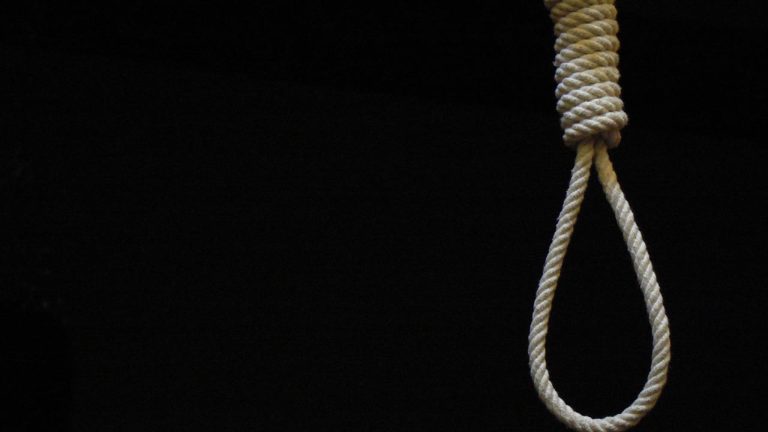
Man to die by hanging for stabbing another to death

0

A man, Hamza Mohammed, has been sentenced to die by hanging for stabbing another man to death during a free-for-all in Niger State.

Mohammed and one Baba Usman (now at large) were said to have chased after the deceased, Isah Mohammed until they caught up with him and stabbed him several times until he died.

The incident was said to have occurred in 2015 during a party when the free-for-all broke out between youths of the Kpakungu area of Minna and youths of Barikin Saleh, where Isah Mohammed was stabbed to death.

Mohammed was first arraigned in August 2015 by men of the Homicide division of the Niger State Police Command on a two-count charge of joint act and culpable homicide, an offence punishable under sections 79 and 221 of the penal code.

The convict, however, denied participating in the killing, arguing, “I and Baba Usman had  pursued the deceased, but Baba Usman was the person that stabbed him before I came there only to meet the deceased in a pool of his own blood.”

Mohammed, however, admitted that he and Baba Usman both pursued the deceased with the knife in an attempt to stab him,  saying  Baba Usman had already stabbed him before he reached the spot where the deceased was killed.

The Presiding High Court Judge and Niger State Chief Judge, Justice Halima Abdulmalik, in a two-hour judgment delivered on Friday, held that “the two-count charge of joint act and culpable homicide punishable under section 221 and section 79 of the penal code was established against the convict Hamza Mohammed and is hereby sentenced and convicted accordingly.”

The Judge further held that the prosecutor was able to prove beyond reasonable doubt the two-count charges of joint act and culpable homicide, punishable under sections 79 and 221 and punishable by death against Mohammed.

She ruled, “The case of culpable homicide  punishable by death is mandatory. You  Hamza Mohammed is hereby convicted and sentenced to death by hanging until you are dead. May the Lord have mercy on your soul.”